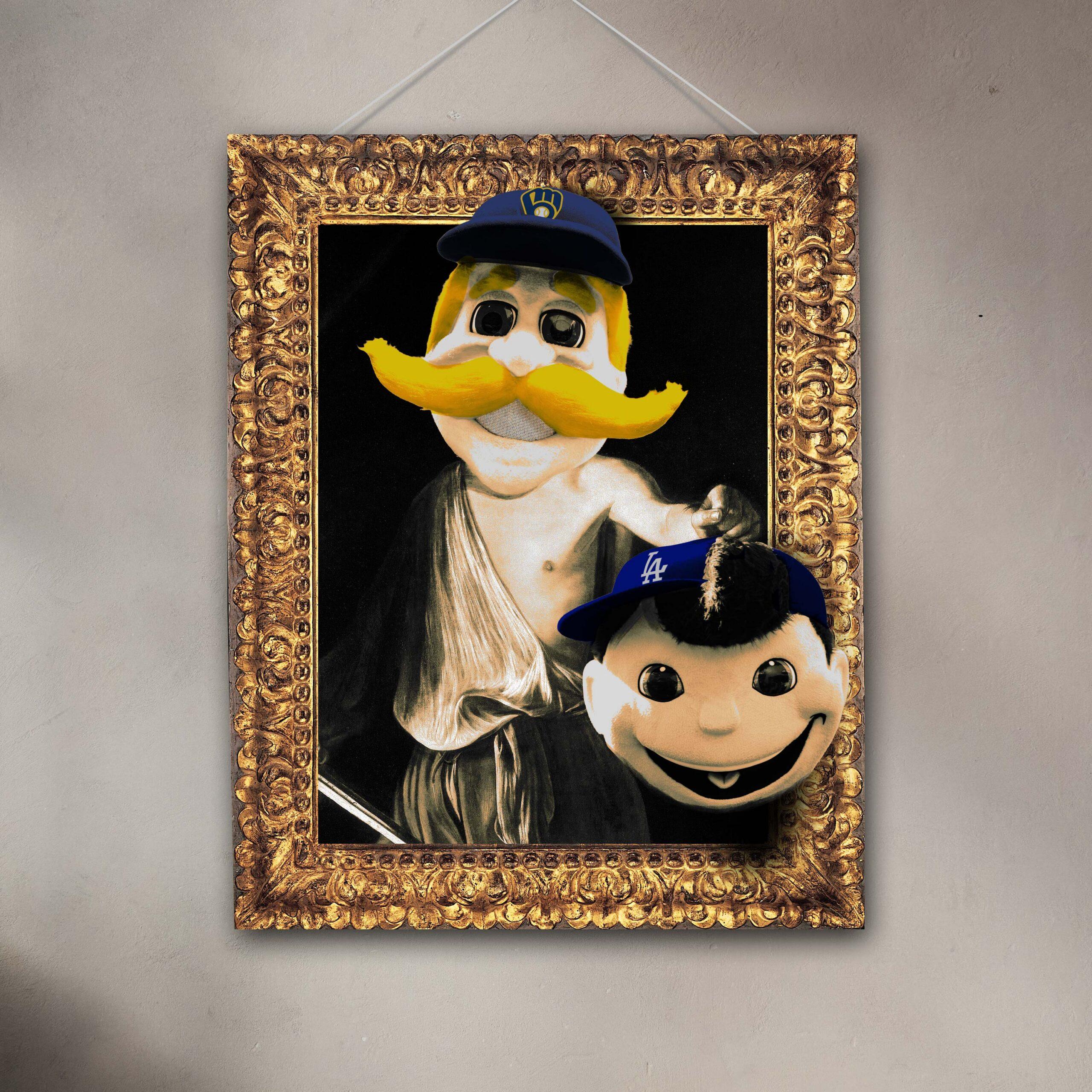
The Dodgers’ Demise Changes Everything and Nothing
The Brewers rescued baseball from morbidly bad vibes. What else did their NLCS sweep accomplish?The Dodgers’ Demise Changes Everything and Nothing
The Brewers rescued baseball from morbidly bad vibes. What else did their NLCS sweep accomplish?
Ding-dong, the Dodgers are dead.
On Thursday in Los Angeles, the Milwaukee Brewers beat Major League Baseball’s bogeymen, just as they had on Wednesday, and on Sunday and Monday in Milwaukee. When the week started, the Dodgers still possessed an air of inevitability. In back-to-back Octobers, and one day in November, they’d been unbeatable (barely), a trend that held true at the start of this month. But in four games over five days, Milwaukee made deposing the Dodgers look easy. The Brewers outhit, outpitched, and all-around dismantled the defending two-time champs to win the National League pennant and drive a stake into the 2026 Dodgers’ well-heeled, all-heel hearts. So much for the three-peat, or the Will Smith seven-peat. Baseball’s last line of defense against enduring dominance—the unpredictable postseason series—held.
The Dodgers, who dashed Milwaukee’s hopes in the 2018 NLCS and 2020 wild-card series, also dog-walked the Crew 4-0 in last year’s NLCS. But the Brewers bounced back from that resounding defeat, and a 4-0 deficit in Thursday’s Game 4, to hand the Dodgers an equally peremptory postseason pink slip. In past postseason rematches between teams whose first tussle was as lopsided as last year’s NLCS, the victor of Round 1 almost always won again. But this time, the swept became the sweepers—a first in playoff matchups between the same two teams in consecutive seasons. In all four contests, Milwaukee made an L.A. lead disappear. Anything the Dodgers could do, the Brewers could do better.
Here’s what the Brewers didn’t do. They didn’t do the Dodgers in for good; at best, the sport’s Sauron is licking its wounds and plotting a comeback in baseball’s Dol Guldur. They didn’t disprove the idea that the Dodgers have it easier than small-market clubs, or vanquish the concept of a salary cap, or banish the specter of a long lockout that could lead to lost games. Sure, Milwaukee—along with the super-penurious ALCS squads—may have undercut MLB’s salary-cap promos and made the case for restricting spending a slightly tougher sell. But the fans don’t have a say in the CBA. The two contingents that do won’t budge from their foxholes because the Brewers put the Dodgers down. The owners will still seek a cap, and the players almost certainly won’t be buying.
In other words, whichever way this NLCS swung, it would have been silly—albeit tempting—to interpret the outcome as a referendum on MLB’s economics or competitive balance. The Brewers didn’t destroy a narrative; they beat a flesh-and-blood baseball team in a single series. That’s no small feat, but it’s far from the fulcrum for the future of the sport.
That said: Wow, would the vibes have been bad if someone hadn’t stopped the Dodgers. By walloping baseball’s big bad, the Brewers did defuse a dire discourse cycle and set up a primo climactic matchup for anyone who wants to bandwagon a long-stymied team. Demonstrating that the Dodgers weren’t predestined to steamroll the rest of the league could do wonders for the sport’s popular perception. And by mercifully silencing the Dodgers doomers (for now), Milwaukee ensured that whoever wins the World Series will treat its fan base to a joy it’s never known—with the possible exception of some superannuated Guardians diehards who were old enough to appreciate a 1948 Cleveland club that won the World Series with no fewer than four Bobs. (This was long before the Bob Emergency.)
The trio of teams still standing includes two (the Brewers and Rays) that have never won a World Series, and one (the Guardians) with the league’s longest dry spell. (Cleveland’s Curse of Colavito—and of Bobby Bragan—isn’t quite as long-lived as the Curses of the Babe and the Black Sox were when the Red and White Sox won titles in the 2000s, but the Guards’ drought is getting there.) The TV ratings might be busts, but no matter who wins, one of these dogs will have its overdue day. Even for neutrals, the rooting writes itself. Especially compared to the prospect of another dogpile for a team that’s hogged the postseason spotlight, spoiled its own fans, and angered everyone else’s during a dynastic reign.
After the Brewers dispatched the Padres in a hard-fought NLDS, Tom Verducci asked Garrett Mitchell why this year’s matchup with L.A. would go better for the Brewers than last year’s. “It just feels different, man,” Mitchell said. “I feel like this year we just have a different type of confidence, a different type of belief, and we’re just going out there and having fun, not putting too much pressure on ourselves.” Did the Brewers down the Dodgers and set up their franchise’s first shot at a title since 1982 because of confidence, belief, and fun? Those qualities can’t have hurt, but the Dodgers talked about believing, too. Belief is nice, but it’s not enough; much as some might seem to, teams can’t simply will a World Series berth into being. Nor is outspending all comers a foolproof path.
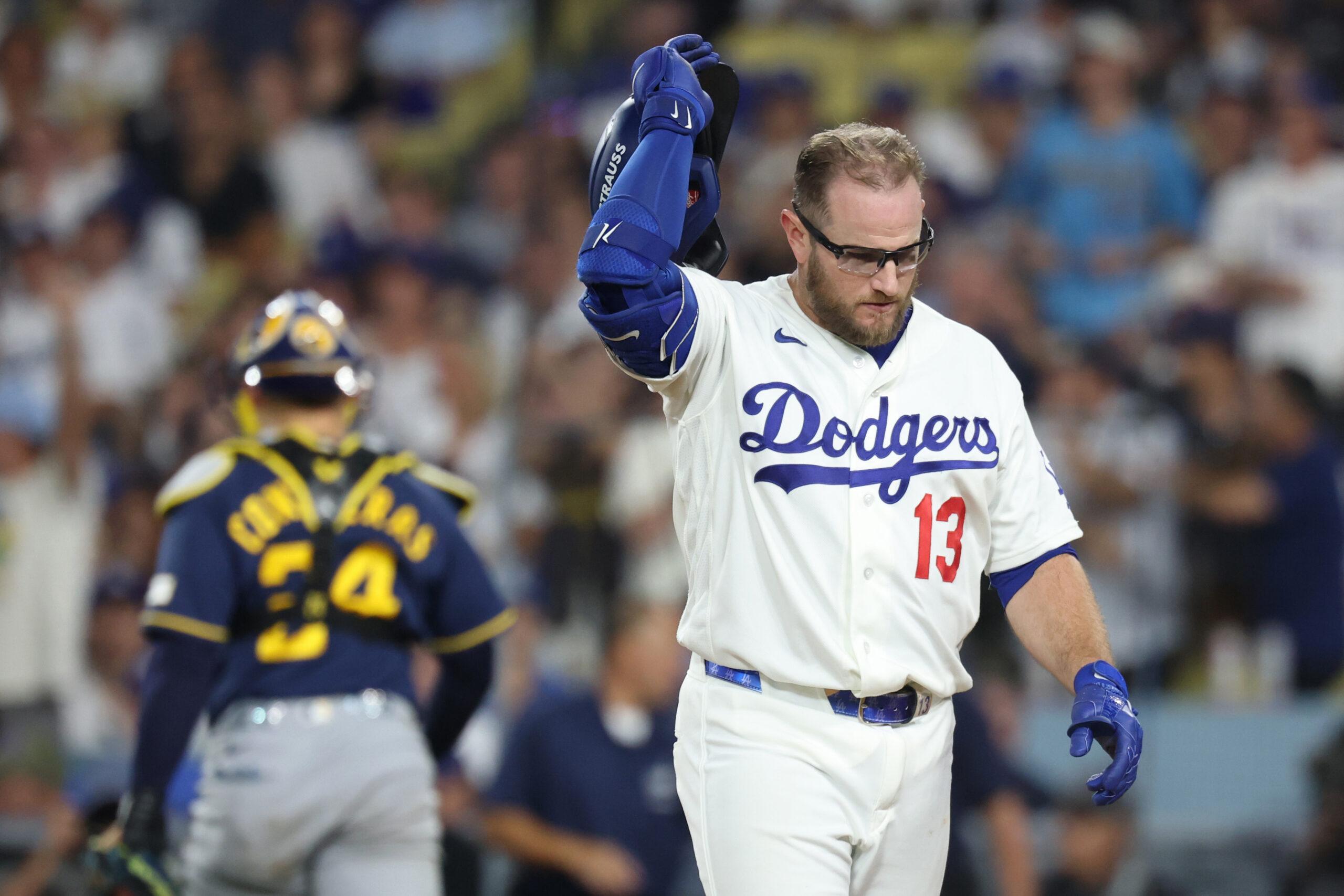
Max Muncy after striking out against the Milwaukee Brewers during the sixth inning of Game 4
It helps, of course. The key to postseason success is consistently making the postseason; the more spins of the wheel, the more likely it’ll eventually land where you want it to. For years, losing in October was a way of life for L.A. Before the Blue Crew broke through in 2020, I called them “a somewhat sympathetic juggernaut,” precisely because they kept coming up short. After that title, they went back to playoff losing for a few years; in 2022 and 2023, they got bounced by division rivals in the NLDS (on the latter occasion, via ignominious sweep). None of which was determinative when they waited till next year. Those downfalls didn’t preclude the Dodgers from winning it all in the next two tournaments. Nor did those back-to-back titles make them playoff-proof now.
Fortunately for the Brewers, pre-pennant exits in their seven trips to the playoffs over the past eight years—most of which resulted in wild-card ousters—didn’t dictate their destiny in 2026, either. Instead, they became the agents of the Dodgers’ demise.
We could try to read more deeply into what L.A.’s loss signifies, but as Max Muncy said after Game 3, “It’s a pretty simple answer. We're playing like shit, and they're playing great. No reason to overcomplicate it.” The Brewers were the hot team on the spot during the Dodgers’ season-ending cold snap, but the knockout could have been delivered by another October team. The Dodgers lost four in a row to the Marlins and Cardinals in April and to the Braves and Giants in May; they also ceded six straight to the Red Sox and Cubs in late July and early August. In baseball, good teams lose a lot of games and series. It’s a testament to how daunting the Dodgers seemed before the Brewers’ October tour de force that a lot of Dodgers detractors lost sight of how vulnerable they were, purely by virtue of being a baseball team. The Dodgers’ strengths made it difficult to recall that in any given season, MLB’s best team usually loses.
Not that the Dodgers clearly were the best team, either this year or last. The Brewers boasted the top seed and had home field advantage both times. They were outmatched in fame, market size, and payroll, but if they were underdogs in skill, it wasn’t by much. ZiPS projections pegged Milwaukee as slightly more likely to win last year’s tilt than this one. Last year’s sweep didn’t reflect the teams’ true-talent gap; neither did this one.
During the 2026 regular season, the Brewers edged out the Dodgers 4-3; a week ago, I would have said that another narrow margin was more likely in this series than the wide one we wound up with. (And not just because predicting playoff sweeps is bad math.) But the Brewers left no doubt about which team played better this week, which is how these series are settled. Clutchness is a calling card of these Brewers, who went 11-for-32 in the series with runners in scoring position. (The Dodgers went 4-for-27.) But they didn’t just excel at Brewer ball/small ball. They beat the higher-powered Dodgers at their own game: The Brewers’ 7-1 lead in home runs one-upped L.A.’s 6-1 tally last year.
L.A.’s lone long ball, a three-run shot, came on Thursday, off the formerly moribund bat of a banged-up, beleaguered Shohei Ohtani. Ohtani, who had to talk his way into the lineup in Game 3, struck the big blast in the second, staking his team to what briefly felt like a comfortable lead. For one swing, at least—his first home run swat since August 18—Ohtani morphed back into the Barrel man he’d been before injuries derailed another peerless campaign. His pent-up frustration, and vindication, came out in an ebullient bat flip.
A big fly from Ohtani—a faint echo of the titanic two-way Game 4 that propelled his team to a pennant last year—two hits by Kyle Tucker, three innings of solid (if not flawless) relief from Edwin Díaz. On paper, it sounds like the blueprint the Dodgers drew up when their latest offseason’s spending supposedly broke baseball again. But the efforts of those and other high-priced, high-profile imports fell short against a team with one free agent (Gary Sánchez), who didn’t get into a game.
“I don’t like thinking that this could be towards the end, because I don’t think it is,” Muncy said before the start of the NLCS. “I think we still have a lot of good baseball left in us.” Muncy might remember the doubts that the Dodgers would be back after 2018 and 2021; look at how subsequent seasons turned out. Then again, the fact that Muncy’s tenure with the Dodgers dates back to before 2018 speaks to the team’s primary problem: The Dodgers field the oldest group of position players in the league, who’ve jokingly labeled themselves “dinosaurs.”
In 2022, after signing Freddie Freeman, Dodgers president of baseball operations Andrew Friedman said, “There are a lot of cautionary tales of large-revenue teams that have had a period of success, and then kind of fallen off a cliff and had to take time to rebuild. And we’re doing everything we can to stave that off and to maintain this level for as far as we can see out.”
The 2026 Dodgers didn’t drop off a cliff (until this series, at least), but cracks formed in their foundation as crow’s feet formed near the corners of their eyes. The Dodgers had baseball’s second-best offense during the regular season, but the worst offense in five years for them. Their legs were slow, and their defense was weak at the corners. There’s scant reason to expect Muncy, Freeman, Mookie Betts, Teoscar Hernández, Ohtani, or Will Smith (in descending order of age) to be better or more durable with more months on their odometers. The farm is still fertile, and Josue De Paula is ready to rake, but there’s little room for a youth movement with the whole aging core under contract.
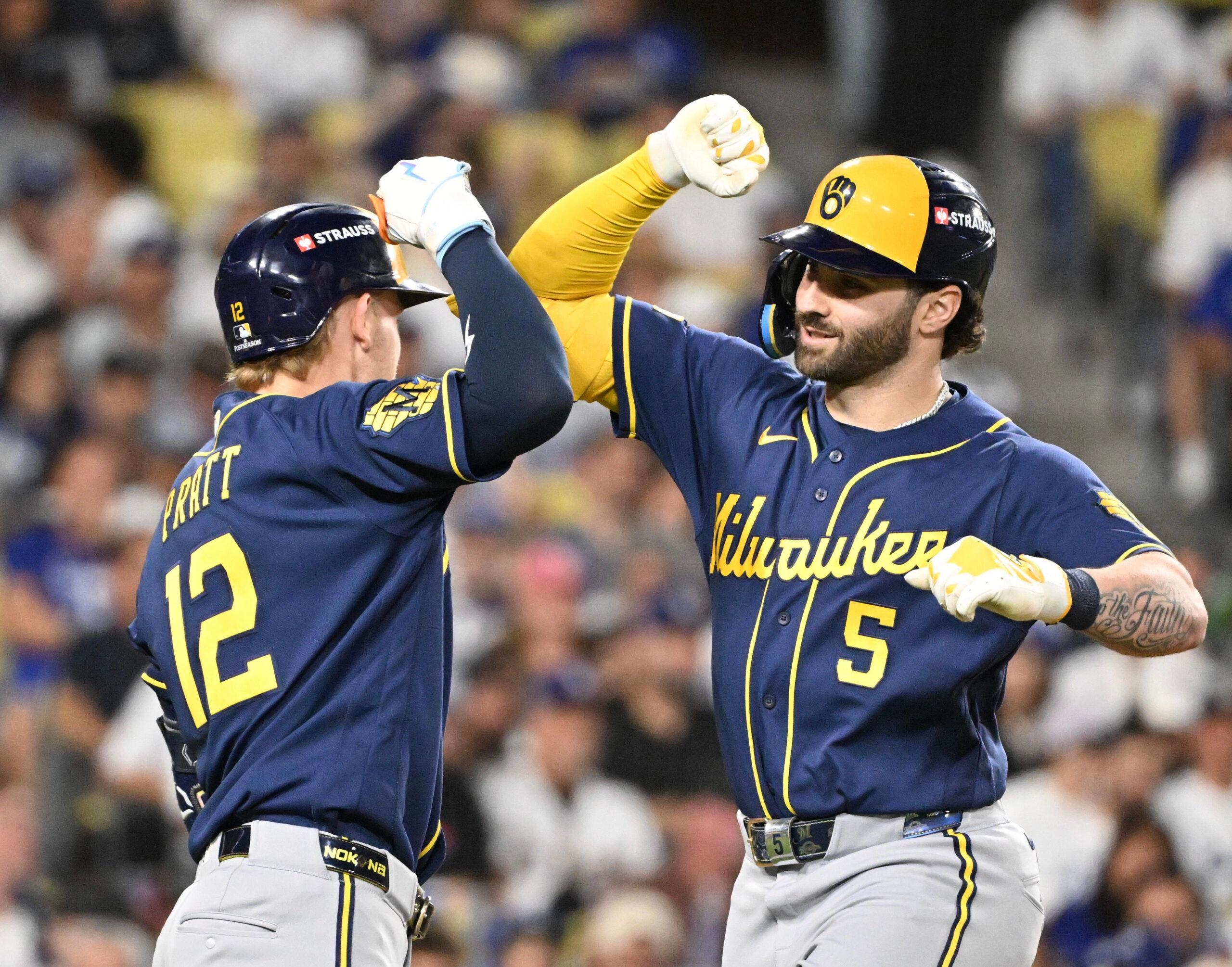
Garrett Mitchell celebrates with Cooper Pratt after a solo home run in Game 4
The glass-half-full spin on that lack of flexibility is that only one impact player is headed for free agency: Tarik Skubal. The Dodgers beat the Brewers in the battle for Skubal this summer, but they lost the war they got him for. Still, they stand a decent chance of persuading him to reenlist for another tour of Dodgers duty, unless owner Mark Walter’s financial morass gives the franchise a taste of other teams’ payroll constraints. Tucker and Díaz, who didn’t look like themselves until late in the year, should produce more than 1 WAR combined. Concerns about creakiness, while legitimate, are quite creaky themselves: The Dodgers have had MLB’s oldest batters for four years in a row. Plus, whatever their weaknesses, which perennial NL West also-ran can stop them from making an unprecedented 15th straight postseason appearance? I wouldn’t count out a club whose competitive window is permanently propped open. Most teams would welcome what the Dodgers define as problems.
But that’s a worry for a different day. As of today, the Dodgers, and their tendency to monopolize and distort conversations about baseball, don’t pose a threat to the last sliver of season that’s certain to be played. If they want to attend this fall’s all-small-market Classic, they’ll have to get tickets. The sport will soon plunge into stasis as the owners extinguish the hot stove. But the Brewers just marked 29 fan bases safe from fretting about a Groundhog Day Dodgers win for the duration of that downtime. And that’s a save as clutch as the kind Aaron Ashby recorded when he snuffed out the last life from L.A.’s World Series streak.