

The hour of our discontent may or may not be nigh. Who knows, really? Baseball is a weird game. We love it for this reason. Dynasties flop. Destiny fizzles. David finds salvation in a bloop single, a bloody sock.
Everything is certain this time of year until it isn’t. That’s the plot the sport has been rolling with for a century and a half, and the forecast does not appear to be changing. Things always depend. Since 2020, our feelings about October baseball (at least outside Southern California) have hinged almost entirely on whether the Los Angeles Dodgers did the thing they were built for or the very funny thing only a team built as they were could do. Plan for plunder, but pray for comeuppance. Sometimes it’s Miguel Rojas; others, it’s Eddie Rosario.
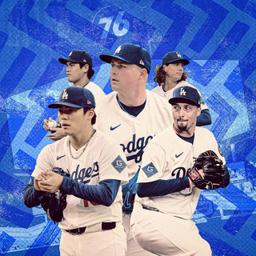
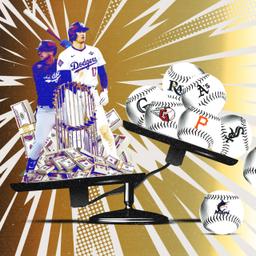
Having spent the past 12 months assembling another gilded roster, the Dodgers—MLB’s foremost assemblage of well-paid heels—have arrived at another familiar crossroads. As is their wont, they’ve looted and pillaged their way here. Ohtani and Yamamoto; Snell and Scott; Diaz and Tucker: The names change, the reign continues, and the dollar totals accumulate.
In July, L.A. leveraged its prospect depth as much as its purse strings to poach reigning two-time Cy Young award winner Tarik Skubal from the Detroit Tigers at the trade deadline. The hitch, at first, was that the move didn’t lead to much winning: The Dodgers went 13-15 following the August 1 deal—including dropping three of four to the National League–leading Brewers—and watched Shohei Ohtani land on the 15-day IL. Yet rumors of their demise would prove to be greatly exaggerated. From September 3 through the end of the regular season, they won 18 of 23 games, clinched the NL West, and secured a first-round bye.
Even with Milwaukee capturing the NL’s no. 1 seed, the Dodgers are heavily favored to win their third straight championship. Ohtani returned from his injury on September 23, and FanGraphs puts their World Series odds at a league-high 38.4 percent. (FanDuel has them at +210.) Yet the question of Dodgers dominance this fall carries an added layer of significance. These playoffs aren’t just about how another L.A. victory would further cement its status as MLB’s new Evil Empire; they’re about what that victory could portend in baseball’s upcoming collective bargaining battle—and the fallout it could create for the 2027 season.
There is an understandable tendency to position a potential Dodgers three-peat as the final nail in the coffin for both the game’s current salary system and the possibility of brief CBA negotiations this offseason. But the history of sports labor struggles in the United States and the fluctuating ways in which the public perceives them paint a much more complicated picture. Government investigations and corporate fire sales aside, if you’re waiting for the Dodgers to be done in by a reorganized economic order, your hate watch might be indefinite.
The recent investigations into Dodgers principal owner Mark Walter and the specter of a corporate fire sale certainly cast a shadow over this discussion, but that shade does not change the fundamentals at play. The baseball-watching public is deeply unhappy with modern payroll disparities across the league and has been for some time. Nearly all of the recent polling on the subject suggests that folks believe spending variances are the biggest issue with the game. When The Athletic surveyed 8,500 fans in mid-June, 75 percent indicated that the payroll gap had “created an unfair fight” across MLB.
It’s not just that, though. Fans have been equally steadfast in identifying whom they blame for baseball’s present economic environment. In the same June survey, three-quarters of respondents indicated that owners were responsible for payroll disparities. Almost 60 percent blamed low-spending owners, specifically.
If MLB ends up canceling games next year, the same fans indicated they’d hold ownership more responsible for the interruption than players by a 2-to-1 margin. That not only differs widely from the historical record of MLB work stoppages but also stands to complicate any efforts by baseball’s owners to exploit an interruption for their economic benefit. Up until the early 2000s, fans tended to side with management in labor negotiations. During the infamous 232-day strike in 1994, CBS found that there were twice as many fans who viewed the owners as more justified in the conflict than the players. Eight years later, amid the 2002 CBA negotiations, fans again sided with ownership. One Gallup poll at the time found that the baseball-watching public was 13 percent “more likely to say they take the owners’ side.”
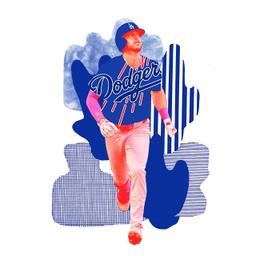
More on the Dodgers Dynasty
By the 2021 lockout, a YouGov poll reported that fans were at least twice as likely to back the players over the owners. Come 2022, Morning Consult found that 45 percent of respondents blamed team owners for the stoppage, versus just 21 percent who blamed the players. Another poll during this period indicated that fans (at a clip of 65 percent) overwhelmingly believed the players were negotiating in good faith. Only 42 percent said the same about ownership.
MLB’s quest to cap player earnings has been unfolding for decades: In the ’80s owners were revealed to have colluded with one another to limit player salaries on the free agent market. In 1990 CBA negotiations, they proposed their first formal cap system, with both a salary ceiling and floor. In 2002, the league installed the closest predecessor to the modern luxury tax system. And in 2016, it toughened the regulations around that luxury tax significantly. Now owners want even more.
The Dodgers’ status as the game’s premier villain has certainly increased the fervency of fans’ calls for a change, but even that reality is complex. For one thing, there’s never been a team with the unique structural advantages that L.A. has. For another, the Dodgers’ particular leg up inspires a different kind of resentment than standard dominance alone might.
What’s less complicated is what the owners’ move will be in the event of a third straight Dodgers title. They’ve already been laying the groundwork: While speaking to reporters this spring, MLB commissioner Rob Manfred said, “It’s clear we have fans in some markets that are concerned about the ability of the team in their market to compete with the financial resources of the Dodgers.” Four days after the Skubal trade, CBS Sports quoted one high-ranking executive “with direct knowledge of the trade” as saying, “I can assure you, owners and the league are pumped.”
If the Dodgers successfully defend their crown, MLB will kick its attempts to depict them as historic boogeymen into high gear. Whether that strategy will work is another matter.
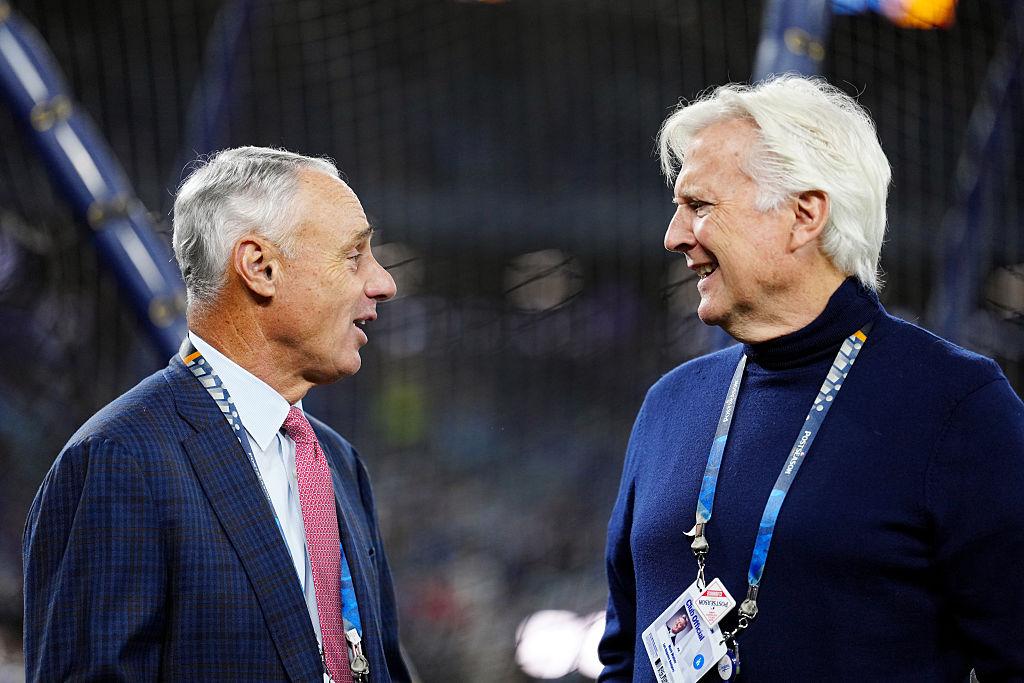
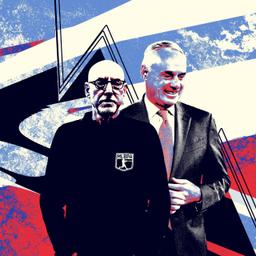
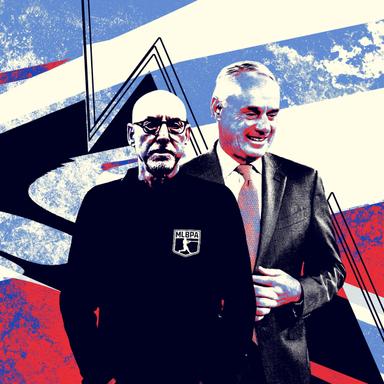
Robert Manfred and Mark Walter before Game 2 of the 2025 World Series
Comparisons with other U.S. sports leagues carry only so much value in analyzing the state of baseball’s economic order, but they do reveal a few key differences in context. Decades ago, both the NBA and NFL agreed to cap systems during periods of single-team or dual-team domination. The NBA agreed to a cap with the NBA Players Association in 1983. At the time of the compact, the Lakers had won two of the past three titles, and they and the Celtics were on the precipice of a decade of dominance. But that impending supremacy wasn’t the reason why then-commissioner Larry O’Brien believed a cap was necessary for the league’s survival.
O’Brien’s concern was that player salaries were rising rapidly while attendance and TV ratings were both decreasing, severely limiting the revenues that the mostly fledgling franchises had at their disposal and the value they’d accrue in the long run. (Even NBA players at the time agreed that the league was in dire straits.) This sequence of factors stands in direct opposition to MLB’s current multibillion-dollar economy, in which skyrocketing franchise valuations have led the league to publicly consider expansion while purposefully keeping profit and expense totals opaque.
In the NFL, a salary cap was implemented in 1994, under an agreement that would have allowed the players union to mutually terminate the system in exchange for lengthening the wait time for players to hit free agency from four years to six. As in the NBA, at the time the NFL’s cap was enshrined, the sport had a clear ruling class: The same three teams had won seven of the previous nine Super Bowls. But competitive balance was not the argument the NFL’s owners made to the NFLPA in favor of a cap. Instead, they contended that a cap and floor would boost average salaries, which remained comparatively smaller than those of players in MLB.
If you want this juggernaut gone from your life, you’ll have to defeat it or outlast it, but baseball is not coming to save you. The ghosts of David Stern, Pete Rozelle, and Kenesaw Mountain Landis are not walking through that door.
What’s crucial to understand, particularly as it relates to baseball’s upcoming labor dispute, is that in both the NFL and NBA, the players quickly regretted their decisions. Within 10 years of the NBA’s original agreement, the NBPA head said that ownership’s support for the cap system was solely powered by a desire to “protect their profit margin.” Around the same time, the NBPA found evidence that some owners had underreported their revenues, thus artificially limiting the cap. In the NFL, within three years of agreeing to a salary cap, the players association successfully sued the league for setting the cap ceiling based on a faulty calculation. Even today—despite the NFL’s rapid revenue growth in comparison with other leagues, in terms of both revenue and franchise valuations—football players still have the lowest average salaries among the four major U.S. sports.
All the reporting in the lead-up to this winter’s baseball negotiation indicates that the MLB Players Association has no intention of ceding ground on a cap. And even if there is a Dodgers three-peat, the mood of baseball watchers around the country would have to shift significantly for it to be a factor in the first place. The average MLB fan doesn’t think that the current system works. That fan also doesn’t think the Dodgers are why the system is broken.
Public opinion wasn’t enough to get the players association to bend on this issue in the decades that preceded the last MLB work stoppage. There’s little reason to believe it would be enough now. The MLBPA does not exist to ensure competitive parity among teams, and collective bargaining is not intended to be a medium through which to enact that goal.
However irksome, the truth when it comes to these Dodgers is that the only way out is through. Either that or wait for a liquidity offer that Walter and Guggenheim can’t refuse—or, you know, for the arrival of the feds. If you want this juggernaut gone from your life, you’ll have to defeat it or outlast it, but baseball is not coming to save you. The ghosts of David Stern, Pete Rozelle, and Kenesaw Mountain Landis are not walking through that door.
As much as the Dodgers problem will be discussed in the coming weeks, a labor dispute is a labor dispute, and a dynasty is a dynasty. The endurance of the latter says little about the outcome of the former. If a potential L.A. three-peat ensures anything, it’ll be only that everyone who’s tuned in out of spite will end up even more discontented by how little shifts in its wake.