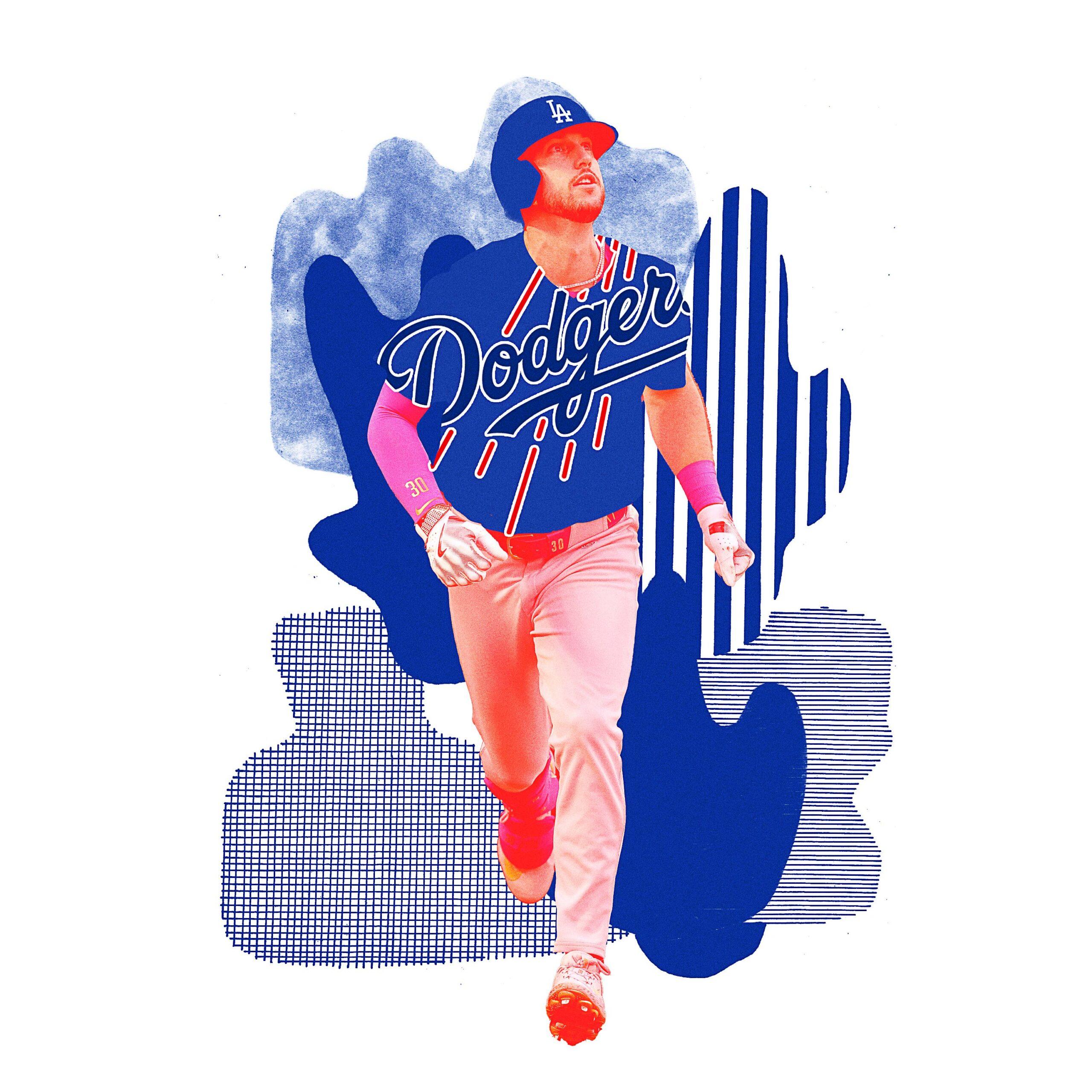

Did you let your guard down? Did you allow yourself to hope—maybe even believe—that the Los Angeles Dodgers, fresh off their second consecutive championship, wouldn’t try to triple down? That they’d say, “Enough is enough!” or “Too rich for our blood!” and refrain from adding MLB’s best free agent to their already redoubtable roster?
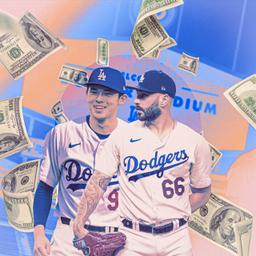
If so, then Thursday night’s news set you straight and served as the latest stark reminder that the Dodgers don’t believe in showing mercy or sharing the wealth (aside from the salaries they lavish on high-priced players). Instead of standing pat, the Dodgers did it again: They added the best available player to the best team. In this case, they signed free agent right fielder Kyle Tucker to a four-year, $240 million deal that includes a $64 million signing bonus and opt-outs after 2027 and 2028. Even after accounting for the standard Dodgers deferrals—only $30 million this time—Tucker’s contract calls for a present-day average annual value of $57.1 million, which (thanks to a far shorter contract term) tops the record of $51 million Juan Soto set with his 15-year Mets megadeal last winter.
Some World Series winners become complacent, contenting themselves with keeping their cores together. Often, they pay a price for not paying top prices to press their advantage. But even in their moments of triumph, the Dodgers rarely relent. Two winters ago, they added Shohei Ohtani, Yoshinobu Yamamoto, Tyler Glasnow, and Teoscar Hernández in a fruitful bid to secure their first non–pandemic season title since 1988. Last winter, they followed up that 2024 World Series win by signing Blake Snell, Roki Sasaki, and Tanner Scott, among others. Almost exactly a year ago, I wrote that the Dodgers had gone from villains to supervillains—and now they’ve not only repeated as champions but also three-peated as winter talent hogs, having handed Edwin Díaz a record salary for a reliever before adding Tucker. The Dodgers don’t always land their man—see Bryce Harper, Max Scherzer, and Soto—but the more they win in the summer and fall, the better positioned they are to win in the winter, too (often on favorable terms). Who’s more hated than a supervillain? That’s what the Dodgers are about to be.
In contrast to the past two offseasons, the Dodgers seemed to sit out this winter’s NPB posting period; top Japanese pitcher Tatsuya Imai, who signed with the Astros, even expressed a desire to take the Dodgers down rather than join them. But it's hardly a surprise that the Dodgers bided their time until Tucker was prepared to pick a team. In September, ESPN’s Kiley McDaniel, citing scuttlebutt from “industry insiders,” listed the Dodgers as “the team to beat” in the bidding for Tucker. In November, Jeff Passan predicted the Dodgers’ interest in Tucker on “a high-dollar, shorter-term deal.” And although the Dodgers lay low last week as rumors connected Tucker to the Mets and Blue Jays, I still expected Mark Walter and Andrew Friedman’s deep-pocketed team to swoop in. In the end, they outbid Steve Cohen—who settled for Bo Bichette—and stole another juicy free agent target from Toronto.
Granted, it’s not as if Los Angeles snagged the market’s most coveted player just for fun or to troll other teams. Insofar as a franchise with the most talent, resources, and recent success can be said to “need” anything, the Dodgers needed Tucker. Their outfield ranked 18th in FanGraphs WAR last season (remember Michael Conforto?) and projected to be similarly lackluster in 2026. Beyond that, the Dodgers fielded the oldest collection of hitters in the major leagues last year. Tucker, who’ll turn 29 on Saturday (happy birthday to him), won’t significantly lower that figure—he and 25-year-old center fielder Andy Pages are the only projected regulars under 30—but he’ll help hedge against a steep age-related falloff as Freddie Freeman, Max Muncy, Mookie Betts, and Hernández proceed deeper into their 30s.
More on the Dodgers
Age has been baseball’s best hope of unseating this squad, which has qualified for 13 consecutive postseasons. But as any camera-ready Tinseltown star knows, spending can slow physical decline. Even the Dodgers can’t defeat Father Time, but they can, perhaps, hold him at bay by regularly replenishing their roster with prime-age free agents, as they’ve done with Ohtani, Yamamoto, Sasaki, and now Tucker. In a recent MLB.com survey of front office executives, the Dodgers’ farm system was the one named most often as baseball’s best, which seems obscene considering how low they tend to draft (and how many picks they forfeit to sign players like Tucker and Díaz). As Pages and backup catcher Dalton Rushing could testify, it’s tough for internal reinforcements to crack the Dodgers’ veteran-rich roster. But several of the team’s top 10 prospects—including consensus top three Josue De Paula, Zyhir Hope, and Eduardo Quintero—are outfielders, which gives L.A. long-term options to cheaply replace Hernández (whose contract runs through 2027) or Tucker, should he opt out in two years.
Why would Tucker ever pass up the prospect of $60 million a year? Well, he may have had even stronger seasons by then. Performance-wise, Tucker has been as consistent as they come: He’s produced 4.2 to 4.9 fWAR in each of the past five seasons and the 10th-most fWAR of any position player over that span. A well-rounded standout who has the skills to go 30-30 with a .400 on-base percentage—he’s hit all of those marks, just in separate seasons—he’s among MLB’s least glamorous superstar-caliber players, perhaps in part because of his somewhat generic name and public persona and because he shared a lineup with a few (in)famous former teammates in Houston. Although his new yearly salary will raise his national profile, he’ll be one perennial All-Star among many on his new club, which will lead to fewer local headlines than he might have managed elsewhere—unless he raises his game. Sterling track record notwithstanding, Tucker’s ceiling has been lowered of late by one weakness: a lack of durability. That lone flaw in his game may explain why he left himself the option to test the market again.
Tucker ranked fifth in hitter WAR through June 3, 2024, the day he fractured his shin on a foul, which sidelined him for the next three months. He ranked sixth in hitter WAR through the end of June last season, at which point he seemed to start feeling the effects of a hairline fracture incurred on a slide into second on June 1. After a brief mid-August benching, Tucker recovered to hit .364/.462/.727 over his next 12 games, only to suffer a calf strain that cost him most of September. All in all, he’s produced a combined 7 WAR through June over the past two years and only 1.7 WAR thereafter. Even though he’s played through injuries, Tucker has been about as productive as Soto on a rate basis over the past five seasons (5.33 fWAR per 600 plate appearances for Soto, vs. 5.04 for Tucker). But Soto has topped Tucker by 122 games and 668 plate appearances over the same span. Admittedly, health doesn’t tend to improve with age, but if Tucker could sustain his level of play from his healthy stretches in 2024 and 2025 over 150-plus games—a playing-time threshold he reached in 2022 and 2023—he’d be an MVP candidate. (If Ohtani ever releases his stranglehold on that hardware, that is.)
Per Baseball Reference, the most similar batter to Tucker through age 28 is Larry Walker, another oft-injured all-around talent who had a fairly low profile (for a future Hall of Famer) as a young player. Walker peaked in 1997 at age 30, when, for the first and last time, he exceeded 143 games in a season. Boosted by career-best availability, he led the National League in fWAR and bWAR and won a well-deserved MVP award that eventually propelled him to Cooperstown. That’s the dream for Tucker, although even a best-case season wouldn’t yield the gaudy surface stats Walker accrued in pre-humidor Coors Field.
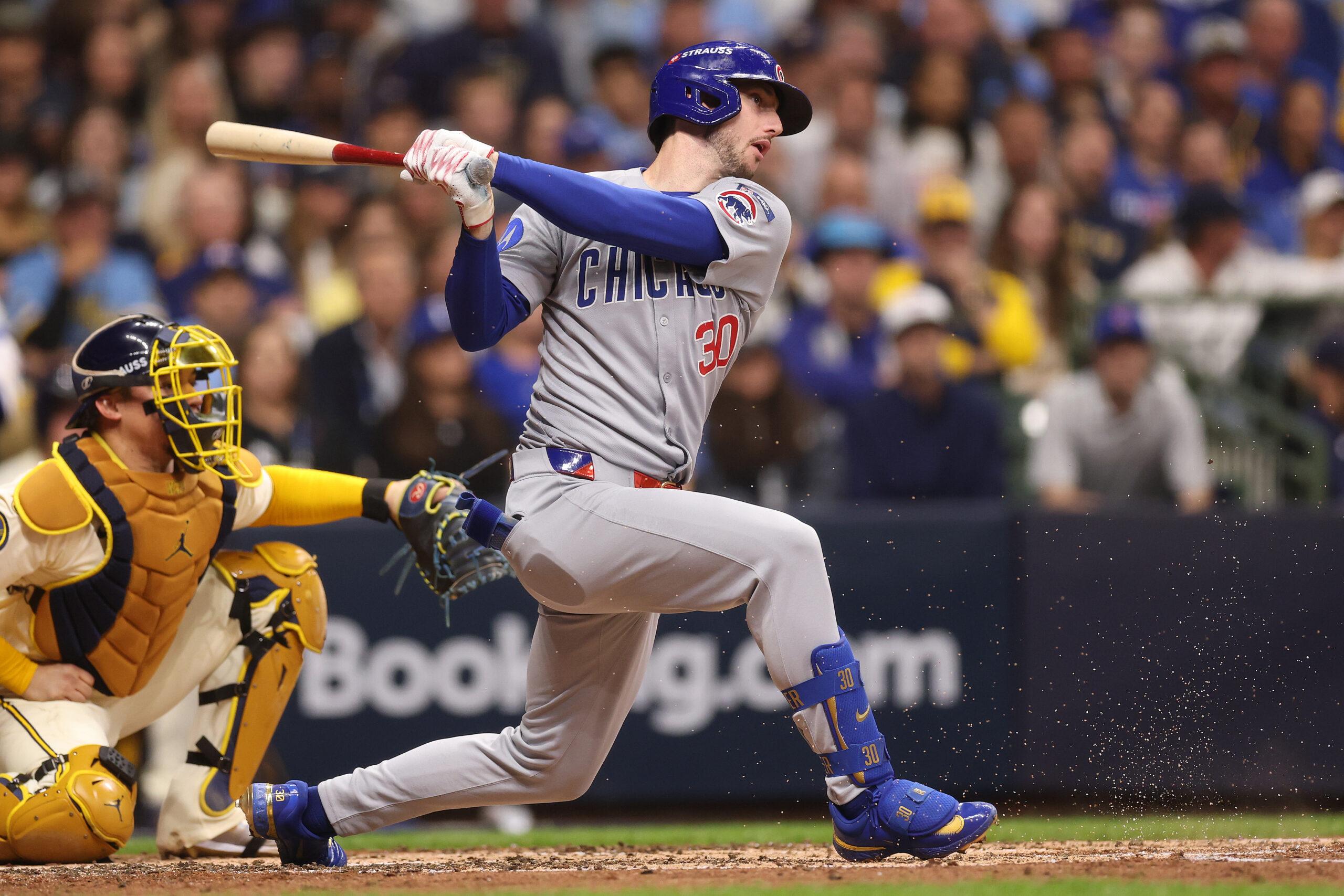
The Dodgers don’t even need Tucker to play a full season, as long as he’s healthy for the month that matters most to them: October. One way Walker’s and Tucker’s trajectories differed: Walker didn’t appear in the playoffs until his age-28 season, whereas Tucker has never played for a non-playoff team. Unlike his Astros teammates George Springer and Yordan Alvarez, though, Tucker hasn’t distinguished himself in postseason play, slashing only .233/.317/.376 (a 95 wRC+) in almost 300 career plate appearances, with a –33.1 percent championship win probability added. With the Dodgers, he should have ample opportunity to burnish those stats.
Kyle Tucker in October
Tucker is a range-challenged right fielder, but he’ll look like the Gold Glover he once was compared with Hernández, who’s just about glued to the ground. (Unfortunately for the Dodgers, Hernández is no better in left.) With Tucker and December signee Díaz—one of baseball’s best closers—in the fold, the Dodgers project to have the game’s best bats, best bullpen, and second-best rotation (after the aggressively reinforced Red Sox). Not only do they have the highest projected WAR total of any team, but the almost 8-WAR difference between them and the second-best Blue Jays is as big as the gap between the Blue Jays and the Rangers, who rank 15th. They’re not exactly lapping the league in true talent, but they’re getting there. The top seven hitters in the L.A. lineup—Ohtani, Betts, Freeman, Tucker, Will Smith, Muncy, and Hernández—look like something out of a 10-team fantasy league. Actually, maybe make that an eight-team league.
There are 30 teams in Major League Baseball, so that kind of consolidation of stars on one dynastic team will continue to cause widespread dissatisfaction with the state of the sport and—much to Rob Manfred’s delight—elicit calls for a salary cap. The gap between the Dodgers’ projected payroll and that of the second-highest-spending team is larger than the payrolls of each of the bottom five clubs. That’s not counting the premium L.A. pays as a serial exceeder of the competitive balance tax threshold (set at $244 million this year). The Dodgers forked over $169 million in CBT surcharges last season, and they may be on the hook for an even higher bill this year. Meanwhile, the Miami Marlins—the ever-retooling team that just traded arbitration-eligible starters to the Cubs and Yankees and whose free agent additions so far consist of Pete Fairbanks and Christopher Morel—sport a projected payroll of $69 million, not that much more than Tucker will make.
Payroll isn’t perfectly correlated with regular-season success, let alone playoff fortunes. Still, it's reasonable to suggest that there might be just a slight imbalance in a sport whose highest payroll is more than six times the size of its smallest. The question is which problem is bigger: one well-run team with institutional advantages flexing its financial might, or several low-payroll clubs (including some successful ones) stubbornly spending below their means. No, the Marlins can’t realistically splurge like the Dodgers, but they could certainly spend more than that.
Of course, both extremes can be problems; even the Dodgers’ Dave Roberts agrees. Salary caps don’t preclude dynasties, and they may not even make losing to dynastic teams less maddening. But they do, at least, undercut the case that the bullies bought a title. There is a scenario where Roberts’s prescription—a salary cap with a salary floor—is applied in an equitable way that partially levels the playing field without (A) overly punishing competitive teams for trying to win, (B) permitting parsimonious teams to prioritize profit over talent, or (C) drastically shifting the league’s revenue in the owners’ favor. Is it a scenario we’re likely to see enshrined in the next CBA, with or without an extended work stoppage? I wouldn’t count on it, considering the players’ understandable reluctance to restrict their own salaries and the owners’ past refusal to make that prospect worth their while. With so much for the commissioner, the owners, and the players alike to lose should the 2027 season be canceled or severely curtailed, odds are that the stakeholders will kick the salary cap can down the road again when the league’s governing agreement expires this December.
It may be small comfort to Dodgers decriers, but their spending dominance isn’t unprecedented. Twenty years ago, the Yankees were spending almost 12 times as much as the Marlins (who were then, as now, baseball’s skinflintiest team). Those mid-2000s Yankees, of Onion headline fame, sometimes outspent their closest payroll rivals by close to 70 percent, a much wider margin than the Dodgers’ 28 percent edge over the Mets (or 52 percent over the third-place Jays). Major League Baseball has survived, and even thrived, since the Yankees’ Evil Empire period, and it will likely weather the Dodgers’ reign of terror, too. Of course, the Yankees, who three-peated from 1998 through 2000, didn’t win another title until 2009, which made their drunken-sailor spending in the intervening years easier for their competitors to swallow.
Those thwarted twilight-of-The-Boss Bombers were often preseason favorites, but projections aren’t destiny. The Dodgers seemed prohibitively powerful this time last year, and although they did fulfill the fears of 29 fan bases by outlasting every other team, they only rarely looked dominant doing it. The Dodgers finished with MLB’s fifth-best regular-season record, one win ahead of the Cubs, and they edged out the Padres by only three games in the NL West. Only so much of their midseason malaise can be chalked up to them intentionally taking it easy. The wheels came off the vaunted bullpen they rode to a 2024 title, and the Blue Jays came excruciatingly close to defeating them in October (and November).
Here's what we know, though. The Dodgers are bringing back almost the entire team that just pulled off MLB’s first successful title defense in a quarter century. Their only substantial loss is that of the soon-to-be-retired Clayton Kershaw, who threw the second-most innings on the staff in the regular season but dropped way down the depth chart by the time the playoffs rolled around. This time around, their injury-prone rotation will be backstopped by a trio of returning starters who were out of commission in 2025 (River Ryan, Gavin Stone, and Kyle Hurt). Ohtani, who transitioned into two-way play as last season wore on, figures to be healthy and stretched out from the start. Betts won’t have his strength sapped by a virulent bug. The pitchers probably won’t be as beset by bum body parts as they were last year (although they aren’t about to boast the iron-men arms of the 2025 Cardinals, either). And now the Dodgers have Díaz to fend off another bullpen implosion and Tucker to lengthen their ridiculous lineup.
A 14th straight trip to the playoffs is nearly inevitable; a third straight season-ending dogpile is not. But baseball’s Dodgers haters will once again depend on playoff randomness to stop the sport’s juggernaut team.