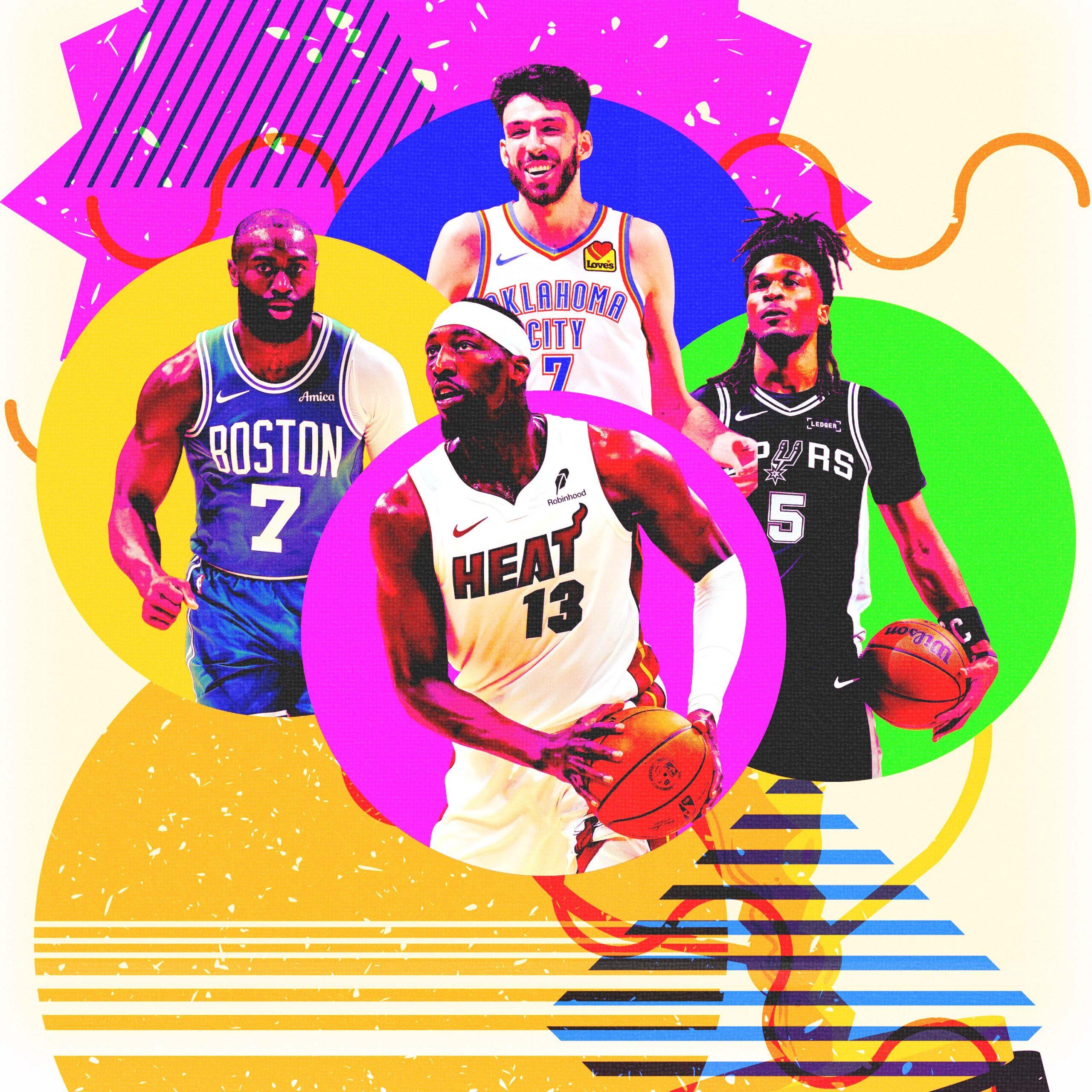

As promised, here’s our third installment of this year’s NBA awards column, where I’ll break down all of the league’s team-oriented honors: All-NBA, All-Defensive, and All-Rookie. Previously, I laid out my full MVP ballot and picks for every other individual award. There are still a few 65-game shenanigans that need to be sorted out over the next couple of days, but unless something unusual happens, these are, more or less, set in stone. Let’s have a look.
All-NBA
First Team
Kawhi Leonard
Nikola Jokic
Shai Gilgeous-Alexander
Victor Wembanyama
Jaylen Brown
The first four players listed above are self-explanatory and were already praised heavily in my MVP ballot. The only new face is Jaylen Brown, who edged out Donovan Mitchell, my fifth-place MVP finisher. I thought that Mitchell was more valuable to his team but Brown had the more impressive season, deftly handling the most responsibility of his career on a shockingly awesome squad.
Did anyone see this coming from Brown? Brad Stevens? Joe Mazzulla? Brown himself? I thought that the Celtics would fall into the lottery this year, in part because I was dubious about Brown suddenly becoming a capable no. 1 option. There was very little evidence to demonstrate that his score-first mentality could translate under harsher circumstances, when he had more defensive attention than ever, with less established talent around him.
Finals MVP? Sure. But this was someone who’d never been particularly efficient or shown any interest in setting the table for his teammates without over-dribbling his way into trouble. Brown had spent nearly all of his (Hall of Fame?) career as a complementary amplifier who was insulated by arguably the NBA’s most competent organization; throwing him the keys seemed like a sneaky way to tank.
As we all now know, Brown responded to the skepticism by obliterating it with a sledgehammer. He leads the NBA in field goals and drives, and only Luka Doncic and Shai Gilgeous-Alexander have scored more points this season. According to Bball-Index, only five players have increased their true usage rate more from where it was last season, and only a dozen players have experienced a larger uptick in matchup quality (which essentially means that he’s been guarded by better defenders).
His true shooting percentage remains a tick below league average, and his advanced catchall metrics remain unimpressive. Boston’s offensive rating is pretty much the same whether he’s on the court or not. But for large stretches of this season, Brown’s midrange jumper buoyed Boston’s offense when it otherwise might’ve drowned. He’s in the 99th percentile for assist rate at his position, draws a ton of fouls, and cares enough to leverage all his size and athleticism on the defensive end. If every NBA player’s 2025-26 season were measured in decibels, Brown’s would blow out all the subwoofers in Massachusetts.
Second Team
Kevin Durant
Jalen Duren
Tyrese Maxey
Jamal Murray
Donovan Mitchell
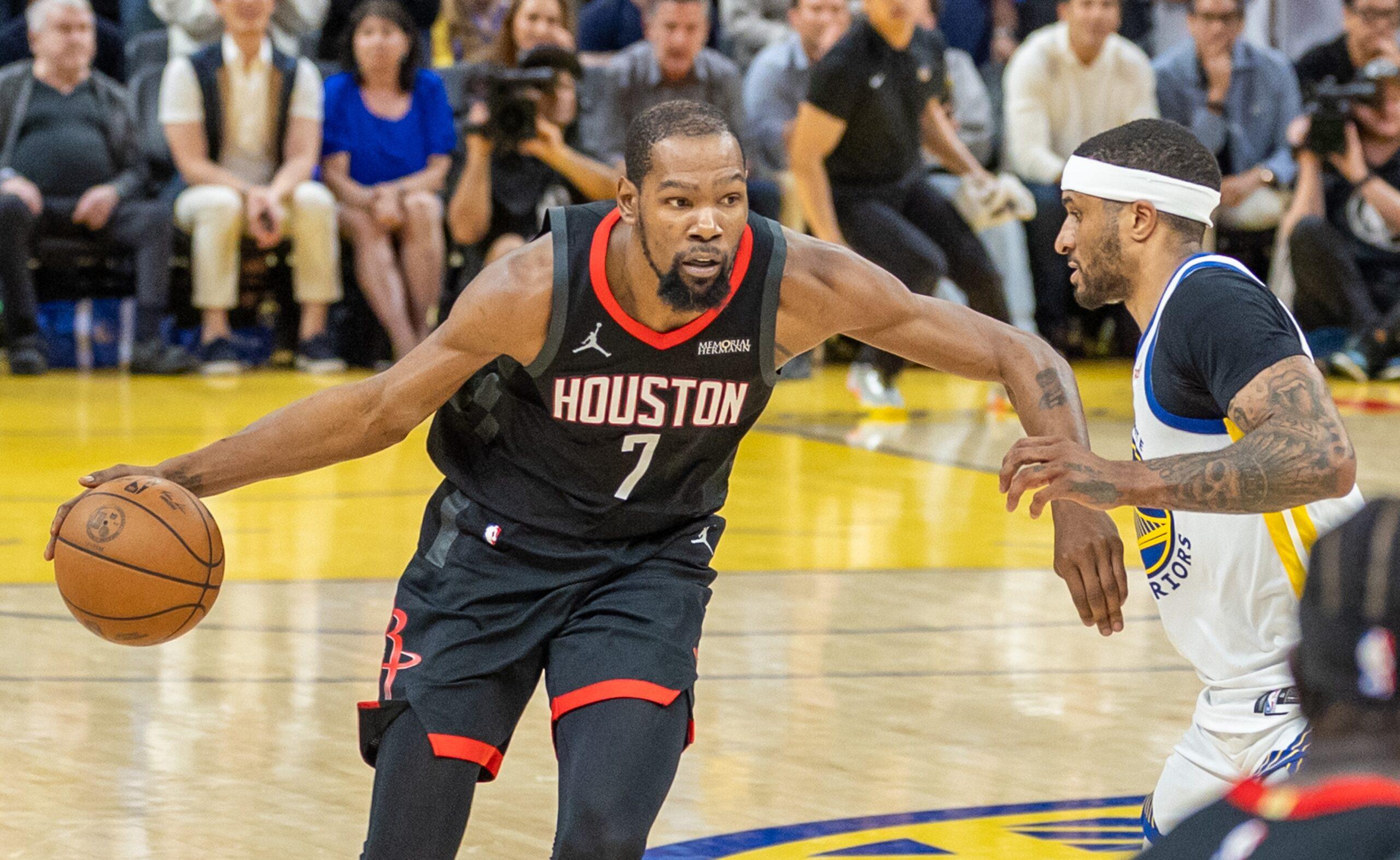
Let’s start with the old-timer. Durant’s first season in Houston has been a display of overlooked, metronomic excellence. He’s 37 years old, is flirting with another 50/40/90 season, is averaging 26 points per game, and has crossed the 40-minute mark a dozen times. Come on, man. Let’s nudge those (deeply humiliating) burner boy allegations to the side and appreciate a living basketball legend who passed Michael Jeffrey Jordan in career points this season. Durant didn’t know that Fred VanVleet would miss the season with a torn ACL when he joined the Rockets. Functioning in lineups with no point guard has piled an excessive load and a ton of attention onto his plate. (Durant leads the NBA in gravity and is third in defensive pressure.) I wonder what KD thinks about when he watches Maxey and the Philadelphia 76ers.
Even though he’s averaging 38 freaking minutes per game—a number that would translate to approximately 149.5 minutes 20 years ago—Maxey swerves like a cherry-red Lamborghini. There’s really nothing like watching him hit the gas to leave a defender in the dust. Maxey generates a whopping 44.7 points per game—a mark topped only by Jokic, Doncic, SGA, and Cade Cunningham—and has scored more fast-break points than anyone else this season. Decent.
Murray’s first All-Star season will be remembered as being somewhere between predictable and shocking. If you’ve received it with a shoulder shrug, fair enough. We’re talking about someone who was already cemented as one of the most consequential postseason performers of his generation. When he made the All-Star team, it was an unnecessary formality that shouldn’t change how he’s perceived. But if you didn’t think he had this in him, that was also fair. Murray is averaging a career-high 25.4 points per game (four points above his previous best) to go with a career-best true shooting percentage and free throw rate. Every single time he puts the ball up, you think it’s going in.
Back in 2020, I wrote a piece comparing Murray to Steph Curry. Among all players who’ve attempted at least 200 pull-up 3s this year, Murray’s 42.3 3-point percentage ranks first, slightly ahead of Curry. Playing with arguably the greatest passer who ever lived certainly helps, and his defense is generally an eyesore, but let’s put Murray’s year into context. He’s irrefutably been better than Devin Booker (this is a compliment to both players). His creation-adjusted turnover rate is one of the lowest in the league, and his true shooting percentage in crunch time is an uncanny 68.6 (slightly above SGA and Anthony Edwards).
Duren was my pick for Most Improved Player, so you can head over here to read up on why I think his season has been so phenomenal. The gist: He’s a 20-10 bulwark who’s added offensive responsibility without letting up in true shooting percentage (in fact, he leads the league!). The Pistons would not be anywhere near the no. 1 seed without him.
Third Team
Derrick White
James Harden
Chet Holmgren
Jalen Johnson
Jalen Brunson
Even though the 65-game rule eliminated several locks from contention, it was still basically impossible to whittle the remaining nominees down to five names. The NBA is full of talent!
Let’s start with the most surprising name. White’s shooting numbers are yucky. He misses two out of every three 3s he takes—whether they’re off the dribble or catch-and-shoot—and his true shooting percentage is nearly 5 percentage points below league average. But a well-rounded basketball player contains so many other ingredients. White is at least “very good” at pretty much all of them. If you really value winning, he’s a no-brainer for this list. White ranks in the top 10 in just about every impact metric, and the Boston Celtics are a staggering plus-565 when he plays and just plus-30 when he sits.
I put him second on my Defensive Player of the Year ballot for reasons you can read about here. But he’s also a shrewd decision-maker who doesn’t turn it over, he can make every pass, he knows exactly when to cut and screen, and—poor shooting numbers aside—he is never left open by the defense. That doesn’t mean a championship contender could or should be built around him, but any organization that aspires to compete at the highest level should have White at or near the top of their shopping list.
Meanwhile, Harden has, once again, been a one-man offensive engine, generating the eighth-most points per game and seamlessly turning the Cleveland Cavaliers into a pseudo-contender. (Since the trade, Harden is averaging the most points per shot he has since his time in OKC.) His pick-and-roll playmaking is still, somehow, even though he’s 36 years old, second to none; he’s still a steel blade in isolation; he still lives at the charity stripe (only Luka, SGA, and Deni Avdija have made more free throws this season); and he still finds himself steering a premier offense.
Next up, we have Holmgren. This is an A+++ rim protector on the most stout defense the NBA has seen in its play-by-play era. On offense, he’s a pick-and-pop threat whose expanding in-between game has turned him into a cheat code. Holmgren is shooting 77 percent at the rim (elite), 47 percent from the midrange (dirty), and 36 percent from behind the arc (we’ll take it!).

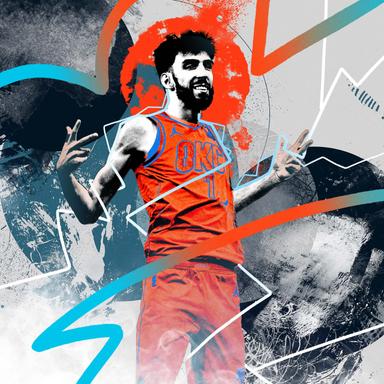
The five players ahead of him in estimated plus-minus are basically an MVP ballot: Jokic, SGA, Leonard, Doncic, and Wembanyama. The Thunder’s offense is nothing to write home about when Holmgren is on the floor without Shai, but in those moments they still boast a double-digit net rating thanks, largely, to his defensive impact. Opponents barely ever get to the rim against those groups, and when they do, they’re greeted with a chance of scoring that's just a little better than a coin flip.
His ability to thrive at either frontcourt position allows OKC to dominate opponents with myriad lineup combinations, either beefing up beside Isaiah Hartenstein or “sizing down” for a sleeker, more versatile attack.
Speaking of a more versatile attack, few forwards touch more areas of the game than Johnson, a cerebral dynamo who nearly averaged a triple-double this season. He’s third in total assists, fifth in total rebounds, and 17th in total points. There are holes in Johnson’s game, but the breadth is undeniable. He can be involved in a pick-and-roll as either the ball handler or the roll man, can catch and throw lobs, can wreak havoc in transition, and can threaten defenses from all over the floor. (The list of players who’re shooting at least 70 percent at the rim, 45 percent on long 2s, and 35 percent on non-corner 3s is seven names long: Johnson, Holmgren, and five first-ballot Hall of Famers.)
My last cut from the second team was Brunson, who has the ball in his hands more than any other starter, thrives in crunch time, and barely ever turns it over. In the end, his league-average true shooting percentage and abysmal defense slid him back to the (still very respectable!) third team.
Honorable mentions: Scottie Barnes, Karl-Anthony Towns, Alperen Sengun, LaMelo Ball, and Stephon Castle



More on the NBA Awards
All-Defensive
First Team
Victor Wembanyama
Derrick White
Scottie Barnes
Ausar Thompson
Chet Holmgren
The first three players here were also on my Defensive Player of the Year ballot. The other two are ferocious enough in their own way to be seriously considered for the award (if Wemby didn’t play enough games to qualify).
I’m not sure how many perimeter defenders I’ve ever seen who combine timing, quickness, and muscle like Ausar. (If anyone is going to be teleporting to a Waffle House, it’s him.) Thompson ranks second in most catchall defensive metrics (behind Wemby) and spends pretty much all his minutes wrestling with the other team’s best player. Do you need a stop? Ausar forces the most turnovers per 100 possessions. Would you simply like to ruin the opponent’s rhythm? Ausar averages the most deflections per game. Aside from Wembanyama, I don’t think there was anyone I had more fun watching on the defensive end.
Then we have Holmgren, whom I’ve already lauded above and who’s one of the two or three best rim protectors in the NBA. He’s mobile enough to step out on the perimeter, and he allows Oklahoma City’s stable of infectious on-ball defenders to be as aggressive as they want. He makes plays on the ball no one this side of Wemby can, covering an absurd amount of ground to erase would-be buckets from angles that don’t even compute:
This season, the NBA’s best defense has been the Thunder’s when Chet is on the court. By itself, that sentence should help explain why he’s here.
Second Team
Rudy Gobert
Bam Adebayo
Kris Dunn
Cason Wallace
Stephon Castle
Stop yelling at me. I know it’s a crime to put Gobert on the second team. He would receive a bunch of DPOY votes if Wemby—the only player with a more positive impact on his team’s defense—did not exist. Gobert ranks first in defensive DPM, fourth in ESPN’s net points, and seventh in EPM. His function is relatively easy to understand, which might be why, generally speaking, the four-time Defensive Player of the Year is now taken for granted. But if you regularly watch the Timberwolves, it’s impossible not to appreciate how much of a deterrent he still is. As someone who’s spent nearly a decade turning driving layups into pull-up jumpers outside the paint, Gobert has blocked 12 long 2s this season. That’s twice as many as anybody else!
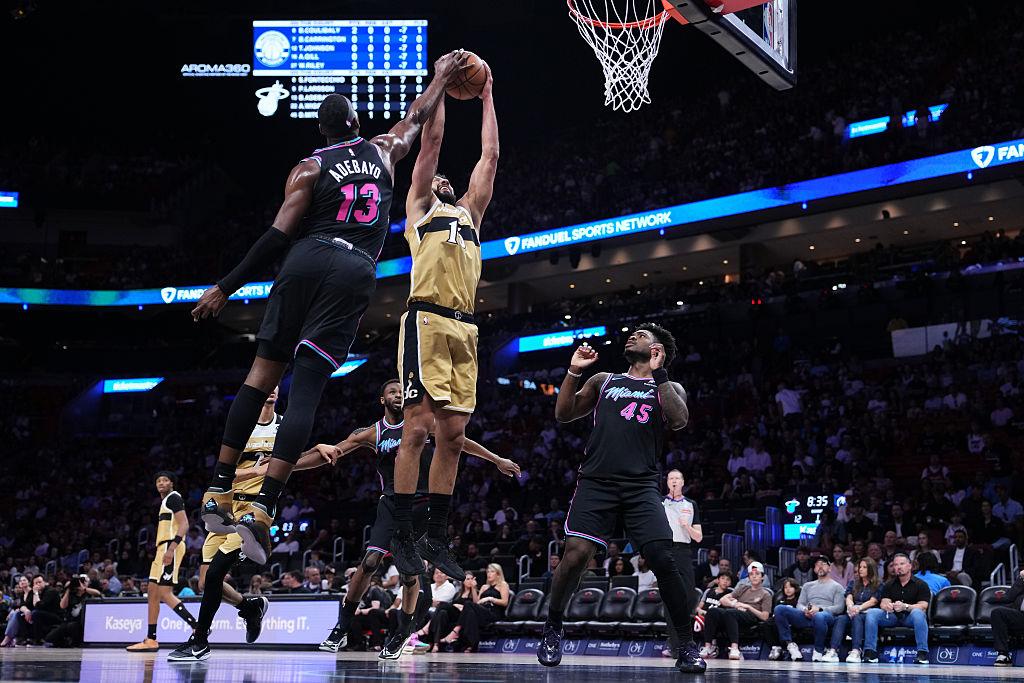
Moving on to another generation-defining anchor, I’d like to make the following statement: Adebayo is the best defender in NBA history to never even finish as a runner-up for Defensive Player of the Year. It’s honestly a shame. Advanced numbers aren’t as high on him this season, but Bam still lords over a Heat defense that’s awesome when he’s in the game and not very good when he sits. Whether he’s switching onto a point guard, fighting a big to deny an entry pass, or solidifying the base of Miami’s 2-3 zone, you’d be hard-pressed to find anyone who competes harder—without ever fouling!–while displaying this type of anticipation:
Comparable forces are in this make-believe team’s backcourt. If Dunn were 6 inches shorter, he’d be a shutdown cornerback. But the impact he has on any given possession extends beyond his ability to invade someone’s personal space. According to Sportradar, Dunn leads the league in stunts (i.e., helping off his own man to take a step or two at the ball). There might not be anyone better at timing their swipe on a drive. It’s somewhere between a dicey gamble and the exact right play:
He’s a lock for the NBA’s All-Annoying Team, a relentless pest who’s so irritating that no opponent wants to shake his hand after the game. Joining Dunn is Wallace: the last person you want picking you up full court. When you account for who else is on the floor, nobody else in the NBA raises their team’s defensive turnover rate more than Wallace. His hands flick out like a frog’s tongue. Off the ball he’s a slightly smaller Alex Caruso, prancing in and out of gaps, zoned up on the weak side, daring ball handlers to whip the ball over to his man.
The last spot, for me, came down to Castle vs. Amen Thompson. You can’t go wrong with either one. Let’s start here: When Wembanyama is not on the floor but Castle is, San Antonio’s defensive rating is still 2.3 points per 100 possessions better than league average. Why? Castle is sticky glue on the other team’s top scoring option for pretty much every minute he’s on the floor. According to Bball-Index, he ranks in the 99th percentile in matchup difficulty, and just going off my own memory, I can’t recall seeing anyone ever score on him.
He makes some of the hardest stuff a defender needs to do look easy. He’s quick and strong enough to trail ball handlers over a screen but then recover back in front before they can put him in jail:
He can chase shooters off the ball and run them off the 3-point line without fouling. The word mismatch doesn’t really exist when his name is in the same sentence. Mitch Johnson will throw him on someone like Karl-Anthony Towns or Alperen Sengun and then beg offenses to sabotage themselves with a post-up. As if having to face Wembanyama wasn’t unfair enough, pairing him with Castle is cruel and unusual punishment for 29 other teams.
Honorable mentions (because celebrating only 10 guys feels wrong): Amen Thompson, OG Anunoby, Jaden McDaniels, Dyson Daniels, and Evan Mobley.
All-Rookie
First Team
Kon Knueppel
Cooper Flagg
VJ Edgecombe
Dylan Harper
Derik Queen
The All-Rookie team doesn’t usually need an explanation, but in honor of this truly incredible class, here’s a sentence or two about each player selected:
- Knueppel was the best off-ball player in the NBA this season. Not the best off-ball rookie … the best off-ball player.
- Flagg took stratospheric preseason expectations and somehow managed to exceed them. I said this last month on The Bill Simmons Podcast, but Cooper would come in second on my own personal trade value power rankings, behind only Wembanyama. I would not exchange him for Nikola Jokic, Shai Gilgeous-Alexander, Luka Doncic, or Collin Gillespie.
- Edgecombe’s combination of athleticism and shotmaking is, almost literally, the kind of thing that can be found only in a dream.
- Harper is so good that if he had landed on the Jazz, Wizards, or Nets, they would not have tanked this season.
- Zion Williamson is still just 25 years old and just quietly had a fantastic season, but, since he doesn’t fit with Queen, the Pelicans probably need to trade him.
Second Team
Ryan Kalkbrenner
Collin Murray-Boyles
Jeremiah Fears
Cedric Coward
Ace Bailey
- No need to double-check this, but I think that Kalkbrenner missed only five shots this season.
- If you told me that CMB will make two All-Defensive teams in his career, I would take the over without hesitation.
- I’m not sure exactly what Fears’s upside is, but his ability to live at the rim was encouraging.
- There were stretches when Coward showed enough poise to make you forget that Ja Morant still exists.
- Bailey’s willingness to accept a relatively limited role on an egregious tanker was low-key the most admirable and impressive thing about him. Whenever his true breakout arrives, buckle up.