
Is it too early to fill out an NBA awards ballot? Probably. Do I reserve the right to tinker with anything written in this piece two weeks from now, when I actually fill out my official ballot? Absolutely.
This year, which features a series of particularly deep and fascinating debates across various areas, we decided to split our awards column up into three parts. First up, I’ll hit every major individual award outside of MVP, which I’ll save (and go long on) for our second installment next week. After that, I’ll break down my three All-NBA teams, along with the All-Defensive and All-Rookie teams. There’s almost too much to chew on. What a season! So without further ado, let’s dive in.
Defensive Player of the Year
- Victor Wembanyama, San Antonio Spurs
- Derrick White, Boston Celtics
- Scottie Barnes, Toronto Raptors
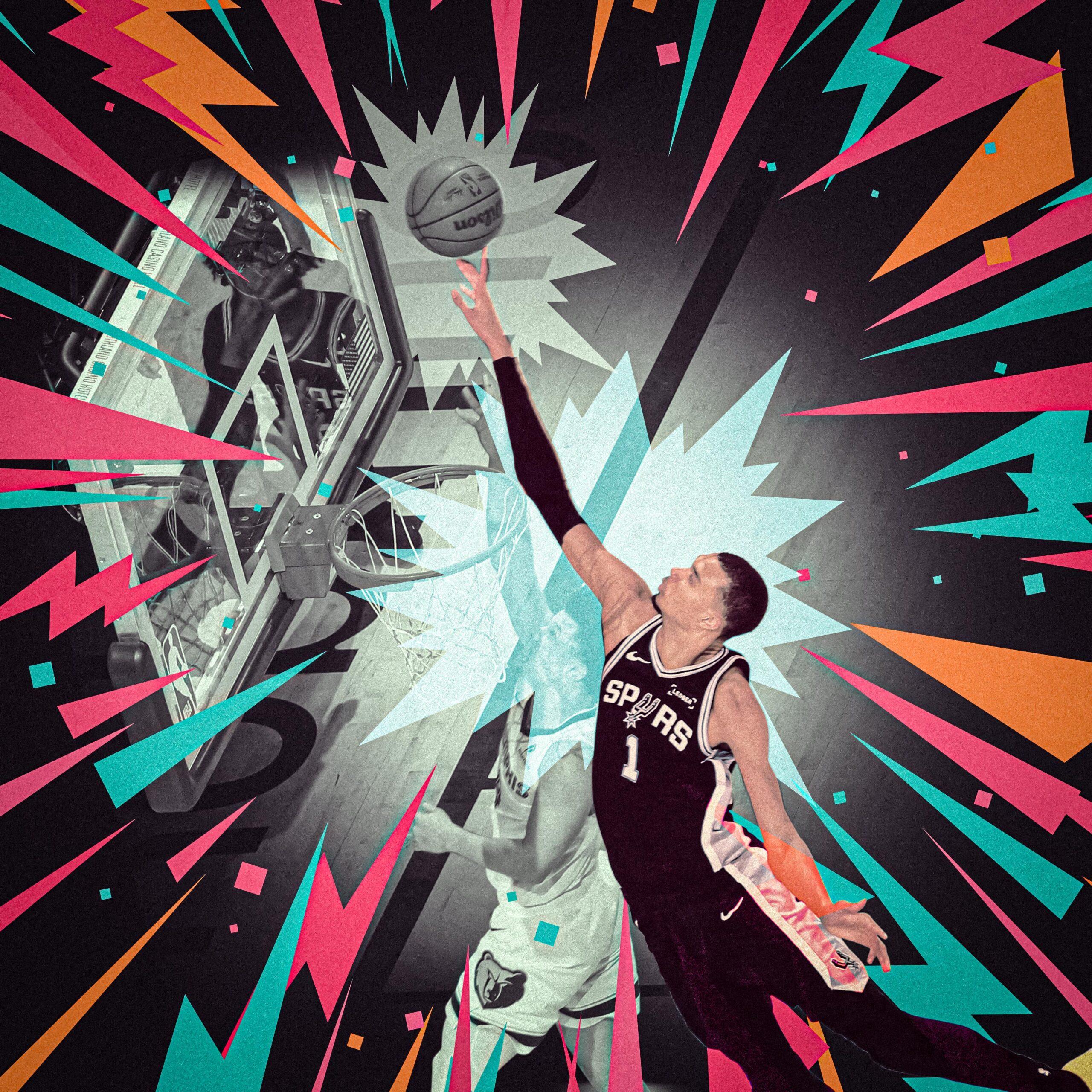
I mean, what can you say? Wemby contorts every single possession to his will in a way that has no precedent. He covers more ground with more poise, coordination, and timing than the basketball gods should’ve ever allowed. He isn’t just great; he’s transformational—the type of defender who requires fans and media members to use new language when describing what he’s able to do.
In the same way we collectively embraced the term “gravity” as a way to understand the totality of Steph Curry’s offensive impact, Wembanyama’s inverse effect on defense needs to be acknowledged more explicitly. Let’s call it "antigravity,” a way to track exactly how aware ball handlers are of Wemby’s location at all times and how important it is for them to stay as far away from him as they possibly can. The numbers are off the charts yet still seem superficial.
NBC play-by-play announcer Michael Grady calls them “never minds”—hapless drives toward the paint that players voluntarily cut short because of Wemby’s presence. It’s a perfect phrase; I find myself writing it in my notebook about 10 times whenever I watch a Spurs game. Here’s a recent example against the Heat:
Wembanyama rebuffs Jaime Jaquez Jr. twice before he tracks Norm Powell’s drive and blocks his reverse layup on the other side of the rim. It’s not an exaggeration to say that no one else in the history of basketball could have pulled this off.
That possession alone pretty much settles any debate over Defensive Player of the Year. This award is so obvious that even the House of Representatives would pass it unanimously. With apologies to every other credible candidate right now, what Wembanyama is doing—in a league that’s constantly tweaking how it's officiated to make life easier for offensive players—has never been seen before.
Wemby ranks first in every defensive catchall metric, and when he’s on the court, San Antonio’s defense holds opponents to an efficiency rating that’s about 10 points per 100 possessions below league average. (For the sake of comparison, the Oklahoma City Thunder’s defensive rating is currently 9.09 points per 100 below league average, which is the best mark of the play-by-play era.) But Wemby’s absurd numbers pale in comparison with the visceral impact he has when you watch him insert the fear of God into other professional basketball players:
The most effective offenses are quickly able to make smart reads at the rim. On drives into the paint, can they get off a high-percentage shot, or should they spray it out to the 3-point line? Wemby single-handedly cuts those options in half. Challenging him at the basket is downright irresponsible and essentially a live-ball turnover—he’ll tap floaters off the glass, to himself, and then spark San Antonio’s offense the other way. And when he volleyball spikes your shot out of bounds, it’s probably because he’s extremely bored, wants to stop the action and catch his breath, or is intent on sending an unsubtle reminder of exactly what you’re up against:
It seems crazy to view all those blocks as the tip of an iceberg—he has about 200 more than any other player since he entered the league in 2024—but they barely count for a whisker of Wembanyama’s impact. Thanks to his existence, game plans change, sets implode as they unfurl, and shots disappear before they materialize.
The Spurs do a terrific job of keeping him near the paint, too; whenever possible, they’ll pre-switch if his man goes up to the perimeter. And when he’s defending pick-and-rolls in a drop, no one is better at keeping the screener and ball handler in front, allowing teammates to stay home on 3-point shooters while he snuffs out the action.
The gap between Wemby and the field on defense is more or less what Curry enjoyed as a 3-point shooter 10 years ago. Every strategic decision is manipulated by his authority. Enjoy trying to score on that for the next decade!
As for the mere mortals in this race, White is the smartest off-ball defender in the NBA. He’s always in the correct spot, single-handedly discouraging plan A’s by simultaneously speeding up and slowing down offenses that really have to think through whatever action they’re trying to run. White is instinctive, prepared, quick as hell, and always willing to sacrifice his body.
The only player who has a more positive impact on his team’s defense is Wembanyama. Boston allows 10.7 fewer points per 100 possessions when he’s on the court. (He’s also eighth in defensive estimated plus-minus and second among all players who average at least 30 minutes per game.)
Coming into this season, one of the biggest reasons I was so down on the Celtics was their unproven frontcourt. Without Kristaps Porzingis, Luke Kornet, Al Horford, and Jayson Tatum (not to mention Jrue Holiday), would a normally stout defense melt into a layup line? It seemed very possible! Instead, Boston’s defense miraculously allows the fewest paint points per game. White is the biggest reason.
Opponents shoot just 54.9 percent at the rim when White is the closest defender. That’s fourth lowest in the league, per Sportradar (Wemby is fifth). Even more important is how reliably White keeps those shots from ever materializing in the first place. White ranks third in “rim deterrence,” a stat provided by Bball-Index that measures the rate at which opposing offenses shoot at the basket when a player is and is not in the game. I covered some examples a couple of months ago in this piece.
In addition to protecting the paint better than 99 percent of the league, Boston’s 6-foot-4 combo guard also ranks fourth in “fast” closeouts, according to Sportradar. Remember when Tatum blocked Lu Dort at the rim last week? Keep your eyes on White throughout the possession. He’s everywhere, doing everything:
That’s exactly who White is. He isn’t a lockdown defender, but he impacts the game so much more than anyone who spends most of their time on the ball.
As for the final spot here, I could’ve gone with Chet Holmgren or Rudy Gobert. Both deserve consideration and will land on many, many ballots. But I went with Barnes, who might be the closest thing to a flawless all-around defender we have in the league.
Toronto’s franchise player does it all. There’s rim protection, rebounding, random double-teams, gap help, lightning-fast closeouts, screen navigation, banging on the block, a crap ton of steals and deflections, full-court pressure, and, most importantly, a night-in, night-out dedication to accepting the toughest matchup. It’s a wide range of skill sets, sizes, and tendencies to be responsible for, ranging from Jalen Brunson to Giannis Antetokounmpo to Michael Porter Jr. (just to name a few). Who else is doing that effectively? Making the opponent’s primary option work way harder than they normally do, with minimal help?
Barnes ranks in the 86th percentile in matchup difficulty and the 92nd percentile in defensive position versatility. Both of those sound about right. He’s quick, physical, long, versatile, and cerebral, with pickup points that are comically high on the floor. Wemby is the only player with more stocks, but statistical analysis gets you only so far. Just watch any Raptors game, and you’ll see him do something special—like denying Ant on a handoff and blowing Minnesota’s whole play up.
If you were to engineer an elite all-around defender in a lab, someone who could guard everyone, anywhere on the floor, it would look exactly like Scottie Barnes.
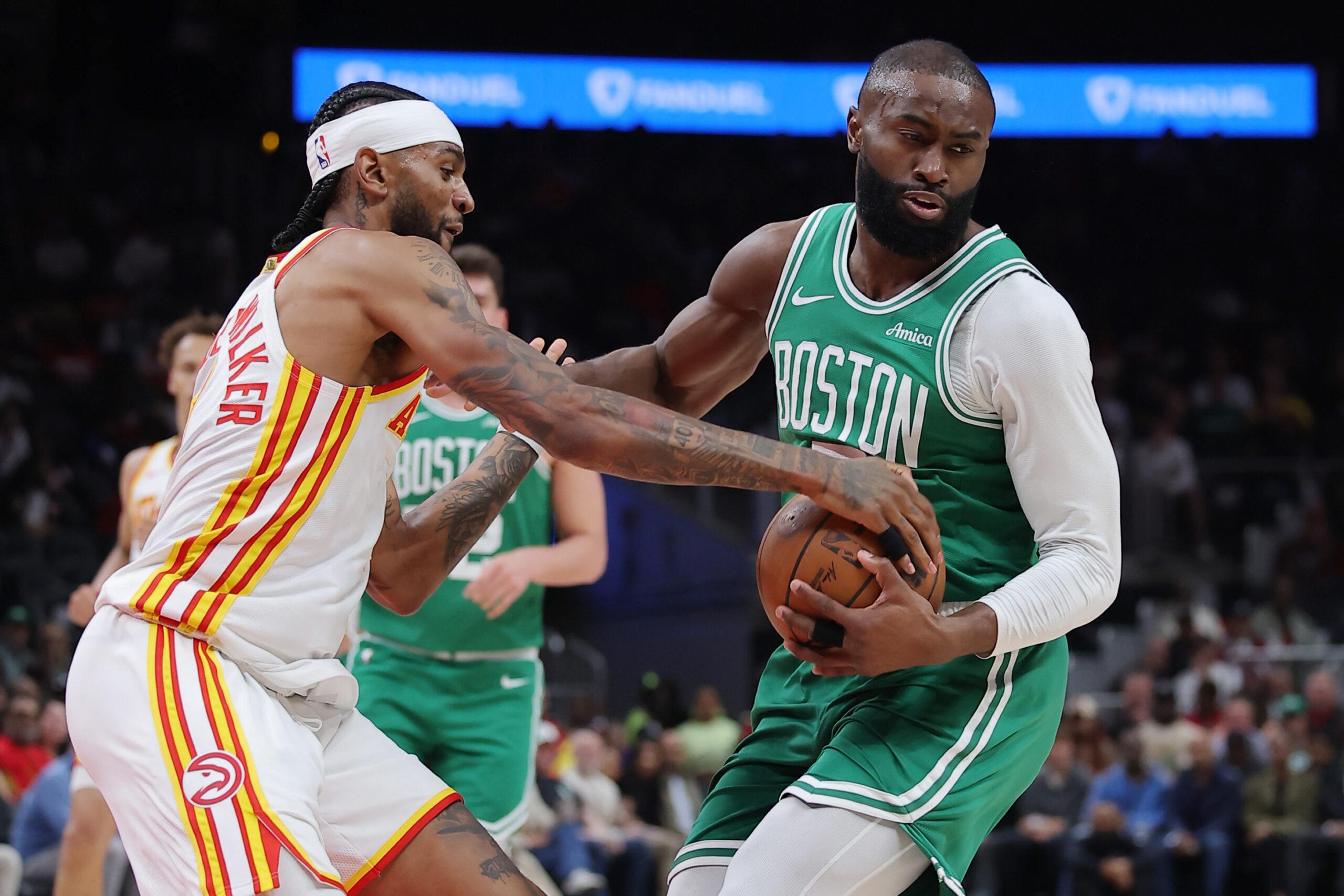
Nickeil Alexander-Walker steals the ball from Jaylen Brown
Most Improved Player
- Jalen Duren, Detroit Pistons
- Nickeil Alexander-Walker, Atlanta Hawks
- Ryan Rollins, Milwaukee Bucks
Nailed it! Duren’s breakout fourth season has completely changed Detroit’s trajectory. At just 22 years old, he’s become so much more reliable in almost every facet of the game: He’s made fewer turnovers, dumb fouls, and defensive mistakes while assuming more responsibility on offense, handling the ball on the perimeter, setting a million screens, and creating efficient looks for himself.
Having made his first All-Star team as the second-leading scorer on the Eastern Conference’s runaway no. 1 seed, Duren is basically averaging 20 points and 10 rebounds in 28 minutes per game. Last season, he ranked 153rd in estimated plus-minus. This season, he’s 10th. The pick-and-roll chemistry with Cade Cunningham is still sublime—Cunningham has assisted 106 of Duren’s baskets at the rim, which is over 35 more than any other teammate combination—but, importantly, his true shooting percentage when Cade is on the bench doesn’t dip even though the percentage of his buckets that are assisted drops by 21.4 percent!
A bunch of those are putbacks, but Duren has been more assertive looking for his shot within the flow of Detroit’s offense. He’s more nimble than a cinderblock should be, with evolving post moves and a terrifying face-up game that have helped him nearly double his free throw attempts. When Duren seals his man on a duck-in, the play is essentially over:
Within the spirit of this award (according to my own definition, which excludes everyone in the first three seasons of their career), Duren’s meaningful growth deserves to be recognized for all the ways it’s impacted winning on a team that’s won 70 percent of its games when he takes the floor.
As for my runner-up pick, let me begin with a quick aside: Tim Connelly is a shrewd basketball architect who’s helped build two different title contenders. But man, losing Alexander-Walker really hurts. The steps that led to his exit from Minnesota are even worse.
First, the Wolves surrendered a future first-round pick to take Rob Dillingham eighth in the 2024 draft. Then, this past summer, facing a tax crunch, the Wolves decided to sign Naz Reid—and not Alexander-Walker—to a contract extension, partially due to the assumption that Dillingham would need more playing time in a crowded backcourt. After that plan crashed and burned, Minnesota had to fill the hole by giving the rest of its second-round picks to the Chicago Bulls for Ayo Dosunmu. It’s a series of loosely connected decisions that have been somewhat of a disaster—particularly for an organization that tried to trade for Giannis Antetokounmpo at the deadline.
Hindsight is 20/20, but Minnesota could have just, like, not done any of that, kept NAW, and been in a significantly better spot. This dude is averaging 11 more points per game than he did last season, with the highest true shooting percentage of his career. The Hawks, Alexander-Walker’s fourth team in seven seasons, brought him in thinking that he could effectively complement Trae Young off the bench. After about a week, he was starting. On a team that’s lost just three games since the All-Star break, NAW’s splits are 51/45/95. For the season, only Tyrese Maxey and LeBron James have scored more fast-break points.
All in all, the Hawks got more than they bargained for: someone who can consistently get to the rim off a ball screen, with a significantly tighter handle and more sophisticated footwork than he was able to show in Minnesota. NAW has a filthy hesitation dribble, an explosive first step, and a perma-green light to put it all on display:
He gets to his spots and can absorb contact in the paint without losing his touch or balance. The creativity has been eye-opening, the left hand has been legendary, and the transition attack is in full bloom:
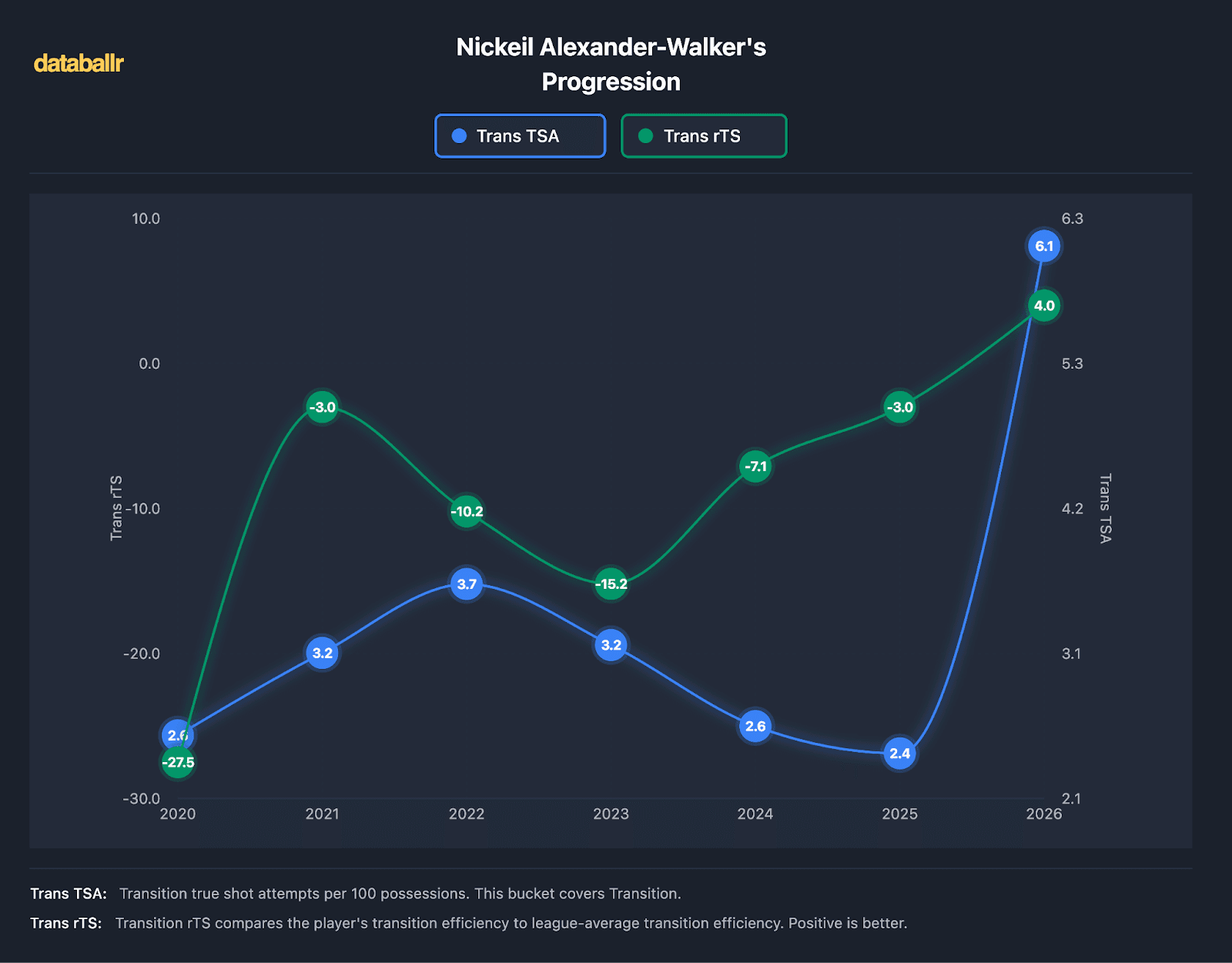
The fact that he’s done all of it without any letup on the defensive end—he’s still willing and able to pick his man up full court—makes Alexander-Walker’s contract one of the sweeter team-friendly deals in the league. It’s far from guaranteed that we would have seen this type of development from him with the Timberwolves, but that doesn’t make watching him on the Hawks any less painful for Minnesota fans.
Finally, a candle in this pitch-black winter of a season for the Milwaukee Bucks. In his fourth season, Rollins has seen his points and assists per game nearly triple. His true usage is up almost 10 percentage points from a year ago, too, which is the ninth-highest mark in the league, according to Bball-Index.
Aside from Giannis, Rollins has the highest on-off point differential on the team, and he hasn’t seen his 3-point percentage dip even though he’s launching four more attempts per game. I could’ve gone a few different directions here, but it felt right to throw the Bucks a bone. Assuming they strip their roster for parts after Giannis gets traded, it’ll be interesting to see whether Rollins is worth a first-round pick.
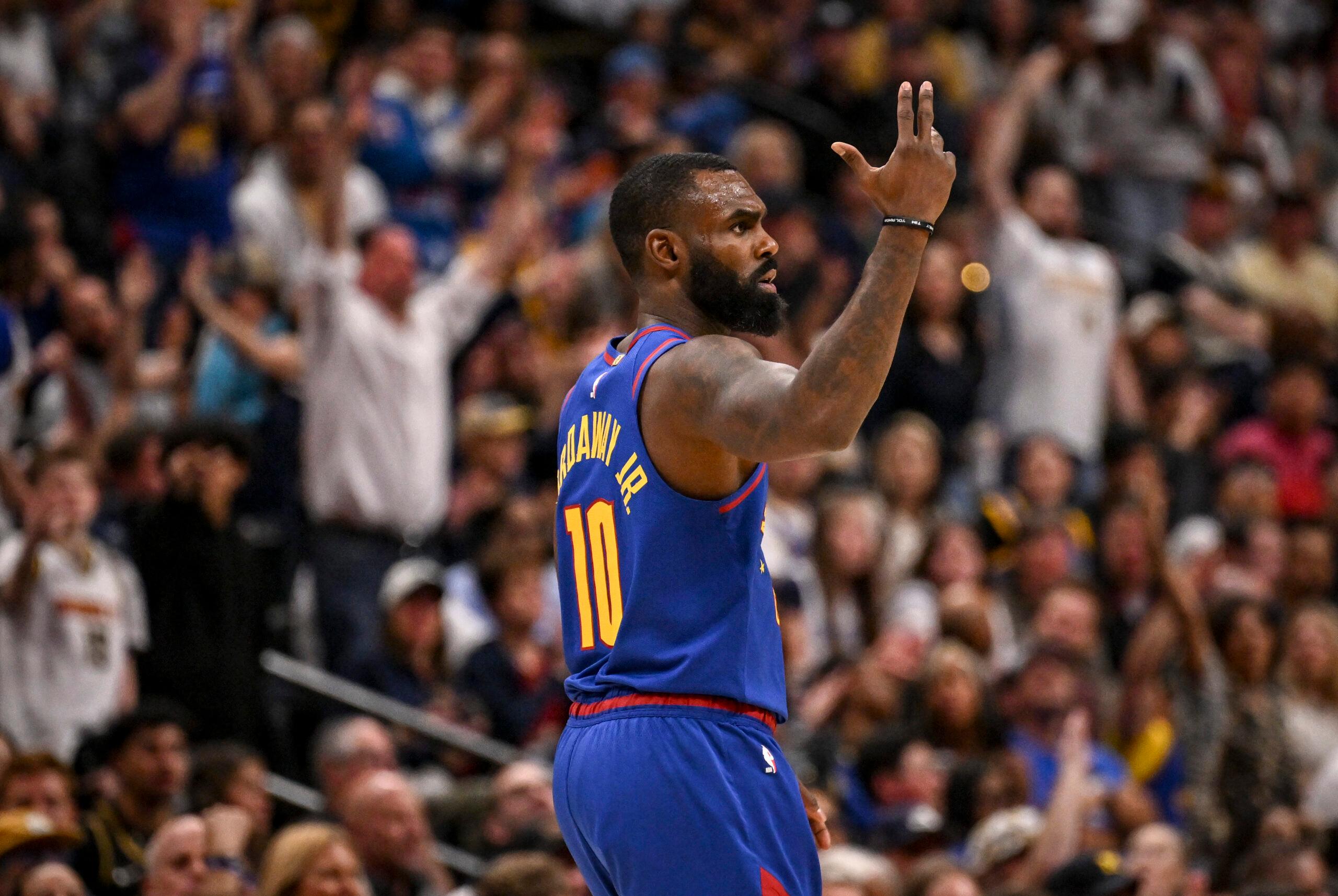
Tim Hardaway Jr. gets the crowd going after making a 3 against the Golden State Warriors
Sixth Man of the Year
- Jaime Jaquez Jr., Heat
- Keldon Johnson, Spurs
- Tim Hardaway Jr., Nuggets
He isn’t the face of the Miami Heat franchise, but, to me, Jaquez has best personified its identity this season: It’s a brake pad–allergic team that’s perpetually rumbling downhill. Only five players have recorded more drives than Jaquez this season, and he’s scored more points in the paint than Luka Doncic, Kawhi Leonard, and Cade Cunningham. Every lane on the Jaime Highway is a passing lane.
Jaquez has a long way to go before he’s as good as Jimmy Butler, but there’s the outline of a similar offensive player. His footwork from the mid-post is diabolical, aided by a bevy of ball fakes that come fast. Jaquez plays off two feet and doesn’t settle. Few are more confident one-on-one, forcing their man to lean one way and then pouncing on the advantage.
Oh, and not to bury the lede, but he leads all bench players in scoring and total assists. He’s also in the 96th percentile among all forwards in assist-to-usage ratio. Jaime not only sucks backpedaling defenses into the paint but also picks them apart when help comes—only Shai Gilgeous-Alexander and Deni Avdija have recorded more passes out of their drives this season. The crop in this category is thin, but Jaquez’s bounce-back season is one the Heat should be thrilled with.
Elsewhere, I have to show some love to Big Body. It must be soul crushing to go up against a team that has Victor Wembanyama on it and then, whenever he subs out, suddenly have to deal with a man made of rock who takes pleasure from crashing into people. The Spurs can beat you in so many ways. The fact that Johnson has clicked this well as the relative elder statesman leftover from a previous rebuild may be what ultimately leads them to a championship.
It’s cool that Johnson is hitting nearly 40 percent of his 3s this season. But you know what’s even cooler? Converting over 60 percent of his 2s. Johnson has been excellent moving without the ball, sliding into open pockets, and bulldozing smaller (and bigger) defenders on his treks through the paint.
Upon entering a game, the best sixth men give their team juice. That’s Johnson. The volume of his game stays at 11. He gets up into ball handlers and puts pressure on interior defenders. Johnson’s game isn’t fancy or excessive. He enjoys contact and doesn’t deliberate when there’s space for him to create some.
I love watching him bark at teammates, too. This is someone who’s been through San Antonio’s rebuild and come out on the other side with an unwillingness to take anything for granted. That rules. He’s probably the seventh player I think of when my brain cycles through reasons the Spurs may win the championship. But that says way more about the talent on this roster than anything Johnson can’t do. He gives San Antonio the rowdiness it needs.
Finally, lost in all the criticism of Cam Johnson’s persistent discomfort in his first season with the Nuggets is the fact that Hardaway has had no such issue. It’s an inversion of my preseason expectations. From day one, THJ understood exactly what Denver wanted and needed him to do. There was no adjustment period.
Hardaway doesn’t hesitate. He doesn’t stop moving. As someone who now has the lowest career turnover rate in NBA history, he currently leads the league in turnover rate and has never really come close to being this efficient or threatening. Hardaway ranks fourth in scoring average among all players who’ve appeared in at least 50 games off the bench, drilling 41 percent of his 3s, shifting momentum, spacing the floor for Nikola Jokic and Jamal Murray, and going above and beyond his veteran’s minimum contract.
Behind their two All-Stars, whenever the Nuggets need a big shot, it seems like Hardaway is the one who hits it.
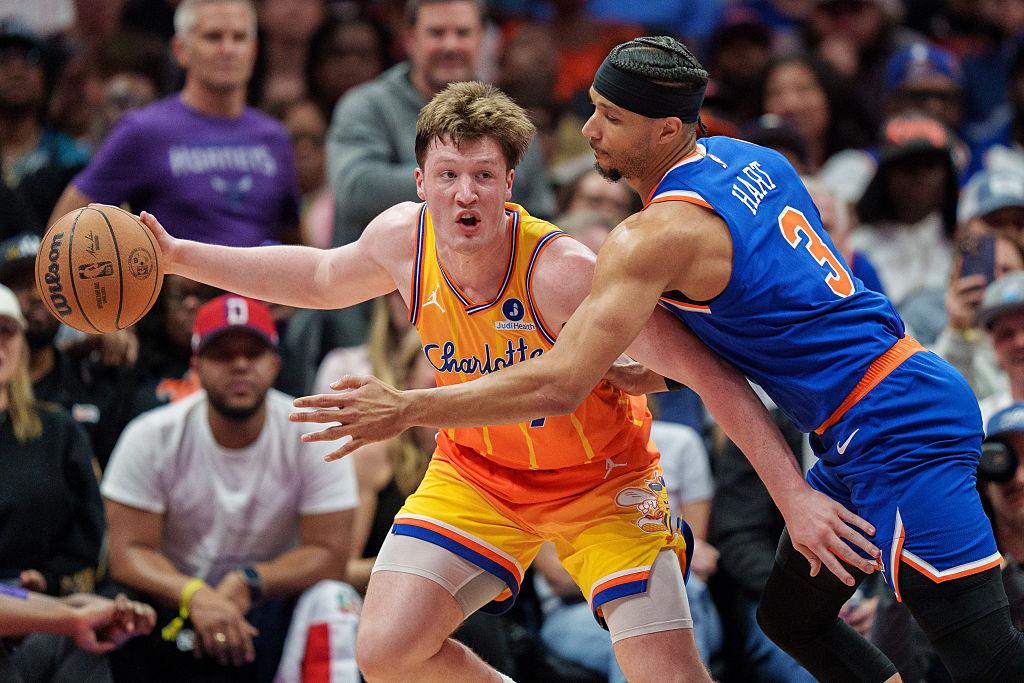
Josh Hart guards Kon Knueppel
Rookie of the Year
- Kon Knueppel, Charlotte Hornets
- Cooper Flagg, Dallas Mavericks
- VJ Edgecombe, Philadelphia 76ers
I posted something on social media over the weekend that, to some, was controversial. It shouldn’t be! Knueppel is not only one of the best rookies of all time but also one of this season’s best players, period—a primary reason his team is enjoying arguably its most successful year in franchise history.
Yes, Flagg has him beat (negligibly) in most counting stats. And if it were 2004, that would mean something. In 2026, we have a better understanding of what actually drives winning. There are no credible impact metrics that have another rookie ranked ahead of Knueppel. According to many of them, it’s not even worth your time to make the comparison. He ranks 15th in the entire NBA in estimated wins, which is a function of both all the minutes he’s played and the fact that he is already one of the best shooters in the world.
Knueppel sits in the 96th percentile at his position for points per shot attempt. His gravity opens up an offense that’s ranked first since Christmas. And here’s a pretty neat counting stat: The guy leads the league in made 3s. I know we’re choosing Rookie of the Year, but it almost feels unfair to hand it to someone who stepped into the league looking like it was his eighth season.
If you want to make the case for Flagg, please do so understanding that all the incredible “youngest player ever to do x” accolades mean nothing. Also, please realize that it does not take anything away from a prospect who, by all accounts, is on track to become an all-time great. Flagg is the absolute truth, a phenom with poise, strength, and an incomprehensible amount of confidence.
He was thrust into a crummy situation that has no real precedent. Tasked with effectively replacing a generational talent who should’ve never left in the first place, Flagg saw the man who drafted him fired a few months later. He was asked to start the season out of position and later watched his front office trade Anthony Davis for peanuts.
Still, there have been flashes of jaw-dropping brilliance. Flagg passes the eye test with flying colors, and his inefficiency is hardly worrisome. In almost any other year, he would be the clear Rookie of the Year. But then his college teammate decided to shatter all preconceived notions of what’s possible in a debut season.
Filling out my ballot, Edgecombe has a game that makes you wish you could time travel four years into the future. I can’t wait to see what he looks like at 25. For now, though, the third overall pick has looked like someone who should be required to play basketball with a bungee cord attached to his waistband. Add in a fairly reliable outside shot (and a promising in-between game!), and his game just does not seem fair.
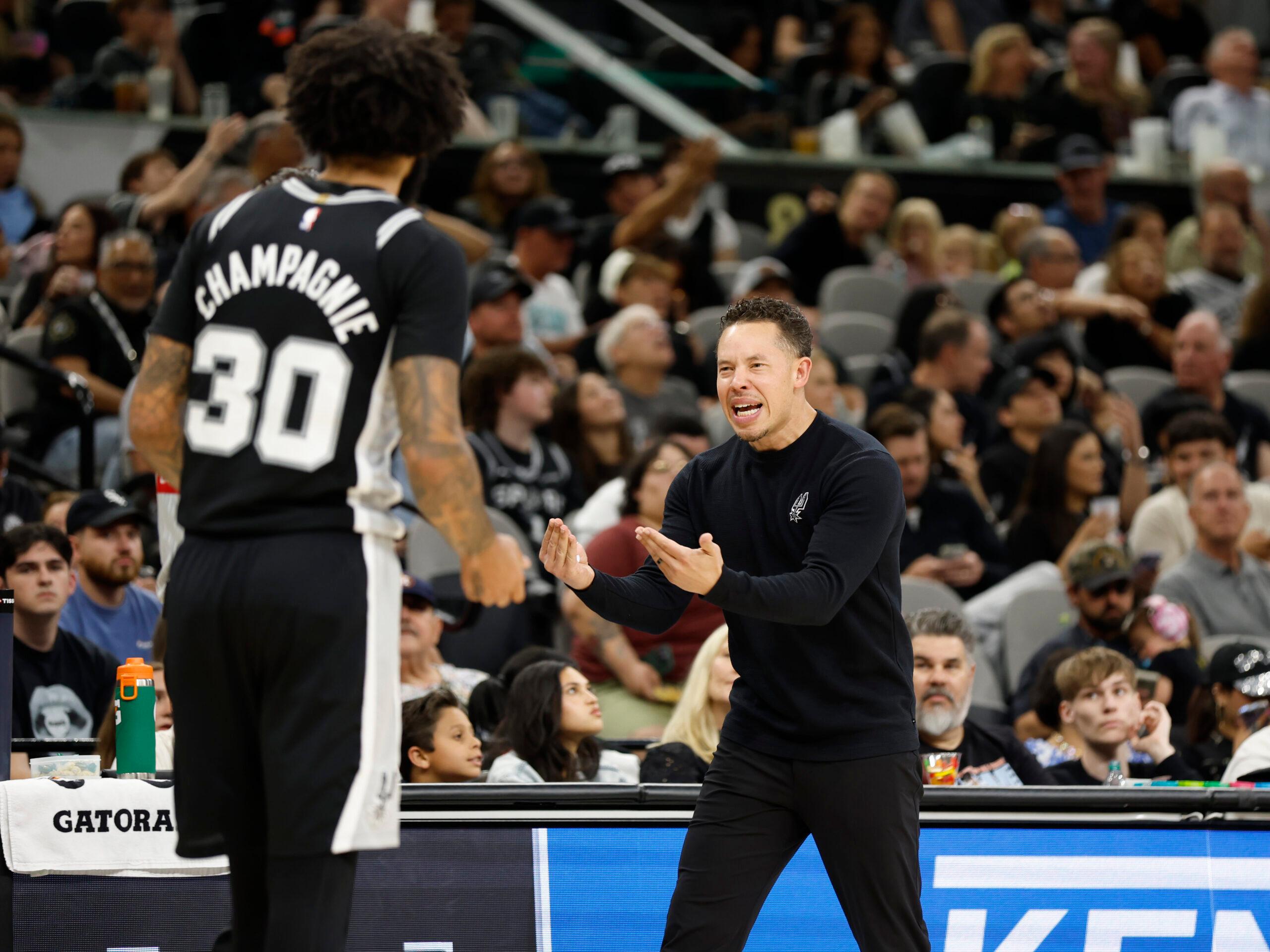
Mitch Johnson argues a call during game against Indiana Pacers
Coach of the Year
- Joe Mazzulla, Boston Celtics
- Mitch Johnson, San Antonio Spurs
- Charles Lee, Charlotte Hornets
The Celtics are far and away this season’s most pleasant surprise. I thought that they’d end up in the lottery. Instead, they have won 50 games (and counting) and might have the 2-seed locked up. Tactically, Mazzulla deserves plenty of credit. Without Jayson Tatum or anyone with meaningful NBA experience in their frontcourt, the Celtics fundamentally doubled down on their tried-and-true nonnegotiables: Launch every open 3 you get, take care of the ball, don’t foul, and get back in transition. (Teams that commit more live-ball turnovers than their opponents have won only 40.2 percent of their games this season. Boston was very good in the turnover department last year, but now ranks first.)
Mazzulla is a realist, though. He reoriented the team’s offensive identity around younger, more dynamic personnel. Compared with last season, the only team that’s made a bigger leap on the offensive glass has been Phoenix, and no team has improved as much as the Celtics when it comes to how often they drive the ball.
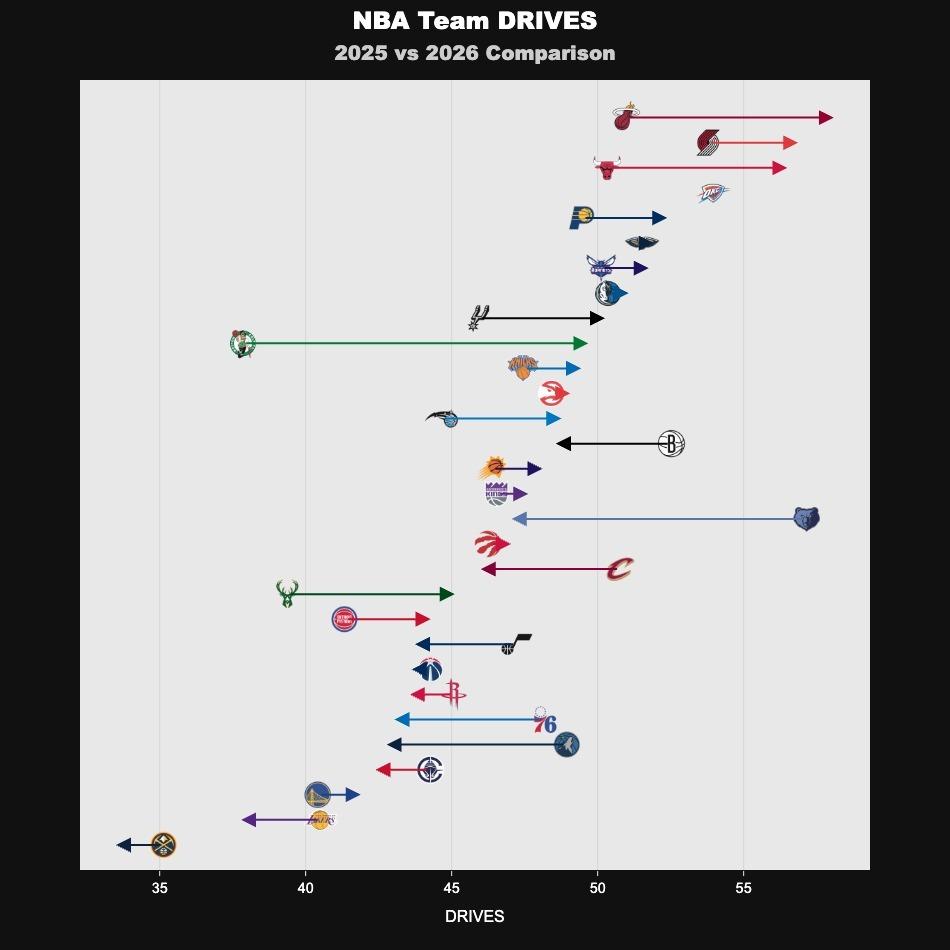
With a starting center who can’t space the floor, Boston generates space with a flurry of off-ball screens and movement. Neemias Queta will set multiple picks from a variety of angles on the same play. (Opposing big men can’t afford to stay in the paint if Queta is freeing Sam Hauser up for an open 3.)
Despite losing some of the NBA’s most reliable and imposing defenders, the Celtics have allowed the fewest paint points in the league. This is miracle work (and a huge reason Derrick White is on my DPOY ballot).
But great coaching is about more than X’s and O’s. How many people in Mazzulla’s position would’ve let their team buy into the notion of a gap year? How many could’ve rallied a group that lost multiple Hall of Famers from last season’s roster, including its best player, who suffered a traumatic injury? Mazzulla doesn’t just deserve a trophy; he deserves recognition for crafting one of the better seasons any head coach has had in recent memory.
Elsewhere, everyone saw Victor Wembanyama coming. But nobody saw the San Antonio Spurs going 10-5 when he didn’t play, boasting a top-five defense and offense, and going monthslong stretches without losing a game.
Johnson has gotten everyone to buy into a role that’s made their success possible. That includes Dylan Harper, a no. 2 pick who could’ve won Rookie of the Year if drafted into a different situation but instead watched a dozen rookies log more minutes than him. That includes Harrison Barnes, a proud veteran who was asked to come off the bench because the starting lineup needed more potent 3-point shooting. That includes De’Aaron Fox, an All-Star point guard smack-dab in the middle of his prime who’s posting his lowest usage rate since his sophomore season.
The Spurs rank second in spread differential, which stamps them as a bona fide surprise. Johnson is a huge reason for that.
For my final spot, I talked to Lee a couple of weeks ago for this story about Charlotte’s remarkable in-season turnaround. It pretty much explains why he belongs here.
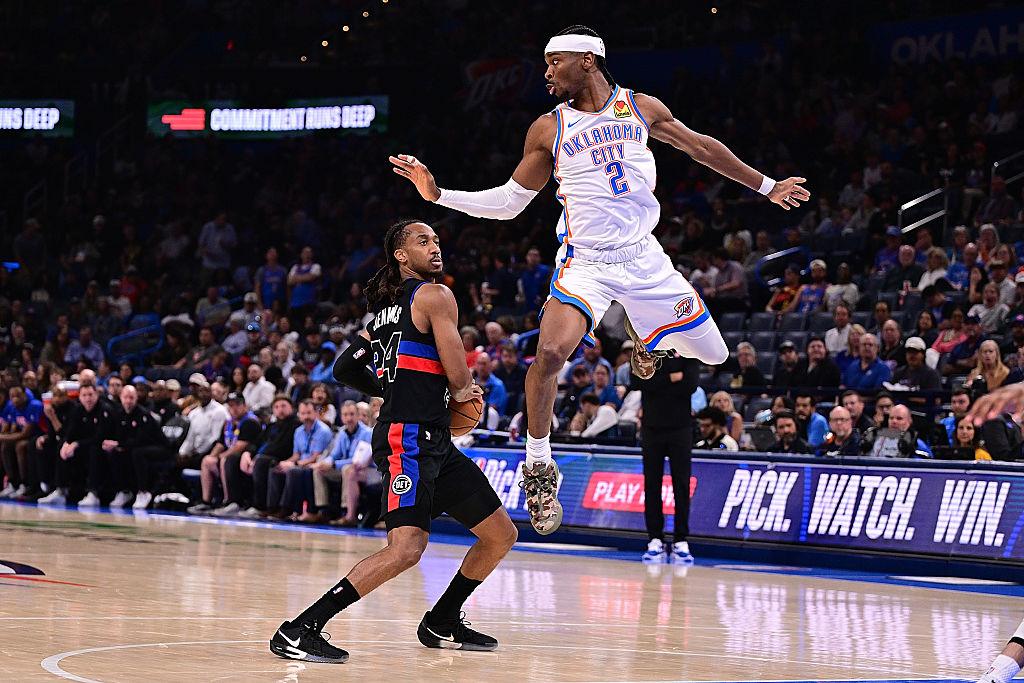
Shai Gilgeous-Alexander jumps on a fake by Daniss Jenkins
Clutch Player of the Year
- Shai Gilgeous-Alexander, Oklahoma City Thunder
- Shai Gilgeous-Alexander, Oklahoma City Thunder
- Shai Gilgeous-Alexander, Oklahoma City Thunder