

Statue Season is finally coming to a close. Each week leading up to the 98th Academy Awards ceremony, we’ve checked in on the closest races, the winningest narratives, and the plain old movie magic that decided who emerged victorious at Sunday’s Oscars. This week, we’re reacting to One Battle After Another’s dominant awards season and Paul Thomas Anderson’s long-overdue Oscar recognition.
Paul Thomas Anderson was holding his first Best Director Oscar, looking down at it practically beaming—but also seeming to process the moment with a bit of disbelief: “You make a guy work hard for one of these,” he said to the room. Before Sunday night, of course, PTA had gone 0-for-11 across his last six trips to the Academy Awards, where films like Boogie Nights, There Will Be Blood, and Phantom Thread lost statuettes to Good Will Hunting, No Country for Old Men, and The Shape of Water. He finally snapped his losing streak at the 98th Oscars, where he took home three trophies as a writer, director, and producer for this year’s Best Picture winner, One Battle After Another.
After garnering a reputation as a long-snubbed auteur—especially after Kenneth Branagh’s Belfast beat Licorice Pizza in Best Original Screenplay in 2022 (which had seemed like one of his better opportunities to win an Oscar up to that point)—it was genuinely touching to see Anderson bowled over by the gravity of his victory. The Best Director trophy wasn’t his first win of the night, but, as with Sean Baker’s four-Oscar night last year, it’s often fun to see multi-time winners make second and third speeches. (After they’ve already thanked their family, cast, crew, and agent, they tend to get a little more candid!) Over Anderson’s three appearances onstage on Sunday, he discussed how he’d made One Battle to reckon with the world we’re leaving behind for our children and shouted out his late longtime coproducer Adam Somner, who died a year before One Battle’s release. (In PTA’s last speech, he also referenced the legendarily stacked Best Picture slate at the 1976 Oscars 50 years ago—he’s a student of the game!) It was clear that he was reflecting on the unique path he took to the Oscars stage after going decades without hearing his name read out of an envelope. (Boogie Nights, his second feature, was released in 1997.)
But that doesn’t mean that Anderson’s three wins were makeup Oscars or career achievement awards that weren’t entirely based on his 2025 output. Best Picture or not, One Battle was going to be remembered as a significant entry in PTA’s filmography, if not his single most essential movie. It’s Anderson’s highest-grossing film ever, and many had already called it the best movie of 2025. It’s his first team-up with Leonardo DiCaprio, who delivered one of the best performances of his career and was rewarded with a Best Actor nom. Stars Teyana Taylor, Benicio del Toro, and Sean Penn all made noise in highly competitive supporting acting categories, with Penn winning. One Battle won virtually every Best Picture–equivalent precursor on the awards circuit. (Other than the Actor Award—formerly the SAG Award—for Best Ensemble, which may have influenced you to make a last-minute change on your Oscar ballot. Oops!) All in all, it was a perfect storm of craft, timing, and real enthusiasm (and, probably, an expensive awards season campaign footed by Warner Bros.) that finally put an Oscar in PTA’s hands.
One Battle’s big night also concluded the fiercest Best Picture race we’ve seen in years. After months and months (and months) of debates between One Battle and Ryan Coogler’s vampire blockbuster, Sinners, PTA ultimately walked away with the Academy’s top prize, which he’d been favored to win ever since his film premiered. Despite One Battle’s nearly spotless awards season performance, that late SAG loss had many believing that a historic upset was possibly imminent. (No film with One Battle’s awards season résumé had ever lost Best Picture.) The surprises in some of the Oscars’ early technical categories did seem to shift the momentum, one way and then another: One Battle won the inaugural Best Casting Oscar, which Sinners had long been favored to nab, making Coogler’s film look all but cooked. But then Sinners director of photography Autumn Durald Arkapaw became the first woman to take home the Best Cinematography statuette, a category that One Battle had been predicted to win. Michael B. Jordan then completed his late Oscars surge by winning Best Actor for Sinners, only for Anderson to get Best Director a couple of awards later. With that, the writing appeared to be on the wall for One Battle’s triumph.
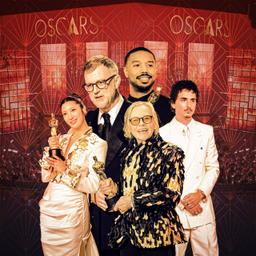
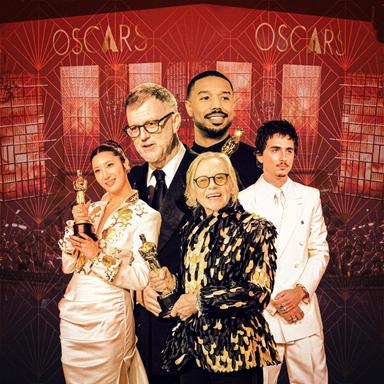
In fact, even though the chaotic homestretch of the awards campaign had left a handful of categories without a clear front-runner, the actual winners were about as chalk as an Oscars ceremony with this many lead changes could have been. Despite some speculating (including from me) about a surge of support for Brazil’s The Secret Agent, Norway’s Sentimental Value notched Best International Feature (director Joachim Trier was also the only international filmmaker who cracked the Best Director slate). Weapons’ Amy Madigan had used some witchcraft to become the favorite for Best Supporting Actress after winning the Actor Award for her performance as Aunt Gladys, and she was able to fend off Taylor and Sinners’ Wunmi Mosaku at the Oscars. Same with Penn in Best Supporting Actor, who was initially the clear front-runner upon One Battle’s release, until every other nominee in that category conjured up some kind of boost during awards season. For a moment there was some doubt about whether the Academy would be willing to give Penn his third Oscar before someone like Sentimental Value’s Stellan Skarsgard even got one, but in the end, it awarded Penn anyway—even if he wasn’t there to accept it. (Because he “didn’t want to,” as presenter Kieran Culkin suggested. Reports say that Penn was visiting Ukraine for an unspecified reason.)
The Best Actor race was the biggest question mark after Marty Supreme’s Timothée Chalamet, who had spent months as the favorite for the statuette, tanked in dramatic fashion. (After that fumble, I’m not expecting Timmy’s Oscars coronation to arrive until, like, 2057—and I’m legitimately scared of what kind of heinous Oscar bait it will take for him to finally land that trophy.) Sinners’ Jordan took the lead after a huge upset at the Actor Awards, but the timing of his ascendance, along with the fact that no one had ever won Best Actor with only a SAG Award as their sole major precursor win, made it seem like there was potential for a third name to emerge from the impressive slate of nominees. But the shift in momentum proved genuine when Jordan accepted the Oscar on Sunday. In the end, while it took a lot of pendulum swings to get there, anyone who was an odds-on favorite at the start of the telecast prevailed in all of the top-line categories.


Through that lens, One Battle’s predictable dominance was perhaps a little underwhelming. All that commotion, only for the movie that had swept through most of awards season to remain on top? I get it—after One Battle won the top prizes at the BAFTAs, Golden Globes, Producers Guild Awards, and the like, it was hard not to feel like Sinners was the Oscars underdog. (As much as a massive hit with a nine-digit budget can feel like an underdog.) But Sinners’ last-minute push to the finish line still turned this into a Best Picture showdown for the ages between two seismic films that both drew a larger audience than the average Oscar awards player. Sure, the ceremony itself didn’t totally match the excitement of the race that led up to it, but it makes sense that it all culminated in Anderson’s overdue coronation. Coogler, who is 39, will certainly be back—he’s said his next film is Black Panther 3, and hopefully he’ll parlay the success of Sinners into another original project as well. But watching Anderson get a little emotional as he finally achieved that sought-after recognition from the Academy proved that, for all the song and dance, awards season can be pretty compelling.