

Welcome to Statue Season! Each week leading up to the 98th Academy Awards ceremony, we’ll be checking in on the closest races, the winningest narratives, and the plain old movie magic that will decide who’s taking home the gold on March 15. This week, we’re looking back on the century’s (often mediocre) Best Actor races, and where this year’s group of five strong nominees ranks among them.
On Oscar nominations day, I got up (embarrassingly) early to watch the announcements, and amid myriad nods for Sinners and One Battle After Another, I realized something: Despite the Best Actor race coalescing around a top five well before nominations were announced, we had not yet processed how stacked the category would be this year. In recent years, and especially throughout the 2010s, the category has seen some tough times. Many statuettes have gone to trope-y biopic performances (see: Rami Malek, Bohemian Rhapsody) or odd, late-career recognitions that are quickly forgotten after Oscar night (see: Gary Oldman, Darkest Hour). But after this year’s five nominees were read, a thought entered my mind: Is this the strongest Best Actor race ever?
OK, after that, I chilled out. Maybe “strongest ever” was too far—1976 exists—but could this year’s slate at least be the best lead actor race of the 21st century? I mean, a good chunk of the competition is pretty weak. The aughts were full of biopics and historical dramas that just aren’t all that well-remembered, and the 2010s contained some ridiculously heavy-handed roles that aged poorly from the second they were announced. Of course, there are a number of iconic performances in that span as well (ever heard of Daniel Day-Lewis?), and the category has had a higher hit rate in the 2020s. So, out of curiosity, I scoured through all of the Best Actor races of the last 26 years and determined a top 10 (and, just for fun, a bottom three) to see where this year’s race falls.
A couple factors went into my ranking: Legacy is a huge consideration when looking back at past Oscars. In the moment, you want to believe the nominees will stand the test of time, but many of them don’t. Obviously, more recent nominees haven’t had much time to age, so I did my best to gauge how we might look back on them. But, as you can assume from the premise of this ranking, recency bias may have come into play. Also, if a Best Actor race had four really strong nominees but the trophy ultimately went to a weak winner, I tried not to let that negatively impact the slate as a whole. This is a ranking of races, not winners.
Without further ado, let’s get into the list and see where Timothée Chalamet, Leonardo DiCaprio, Ethan Hawke, Michael B. Jordan, and Wagner Moura stand among their leading brethren. (Note: For clarity, the years included are for the year the films nominated came out, not when a particular Academy Awards ceremony took place.)
The Hall of Shame
2018
Christian Bale, Vice
Bradley Cooper, A Star Is Born
Willem Dafoe, At Eternity’s Gate
Rami Malek, Bohemian Rhapsody (winner)
Viggo Mortenson, Green Book
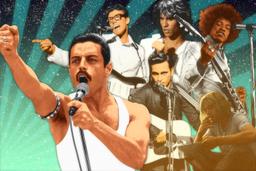
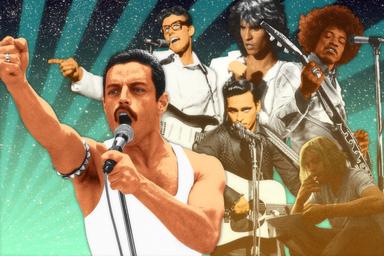
I mean, my God. Where to begin? There’s just no other way to say it: This is ROUGH. I know it’s Ringer self-parody at this point to ride for A Star Is Born, but it’s beyond comprehension as to why Cooper didn’t run away with this trophy. Malek’s victory for his portrayal of Freddie Mercury is one of the least popular Oscar performances of the century (if not ever), but I can’t imagine this race would have aged much better if Bale had won for his extremely unsubtle performance as Dick Cheney or if Mortensen won for his role in one of the least popular Best Picture winners in recent memory. And I’m not convinced that a movie where Willem Dafoe played Vincent Van Gogh ever actually existed.
2014
Steve Carell, Foxcatcher
Bradley Cooper, American Sniper
Benedict Cumberbatch, The Imitation Game
Eddie Redmayne, The Theory of Everything (winner)
Michael Keaton, Birdman
It was bad enough that The Imitation Game and The Theory of Everything came out in the same year, but both of its leads getting the Best Actor nod should have prompted congressional action. Throw in American Sniper, and we’ve got three biopic performances that no one is eager to revisit. (Though Bradley Cooper did a pretty good job of pretending that baby was real.) Carell's and Keaton’s turns both garnered a ton of buzz at the time, but looking back, they’re both the kind of ostentatious performances that don’t really stand the test of time. And what makes this race even worse is that 2014 was not a bad movie year in the slightest! Just consider these performances that were left on the table: Ben Affleck in Gone Girl, Matthew McConaughey in Interstellar, Ralph Fiennes in The Grand Budapest Hotel, David Oyelowo in Selma, and Jake Gyllenhaal in Nightcrawler. That’s a five right there that a lot of people would’ve been happy with—now, was that so hard?
2015
Bryan Cranston, Trumbo
Matt Damon, The Martian
Leonardo DiCaprio, The Revenant (winner)
Michael Fassbender, Steve Jobs
Eddie Redmayne, The Danish Girl
Sigh. Well, we got Leo an Oscar … for a role absolutely no one thinks is his best. That’s not an exagerration—when we put together our list of the best movie performances of the 21st century last summer, six DiCaprio roles received votes via our balloting process. The Revenant was not among them. But even beyond that, this race was deeply flawed from top to bottom. Some people ride for that Fassbender performance, but Steve Jobs underperformed at the box office and didn’t have much staying power. Damon’s role in The Martian is totally forgettable, and Cranston’s as Dalton Trumbo only lives on in that “My weekend as a 28-year-old in Chicago” TikTok. Redmayne’s performance came when a lot of cis actors were using trans characters to chase accolades (i.e. Jared Leto in Dallas Buyers Club, or Jeffrey Tambor in Transparent). The Danish Girl was criticized at the time for its reductive portrayal of trans pioneer Lili Elbe—and I can’t imagine it holds up great today.
The Best of the Rest
10. 2001
Russell Crowe, A Beautiful Mind
Sean Penn, I Am Sam
Will Smith, Ali
Denzel Washington, Training Day (winner)
Tom Wilkinson, In the Bedroom
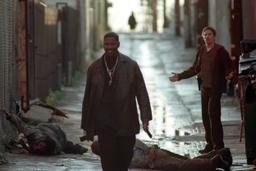
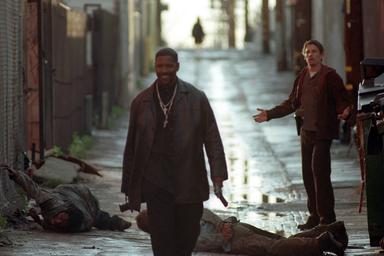
You know there wasn’t a ton of stiff competition when we’re kicking off the top 10 with a slate that includes two certified stinkers. A Beautiful Mind is some uninspired Oscar bait that, naturally, won director Ron Howard a statuette over David Lynch and Robert Altman. (Crowe’s performance is unremarkable.) I Am Sam was largely negatively reviewed at the time, and I’m not eager to find out how the years have treated Penn’s turn as a mentally disabled barista. But Smith and Wilkinson are interesting choices—the former helming Michael Mann’s Muhammad Ali epic, and the latter coleading the family drama that put the creator of Lydia Tár (who I still believe is real), Todd Field, on the map as a director. Plus, it always helps to get the winner right—Washington’s unrelentingly electric screen presence turned Antoine Fuqua’s cop caper into one of the century’s most enduring crime thrillers. And Washington won in dramatic fashion—with a last-minute surge after Crowe had collected most of the precursor awards. A Best Actor slate has a pretty high floor anytime Denzel is involved, but this career-defining turn automatically puts this race in the top 10.
9. 2005
Philip Seymour Hoffman, Capote (winner)
Terrence Howard, Hustle & Flow
Heath Ledger, Brokeback Mountain
Joaquin Phoenix, Walk the Line
David Strathairn, Good Night, and Good Luck.
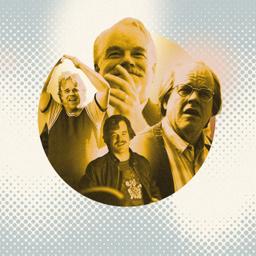
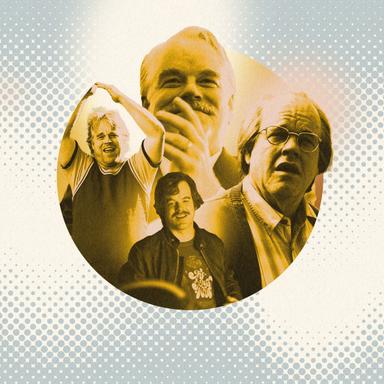
This race resulted in the only Oscar Hoffman ever won—and he did so decisively, collecting every big precursor award along the way. His inclusion alone juices this slate, but then you also have Ledger, delivering one of the most moving screen performances of the millennium, competing alongside him. (Sorry to everyone with a Joker tattoo—I still believe Brokeback was Ledger’s absolute best.) Howard’s nomination is also a great call, and thankfully Hustle & Flow didn’t go home empty-handed after Three 6 Mafia won the Oscar for Best Original Song. (It’s one of my favorite Oscar moments—I’ll take any chance I can get to bring it up!) As for the other two nominees … well, Phoenix’s turn as Johnny Cash gave us Dewey Cox, so there’s that.
8. 2023
Bradley Cooper, Maestro
Colman Domingo, Rustin
Paul Giamatti, The Holdovers
Cillian Murphy, Oppenheimer (winner)
Jeffrey Wright, American Fiction
I’ll admit, this one might be a matter of personal taste—where some may have been put off by Bradley Cooper’s showy, prosthetics-laden portrayal of Leonard Bernstein, I didn’t want him to rein in a single thing about it. It’s a shame that there weren’t acting clips shown at the Oscars that year (they returned last year, thankfully) because everyone in Hollywood should get to experience Snoopy getting abandoned in the vestibule at least once. But even Maestro aside, this is a fun race. For one, humor was present! Both Wright’s and Giamatti’s roles leaned pretty comedy-forward, and it’s always nice to see at least one funny performance break through with the Academy. And Murphy’s turn as J. Robert Oppenheimer was so seismic in one of the most award-season-dominant films in recent memory that I’m surprised they didn’t invent new trophies to give it. So did we put together a worthy Best Actor race that year? I believe we did.


7. 2012
Bradley Cooper, Silver Linings Playbook
Daniel Day-Lewis, Lincoln (winner)
Hugh Jackman, Les Misérables
Joaquin Phoenix, The Master
Denzel Washington, Flight
These are unprecedented levels of 2010s vibes. But in a fun way! There are two never-missers here in DDL and Washington—though few would call these their career-best performances—and we have a legitimately transcendent Phoenix in what probably is his career-best performance. (It’s certainly better than the one he did win an Oscar for—spoiler, the Joker year did not make the top 10.) Add in the touching Cooper role that helped make Silver Linings Playbook a surprise hit, and there’s enough quality in the race to allow one to forget about that dull Les Mis adaptation (as many promptly did).


6. 2024
Adrien Brody, The Brutalist (winner)
Timothée Chalamet, A Complete Unknown
Colman Domingo, Sing Sing
Ralph Fiennes, Conclave
Sebastian Stan, The Apprentice
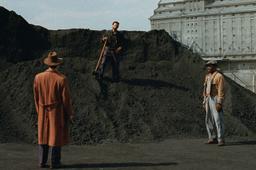
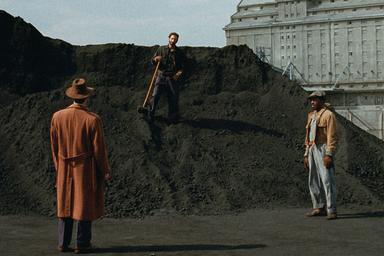
Last year’s Best Actor race didn’t have much in the way of pizzazz—and as a result, there isn’t a clear best performance in the bunch, even with a year’s hindsight. Still, across the board, this slate is totally defensible. It’s hard to get excited about a music biopic performance getting a nod, but Chalamet was a pretty compelling Bob Dylan (at least enough to land him a musical guest slot on Saturday Night Live). And Brody was tasked with a lot in Brady Corbet’s three-and-a-half--hour epic, The Brutalist—it’s hard to argue with the Academy’s decision, gum-throwing aside. You may not be itching to revisit The Apprentice any time soon, but Stan’s nomination reflects the difficulty of what he accomplished: taking on the basically impossible role of the most public—and parodied—person in the world and managing to find a unique take on the material. (Plus, if you pretend the nomination was partially for his fantastic performance in A Different Man, as I do, it elevates the entire race even more.) Domingo and Fiennes also held their own with some rock-solid outings—Brody and Chalamet ultimately duked it out for the Oscar, but this was a pretty even race.
5. 2013
Christian Bale, American Hustle
Bruce Dern, Nebraska
Leonardo DiCaprio, The Wolf of Wall Street
Chiwetel Ejiofor, 12 Years a Slave
Matthew McConaughey, Dallas Buyers Club (winner)
Like the 2012 race, any Oscars that involved a David O. Russell movie immediately feels extremely 2010s-coded. In this case, this is one of the roles for which Christian Bale spent the decade gaining and losing weight at an alarming rate—and was consistently awarded with a nomination. Otherwise, this is a decent race: career-defining turns from DiCaprio and Ejiofor, a fun late-career vehicle for Dern, and McConaughey riding the McConnaissance to the trophy. OK, yeah, he probably shouldn’t have won over Leo, but if you pretend the Oscar was for True Detective instead of Dallas Buyers Club, it doesn’t feel like as much of a robbery.
4. 2002
Adrien Brody, The Pianist (winner)
Nicolas Cage, Adaptation
Michael Caine, The Quiet American
Daniel Day-Lewis, Gangs of New York
Jack Nicholson, About Schmidt
This isn’t the flashiest Best Actor race, but as far as average quality goes, it’s really solid. A DDL nom is always going to elevate the entire slate, Cage in Adaptation is a cool shout, and Nicholson in About Schmidt is in the upper echelon of late-career Oscar performances by any actor. Veterans of the early-aughts Oscar forums will also remember this race as a particularly exciting one—four of the five nominees had won before, and the one exception (Brody) was [gasp] under 30, when the award had never gone to someone that young before. What was stronger: the Academy’s aversion to young men, or its aversion to two-time winners? Day-Lewis won the BAFTA and the SAG Award, Nicholson won the Golden Globe, and the two tied for the Critics Choice Award. But ultimately, even without winning any major precursors, Brody broke an Oscar record—and that time, it wasn’t for the longest speech in Oscar history.
3. 2007
George Clooney, Michael Clayton
Daniel Day-Lewis, There Will Be Blood (winner)
Johnny Depp, Sweeney Todd: The Demon Barber of Fleet Street
Tommy Lee Jones, In the Valley of Elah
Viggo Mortensen, Eastern Promises
2007 is a legendary movie year, encapsulated by Paul Thomas Anderson’s There Will Be Blood facing off against the Coen brothers’ No Country for Old Men at the Oscars. Alas, the Coens’ film didn’t make it into this category. Tommy Lee Jones got supporting nominations from the BAFTAs and the SAG Awards for No Country, but the Academy opted to give him the lead nod for the much less memorable In the Valley of Elah instead. (Maybe Jones campaigned harder for the latter film because his No Country costar Javier Bardem was bound to dominate the Best Supporting Actor race that year?) Still, this crew has some high highs: Day-Lewis’s performance is obviously an all-timer, Clooney’s isn’t far behind, and it’s nothing short of incredible that Mortensen got recognized for David Cronenberg’s bleak gangster film Eastern Promises. As for the Sweeney Todd nomination … well, it was 2007, after all.


2. 2017
Timothée Chalamet, Call Me by Your Name
Daniel Day-Lewis, Phantom Thread
Gary Oldman, Darkest Hour (winner)
Daniel Kaluuya, Get Out
Denzel Washington, Roman J. Israel, Esq.
This year had so much going for it! We’ve got three of the century’s most iconic and beloved performances: Chalamet breaking out with Call Me by Your Name, Kaluuya earning the all-too-rare horror nomination, and Day-Lewis still revealing new layers to his craft with three Oscars already under his belt. Throw in the always magnetic Washington, and this is an unimpeachable Best Actor slate. And yet, the Academy ended up giving the award to Oldman, playing Winston Churchill in some standard-issue biopic fare. I won’t go as far as to say that Oldman was a special agent sent here to ruin the evening (and possibly our entire lives)—but when the Academy had some genuinely exciting names in the mix, it was pretty disappointing to see them opt for something so safe. And we didn’t even really get to enjoy a race between Chalamet, Kaluuya, and Day-Lewis because Oldman won all the major precursors that year! Regardless, that trio instantly made this one of the strongest Best Actor races in years, and it still stands as such.

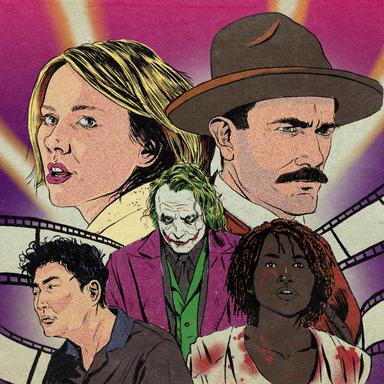
1. 2025
Timothée Chalamet, Marty Supreme
Leonardo DiCaprio, One Battle After Another
Ethan Hawke, Blue Moon
Michael B. Jordan, Sinners
Wagner Moura, The Secret Agent
I tried to fight the recency bias. I really did. But this slate just does not have a weak spot. Chalamet and DiCaprio are regular nominees at the Oscars, but these nods weren’t just earned off of their clout—these films are some of their best work to date. Jordan (x2) helmed a massive cultural phenomenon with a gritty, layered dual performance. Those are three roles that are going to be remembered well after that Best Actor envelope is opened. And then to round out the slate, we have Moura’s grounded, soulful turn as a fugitive of late ’70s Brazil’s oppressive regime as well as Hawke’s completely unconventional—and hilarious—approach to a biographical role. Chalamet is still the favorite, but I can genuinely see an argument for each of them winning—I don’t know if I can say that about any other Best Actor race this century. This all sounds like someone firing off a take that’s destined to age horribly, but it’s not like we were all lauding Malek vs. Bale as the 2018 Best Actor race was happening, or hanging Eddie Redmayne’s name in the rafters after his back-to-back noms. I think it’s possible to recognize a good (or bad) race in the moment, as it’s happening right in front of you. And, folks, I think we’ve got a uniquely great one. Surely that means everybody will be happy with who ends up winning.


Stock Watch
To paraphrase one of cinema’s great stockbrokers: Nobody knows if an Oscar stock is going to go up, down, sideways, or in circles. In this section, we’ll evaluate who’s on the up-and-up and whose momentum is sputtering out as the competition across categories heats up.
Stock up: The American Cinematheque in Los Angeles is hosting a career retrospective on the 30-year-old Timothée Chalamet. (Is that allowed?) Weapons’ Amy Madigan and One Battle After Another’s Sean Penn both won awards from the London Film Critics Circle this week, perhaps boosting them in their tight supporting races. Everyone was charmed by Ryan Coogler’s appearance on Good Hang with Amy Poehler (a Ringer podcast), in which he said he “got involved with” mixing sodas at a soda fountain. I’m now expecting him to thank the Coke Freestyle machine in his Oscar speech.
Stock down: The Secret Agent didn’t receive any honors from the LFCC—it lost Foreign Language Film of the Year to Sentimental Value. Leonardo DiCaprio continues to lose awards to Timothée Chalamet—is the Best Actor race not as close as we think? This might be a bit premature—the films aren’t slated to come out until 2028—but the early stills from Sam Mendes’s four-part Beatles series may not sell you on the ticket to ride.