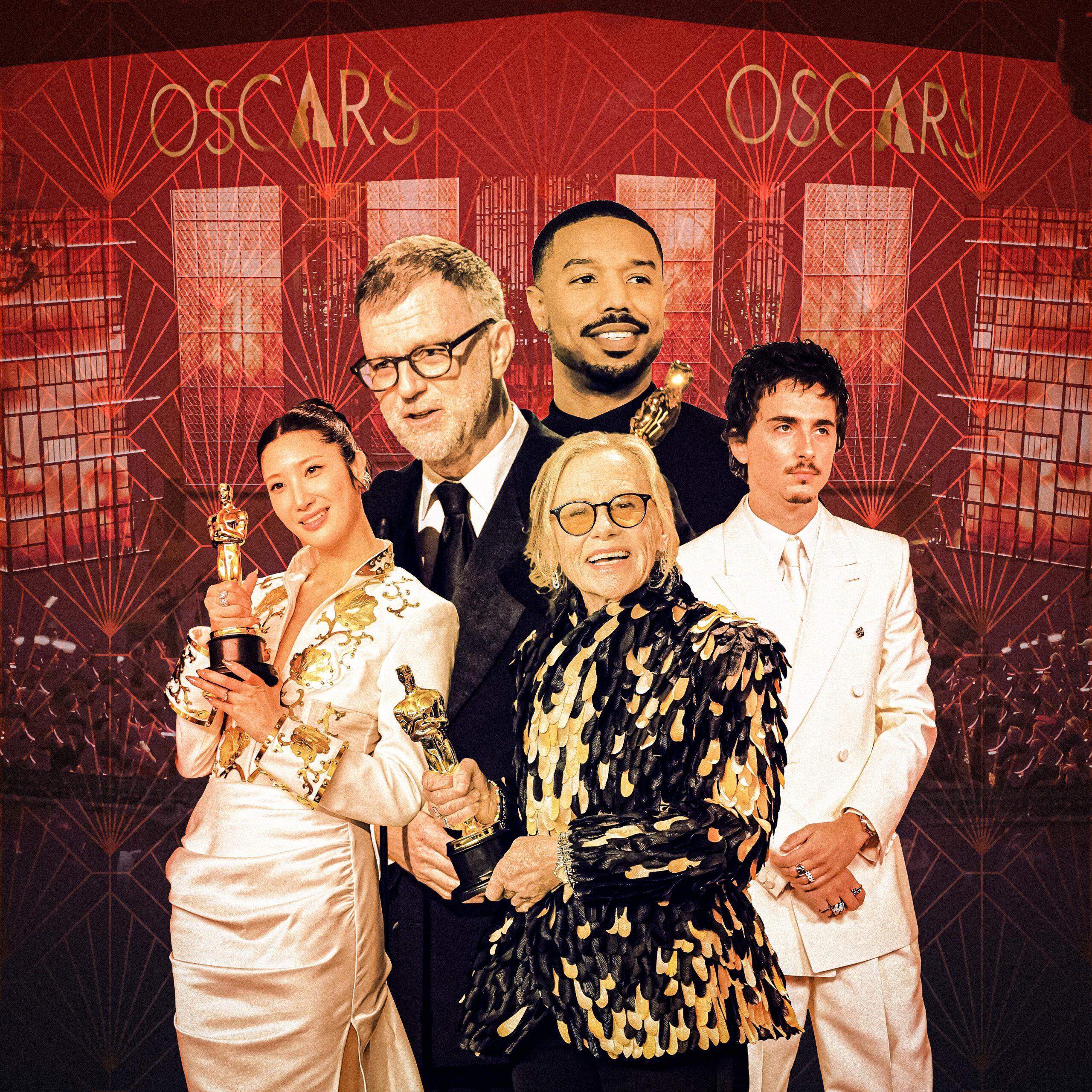

After an awards season that made us feel the passage of time as ruefully as the protagonist of Train Dreams, the 98th Academy Awards are finally in the books. With Conan O’Brien returning as host—and former host Jimmy Kimmel making a memorable cameo comparing CBS to North Korea—Hollywood’s biggest night delivered a mix of long-awaited victories, surprising outcomes, and a few moments that will live on in Oscars lore. Here are The Ringer’s biggest winners and losers from Sunday night’s ceremony.
Winner: One Battle After Another and Sinners Sharing the Spoils
Between One Battle After Another and Sinners, Warner Bros. had to feel pretty good about its chances of cleaning up at the Oscars. But after Sinners had a whirlwind awards season—nearly being shut out at the Golden Globes before breaking the record for the most nominations in Oscars history—you could envision a scenario in which Ryan Coogler’s film dominated at One Battle’s expense, or once again got the short shrift.
As it happens, we might’ve gotten the best-case scenario: Sinners managed to win four Oscars, including Best Original Screenplay for Coogler and Michael B. Jordan’s win in a highly unpredictable Best Actor race. Both Oscars were the director’s and actor’s first of their respective careers. Meanwhile, One Battle came away with six wins of its own, including Best Picture, while Paul Thomas Anderson was recognized for both his writing (Best Adapted Screenplay, also his first Oscar) and directing (Best Director). (Also, shout-out to Sean Penn, who won his third Oscar but missed the ceremony because he’s reportedly in Ukraine. He’s now tied for the most Oscars for a male actor, along with Daniel Day-Lewis, Jack Nicholson, and Walter Brennan.) The fact that Warner Bros. could soon be acquired by Paramount—another piece of a potential right-wing takeout of American legacy media—adds a sour note to this historic studio’s accomplishments. But for one night, at least, Warners’ dominance felt like a win for anyone who still believes in big-budget, auteur-driven filmmaking.
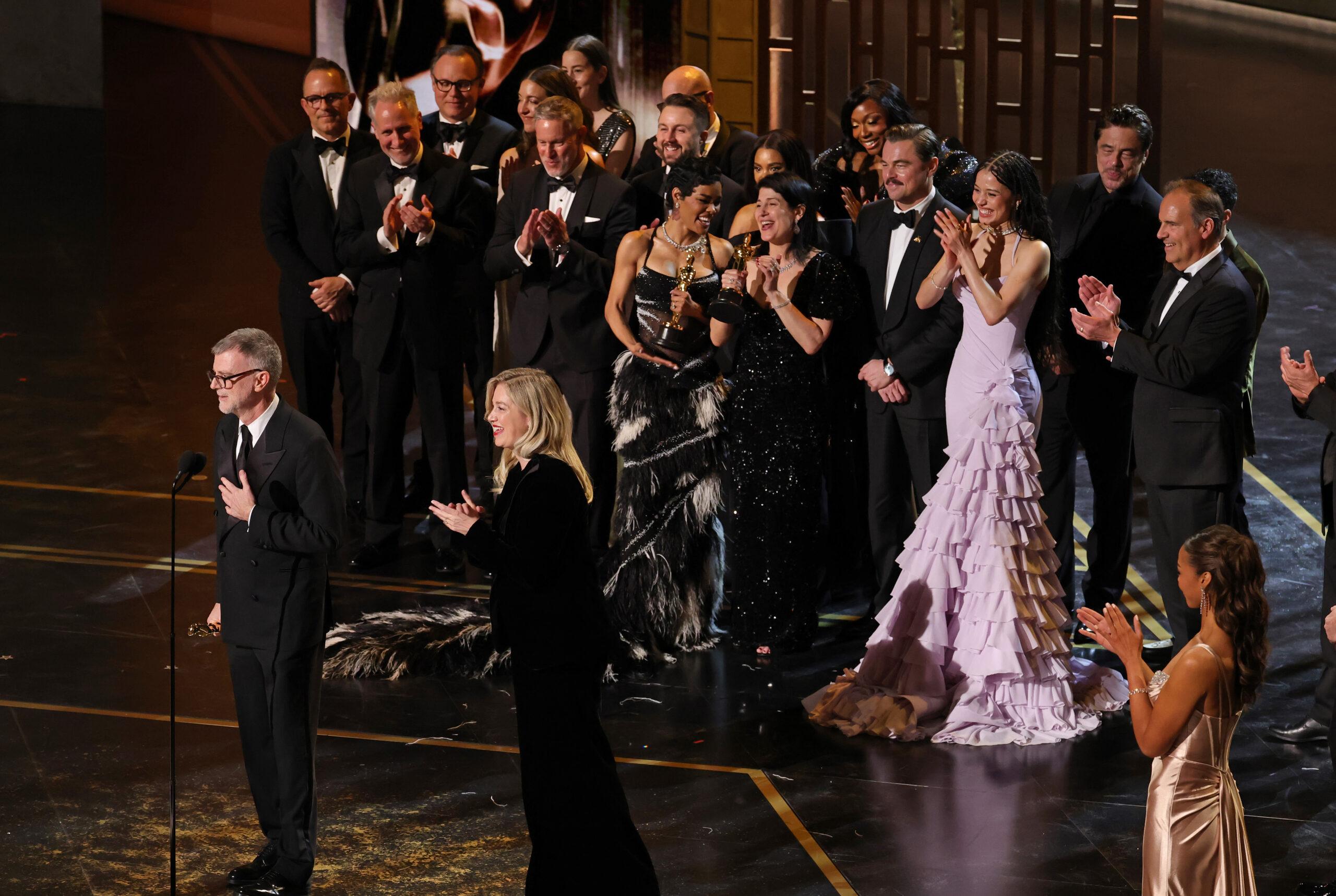
Winner: Autumn Durald Arkapaw’s History-Making Win
Speaking of Sinners, another of its Oscars went to cinematographer Autumn Durald Arkapaw, who made history as the first woman to ever win in the category. There are conflicting emotions at play here: It’s downright criminal that the Oscars have been around for nearly a century and not a single female cinematographer has been deemed worthy of recognition. Still, Arkapaw’s triumph is a testament to the stunning visual language that helped bring Sinners to life. If the Oscars needed a moment that felt both historic and well deserved, this was it.
Loser: Timothée Chalamet’s Quest for an Oscar
“This is probably my best performance, you know, and it’s been like seven, eight years that I’ve been handing in really, really committed, top-of-the-line performances.” So said Chalamet about himself in Marty Supreme, and while that kind of confidence was very on brand for a Marty Mauser–centric press tour, it seems to have put Academy voters off. Upon reflection, it’s pretty surprising that we got to this point: After he won the Golden Globe for Best Performance by a Male Actor in a Motion Picture—Musical or Comedy, the Best Actor Oscar appeared to be Chalamet’s to lose, and boy did he ever.
While the infamous ballet/opera discourse happened after Academy members had voted, perhaps it was a sign that we’d reached a point of collective Chalamet fatigue. Given that he’s already notched four Oscar nominations by age 30, it should only be a matter of time before he wins. Until then, he might want to consider a complete 180 for the next Timothée Chalamet press cycle: Sometimes less is more.


Winner: The “In Memoriam” Segment
If it hadn’t already hit you that we lost a lot of top-line Hollywood talent in the past year, the Oscars’ in memoriam segment will have gotten you in your feelings. With special tributes to Rob Reiner, Diane Keaton, and Robert Redford by some of their closest collaborators, the Oscars reminded us that for all its glitz and glamour, Hollywood is ultimately a close-knit creative community where decades of collaborations, friendships, and shared history resonate. And when we lose our biggest legends, the loss doesn’t just reverberate through the industry—the pain is shared by the audiences who grew up watching them, too.
Winner: The Global Power of K-Pop
To nobody’s surprise, KPop Demon Hunters won Best Animated Feature, while its breakout bop, “Golden,” won the Oscar for Best Original Song. (Ejae, Audrey Nuna, and Rei Ami also performed “Golden” at the ceremony, but, unsurprisingly, they couldn’t quite match the full-blown animated spectacle from the movie.) In doing so, “Golden” also became the first K-pop song to be honored by the Oscars. While there might not have been many prior opportunities for K-pop to land on the Academy’s radar, the all-consuming hype for KPop Demon Hunters—even if you didn’t watch the movie, you definitely heard “Golden” out in the wild—was impossible to ignore. The Oscars may be late to the party, but this win felt like a long-overdue recognition of K-pop’s global dominance.
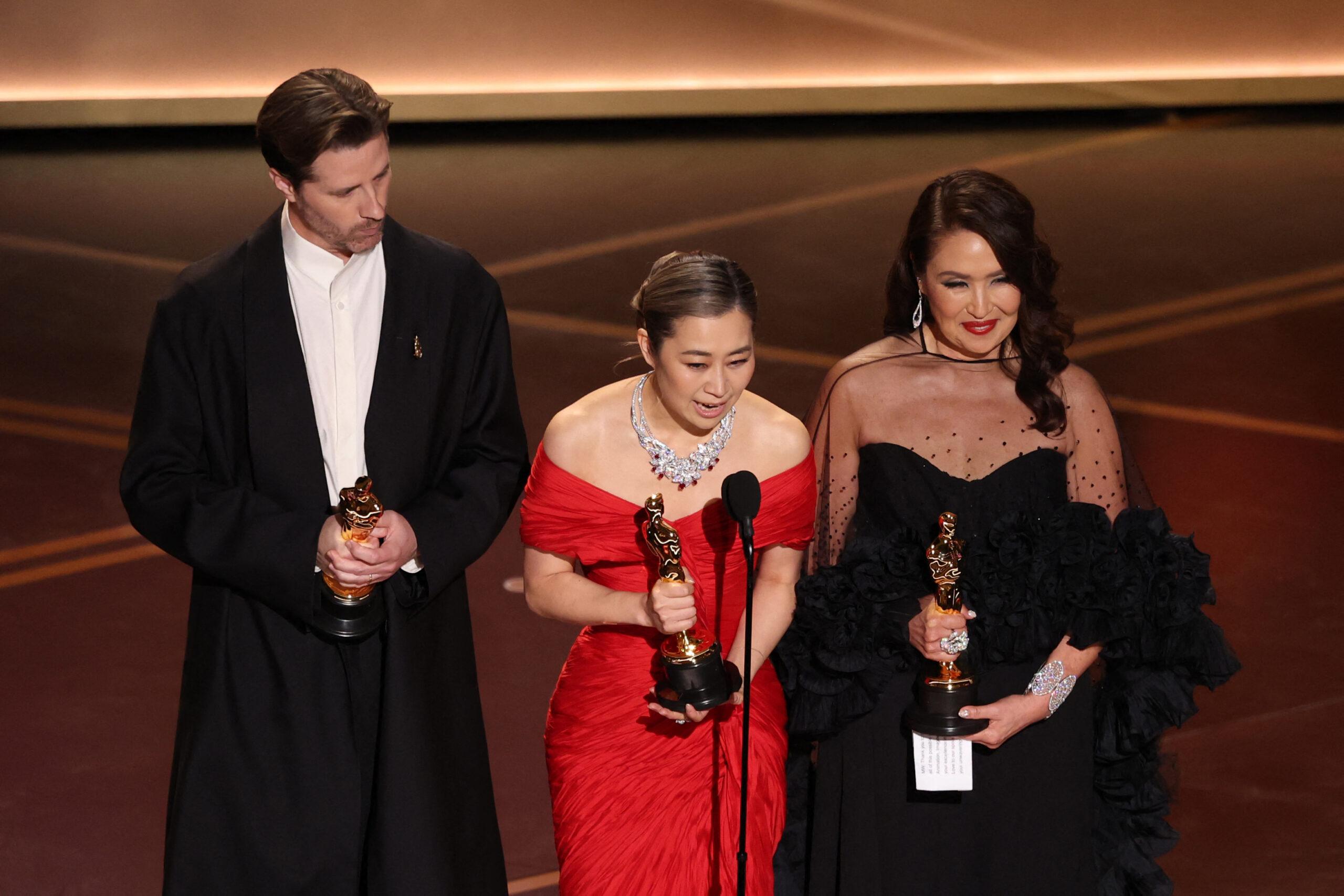
Loser: Cutting People Off
Once again, the Oscars planned to have a three-hour ceremony, and once again, they went way over time. (By the time Conan’s bit about getting Lockjaw-ed at the end of the telecast hit, we were approaching three hours and 45 minutes.) But here’s the thing: Most people who actually tune in to the Oscars aren’t exactly clock watchers, and running long is part and parcel of the experience. (With the possible exception of pop culture bloggers dreading a long night of writing.) If the Academy wants to shave time, there are plenty of bits it could trim. What it shouldn’t do is cut people off during one of the greatest moments of their lives—especially when the Academy could incur the wrath of K-pop fans in the process. Acceptance speeches are the whole point of the night; nobody at home is begging the orchestra to hurry them along.


Winner: Amy Madigan
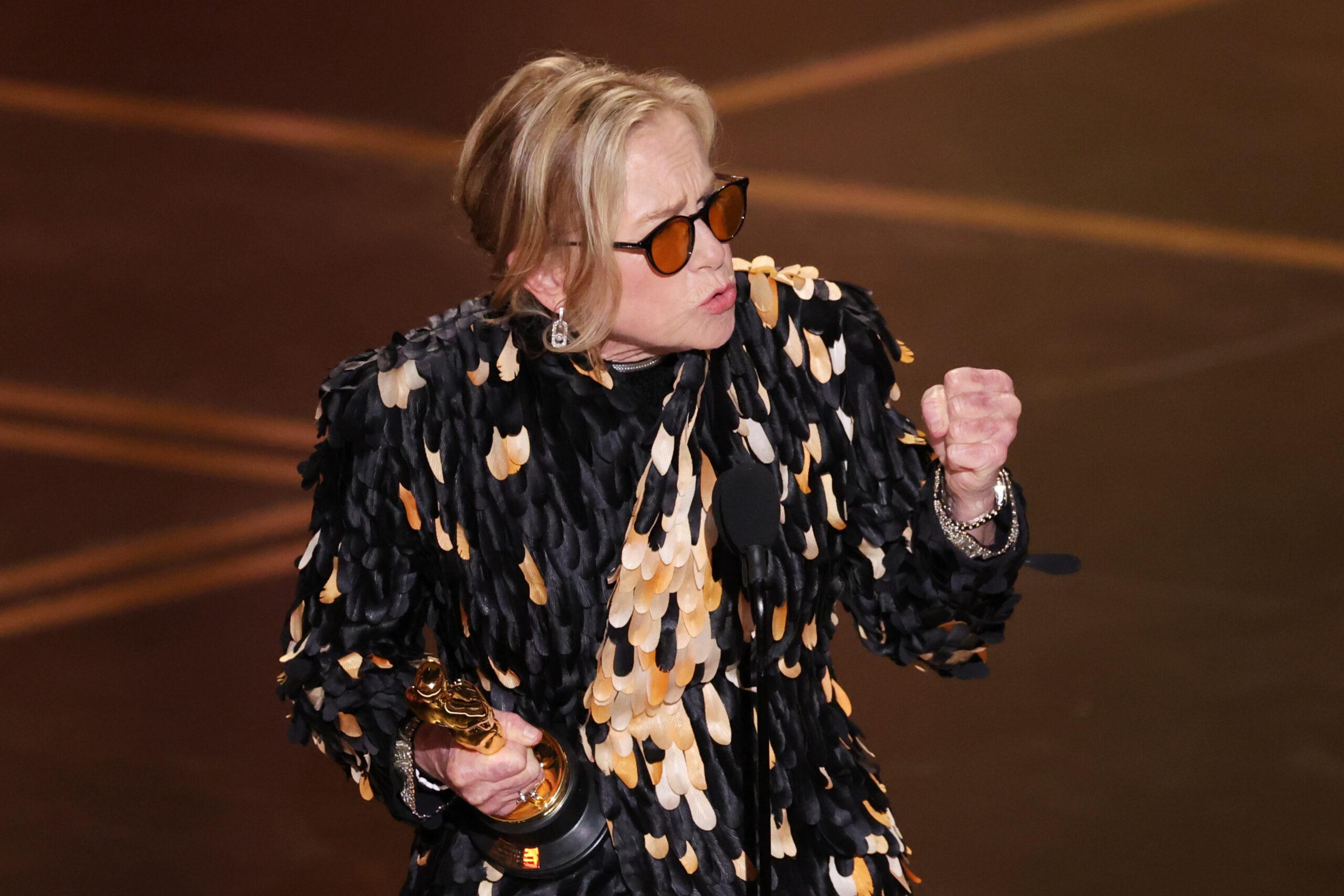
With the notable exception of The Silence of the Lambs, horror has long had a bad rap at the Oscars. Whether performances lose out (apologies to Demi Moore) or never make the ballot altogether (we see you, Toni Collette), horror can’t seem to shake its reputation as pulpy genre fare beneath the Academy’s prestige threshold. Fortunately, this year the Academy got one thing right: You don’t want to mess with Aunt Gladys. In a competitive Best Supporting Actress race, Madigan won for her scene-stealing turn in Weapons. Four decades after her first nomination, for Twice in a Lifetime, Madigan finally has an Oscar—and horror has hope that the Academy might be coming around to its gruesome, gory pleasures.
Undecided: Ties
In what will surely be a fun bit of trivia in a few years’ time, the Oscars had just their seventh tie in history, courtesy of Two People Exchanging Saliva and The Singers both winning for Best Live Action Short Film. Whether this is because of the Academy’s new mandate that members have to provide some proof they’re watching the things they’re voting for—what a concept!—or just a happy coincidence, Best Live Action Short Film unexpectedly became one of the most intriguing categories of the night.