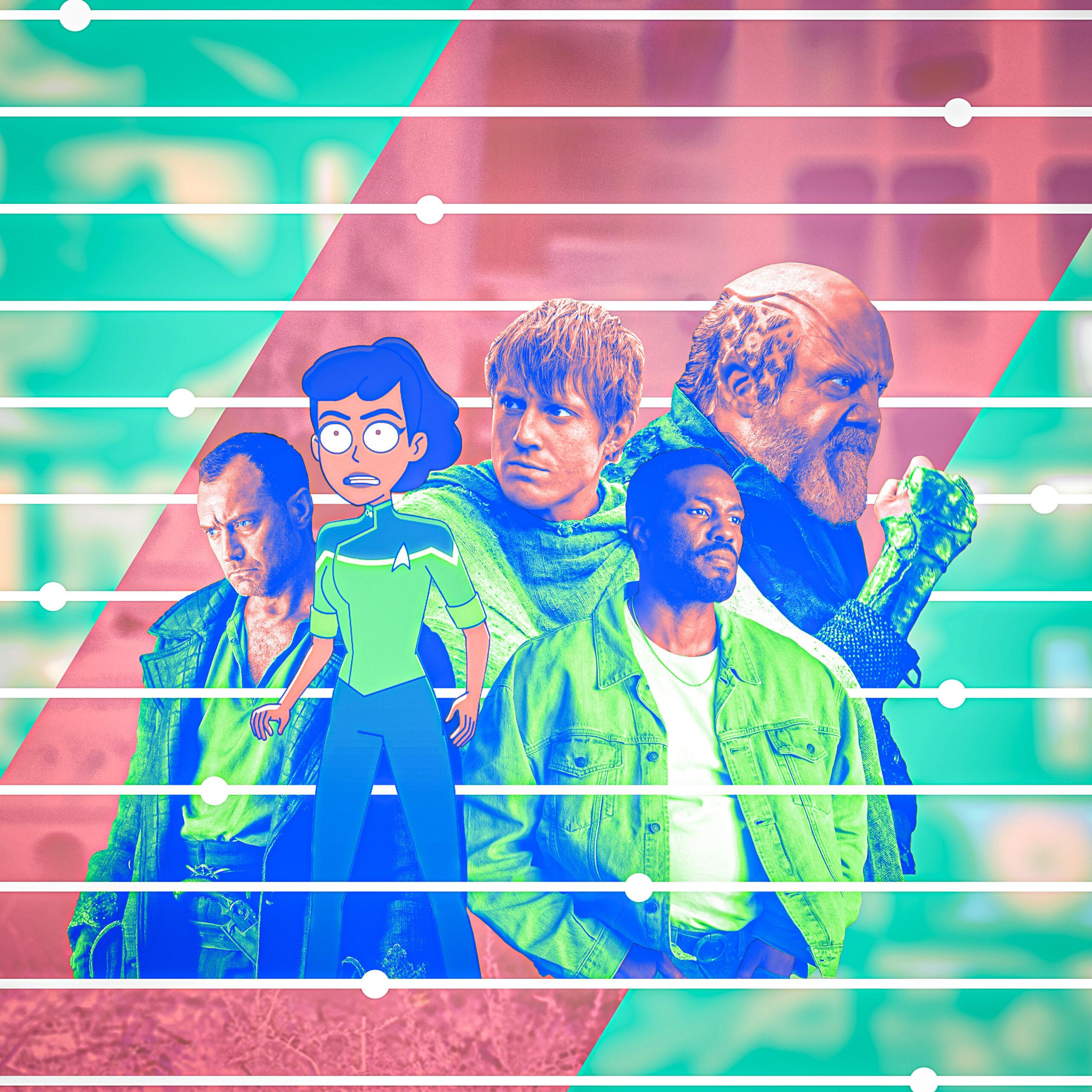

A Knight of the Seven Kingdoms, the Game of Thrones spinoff whose first season concluded on Sunday, is a series concerned with whether one’s identity dictates one’s destiny. Can Dunk, the penniless orphan from Flea Bottom, become Ser Duncan the Tall, a knight who enters tournaments and hobnobs with lords? Can Aegon V Targaryen, cloistered prince of the realm’s ruling family, become Egg, squire to a humble hedge knight?
Westerosi society discourages self-determination: Lineage separates smallfolk from nobility, downtrodden and impotent from privileged and powerful. “Aegon is blood of the dragon,” Egg’s father, Maekar, declares to Dunk. “He cannot sleep in ditches and eat hard salt beef.” But the belief that certain practices aren’t fit for princes may have made Maekar’s older sons in the series—ne’er-do-well, drunken Daeron and cruel, arrogant Aerion—who they are. As Dunk remarks to Maekar, “Daeron never slept in a ditch. And all the beef Aerion ever ate was thick and rare and bloody.” Daeron himself muses, “Perhaps the seeds of madness are sown in the womb, as the maesters say. But Aerion was quite the glad child once. He liked fishing.” Granted, so did Saddam Hussein—sometimes with grenades.
In the Targaryens’ case, blood magic plus centuries of inbreeding kinda complicate the “nature versus nurture” debate. But A Knight of the Seven Kingdoms suggests that the monstrousness of Westeros’s rulers might not stem solely from bad genes, or from destinies handed down by the gods, but also from self-sabotage. #NotAllTargaryens are doomed to be tyrants; some, it seems, are just brought up to be. Maybe, then, a drastic reinvention is as simple as unveiling a different look to fit a new name: shaving one’s head, repainting one’s shield, and trying to look confident. And maybe princes and nobles would be better off if they mingled with the smallfolk for a while.
In 2026, some of Hollywood’s highborn entertainment franchises seem to be facing the same sort of existential questions—and attempting similar makeovers. Star Wars and Star Trek have been absent from theaters since 2019 and 2016, respectively, and both have suffered some small-screen misfires in the interim. Marvel’s box office bankability and critical reception have fallen far from their Phase 3 heights. And while HBO’s chosen successor to Game of Thrones, House of the Dragon, remained a major draw in its second season, its viewership and user ratings declined after Season 1, amid creative differences. Not every high-profile franchise has floundered or endured a prolonged malaise; thanks to new leadership and the success of last summer’s Superman, the DC Universe is in better shape than the DC Extended Universe ever was (pending Netflix’s prospective purchase of Warner Bros. Discovery). But for a few of the tallest tentpoles in science fiction and fantasy, things have been a bit bleak.

More on ‘A Knight of the Seven Kingdoms’
This young-ish year hasn’t yet brought any big-budget salvos from the aforementioned household names of nerd culture. Instead, HBO dropped its third Thrones show, A Knight of the Seven Kingdoms, which is based on the George R.R. Martin novella The Hedge Knight and stars an actor unknown to most viewers; Marvel binge-released Wonder Man, an oddball bromance meets industry satire that revolves around an eponymous, C-list, never-before-seen-on-screen superhero; and Paramount+ marked Star Trek’s 60th anniversary by launching a YA-flavored Discovery spinoff, Starfleet Academy. Those off-brand debuts have followed in the footsteps of lighthearted, lower-stakes series such as Star Wars: Skeleton Crew and Star Trek: Lower Decks, which premiered and wrapped up, respectively, in December 2024.
While some of these series haven’t been hits, all have offered merciful respites from the pitfalls of their franchises: the ever-present pressure to go big, the strain of servicing interconnected narratives, the constant self-referencing. Taken collectively, they suggest that some entries in famous, highfalutin franchises, like some princelings in royal lines, should be allowed to like fishing.
Where franchise fare is concerned, stakes are relative. When saddled with and/or signal-boosted by the banner of a big-name franchise, even slice-of-life series tend to include some slices of death. In A Knight of the Seven Kingdoms’ fifth episode, Baelor Targaryen, heir to the Iron Throne, gets his head bashed in, which tragically alters the course of the Seven Kingdoms’ history and helps create the clash of kings that frames the original series. Wonder Man’s finale features fancy ionic powers and run-ins with the Department of Damage Control. Starfleet Academy’s sixth episode ratchets up the tension and replaces puppy love and fake fighting with big bads and real blood. “We all felt it was important to turn this show on its head so that suddenly, the cadets realized the world they were stepping into had real stakes, that joining Starfleet isn’t just about being in a classroom,” overseer of Star Trek TV and Starfleet Academy co-showrunner Alex Kurtzman told Polygon. “In fact, the stakes were massive.”
Still, by the standards of their predecessors, these series do stick to smaller scopes. A Knight of the Seven Kingdoms isn’t about Baelor; he’s at best a bit player in the story of Dunk, the titular knight who technically may not be a knight at all. Wonder Man only sporadically seems like a superhero series; for most of its season, bad things happen when Simon Williams unleashes his non-thespian powers, which might as well be a metaphor for the failures of many a Marvel project that culminates in a hollow VFX-fest. Before the finale, the physical damage done by Simon’s ionic capacity is limited to repeatedly destroying his mom’s kitchen decor; whole episodes transpire without a sign of superpowers, and the show would work just as well if Simon’s hidden gift/curse were replaced by a more mundane secret trait. As for Starfleet Academy, the defining conflicts and dramas of the first half of the season are, respectively, a prank war waged between students at Starfleet Academy and its rival War College and the alternately coquettish and standoffish flirtations between hardscrabble human heartthrob Caleb Mir of the Academy and Betazoid aristocrat (and War Collegian) Tarima Sadal.
With the exception of Starfleet Academy, which sometimes overstays its welcome with its hour-long running times (and occasionally cringey dialogue), all of these series align lower stakes with less screen time, hewing to half-hour (or shorter) installments and, at most, 10-episode seasons. That makes them feel like digestible snacks in a world of ponderous, stomach-straining (and bladder-busting) blockbusters. They go down easy, rough edges and all.
Better yet, befitting their status as off-the-beaten-path projects, they play with the forms of their franchises in content, too, ranging from an animated sitcom (Lower Decks) about the non-bridge crew of a nondescript ship that specializes in second contact to an ’80s-aping, Amblin-esque, coming-of-age space-pirate romp (Skeleton Crew) to a grounded meditation on self-actualization and redemption (Wonder Man) to a thirst-trappy showcase for sexy, single cadets (Starfleet Academy). After so much sameness, it’s a relief to see some of these venerable franchises stretch their wings, even if it turns out they’re not always airworthy (or warp-capable). At least they suffer from different flaws.
Plus, in practice, qualities that sound like limitations—including lower budgets and reduced screen time—can be liberating, hearkening back to an era when franchises weren’t so established, precious, and self-serious, and fewer fans fretted over the canonicity of Star Trek: The Animated Series or the Star Wars Holiday Special. From 1950s needle drops to nervous bowels to giant genitals, A Knight of the Seven Kingdoms strikes out in unpredictable directions, à la Dunk and Egg when they wander in search of dry ground on which to bed down. Even when Kingdoms draws on old IP, it presents it in a new light by (for instance) mocking maesters’ medical skills or deploying the classic Thrones theme song for both dramatic and comedic effect.
Although Starfleet Academy is visually bland, bearing the NuTrek hallmarks of J.J. Abrams’s films—never has a series set mostly indoors featured so much lens flare—it’s quirky and irreverent (at times, to a fault). The series hasn’t gotten quite as gimmicky as Strange New Worlds (which once weirdly, and wonderfully, crossed over with Lower Decks), but Holly Hunter’s impish Captain Nahla Ake never met a shoe she couldn’t shed in public or a couch or a command chair she couldn’t ostentatiously stretch out on, Stephen Colbert voices a digital dean, and, speaking of space pirates, Paul Giamatti masticates all scenery in sight while playing one. Wonder Man is a dramedy that self-deprecatingly introduces a meta film-within-a-film. Skeleton Crew is a tribute to ’80s classics not named Star Wars that invokes Star Wars tropes but sometimes subverts them—and, along the way, creates curiosities such as an owlish alien whose species even Wookieepedia can’t classify.
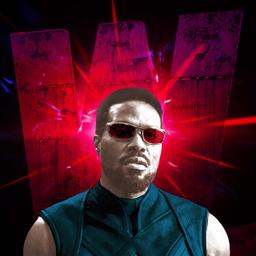
These inventive series can subsist on less screen time in part because they don’t devote much of it to picking up plot points from previous stories or planting seeds for future ones. While someone with no knowledge of Thrones or House of the Dragon would be oblivious to some subtleties and depths of A Knight of the Seven Kingdoms, they wouldn’t be aware of or bothered by what they were missing. Wonder Man is only the second project to be labeled as a stand-alone, “Marvel Spotlight” release—and arguably the first to deserve the distinction. Although the season’s climax gestures vaguely toward some larger role for Simon in the MCU, the series may turn out to be truly self-contained, saved for its ties to Trevor Slattery’s MCU past.

More on ‘Wonder Man’
The events of Skeleton Crew may yet come into play in other Star Wars releases, but only a superfan of space pirate Vane—if such a person exists—would suggest that any knowledge of other recent Star Wars stories is required to follow it. Lower Decks and Starfleet Academy are more beholden to their franchise’s history—see the frequent callbacks to (and send-ups of) past series on Lower Decks, the Deep Space Nine homage of Starfleet Academy’s fifth episode, and the crossover characters from Trek series as varied as Voyager and Discovery. But if anything, Starfleet Academy skimps on some connective tissue. For the first few episodes, it barely bothers to explain the catastrophic circumstances that necessitated Starfleet’s reconstruction, familiar to anyone who watched the later seasons of Discovery. (Which I wouldn’t really recommend.) Starfleet Academy is supposed to be about fresh starts—for its students, for Starfleet, and, ideally, for some new converts to Trek. It’s designed not to feel like a continuing mission, which—as with Kingdoms and Wonder Man—largely frees it to follow its muse.
We’ve covered the creative virtues; what about the bottom line? A Knight of the Seven Kingdoms was a popular success, albeit slightly less so than Dragon (let alone Thrones). Lower Decks ran for five seasons; the show got good reviews, and its quality was consistently strong, but like a lot of adult animation, it lacked mass appeal. Starfleet Academy (which is cowritten by Lower Decks costar Tawny Newsome) hasn’t hit the ratings charts; streaming industry analyst the Entertainment Strategy Guy labeled it a “co-‘Miss of the Week’” and declared, “This didn’t work.” Wonder Man’s numbers weren’t wondrous either. Viewership-wise, Skeleton Crew was a Disney disappointment too, though a second season may belatedly be in development. The budgets for most of these series may be modest enough to make middling audiences sufficient for the suits, but it’s tough to construct a purely business-based case that unorthodox, lore-light, less-momentous shows can be a panacea for franchise fatigue.
Thus, this lovely, low-stakes interlude won’t last much longer. House of the Dragon’s third season, due out in June, promises to be bigger and bloodier than ever. Daredevil: Born Again will keep Marvel’s storytelling grounded—and its TV properties somewhat separated from the wider MCU—when its second season starts next month. And Spider-Man may stay at street level when the character comes back from a five-year film break in July’s Brand New Day (directed by Wonder Man maker Destin Daniel Cretton). After that, though, the MCU will lean hard into multiversal nostalgia, as a cavalcade of the MCU’s famous faces returns in Avengers: Doomsday.
Star Trek will supposedly, eventually, beam back to the multiplex, in what’s been described as a new take on Trek. On the Star Wars front, the franchise will venture back to the big screen for the first time in nearly seven years—albeit via a repurposed TV property—when The Mandalorian and Grogu premieres in May. The Mandalorian delighted audiences early in its run precisely because it felt like a lighter, procedural alternative to the space-operatic Skywalker saga (notwithstanding some setup for the sequel trilogy). In the third season—after Luke Skywalker himself (stirringly) rode to Din Djarin’s rescue and the series grew swollen with legacy characters in support of the burgeoning (and now, seemingly, stagnating) “Mandoverse”—it lost a lot of its charm. Trailers for the film are light on plot details and heavy on Grogu mugging for the camera, which may portend a renewed focus on friendship and fun over franchise-building—or, less happily, a lack of story inspiration and an overriding emphasis on lucrative toy tie-ins.
Maybe the most that fans of chill franchise fodder can hope for is that the marquee, high-concept swings to come will incorporate the influence of these more experimental shows, much as the latter have adopted elements of their franchises’ heavy hitters. After all, despite these series’ novelties, they capture much of what has always worked about their franchises, massive armies and space armadas aside.
Sure, Game of Thrones has big battles, stunning twists, and succession struggles, but it’s also a series that sings in the quiet moments between the battles, with relatable wishes, witty wordplay, and odd-couple companions. Yes, Star Trek features phasers, photon torpedoes, and threats to Starfleet and the Federation, but it also revolves around ethical dilemmas, egalitarian cooperation, and compelling crew members whose mutual fondness fills voids in space and inside each other. The MCU traffics in CGI spectacle, cosmic confrontations, and infinite realities, but it flourishes when we see ourselves reflected in superpowered people who are making their way in the world. George Lucas has always insisted that Star Wars is for kids; Skeleton Crew takes that contention to its logical conclusion. Many major franchises have firm foundations. Sometimes they just need a renovation.
“You don’t look to be a knight,” Egg tells Dunk, and officially, perhaps he isn’t. But if we are what we repeatedly do—or even if we are what we pretend to be—then no one is knightlier. A Knight of the Seven Kingdoms may not always look like traditional Thrones or like the typical foundation of one of HBO’s storied Sunday nights. But the TV tales of Dunk and Egg—and their lowish-stakes small-screen counterparts—are as much a credit to their franchise as the flagship films and series that sandwich them.