Is Duncan the Tall a True Knight, or Not?
We examine the evidence after the season finale of ‘A Knight of the Seven Kingdoms’


Last week’s action-packed penultimate episode of A Knight of the Seven Kingdoms gave way to this week’s quiet, understated season finale. “The Morrow,” directed by Sarah Adina Smith and written by Ira Parker and Ti Mikkel, is the shortest installment of the series, with a sub-30-minute run time. The eventful tourney at Ashford concludes on a somber note, amid a funeral for Baelor Targaryen, whose death looms over Dunk and the entire realm. And after saying farewell to his friends both new and (counting his horse) old, the hedge knight sets off on the road again with his squire, Egg, by his side.
But the finale also raises an important question about our lovable, lumbering protagonist: Was Dunk ever actually knighted by Ser Arlan Pennytree?
Across its six-episode first season, A Knight of the Seven Kingdoms has explored what it means to be a true knight in Westeros—and who’s allowed to be one. Dunk was once nothing more than a penniless orphan from Flea Bottom, but he’s just defeated a Targaryen prince in a historic, deadly trial of seven that pitted right against wrong and good against evil. Dunk is a knight who remembered his vows, a protector who put his life at risk to defend the innocent. Yet “The Morrow” casts doubt on whether Dunk really made any vows at all.
After Dunk tells Egg about halfway through the episode that he won’t be accepting him as his squire, the disappointed prince laments that Dunk may not be the knight he thought he was. The moment triggers a flashback of one of the final exchanges between Dunk and Arlan before the latter’s demise. As Arlan re-explains the roots of the name of his village, Pennytree, Dunk presses his master on an issue that has clearly been weighing on him for some time.
“Why did you never knight me?” Dunk asks him, distraught. “Did you think I’d leave you? I wouldn’t have. Or was it something else?”
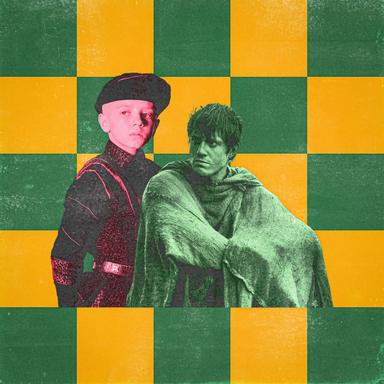
Arlan looks so vacant in response that for a moment, Dunk believes him to be dead. Arlan eventually springs back to life to finish his story, as any true knight would (or so Arlan says), but he doesn’t so much as dignify his loyal squire with an answer. While the finale allows for the possibility that Arlan could’ve knighted Dunk soon after this exchange, it appears to heavily imply that the old man never bestowed that honor upon him.
This scene isn’t the first time that the validity of Dunk’s knighthood has come into question. When Dunk tries to enter the tournament in the series premiere, Plummer—Ashford’s steward—very much doubts Dunk’s flimsy story about getting knighted by Arlan. Dunk claims that only a robin stood as witness to the occasion, and then nervously begins to bumble about how it was raining that day as Plummer presses him further. (When Dunk also contends that Arlan always intended for him to be a knight, a cutaway flashback quickly contradicts him: After a young Dunk asked Arlan if he was going to be a knight one day, Arlan merely spat on the ground in response.) Plummer eventually drops the interrogation altogether, much to Dunk’s relief, but the former squire remains guarded and eager to prove his legitimacy to everyone thereafter.
The Hedge Knight, the novella from which this season is adapted, also raises suspicions about Dunk’s knighthood without providing a definitive answer. Early in George R.R. Martin’s version of the story, Dunk considers his options after Arlan’s death: “I could find another hedge knight in need of a squire to tend his animals and clean his mail, he thought, or might be I could go to some city, to Lannisport or King's Landing, and join the City Watch.” If Dunk had truly been knighted by Arlan, it would’ve been a peculiar choice for him to squire for another knight again.
Shortly after Egg reveals himself to be a Targaryen in the book, Dunk also empathizes with the boy when he explains the nature of his lie:
[Egg] lowered his eyes. “I didn’t care if Dareon fought or not, but I wanted to be somebody’s squire. I’m sorry, ser. I truly am.”
Dunk looked at him thoughtfully. He knew what it was like to want something so badly that you would tell a monstrous lie just to get near it. “I thought you were like me,” he said. “Might be you are. Only not the way I thought.”
And, lastly, when Raymun Fossoway urges Dunk to knight him so he can join his trial of seven, Dunk refrains from doing so himself for reasons that he doesn’t explain:
Frowning, Dunk moved a hand to the hilt of his longsword, then hesitated. “Raymun, I… I should not.”
“You must. Without me, you are only five.”
“The lad has the truth of it,” said Ser Lyonel Baratheon. “Do it, Ser Duncan. Any knight can make a knight.”
“Do you doubt my courage?” Raymun asked.
“No,” said Dunk. “Not that, but…” Still he hesitated.
A fanfare of trumpets cut the misty-morning air. Egg came running up to them. “Ser, Lord Ashford summons you.”
The Laughing Storm gave an impatient shake of the head. “Go to him, Ser Duncan. I’ll give squire Raymun his knighthood.”
…
Dunk left them there, feeling as relieved as he was guilty.
While it’s possible that Dunk was merely trying to save his new friend from a likely death in the imminent battle, it seems as if the very act of knighting someone else is what’s giving Dunk pause. As Baratheon pointedly says, “Any knight can make a knight.” But if you’ve told a monstrous lie to become a knight, you might not be so inclined to turn your buddy into a bad apple, too.
These instances from the source material amount to a pretty strong case against the legitimacy of Dunk’s knighthood. Yet A Knight of the Seven Kingdoms goes a step further than the novella by adding the finale’s flashback conversation between Dunk and Ser Arlan, which never occurs within the pages of The Hedge Knight. It renews the series’ early uncertainty surrounding the veracity of Dunk’s story and addresses the matter more directly, just in time for the conclusion of the first season. In an episode that finds our hero agonizing over Baelor Breakspear’s death, and why the gods would let a mere hedge knight survive instead of the noble heir to the Iron Throne, it also reestablishes a fascinating dynamic that’s central to Dunk’s character and his ongoing struggle with imposter syndrome.


In Game of Thrones, no one abided by a knight’s moral code more faithfully than Brienne of Tarth. She was more honorable and skilled with a sword than just about anyone else. However, due to archaic Westerosi customs, Brienne was barred from serving as a knight simply because she was born a woman. With The Hedge Knight, George R.R. Martin created a similar source of conflict to subvert the themes of chivalry and knighthood with another character, in a different era. Even if Dunk is a knight in title by virtue of a lie, the former squire’s pure heart and noble intentions put most “true” knights’ actions to shame.
Of course, Dunk isn’t the only character who’s lying to get the title he wants in “The Morrow,” as Egg deceives his new master (again) to retake his place at Ser Duncan’s side. When the hedge knight returns to Maekar Targaryen to tell him that he’ll take his youngest son as his squire so long as they can leave Summerhall behind and venture throughout the seven nine kingdoms on his terms, Maekar doesn’t seem too impressed by the proposal. Egg, clever as always, shows up just as Dunk is leaving Ashford and claims that his father has told him he’s to serve Ser Duncan, and Dunk the Lunk is too naive to think otherwise. After the (amended) title screen flashes at the end of the episode, a final scene depicts an angry Maekar desperately searching for his missing son as the Targaryens depart Ashford as well.
As Dunk and Egg ride off into the sunset toward the Red Mountains, they’re joined by a third man on a horse: Ser Arlan, who quickly veers off in a different direction as his successor marches on with a squire of his own. Dunk subtly turns his head to look back at Arlan’s ghost, but he continues forward all the same.
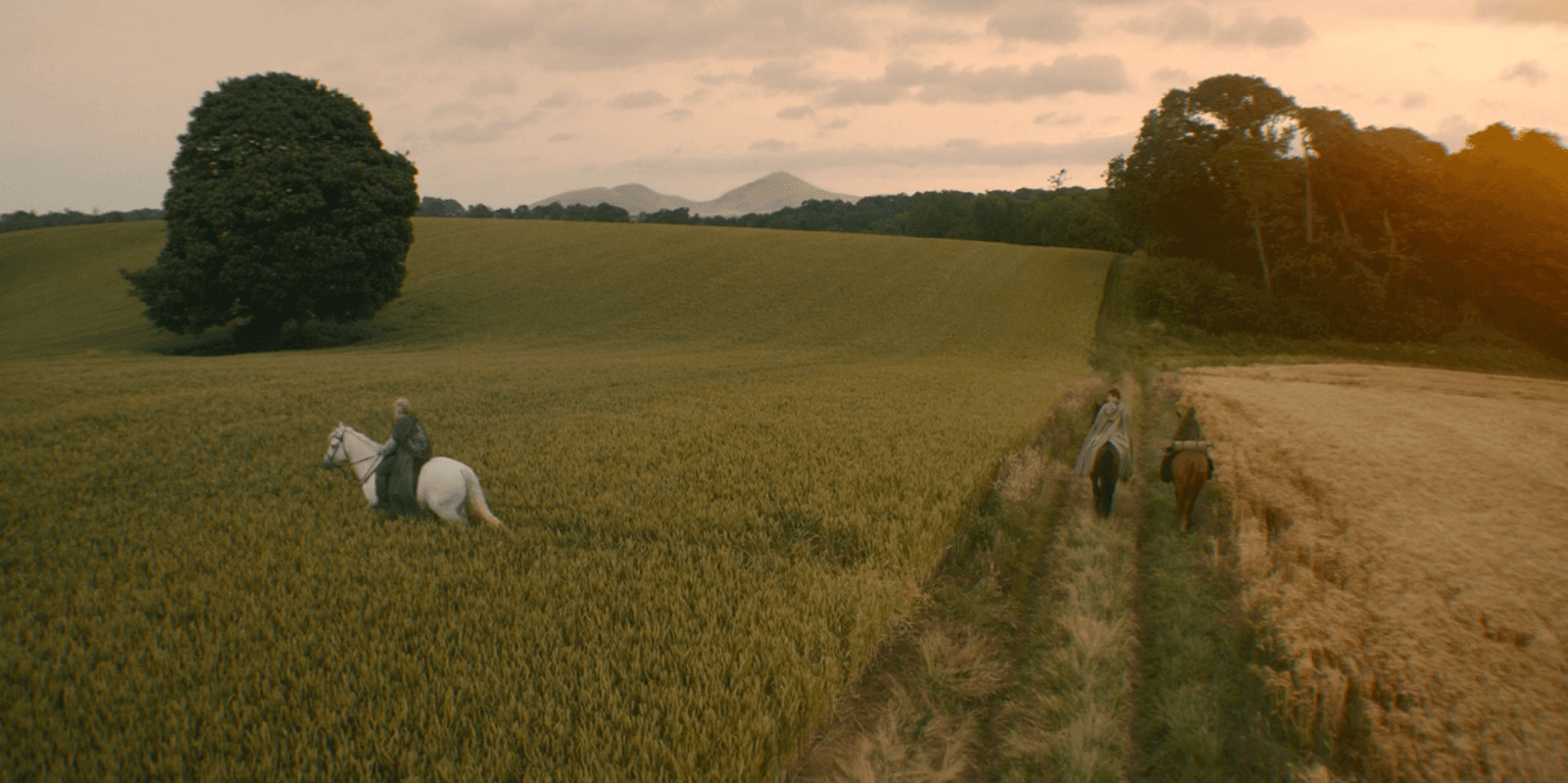
It’s a touching, and fitting, moment to end the first season, as the trio saunters through the serene scenery as composer Dan Romer’s score swells to accompany them. Even if the old man never knighted Dunk, he still taught him everything it means to bear the duty of being one. As flawed an education as Dunk’s may have been, his moral compass guided him exactly where he needs to be, and Ser Duncan the Tall will take Arlan’s lessons with him as he starts an adventure of his own with his Targaryen squire.
When the series returns for a second season next year, A Knight of the Seven Kingdoms could very well return to the lies that Dunk and Egg have told to make their dreams possible. There’s also the matter of a distressed father in Maekar, not to mention the aftermath of Baelor’s death and what it’ll mean for the realm. But for now, our leading duo is striking off into the hopeful unknown as A Knight of the Seven Kingdoms begins what could be an enduring, fruitful journey.