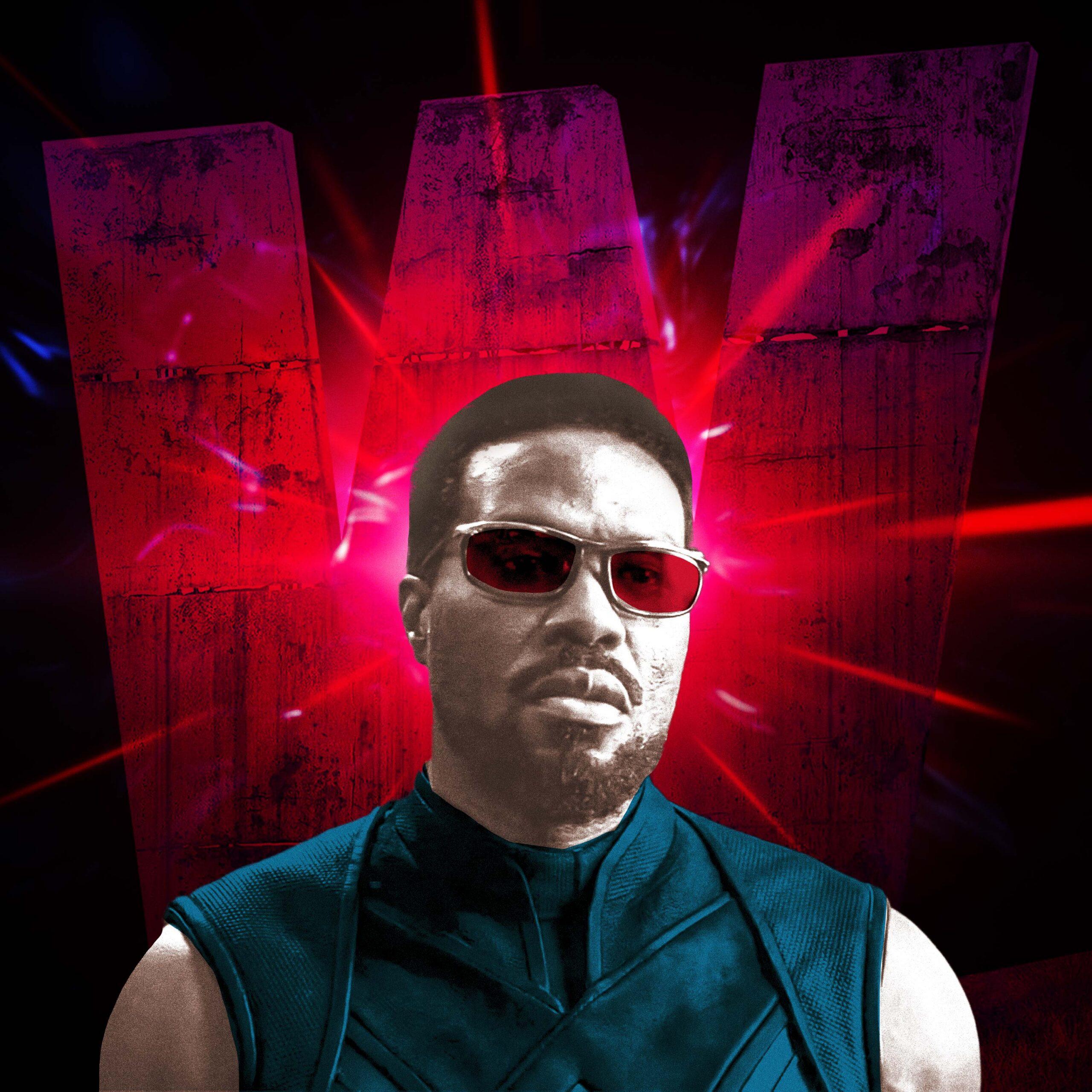


Two years ago, Marvel Studios released its first TV series under the Marvel Spotlight banner: Echo. At the time, Marvel head of streaming Brad Winderbaum promoted this new brand within the studio’s TV programming as a narrative space for grounded, character-driven stories that viewers could follow without any prior knowledge of the MCU.
“Marvel Spotlight is about resetting the audience’s expectations,” Winderbaum explained. “Not everything is tied to a mainline Avengers story or is a necessary path on the road to this ‘big thing.’ There’s no homework required. You can watch it, and we’re going to fill in the blanks.”
Echo was indeed a new kind of TV show for Marvel in various ways. It was the first MCU series to receive a TV-MA rating, and it starred a deaf, Native American protagonist in Maya Lopez (Alaqua Cox), whose life dealt with street-level stakes instead of multiversal drama. But Echo was far from a stand-alone story, and even with its darker tone, the five-episode miniseries bore many of the hallmarks of non-Spotlight MCU projects.
About half of its premiere was dedicated to catching the audience up on Maya’s introduction in Hawkeye; Echo recycled scenes from Hawkeye and added some new details from that time in Maya’s life in what essentially served as an elevated “previously on” segment. If no homework was required to watch, that was only because the show included the answer key. What’s more, Echo reused the main villain from Hawkeye, Kingpin (Vincent D’Onofrio), and focused some of its ending on setting up the events of Daredevil: Born Again.
On Tuesday, Marvel premiered its first Marvel Spotlight series since Echo: Wonder Man. And this time, the label fits. The eight-episode TV miniseries is the rarest of creatures: a truly self-contained MCU story. And its un-Marvel-like narrative approach pays off.

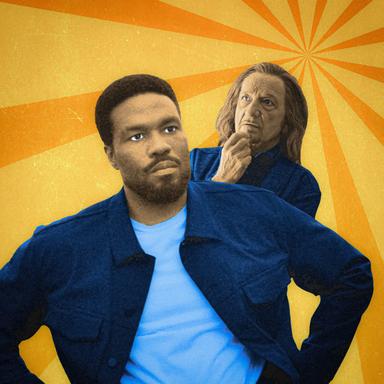
Wonder Man is exactly what Winderbaum originally advertised the Marvel Spotlight brand to be. Created by Destin Daniel Cretton and Andrew Guest, Wonder Man feels like a true departure from previous MCU series in both style and substance. It has almost comically low stakes compared with Marvel’s typical interests: The entire season follows Simon Williams’s (Yahya Abdul-Mateen II) acting journey as he lands the lead role in the remake of a classic superhero movie, Wonder Man. With a few exceptions, each 30-ish-minute episode centers on one part of this process from Simon’s perspective, including the initial audition (“Matinee”), the callback (“Call Back”), and a New York Times profile to promote the movie (“Kathy Friedman”). By narrowing the scope of each installment, Wonder Man creates room to intimately flesh out Simon’s character and his friendship with Trevor Slattery (Ben Kingsley).
Of course, given Slattery’s return, Wonder Man isn’t completely self-contained. But the series uses its connections to the MCU to service its story, rather than using its story to service the MCU (which happens far too often). Trevor most recently appeared in 2021’s Shang-Chi and the Legend of the Ten Rings, but the events of the movie aren’t mentioned in Wonder Man, save for a throwaway line about a friend in a pocket dimension. However, his previous appearance as the (fake) terrorist known as the Mandarin in 2013’s Iron Man 3 plays a surprisingly prominent role across the season.
As depicted in the 2014 short Marvel One-Shot: All Hail the King, the real warlord Trevor was pretending to be in Iron Man 3 broke Trevor out of prison, thus preventing him from finishing his sentence. Wonder Man deftly uses this as an entry point for Slattery’s return in the series, as the Department of Damage Control—a government agency that deals with superhuman affairs—leverages his bizarre legal situation to make a deal. Using Trevor’s acting career to its advantage, the DODC sends in the eccentric thespian to gather evidence on an actor with dangerous, unstable superpowers: Simon.
Trevor’s role in Iron Man 3 was minor enough that Wonder Man can quickly reestablish his character’s story for any viewers who haven’t seen the movie or don’t recall anything about it more than a decade after its release. But Wonder Man also uses that backstory to complete the full arc of Trevor’s own acting journey alongside Simon’s, as Trevor is forced to confront his past—including his greatest failure—while Simon tries to break into a competitive industry. Trevor emerges as a mentor and friend to Simon, and Kingsley and Abdul-Mateen have a magnetic chemistry that serves as the emotional core of the series. These unlikely friends bond over their love of acting and their shared loneliness at opposite ends of their careers, and Slattery’s duplicity becomes a driving tension.
Wonder Man establishes a unique visual style and its own comedic, yet heartfelt tone that carries it to the season finale. Most MCU TV shows, including one of Marvel’s best in 2021’s WandaVision, had unsatisfying conclusions because they sacrificed what made them distinctive to deliver obligatory, action-packed Marvel spectacles. (She-Hulk: Attorney at Law even poked fun at this familiar formula in its fourth-wall-breaking season finale in 2022.) But Wonder Man stays true to its vision to the very end. The series culminates in a finale that doesn’t get caught up in fabricating a big fight scene for the sake of it. Instead, it subverts what we’ve come to expect of traditional superhero endings—without having to Hulk-smash its way through the fourth wall to do so.
In “Yucca Valley,” directed by Stella Meghie and written by Guest, Trevor takes the fall for Simon, who lost his temper and destroyed the Wonder Man film set at the end of the penultimate episode. Simon had finally discovered the truth of Trevor’s deal with the DODC, and he unleashed his anger over the betrayal in an explosion that wouldn’t be covered up easily. And so Trevor saves Simon’s career (and freedom) by stepping back into the role of the Mandarin and claiming the destruction as another act of terrorism in his grand return to crime. This sacrifice brings Trevor’s unexpected MCU trilogy full circle as he finally takes accountability for his past, but it also reinforces the show’s themes of trust and redemption.
So many superhero origin stories conclude with the titular protagonist embracing their role as a superhero and/or wearing their iconic costume for the first time. Trevor’s selfless act paves the way for Simon to get his own signature origin moment—yet it’s one that still exists only within the fictional world he’s creating with director Von Kovak (Zlatko Burić). While filming the big scene that he’d practiced throughout the season, Simon dons his Wonder Man costume—with the original red shades to match—and becomes the superhero he aspired to play on-screen as a child. Before long, he’s surrounded by his family and a new legion of fans as they gather for the triumphant Wonder Man premiere. With that, Simon’s dream is finally realized.

After all the trials of Simon’s rise to stardom that are depicted in the first seven episodes, the finale gives us only a small taste of Simon’s actual Wonder Man performance and the success it creates for him. Instead, the latter half of “Yucca Valley” is used to tie together the story of the season while also leaving room for the series to return for a potential second run.
Following an unspecified passage of time, Simon meets with a man named Chuck Eastman (Blake Robbins), whom the actor claims to be portraying in a secretive upcoming movie. The rising star shadows Chuck through the mundane moments of his everyday life before Wonder Man eventually reveals Chuck’s job as a DODC guard at the prison where Trevor is being held. Using Chuck’s help to enter the building, Simon fittingly uses his acting skills to get past the other guards at the prison, and then he breaks Trevor out of his cell—flying him through the ceiling—as he displays a newfound mastery of his abilities. As all of this is happening, DODC agent Cleary (Arian Moayed) is meeting with his boss to tell him about newly obtained lab results from the Wonder Man set Simon destroyed.


“The ions were disrupted in every single thing that we tested,” Cleary explains. “If he’s capable of harnessing ionic energy, then Simon Williams is an extraordinary threat … or asset.”
The season ends with Cleary and his DODC coworkers hopelessly looking up through the hole that Simon and Trevor have left behind. For Simon and Trevor, their reunion comes after they’ve both embraced the sides of themselves that they’ve sought to bury from the public. Trevor tried to brush away his unsavory past as the Mandarin and restart his career, yet his infamous role ended up saving his only real friend from dooming himself. Meanwhile, Simon—who hid his destructive abilities for his whole life out of fear of getting caught or jeopardizing his acting dreams—chooses to use those powers right in the heart of the DODC to repay Trevor in his first and only true act of heroism.
Wonder Man, which was promoted as a limited series, hasn’t been green-lit for a second season. However, Guest hasn’t ruled out a return for either Simon or the next chapter of his eponymous story. “I think Marvel’s approach to this is [to] let each project stand on its own, and if an audience connects with it and if they connect with the character, then they can figure out how to keep using them,” he told ComicBook.com. “[With] Trevor Slattery, maybe you thought he would be a one-and-done after Iron Man 3, but Destin was able to bring him into Shang-Chi and find a whole other side of him. I was so thrilled to get to use that same character again, so hopefully, people fall in love with Simon Williams, and he can continue to live on.”
Between an eight-episode dump on a Tuesday night in January and a pretty muted marketing campaign, Wonder Man hasn’t exactly been set up for success by the studio. Even so, the show’s glowing reviews and word of mouth could be enough to earn it a second season, especially as Marvel seeks to develop more multi-season series in its overhauled TV strategy. Wonder Man may end up following Thunderbolts* and The Fantastic Four: First Steps as critical achievements that fail to generate financial profits to match for the House of Mouse. No matter what happens, though, the series will stand as an encouraging example that Marvel can still make good TV shows when it worries less about tying them into the wider MCU and instead trusts its creators to see their vision through to the end. Wonder Man makes a strong case for more projects to appear under the Marvel Spotlight billing in the years to come—or better yet, a second season.