
Thor, the debut film for Chris Hemsworth’s god of thunder, concluded its end credits with a concise line of text: “Thor will return in The Avengers.” Thor was just the fourth entry in the MCU, and the 2011 film followed Marvel Studios’ formula of featuring a post-credits stinger to tease how the movie’s events or characters would tie into the cinematic universe’s expanding, interconnected story. But the written message teasing Thor’s return in The Avengers marked the first time Marvel had utilized this new element of its emerging release strategy. It was a simple yet effective way to generate excitement, build momentum, and ensure that the audience would be seated for the studio’s big crossover event.
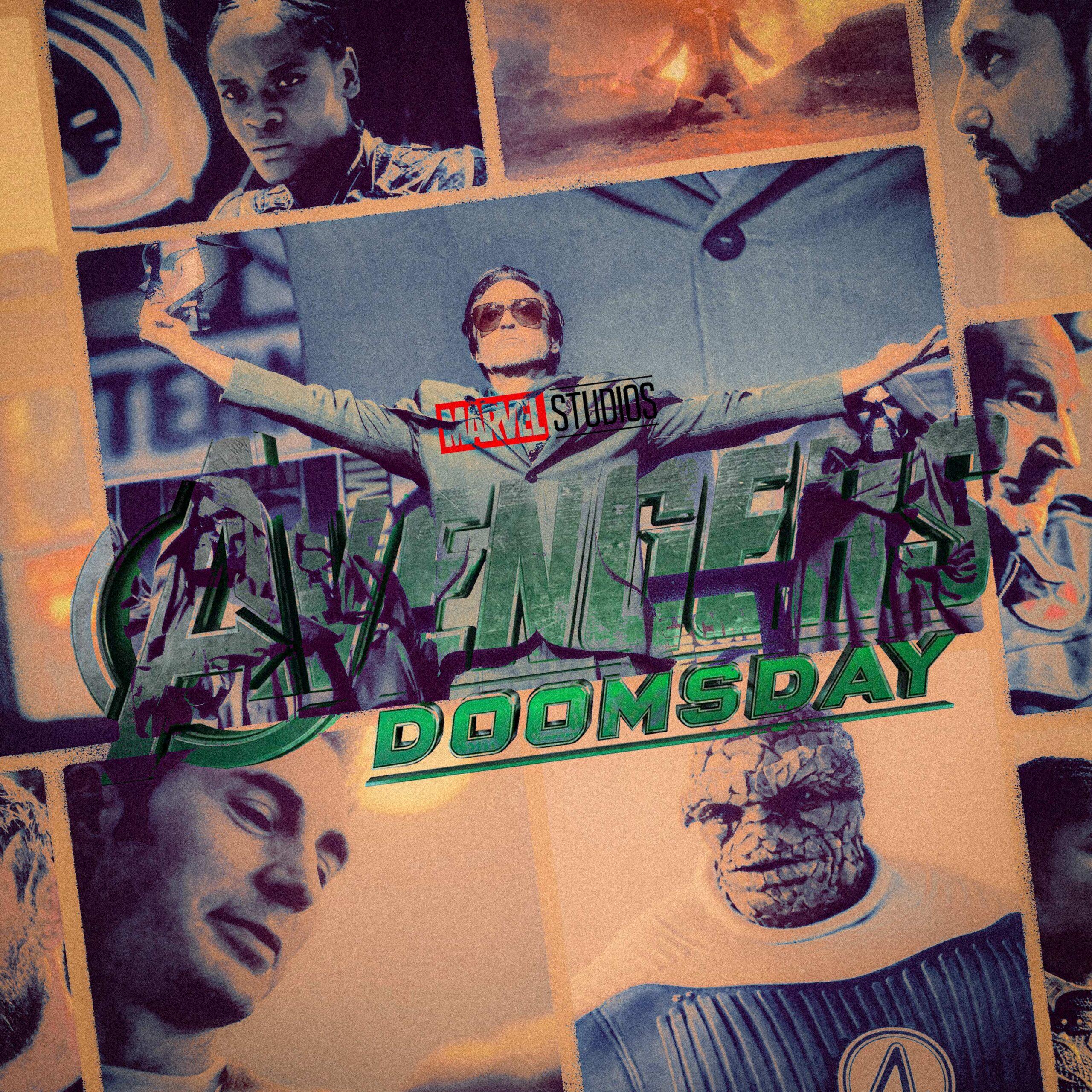
Fifteen years later, Marvel Studios has repurposed this end-credits mainstay into the central marketing tactic for its next major crossover: Avengers: Doomsday, which is due in theaters on December 18. Marvel started unveiling new teasers for the first Avengers film since 2019’s Endgame almost exactly one year before its premiere and has continued to release them on a weekly schedule to keep the conversation going. Each trailer has announced the return of another superhero or superteam, ranging from characters who were believed to be dead to some who have yet to officially appear in the MCU. While the weekly drops may be achieving their primary purpose of generating buzz online, the rollout has also reflected the studio’s desperation as it attempts to salvage the conclusion of the uneven Multiverse Saga.


Part of what worked so well during the Infinity Saga’s lead-up to its two-part Avengers finale (Infinity War and Endgame) is that the movies coalesced around a core group of characters who had already appeared in their own solo films or previous crossover events. Even if Marvel encountered the occasional box office setback or creative misfire, there was still enough continuity in the wider MCU for the sum of the MCU’s parts to succeed. But as The Ringer has covered many times in the past few years, the Multiverse Saga has been a scattered mess by comparison. There hasn’t been a true crossover movie akin to an Avengers-level team-up, and even successful stand-alone films like 2021’s Shang-Chi and the Legend of the Ten Rings have yet to receive a sequel. And so Marvel is deploying its greatest—or, at least, most bankable—weapon to lure back the general audience that it’s lost over the past half decade: nostalgia.
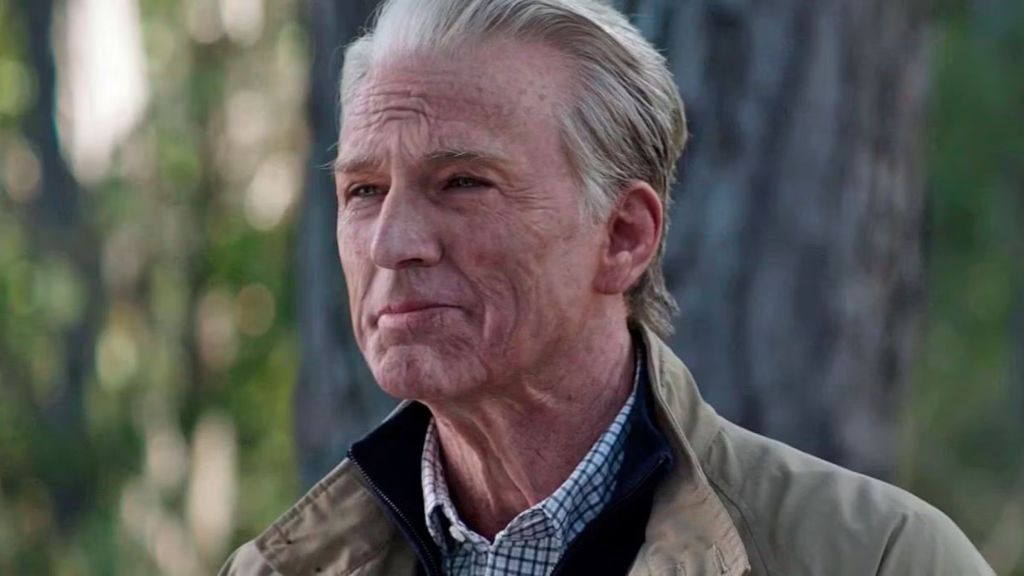
From the moment Marvel unmasked Robert Downey Jr. as Doctor Doom in Hall H at San Diego Comic-Con in 2024, the studio demonstrated that it would turn to the pillars of its past success to save its uncertain future. After Marvel fired Jonathan Majors following his conviction for assault and harassment in December 2023, Kevin Feige went back to Downey—the actor who played the MCU’s first superhero—to replace Majors’s Kang the Conqueror as the Multiverse Saga’s foremost villain. The Russo brothers, who helmed Infinity War and Endgame, were likewise rehired to direct Doomsday and its 2027 follow-up, Avengers: Secret Wars. And after months of rumors and leaks, the release of the first Doomsday teaser this past December officially confirmed that Downey wouldn’t be the only Infinity Saga star who would somehow return after a superhero hiatus. Chris Evans is back as Steve Rogers, and he’s brought a baby with him.
Between the aforementioned leaks and Evans’s cameo as the Human Torch in 2024’s Deadpool & Wolverine, the announcement of the original Captain America’s return didn’t land quite as well as Marvel likely envisioned. And with only one year having elapsed since former Falcon Sam Wilson (Anthony Mackie) made his big-screen debut as the MCU’s new Captain America in Captain America: Brave New World, the move comes off like a swift course correction. Brave New World was a box office disappointment and was panned by critics and fans. Yet the Russo bros. claim that “it was always going to come back to this.”
Regardless of whether Evans’s role reprisal was the plan all along, Rogers’s reemergence erases what was a satisfying conclusion for the beloved character in Endgame. Rogers finally got his happy ending with Peggy Carter in his original timeline and lived the life he had been robbed of. Remember when Steve was super old all of a sudden and gave Sam his shield? Well, now he’s back, and he’s young again after missing almost the entire Multiverse Saga.
The second Doomsday teaser centered on Hemsworth’s Thor to complete the reunion of the MCU’s Big Three, even if Downey might not be stepping back into the role of Iron Man. (Though that seems like too good a fan-service opportunity for Marvel to pass up.) The 80-second trailer features All-Father Thor praying to Odin and reflecting on his new responsibilities to his adopted daughter, Love, as he’s called back to battle again, reminding the audience of his tremendous growth over his eight non-cameo film appearances—including the unfortunate most recent installment, Thor: Love and Thunder.
For the third teaser, Marvel trotted out one of its most closely guarded assets: the X-Men. It’s been six years since Disney acquired 21st Century Fox, which gave Feige the opportunity to add the mutants to his growing roster of MCU superheroes at last. But for most of that time, details about any live-action X-Men project were scarce; Marvel announced it had found its X-Men movie director, Jake Schreier (Thunderbolts*), this past summer, while the new cast for the reboot has yet to take shape. Aside from the animated X-Men ’97, X-Men characters have been shown sparingly, including cameos in 2022’s Doctor Strange in the Multiverse of Madness and 2023’s The Marvels. Only Deadpool & Wolverine has heavily featured the X-Men on the big screen, as it bade farewell to Marvel’s Fox era in a multiversal romp that brought Hugh Jackman out of superhero retirement to don Wolverine’s iconic yellow-and-blue costume.
The Doomsday promo is a similar trip down memory lane, providing a tour through the ruins of the X-Mansion as Patrick Stewart’s Professor X narrates and then appears on-screen to play another game of chess with his longtime friend and rival, Magneto (Ian McKellen). It ends with Cyclops (James Marsden), wearing his own iconic yellow-and-blue costume, unleashing an optic blast into the skies in the midst of a battle.
Finally, this week’s teaser shows the Wakandans—led by the new Black Panther, Shuri (Letitia Wright), and King M’Baku (Winston Duke)—meeting with the Fantastic Four’s the Thing (Ebon Moss-Bachrach) as Wakanda Forever villain Namor (Tenoch Huerta) returns with his Talokanil. Four weeks into the latest video-driven phase of the Doomsday marketing campaign, this gathering is the first example of Marvel spotlighting characters introduced during the Multiverse Saga. Given that the original Black Panther, T’Challa, first appeared in a Fantastic Four comic in 1966, and considering Namor’s longstanding rivalry with the Fantastic Four, it’s also a convergence of three factions with a rich shared history in the comic books.
Each of these teasers offers a glimpse into the current lives of these characters, and how they may have changed since viewers last saw them. For the likes of Steve Rogers and Thor, it’s newfound parenthood. For the X-Men (perhaps in a post–X-Men: The Last Stand timeline), it’s loss and grief. For the Wakandans and the Talokanil, it’s new job titles and a tenuous alliance. (As for the Thing, he just seems happy to be there. Although it could be notable that he’s not joined by his team members.)
The character-driven approach that Marvel has used to promote Doomsday leans into the strength of its IP while circumventing the lack of any discernible narrative through line in the Multiverse Saga (and sidestepping any pressure to illuminate the movie’s plot). By leading with Steve Rogers, Thor, and the X-Men, Marvel has highlighted some of its most popular, recognizable characters before reintroducing franchises (such as the Fantastic Four) that haven’t had as much financial success in the studio’s past few phases. Spider-Man: No Way Home (2021) and Deadpool & Wolverine each hauled in more than $1 billion at the global box office (almost $2 billion in No Way Home’s case) by prioritizing fan service and bringing back fan-favorite actors in droves. Both films, which were the biggest earners in the Multiverse Saga by a wide margin, used the multiverse as a narrative crutch to create entertaining spectacles without much substance. And these recent teasers seem to indicate that Marvel is banking on that approach working again in Doomsday.
In fairness to Marvel and Feige, the studio did have a more cohesive plan in place at one point. Multiverse Saga projects such as Loki and Ant-Man and the Wasp: Quantumania helped establish the foundations for the crossover that was originally intended: Avengers: The Kang Dynasty. Of course, everything changed when Majors’s Kang was jettisoned. Now, to compensate for the apparent lack of connective narrative tissue between the many movies and TV shows of the Multiverse Saga, Marvel is rolling out these teasers, and it will likely continue to roll out character updates in the weeks and months to come.
Indeed, the Russo bros. emphasized the promos’ importance as they shared the latest teaser in an Instagram post on Tuesday. “What you’ve been watching for the last four weeks… are not teasers,” they wrote. “Or trailers. They are stories. They are clues… Pay attention.”
With only two Disney+ series (Wonder Man and Daredevil: Born Again Season 2) and one film (Spider-Man: Brand New Day) slated to arrive ahead of Doomsday, these teasers—sorry, stories—will have to serve as a last-ditch narrative runway for the much-hyped Avengers crossover. Although the teasers’ early leaks may be dampening Marvel’s calculated strategy, and their formulaic structure is being memed to hell by the undefeated internet, there appears to be no end to the advertising in sight. We’ll find out in December whether the ploy paid off. And in case you forget how far away December is, Marvel has you covered: It just debuted a Doomsday countdown clock.