
The NBA season is barely two weeks old, and injuries have already stolen far too much of the spotlight. Anthony Edwards, Jalen Williams, Chet Holmgren, Cason Wallace, Paolo Banchero, Jalen Suggs, Jaren Jackson Jr., Ja Morant, Tyrese Haliburton, Jalen Duren, and our old pal Kawhi Leonard have already suffered injuries that are either serious enough to jeopardize their entire season or worrisome enough to sideline them for a stretch that would otherwise allow for the acclimation and discovery that make these opening weeks so fascinating.
But standing tall in the shadow of all this bad news are a few teams that can’t complain about their start. All are, to varying degrees, a pleasant surprise. So instead of lingering in a state of basketball depression, let’s bask where the sun has decided to shine. In addition to analyzing some of the NBA’s more hopeful starts, I’ll also measure how sustainable they are on a scale of 1 to 10, with 1 being “Enjoy this while it lasts” and 10 being “It’s never too early to plan a championship parade.”
Memphis Grizzlies
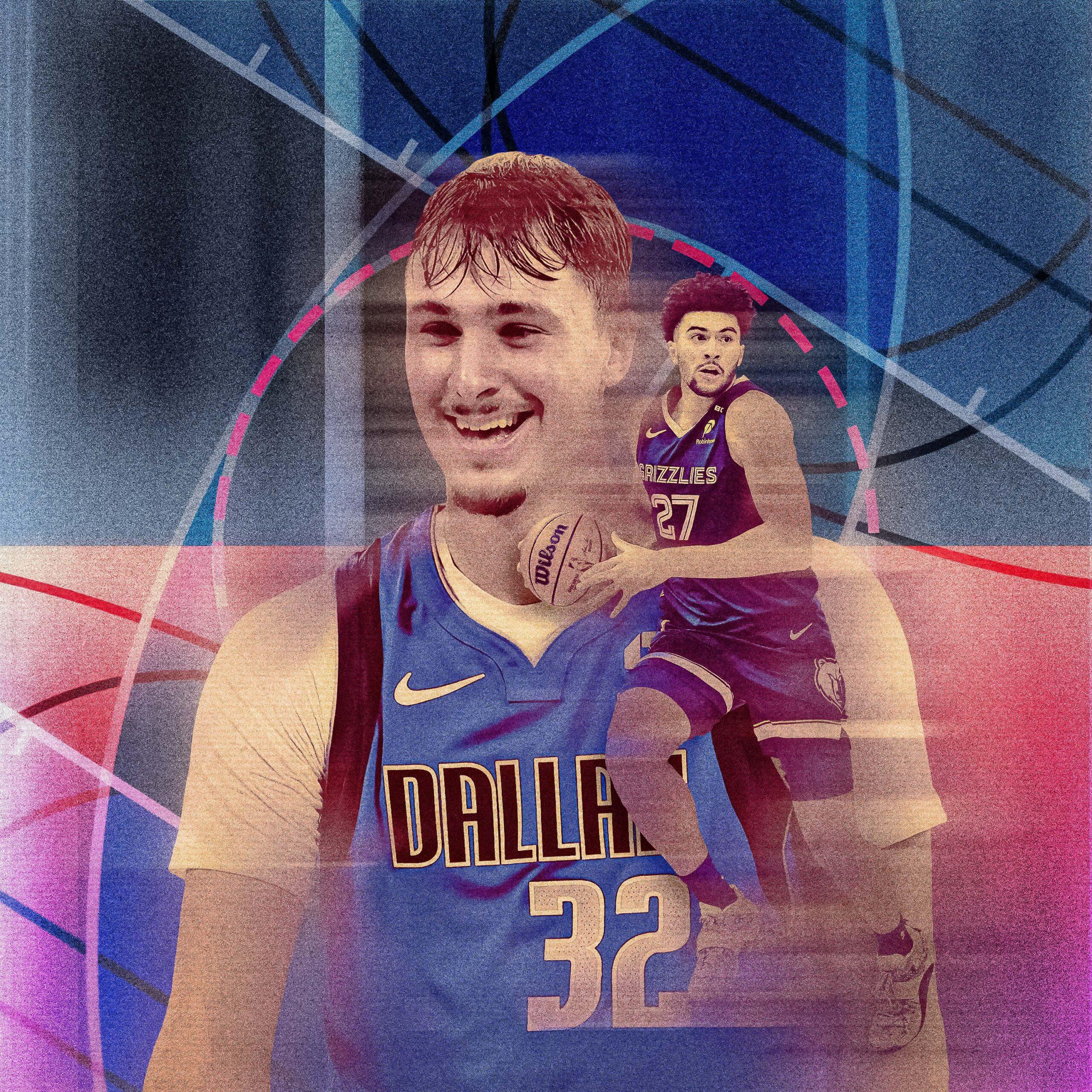
Where else could I possibly begin? Memphis is 6-0, winning its first four road games for the first time in franchise history. Here are my top three revelations about the best story in the league right now: 1) Ty Jerome has shown that he knows how to impersonate the surface of the sun, 2) Cam Boozer is probably going to average a triple-double next season, 3) the Grizzlies have 12 guys averaging at least 15 minutes per game, and the only one who’s above 30 is Boozer. It’s a deep, feisty, humongous, ascending squad that could very well make the play-in tournament despite being the NBA’s second-youngest team.
Now, to keep things tempered, those aforementioned first four road wins came against the Warriors, Kings, Jazz, and Blazers. They’ve also outshot all their opponents by a whopping 11.7 percent behind the 3-point line, which is unsustainable; spacing issues among the Zach Edey–Isaiah Stewart–Boozer frontcourt triumvirate could eventually toss this halfcourt offense into a crater. But, for now, who cares? Undefeated is a lot cooler than winless, and all analysis of this team should boil down to two words: hot damn!
The Grizzlies are a pugnacious wave of physicality. Sharp elbows, short tempers, and (potentially) enough skill to thrive with all that size. Jerome’s volcanic start deserves plenty of attention (the guy was named the Western Conference’s Player of the Week!) and Jaylen Wells is still here, quietly becoming one of the most helpful role players in the NBA! But Boozer is why you’ll stick around and watch them all season. I don’t really care about his poor shooting percentage. What matters is intuition. Most rookie big men process the NBA with a dial-up modem. Memphis’s 19-year-old franchise player entered the league with fiber-optic cables. He reads defenses, diagnoses what they’re trying to do, and reacts at the speed of an eyelid.


There was one play late in their recent win against Portland when Boozer—who finished it as the youngest non-guard in NBA history to record a triple-double—had the ball at the top of the arc and called for a screen. When the Blazers pre-switched it by sending Jrue Holiday up instead of Donovan Clingan, Boozer responded by skipping the ball over to Cedric Coward in the corner, open enough to drill a 3 before Clingan could close out.
How can you not love this team? If the winning continues, it’ll be interesting to see how active Memphis’s front office will be a few months from now. Do they sit on their hands, sell some vets, or make like the Pistons two years ago and add to what’s already there?
Good Vibrations Scale: 5. It’s just so early! Three-point variance is a very real thing and will bring them back to Earth on both sides of the ball. Also, teams that have such little experience navigating the ups and downs of an arduous regular season stumble more than glide. If Jerome is an All-Star, I will happily print this article out and eat it for lunch.
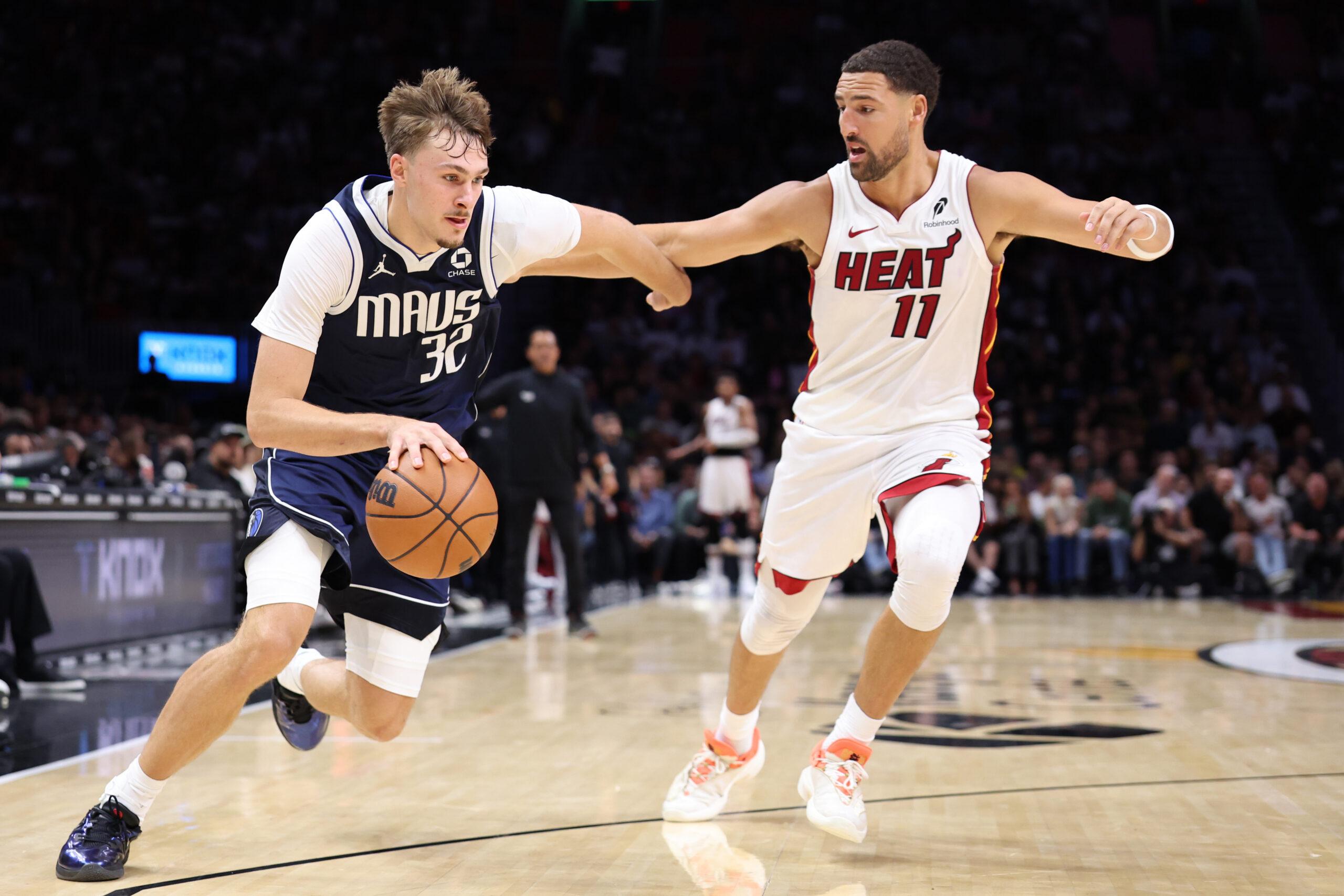
Cooper Flagg drives against Klay Thompson
Dallas Mavericks
This isn’t all about Cooper Flagg, but I definitely wouldn’t be writing about this team if the 19-year-old phenom wasn’t on it. Flagg is so good my brain often refuses to accept what my eyes transmit when they see stuff he does on a basketball court. It’s almost like sitting down at a restaurant, loving your meal, and then being told the head chef is a literal baby.
His numbers are ridiculous, his highlights are phenomenal, and the inevitable positivity he’s already packing into crunch time is surreal. His shotmaking against the Houston Rockets on Friday night simply should not be possible for a teenager who’s only appeared in 75 NBA games. There was one halfcourt play in the second quarter of that game where Flagg started at the top of the key with Jabari Smith Jr. on him. When he drove left, Rockets forward Tari Eason was already waiting in the paint to cut him off. Smart enough. What’s funny about this is Eason completely abandoned his own man (PJ Washington) to load up behind a teammate who should have the size and speed to contain Flagg on his own.
That’s how much respect Flagg is already getting from some of the best defenses in the league. It’s extraordinary. He’s fearless and poised against coordinated efforts that are designed to slow him down. So far, none of them have worked. Flagg has a great understanding of spacing, angles, and timing. He moves and takes care of the ball. He cuts aggressively. Whenever he drives to the rim and finishes against a set defense it’s sort of just, like, come on. Are you Giannis? The guy makes highly difficult things look so easy.
His overall awareness is so advanced. He closes out short on shooters who don’t pose a threat. He pre-rotates defensively and communicates what he’s doing so help can come on the backside. He gets off the ball fast enough to let teammates take advantage of the defense he just scrambled by basically standing still and being himself. In general, he reads the game and does what it tells him to do, with little interest in box score stats or making sure he gets X-amount of shots per quarter. It’s off-the-charts maturity.
In one play against the Oklahoma City Thunder last week, Flagg saw that the 6-foot-9 Morez Johnson was guarded by Shai Gilgeous-Alexander in the paint, so he dumped the ball down and watched his rookie teammate draw a foul. Flagg had his own mismatch but didn’t care. He wasn’t interested in scoring himself. There are dozens of plays like this one in every game. They’re all a testament to what makes Flagg so special: He makes decisions that are in the best interest of his team, not himself. It’s a meaningful difference that typically comes with age and experience. Flagg already understands (and rarely deviates from) this mindset.
Elsewhere, despite over half his shots coming behind the 3-point line and an inability to explode quite like he did before he tore his ACL, Kyrie Irving looks like an ideal running mate for Flagg. There are plenty of possessions where you wouldn’t even know he ever got hurt if you weren’t aware that this is his first batch of NBA games in 18 months. (There are also the plays where he can’t turn the corner on Houston’s fourth center, but it’s early. Stuff like that is to be expected!)
In general, I just love how the Mavericks look and the way Dusty May has them approaching each possession. Flagg’s success is kismet. He was born to dominate the NBA. And yet, one of my favorite possessions this season was by Dallas when their best player was on the bench! Selflessness and energy can go a long way:
Dallas beat Indiana in a game Flagg left early with a shoulder injury. They were competitive in a loss to the Spurs two nights later, without Flagg or Irving. That’s encouraging. Then they beheaded the Heat on the road in crunch time, with Flagg’s two-way dominance on full display.
The Mavericks are simultaneously thin up front and in their backcourt. Morez Johnson, Walter Clayton Jr., and Marcus Sasser have all been pretty good, but there’s just a little too much of them happening in the early going. So long as Dallas’s two best players are able to spruce up otherwise ramshackled lineups—May is right to stagger them in a rotation that will be even more potent once Irving is off his minutes limit—this team will have spunk on a nightly basis.
(Them looking as good as they have, with the injuries they’re already dealing with and probably the toughest schedule in the league, is beyond impressive. We haven’t even seen Santi Aldama yet!)
Good Vibrations Scale: 8. I will not argue with anyone who thinks Flagg will be the best player on the planet before he turns 25 years old. I will also not argue with anyone who thinks he’s already good enough to win his first MVP.
Portland Trail Blazers
The bloom isn’t quite off the rose just yet—it took just three games for me to fall in love with this team—but Portland’s home loss against Memphis last week exposed a structural imbalance that worried me before the season began. It was only one game, and there’s so much to like about all their wins, but the Blazers’ margin for error is thinner than you’ll normally find in a team that ranks fifth in net rating.
With Robert Williams III sidelined by a sore knee, Donovan Clingan was pretty much the only playable big man in Portland’s stable. (Branden Carlson and Micah Potter combined for three points and four rebounds in 20 minutes.) A backup center shouldn’t be so critical, but when Time Lord gets removed from the equation you’re reminded of how small this team really is.
Their rebounding numbers have been excellent and so far Portland has protected the rim as well as any team in the league, but the opening two plays in that loss saw Cam Boozer throwing a lob to Zach Edey, and Edey tip-dunking a missed 3 from Ty Jerome. When Clingan sells out to contest a shot, Portland’s platoon of guards and wings have to put a body on someone … or it’s going to be a long season. (When teams do grab an offensive rebound, Portland’s defense allows 1.5 points per possession on the putback attempts, which ranks dead last.)
Ja Morant was sensational before he pulled his hamstring—I already miss hearing Blondie’s “Call Me” blast across the Moda Center’s PA system whenever he scores—but the Blazers have enough ball handling to weather that injury (if not find a more defensive-minded identity). I’m excited to see what Scoot Henderson can do once he finds the rhythm he’s lacked in a maddeningly narrow role. I’m less bullish on the wider group’s 3-point shooting, though, which is a large reason for their early success. After the Blazers began the season on an irrepressible heat check, they finished 12-of-49 from behind the arc against the Grizzlies. Three-point variance will plague/bless them all year long. But there’s still plenty of reasons to feel optimistic.

Pardon me for just naming some names, but it turns out Damian Lillard, Deni Avdija, Jrue Holiday, and Toumani Camara are all dependable and complementary. Camara, in particular, never turns the ball over, draws offensive fouls in his sleep, and already leads the league in impact plays born from his sheer refusal to give up.
The offense will stay relentless. Pretty much everyone is able to launch a 3 (including Clingan!), drive a gap, or take it coast-to-coast. If you can stand all the free throws Avdija is going to take, you’ll be hard-pressed to find a more enjoyable viewing experience when everyone is healthy. It’s a livewire.
Good Vibrations Scale: 5. This feels like an offense that may get sanded down by opposing scouting reports. A best-case scenario is still probably what happened last year.
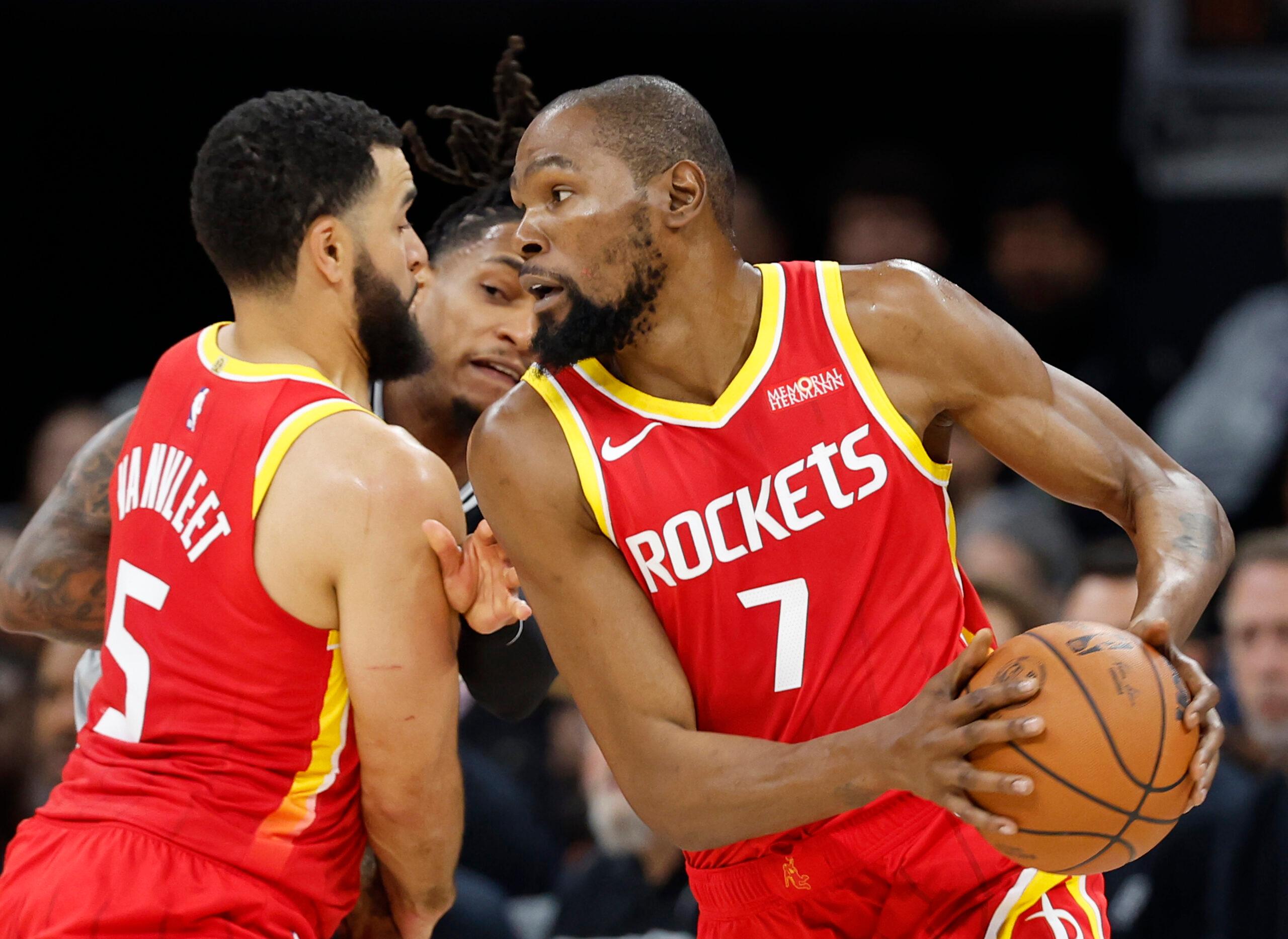
Kevin Durant looks to drive against the San Antonio Spurs
Houston Rockets
Is Houston a legit favorite to win the title, or is this more simply a well-constructed regular-season juggernaut that’s outwardly benefited from several devastating injuries already suffered by a few contenders in the Western Conference? Regardless of your answer to that question, the fact that we’re even having this discussion speaks to how awesome Houston has been.
The Rockets are 6-1, off to their hottest start since the 2014-15 season despite already enduring a few meaningful injuries of their own. Marcus Smart, Steven Adams, Reed Sheppard, and Alperen Sengun have all missed time, while a mending Fred VanVleet has sat out both of Houston’s back-to-backs. None of it mattered. The Rockets’ rotation is bottomless, full of talented options who’ve allowed Ime Udoka to experiment with different lineup combinations. Unlike last season, this team can withstand the loss of one or two important players for a few weeks and not really miss a beat.
They stomped the helpless Milwaukee Bucks with a center-less starting five, and blitzed the Atlanta Hawks sans VanVleet, who has been the ancillary piece Houston’s puzzle was missing last year. Kevin Durant is still a razor blade who sparks panicky double-teams 18 feet from the basket. Amen Thompson opened the season with three straight double-doubles and had a miraculous game-saving block at the rim against Victor Wembanyama—Houston’s young star has been unlocked in an offense that looks unstoppable whenever he strikes the right balance between on-ball creation and off-ball activity, which is happening quite a bit.
Sengun has never looked more confident or acted with more patience, and he looks like an All-NBA center on both ends. Jabari Smith Jr.’s all-around game is coming together. And the bench is full of momentum-altering players like Smart, Adams, Tari Eason, and Sheppard, who, before getting hurt, struggled to find his shot off the bench but was a blowtorch in his only start.
The caveats to all of this positivity can’t be ignored, though. The Rockets’ schedule is no cakewalk over the next couple weeks, and it absolutely must be noted that they’ve outshot their opponents by a league-high 11.7 percent behind the 3-point line (an outrageous gap that will level off as the season goes on). Their transition defense has been questionable and their halfcourt offense remains a bit too syrupy. (A whopping 23.5 percent of their half-court possessions end with four or fewer seconds on the shot clock, which is a league high.) This is probably the NBA’s most resourceful roster, but it should always be stressed that Durant is 38 years old and played the second-most minutes in the entire league last season, Adams is already banged up, and Smart’s endearing recklessness has a tendency to undercut his availability.
If Durant goes down with a serious injury then their championship dreams might be dashed. But, in the meantime, knick-knack ailments here and there won’t stop them from being competitive. Even without Sengun, Adams, and Sheppard last Friday night, they still nearly took down a Mavericks team that was firing on all cylinders. There was no let-up in a beatdown of the snake-bitten Oklahoma City Thunder on Halloween. All in all, as someone who was high on the Rockets before the season began and thought they deserved a little more attention as bona fide championship contenders, things could not possibly be going better for them right now. They’ll be a better team in four months than they are today and can absolutely win the championship as currently built. The fact that they’re somehow under the luxury tax with up to six tradable draft picks is just icing on the cake.
Good Vibrations Scale: 9. Age, injuries, and 3-point shooting may ultimately decide Houston’s fate. But they’re also an extremely real title contender that can win games in myriad ways.
Detroit Pistons
Despite not being fully healthy for almost all their games, the Pistons are 5-1 with impressive wins against the Celtics, Sixers, and Heat. Those who thought there was something flukish about last year’s 60-win, first-place finish may soon want to reconsider that opinion.
Even without Beef Stew, and Jalen Duren nursing a hamstring injury, the hard-nosed identity that elevated this team last season hasn’t gone anywhere. They have the best defense in the league, protect the rim at all costs, and are willing (eager?) to fight you for every 50-50 ball. On one play in their loss to the Knicks, three Pistons blocked three consecutive OG Anunoby shots at the basket. Everyone cares, deeply, about getting stops. They’re fouling less—we’ll see if that keeps up—and still generating a ton of turnovers with a desire to bully whoever’s in front of them. That DNA should yield a ton of regular-season victories, but, as we learned last year, is potentially useless in the playoffs without a more diversified, explosive offense to back it up.
The Pistons are still far from perfect on the other end of the floor, but their plan to course-correct is going well enough. The biggest change—and story of its season, so far—is Detroit’s increased 3-point rate. Going from 29th to 13th is a meaningful jump that could climb even higher when Isaiah Joe returns from the hip injury he suffered on October 25.
Cade Cunningham, Duncan Robinson, Kevin Huerter, Daniss Jenkins, and Javonte Green have all seen either their 3-point attempts or 3-point rate make a noticeable climb from last season. John Collins is spacing the floor as a spot-up threat from the corner and opening things up as a roller when he’s at the 5 (which has happened quite a bit since Duren went down).


There are still some non-shooters who’re completely ignored off the ball. Sometimes they grind Detroit’s offense to a halt, but the splash of movement and diversity that was lacking last year has helped make this team a little harder to guard. Ausar Thompson’s playmaking opportunities have gone up a notch and he’s responded with an assist rate that’s nearly double what it was last year. BBall Paul is a folk hero who should be honored with his own federal holiday. He’s also possibly the best backup center in the NBA and is on pace to make 68 3s (over three times his previous career-high for a season).
Cunningham unsurprisingly looks like an MVP candidate, but Detroit’s biggest hero so far might be Robinson, who has solidified himself as one of the most valuable role players in the entire league. We’re working with incredibly small sample sizes that will definitely change, but coming off a year where his impact was immensely positive on a team that was desperate for elite movement shooting, Detroit’s offense currently hums to a beat that’s 7.1 points per 100 possessions above league average when he’s on the court with Cade. When Cade plays without Robinson, Detroit’s offense is about six points below league average.
Good Vibrations Scale: 8. The Pistons look like a team that won 60 games last year, understood their biggest weakness, and then made it better. Good job by them!
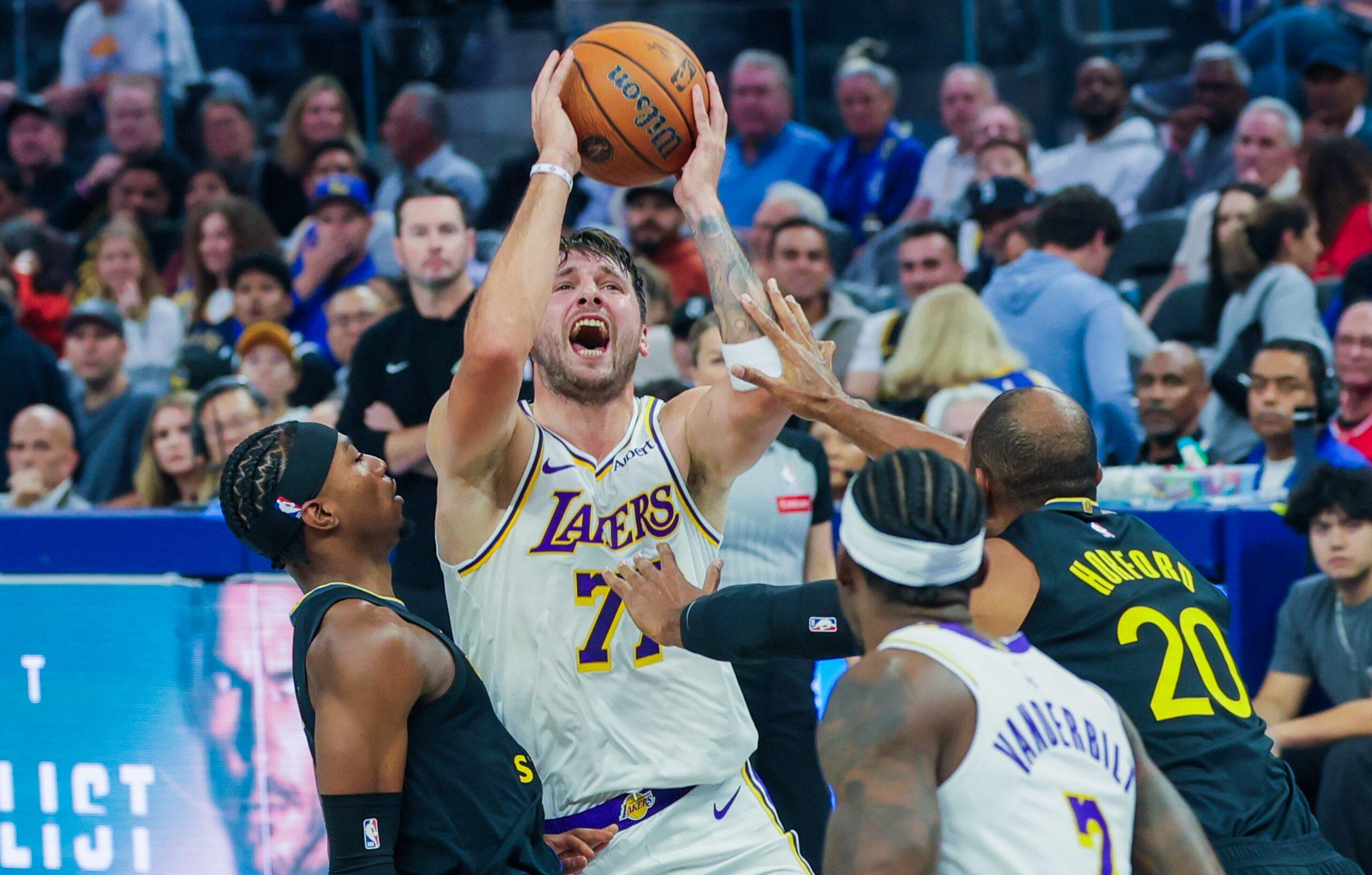
Luka Doncic during the NBA Cup group match between the Warriors and Lakers in San Francisco, the United States, Oct. 30, 2026. (Photo by Arthur Dong/Xinhua via Getty Images)
Los Angeles Lakers
So, it turns out Luka Doncic is really good when he has a rim-running lob finisher at the 5, shooters you can’t completely ignore in the corners, and a co-pilot whose off-ball gravity and on-ball prowess are only one pass away.
The new-look Lakers are a coordinated maelstrom when Doncic is able to aggressively conduct it with these pieces in place. He’s averaging 37.7 points, 8.2 rebounds, and 7.3 assists per game. His stepback 3 is currently the most devastating shot in the league—the guy is nearly launching 14 3s per game and making almost 40 percent of them!—and when he’s on the court, L.A.’s offensive rating is 17.4 points per 100 possessions above league average. To make matters even less fair, Doncic ranks first in free throws, and when he wants to pass, he can find anyone, anywhere, any way he wants.
The only players who’ve opened a season scoring more points in their first six games are Wilt Chamberlain, Michael Jordan, and Jack Twyman (in 1959). That’s pretty good. It’s outrageous when you realize that there are 43 examples of a player attempting more field goals than Luka has over that same span. Walker Kessler generally looks like everything the Lakers thought they were getting on both ends, and when they put Sandro Mamukelashvili in as a small-ball 5, it’s the perfect changeup.
On the other end, L.A.’s defense is a mixed bag. Neither a complete trainwreck nor anywhere close to where it needs to be if the Lakers actually want to make noise in the playoffs. For now, this is fine. In their win over the Raptors on Sunday night, Doncic showed how effective he can be on that end when he tries—taking charges, executing timely double-teams, refusing to get overpowered in the post. Exhibiting that level of focus on a consistent basis is a different animal, though. For now, Doncic and Austin Reaves remain weak links with a bull’s-eye on their back—Steph Curry should serve jail time for what he repeatedly did to Doncic on Friday night—but opponents are shooting a dreadful 42.5 percent at the rim when Kessler contests their shots. (Victor Wembanyama finished last season at 53.8 percent.)
Meanwhile, Matisse Thybulle and Ziaire Wiliams are doing what J.J. Redick and the Lakers hoped to see: leaping into gaps and sparking fastbreak opportunities. The Lakers rank second in defensive turnover rate, a key metric that, if maintained, will make them incredibly dangerous, so long as they stop coughing it up in alarming ways on the other end. To that point, I will say, the loss to Golden State on Friday night was a little concerning offensively. The Warriors had quite a bit of success doubling Luka and Reaves high up the floor, squeezing the ball to other Lakers, and then running them off the 3-point line. Even if most opponents won’t have the personnel or stamina to execute such a taxing strategy, one takeaway I had watching that game is that L.A. could still use another ball handler or two.
Doncic’s usage rate is higher than it’s ever been and Reaves leads the league in turnovers. Something will eventually have to give.
Good Vibrations Scale: 7. Luka Magic has never looked more real but, unfortunately, he can’t average 48 minutes per game.