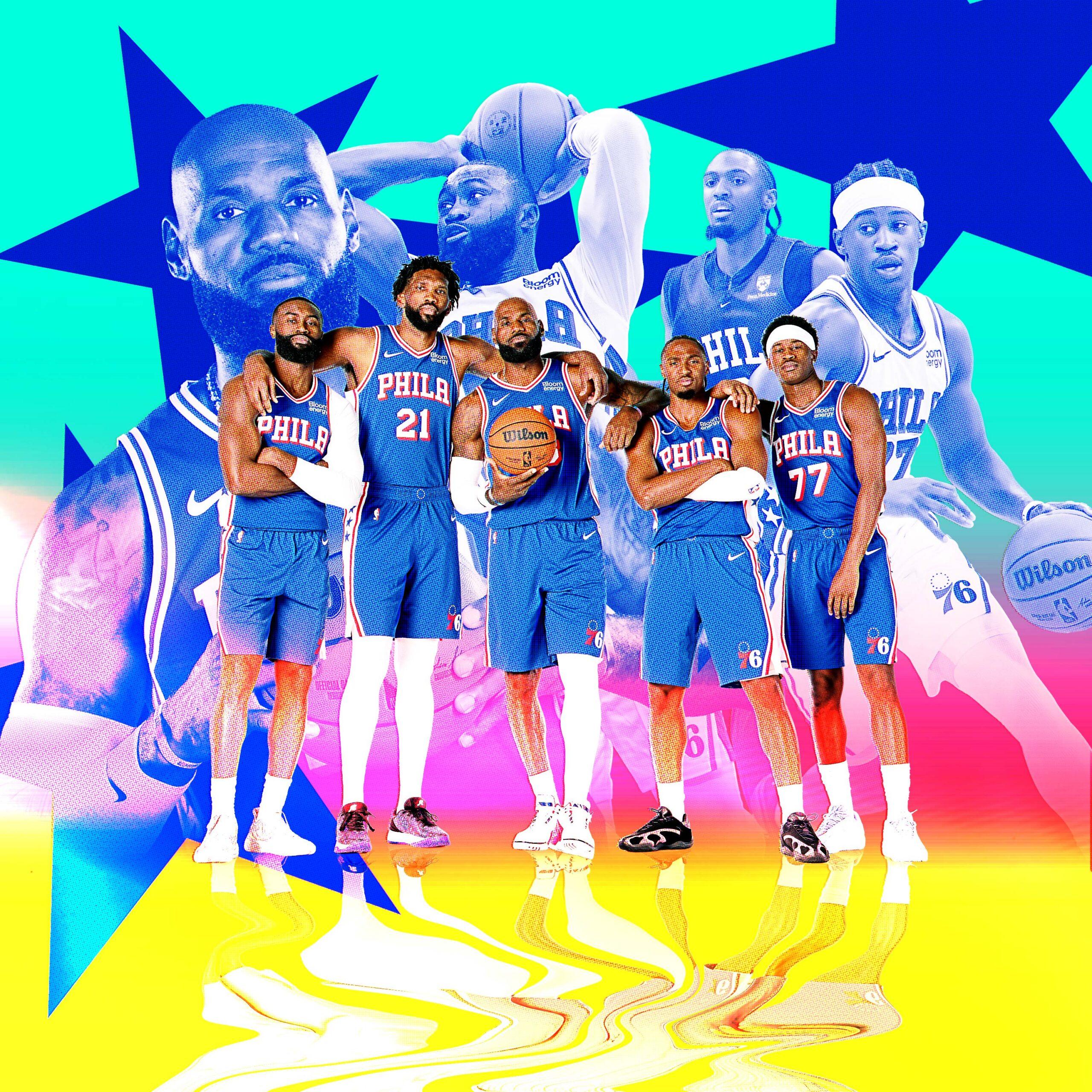

The best way to understand how the Philadelphia 76ers’ new boss plans to run the team is through a story that has nothing to do with them.
In the summer of 2024, Cleveland Cavaliers star Donovan Mitchell launched a basketball camp in conjunction with Adidas. They called it “Spida Elite.” The idea was to coach and mentor high school guards. It has since become an annual event, and one Mitchell has made clear he cares deeply about. This year’s camp took place in Los Angeles in August, and one GM (or, if we’re using official terms, president of basketball operations) made the time to swing through the gym. It wasn’t as if Mike Gansey had nothing better to do. He was just a few months into his new job with the Sixers, one he had jumped into by trading for Jaylen Brown and recruiting LeBron James. And having left the Cavaliers, where he’d spent the previous 15 years, he had no professional obligation to be there, either.
But none of that mattered to Gansey. What did matter to him was how much the camp meant to Mitchell, someone he had grown close with. And so for Gansey, it wasn’t a question of whether he could attend but rather how. That, people who know him well say, is his default setting.
“Everybody likes Mike Gansey,” said an NBA agent who also attended Mitchell’s camp. “And stories like that are why.”
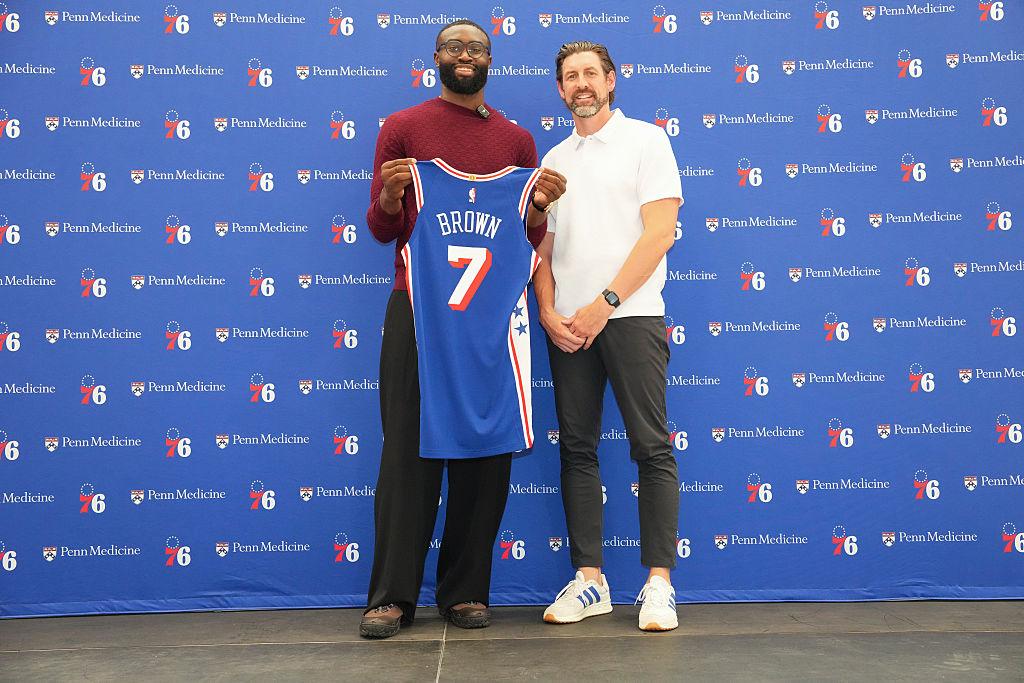
Ask people around the NBA about Gansey—the man who just pulled off what might be the most audacious offseason the league has ever seen from a first-time lead executive—and the initial responses make it seem like everyone is reading off a script. “I love Mike Gansey,” said Brooklyn Nets head coach Jordi Fernández, a friend of Gansey’s from their time together in Cleveland. Six other NBA insiders I spoke with for this story, a mix of executives, coaches, and scouts, none of whom had ever worked with Gansey, used that exact same phrase. So did multiple former colleagues.
Gansey, these people say, is a lot of things. A sharp scout. An empathetic boss. A fun hang. But most of all, he’s a culture guy. “I want fountains, not drains,” Gansey said repeatedly during his introductory Sixers press conference in June, a phrase he’d adopted from Cavs president Koby Altman. It’s not the type of rhetoric anyone had ever heard from the executive who previously sat in Gansey’s chair, which makes the contrast all the more stark. That’s not to say that Gansey’s approach is better than the more data-driven, dispassionate way in which Daryl Morey ran the Sixers; Morey, after all, has done plenty of winning himself. But it is, without a doubt, different.
In other words: It’s a new era in Philly, and not just because the Sixers now employ the league’s biggest star and most ambitious superteam. Can Gansey’s temperament help shepherd the suddenly alpha-heavy Sixers (sorry, Jaylen) through the bumps sure to arise this season? Or is the team the sort of thing destined to crumble under the pressure that comes with all the stars? The answer could determine whether this overnight spectacle is remembered with the likes of the Kevin Garnett–Paul Pierce–Ray Allen Big Three or buried in a graveyard alongside all those iterations of the Brooklyn Nets and the many other failed collections of big names.
“I think building, managing, and maintaining relationships is very important in my position,” Gansey told The Ringer. “With the star power we have, I want to build those relationships and try to help them, and help everyone on the roster get where we want to go.”
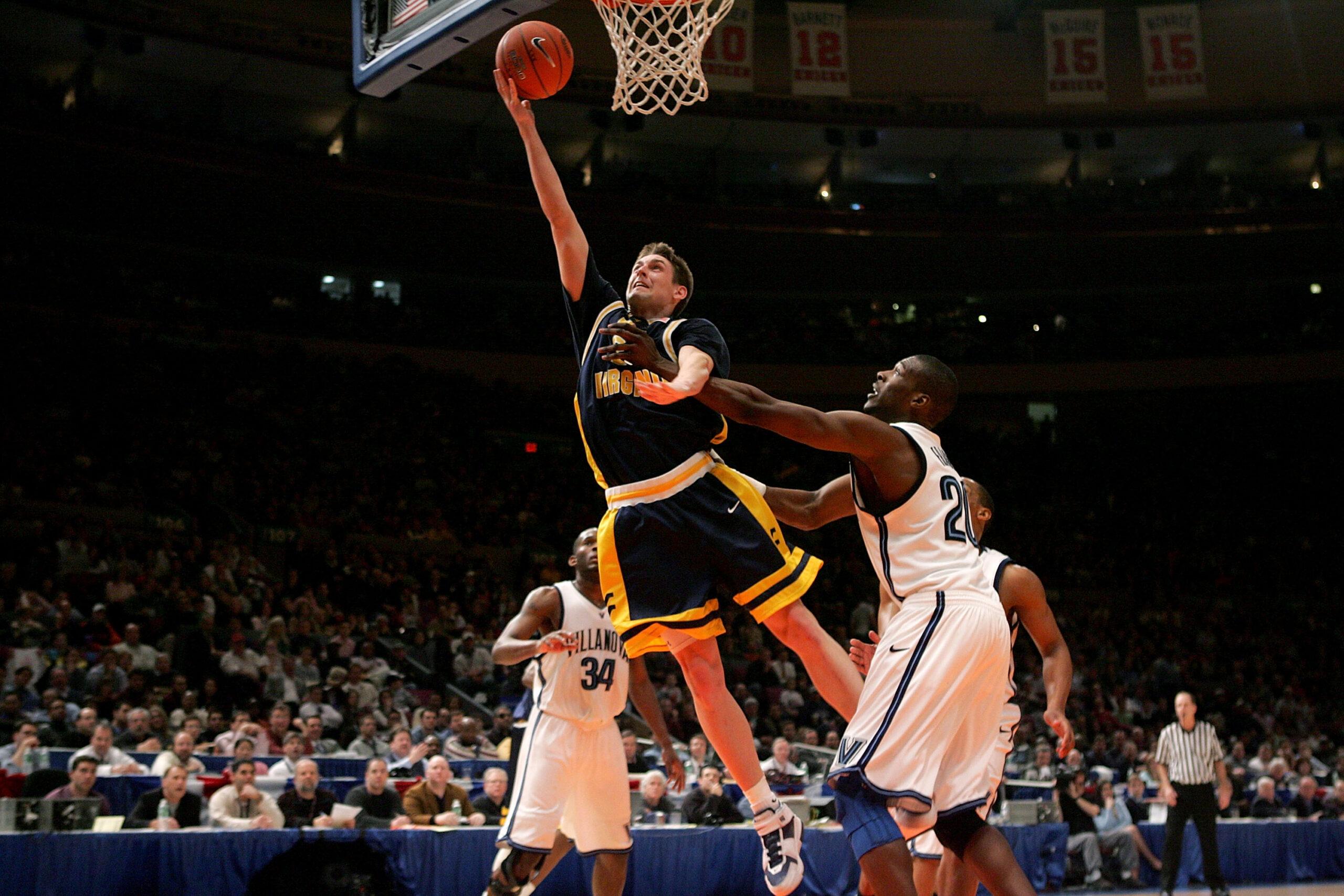
Gansey’s front office career began in 2011, after his own playing career fizzled out. A former high school star—he finished second in the 2001 Ohio Mr. Basketball voting; the winner was a sophomore from Akron whom you might have heard of—he spent two years playing for St. Bonaventure before transferring to West Virginia and becoming a key wing for head coach John Beilein (Gansey scored 29 points in a double-overtime win over Chris Paul and Wake Forest in the 2005 NCAA tournament). To basketball fans, he became known for both his all-around game and the baggy T-shirt he wore underneath his uniform. Inside the West Virginia locker room, though, he was beloved for his work ethic and for being the guy to call whenever a teammate was in need, like when Darris Nichols had an issue with his on-campus apartment and, along with his roommate, needed a place to stay.
“Gansey gave us his room,” Nichols said. “The dude had just taken the school to the Elite Eight the year before, and he’s putting himself out for some underclassmen.”
Gansey went undrafted in 2006. He signed with the Miami Heat as a free agent but contracted MRSA that summer. He was bedridden for two weeks and lost 30 pounds. The Heat released him. He traveled the globe to chase his NBA dreams—overseas in Italy and Germany, stateside in Idaho and Erie, Pennsylvania—but in 2011, he took a job in the front office of his hometown Cavaliers.
A quick learner, Gansey was promoted the next year to director of G League operations. “He had a knack for getting high-IQ, good culture guys,” said Steve Hetzel, head coach of the Canton Charge, the Cavs’ affiliate, for the 2013-14 season. “There were times where we passed on guys in the player pool who we didn’t think were cultural fits with what we were trying to put together.” Gansey climbed the ladder fast, and in the summer of 2017—before LeBron’s last season with the team—the Cavaliers promoted him to assistant GM.
Gansey thrived in the role. “He was a huge part of building the great culture that we put together after LeBron left,” said a former Cavs colleague. He was a road dog who, somehow, between his kids’ soccer and basketball obligations, seemed to watch every game at every level from every country, all while staying close with colleagues back home. “He knew intricate details about every person in the building,” Altman said. “If your college football team lost on Saturday, you’re going to hear about it from Gansey on Monday. He remembers personal details about people in a way that shows he cares.”
Gansey’s playing career earned him respect in the locker room. His friendships and popularity across the league turned him into a magnet for intel. Rival coaches and scouts trust him. So do agents. In fact, the Cavs’ February trade for James Harden was the direct result of back-channel talks between Gansey, who by then was Cleveland’s no. 2 to Altman in the front office, and Harden’s agents, according to a league source.
In April, Gansey was among the group of executives who interviewed for the top job with the Chicago Bulls. About a month later, Sixers owner Josh Harris fired Morey, creating another intriguing opening. He tasked Bob Myers, the former Golden State Warriors GM who now serves as president of Harris’s sports empire, with finding a replacement. Myers made calls throughout the league. “I asked a lot of people,” Myers told reporters in June. He didn’t know Gansey beforehand, but many of his former Warriors colleagues did. Myers then called Altman. “The first question he asked me was ‘Why Mike Gansey?’” Altman said. “The first thing I said is ‘You’re going to love him, he’s a basketball guy.’ And I think that resonated with him.”
Gansey and Myers hit it off. “They realized they have a lot of similarities and approach things in similar ways,” said someone close to Gansey. Listen to Myers hold court, and you can hear why. “Getting to know a player, really trying to get to know them, you develop a trust,” he told Vince Carter and Tracy McGrady on their Cousins podcast in August. “How do I convince you … we’re here to win? And that requires now—and maybe more so now—every day that constant discussion, environment, and culture that is really hard to do.”
Getting all his players on the same page might be harder for Gansey than he originally thought. He had pitched Myers and Harris on a long-term vision: Ride out the final two seasons of Paul George’s bloated contract and the final three of Joel Embiid’s while using the assets Morey left behind to supplement the core of Tyrese Maxey and VJ Edgecombe. Then the opportunity to trade for Brown fell out of the sky.
“I showed up, and I’m trying to meet and learn people in the building, just putting a name to a face, and on top of that it’s the busiest time,” Gansey said. “So while all that’s happening, I’m trying to present stuff to Josh [Harris], and I’m new, and there’s this opportunity to make a big splash with a big trade for Jaylen Brown that could obviously change our organization.”
Did he know at the time how much would change for the Sixers if he did, indeed, pull the trigger on the Brown deal? “I think with the LeBron thing, I didn’t know how it was gonna go,” Gansey added in August. “I thought after Jaylen, we had a better chance.” LeBron has made it clear that Sixers players—most notably Maxey, a fellow Klutch client—were the ones leading the recruiting, but Gansey jumping into the Brown mix put the Sixers in position to pounce.
"It's just crazy in this NBA, you don't know what's going to happen," Gansey told reporters in August. "I'm just going to pick up the phone, I'm going to try to get involved in everything I possibly can and see what's out there and be aggressive and creative."
In less than a month, Gansey had added both a living legend and a still-in-his-prime former Finals MVP to the Sixers’ roster, and he’d found a taker for the two years and $111 million left on Paul George’s contract. All it cost was a few future draft picks and a minimum contract slot. Both the Celtics trade and the LeBron signing might have been relatively easy calls, but they still meant that a team that was coming off an embarrassing second-round sweep and thought to be dead would now be entering the season with massive expectations. Seemingly overnight, Gansey’s job had changed.
It was an unprecedented burst of dealmaking for someone new to the seat. Most first-time hires tear things down while preaching the importance of patience. They toss around terms like "optionality.” Gansey’s former colleagues say that he believes in all those things. “But we talked all the time about thinking big and then landing the plane," Altman said. “Mike was able to do that.”
Thus far, Gansey’s playbook for navigating his new reality has been simple: Learn as much as he can from wherever he can, whether in his daily conversations with Myers (“He’s been a tremendous resource for me,” he said. “Someone I’ve found myself reaching out to.”) or by meeting with his counterparts at the other Harris-owned teams, Adam Peters of the Washington Commanders and Sunny Mehta of the New Jersey Devils. He inherited most of his staff (the only major changes to the front office were the hiring of former Denver Nuggets assistant general manager Tommy Balcetis and the departure of Fan-Hal Koung, an assistant general manager who worked closely with Morey and recently left for the Oklahoma City Thunder) but has made a point of emphasizing collaboration. And he’s started working the locker room as well.
“We talk a lot,” Edgecombe said. “He’s around all the time. I love it.”
Now that the roster is in place, could Gansey’s management style prove to be the difference for a combustible locker room? After all, barely halfway through the preseason, LeBron was already refuting reports while Embiid lamented the need to comment on “outside noise.” And that was all in reaction to a throwaway story told on another city’s station (New York City’s MSG Network) by the beloved and anodyne voice of the NBA (Mike Breen). What happens when someone, somewhere throws some actual heat? Whether it’s Rich Paul, Stephen A. Smith, or a player’s close friend over dinner after a game? Sixers players repeatedly used the word "sacrifice" when speaking with reporters during training camp. What happens if one player thinks he’s sacrificing more than the rest?
Gansey knows that being the boss will make all of this harder, that people look at you in a different way when you’re the one in charge of their future. He also knows he hasn’t been truly tested yet, whether by taking a call from a frustrated owner, seeing fans blame him for a losing streak, or having to replace a player in the rotation with whom he’s close. “I’ll always try to be as transparent with people as I can and do my best to make sure we’re on the same page,” Gansey said, “but at the end of the day, this is a business, and the players know that.”
Until then, he said, he’ll just keep doing what he does. “I think molding an organization and building a strong culture is absolutely essential,” he said. “I want people to come to Philly and be their best selves.”
Can that be the case if so many of those people are stars being asked to play new roles? The man who once gave up his own room so that his teammates would have a place to sleep is betting that the answer is yes.