
In 2011, Green Lantern introduced its titular superhero in a live-action feature film for the first time in the DC Comics character’s then-71-year history. The movie starred Ryan Reynolds as Hal Jordan, a test pilot who inherits a powerful green ring that thrusts him into the service of an intergalactic police force that defends the universe: the Green Lantern Corps. Green Lantern fully embraced all of the grand, cosmic elements that are essential to the title character, from Hal’s training on an alien planet with a hulking space pig to his clash with an ancient entity that embodies the yellow energy of fear. But the summer would-be blockbuster was a campy, uneven mess that flopped at the box office and was panned by critics, ensuring that a sequel would never come. In the Snyderverse that followed, the Green Lanterns were all but sidelined, with the space cops making only a brief background cameo in 2021’s Zack Snyder’s Justice League.
Fifteen years after Green Lantern failed to take flight in theaters, Hal Jordan is back—but in a different kind of story and a different medium. And this time, he’s sharing the spotlight with another Green Lantern: John Stewart.
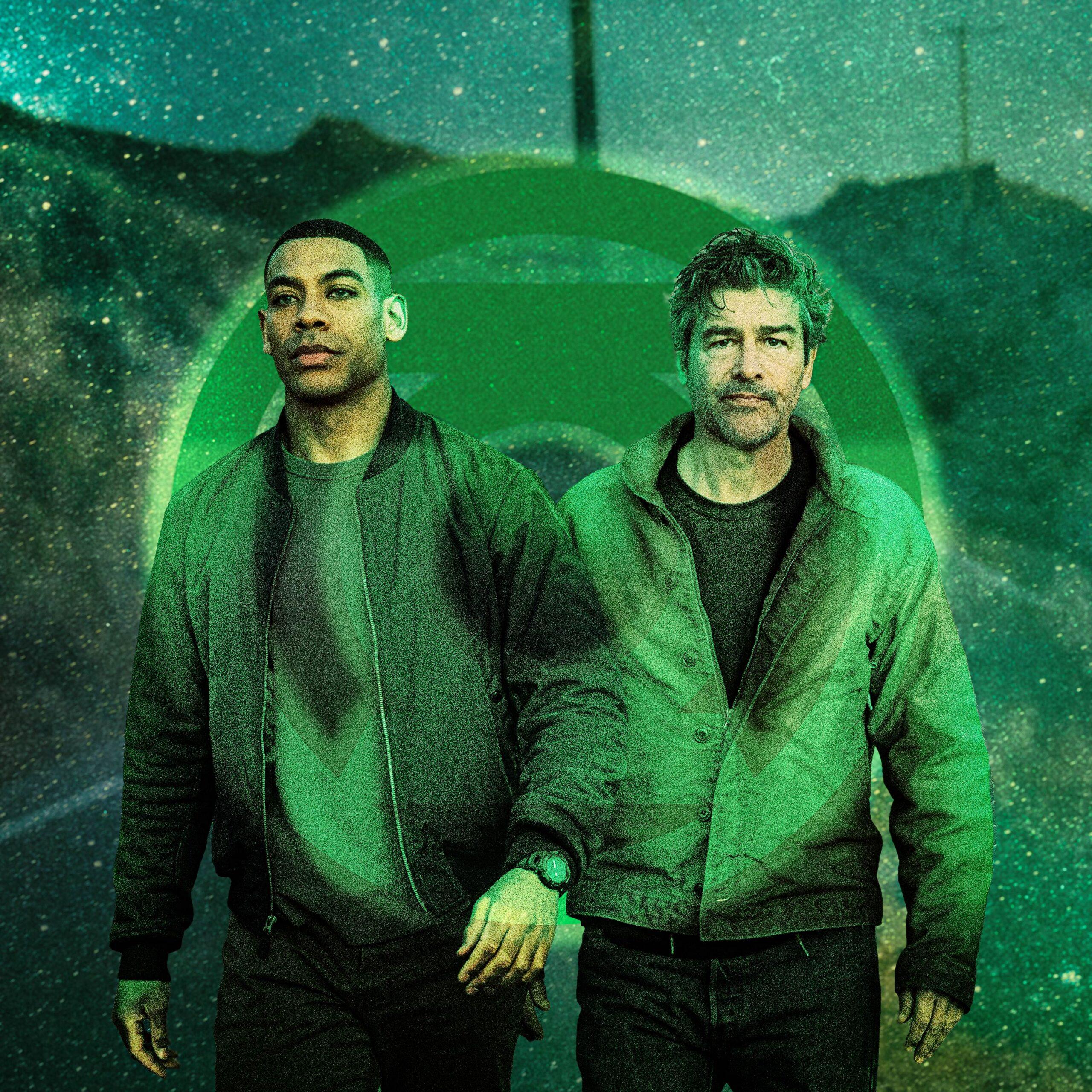
On Sunday night, Lanterns premieres on HBO, becoming just the second live-action TV series in James Gunn’s DCU (after Peacemaker) and the first that wasn’t created by the cinematic universe’s primary architect. Lanterns, which features eight episodes in its opening season, follows an older, battle-tested Hal Jordan (Kyle Chandler) as he begrudgingly trains his potential Green Lantern successor, the younger, highly capable John Stewart (Aaron Pierre). Together, they travel to Rushville, Nebraska, to investigate a murder, and they begin to unravel a wider mystery with potential extraterrestrial connections.
Styled after buddy-cop shows and crime dramas like True Detective, Lanterns takes a much more grounded approach to its source material than its big-screen predecessor did. That’s very much by design—and it starts with the show’s focus on its two leading characters. Although Hal and John are separated by decades of superhero experience, each of them believes he’s better suited than the other to wield the ring, a versatile weapon that can manifest its wielder’s thoughts into physical constructs through sheer willpower. And as Lanterns alternates between multiple timelines, primarily set in 2016 and 2026, the series reveals the two protagonists’ pasts and how they came to occupy their posts.
“I tried to think of it as a story about these two guys and, like, what are we writing about?” showrunner and cocreator Chris Mundy tells The Ringer. “We're writing about a replacement; we're writing about parenthood or being raised—how much control do we have over our upbringing? What part of your past guides you, what part is trauma? I just wanted to talk about all the stuff that was sticky in that way.”
Mundy, who served as the showrunner on Ozark and as a writer on True Detective: Night Country, entered this fantastic DC universe of capes, aliens, and green power rings without any experience in the superhero sector, yet he brought with him stories that were suffused with crime and the human experience. And he joined a pair of cocreators who are superhero veterans: Damon Lindelof (whose impressive TV résumé includes some of the greatest TV shows of all time in Lost and HBO’s The Leftovers) and Tom King (one of the most influential DC Comics writers of the past decade). This trio of creatives combines distinct storytelling sensibilities to weave together a thrilling narrative that builds toward its intergalactic drama from the ground up.
“Certainly for me, it comes from a less comic book direction,” Mundy explains. “We kind of ran the gamut: Tom writes comic books; Damon knows them really well, he’s done super grounded stuff, he's done Watchmen. But it was a great place where our storytelling overlapped. So for me, this was the way that makes sense for us to do it. I wanted it to feel really emotionally real, and … if we're gonna believe this premise, I have to believe these [characters]. … I want to see the town they're walking around in. The more that it was like blue screens, green screens, the more I would feel emotionally separate from it.”


Superhero stories have been declining in popularity in Hollywood for years now (well, most of them, anyway), and much of that downfall can be credited to Marvel Studios’ increased output and decreased quality control in the early phases of its Multiverse Saga, while the tumultuous DCEU era ended in a whimper. Marvel’s overreliance on visual effects rushed by overworked VFX artists became a glaring issue, as lackluster multiversal stories introduced alternate dimensions and lessened the stakes of an already aimless interconnected narrative. But over the past couple of years, we’ve also seen some successful attempts to scale down those superhero tales on the small screen with lower-stakes, character-driven storytelling. The Penguin, a Gotham City crime story in which Batman never appeared, won nine Emmys out of its 24 nominations for DC Studios and Warner Bros. Television last year. Marvel’s Wonder Man recently earned an Emmy nomination for its star, Yahya Abdul-Mateen II, whose character Simon Williams pursued the lead role in the remake of a classic superhero movie.
Lanterns, a series centered on space cops, would appear to be an unlikely candidate to follow this downsized superhero TV trend—and wary Green Lantern fans rebuked the prospect of a grim, toned-down show as they voiced their concerns about the first Lanterns teaser in March (particularly its lack of green). Many feared that the series was embarrassed by its comic book roots. Yet Lanterns retains much of the spectacular, cosmic DNA of its source material. The drama’s scale ultimately far exceeds the street-level limits of The Penguin or the Hollywood dreams of Wonder Man, although the early episodes are more concerned with establishing the series’ human element in a dusty, small town in Nebraska.
“What we have going for us is that it's a Green Lantern story,” Mundy told Entertainment Weekly in May. “They can conjure anything from the ring. They do go off the planet. There's all these other powers that they have. We wanna use everything that's great about the mythology of the Green Lanterns, but at the same time, we wanted it to feel like an upscale mystery, a very emotionally tangible story about these people that are in it.”
Lanterns doesn’t take a straightforward path into its central mysteries or the lives of its characters—which should come as no surprise to anyone who’s opened one of Lindelof’s mystery boxes. By starting the series with an older version of Hal Jordan rather than rehashing his origin story from the beginning, Lanterns takes on a very human experience that isn’t often explored in superhero narratives: aging.
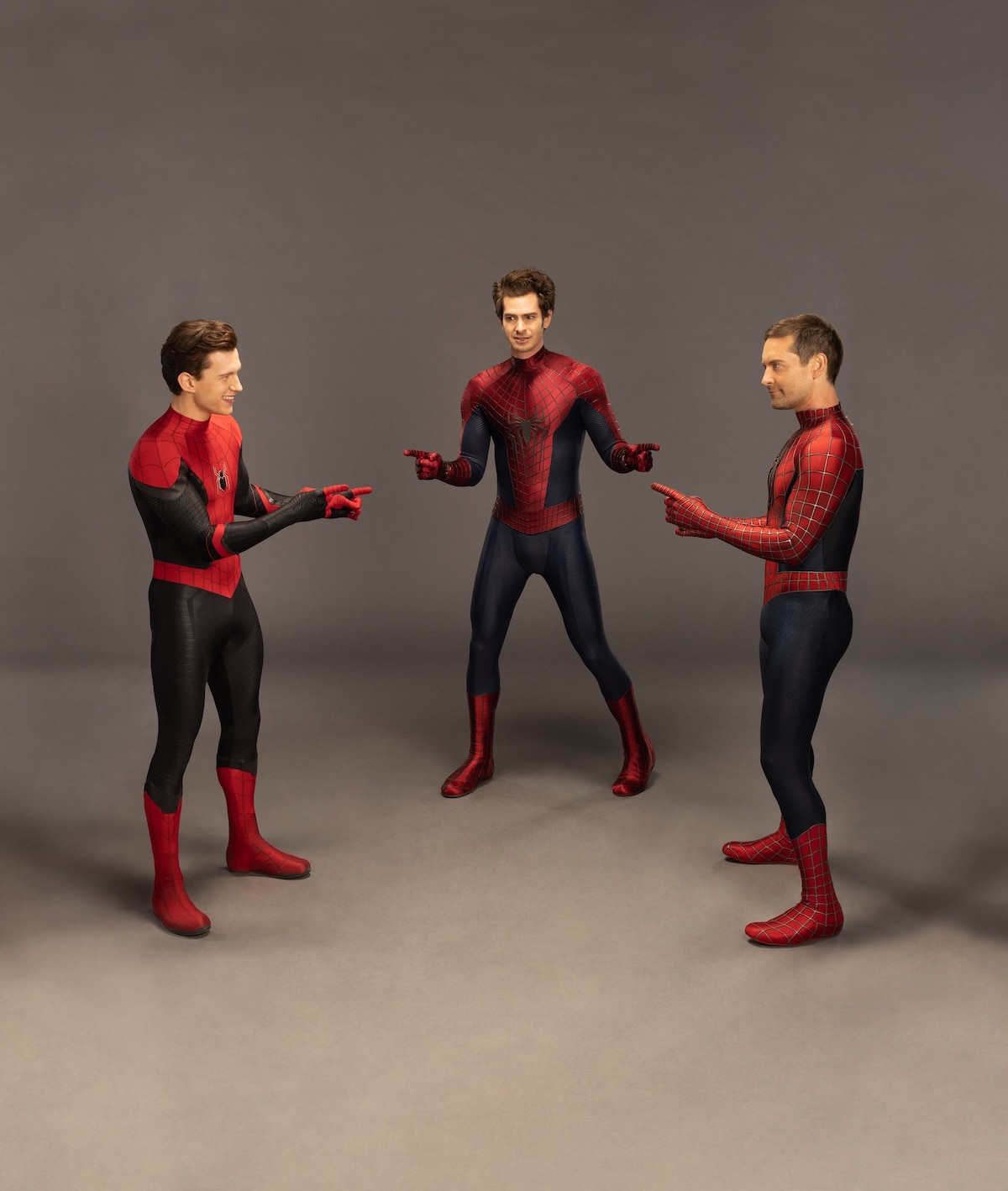
“Hal is actually closer to the end of his career than he is to the beginning, and he doesn't want to stop being Green Lantern,” Lindelof explains to The Ringer. “A lot of our superheroes don't age. It's like, ‘OK, Tobey Maguire's done three [as Spider-Man], it’s Andrew Garfield time.’ And now, Andrew has done his run. But when you see those three guys together [including Tom Holland, in Spider-Man: No Way Home], and you feel, ‘What does Peter [Parker] look like in his 40s?’ there is a real power to that, too. So we became enamored with this idea of Hal not wanting to let go of the ring. And, obviously, there were things happening culturally and politically around us where people in positions of power were not wanting to get out of the way for the younger generation to come up, and that got us all excited.”


Jordan enters the series having served as Earth’s sole Green Lantern for decades, yet his alien bosses—the Guardians of the Universe—have recently selected his backup, whom Hal suspects may actually be his replacement. This tension creates a gripping dynamic between Hal and his trainee, Stewart, a character whose comic book history dates back to 1971 and whose popularity skyrocketed in the early 2000s thanks to Bruce Timm’s animated Justice League and Justice League Unlimited series. Chandler and Pierre both deliver terrific performances and share a captivating on-screen chemistry that sets the tone of the series, as their characters’ relationship thrives on an unspoken respect amid their mutual resentment. Chandler brings a dry humor and natural charm to Jordan, despite the former test pilot’s grating arrogance, while Pierre opposes him with a calm, quiet intensity that overlies Stewart’s hidden complexities.
As Lanterns explores its 2016 and 2026 timelines, with various flashbacks dispersed in between, the series introduces a new world that feels lived in and full of history. “You're seeing a small bit of the iceberg, but there’s so much beneath to explain the backstory of all of this,” says King, whose original pitch to DC Studios’ top brass set Lanterns in motion. “And part of that was building it with Chris Mundy—who was not as familiar with these characters—and showing him the deep depths of what these worlds are. I brought the nerd to him, and he could pluck what was cool from that sea.”
For any DC fans who were worried after the show’s initial teaser, the release of its full trailer in late July revealed just some of the ways the series is rooting itself in Green Lantern lore and the wider DCU. It introduced the existence of Manhunters, the extraterrestrial predecessors of the Green Lantern Corps., as well as a pair of familiar characters in Jordan’s nemesis and former mentor, Sinestro (Ulrich Thomsen), and Guy Gardner (Nathan Fillion), the latter of whom appeared as Earth’s Green Lantern in Gunn’s Superman last summer. And, yes, the trailer also featured plenty of green.
Lanterns has already survived a minor (and rather silly) controversy before the release of a single episode (concerning a Lindelof joke about omitting “Green” from the title), and the series takes some bold narrative swings and canonical departures that could invite further backlash from a subset of fans. But the passionate responses the show has elicited speak to how much of an appetite there is for a live-action Green Lantern story done right, after past missteps and missed opportunities. And Lindelof is no stranger to the challenges that come with balancing bold storytelling and audience expectations in a narrative space that is sacred to so many.


“You can really be frozen a lot of the time, because your brain just basically says, ‘How dare you?’ Like, over and over again,” Lindelof says. “Or: ‘Who do you think you are?’ And you have to counterbalance the hubris—which is what it is—to say, ‘I have something to say about Batman. I think we need to hear what I have to say about Rorschach.’ Like, it's just absolutely and totally absurd. And yet, as a fan, we all do it, you know? We've all been doing it our entire lives, and I think that we have a proprietary sense of care around these characters.”
At times, Lanterns does feel like it’s holding back the cosmic side of its identity—but that sense of care and reverence for its heroes and their legacies always shines through as it lays the foundation for what’s intended to be a multi-season journey. After a string of irreverent TV and film projects from Gunn that relaunched DC’s cinematic universe, and a disappointing start to the summer with Supergirl, the latest product of HBO’s IP era presents a refreshing change of pace for the DCU as it finds its footing (and a warm critical reception) in an ever-changing superhero media landscape. On Sunday, Lanterns will mark a major new chapter for the studio as the show tries to prove that a live-action return to the world of Green Lantern was never anything to fear.