I’m Ready for the Dance of the Dragons to End
Although hype for the final season should be building, ‘House of the Dragon’ has become kind of a drag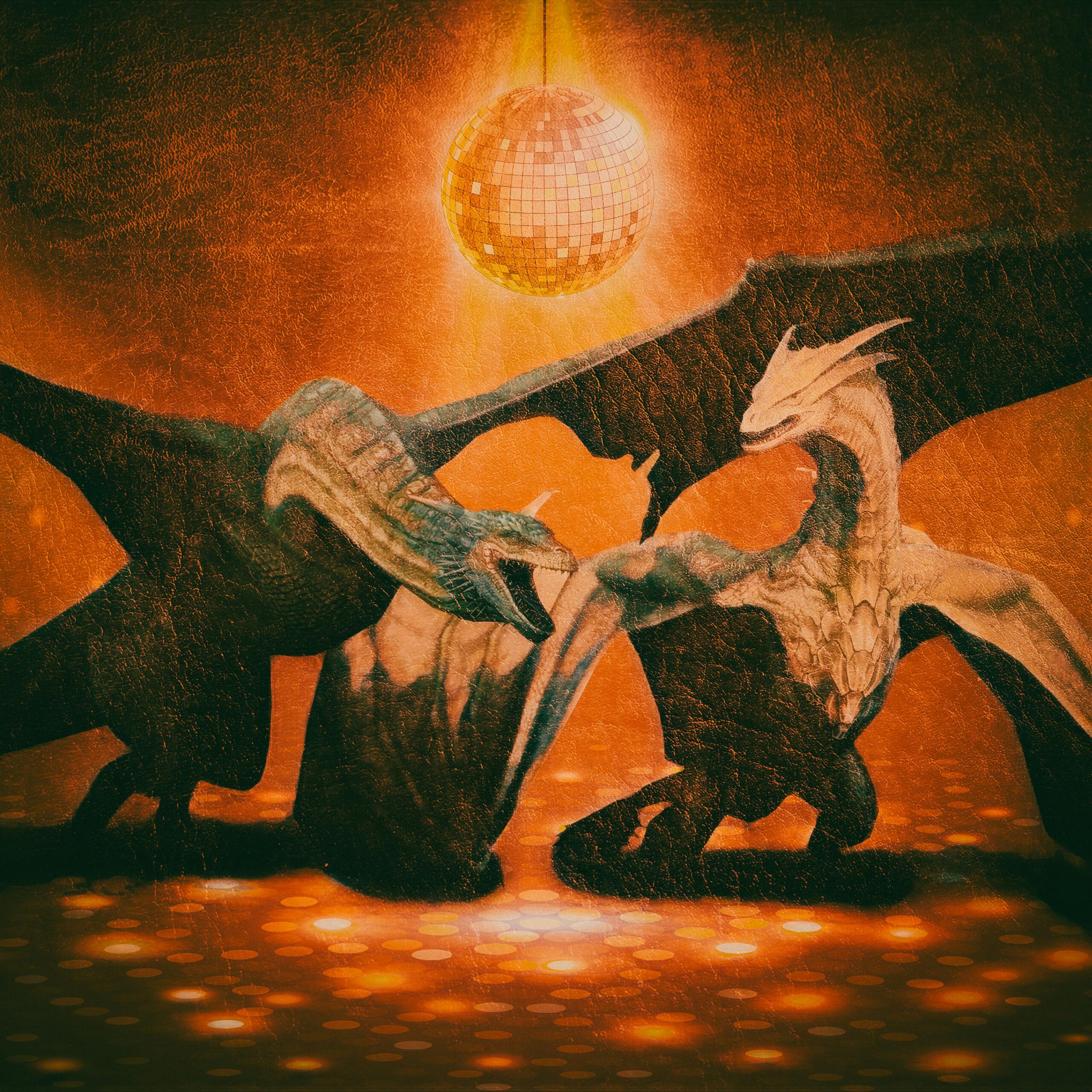

In HBO’s post-episode featurette for the Season 3 premiere of House of the Dragon, cocreator, showrunner, and writer Ryan Condal sums up the impact of the bloody Battle of the Gullet: “This battle has such a ripple effect afterwards, I think you really do have to question, ‘Was there a victor? Is there going to be a victor in the Dance of the Dragons writ large because of the high cost of this battle?’”
Those questions may have been rhetorical—the implication, clearly, was “Nah”—but in the post-episode featurette for Sunday’s Season 3 finale, director Andrij Parekh more or less answers them anyway. “There’s definitely no winner at the end of Season 3,” he says. “It’s just death and destruction.”
During discussions of Game of Thrones, “D&D” generally referred to showrunners David Benioff and D.B. Weiss. For HotD, the new D&D are death and destruction. D&D abound in “The Treasons at Tumbleton,” which features the deaths of Helaena Targaryen, Ormund Hightower, Roderick Dustin, the High Septon, and countless combatants and innocents at Tumbleton. (Including kids—innocents who became quasi-combatants when Ormund armed them in a futile attempt to stave off the blacks’ attack.) Amid the chaos, a dazed Daemon Targaryen surveys the horrors his family’s pursuit of power has wrought: toppled buildings, fractured families, fried fighters. Briefly, he seems to consider whether he might have made the wrong call when he passed on a peace proposal from Gwayne Hightower and Daeron Targaryen that could have reduced the D&D. But the Rubicon is crossed and Daemon is wired for war, so he plunges back into battle and adds to the corpse count.
That fleeting moment of mid-battle reflection, buried as soon as it surfaces, highlights one exhausting aspect of the series’ penultimate season: Essentially, no one learned anything (except, perhaps, for the wrong lessons). That goes for the war-weary but bloodthirsty participants in the Dance, but it also applies to us, the spectators. Few of the series’ combatants have a death wish, à la Criston Cole, and unlike Helaena, most viewers who’ve stuck it out this far will likely see the series through. But even though Sunday’s finale capably sets the stage for the final season, it’s hard to get hyped for the carnage to come. In the post-finale featurette, Condal says, “We’re entering into the end-of-days phase of the Dance of the Dragons.” I’m glad—not because I’m so eager to see what happens, but because it’ll be a load off when the D&D are done.
I’m not saying that HotD doesn’t have redeeming qualities. The series remains popular (albeit not to quite the same extent it once was), and three seasons in, its viewership can’t be attributed entirely to (dragon)riding Thrones’ coattails. The third season largely improved on its predecessor—and even, in some respects, on Season 1. In part, Season 3 got better by cannibalizing content originally intended for Season 2: The Gullet got shifted to this season, which delivered the big battles last season lacked. But as the series’ story has advanced and its scope has expanded, it’s also addressed other deficiencies from the early going, such as jarring time jumps, a paucity of settings, and a focus on elites and power brokers to the total exclusion of the smallfolk. And hey, the more characters kick the bucket, the fewer confusing names there are to keep straight.
However, time has only compounded the problem of repetitive, telegraphed tragedy at the show’s hollow heart. You don’t have to have read Fire & Blood—or be aware, thanks to Thrones, of the “darkness for the days to come” for the Targaryens—to realize that the moral of this story isn’t “Gee, that war was worth it.” And considering the conflict’s trajectory, it’s difficult to foresee a painless ending for any of the principals, let alone the innocents. All of which leads to relentless loss without corresponding gain, and doom and gloom with little uplift, love, or levity to light the way. (No offense to Harrenhal’s hottest—and only—couple, whose problematic age gap and major mommy issues taint their fiery romance.) As Helaena says to Rhaenyra shortly before the former self-defenestrates, “All the things you care about are ugly. This place … is ugly. You, yourself … ugly.” The same complaint pertains to the show, which could use more beautiful beetles—even if they feed on waste.
That the series is somewhat joyless isn’t so much an adaptation problem as it is an issue with the historical tome it’s based on—which, as its title suggests, isn’t exactly a lark or a laugh riot. The Dance of the Dragons is the story of a severely screwed-up family that decides to self-immolate and doesn’t much care who’s caught in the crossfire. Targaryens continue to be a tough hang: They’re sporadically sympathetic only until you recall their crimes. The toadies and strivers who inhabit their orbit often aren’t much better. Ormund isn’t really off base about the Targaryens’ savagery; he’s just wrong to consider himself superior. In this story, characters who could pass for well adjusted and honorable typically end up sidelined or doomed, like Gwayne and Daeron, or fall to the dark side themselves, like Alyn of Hull, who just assassinated the High Septon because proximity to power seduced him and Rhaenyra issued the order.
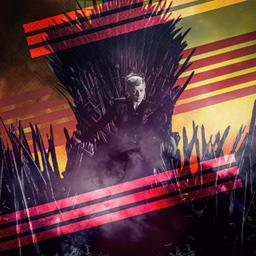
Naturally, the series also suffers from comparisons to Thrones, which not only came first but also offered a far richer portrayal of the same basic premise (a struggle to succeed a Targaryen ruler). Thrones opened a window into a wider cross section of Westerosi society; dangled the potential for a victor to break the wheel, rather than replace one imperious monarch with another; and, in the White Walkers, established a threat that transcended the fight for the Iron Throne. (Which HotD has sweatily tried to tether itself to via the invention of Aegon’s prophecy.) That the original series ultimately squandered some of its promise on a hasty, hated ending doesn’t negate the satisfaction it provided along the way. Even if you’re seated every Sunday for the latest Targaryen atrocities, do you find yourself speculating about, reflecting on, or discussing Dragon half as much as you did Thrones? Risk of spoilers notwithstanding, is it truly appointment TV?
HotD is a death march, and its characters aren’t great company on the slog to the gallows. (This season’s Larys-Aegon road trip was both a refreshing change of pace and a reminder that Larys is no Varys—or Tyrion.) Monstrous characters can be compelling—see Succession—but despite Matt Smith’s swagger as the volatile Daemon and Emma D’Arcy’s grievance and gravity as the spitfire Rhaenyra, Dragon’s squabbling blue bloods wear thin. There are more memorable lines, and laughs, in some episodes—even scenes?—of Succession than there are in three seasons of HotD. Yes, people watched Succession to see who would succeed Logan Roy, but there was more going on around that central power play than there is on HotD, and a much more magnetic collection of characters. It’s not just that it’s hard to really root for anyone on Dragon (especially after Rhaenyra turned tyrant). It’s that their goals aren’t that deeply layered.
“It’s hard to be anti-war without glorifying warfare, because you have to show it,” Parekh says after the finale. “But what I hope the audience comes away with is not the swinging of swords, but the aftermath of the swinging of swords.” Season 3 devoted ample time to both. Some of the sword swinging yielded sensational set pieces. But Dragon has already left little doubt about its stance on civil war—it’s hell—and another eight episodes (presumably) of reemphasizing that takeaway in 2028 could be overkill, literally. The upshots have been hammered home, and they’re mostly familiar: “Violence begets violence,” “Absolute power corrupts absolutely,” “The sins of the parent are visited on the children,” and “Big things have small beginnings.” Plus the epiphany Jaime Lannister shares on Thrones Season 7: “Maybe it really is all cocks in the end.”


The portion of Fire & Blood that House of the Dragon draws from runs some 229 pages, compared with the 4,500 or so of the (far from finished) A Song of Ice and Fire. All told, Dragon will have half as many seasons and fewer than half as many episodes as Thrones, yet the shorter series seems protracted, while Thrones felt really rushed. As HotD’s lengthy Harrenhal hallucinations and Alicent interludes illustrate, even four seasons for the series is a stretch. You might say they’re really dragon this out.
Put aside some questionable characterization, debates about departures from the book, and fears for the dragons commanded to dracarys. The fundamental flaw in the foundation of HotD flows from its characters and conflict, whose hooks are barbless and whose mutual, inexorable bloodletting has developed too slowly and is lasting too long. The Westeros of Thrones, however fraught (and, at times, torturous), was often one I wanted to explore. The Westeros of Dragon is one I’m regularly relieved to leave. This duel-to-the-deaths war of attrition—a Dance that could be branded They Shoot Dragons, Don’t They?—is enough to make me miss the days when Viserys’s wounds were the only ones visibly festering, or the simple pleasures of the later, lower-stakes, secret-Targaryen detours of Dunk and Egg.

On some level, there will be a winner at the end of Season 4, because someone in the line(s) of succession will still be standing when the chaos concludes. And even if the series doesn’t pull people back in or add to its audience for the fourth season, HBO will have won as well by cementing Thrones’ status as a franchise, not just a stunning, singular success. But for the figures at the epicenter of this internecine, self-defeating war, any win would be worse than Pyrrhic.
As George R.R. Martin wrote recently (about real life), “The worst may be yet to come.” No matter how competently Condal and Co. tie up their production, that dire forecast will probably apply to their small-screen cover of Martin’s fiction. At this late date, I’m committed, of course, as are those naughty Targaryens. But if, as seems almost certain, we’re heading for an ugly end in which the claimants to the throne and the realm alike largely lose, then it’s high time to get off this dragon ride. House of the Dragon is lavish, ambitious, and sometimes breathtaking TV. Nonetheless, I’m ready for the Dance to be done.