‘House of the Dragon’ Is Finally Finding Some ‘Game of Thrones’ Magic
After a lackluster Season 2, the show is finding its footing in Season 3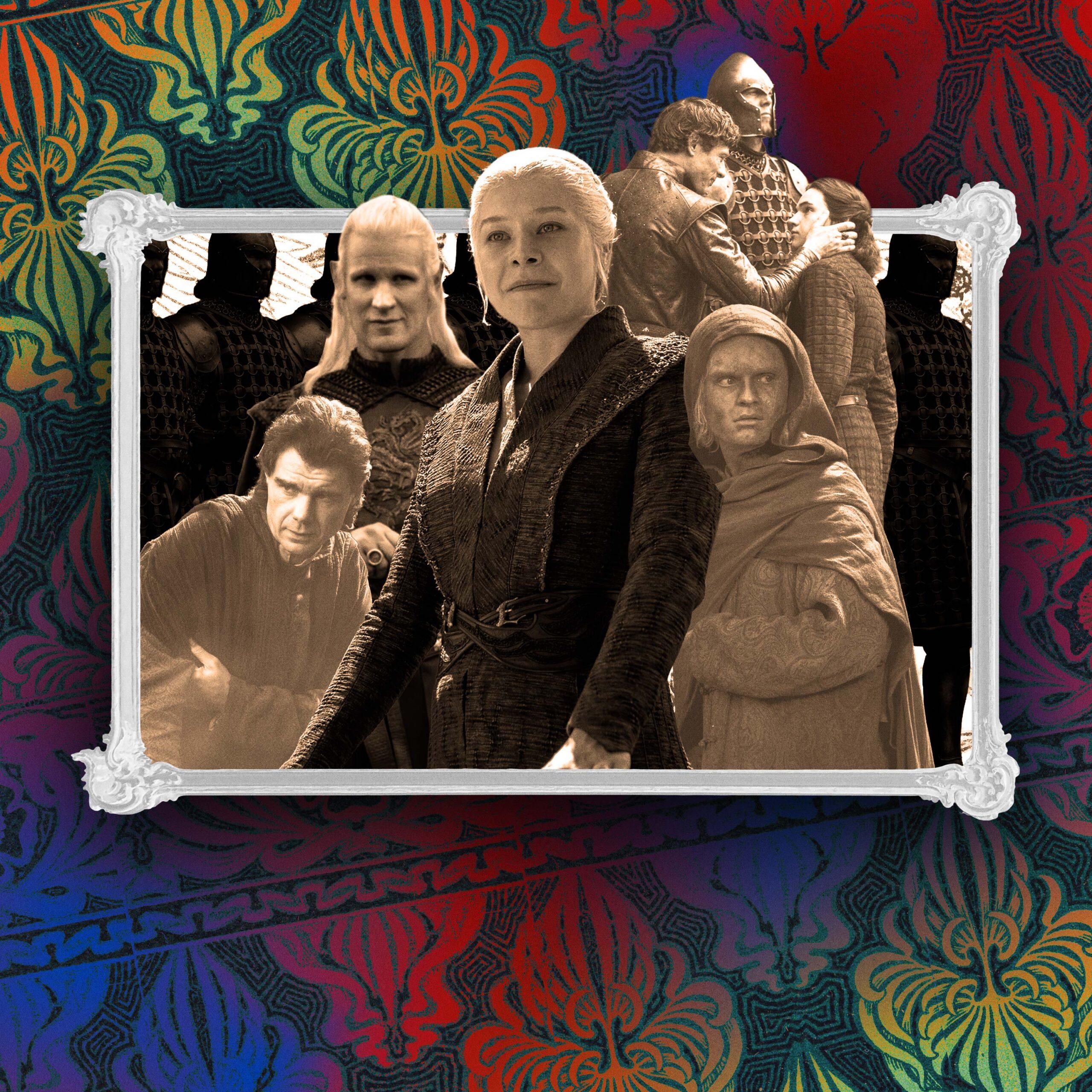

A mad scramble for a pointy throne, a dash or three of incest, platinum blonds raining down hellfire, little boys who should have stayed on Earth’s sweet soil: From the start, House of the Dragon has shared plenty with Game of Thrones. But over its first two seasons, the A Song of Ice and Fire prequel often looked like the black-haired bastard of HBO’s firstborn, a grim, plodding, undeserving heir to the last great ruler of prime time. In Season 3, though, while things might not be looking up for the Targaryen clan, House of the Dragon is finally proving itself a worthy successor by cribbing some moves from the first show’s playbook. As Rhaenyra fends off requests for tallow and taxes, her loathed half bro shovels shit, and a new villain sniffs his way to the top, House of the Dragon is finally tapping into the humor and humanity of the first show, planting two feet firmly on the filthy, familiar ground of Westeros.
When it premiered in 2022, House of the Dragon was supposed to be distinct from Game of Thrones, zeroing in on the imperious Targaryens back when they had their dragons and (for the most part) their sanity. The newer show traded in the sprawl of Westeros and its warring houses for a single family tree that isolated itself in drafty castles and (literally) flew high over the hoi polloi. It was a premise with potential, our first chance to get to know the storied, incestuous house that had mostly been wiped out by Thrones times. But the show didn’t acquaint us with the family so much as speedrun us through its manifold conflicts: Season 1 dashed through decades, dispensing with the character and relationship building that was key to Thrones to get the pieces for the Dance of the Dragons placed on the board. Season 2 kept those pieces rooted in place, refusing the narrative momentum and geographic expansiveness of peak Thrones to build—and ultimately deflate—suspense for the conflict ahead.
Neither season had much breathing room, confining the prowling Targaryens to the airy halls of the Red Keep or the dank ones of Dragonstone. And keeping the focus on the self-serious—and sometimes thinly drawn—Targaryens meant that we missed out on the self-deprecating wisdom of a Tyrion Lannister, the salt-of-the-ocean goodness of a Davos Seaworth, the twinkling ego of an Oberyn Martell. The show wasn’t helped by the fact that its characters are based on historic outlines in Fire & Blood, not the lively, vying figures of the Song of Ice and Fire books. This was our chance to see the Targaryens at the height of their power, and in the first few seasons, we mostly just got a would-be queen counting down her remaining sons and dragons, a rogue prince having some very bad dreams, a libertine usurper sweating it out in bed, and softboy heirs who just felt like dragon fodder. It was all a little too bleak and a little too flat, a long fall from the bawdy flesh-and-blood strivers of Thrones.
In Season 3, though, even as the war is slipping away from them, the Targs are finding themselves—and maybe even a sense of humor—in large part by coloring in the lines drawn by Thrones. When Rhaenyra takes her throne, she’s beset by an ever-growing list of problems: sheep shortages, an evaporating treasury, enemies pressing in, rats running amok, bastards with jumped-up dreams, an uncle-husband who literally thinks he’s a god. But despite the stress and the stakes, there’s something fun and refreshingly brisk to the shaky beginning of Rhaenyra’s reign. This is the deliciously entertaining, occasionally absurd politicking of Thrones, the reality of ruling that House of the Dragon has circled but never shown quite enough of as its nobles sit like ducks in war rooms and fly overhead on dragons.
And as Rhaenyra paces the halls and fends off requests from all comers, I couldn’t help but think of another towheaded queen given to frequent bouts of incest: Rhaenyra’s questionable choice to feed the rats to the merchants and nobility at her table is right out of Cersei Lannister’s “I can do whatever tf I want” playbook; her chats with Alicent bring to mind the other queen’s uneasy but confiding tête-à-têtes with Sansa, another red-haired rival; Rhaenyra’s no-nonsense black garb is a little like Cersei’s own power look; and what’s Rhaenyra’s threat of all-consuming dragonfire but a precursor to Cersei’s yen for wildfire? Both of them have power over the men in their orbit but will always have to contend with their disrespect, and the aspirations of each were hobbled by fathers who didn’t properly prepare them for their roles. Rhaenyra is certainly more merciful to her enemies than Cersei was, and she probably has a healthier relationship with her own son named Joffrey. But as Alicent tells her, sitting on the Iron Throne has a way of making you do things “that your heart would have recoiled from before you came to the throne.” Now that she’s forced to contemplate the messy realities of rats and taxes and charbroiled heads—not to mention a couple of slain sons and a rapidly deteriorating kingdom—her track record as a blandly sympathetic figure may be, mercifully, coming to an end. Every monarch makes some bad choices and loses some piece of themselves to the throne; so far, Rhaenyra’s slate has been suspiciously clean, but the demands of court and an ongoing war may make her as complex and confounding as Cersei.
Rhaenyra’s not the only contending monarch who bears traces of Thrones this season: The Aegon-Larys odd couple recalls those dynamic duos from Thrones—Arya and the Hound, Brienne and Jaime, Tyrion and Bronn, Jorah and Tyrion, etc. (It’s such a good formula that A Knight of the Seven Kingdoms runs with it, making the Dunk and Egg pairing the central, wildly successful conceit of the series.) Those wandering pairs brought the unexpected out of each other and spirited us to the corners of the realm, providing a boots-on-the-ground perspective of the smallfolk and war outside the Red Keep. Larys and Aegon with the muckrakers is like a release valve after all the Sturm und Drang of dragons and throne rooms, and they’ve both already managed to go from kinda creepy to kinda funny—maybe even a little charming. (“I can read just as well as he can!” Aegon insists to his new tormentor.) More boot kissing, please, and more ventures to the vibrant corners of Westeros on foot instead of on dragon.
Even better, Larys isn’t the only schemer House of the Dragon has up its sleeve this season. Ormund Hightower is giving him a run for his money as a classic Thrones-verse villain, a Machiavellian weirdo who lives for a dastardly plot and a bald-faced lie. He and Larys actually divvy up some Littlefinger strategies this season: Larys takes the smuggling-a-noble-out-of–King’s Landing mantle; Ormund grabs the hair dye. But Ormund is a creature all his own, a prissy religious fanatic who loathes dragons but isn’t afraid to use them, a man who preaches justice and family values when convenient and flouts them when they’re not—basically, the kind of compelling, idiosyncratic antagonist that House of the Dragon needs to breathe some life into this conflict. We’ll always root for an Ormund type just to see what he’ll do next; the best conflicts in Thrones had lovable baddies on all sides, an element that House of the Dragon has missed as it’s drawn its lines a little too neatly between the conniving greens and the wronged blacks. It was always fun to hate Ser Criston Cole, but it’s not nearly as fun to watch him mope around and bash people’s heads in. And while Daemon has had his moments as an antihero, House of the Dragon has hemmed him in a bit too tightly, marooning him in Harrenhal for almost all of Season 2. (Here’s hoping that Rhaena and Sheepstealer will drive a satisfying wedge between the consort and his queen.)
A dread as black as Balerion always hung over this series, souring the mood of every birth, death, and wedding. Thrones also had the requisite blood and death, but there was a levity and layered humanity to that show—in Tyrion’s snide but sincere counsel for Joffrey, Samwell Tarly’s doting allegiance to Jon Snow, and Arya’s almost affectionate gibes at the Hound—that House of the Dragon and its self-important Targaryens lacked. Those elements have been at the edges (e.g., in Helaena’s bizarre proclamations or Larys’s foot stuff), but by leaning into its Thrones forebears, making its characters a little funnier and a little more complex, and bringing us closer to the ins and outs of ruling and living in Westeros, House of the Dragon finally feels like it’s come down to earth. No one’s ever figured out how to rule Westeros, or HBO, in a day; sometimes, it takes a few seasons. And when a new ruler can’t make their own way, the best option is stealing what’s already worked.