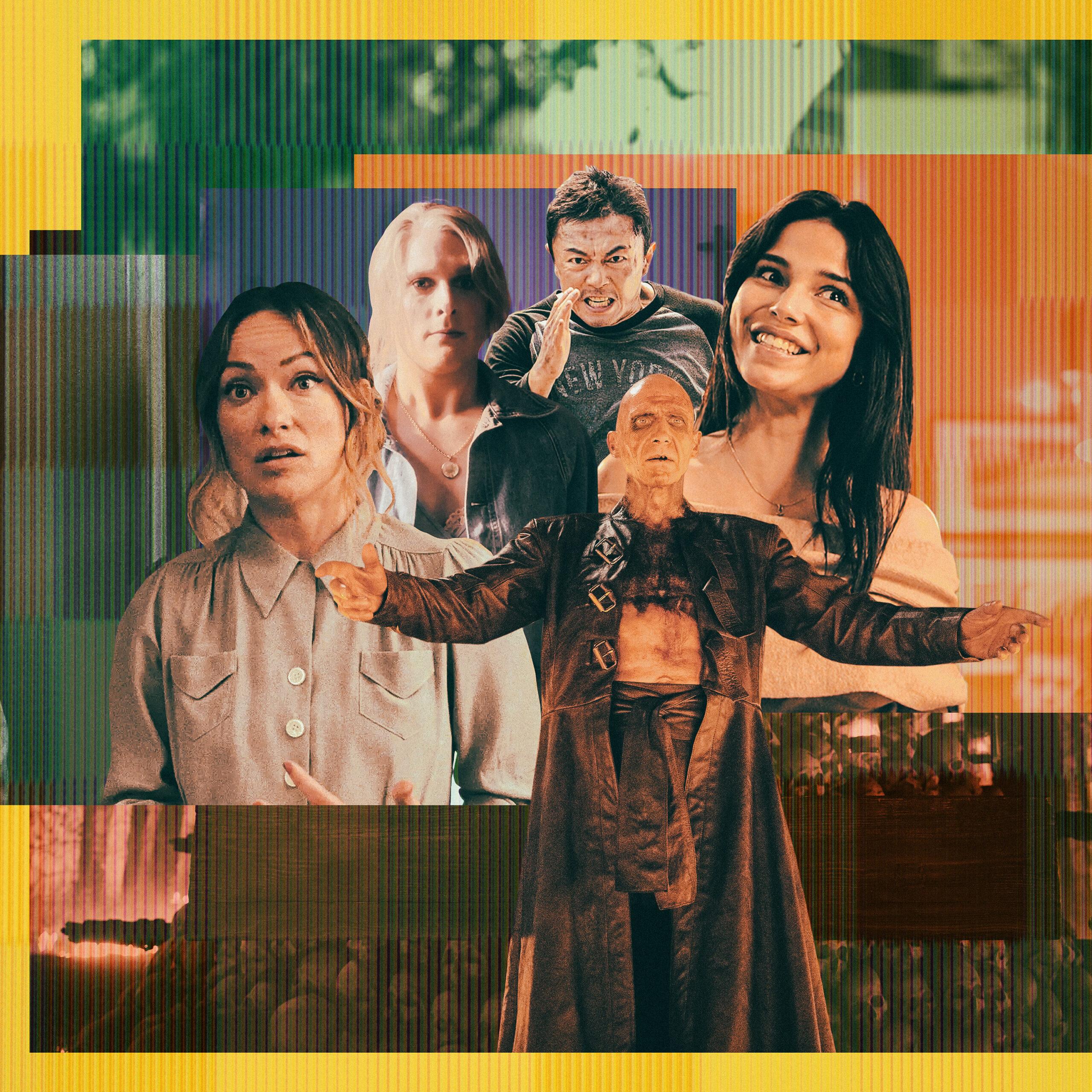
Is it wrong that I’m filing this annual halfway-mark roundup right before heading off to see The Odyssey? Somehow, it seems like Christopher Nolan’s movie will find its billion-dollar audience whether or not critics—and apparently not influencers—act as heralds. If it really does turn out to be the greatest story ever told (or even nearly as good as O Brother, Where Art Thou?), it’ll find a way into the year-end top 10. Place your bets. In the meantime, here are 10 movies (and some honorable mentions) worth seeing before the fall deluge brings forth even more of the usual suspects than usual (“by gawd … that’s Alejandro González Iñárritu’s music!”) and the awards-conscious consensus rears its boring head.
Movie of the Year So Far (Derogatory?): Obsession (Curry Barker)
I’ve been writing about new movies—and rubbernecking at the discussions around them—for a long time now. Darned if the online and IRL exchanges about Curry Barker’s Obsession don’t set new standards for rancidness. Some of that stench is purely circumstantial, a toxic by-product of what industry pubs might call “boffo box office” and a social mediasphere that thrives on polarization. But it’s also a direct reflection of a young, crafty director plunging deep into a rhetorical can of worms and flaunting how he’s gotten his hands dirty. This is an ugly movie: visually, thematically, spiritually, you name it. It’s clever and stupid—it somehow mocks, validates, and amplifies the anxieties of champions and haters alike. And while the images are as cramped as an Instagram Reel, there’s plenty of room therein for interpretation. Is Obsession the cinematic equivalent of a One Wish Willow—a cheap trick gone terrifyingly awry and yielding a torrential downpour of cash? Is it an exercise in vindictive blunt-force trauma à la its infamously reedited driver's seat set piece? A medium-rare dead cat sandwich? A well-acted, intermittently creepy riff on the monkey’s paw myth with myriad flaws that collapses under the weight of the surrounding discourse? “I’m not going anywhere,” Inde Navarrette’s Freaky Nikki promises the object of her affection, a death-do-them-part vow that sums up the staying power of Barker’s movie, for better and for worse.


Cinephile of the Year: Charli xcx
I’d probably give this to Charli just for picking The Shrouds in the Criterion Closet and giving its director a feature on her new record: It’s about time David Cronenberg got a platinum plaque to go with his Cannes hardware. But more hats off to Charli for supplying songs for Emerald Fennell’s Wuthering Heights and giving three very disparate screen performances—two of which are really quite good—in Faces of Death, Erupcja, and The Moment, the latter of which has real merit as a deconstruction of the pop star–industrial complex. Next up: an on-brand role in New Queer Cinema figurehead Gregg Araki’s new comedy, I Want Your Sex. While composing this blurb, I checked Charli’s Letterboxd to see her last entry: Point Break, five stars. That’s right.
Right Here in My Raptor Bag: Blue Heron (Sophy Romvari), Mile End Kicks (Chandler Levack), Nirvanna the Band the Show the Movie (Matt Johnson)
There are enough critics sticking up for these three very different—and each, in their way, distinctly scrappy and independent—Toronto-centric and Toronto-adjacent features, all made by friends, that I don’t have to, at least not officially. (Coming soon: the Big Picture Canadian movie draft.) Hopefully, the degree to which the films have broken local and national containment augurs well for other Canadian filmmakers launching in the second half of the year. Denis Villeneuve, we’re all rooting for you and your wacky little passion project back home.
Watch This Space: The Samurai and the Prisoner (Kiyoshi Kurosawa)
Kiyoshi Kurosawa’s heady, ethically complex feudal-era murder mystery doesn’t open until July 31, but it’s never too early to give viewers a heads-up on one of the best movies of the year. The devil’s bargain of Kurosawa’s late-career branding as a genre specialist—exemplified by the savvy packaging of existential freak-outs like Chime and Cloud—is that it belies the range of his artistry. The Samurai and the Prisoner isn’t remotely a horror movie, yet its tale of a veteran warrior leveraging potential military maneuvers against more metaphysical dilemmas taps a rich, cold vein of dread. Don’t miss it.
10. The Death of Robin Hood (Michael Sarnoski)
Child murder, leprosy, jaws being pried from sockets—it’s sort of amazing that a period piece this grim and unappealing got made. The demise prophesied in the title of Michael Sarnoski’s film is commercial, $20 million dead and buried. Going for broke and getting there isn’t inherently heroic, of course, but it’s not like The Death of Robin Hood believes in the good fight, either. Its worthy subject is the melancholy that comes with living without illusions, about oneself or anybody else, and Hugh Jackman—a consistently excellent actor even if it’s sometimes easy to forget that fact—out-Logans himself. His Robin is a weathered apex predator frustrated by his own survival instinct; kudos to the actor and his director for not only placing the character beyond redemption but also keeping him there.

9. The Furious (Kenji Tanigaki)
Kicky-punchy-smashy of an extremely high order, hinged on a familiar—if strenuously lurid—child-trafficking plot (complete with a vengeful girl-dad protagonist). The Furious is as deftly choreographed as anything this side of The Raid, with which Hong Kong director Kenji Tanigaki’s thriller shares several actors, including the amazing Indonesian martial artist Yayan Ruhian, who gets to wield a bow and arrow this time out. The scenario is just gripping enough to keep things pressurized in between set pieces, which, meanwhile, are more than outrageous enough to please even the most demanding genre aficionados. The violence is hellacious—it’d probably be easier to list the body parts that we don’t see snapped, hacked, or tenderized in extreme close-up. Nothing wrong with giving the people what they want.
8. The Invite (Olivia Wilde)
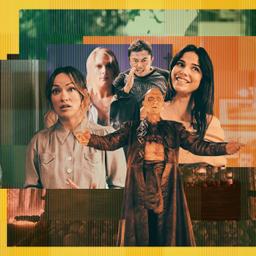
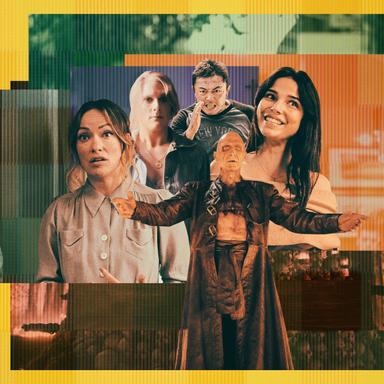
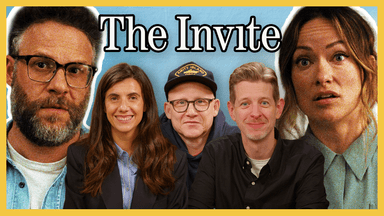
I have a sneaking suspicion that Olivia Wilde’s widely acclaimed chamber piece—a postmillennial riff on Who’s Afraid of Virginia Woolf? about two frustrated couples circling each other during a dark night of the upper-middle-class soul—is ultimately less than the sum of its parts. But those parts are well oiled: Each of the four leads, starting with Wilde herself and also including Seth Rogen, Edward Norton, and Penélope Cruz, conjures up moments of startling emotional acuity. The film is superbly shot and directed in a way that both emphasizes and belies the claustrophobia of the single-apartment setting; the observations in Will McCormack and Rashida Jones’s screenplay about the psychology of temptation (Thou Shalt Not Covet Thy Upstairs Neighbor’s Wife—unless she’s into it) and embedded dichotomies of monogamy (familiarity and contempt, tenderness and resentment) are intelligent. Does it matter, then, that there’s also something weirdly timid and pat and obvious about the whole thing? Yes, it does. But if The Invite really is a proverbial movie for grown-ups, the adult thing to do is to follow its lead and accept the possibility of imperfection in a love-it-or-hate-it critical economy.

7. The Christophers (Steven Soderbergh)
It’s a good thing that Steven Soderbergh made a witty and heartfelt comedy exploring the mystery and beauty of the creative impulse—not to mention tricky themes of forgery and reiteration—before he got AI-curious. The Christophers is modest but not necessarily minor. Ed Solomon’s script keeps throwing jabs at art-world rituals and figureheads, and Ian McKellen and Michaela Coel make for terrific sparring partners; Soderbergh’s direction is masterful enough that even James Corden comes off well. “I like my flattery, I just need to believe it,” purrs McKellen’s flamboyant, Pablo-matic™ painter, and The Christophers is finally wise on the subject of acclaim and its discontents. Just as there’s no separating the art from the artist, the conjoined vanity and insecurity of those who expose themselves on the canvas sketches the human condition.
6. Night Nurse (Georgia Bernstein)
From the opening-credit scene—a phone cord winding around exposed flesh, bondage-style—Georgia Bernstein’s auspicious first feature announces its malevolently sexy intentions. This is a movie about different forms of seduction and entrapment, featuring characters who’ve got to have it and get hoisted on their own kinky petard; it’s cynical but not moralistic in a fine (neo-)noir tradition. Eleni (the amazing Cemre Paksoy) is a sloe-eyed cipher working at an assisted-living facility. Her desire to feel needed makes her an easy mark—and then a willing confederate—for a septuagenarian con man, Douglas (Bruce McKenzie), whose dementia diagnosis belies a predatory cunning. His grift is phone scams, and Eleni throws herself into the fray with the enthusiasm of an inveterate role player, which makes us wonder, after a while, who’s really gaming whom, and also how bad the collateral damage might get as they take turns fucking with each other. Bernstein is a talent to watch; in a moment when so many independent filmmakers seem determined to break through to a slop-ified mainstream, she’s off in a corner trying to channel the transgressive finesse of Catherine Breillat. That she gets within spitting distance the first time out is pretty darned impressive.
5. Miroirs No. 3 (Christian Petzold)
Christian Petzold’s latest unofficial Vertigo remake concerns a young musician (Paula Beer) stepping—or is she being pulled?—into another woman’s life. The question of whether Laura is a guest in her adopted rural household or a hostage of sorts vibrates on a gently Hitchcockian wavelength. The slow-burning beguilement of Miroirs No. 3 may be an acquired auteur taste, but Petzold is cooking with gas on a low setting; the shooting, editing, and musical curation are all terrifically precise. It’s also worth noting, after the immolating, apocalyptic atmosphere of his last feature, Afire, that Miroirs No. 3 proffers something like optimism for its characters and the world they occupy, hence the recurring imagery of broken items—objects and people—being subject to repair.
4. La Nuestra Tierra (Lucrecia Martel)
The Argentine auteur Lucrecia Martel specializes in humid hothouse intrigues, so it’s strange—and welcome—to see her tackle nonfiction storytelling. The first thing to say about La Nuestra Tierra is that it’s as stylistically arresting as Martel’s dramatic features, starting with the most striking use of drone photography in recent memory; the aerial views of the lush Chuschagasta native landscape suggest true-crime aesthetics on autopilot—until a bird crashes into the camera. That visceral collision sets up a tragic, enervating narrative about a bloodstained land grab that left an Indigenous leader dead; the familiar courtroom rituals are enfolded into Martel’s own rigorous litigation of her homeland’s colonial legacy.
3. 28 Years Later: The Bone Temple (Nia DaCosta)
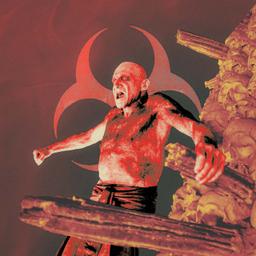
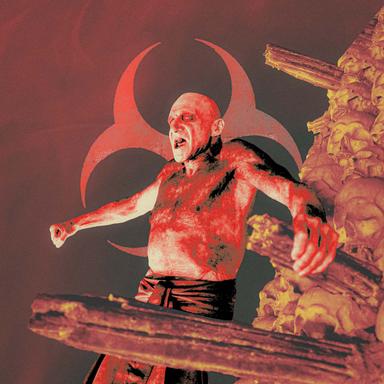
Forgiving Alex Garland’s trespasses over the past two years or so has been a revivifying experience, at least on my end: Like Dr. Kelson and Samson, maybe this is the beginning of a beautiful friendship. Garland’s scripts for 28 Years Later (2025) and The Bone Temple are smart, eccentric, and emotionally resonant, and also sturdy enough structurally that filmmakers as divergent as Danny Boyle and Nia DaCosta can erect towering, gorgeously morbid edifices on their foundations. Yes, this middle installment is less sweeping and slightly more generic than its predecessor, but DaCosta—clearly a very smart filmmaker, and a proper horror fan—ensures that the franchise’s pop-mythic iconography and attitude remain of a piece. Great gore, great bro-ing out montage, great lore building, great Ralph Fiennes lip-syncing in black leather … we’re talking a Boschian garden of earthly delights here. As for the One-Zombie-After-Another ending—it’ll do for now, but if Part 3 fails to materialize, we riot.
2. Remake (Ross McElwee)
Since his epochal 1985 breakthrough, Sherman’s March, Ross McElwee has carried his camera ahead of him like a sword; with Remake, he falls on it. The title of the decorated documentarian’s latest feature ostensibly refers to the absurd process of watching—and participating in—a proposed Hollywood reboot of his independently produced debut, but the comedy of selling out fact for fiction is shadowed by some harder truths. The real subject is McElwee’s late son, Adrian, a familiar presence at the margins of his father’s work and now positioned posthumously after a fatal struggle with opioid addiction as both protagonist and structuring absence. Did growing up on camera factor into a young boy’s dreams and failures? Why did McElwee keep filming Adrian as he fell apart later on? Did he think it could make his son whole? Good questions, no answers. “As I look back over that footage, I find a partial record of what was happening in our lives then,” McElwee intones over home movies, “what we were both up to as we moved closer to the day that you would die.” The aching, extraordinary beauty of Remake lies in how McElwee maps his own march through that tragedy and out the other side, without ever leaving it behind.
1. Maddie’s Secret (John Early)
The tonal balancing act in John Early’s debut is high-wire stuff, with plenty of risk for high-impact face-planting. A satirical comedy—set in L.A.’s Silver Lake neighborhood—about a guileless foodie-world influencer whose overnight success triggers her long-dormant eating disorder? Based loosely on an ’80s network prime-time special? Starring the director, in drag, as the title character? Shot like a Todd Haynes movie and acted like one by David Wain? The question about whether Maddie’s Secret is best filed under parody, pastiche, or put-on is worth asking, but like so many of the best movies, it somehow renovates its own categories. MVP: Kate Berlant, who’s funny only when she walks or talks or does pretty much anything.