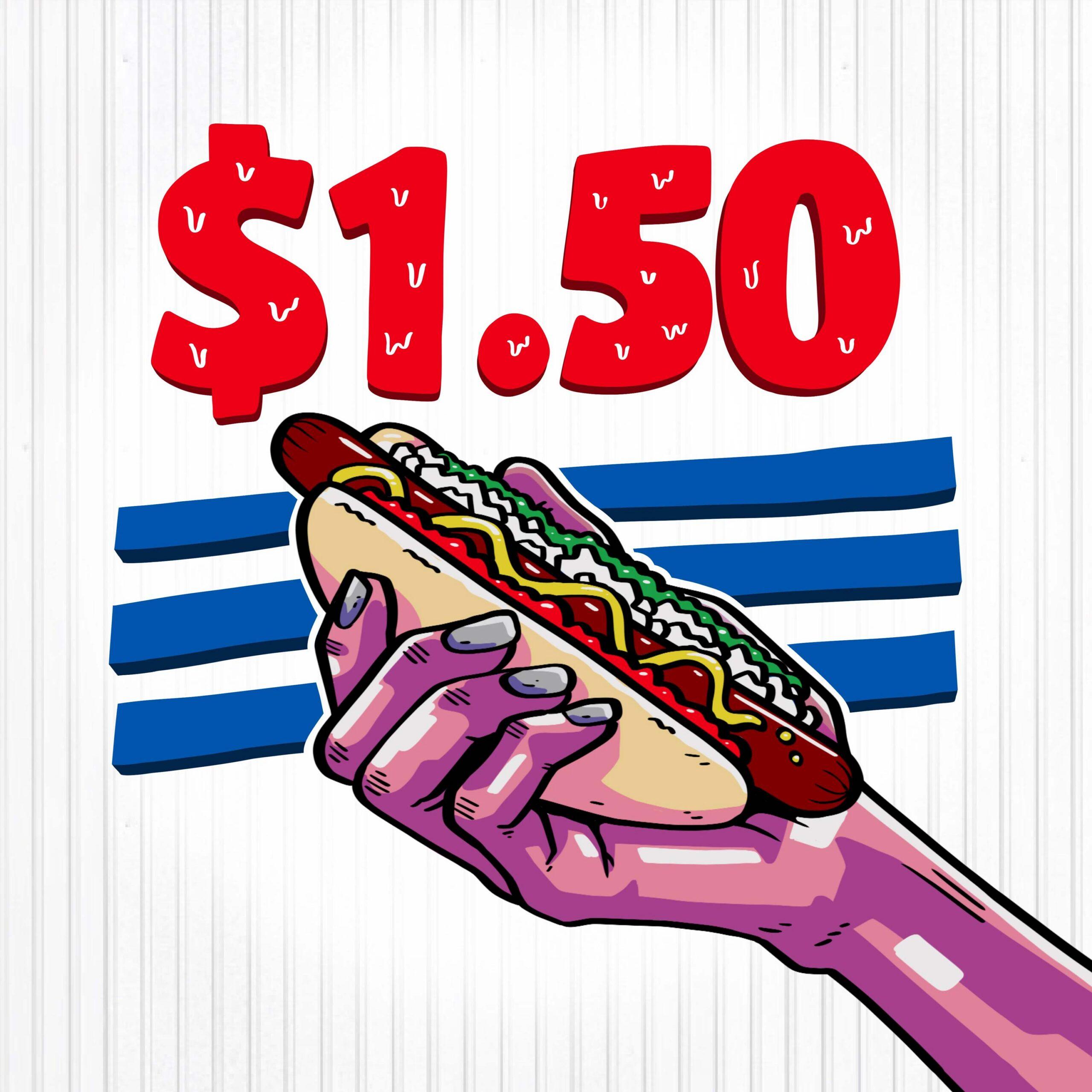
America’s Greatest Hot Dog
The price and quality of the $1.50 Costco frank haven’t budged in 40 years. It’s the last—and best—deal in the country.America’s Greatest Hot Dog
The price and quality of the $1.50 Costco frank haven’t budged in 40 years. It’s the last—and best—deal in the country.
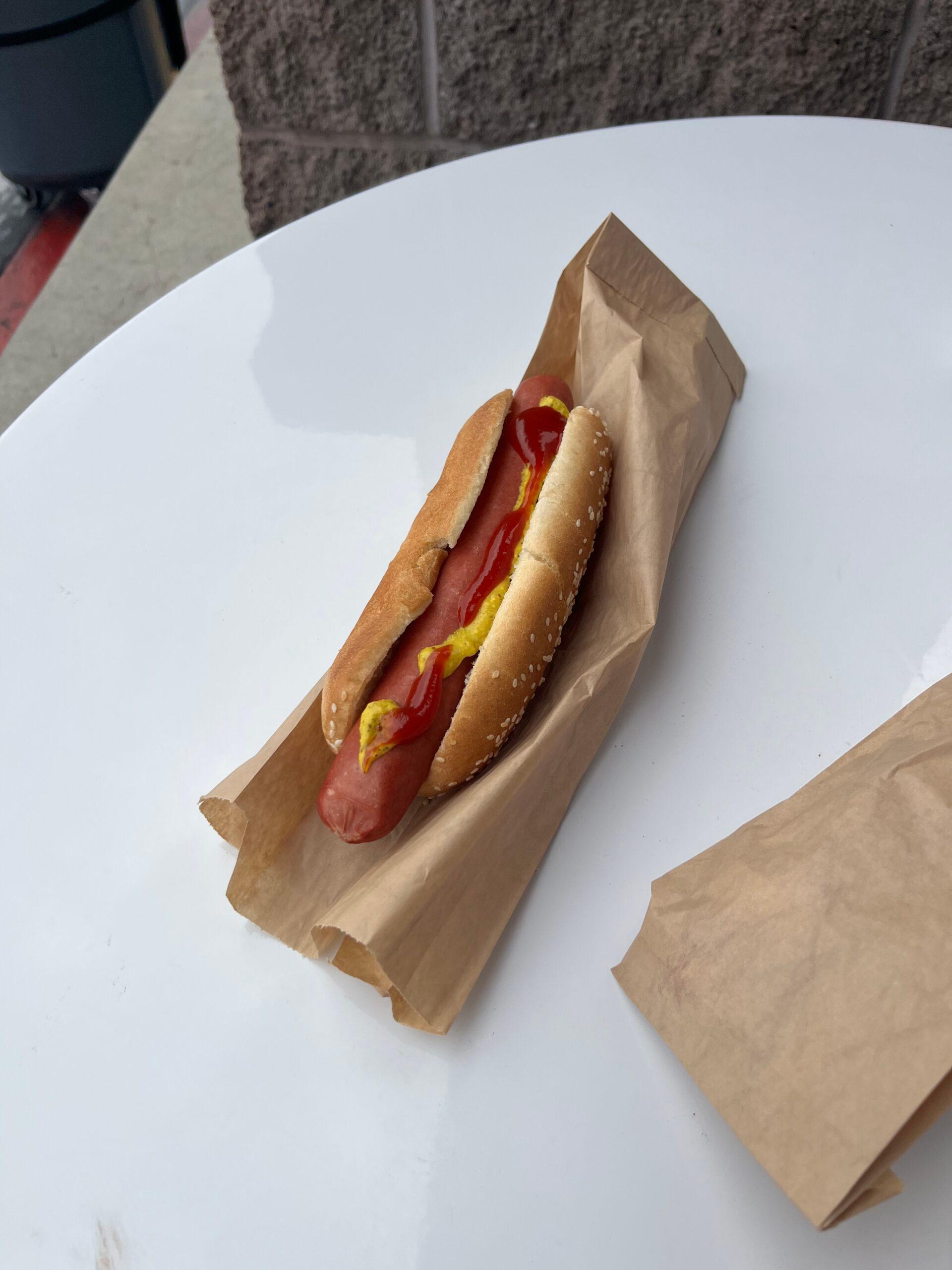
On March 18, Ron Vachris became the first CEO in recent memory to go viral for something positive. That day, he was featured in a 41-second Instagram video he took on his lunch break. In it, he orders one of his company’s signature $1.50 hot dogs, sits down at a food court table, unsheaths the quarter-pound-plus frankfurter, and takes a huge bite.
While he’s polishing off that famous Costco weiner, he looks into the camera and says, “The hot dog price will not change as long as I’m around.” The clip piled up nearly 9 million views in a single day.
As soon as the post went up, Vachris started receiving messages. Most of them, he tells me over email, went something like this: “It looks like you have enjoyed many hot dogs over the years.”
The overwhelmingly enthusiastic response to the video surprised Vachris, who started at Costco as a forklift driver. “This was done with a cellphone in a warehouse,” he says. “And that’s us, no frills!” He knows the truth: The flowers were not for him. “The Costco hot dog is the star,” he says before dressing up his zinger with a little extra mustard. “I was just along for the ride.”
That might sound like cheeky corporate propaganda, but Vachris is right. There is no fast food item as beloved as the Costco hot dog. For a buck fifty—the price has stayed the same since it was introduced in the ’80s—you get an all-beef dog and a fountain soda (or now, a bottle of water). In the 2025 fiscal year, the warehouse club reportedly sold 245 million of those combos. There’s a reason why Julia Child herself used to eat two Costco dogs at a time with mustard and sauerkraut.
“What’s not to like?” says Simpsons writer turned professional foodie Bill Oakley, the man behind “Steamed Hams.” “I mean, it’s the archetypal hot dog.”
“The thing is, it’s so good,” says Nick Wiger, cohost of the long-running chain restaurant review podcast Doughboys, “it’s hard to even call it fast food.”
Wiger and his cohost, Mike Mitchell, have spent the past decade experiencing the decline of some of their favorite national chains. Costco is an exception. “So much of the food quality has dropped and the price has gone up, but that hot dog has stayed pretty consistent,” Mitchell says. “I’ve got to give it to them.”
The fact that the Costco dog is inflation proof doesn’t hurt its case, either. “It costs $1.50, and it doesn’t taste like nuclear waste to most people,” says Jamie Loftus, author of the book Raw Dog: The Naked Truth About Hot Dogs. “Because there are other $1.50 hot dogs out there. They’re very, very rare now. But even rarer is that you would recommend them to someone or eat them out of anything other than a need for survival.”
In a world where the McDonald’s Dollar Menu is long gone, a 7-Eleven dog costs over $2, and it’s a challenge to stay on budget at Taco Bell, the Costco frank stands alone. It is America’s greatest hot dog. And the country’s last great deal.
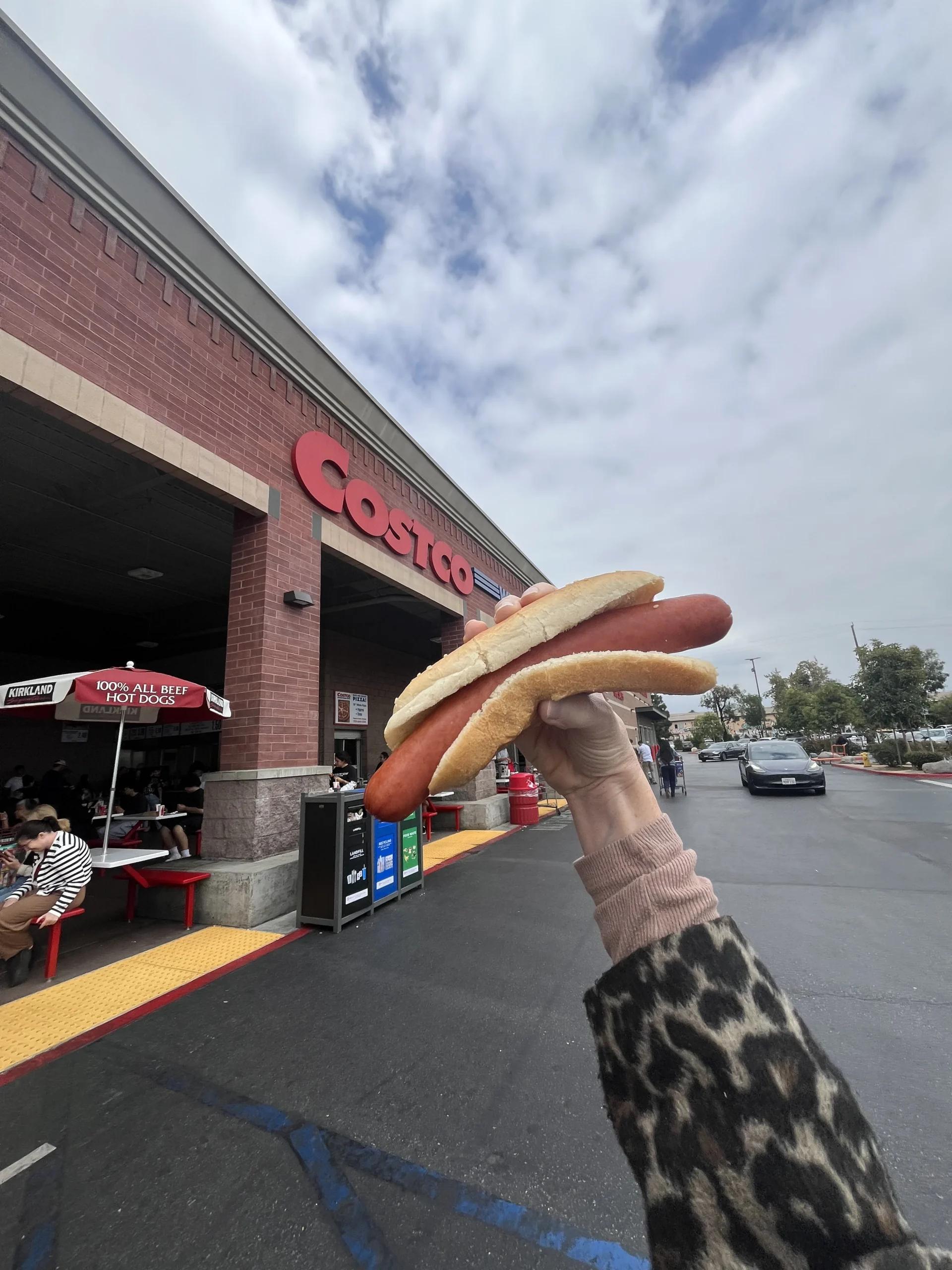
Bob Collins eats a hot dog almost every day. That’s just life as Costco’s director of food court operations. “We’re doing our own quality checks all the time,” he says. When we talked in June, I asked him what he thought made the $1.50 combo so popular.
“I’ve asked myself that quite a bit,” Collins says. “I’ve been in the food court since 2000, so 26 years. And I’ve learned a long time ago that the food court really isn’t ours. It’s our members’. And it’s very special to the members.”
The Costco hot dog is special because these days it seems rare: It’s low cost and high quality. Even if you’d need to eat an unhealthy number of them to fully offset the cost of the store’s $65 base annual membership fee, it’s a perk that makes joining the club feel worth it.
“It’s a goodwill builder,” Oakley says. “The thing about Costco is that for better or worse, it feels like they care about your patronage. As opposed to every other store, from Target to Walmart to Ross Dress for Less. They couldn’t give a shit if you come in or not.”
There’s also the obvious nostalgia factor. “Even in indoor food courts, we still have umbrellas up,” Collins says. “It’s something that people look for. And our menu boards haven’t changed a whole lot. And I think it’s just a throwback.”
There are other $1.50 hot dogs out there. They’re very, very rare now. But even rarer is that you would recommend them to someone or eat them out of anything other than a need for survival.Jamie Loftus
When Oakley was a kid in the 1970s, a Rexall pharmacy near where he grew up in Maryland still sold 5-cent Cokes. “That was obviously the price that they’d had since the ’20s or ’30s,” he adds. “It got you in the door, and you felt like they cared about the customer.”
The Costco dog, Wiger adds, “just kind of feels frozen in time, where it’s a bite of a memory. It tastes like I remember as a kid, even though it’s not exactly the same.”
At $1.50, the combo is a steal. If Costco kept up with inflation, the deal would cost about $5. But the company has pointedly refused to raise the price. In a speech he gave in 2018 at the chamber of commerce in the company’s hometown of Issaquah, Washington, then-CEO Craig Jelinek claimed that they did once consider a bump. He even went to the chain’s cofounder James Sinegal about it.
“I said, ‘Jim, we can’t sell this hot dog for a buck fifty. We are losing our rear ends.’” Jelinek recalled. “And he said, ‘If you raise the effing hot dog, I will kill you. Figure it out.’”
That’s all Jelinek needed to hear. The price stayed the same.
Over the past eight years, the anecdote has been passed around like a folktale. There’s even a Snopes entry confirming that it’s true. It’s the kind of legend-building story that a company loves to tell. After several centuries of consumerist mythmaking, it’s also the type of thing that might make you roll your eyes.
“There’s this reverence for CEOs when that story goes viral every time that I’m just like, ‘I don’t want to talk about the CEO,’” Loftus says. “‘Can we focus on the hot dog? Can we talk about the art?’”
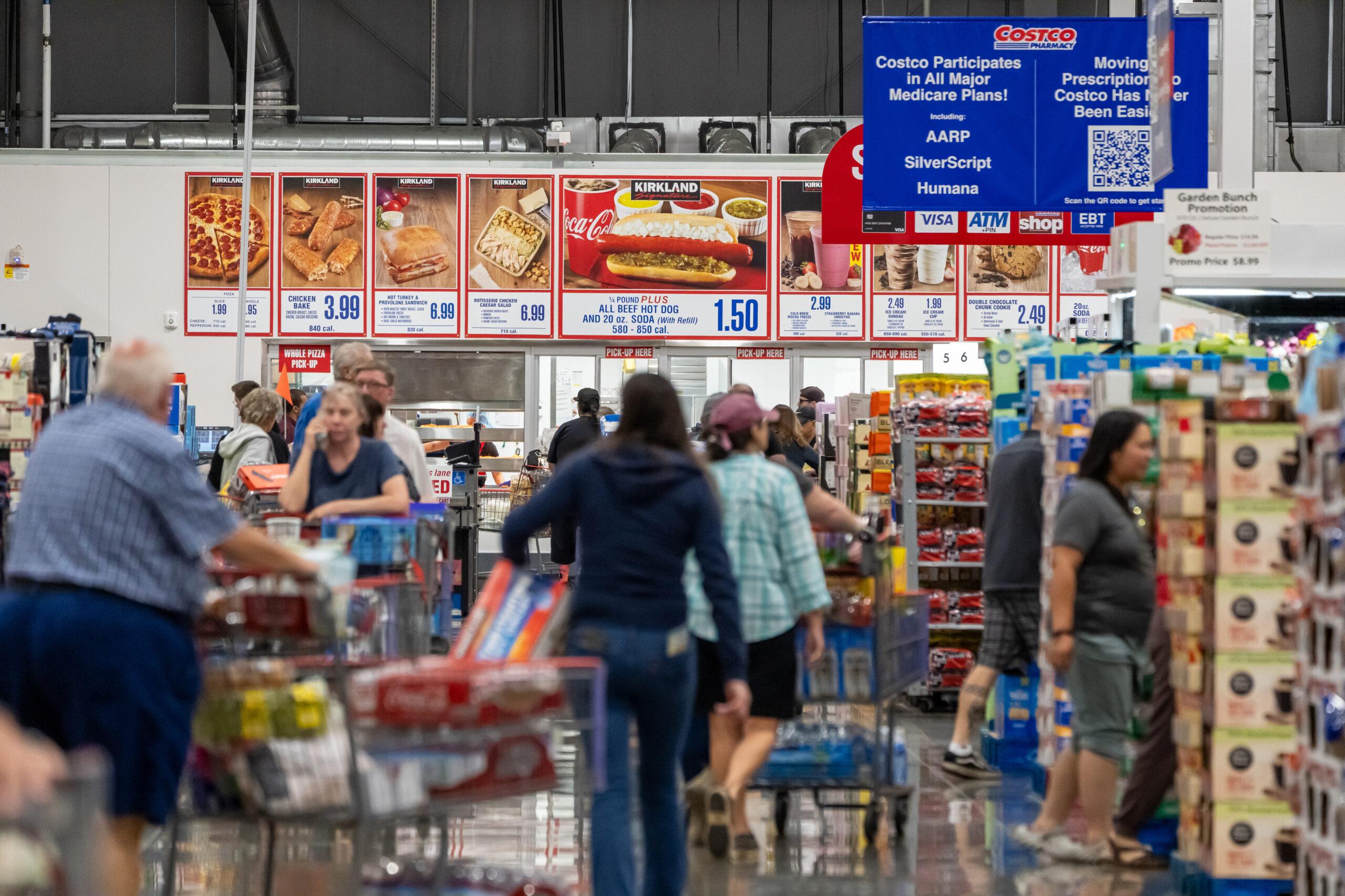
The Costco frank is art. Just ask Collins, who breaks down the cooking process for me like John Madden breaking down an NFL play. The weiners, he says, are heated in a water bath. “It’s got to be hot. It’s a hot dog. We have a special piece of equipment designed for our volume to make sure that we can maintain the right temperature.”
Then there’s the flavor. It’s salty, smoky, garlicky, and a tad sweet. And don’t forget the crunch. “The snap of the hot dog is very important, where it’s not mushy,” Collins says. Toss in freshly steamed buns, condiments like chopped onions and relish, and a custom-designed water filtration system for the soda fountain, he adds, and “it just all comes together nicely.”
The hot dog combo hasn’t changed much since it was born in the ’80s. Back then, Costco rival Price Club started getting phone calls from vendors asking to sell hot dogs outside the store’s original location on Morena Boulevard in San Diego. Sol Price and Richard Libenson, two of the company’s founders, considered the offers but went in another direction. “We decided if anyone was going to sell hot dogs at the Price Club entrance,” Price’s son and colleague Robert wrote in his book, Sol Price: Retail Revolutionary and Social Innovator, “we should be the ones.”
Price Club then bought some hot dog carts left over from the 1984 Olympics in Los Angeles and started slinging Hebrew National franks. Vachris says that this “was the first official rollout of the hot dog and can of soda combo.” It cost $1.50. Customers naturally liked being able to grab a quick meal before or after shopping. “That was the whole idea,” Collins says. “Just something for members to snack on outside of the free samples.”
More Stories on the Humble Hot Dog
Costco and Price Club merged in 1993. The chain’s in-house snack bar, aptly named Cafe 150, eventually got rebranded as the food court. By then it was offering pizza, too.
In 2008, Costco said goodbye to its first two hot dog manufacturers, Hebrew National and Sinai/Best Kosher, and began making its own Kirkland Signature frank. According to Collins, it’s about 9 percent larger than the original. “In some countries you can’t have beef or U.S. beef,” he says. “So other countries have different iterations of it, but it’s all manufactured through our production plants.”
Since the ’90s, the Costco menu has expanded beyond hot dogs and pizza. Some new items, like the chicken bake—which is basically a Hot Pocket that looks like it’s gone through a taffy puller—have stuck around. But others, like the Polish dog, have been discontinued. That one apparently had passionate fans. After it was taken off the menu, the warehouse club added an entry on its website explaining the decision. “In order to simplify our menu and make room for healthier options, we have decided to offer only the all-beef hot dog,” it reads. “Sales show this is what the majority of members prefer.”
That’s everywhere. “Wherever we do business in the world globally, it’s the no. 1 item in the food court,” Collins says. “By a long shot.”
No matter where you go, the Costco hot dog is king.
America has a lot of great hot dogs. I grew up loving boiled Fenway Franks, even if eating them seemed to make me hungrier. When I lived in Washington, D.C., I housed at least one half smoke at Ben’s Chili Bowl weekly. I’ve inhaled the “Recession Special” at Gray’s Papaya in New York a dozen times. Before it closed for good, I waited two hours in line to get into Hot Doug’s in Chicago, and I’m glad I did. And now, after shows in L.A., I always grab a bacon-wrapped street dog, a creation that, by the way, originated in northern Mexico.
Therein lies the beautiful irony of the hot dog being the most all-American food: “It’s not actually American,” Loftus says. “It’s just a result of a force of marketing that has convinced you that it is American. It’s fully European.”
Yet the German import has become as American as the Fourth of July. The hot dog is easy to grill, easy to eat, and pretty inexpensive, and it usually tastes good. All of those things make it an excellent culinary canvas. There are too many regional and international variations to list here, but hot dogs are for everyone. That includes vegetarians and vegans.
“They are the food of baseball games and boardwalks, camping trips, and emergency dinners on the sidewalk,” Jaya Saxena wrote in a recent Ravenous essay about hot dogs’ cultural standing in the U.S. “They are summer in a way no other summer food is.”
The Costco hot dog gives you that Fourth of July feeling year-round. In college, I used to take the D.C. Metro with my roommates to the Pentagon City Costco on Fridays for a cheap lunch. We always left full, happy, and feeling like we’d gotten away with something. It didn’t even bother us that to get in the door, two of my friends had to spring for a shared membership. (Some locations used to let people eat without joining, but lately, Costco has cracked down on that.)
I’ve learned a long time ago that the food court really isn’t ours. It’s our members’. And it’s very special to the members.Bob Collins
Twenty years later, I have my own Costco card. In late June, I drove to one of the warehouses on the Eastside of L.A. on a Monday afternoon for lunch. The food court was completely packed. I saw people of all ages eating slices of pizza, chicken bakes, and soft-serve sundaes. But big shock: No item was as popular as the hot dog. That day, I took down two myself. The heavy garlic taste stayed with me all day—hey, I’m 43—but it was worth it.
The deal is still that good. The hot dog is still that satisfying.
It’s why the clip of Vachris polishing off a Costco dog went over so well. Unlike the McDonald’s CEO who went viral in a bad way for taking a hesitantly dainty bite of his company’s new Big Arch burger, Vachris seemed to understand why America likes his product.
“We’re in this parody of the Gilded Age, with even more wealth disparity than ever before in this country,” Oakley says. “And the rich people are more out of touch than they ever have been in the history of America, probably since the French Revolution. So when a guy eats a hot dog and pretends like he’s a normal person, it’s shocking.”
Although Vachris would argue that it’s not pretend. When people reached out to tell him that he looked like he’s enjoyed many hot dogs over the years, he felt validated. “That is a fact!” he says. “And I still do today.”
But as much as Vachris loves the Costco hot dog, it doesn’t belong to him. It belongs to us.