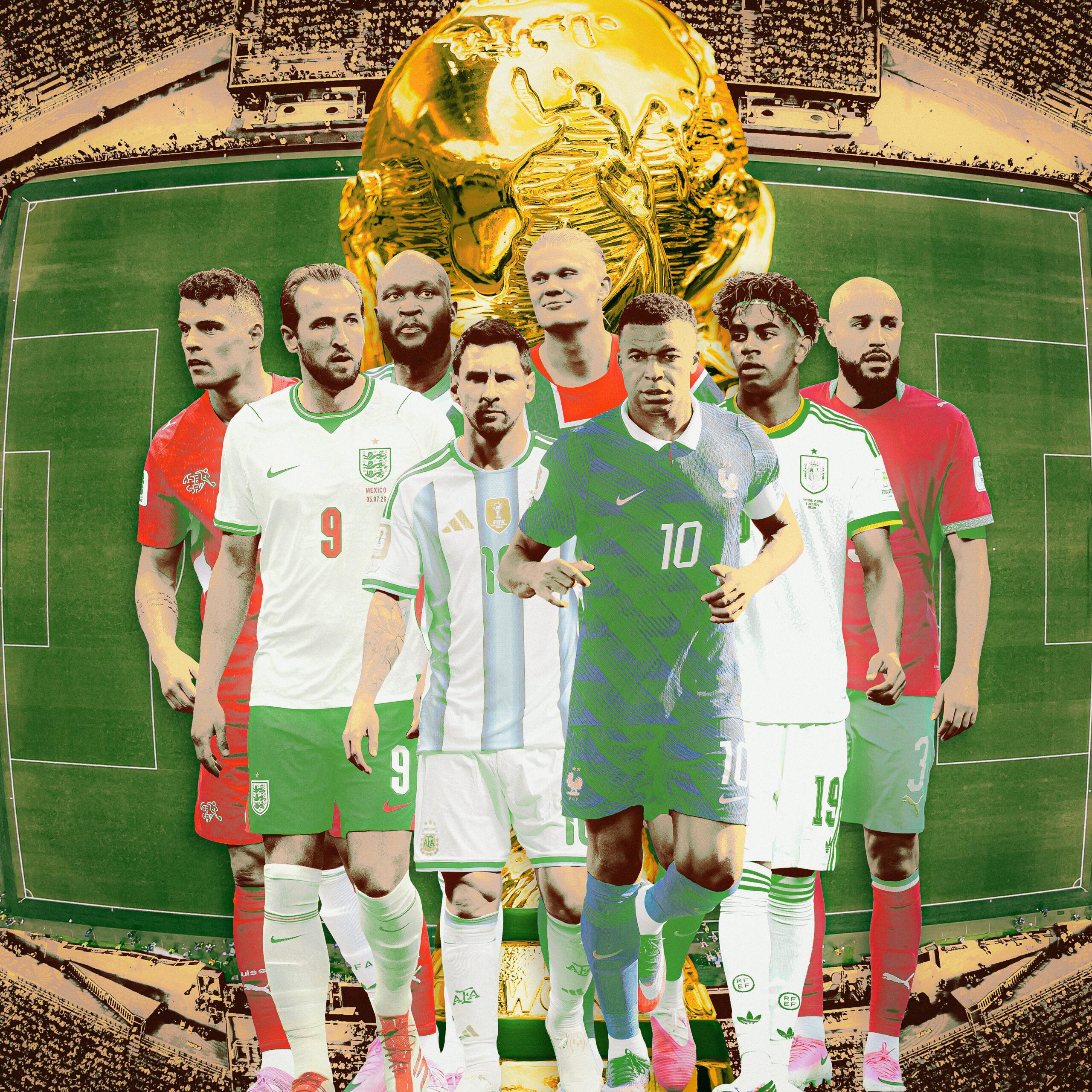

The World Cup has reached the quarterfinals, which means the partying and celebration stage has been replaced by the tension of massive stakes and the weight of history.
The clock has now struck midnight on most of the Cinderellas. All of the host nations have been eliminated. Six European powers remain alongside the most dominant South American nation of the modern era and an emerging contender from Africa. Four of the eight teams remaining are repeat quarterfinalists from 2022, while Switzerland and Norway are making their first appearance at this stage.
Winning a World Cup takes more than just talent. Getting three more wins against the best teams on the planet requires a robust formula that can survive different opponents, different game states, and the beautiful, chaotic randomness inherent to knockout soccer.
These are the eight remaining teams in the field, power ranked from least likely to most likely to lift the World Cup. We analyzed the biggest reason each can become world champion, and the flaw that is likely to stop each of them.


8. Belgium
Why they’ll win: Because when you’re the less talented team, sometimes the simplest plan is the best one. Belgium’s languid ball progression got them into trouble against Egypt, Iran, and Senegal earlier in the World Cup, but manager Rudi Garcia appears to have found some real solutions in the waning minutes against Senegal and in Belgium’s round of 16 win against the United States. Against superior pressing midfields, it turns out that just chipping the ball long to Romelu Lukaku in the center of the penalty area can work. Sometimes, just pinging the ball to Jérémy Doku in space can lead to elite counterattacking opportunities.
Belgium’s next match is against Spain, and it has me thinking back to their 2-1 loss to Italy at Euro 2021, which could be a blueprint for how Belgium wants to play. In that match, the Italians dominated the first hour, but Doku was so dangerous as a wide outlet playing direct in transition that Belgium almost played its way back to level. They have deep-lying passers. They have an outlet in Doku. They have the big guy in Lukaku. Everyone already wrote this team off, they are my lowest-rated team left in the field, and they face the toughest path. But crazier things have happened and maybe Belgium can summon a miracle run through the knockouts.
Why they won’t: Because they won’t face a defensive unit as bad as the USMNT’s again. The game plan Belgium used to torch the United States was relatively simple. Garcia understood that the Americans had advantages with both their press and counterpress, so the Belgians bypassed them completely. Goalkeeper Thibaut Courtois routinely went long and over the top of the U.S. press. And anytime Belgium won possession, they immediately looked to play balls behind the American defense. That strategy put a lot of pressure on the USMNT defenders to win the ball and retain possession, all while Belgium’s attackers were waiting to pounce. Garcia’s lineup and tactical decisions worked, but the American defense also completely crumbled. Individual errors contributed to at least three—and arguably all four—of Belgium’s goals. And Belgium will not get that much help again.
7. Norway
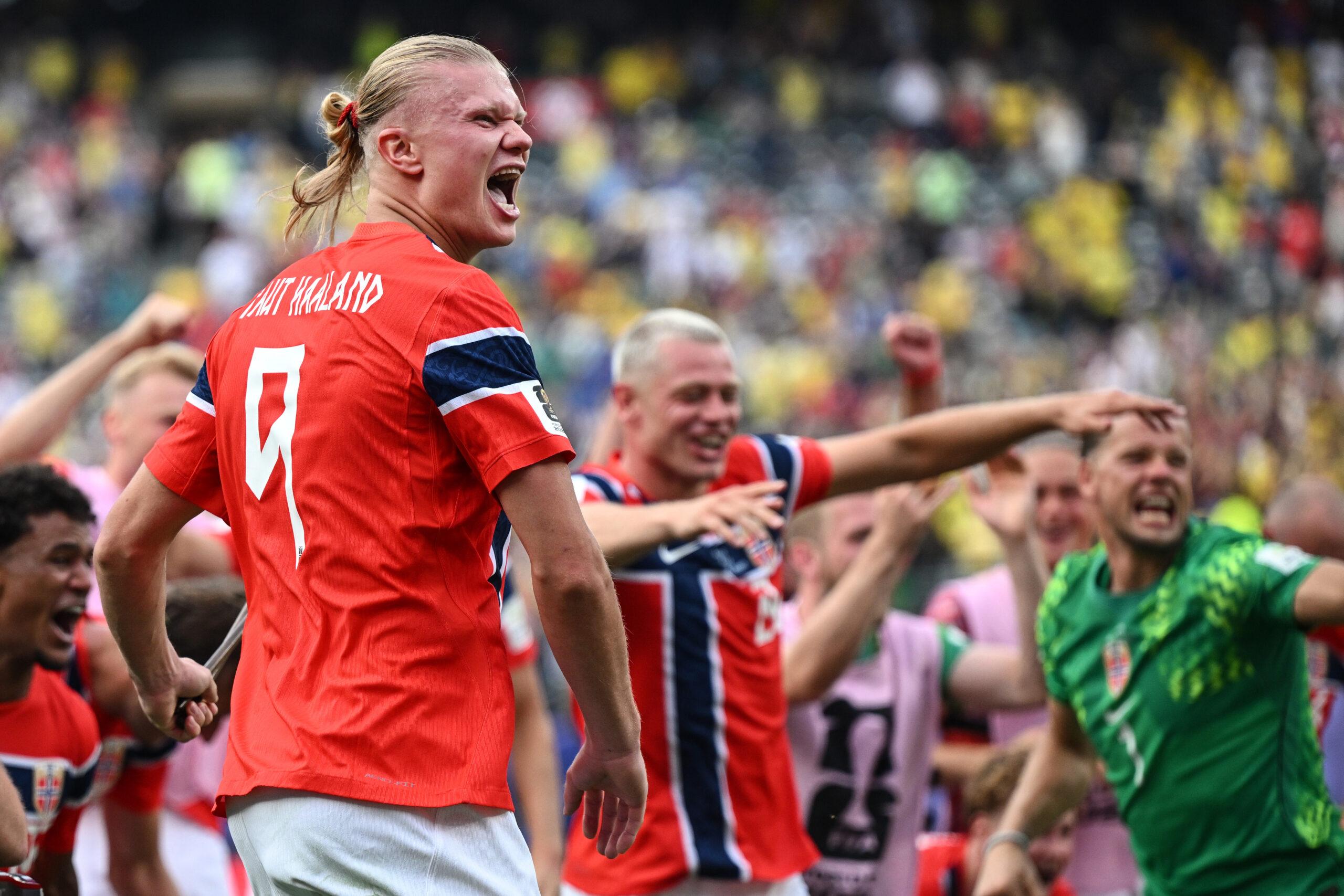
Why they’ll win: Because Stale Solbakken is maximizing his team’s strengths and hiding its weaknesses as well as any coach in the tournament. Solbakken made the controversial decision to rest his starters against France at the end of the group stage, because he understood his squad lacked depth, needed a rest, and didn’t have to win that game. He set the team up wonderfully against Ivory Coast with a conservative defensive approach that prioritized not getting beat in wide areas by Ivory Coast’s excellent wingers, and simultaneously threw numbers forward constantly in transition to give Erling Haaland and Martin Odegaard their best opportunities to score goals. Then, against Brazil, Solbakken prioritized possession, knowing that Brazil had a weak press and that his defense would not hold up if it ceded space and time on the ball in the summer heat for 90 minutes.
Haaland is stealing all of the headlines for his goal-scoring prowess and engaging personality, but Solbakken has done a remarkable job of navigating this tournament to get the most out of his best players. He’s going to have to get even more creative as Norway faces its toughest test yet.
Why they won’t: Because we’ve basically never seen one player carry a team to a World Cup title as his team’s entire attack. Haaland has 4.3 expected goals and seven actual goals so far in this tournament; no other Norwegian player has more than 1.3 xG. Haaland is getting 5.4 shots per match; no other Norwegian averages more than 0.8. Norway’s entire attacking system is centered on Haaland’s ability to be a low-touch player who shows up at the end of attacking moves to score the goals. (Odegaard looms as an X factor if he’s able to add more to the attack than he has so far.) It’s brutally efficient, but it’s the kind of system that inevitably runs into a wall, when Haaland has a bad game, misses a few big chances, or encounters a team who is able to tactically limit his opportunities. Norway hasn’t faced that opponent yet, but relying so much on one player is both the reason they’re here, and the reason they’ll ultimately come up short of winning the title.
6. Switzerland
Why they’ll win: Because in a tournament defined by a wide variance in goalkeeper play, Gregor Kobel has consistently been a standout keeper. He hasn’t gotten the headlines like Cape Verde legend Vozinha, or posted the volume of saves that Curaçao’s Eloy Room did against Ecuador. He didn’t have a single, spotlight-stealing game like Norway’s Orjan Haskjold Nyland did against Brazil. But Kobel has conceded only three goals in this tournament, and the advanced metrics say he’s prevented more goals relative to expectations than the seven other keepers remaining in the field. Here are the goals prevented over expected rankings of those eight goalies:
Kobel took over for Swiss legend Yann Sommer after Sommer retired from international duty in 2024. And this would not be the first time Kobel has carried his team in a knockout tournament, as he was a primary reason that Borussia Dortmund made it all the way to the Champions League final in 2024.
Why they won’t: Because Switzerland seriously lacks attacking firepower now that 20-year-old wunderkind Johan Manzambi picked up a knee injury and didn’t play in their round of 16 game against Colombia. Manzambi had scored three goals and added two assists in his first four World Cup games, despite coming off the bench in the first two matches. He was so explosive and creative that he forced his way into the starting lineup, and he looked like a much needed boost to an often vanilla Switzerland attacking group.
The Swiss are likely to play more in transition against Argentina than they have in any of their other matches, and Manzambi’s dribbling ability in space could be their main ball-progression engine. Switzerland has not yet ruled on Manzambi’s availability for the quarterfinal on Saturday. But he is the ceiling-raiser in a team that has long lacked a difference-making attacking talent to pair with its solid structural spine.
5. Morocco
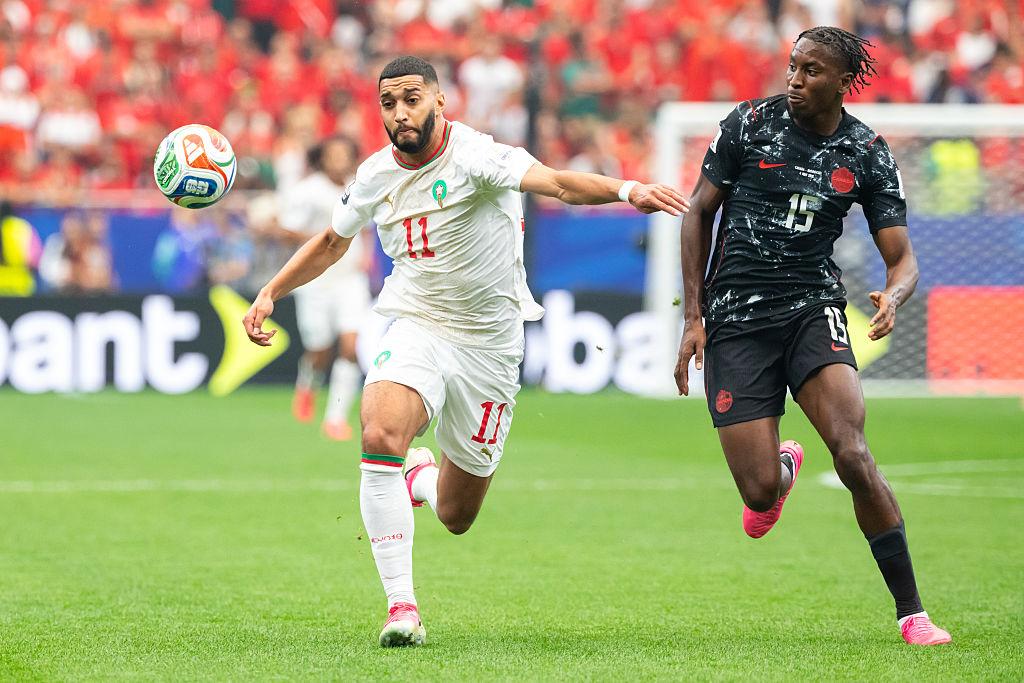
Why they’ll win: Because this team can win in many different ways and with many different styles. Morocco played even with Brazil, outplayed the Netherlands, and survived an off day against Canada to reach the World Cup quarterfinals for the second consecutive tournament. Against Brazil, Morocco proved they could play in transition and create consistently incisive attacks. That’s exactly how striker Ismael Saibari scored the opening goal and how Morocco exposed Brazil so badly that they had to take Casemiro off the pitch at the half.
Against the Netherlands, Morocco won in a completely different manner: by maintaining possession. They consistently won midfield exchanges against the Dutch (they can thank some bizarre Dutch tactics for that one) and kept 70 percent of possession with a pass completion rate over 90 percent. And against Canada, Morocco scored three goals: one on a set piece and two from channeling their inner 2022 World Cup run, in which they defended deep and countered into space once they had the lead. Morocco has a lot of positional versatility and tactical flexibility, and they’ll need it, as the bracket would have them face three opponents with superior talent on their path to a potential World Cup title.
Why they won’t: Because Saibari may not be healthy. Saibari left Morocco’s win against Canada after just 22 minutes with a hamstring injury. While he is reportedly traveling with the team to Foxborough for the quarterfinal, his status is in major doubt for Thursday. If he can’t play, or if he’s not 100 percent, it would be a massive loss for Morocco. Saibari has been essential to Morocco’s ability to play in transition and get in behind the defense. He’s scored three goals already at this tournament and just earned a huge move to Bayern Munich. Backup striker Soufiane Rahimi is solid, but he’s a clear step down. Saibari is a major reason I think this Morocco side is better than the 2022 version; without him, their ceiling is considerably more limited.

4. Argentina
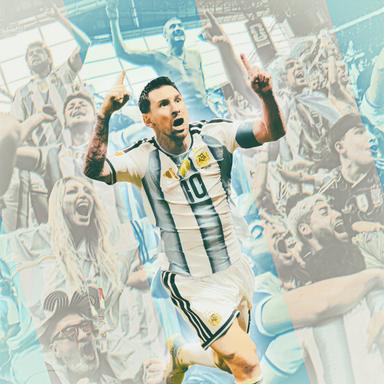
Why they’ll win: Because of Lionel Messi. I didn’t think it was possible for Messi to live up to the standard he set at the 2022 World Cup in Qatar. He just turned 39 years old, and he isn’t playing at the top level of club soccer anymore. But with Messi, nothing is impossible, and no dream is too far-fetched. It’s been only five games, but Messi’s performances at this World Cup have surpassed his showcases in Qatar.
Argentina has scored 14 goals at this World Cup, tied with France for the most in the tournament. Messi scored eight of them, assisted another, and basically created another even though it was ultimately ruled a Cape Verde own goal. That makes him directly responsible for 10 of Argentina’s goals. Did I mention that he’s 39 years old? And it gets even wilder.
Argentina’s biggest issue at this tournament has been their glaring lack of width when they possess the ball. They don’t have aggressive or attacking fullbacks, and they have routinely played lineups with four central midfielders and Messi. When they’ve faced organized defensive teams like Cape Verde and Egypt, the Argentine attack has gotten very clogged through the middle. The loss of Angel Di Maria to retirement and the lack of a replacement has really weighed them down.
But Messi was able to problem-solve in real time in both knockout matches. He became a de facto winger, moved himself into a wider position, and helped balance out the attack. Given his athletic limitations, this is an incredible feat. Messi was excellent operating from wide areas in his prime, but now he has to do a lot more work to make the same incredible impact.
Why they won’t: Because Argentina’s struggles to defend wide areas started to get exposed during the knockouts. Cape Verde in particular pierced the heart of Argentina’s defense by attacking consistently from wide. Both of the goals that Cape Verde scored came from wide entries into the penalty area. Argentina doesn’t really have any wingers, which means that there isn’t anyone tracking back to defend. Messi has taken on a wide role in the attack in Argentina’s past two matches, but he won’t add anything defensively at this stage of his career.
The ease with which both Cape Verde and Egypt played through Argentina was a bit alarming, especially since Argentina has had the easiest strength of schedule among the quarterfinal teams. If they’re struggling to defend transitions and wide areas against two teams as limited as those Cinderellas, what will happen when they face one of the elite squads?
3. England
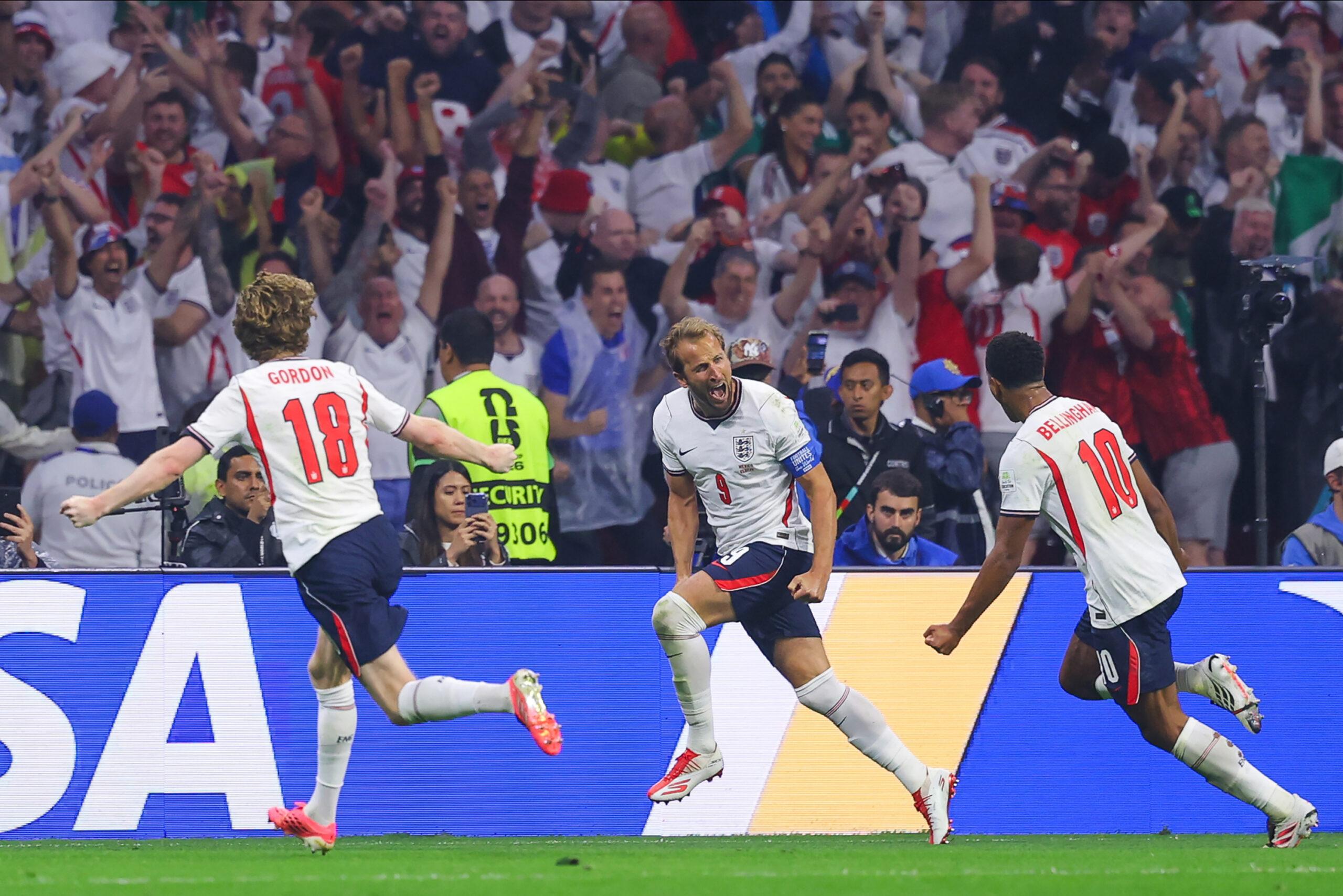
Why they’ll win: Because England has already put together one of the most dominant single-game performances of the entire World Cup against Croatia and survived the most difficult knockout challenge against Mexico. The Three Lions opened the World Cup with a 4-2 victory against Croatia that showcased why their ceiling is a championship. As Croatia tried to press them and force the defense into making mistakes, England played through and around them and got in behind them repeatedly. Their second-half performance was especially impressive, as it showed that they were shedding the conservative and risk-averse DNA they had under Gareth Southgate and were continuing to push on for more goals.
Then, England survived the Azteca, a stadium where Mexico had lost only twice in competitive matches since it opened in 1966. England scored three goals against a defense that had not yet conceded in this tournament. They overcame the altitude, an unlucky penalty, and a red card. The English defended with 10 men, parked a bus in front of their goal, and survived a furious Mexican comeback attempt. England has proved that they can win in a variety of different ways, and they have already overcome adversities that the two teams ahead of them on this list, Spain and France, haven't faced.
Why they won’t: Because I’m not sure their defense will hold up under more intense challenges. In past tournaments, England has relied on its defense first and conceded very few chances to its opponents. But despite a world-class midfield, an injury to Reece James at right back and inconsistent play at center back have left England unusually vulnerable. Their survival at Azteca might be a turning point, but it’s a bit alarming how much Ghana and Congo were able to create in attacking transition. England’s next opponent, Norway, is one of the best transition teams in the entire tournament.

2. France
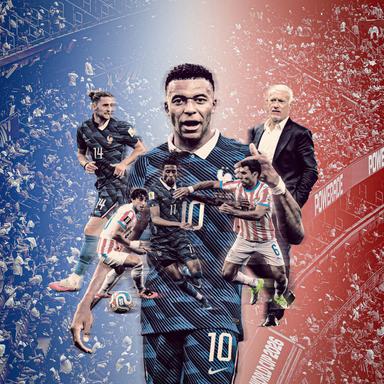
Why they’ll win: Because France has three of the best attacking players in the world. It’s admittedly difficult to rank soccer players because roles and responsibilities vary greatly by position and the margins are so tiny. But if you were to choose the eight best attacking players remaining in the World Cup, it would be hard to argue against these eight (in no particular order):
- Michael Olise, France
- Kylian Mbappé, France
- Ousmane Dembélé, France
- Lionel Messi, Argentina
- Harry Kane, England
- Jude Bellingham, England
- Lamine Yamal, Spain
- Erling Haaland, Norway
The first thing that jumps out is that three of them play for Les Bleus—and that doesn’t even include France’s trio of young stars—Désiré Doué, Bradley Barcola, and Rayan Cherki—who are game-breaking talents themselves. Through five matches, all that talent is translating directly to scores: France is tied with Argentina for most total goals in the World Cup with 14 (and two of Argentina’s came in extra time against Cape Verde).
France has showcased the highest ceiling of anyone at this tournament so far. The second half against Senegal, the first half against Norway’s backups, and the second half against Sweden were approaching soccer nirvana. With Olise creating chances as easily as he has and Mbappé and Dembélé finishing the moves off, France unquestionably has the most terrifying attack in the tournament and one of the best international groups ever assembled.
Why they won’t: Because they’re vulnerable to elite teams who can exploit their attacking style. There’s a general consensus that this is France’s World Cup to lose and that Les Bleus are the most complete team headed toward a coronation across their next three matches. Earlier this week, I wrote about why I don’t quite believe that’s the case. France could outscore everyone en route to a title, sure, but we haven’t seen them match up with a truly elite team that can simultaneously pressure their attackers and keep possession of the ball. What will happen when France isn’t able to hang on to the ball? What will happen when opponents counterpress and keep the ball away from their attack?
Spain and Argentina have gotten the better of France at the last two major international tournaments in large part because they exposed France’s inability to win the ball back and organize a press. In the Euro 2024 semifinal, Spain strangled the match against France with 61 percent of possession in the second half, preserving a 2-1 lead with relative comfort. France’s next opponent, Morocco, proved it can settle possession against Brazil’s press, which is just as mediocre as France’s. The rest of the World Cup will present a different kind of challenge. Les Bleus have proved they can dominate vastly inferior foes, but the calculus is about to change.
1. Spain
Why they’ll win: Because Spain is putting together one of the greatest defensive runs in World Cup history. To reach the quarterfinals, they played Cape Verde, Saudi Arabia, Uruguay, Austria, and Portugal—and they have yet to concede a goal. Every other nation except now-eliminated Colombia has allowed at least two. Dating back to their 2022 World Cup campaign, Spain just became the first team in World Cup history to keep six consecutive clean sheets. And their defensive bona fides are absolutely backed up by the underlying expected goals data.
Stylistically, no one in this tournament plays more like an elite club team than Luis de la Fuente’s side. The Spanish play to keep the ball at all costs—and when they lose it, there’s basically no team as good at winning it back right away. Spain is the top-ranked remaining team in passes per defensive action, and they lead the entire tournament in high turnovers forced.
In a tournament that has been defined by superstardom and goal-scoring, Spain has won low-scoring affairs by strangling possession and constricting their opponents into submission. It’s not the most exciting brand of soccer, but it’s brutally effective.
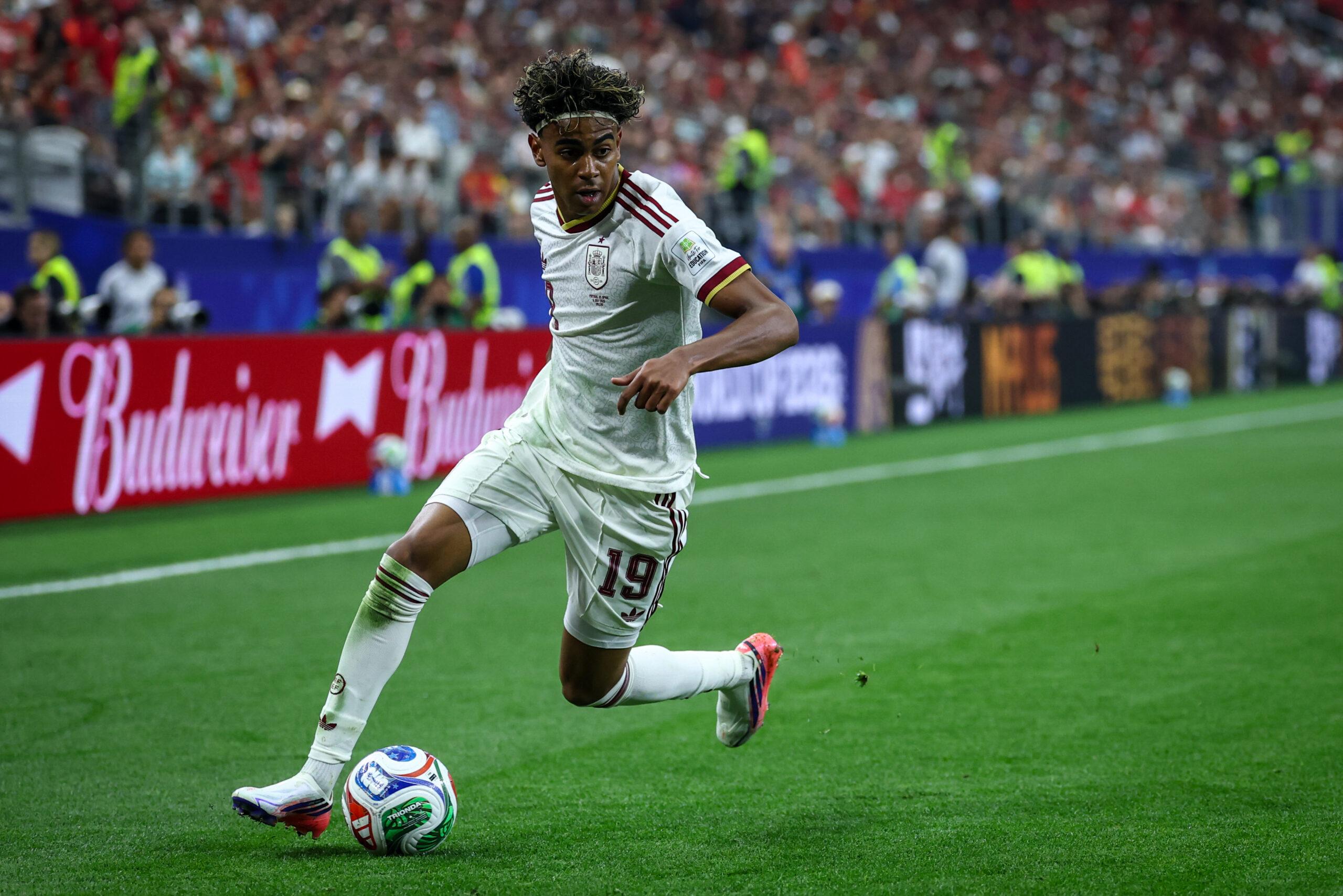
Why they won’t: Because there’s another way you could frame Spain’s World Cup performance so far. Spain benefited from a Fernando Muslera goalkeeper error in their win against Uruguay, needed a stoppage-time goal to sneak past Portugal 1-0, and failed to score against Cape Verde during group play. In three of their five matches, Spain has struggled to create and finish high-quality chances. The main reason for that has been the absence of the elite winger play that made them so dominant at Euro 2024.
At that tournament, the emergence of dynamic and direct wingers Lamine Yamal and Nico Williams led Spain to wins in all seven matches and a title. Yamal hasn’t been close to his best in this tournament as he plays his way back into peak fitness after a hamstring issue. And now Williams is injured, too, with a leg injury that casts doubt on his availability the rest of the way. In his place, Spain is relying on Álex Baena, a great passer who just isn’t a traditional winger. And without a real threat playing wide on the left opposite Yamal, defenses can key in on Yamal and limit this Spanish attack.