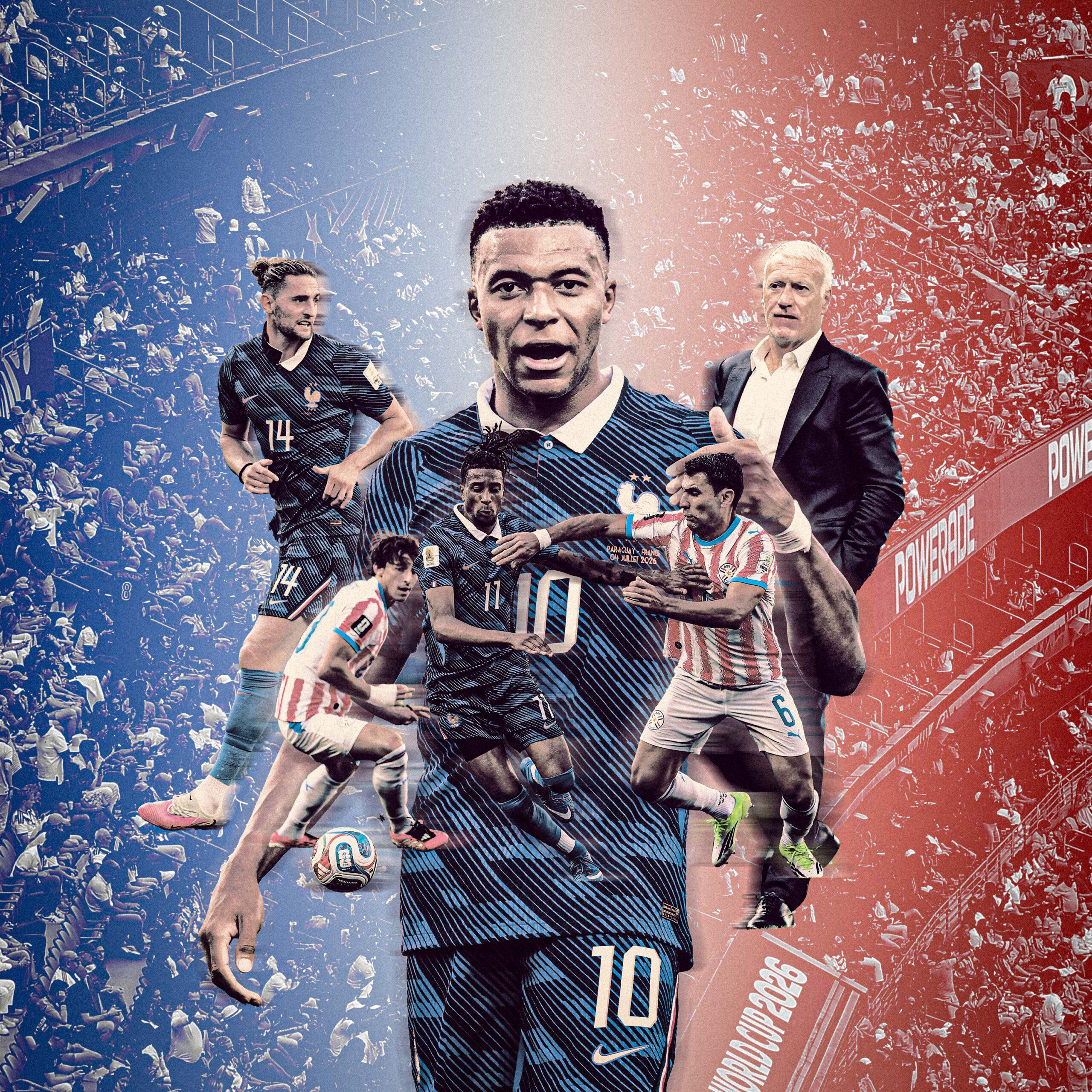

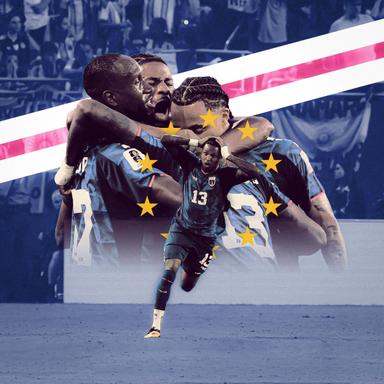
At some point between Ousmane Dembélé’s first-half hat trick against Norway and Michael Olise’s audacious overhead kick against Sweden, France stopped looking like just the best team at this World Cup and started seeming inevitable.
France’s starting lineup features three of the best seven attacking players in the world. The French have scored 14 goals in five matches so far and conceded just two. No team has looked as dominant, or glided into the quarterfinals with less stress. France has become the gravitational force that the rest of the World Cup revolves around. Every conversation about the knockout stage eventually circles back to Les Bleus and the central question of how anyone is supposed to beat them.
On Saturday, France beat Paraguay 1-0, surviving 90 minutes in 100-degree heat in Philadelphia and overcoming a Paraguayan defensive block that ensured it had 10 men behind the ball at all times. Paraguay completed only 98 total passes in the entire match and focused all its efforts on slowing the game down and antagonizing France. But Les Bleus won despite producing only 0.66 expected goals from open play.
Paraguay proved to be a difficult and unique test, as none of the remaining World Cup contenders will attempt to play as little actual soccer as Paraguay did. And when teams have tried to attack France rather than simply survive against it, it hasn’t gone well. France topped the most difficult group at this tournament with three wins by two or more goals against Senegal, Norway, and Iraq. They then dismantled Sweden in a 3-0 thrashing that could have easily become 4-0 or 5-0.
France possesses an irresistible blend of attacking dynamism: from Kylian Mbappé’s superhuman dribbling to Olise’s visionary passing to Dembélé’s curling left-foot finishes. Mbappé has seven goals and is tied with Lionel Messi and Erling Haaland at the top of the Golden Boot leaderboard. Dembélé has four. Olise leads the tournament with five assists and has arguably been France’s best player. France is so talented that players like Désiré Doué—one of the best young players in the world—can come on as reserves late in the match and dribble through multiple defenders to win a deciding penalty.
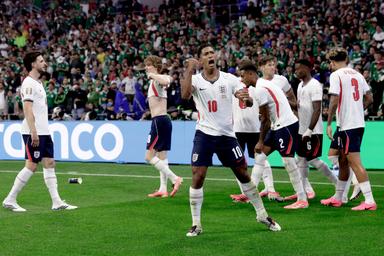
It’s easy to envision France lifting the World Cup in 12 days. The betting markets now make Les Bleus the clear favorite over Argentina, Spain, and England. And yet, despite all of the gushing about France, it still has yet to answer the one question that contributed to the team’s downfall in multiple international tournaments in the past four years: What happens when opposing teams are willing to keep possession and capable of doing it?
That question rarely comes up because most teams are not equipped to ask it. France’s attacking talent is so overwhelming that opponents spend most of the match trying to avoid catastrophic mistakes. Push too many numbers forward, lose possession in midfield, and suddenly Mbappé or Dembélé is sprinting into open space. Most teams either don’t have the counterpress to recover those turnovers or the individual defenders to survive those French transitions. Teams that risk pushing numbers forward without a good counterpress usually end up fishing the ball out of their own net a few times.
France plays a different style than many of the best club teams. Those squads usually want to maximize possessions, exploit their talent advantages, and constrict space as much as possible, which leads them to defend aggressively and try to turn their press into efficient attacks.
By contrast, France’s manager, Didier Deschamps, doesn’t ask his team to relentlessly hunt the ball; France ranks just 18th in passes allowed per defensive action at this tournament and is tied with the United States in high turnovers forced, despite having played one more match than the U.S. Rather than suffocate opponents with an aggressive press, France prioritizes defensive structure and trusts its talent to punish mistakes whenever possession changes hands. That strategy is very different from that of the other three elite teams—England, Argentina, and Spain—remaining in this tournament.
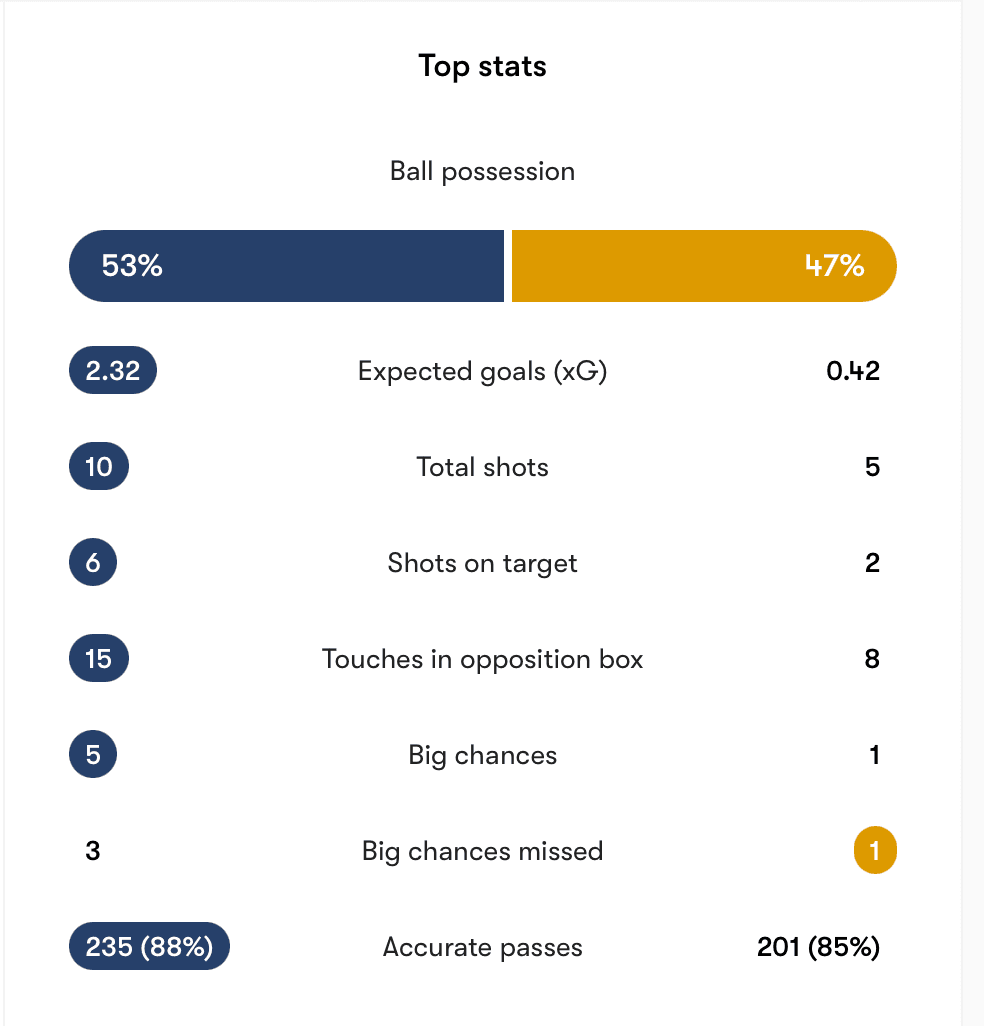
France becomes almost impossible to defend once matches become stretched. Just look at the 3-0 victory over Sweden. In the first half, France had 71 percent of the possession. The French produced 15 shots for 0.92 expected goals and deservedly led 1-0 at the break. It was a solid, controlled performance.
The second half showed why France has become the tournament favorite. Sweden had no choice but to take more risks with the ball and attack with numbers. France's possession actually dropped to 53 percent, but the game became more open and chaotic. Les Bleus generated 10 total shots and 2.32 expected goals and scored twice more. The more Sweden chased the match, the more France punished them.
That pattern has appeared repeatedly throughout this tournament. When France is forced to patiently attack organized defensive blocks, it’s still good—but it looks human. We saw that in stretches against Paraguay. We saw it during portions of the Iraq match. France dominated territory but rarely won the ball back high enough to create repeated transition opportunities. Like virtually every national team, the French are less devastating when every attack begins against a settled defense.
Possession does not correlate, and has never correlated, with domination for Deschamps’s teams. That’s how you end up with matches that feature fairly even possession splits but that are tilted heavily toward France’s part of the pitch.
It also means that when France does lose the ball, it doesn’t really have a mechanism to win it back in an organized manner. It’s risky to play a possession game against France, but it can be and has been done—and France’s next three likely opponents are all capable of doing it. The only way to stop an attacking group as good as France’s might be to smother any opportunities for their midfield and defense to get the ball up the field.
France’s knockout stage will truly begin on Thursday in Foxborough, Massachusetts, against a Morocco side that looks very different from the one France defeated in the 2022 semifinal. Morocco is no longer simply a deep-block, counterattacking team; the Atlas Lions are comfortable keeping the ball. They rank eighth in average pass sequence length at this World Cup and successfully slowed down matches against both Brazil and the Netherlands. Morocco may struggle to create enough chances against France’s defense, but it possesses the technical quality to dictate stretches of possession and force France to defend for longer periods than it’s accustomed to.
France should still be favored. The talent gap remains significant, especially if Morocco is without Ismael Saibari because of a hamstring injury. But Morocco has the stylistic profile that can at least ask France uncomfortable questions. Morocco has only one error leading to a shot in the entire tournament, according to Opta. The 2022 semifinalists aren’t going to beat themselves with costly turnovers, and their stability in possession allows them to really slow the tempo of the match down to a crawl.
If France advances, a potential semifinal date with Spain may present an even more uncomfortable matchup. Spain and France have played one another in each of the past two summers in European semifinals. At Euro 2024, France squandered a ninth-minute lead and lost 2-1. Spanish wunderkind Lamine Yamal scored a beautiful, curling goal from outside the penalty area after Adrien Rabiot was late to close him down in the 21st minute. Then Dani Olmo scored the eventual winner in the 25th minute. It wasn’t a shock that France went down 2-1 with 65 minutes to go. It’s what happened next that was stunning. France couldn’t win the ball back from Spain consistently enough to mount a real comeback attempt.
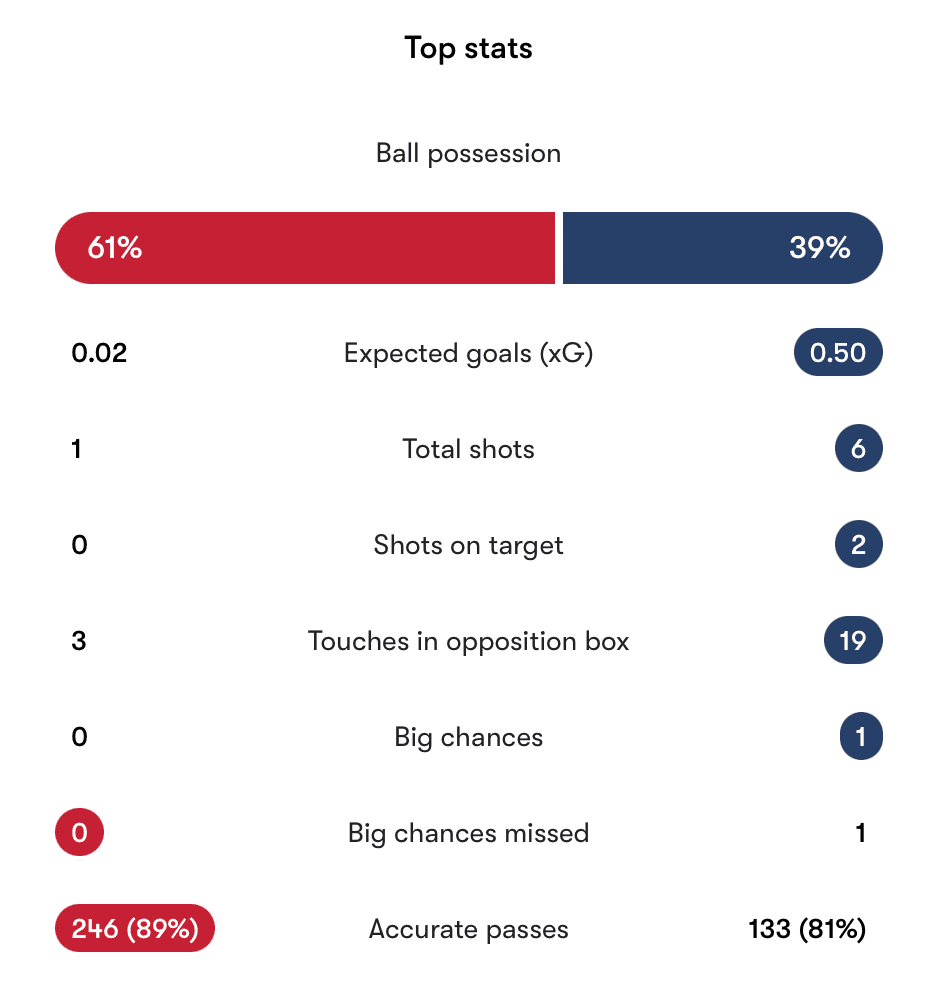
Despite playing with the lead, Spain managed to keep 61 percent of possession in the second half. Spain killed off the game with nonthreatening defensive possession and then counterpressed France when it did lose the ball.
France never could create a bout of sustained pressure against Spain. And that result and performance is not a one-off. When the two teams met in the Nations League semifinal last year, Spain jumped out to an early 2-0 lead, and it wasn’t until the Spanish led 5-1 in the second half that France’s attack finally kicked into gear. France’s roster looks very different than it did in the World Cup four years ago, but the team displays the same tactical pattern it did in the first half against Argentina in the 2022 final.
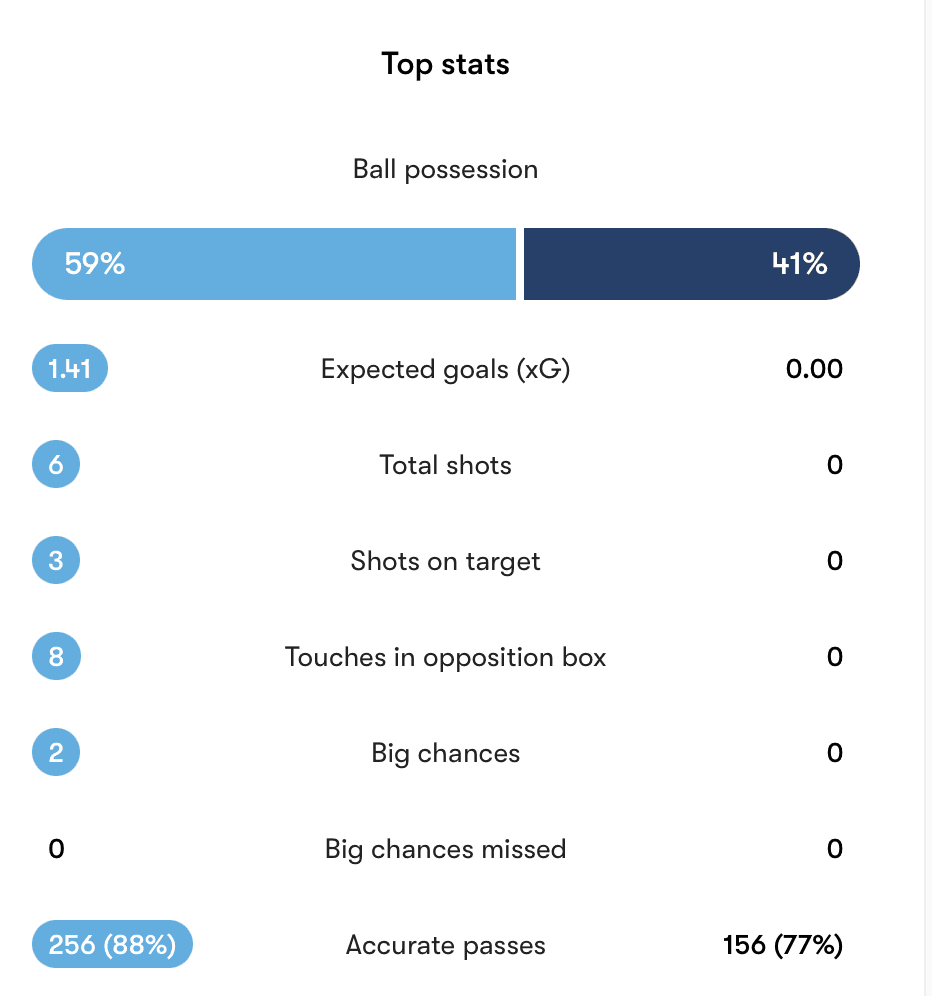
In fact, many of the underlying metrics suggest that this version of France is more vulnerable without the ball than the team that reached the 2022 World Cup final. This year’s front line is more explosive, with Olise replacing Antoine Griezmann’s creativity, plus Doué and Bradley Barcola joining the attacking ranks. But France has also looked a bit easier to play through.
For most of the Mbappé era, France’s defining characteristic wasn’t simply world-class talent but rather balance. France relied heavily on the ball winning of N’Golo Kanté. At Euro 2024, Deschamps regularly played three more defensive central midfielders to help shield his backline and remain defensively solid. They could absorb pressure for long stretches, defend their own penalty area with composure, and then punish opponents the instant possession changed hands. Deschamps has shunted more attacking players into the lineup, but that comes at a cost to other parts of France’s play.
For comparison, Spain and France had each played four matches through the round of 32. If you do a full comparison of both Spain and France’s underlying statistics entering the round, the inevitability gap between them starts to fade away.
Morocco will have the next crack at knocking off France. Spain almost certainly will follow if the bracket holds. Argentina has spent the better part of four years under Lionel Scaloni proving it can suffocate matches through long spells of controlled possession. No team in this tournament is slower in its build-up possession speed than Argentina. England under Thomas Tuchel has become increasingly comfortable doing the same. Anthony Gordon, Declan Rice, Elliot Anderson, and Jude Bellingham all give England relentless pressing energy.
Of course, maybe none of this will matter. Maybe Mbappé will score after six minutes and every silly possession argument will disappear. Maybe France simply has too much talent. France needs only a handful of transition moments to turn a heavyweight match into a rout, or to turn a rout into an all-time classic.
But international tournaments have always rewarded teams that can solve different kinds of matches. Some opponents force you to attack patiently against 10 defenders behind the ball. Others dare you to survive long stretches without possession. The champions usually find a way to do both.
For weeks, France has dragged everyone else into its preferred style of play. Now we’ll find out whether anyone else can drag France into theirs.