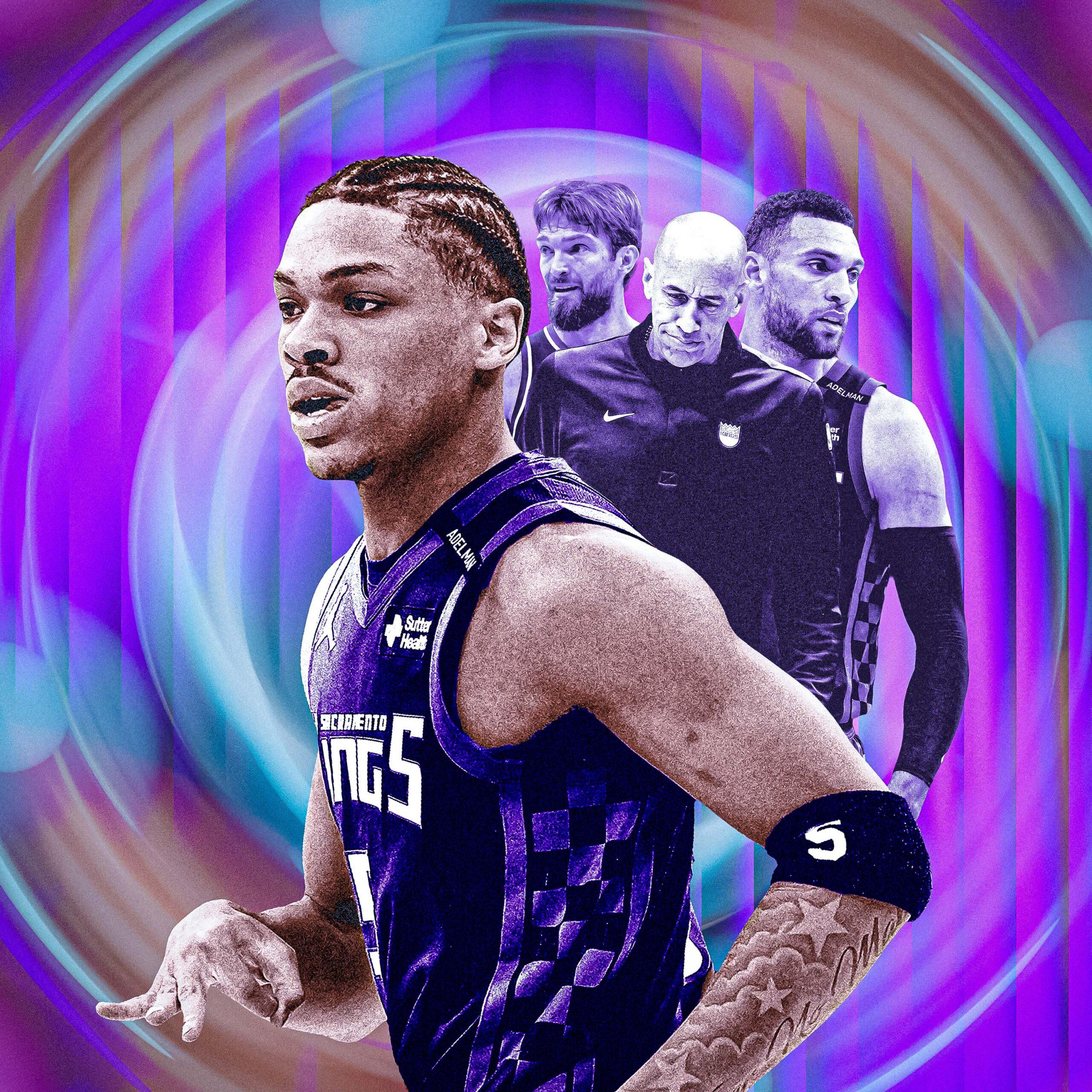

We’re just one month into the NBA season, and almost a third of the league is already in some kind of trouble. Some teams just need time to either get healthy, jell, mature, forge an identity, or find a new head coach. For others that weren’t expected to be good in the first place, the dust has all but settled. Look at the league net ratings, and you’ll see that nine teams have been meaningfully worse than everybody else.
But, seeing that it’s still not even Thanksgiving, every club technically still has at least one silver lining, a single reason to watch them play without feeling like all hope is lost. There are five more months of regular-season basketball sans any lottery-related motivation to tank.
Here’s a look at why the league’s worst teams currently sit underneath a dark cloud, along with some reasons to believe they can turn things around.
Sacramento Kings (2-14)
Dark cloud: There are too many places to start a sentence that tries to summarize what’s wrong with the Kings, but let’s start with their hopeless inability to get stops. Sacramento has one of the worst defenses in the league; it ranked dead last before Saturday night’s win against the Celtics (in which Boston miraculously finished a horrid 13-for-58 behind the 3-point line). When the Kings’ two most expensive players, Zach LaVine and Domantas Sabonis, share the floor, there’s an almost impressive degree of incompetence.
Scoring on a bunch of turnstiles that operate within deeply anachronistic lineups isn’t that challenging. Sacramento’s defense allows a 56.7 effective field goal percentage, which is (obviously) the worst in the league. To put it in better perspective, Luka Doncic’s effective field goal percentage is currently 56.6 percent. That’s the level of obliteration we’re dealing with: a punching bag that makes every opponent look like an irrepressible MVP candidate.
Somehow making a sad situation even more humiliating, opponents are making 77.1 percent of their looks at the basket, which is about what Victor Wembanyama shoots from that area. (Not to get too in the weeds, but if you see that Sacramento’s defense allows the league’s lowest shot frequency at the rim, know it’s due to a wonky tracking data issue: At home, the Kings rank first by a mile. On the road, they’re 26th.)
In what’s basically been an annual tradition for the last couple of decades, this is a team that can’t get out of its own way. Once or twice a game, someone on the Kings will commit the sort of mistake that deserves a postgame intervention. Can we inbound the ball against a full-court press? Are we doubling the post? Does everyone know whom they’re supposed to be guarding, or should we just let the ball handler crossing half court walk into an open 3? Unfortunately, all of these questions are an important part of basketball. The number of times that Sacramento doesn’t know the answers is a little disturbing.
Silver lining: Darius Acuff Jr. I was skeptical about Acuff before the season began. I don’t watch college basketball, saw a supercut of his worst defensive mistakes on YouTube, and was out. There’s only so far a high-usage, undersized point guard can take you in the playoffs when he’s a noxious liability on the other end. Those concerns haven’t gone anywhere, but after a start like this, who cares? Acuff celebrated his 20th birthday on November 16 and is averaging 25.4 points, 7.4 assists, and 3.6 rebounds per game. Sure, somebody has to score on a shitty team. But that doesn't mean anybody can do this.
Yes, Acuff takes a lot of shots. Some are poorly conceived. Many don’t go in (his true shooting percentage is 6.2 percentage points below the league average). But he’s the product of his environment, often the best scoring option in lineups that have zero spacing and feature at least one other black hole. Acuff is a victim of these circumstances and should be acquitted for the simple fact that he’s also such an advanced passer.
So far as silver linings go, it doesn’t get better for a team as bad as this. Sacramento picked a point guard who currently ranks fourth in the league in true usage and has range, torque, and at least one scoring title in his future. Hopefully, if/when that happens, he’ll earn it wearing a Kings jersey.
Brook Lopez
Los Angeles Clippers (4-11)
Dark cloud: It’s back to ground zero for a franchise that was recently punished for circumventing the salary cap, lying through its teeth to investigators who wanted to know whether it circumvented the salary cap, and then denying all wrongdoing even after the league publicly disclosed that it did indeed circumvent the salary cap. Embarrassing stuff. But very little of the league’s punishment—the Clippers were docked five future draft picks, were fined $30 million, and had several high-profile members of their organization suspended—was designed to hurt this year’s team. The Clippers did that to themselves, trading away Kawhi Leonard for an injured Brandon Ingram and Gradey Dick.
As it stands, despite some pretty solid moves around the margins—trading for Max Strus, signing Rui Hachimura, and drafting Keaton Wagler—the team hasn’t had enough juice to compete on a nightly basis. It’s hard to win when Darius Garland is your best player. Even with pretty much everyone on this team drilling 3s at a blistering rate, the Clippers offense is trick or treat. (Healthy) Kawhi isn’t walking through that door. L.A. doesn’t create second chances and turns the ball over a ton—which is likely one of the reasons Ty Lue recently replaced Kris Dunn with Max Strus in the starting five.
Ingram will hopefully boost their potency in the half court by giving them a midrange option, someone who can lighten up ballhandling responsibilities that pretty much exclusively fall on Garland’s shoulders. But even as an Ingram apologist, I don’t think his debut (slated for Monday) will move the needle all that much.


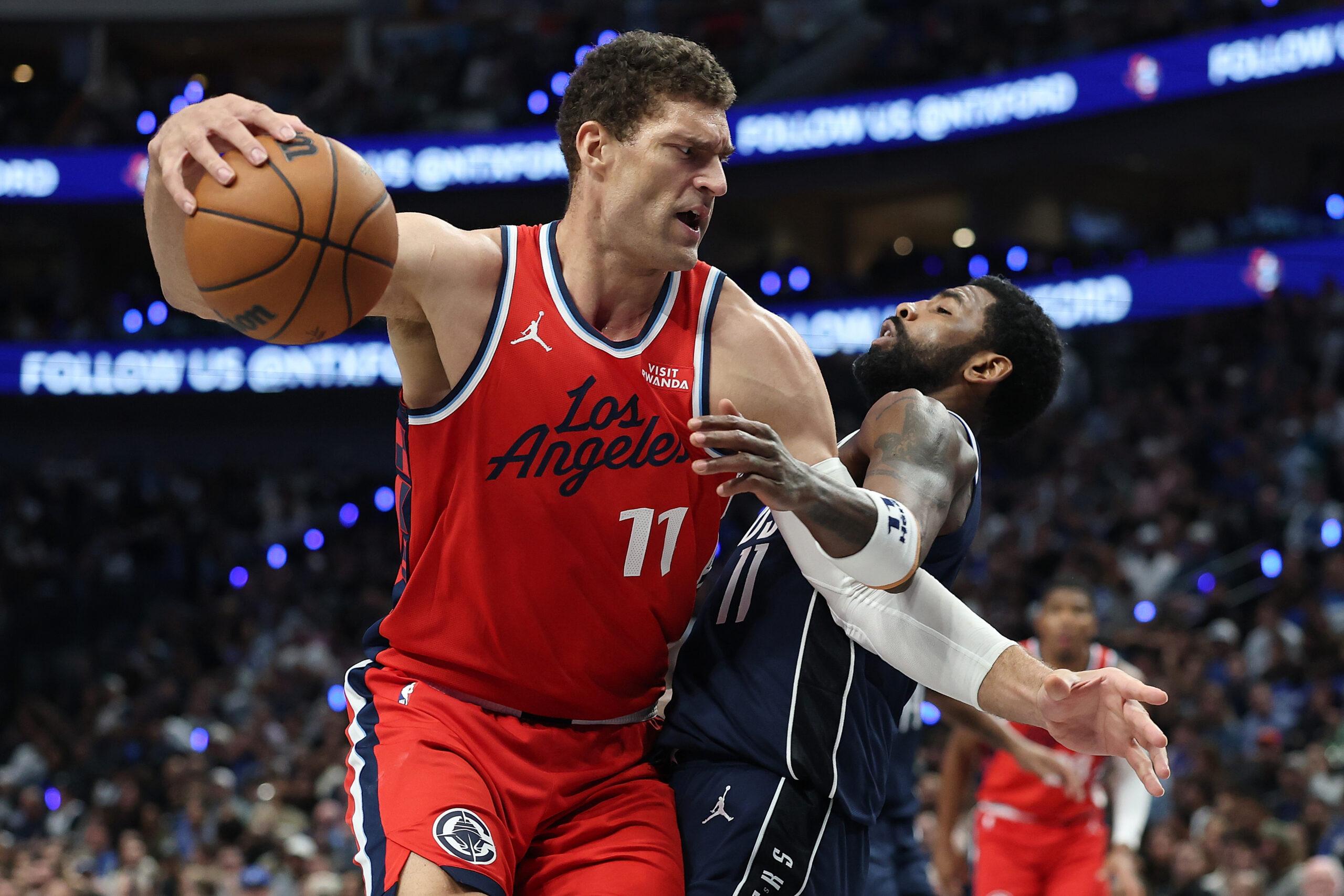
Silver lining: Brook Lopez. This probably isn’t what Clippers fans wanted to see, but their 38-year-old center is quietly having a renaissance season for the ages. Pretty much all of Lopez’s numbers are above his career average. He’s shooting 62 percent inside the arc and a whopping 42 percent behind it. The aesthetics are even more fascinating. We’re getting some vintage Lopez on a nightly basis. His 3-point rate hasn’t been this low since he was in Brooklyn. Despite that, he’s never averaged more points per shot attempt or had a higher assist rate in his entire career.
Teams that either purposefully put smaller wings on him or switch ball screens to take away pick-and-pop jumpers are watching Lopez annihilate the mismatches on his own. He is very large but low-key agile, and he hasn’t forgotten how to back someone down on the block. According to BBall Index, only LeBron James and Zion Williamson have seen a larger jump this season in post-up impact, a stat that measures the volume and efficiency players have on those plays.
The Clippers have been relatively effective on defense with Lopez on the court. Much of that’s thanks to some extreme 3-point luck, but he’s actually moving kinda OK guarding pick-and-rolls. I wouldn’t bet on Lopez holding up on that end in a playoff series or anything, but it’ll be interesting to see whether any postseason hopefuls are watching Lopez and seeing a potential insurance policy for whatever frontcourt questions they might currently have. (This is found money for the Clippers, a team that should be pumped to cash out on pretty much anyone on their roster.) The Philadelphia 76ers should definitely be one of those teams! The Orlando Magic could be, too! And what about the Miami Heat, who could reunite Lopez with Giannis Antetokounmpo?
Brooklyn Nets (3-12)
Dark cloud: I genuinely thought the Nets would not be a gross embarrassment this season. That might’ve been a miscalculation. Julius Randle has been a canker sore whose robust box score numbers and positive on/off impact have been negated by how he navigates possessions on both ends of the floor. The opposite of “hold up, let him cook” is Randle in a triple-threat position, surveying the floor before inevitably barreling into traffic and turning it over, launching a skip pass into the third row, or settling for a contested fallaway jumper that goes in roughly 15 percent of the time.
Brooklyn’s struggles extend beyond Randle. There have been injuries, preexisting depth issues, and plenty of youth-related defensive mistakes. It’s just really hard to win games when the only guy on your team who’s ever been an All-Star plays like Randle does. Good luck to Brooklyn if/when it gets on the phone with other teams to try to trade him.
Silver lining: A willingness to get weird! We could also go with Nolan Traore or Mikel Brown Jr., two young guards who momentarily give Brooklyn’s front office something to exhale about. Both look like keepers. (Egor Demin does too, though he’s been hurt and was recently yanked out of the starting lineup.)
But, if we’re looking for a reason to watch a sad Nets team that’s yet to provide any inarguable rays of sunshine this season, let’s go with Jordi Fernández’s decision to put Danny Wolf, a near 7-footer, in a starting lineup that lists him at shooting guard. That positional bulk is funky but sensible. Wolf can shoot, read the floor, and be a huge role player in a sport that rewards size.
In a small sample, Brooklyn has been awesome when Wolf has shared the court with Randle, Michael Porter Jr., Day’Ron Sharpe (who objectively rules), and a guard. It’s unclear when the Nets will stop being a laughingstock, but on their way out of this ditch, it helps to be unique.
Kyshawn George
Washington Wizards (7-11)
Dark cloud: The Wizards really wanted to be good this year. Trades for Trae Young and Anthony Davis reflected a desperate need to shake their dreaded Lizards moniker and attain any form of NBA relevance. Instead, they are who I thought they were: a bewildering train wreck (they recently ended an eight-game losing streak against the Raptors 905 that confirmed more cracks in their new foundation).
Despite a pair of wins against the Bulls and Magic, this still has the feel of a rushed rebuild removed from reality. Given where they are in their respective careers, Young, Davis, and AJ Dybantsa make zero sense on the same team. Alex Sarr and AD make zero sense in the same starting frontcourt. Young’s playmaking genius has been overshadowed by abysmal shooting numbers and his continued status as one of the worst defenders in the league.
Covering for his deficiencies on that end requires a ton of work. Washington’s roster, unfortunately, has so far been ill-equipped to handle the strain. Dybantsa and Tre Johnson are matadors at the point of attack, either dying on screens or failing to execute the game plan, which puts even more pressure on AD, Sarr, and Deandre Ayton along the back line.
I don’t want to advocate for anyone to lose their job, but if I ran the Wizards, I’d do everything in my power to hire Tom Thibodeau tomorrow. Sarr, Johnson, Bilal Coulibaly, and Bub Carrington have all seen either their minutes, usage, shots, or efficiency take a turn for the worse this season.
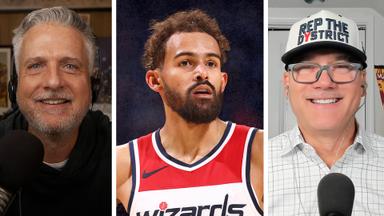
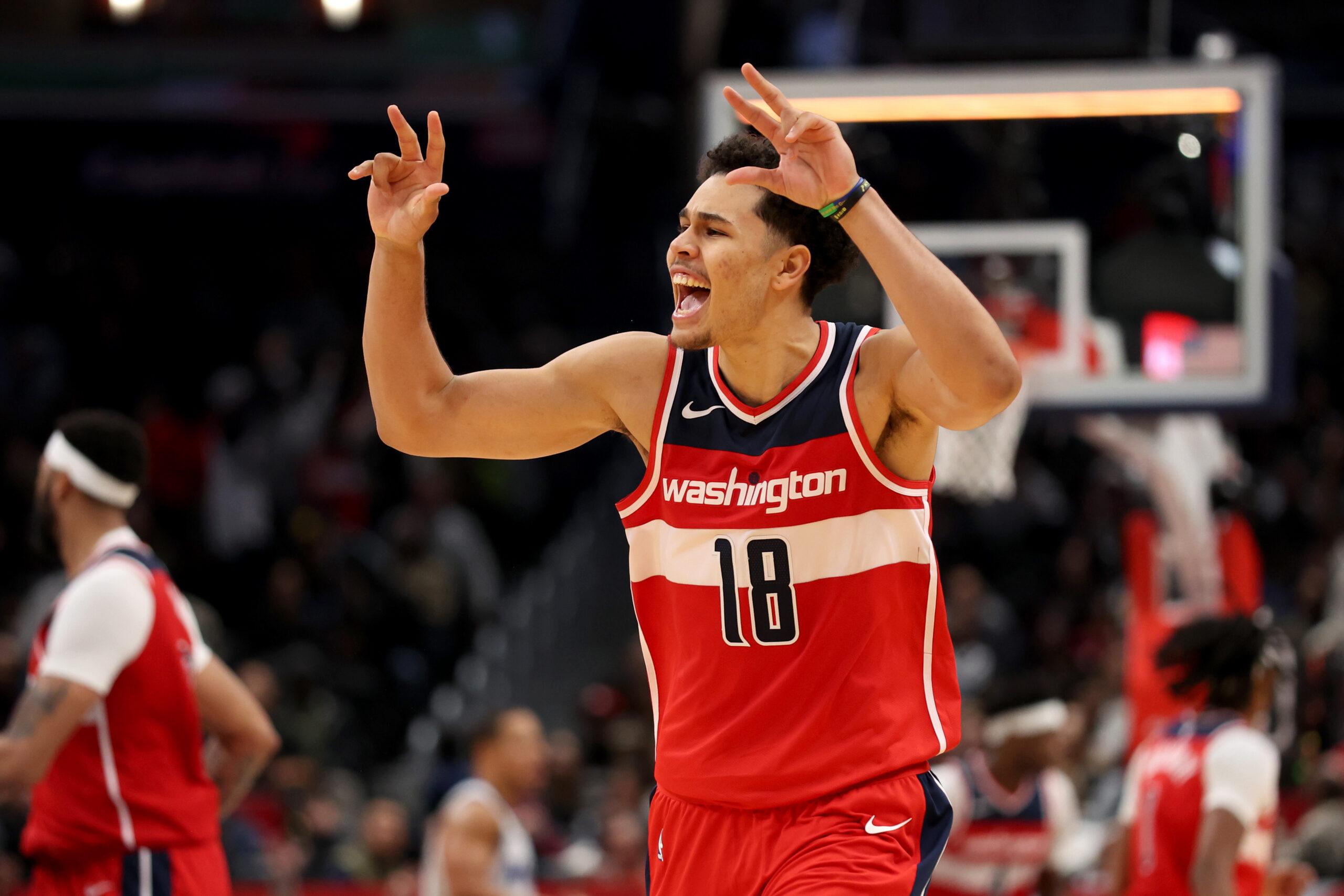
Silver lining: Kyshawn George. A real diamond in the rough. I don’t know if George is the most underrated player in the entire league—it’d be nice if he could finish around the basket—but he’s someone more people should know about. The 22-year-old has size and range, and, as the second-best passer on this team, he can step in and play some backup point guard when Trae is on the bench. He’s also Washington’s second-leading scorer, averaging 17.4 points, 4.4 boards, 4.5 assists, and 1.2 blocks per game. That’s nothing to sneeze at on a team with so many mouths to feed.
A case could be made that he’s also been the Wizards’ most consistent player—simultaneously an indictment of their roster and a bullish take on where this organization could go if it resets, acts normal, and builds around Dybantsa. George’s on/off splits are inflated by 3-point luck on both sides of the ball, but the positive numbers don’t feel like a fluke. George does his part. Out of 39 players who’ve taken at least 150 jumpers this season, he has the fourth-highest effective field goal percentage. He’s shooting 40 percent behind the arc (on a bunch of tough looks) and makes smart playmaking decisions on the fly, whether it’s a kick-ahead, lob, or pinpoint skip pass to the opposite corner. I wouldn’t bet on George becoming an All-Star, but I also wouldn’t blink if it happened one day.
Charlotte Hornets (4-11)
Dark cloud: LaMelo Ball is very good, but … this good? The Hornets had the fifth-best offense in the NBA last year! Right now they’re dead last in offensive rating despite ranking first in offensive rebound rate. Not ideal. They don’t get to the free throw line and turn the ball over at a rate that effectively spots the other team a dozen points before the game even starts.
There’s more at play than just Ball’s absence, of course. Preseason injuries to Kon Knueppel and Coby White effectively cut the Hornets off at the knees before they played any actual games, but it’ll be interesting to see whether they punt the year away and get a high draft pick or, if everyone can get healthy, trade for a point guard, pray some of the fluky breaks they’ve endured turn around, and attempt to make the type of midseason run they did a year ago.
Silver lining: Their terrible 3-point luck will eventually change. Nobody thought Charlotte would have an awesome defense this season. But that doesn’t make it reasonable to think opponents would shoot 39.6 percent on contested 3s, 42.3 percent on wide-open 3s, and 41.5 percent on non-corner 3s against them. These numbers are silly and rank either dead last or second to last. Charlotte’s 3-point luck is the worst in the league by a margin equal to the difference between the second- and 12th-unluckiest defenses.
That’s largely because, in addition to getting sniped on defense, Charlotte ranks 29th in 3-point percentage on offense despite ranking first in 3-point rate. Again, not having Knueppel or Ball is killer. But it’s still wild that Brandon Miller is shooting 27 percent on over 10 3-point attempts per game, that White is starting the year 8-for-47, and that Royce O’Neale and Naz Reid (who’s largely been a disappointment) are shooting well below what they’ve proved to be capable of. It’s scary to think about how low Charlotte’s basement would drop if not for Grayson Allen’s out-of-body experience as one of the most dangerous off-ball players in the league.
Put in the simplest terms, Charlotte has attempted 122 more 3s than its opponents this season. That’s the largest disparity in the league. Meanwhile, those same opponents have made eight more 3s than Charlotte has, which ranks 20th. This is difficult to comprehend and pretty much has to course-correct at some point. It probably won’t be enough to land Charlotte in the play-in tournament, but it’ll at least give them a chance.
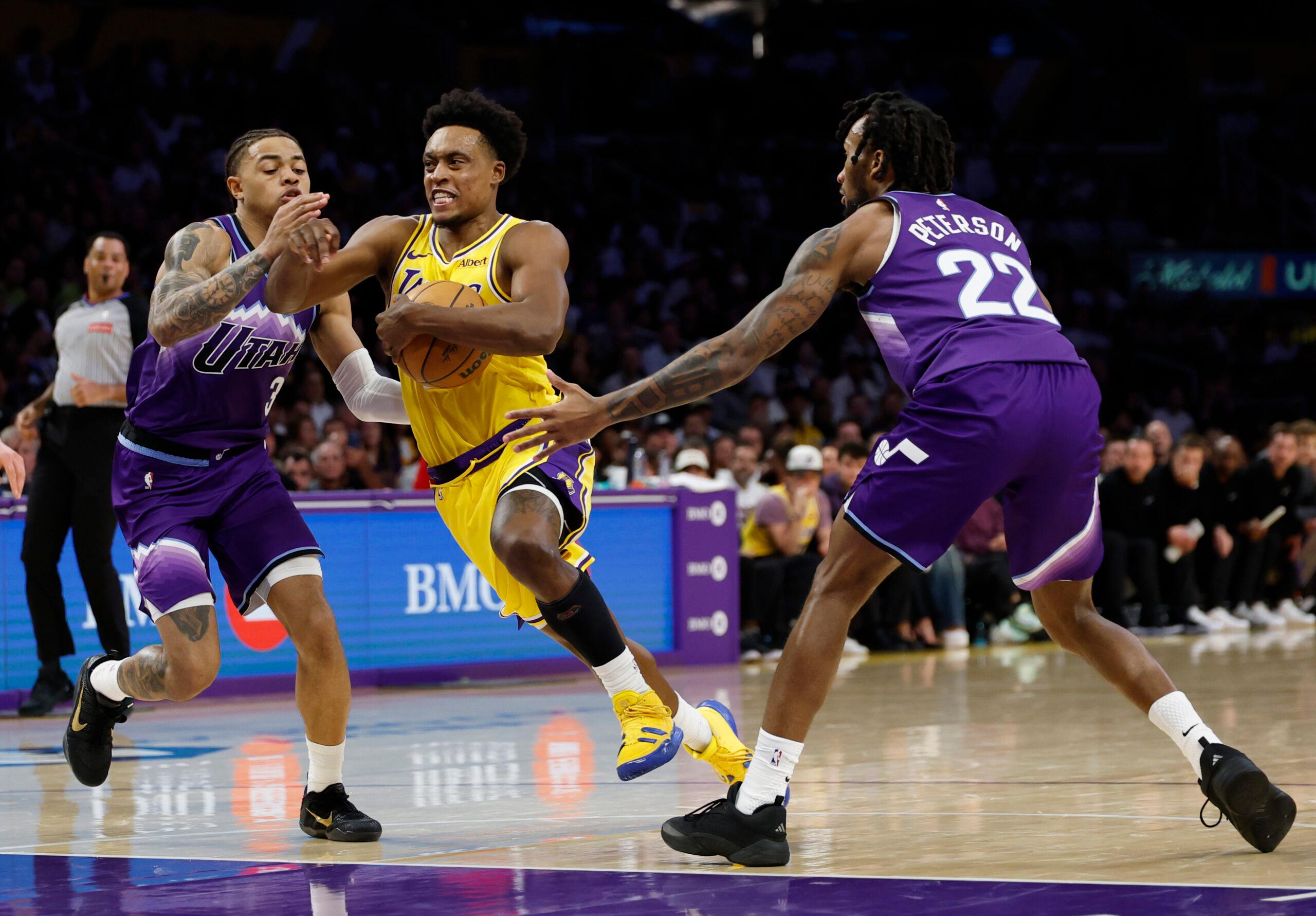
Collin Sexton drives between Keyonte George and Darryn Peterson
Utah Jazz (3-14)
Dark cloud: It’s easy to blame injuries when a team with such lofty preseason expectations becomes such a disappointment. In this case, it’s also perfectly fair. Jaren Jackson Jr. and Lauri Markkanen entered this season as Utah’s two highest-paid, most talented, and most accomplished players. Cutting them out of the equation has been a death knell, compounded by the (so far) painful Walker Kessler trade, loss of Jusuf Nurkic, and Jaxson Hayes’s inability to stay on the court. No team is built to withstand everyone on its opening-day roster who’s taller than 6-foot-10 being sidelined for an extended period. When said team also has an inexperienced backcourt and no two-way stoppers on the wing, a problematic situation can turn into a One Wish Willow nightmare.
Utah has the second-worst offense in the league. It’s dead last in transition frequency and fast-break points. Some pep in their step would be nice, but it’s easier said than done for a defense that doesn’t generate any turnovers and also ranks last in free throw rate/differential. It’s hard to run when you can’t spark any run-outs in the open floor and are constantly inbounding the ball after a trip to the foul line.
Silver lining: Time and youth. Markkanen and JJJ will eventually return. The Jazz’s frontline will stabilize, and their offense will settle into a more practical hierarchy. In the meantime, Darryn Peterson and Keyonte George have time to hopefully develop a little chemistry while running more of Will Hardy’s offense than they probably anticipated. It’s somewhat of a boom-or-bust proposition. There is potential for this to be one of the most explosive backcourts in the entire league: two shifty, hyperaggressive attack-mode scorers who can thrive with or without the ball. That type of cohabitation takes time, but the Jazz have been significantly better with both on the court instead of just one.
George already has a few years of high-usage playmaking under his belt, but over the past couple of weeks, he’s started to benefit from having an even more dynamic threat by his side. Peterson’s decision-making out of the pick-and-roll is beginning to crystallize, particularly when Utah runs a Spain action with George setting the back screen.
Elsewhere, Ace Bailey—who tends to get lost in the shuffle—has been fun! There are shortcomings that come with any 20-year-old, but he’s learning how to play within himself in an offense that doesn’t typically go out of its way to call his number. Bailey is comfortable and effective driving closeouts, getting to his spot in the short midrange, and rising up and scoring over the top. He makes hard shots look easy while embracing who Utah likely needs him to be long-term: an über-skilled energy guy.
The Jazz have already strung together a few wins and looked competitive in losses against some Western Conference heavyweights. They’re only six games back of the 10-seed with an evolving defensive shot profile that’s extremely encouraging! In the last couple of years, Utah allowed a million 3s and one of the highest field goal percentages at the rim. This season, it ranks first in defensive 3-point rate and is holding teams to about league-average accuracy on shots at the hoop. This is not a small deal!
Chicago Bulls (4-12)
Dark cloud: No team needed to smash the reset button more than the Bulls. This rebuild was a long time coming, and good on them for finally embracing it. Nobody should care that they’re bad. They’re supposed to be bad. It’s by design. They play hard, have a genuine franchise player in Caleb Wilson (who unfortunately broke his right hand earlier this month after breaking his left hand in college), and are well-positioned to make helpful moves before the trade deadline. (It’ll be interesting to see who lands Norm Powell, whether any team is willing to take Josh Giddey’s or Nic Claxton’s contract, and whether Matas Buzelis has an advantageously inflated trade value.)
But since we’re here to explain what’s wrong with a team that’s 4-12, it needs to be said that Chicago allows the most fast-break points, the most points in the paint, the second-most second-chance points, and the highest at-rim shot frequency in the league. So, yeah. Not great. Unless you’re playing them. (Also, #FreeTreJones.)
Silver lining: A rough schedule. The Bulls have had the second-hardest schedule in the league so far. They’ve already played nine road games, faced just about every great team (at least once), and seen most of their opponents at full strength. They’ve got two losses against the Sixers, two losses against the Celtics, and two losses against the Knicks. Bulls announcer Kendall Gill called Chicago’s arduous early slate the toughest schedule he’s ever seen, but this team hasn’t made any excuses. They went into Target Center and beat the Timberwolves after a nationwide ground stop forced them to land in Minnesota way later than normal. A young group can find itself during difficult times. The Bulls have that chance.
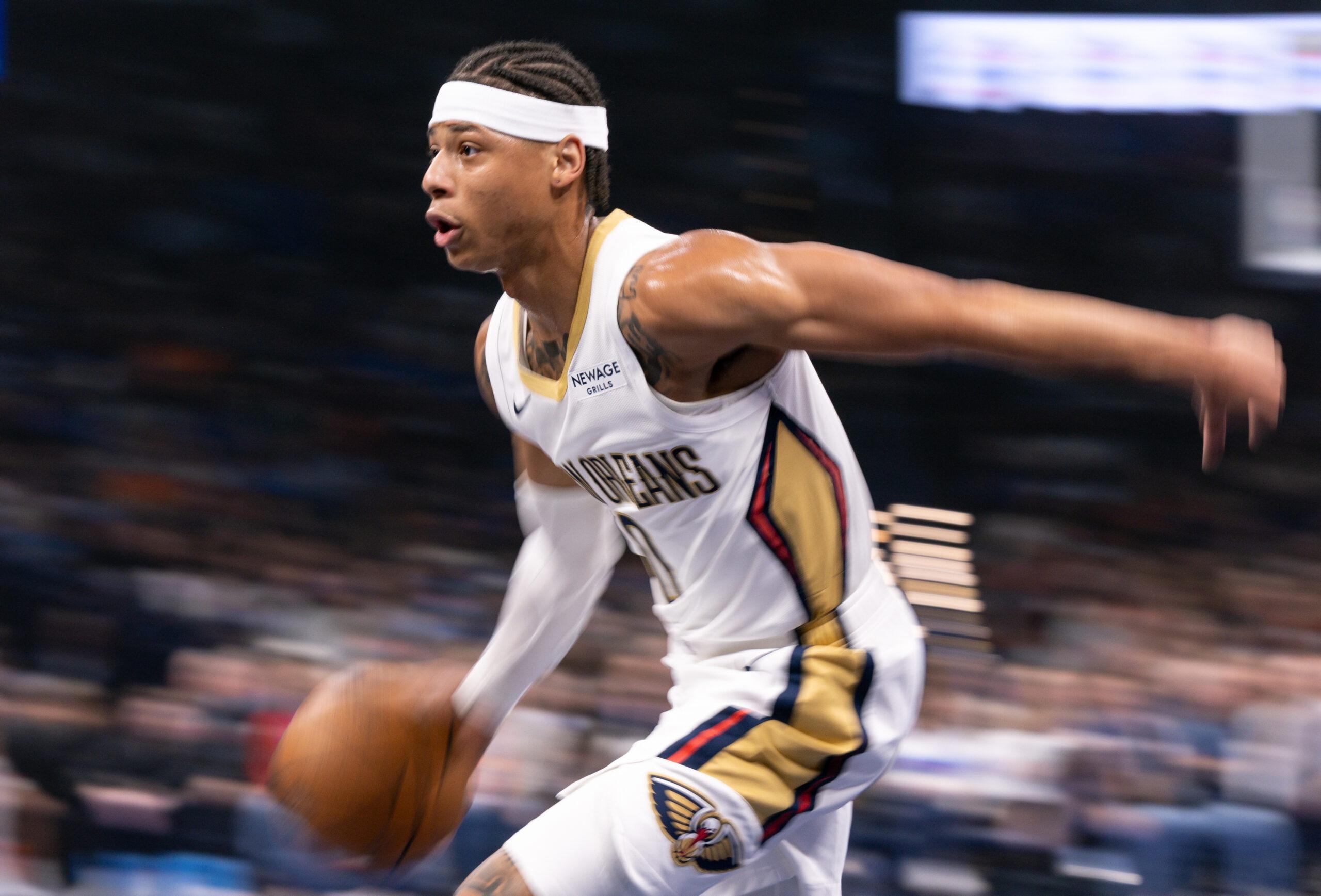
Jeremiah Fears
New Orleans Pelicans (5-13)
Dark cloud: The Pelicans are messy, dysfunctional, and irrationally stuck in their ways, straddling two timelines with a mismatched roster of expensive mid-career veterans and much younger players who were drafted to lay the tracks for a bright future that increasingly feels out of reach. Coming into this season, a healthy Dejounte Murray was supposed to serve as a connective tissue of sorts, the experienced floor general they needed last year. Instead, he publicly demanded a trade earlier this month (despite having no trade value). Can you blame him? Who would want to play in New Orleans right now?


The on-court product stinks—they’re 22nd in offensive rating and 27th (gulp) in defensive rating—but that’s almost beside the point. With Jamahl Mosley at head coach, Herbert Jones started the season off the bench for the first time since his rookie year; his offense has completely fallen off a cliff. The center rotation is a bridge to nowhere. Trey Murphy III should’ve been traded months ago. Zion Williamson and Derik Queen can’t/shouldn’t play together. For some reason, Jordan Poole is still on the team.
New Orleans can’t be taken seriously until it leaves its self-imposed purgatory. Make some moves, Joe Dumars. Please!
Silver Lining: Jeremiah Fears. Undersized point guards who can’t shoot 3s are virtually extinct … unless they’re maybe the fastest player in the league, barely 20 years old, and increasingly heady with the ball. That’s Fears. His scoring numbers and shooting splits haven’t made a noticeable leap this season, and some catchall metrics really don’t like what they’ve seen so far. But everything about his game exudes more confidence than it used to. He’s officially the full-time starting point guard, and out of 79 players who’ve logged at least 400 minutes, only Franz Wagner and Davion Mitchell have had bigger leaps in their assist averages compared to last year than Fears.
But it’s more than assists. Fears has been steadier and unhurried. He’s happy to slow things down and recognize a mismatch or reward a hot hand. He’s learning how to change speeds, get into the paint, and break a defense down without picking up his dribble:
Fears’s outside shot is a humongous long-term variable, but right now, as he battles inconsistent results, I enjoy watching him eagerly pull up off the bounce whenever his man ducks under the screen. He isn’t afraid of that shot and knows how important it is. At the same time, when defenders sag back and bless him with some daylight, Fears knows he’s quick enough to turn the corner without a screen and get to the rim, where he lives.
The Pelicans need someone, anyone, to get excited about—a foundational player they can label “untradable” and actually mean it when opposing GMs call. Fears is becoming that guy.
Milwaukee Bucks (1-16)
I struggle to think of a team that has less of a functioning identity than this one. There are stretches where the Bucks run up and down the court with no discernible goal. No collaborative intent. No clear game plan. It’s five individuals who might as well have met each other 15 minutes before the opening tip and just so happen to be wearing the same color jersey.
The Bucks shoot a bunch of 3s but don’t make any effort to limit those looks on the other end. They cough the ball up but don’t generate turnovers. They fail to create second-chance opportunities while giving up a ton of offensive rebounds. They can’t get to the free throw line and foul like crazy. They rarely communicate and are known to commit 24-second violations trying to execute an ATO. It’s just an atrocious product, albeit one everyone saw coming after Giannis Antetokounmpo was traded to the Miami Heat.
The incoming pieces from that deal have struggled to mesh with leftover veterans who could not possibly look less interested in the game’s final score. There are defensive possessions where Myles Turner doesn’t move despite being involved in the action. There are potential rebounds that float within the radius of his wingspan but don’t come close to his hands. There are wide-open shots that miss the rim entirely.
With a roster that was built to complement a singular superstar, Milwaukee is currently a collection of guys who don’t fit in any tangible form. Taylor Jenkins is trying literally everything to make sense of it, even if some of his decisions are hard to understand. He recently started Jericho Sims and Turner in two straight games, a comically outdated pairing that has disaster written all over it, regardless of the opposing matchup. Jenkins eventually dusted off Gary Trent Jr. and even let Caris LeVert step on the court last week. Meanwhile, AJ Green has steadily been phased out of the rotation.
Silver lining: Um, the trade deadline. Brayden Burries could go here, and Nate Ament may be pretty good someday. If Milwaukee’s two rookies are keepers, it’ll be huge. But both of them are stuck in a frustrating environment that isn’t exactly conducive to player development. This is a crowd of mercenaries waiting for the trade deadline. Tyler Herro, Ryan Rollins, Jaime Jaquez Jr., and Green should have some value around the league. (The Bucks should probably send Kyle Kuzma home and will be fine to let LeVert slide off their books this summer.) It wouldn’t hurt to see what Kel’el Ware—who sometimes doesn’t look like he wants to play basketball—and Kasparas Jakucionis are worth, either. The Bucks are many, many years away from being competitive and don’t have control of their own picks for the rest of this decade. The biggest silver lining might be that it’s hard to imagine them getting worse.