
The 2026-27 NBA season unofficially tipped off with Media Day on Monday. Questions were asked, answers were given, and pretty much every interaction was inconsequential. The only meaningful revelations about this season will emerge on the court, starting later this month. With that in mind, here are a few players I’m incredibly curious to watch once the games actually begin. Some are on new teams. Some are poised to make a monstrous leap. Some are entering the year with a tarnished reputation that needs to be saved.
The list is highly subjective and could’ve had 100 names on it. I tried not to be too obvious with my picks, but I also wanted to hit some guys who’re positioned to swing the title race. I can’t wait to see what all of them do over the next six months.
Jaylen Brown, Philadelphia 76ers
Something has to give in Philadelphia, a talent-packed superteam that has a sky-high ceiling and a floor low enough to knock on the gates of NBA hell. In the center of it all is Brown, who saw his tenure in Boston come to an unceremonious end in July when the Celtics traded him to the Sixers for a return that, to put it politely, was deemed a crime against humanity by most basketball fans who live in Massachusetts.
At his best, Brown is an eruption of talent, endurance, and severity. He glides, soars, and effortlessly pulverizes whoever’s unlucky enough to challenge him at the rim. His post-ups foreshadow a too-small taunt. His stepback jumpers, flung with a seemingly infinitesimal success rate, plop through the net. When it’s going well, words like “unstoppable” and “inevitable” aren’t hyperbole. The other side of that spectrum can be jarring, though.
At his most frustrating, Brown commandeers possessions that collapse in on themselves. His determination can singlehandedly reverse positive momentum. Rushed jumpers make his teammates' shoulders sag.
Drives go nowhere. Passes sail out of bounds. Obvious reads are either missed or ignored. Brown’s strengths shrivel into myopic vices. His individual on-ball defense is at times spectacular. His responsibility to cover for others on the weakside, less so. His ballhandling and footwork have a dizzying effect, for better and worse.
Of course, the highs and lows of this ride aren’t perfectly balanced—Brown was a pseudo-MVP candidate last season—but no star consistently undercuts his own ability to physically dominate a game, from one decision to the next, like Brown. This is someone who knows how to function inside a recognizable, disciplined, winning system. On his way to making four All-Star teams and never losing a first-round series, he did it, begrudgingly, for almost a decade. But last season, in a stunning individual campaign that saw him average a career-best 28.7 points per game on the second-best offense in the league, Brown tended to defy the fact that basketball is a team sport. He was almost a vigilante, thriving outside Boston’s tried-and-true system.
Boston’s 3-point rate shrunk and its midrange frequency skyrocketed with Brown—who isn’t a great outside shooter—on the court last season. His adverse effect on the Celtics’ shot diet was more dramatic than just about any other player had on their respective team. He also simultaneously led the NBA in turnovers with a pass percentage that ranked 299 out of 302 qualifying players.
How that approach translates on a team that has LeBron James, Tyrese Maxey, and Joel Embiid on it, in a situation that will require a massive amount of collaboration and self-restraint, will be fascinating. Jaylen spent his entire career telling anyone who’d listen that he was able to be the primary option on a very good team, and then didn’t squander the opportunity when it finally appeared. As someone who already has a max contract, championship ring, and Finals MVP on his mantle, how motivated will he be to recede on a team that won’t place him at the center of their orbit? The issue here is that what’s best for Brown may undermine Philadelphia’s ambition. His idea of having his defender right where he wants them often coincides with a sigh of relief from the opposing head coach.
Brown, in other words, is a lot. And to get where they want to go, the Sixers will only need so much of everything he wants to give.
Alex Sarr, Washington Wizards
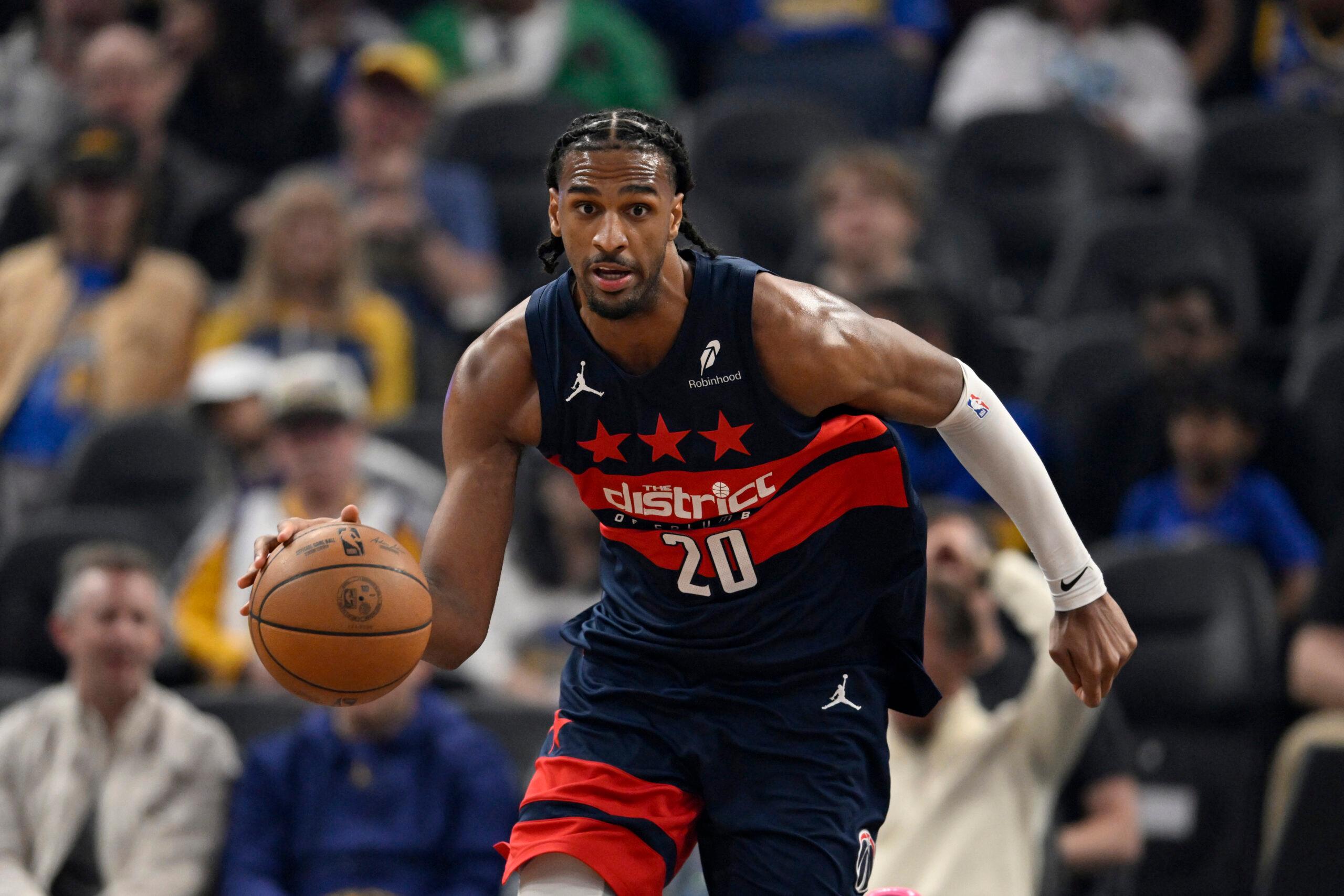
As the second-most important prospect on a rebuilding team that’s desperately seeking relevance, Alex Sarr’s development is critical. This is Year 3 for the former no. 2 pick, a potential tipping point for the 7-footer who made some strides during a sophomore season that was also a little awkward, inefficient, and cut short by injuries.
Sarr became a more intimidating shot-blocker and, despite still only making 52 percent of his field goal attempts inside the arc (an atrocious number for a big man), upped his 2-point field goal percentage dramatically from Year 1. Going forward, Trae Young—an alley-oop maestro—should continue to nudge Sarr in the right direction. There’s a world where, by season’s end, Sarr and Young are able to form one of the more dangerous two-man games Washington has had in … ever? There’s so much theoretical versatility here. Sarr can be the irresistible big who crams lobs in traffic and pops behind the arc to knock down a 3. If that hypothetical becomes reality, the Wizards offense will finally have an identifiable shape and edge.
Potential is dangerous, though. And with Sarr’s comes a few obvious complications. For the time being, one is named “Anthony Davis.” Starting alongside another center for the first time in his career, Sarr will probably spend a decent amount of time in jumbo-sized lineups that can’t space the floor or let him stay in the paint on defense. The adjustment period will be real.
Sarr is only a career 31.6 percent 3-point shooter who saw his volume dip dramatically last season. The good news is that Young’s presence likely eliminates shots that had no business going up in the first place.
The bad news, according to Bball-Index, is that Sarr finished in the 9th percentile in off-ball gravity among all players who logged at least 1,000 minutes last season. In other words, even with Young around to organize a young core that doesn’t know how to win, most opponents will open the season letting Sarr fire away. (If shots fall, it’ll be a boon to everyone, including first overall pick AJ Dybantsa.)
More bad news: Sarr had foot surgery in June, wasn’t active throughout the summer, and won’t be a full participant in training camp. This is not a minor issue. Developing chemistry with new teammates who consume a ton of oxygen really matters.
Of course, he’ll also find himself in smaller lineups with significantly more room to operate. Sarr’s jumpers will be wide open, whether he’s popping out of a screen or spotting up in the corner. Few floor generals alive are better equipped than Young to streamline his offensive responsibilities. And, when AD is healthy, few bigs are better equipped to help Sarr cover ground on a team that has Young—probably the league’s worst defender who actually plays significant minutes—in it.
Sarr has a long way to go before he’s anything close to a bona fide franchise center, but the steps he takes this year will help dictate how successful this new era of Wizards basketball can be. Can they sniff the playoffs this year? I wouldn’t bet on it, but if Sarr becomes a two-way monster it’s at least plausible.


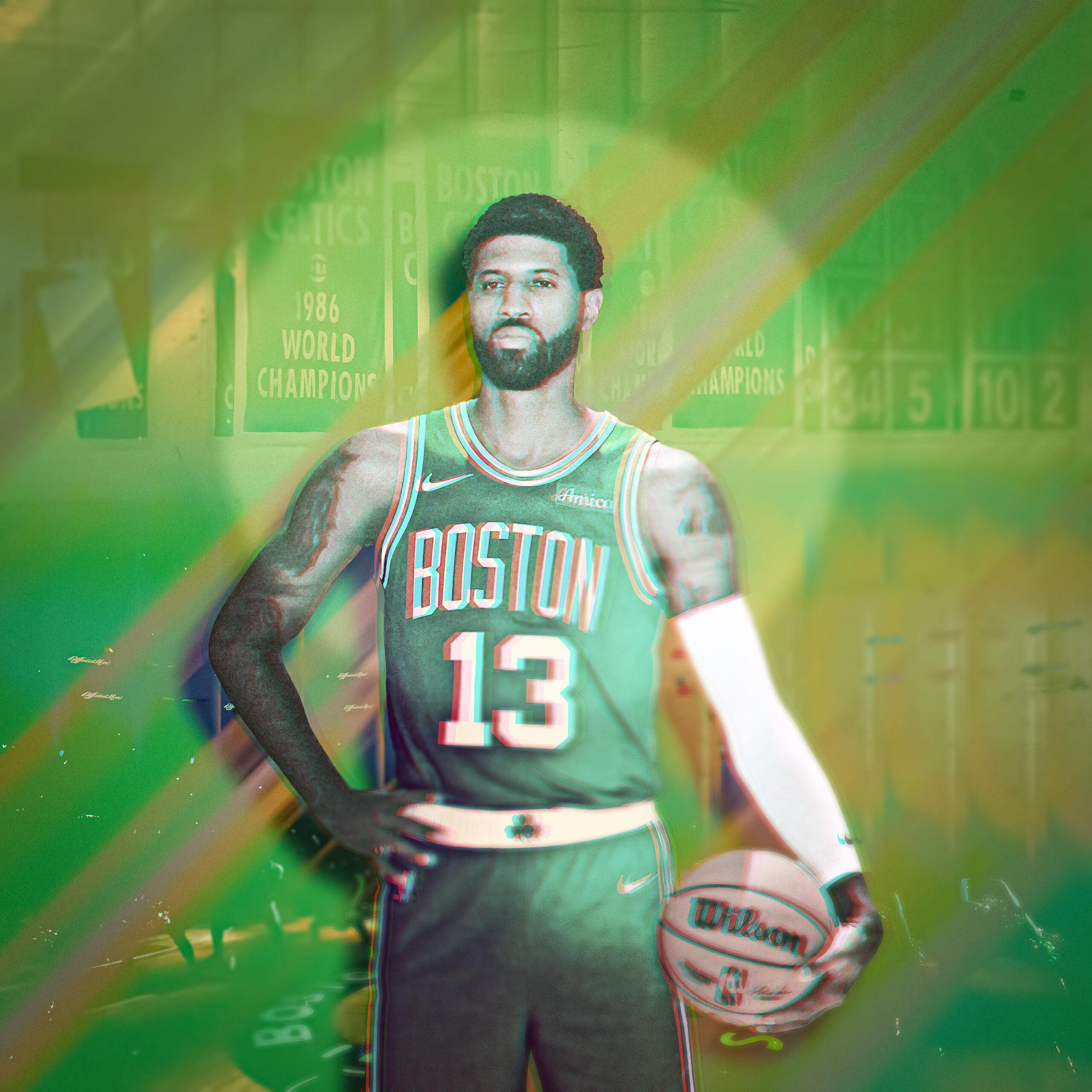
Paul George, Boston Celtics
Along with their strange new look, the Celtics will have some variance this season. Things could go great. They defend, already possess championship DNA, and can really shoot. Or, with Jaylen Brown in Philadelphia and Jayson Tatum still needing to reclaim the status his Achilles injury took away, they could disintegrate. Change brings volatility. Even if Tatum’s daily contributions are the be-all and end-all that decides Boston’s success, George’s ability to excel in a supplementary role (without getting hurt) is an even larger variable.
The Celtics traded Jaylen Brown for many reasons that have nothing to do with George. But discussions about that controversial decision often overlook everything the 36-year-old can still do on a basketball court. Forget about his contract and look past his disappointing tenure in Philadelphia. (He’s now on a team that doesn’t revolve around a ball-dominant center.) So long as he’s healthy, PG is not a throw-in. His raw production at 36 years old will obviously not match Brown’s. He doesn’t attack the basket, get to the line, or share the same degree of durability. But George’s skill set is still top-tier and more catered toward how Joe Mazzulla wants to play. There are fewer hitches and more shrewd decisions on both ends (particularly as an off-ball defender, a role George remains excellent in); and, critically, there is a far more consistent outside shot.
This could definitely not work, and it’s fair to point out that George loves the midrange almost as much as Brown. But it’s not hard to imagine PG thriving in an offense that wants him to cut down on less efficient shots. (When he shared the court with Kawhi Leonard, he made over 40 percent of his 3s, with 48.4 percent of all his shots coming from behind the arc.)
He doesn’t want or need to have one of the highest usage rates in the league, either. This is his fourth team in seven years. He’s done pretty much everything except compete in the NBA Finals. George will manufacture more possessions (by forcing turnovers) and then help Boston make the most of them. He’s a perfect second-side creator who’s overqualified to lead a bench mob when Tatum isn’t on the court. George also has plenty of experience working off the ball, is deadly coming off screens, can’t be left alone on the perimeter, and knows how to run a pick-and-roll.
Basketball teams are puzzles. It may not seem like sliding George in for Brown will make the Celtics better than they were. But sometimes less is more. Particularly when that “less” is a onetime superstar whose talent can be tapered down to that of a glorified role player when the situation calls for it.
Scottie Barnes, Toronto Raptors
I try not to overreact to anything that happens in one playoff series. It’s an inherently small sample size against a single opponent. Sometimes a player gets hot or goes cold for two weeks. Sometimes a matchup is super favorable or particularly unpleasant. Sometimes a key teammate (or opponent) is injured, further skewing an outcome or opportunity.
But, of course, that doesn’t mean I ignore everything. The playoffs yield insufficient data, but they’re also highly competitive and full of tension. The pressure, attention to detail, and intensity within each possession help forge an environment that’s able to showcase the best of the best. It isn’t for everyone, and those who shine deserve some praise.
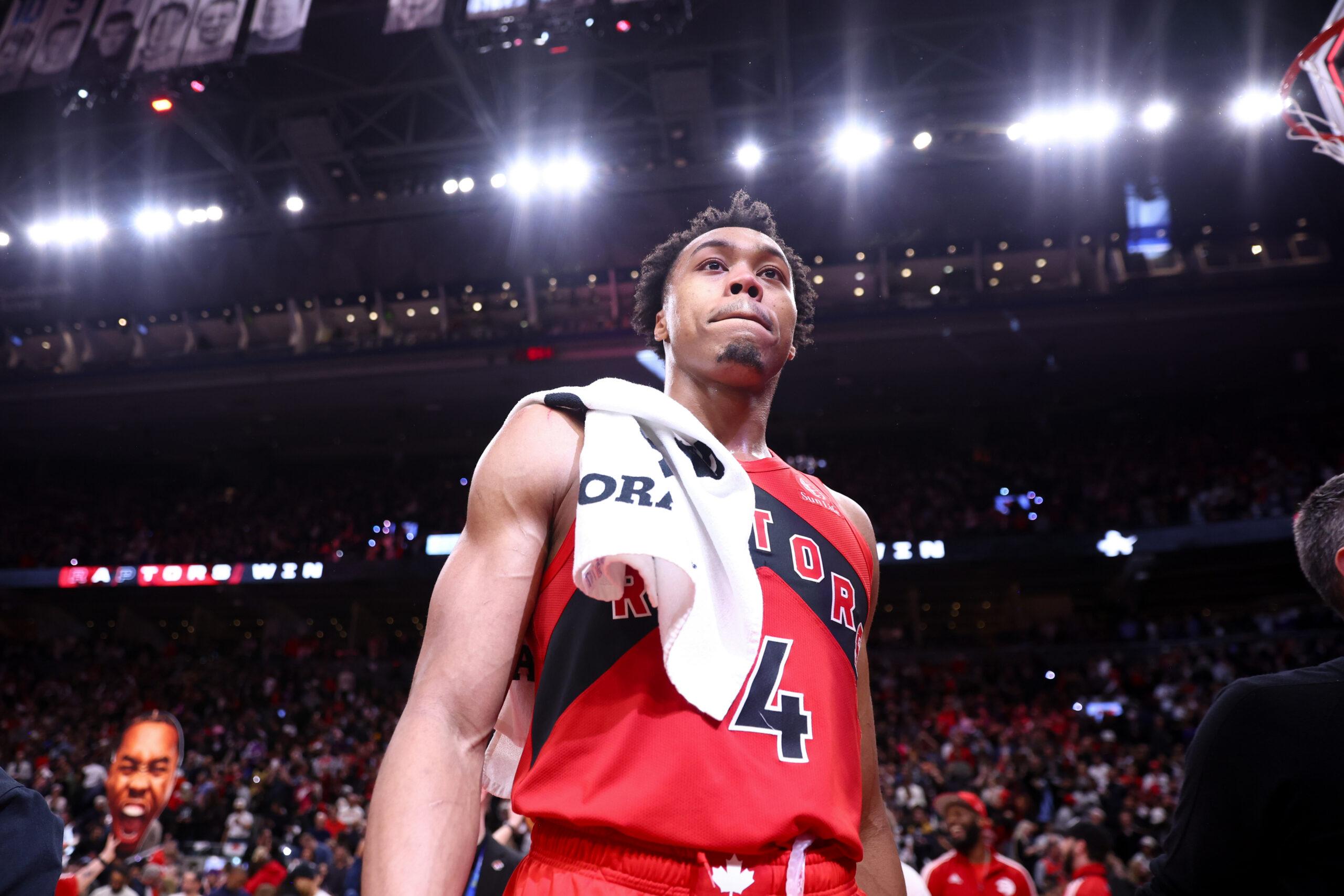
Enter: Scottie Barnes, whose all-around performance against the Cleveland Cavaliers in last season’s first round was impressive enough to convince me that it may have motivated the Toronto Raptors to be significantly more aggressive in their pursuit of Kawhi Leonard. Barnes had the most positive impact on that series, functioning at all five positions on both sides of the ball, controlling the tempo, and generating a ton of easy baskets.
His performance was kinetic and confident. At one point, Barnes started picking Donovan Mitchell up at half court, a bold choice that sent a message: Toronto might fall, but it wouldn’t do so as the less aggressive team. Signs of tangible growth were everywhere you looked, especially when it came to scoring. During the regular season, 60 percent of Barnes’s baskets were assisted. In the playoffs, that number fell to 37 percent. Usually, when that happens, a player becomes less efficient. But Barnes saw his true shooting percentage rise from 57.7 to 60.5. He repeatedly got to his spots, forced help, lived at the free throw line, and couldn’t stop diming up teammates all over the floor.
Again, we’re talking about a seven-game sample size, but Barnes finished the playoffs ranked sixth in estimated plus-minus (Jalen Brunson was seventh). This probably means next to nothing. And yet … if that player is here to stay for an entire season, now paired with an established superstar who drills tough shots, draws double-teams, and wreaks havoc on the defensive end, Toronto may have the best duo in the Eastern Conference.
Christian Braun, Denver Nuggets
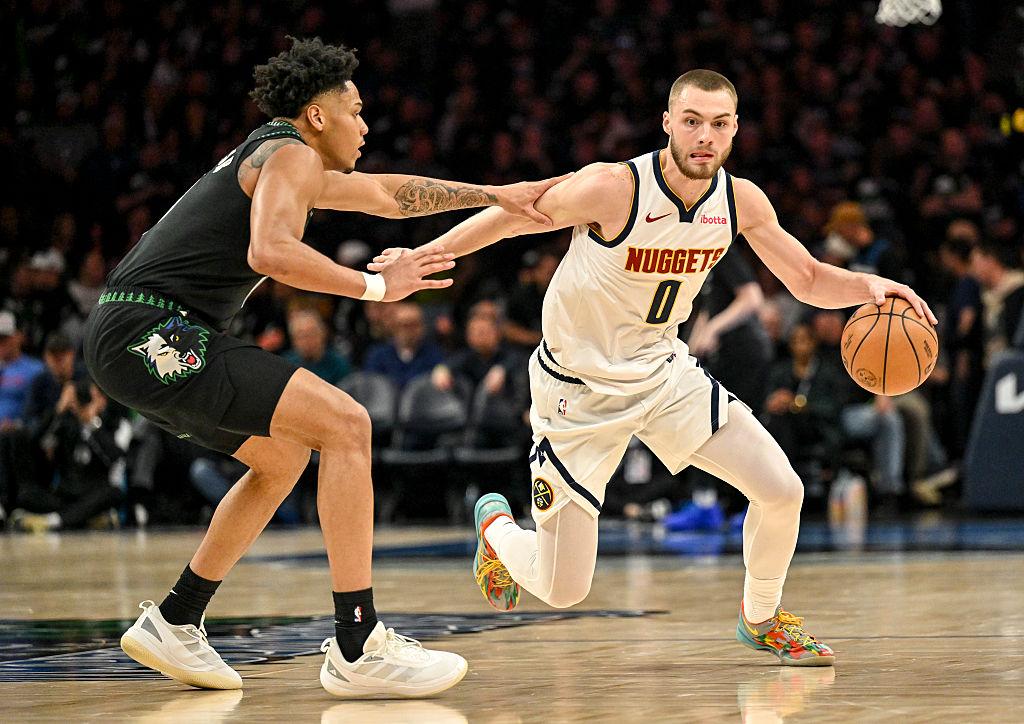
If we see the type of internal improvement that allows Denver to blow past its preseason expectations, Braun will likely be involved. Coming off Braun’s disappointing, injury-plagued fourth season, it’s easy to forget how awesome he was in 2024-25, when he averaged 15.4 points per game with the fourth-highest true shooting percentage in the league. The spike in production with an expanded role earned Braun a fourth-place finish for Most Improved Player and motivated the Nuggets to lock him up on a five-year, $125 million extension. (Nobody that season—neither Giannis nor LeBron!—averaged more fast-break points per game!)
Progress isn’t linear, though. Only three non-bigs saw their 3-point percentage take a steeper dip than Braun’s last season. The good news is there’s no reason to be cynical about his ability to bump that mark back up this season. The bigger question I have is whether he can stay healthy, thrive in transition, and possibly even blossom more as an on-ball option in the half court. He doesn’t need to do anything crazy, just be someone who can be involved in more dribble handoffs to keep the defense off balance. Maybe sprinkle in a few pick-and-rolls. He’s already an intuitive cutter (which is obviously critical playing beside Nikola Jokic, who trusts him) and very good at finishing around the basket. But if Braun can take another step and continue on the trajectory most people foresaw after 2025, the Nuggets will be a pleasant surprise.
“I know who I am and the player I am,” Braun said in August. “I know I’ll bounce back and be right where I need to be next year.” The Nuggets are counting on it.

Brandon Miller, Charlotte Hornets
LaMelo Ball is gone. How will Miller respond? As the leading scorer on a top-five offense last year, Miller gave Charlotte exactly what it hoped to see in his third season. Quite a bit of his progress, though, could be explained by Ball’s knife-grinding selflessness. Miller became one of the most accurate high-volume catch-and-shoot players in basketball, but he still wound up with a true shooting percentage below league average.
How? When Ball sat, Miller’s looks got a lot harder. His field goal percentage at the rim nose-dived from 73 percent with Ball to 52.5 percent without him. That is concerning. Furthermore, his midrange frequency went from 29.5 percent with Ball to 40.8 percent without. Another shift that doesn’t bode well. Many of Miller’s self-created looks in the paint aren’t pretty, which is kinda strange for someone who stands at 6-foot-9 and has a deadeye jumper, half-decent ballhandling abilities, and advanced footwork.
When Miller takes off for the hoop against a set defense, the court might as well be covered in taffy. He doesn’t have an explosive first step and rarely finishes through contact; when he’s matched up against wings and bigs who can move their feet, his drives typically end with a contested layup.
Even with Coby White, Dennis Schröder, and teammates (like Kon Knueppel) who lend real gravity to Charlotte’s offense, Miller will still find himself in more situations that demand on-ball play creation now that LaMelo is gone. If he’s up against a switch-heavy scheme that’s content staying home at the 3-point line and letting him attack one-on-one, Charlotte could get stuck in the mud, and Ball will retroactively look like an MVP candidate.
Reed Sheppard, Houston Rockets
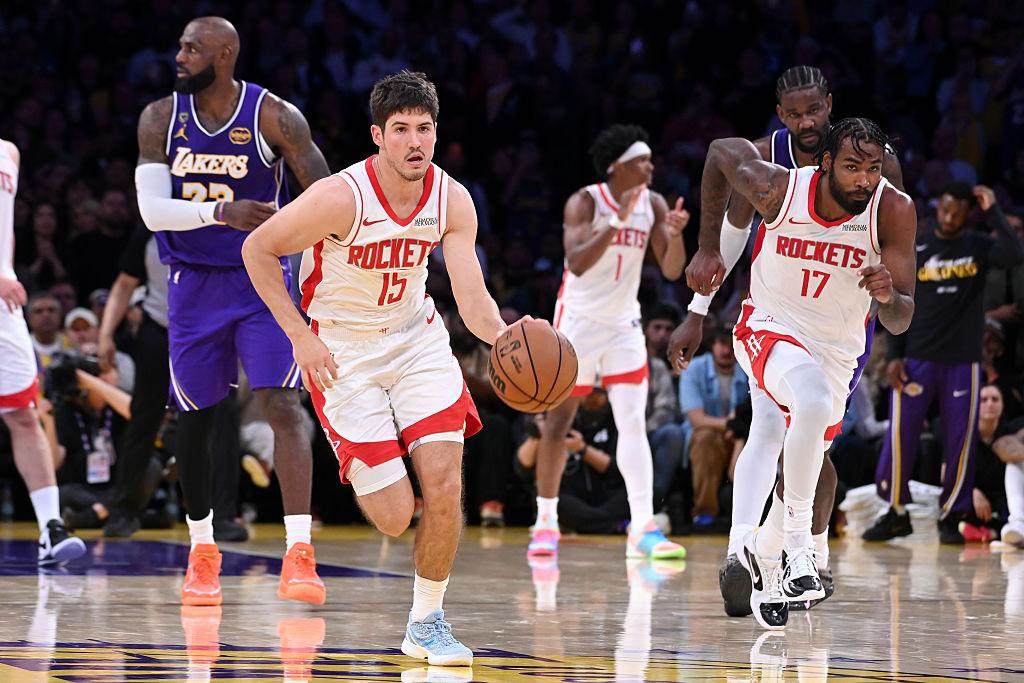
So, what if Sheppard pops? What if, standing on solid ground in Ime Udoka’s rotation, he emerges as one of the scarier high-volume pull-up 3-point shooters in the league? Someone who can single-handedly induce total defensive panic by simply dribbling off a high screen? Sheppard drilled a promising 37 percent of his off-the-bounce 3s last year. If his volume and accuracy both rise—which definitely feels possible—and he’s able to leverage all the aggressive coverages that force big men to meet him on the perimeter by squirreling into the paint and then really wreaking havoc, we may witness a third-year leap that’s meaningful enough to tilt the entire Western Conference.
What if Sheppard is the runaway favorite to win Sixth Man of the Year or catches lightning in a bottle and forces Udoka to bring Fred VanVleet off the bench? I wouldn’t say these scenarios are likely. Skepticism about Sheppard’s upside is at an all-time high coming off that truly dreadful playoff series against the Los Angeles Lakers. But the type of breakout season that justifies Houston’s decision to select him third overall isn’t unrealistic either. Thanks to his team’s identity—one defined by brute force, size, and defensive tenacity—it’s easy to overlook Sheppard. But in many ways, on a team that also struggles to shoot the ball, he’s the key to everything.

Honorable Mentions
Just because. I can’t resist. Here’s one sentence each for nine other players I’m curious about this season:
- Peyton Watson, Nuggets: Can he be the missing fifth man on a Cavaliers team that clearly aspires to win it all?
- Cason Wallace, Thunder: An offensive leap from him could reassert Oklahoma City as a dynastic juggernaut.
- Ja Morant, Blazers: What if he turns back the clock and regains the magical charm and flair that made him a virtually unprecedented highlight factory four years ago?
- Paolo Banchero, Magic: Is this the year Orlando is better with its franchise player on the court or the year it trades him?
- Dylan Harper, Spurs: This might sound absurd, but is there a world where we’re all sitting around a year from now wondering whether the Dallas Mavericks took the wrong guy?
- VJ Edgecombe, 76ers: The guy no one is talking about who’s talented enough to be the guy everyone is talking about during the conference finals.
- Darryn Peterson, Jazz: He could honestly be the story of the season—that’s how high Peterson’s year-one ceiling could be.
- Zach Edey, Grizzlies: How scary will Memphis be if he stays healthy enough to mash people on both ends as Cam Boozer’s full-time bodyguard?
- Ausar Thompson, Pistons: Forget the shot; if Thompson emerges with some type of on-ball playmaking dynamism, Detroit’s offense will be a cheat code.