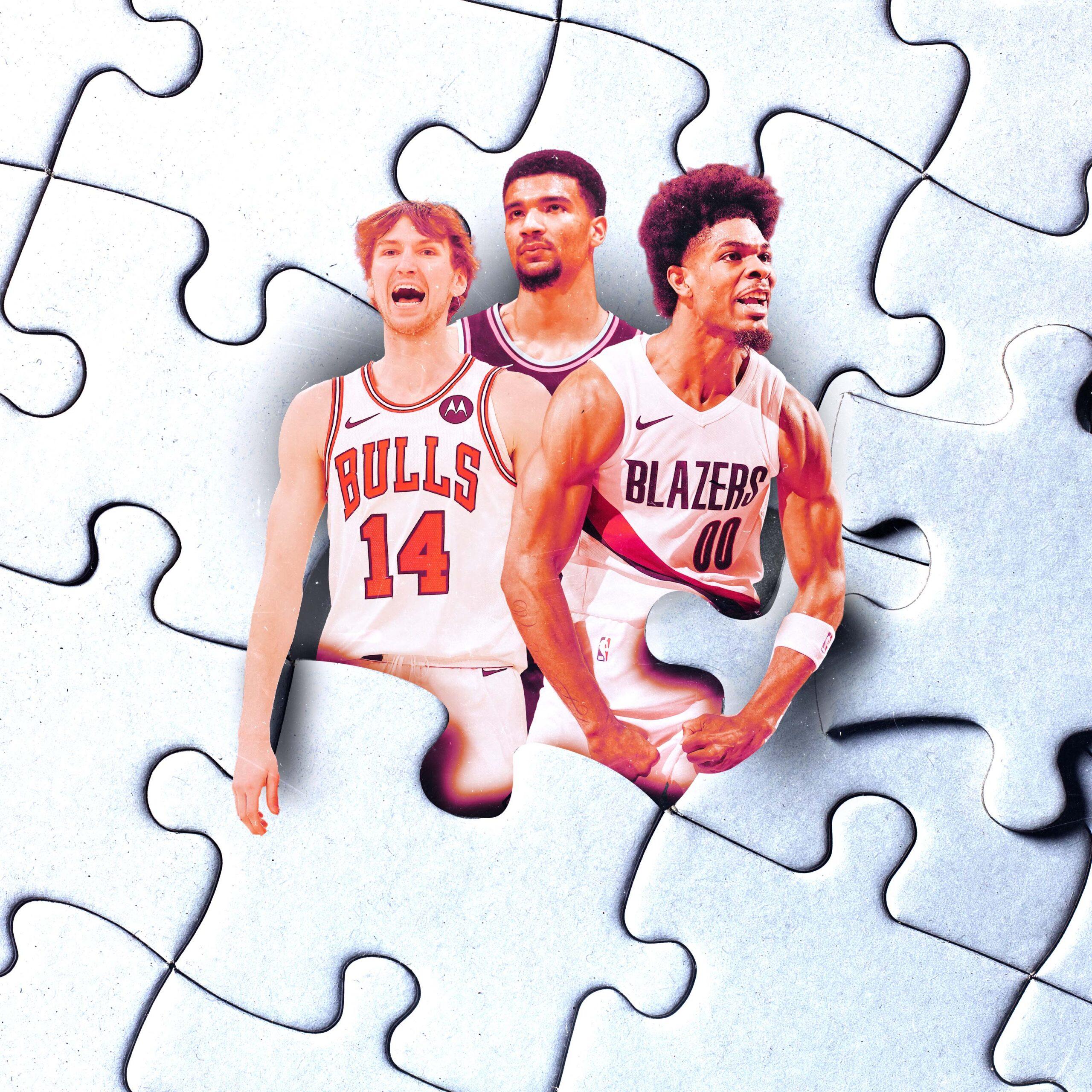

In an unfortunate turn of events, the spotlight during these idle hours of the NBA offseason has focused on billionaires and legal investigations. What happened to the game we love? With the regular season roughly two months away, perhaps it’s time to shift the focus back to what makes the NBA great: potential being realized, players making a leap. There won’t be any sophomores on this list since most come equipped with a baked-in hype machine, especially given the crop of rookies we just saw. There will be players who are adjusting to new teams, new contexts, new responsibilities, and new phases in their growth—both physical and mental. So, without further ado, let’s inject some hope and cautious optimism back into the arena. Let’s explore a few potential breakouts, both big and small, for the upcoming season.
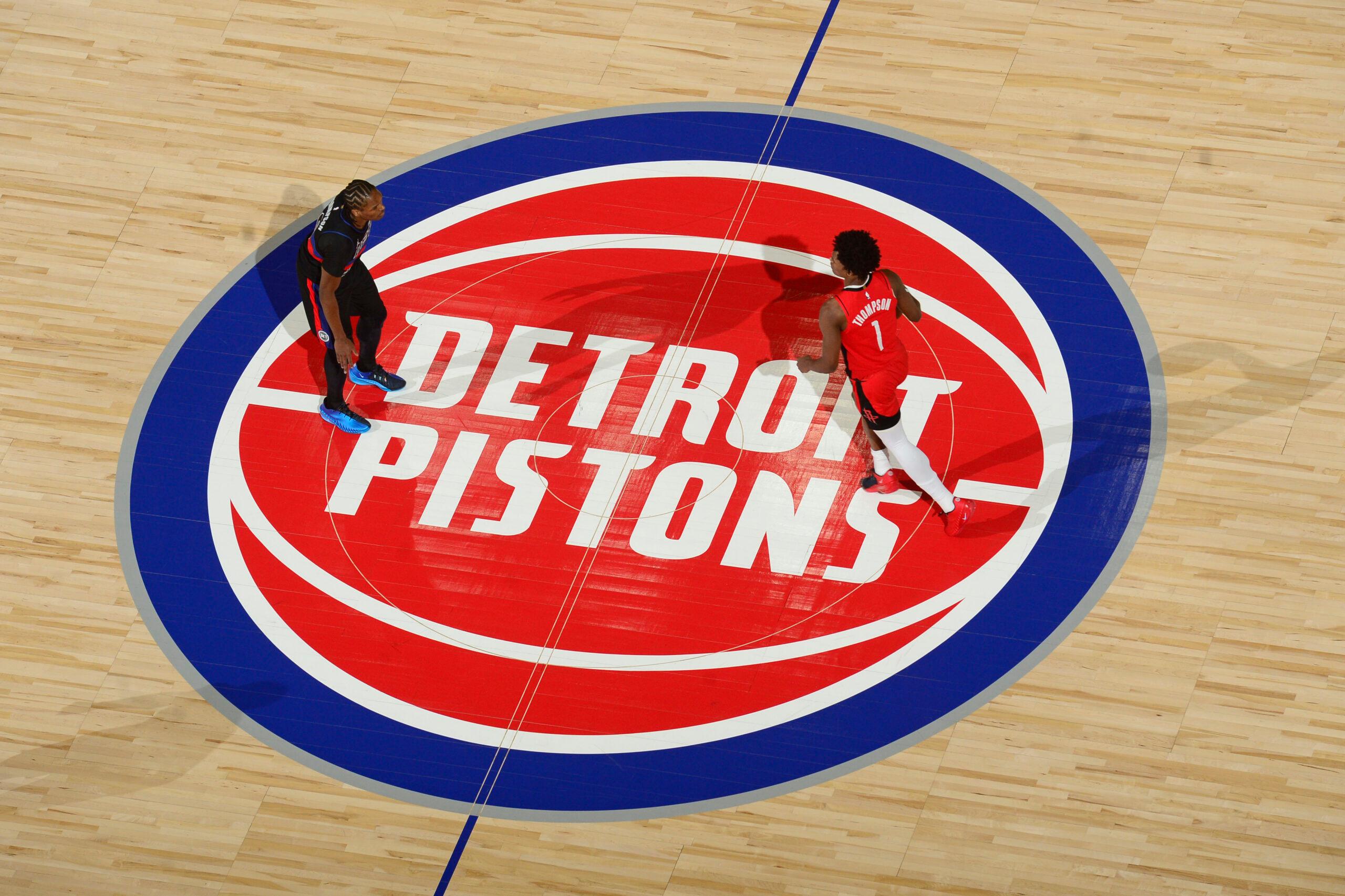
Amen and Ausar Thompson
Is Thompson Twins Jumper Watch destined to succeed Ben Simmons 3-Point Hopium as the most enticing annual summer nothing burger? It’ll take years to know for sure. For now, I choose to be cautiously optimistic:
In July, the Rockets hired renowned shooting coach Chip Engelland—the man who helped shape Kawhi Leonard, a poor college shooter, into one of the most efficient three-level scorers ever. Two years ago, the Pistons hired shot doctor Fred Vinson, who had transformed Lonzo Ball (and his strange look at my dab shooting motion) into one of the league’s best catch-and-shoot triggermen during Ball’s extremely brief peak. These are the lengths to which franchises must go to mine whatever juice remains in the perimeter games of two of the most dynamic athletes basketball has ever seen. Amen and Ausar are Stan Lee characters come to life; their physical domination on both the lateral and vertical planes has altered the perceived limits of perimeter defense. They are also the two worst 3-point shooters in NBA history among players who have averaged at least one attempt per game over the course of their careers.
Each twin steps into a more favorable role heading into next season, and they are both eligible for big-money extensions: Ausar will likely inherit some of the vacated usage left in Detroit in the wake of Tobias Harris’s departure, and the offseason spacing upgrades from players like John Collins and Isaiah Joe ought to create better conditions for him to expand his driving game. Amen will no longer have the pressure of serving as Houston’s de facto point guard now that Marcus Smart (and presumably what’s left of Fred VanVleet) are in the mix, allowing him to continue picking out mismatches and gaps in the defense from the baseline. Engelland’s presence proves that the Rockets are still optimistic about his shooting consistency coming around, but these shot doctors aren’t miracle workers. Vinson has been in Detroit for two years, yet Ausar practically eliminated the 3-ball from his shot diet this past season and shot worse from the free throw line than ever before.
The notion that either twin will become an above-average 3-point shooter feels like a pipe dream at this point, yet there is still a lot that can be gained from a shooting coach at this pivotal juncture in their respective careers. There is something almost antithetical about a set jump shot in either of their offensive repertoires—no matter how practical it would be, a rote, mechanical motion is sort of at odds with how the two move through space. But if that’s the case, what the twins could refine is their relationship to touch, the confidence and audacity to transform some of the kinetic energy that they create in motion into something softer and more unexpected. Both brothers have shown the ability to hit some remarkable floaters while decelerating from top speed. Amen in particular has dramatically improved his free throw percentage and flashed a more steady in-between game on push shots in the lane. Finding that particular rhythm and flow with their shot creation could be what keeps hope alive for their offensive development. Amen and Ausar have already broken out on defense, but there might be another leap coming on the other side of the ball.
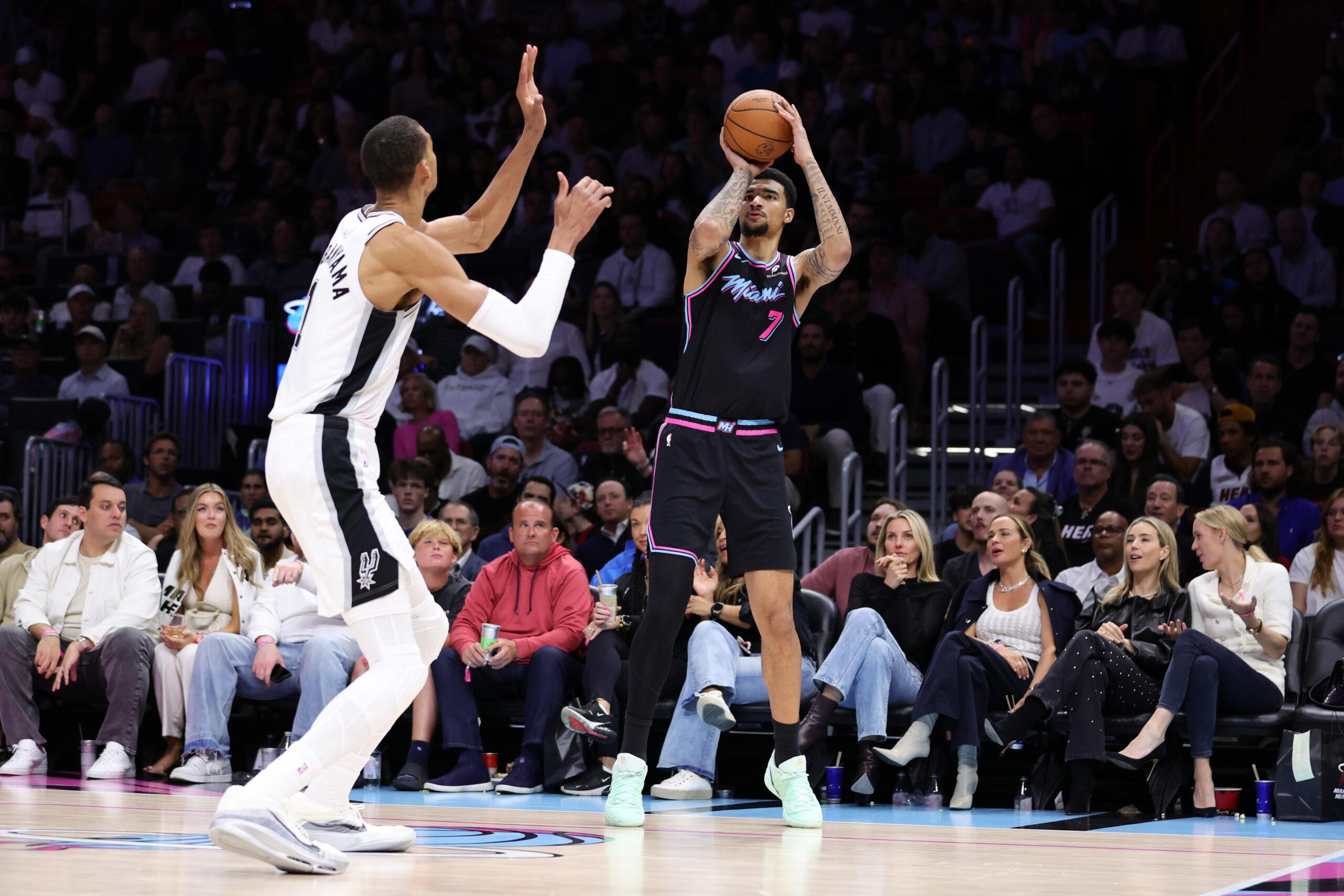
Kel’el Ware
Ware’s fresh start in Milwaukee is fundamentally a question of scale. The undeniably talented 7-footer has yet to average more than 22 minutes per game across his two seasons in the league, but his per-possession numbers are outstanding. His wingspan is gargantuan; his open-court strides are as smooth as they come for a player of his size. His impressive rebounding numbers are a nod to tradition, while his obscene 3-point efficiency is a thunderclap of modernity. Only Micah Potter and John Collins had better catch-and-shoot 3-point percentages among centers last year—and Ware has at least 3 inches on each of them.
How much were Erik Spoelstra and the Miami Heat hiding—both good and bad? Ware’s effort has historically waxed and waned, so much so that Spoelstra practically suppressed his playing time as a matter of principle. But what will happen when Ware starts playing actual minutes? What will happen when he’s asked to anchor a defense without the bumper lanes installed by Bam Adebayo’s omnipresence?
Milwaukee knows better than most teams how valuable a player of Ware’s archetype is. There would have been no unlocking an all-time talent like Giannis Antetokounmpo without a true 3-and-D big man. The Bucks struck gold by landing an evangelized Brook Lopez right at the beginning of his 30s; they made a wildly irresponsible gamble on Myles Turner in his age-29 season thinking they could capture lightning in the same bottle a second time around. Acquiring Ware, still just 22 years old, is recognizing the game-changing value of a rare sharpshooting rim protector while also being realistic about where the team is in its trajectory.
It’s easy to envision Ware quickly ascending as the crown jewel in Milwaukee’s asset haul, even if the “physically gifted but aloof” center mold has led to some catastrophes across league history. His positive range of outcomes becomes a game of fun with numbers. Say Ware receives a standard bump in playing time, up to 27 minutes per game—roughly the same number of minutes that players like Jarrett Allen, Alex Sarr, Donovan Clingan, and Ware’s new teammate Turner averaged last season. In the 53 games wherein Ware logged at least 27 minutes, he averaged 14.2 points, 11.4 rebounds, 1.7 blocks, and more than three 3-point attempts per contest. Only Victor Wembanyama, Joel Embiid, and Shawn Marion have matched those figures across a full season.
But let's get wild. Imagine Ware with an even greater workload: 30 minutes per game, more than Wemby averaged last season. In the 29 games in which he has played such extended minutes during his career, Ware has averaged 16.2 points, 12.2 rebounds, and 2.2 blocks. When you pair those numbers with Ware's unreal 3-point efficiency, you get a stat profile that's never been accomplished across a full season in NBA history. That’s not exactly how upscaling materializes in real life, but these numbers also aren’t being pulled out of thin air. Ware’s two-year associate’s degree in HEAT CULTURE was a tantalizing proof of concept. What comes next could well define the Bucks’ new era.
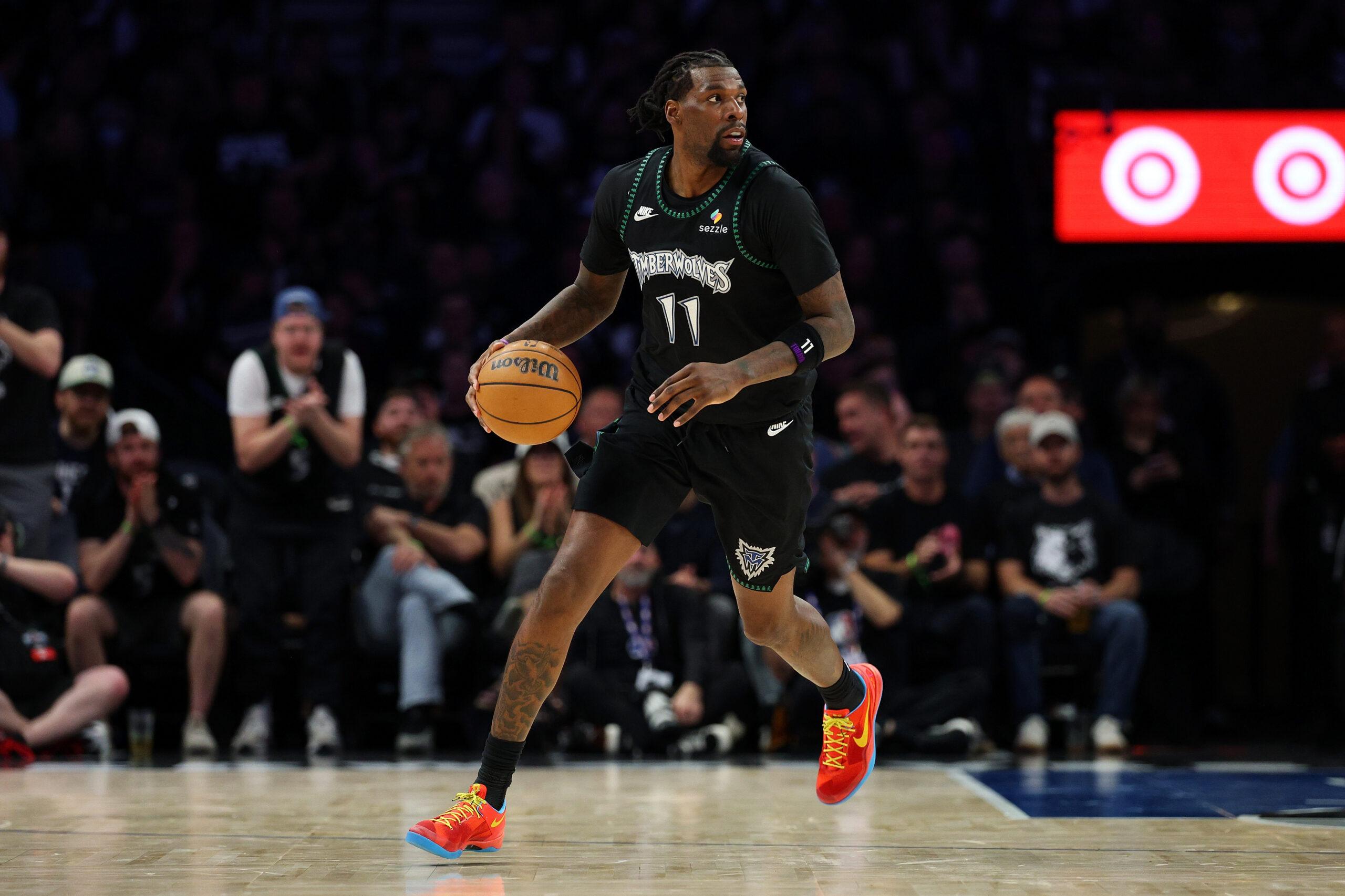
Naz Reid
The Hornets are about to learn what Wolves fans have long wondered: What if you just made Naz Reid a starter? There aren’t too many eighth-year breakouts to point to in recent memory, but there also aren’t too many players who encompass Reid’s intersection of strength and mobility, sharpshooting and ballhandling. There have been 54 players in NBA history standing at least 6-foot-9 who have attempted five or more 3-point attempts per game during a season. Of those players, only DeMarcus Cousins and Brook Lopez weighed more than Reid.
It’s a skill set whose limits are worth exploring in ways that just weren’t realistic given the massive frontcourt contracts the Wolves had to juggle. But with the Hornets’ roster makeup and their propensity for letting it fly, my mind, ever influenced by the late, great Jonathan Tjarks, immediately darted to how Charlotte could deploy some fiendish small-ball units to maximize the skill level present on the court. Back in June, I wrote that “Reid could potentially unlock five-out lineups in which every player on the floor can dribble, pass, and shoot at a high level—every team’s dream for the past decade.” Now in August, my attention has shifted to how Reid might be used on defense—a side of the ball that had been uneven during his time with the Wolves.
There is a blueprint available, even if it isn’t totally replicable. The Wolves allowed just 104.5 points per 100 possessions in the 2,545 minutes that Reid and Rudy Gobert shared the floor over the past three seasons—a better defensive rating than any of the league leaders since 2019-20. That gives a sense of Reid’s optimal role on defense: as a low-man helper with the lateral quickness to rotate and the bruising strength to contest and deter around the rim in a pinch, expanding the coverage radius of a drop-scheme anchor. The issue is that the Hornets don’t have a Gobert on the roster. Moussa Diabate is frenetic, but flimsy; Ryan Kalkbrenner is giant, but garden-variety. Gobert also covered for the more-than-occasional attention lapses from Reid over the years. Is there enough bandwidth for Reid to impact both sides of the court to the degree that the Hornets will need him to?
Scoot Henderson
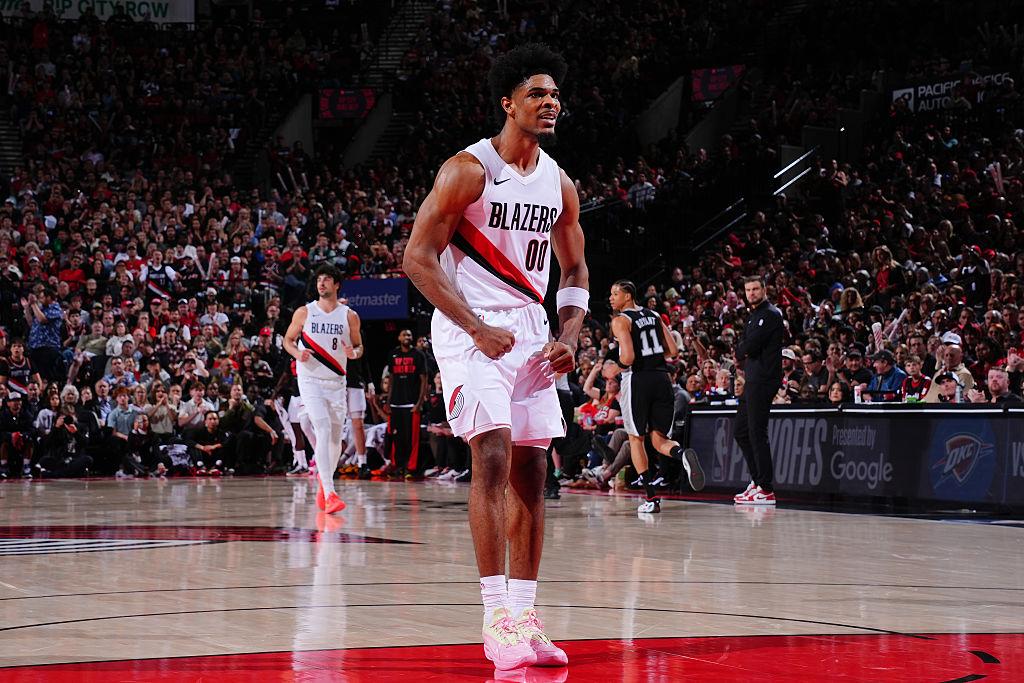
Shame on me for buying into an offseason dunk, of all things, as a window into a player’s development. But look at this:
Come on. Is it possible that Scoot still has it in him to become a legitimate star? Is it possible that the first three games against San Antonio in the playoffs were a sign of things to come? Do we dare discount a 31-point performance in a winning effort against an eventual NBA finalist? The only other players to score more points in a single game against the Spurs in the 2026 postseason were Jalen Brunson, Shai Gilgeous-Alexander, Anthony Edwards, and OG Anunoby in the Right Hand of God game—those are four top-25 players according to The Ringer’s offseason Top 100, and three of the top six!
If there is anything to seriously be gleaned from Henderson’s contest-worthy dunk, it’s the possibility that there might be more vertical and lateral explosion than we’ve seen thus far. Ever since he came into the league, Scoot has fought an uphill battle against an outsized perception of his athleticism. When he was a teenager who took the G League by storm as a pioneering figure on the Ignite, his athleticism had seemed on par with the most electric point guards of the 2010s: Derrick Rose, Russell Westbrook, John Wall. But reality has underwhelmed in comparison to those expectations, and injuries have muddied Scoot’s trajectory. In his three years in the league, he’s dealt with at least six lower-body injuries, including the hamstring tear that kept him sidelined for the first four months of last season. This upcoming campaign could feature the healthiest Scoot Henderson we’ve seen in a while.
But if there is a void in Scoot’s game that could vastly change his outlook moving forward, it’s his ability to finish in the lane. Even if his explosiveness isn’t in the same tier as some of the all-time athletic marvels at his position, there’s no reason for a player with his length and build to shoot 28.6 percent from the zone 3 to 10 feet away from the rim.
Despite that, Scoot does have a stable foundation to build on. If Henderson has developed any calling cards in the league, it’s his pull-up shooting and his defensive motor. Playing alongside Jrue Holiday has helped Scoot understand how to maximize his leverage, speed, and length to make defensive plays both on and off the ball. And, as evidenced by his outrageous 3-point shooting in the postseason (and in the final month of the regular season), his confidence in his range off the dribble and on stepbacks has never been higher. As of right now, Henderson has two angels on his shoulder in Holiday and Damian Lillard. Henderson’s most promising traits just happen to borrow from some of the hallmarks of his vets.
Matas Buzelis
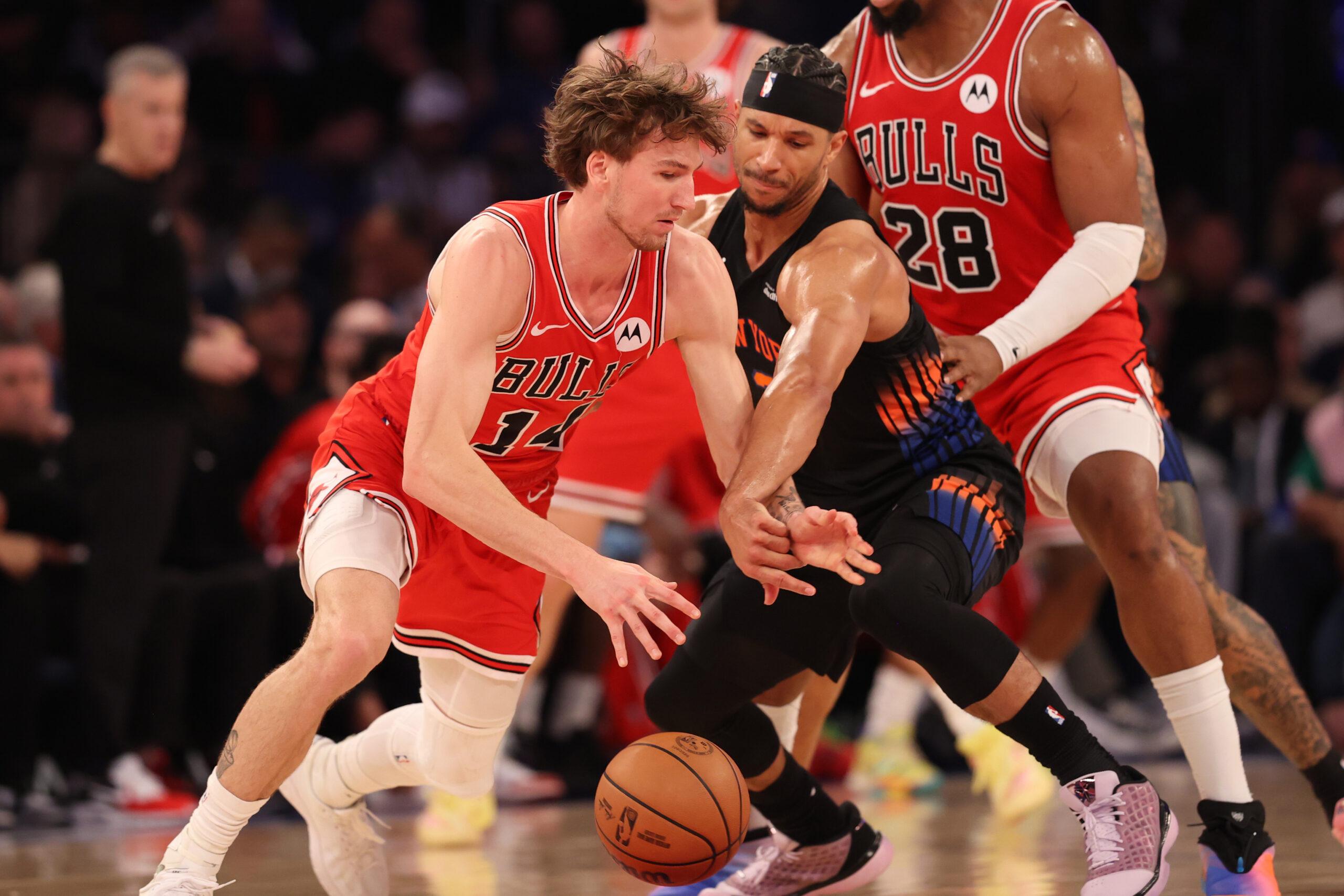
We don’t know yet whether these Bulls are going to be really good or really bad—shout-out to Norm Powell—but if there’s one thing for certain, it’s that Chicago will trot out the most exciting roster the team’s had in years. While Caleb Wilson sets his sights on winning Rookie of the Year, Buzelis could emerge as one of the favorites for Most Improved Player.
Buzelis came into the league a remarkably advanced slasher for a wing who plays at around 6-foot-10 in shoes. He possesses a rare level of creativity operating downhill on drives. His sharp handle and his array of feints, step-throughs, and Euro-steps allow him to dictate momentum against a defense on its heels. Historically, defenders could force him off course just by putting their chest in his way, but Buzelis’s feel for scoring has developed alongside his scouting report. His most impressive drives seem to preempt the contact by a beat or two, as he sidesteps his defender with a windmill gather or stuns them with a frictionless hesitation move.
The next step is embracing the contact. There’s footage from earlier this week of Buzelis getting inordinately hyped to bench-press 225 pounds. For a famously lanky athlete, strength gains are always going to be less readily visible than they would be for a more stout bodybuilder, but the aesthetics are immaterial here. In basketball, it’s about how those incremental gains affect mentality. For such an accomplished driver, Buzelis’s free throw attempt rate has been mediocre at best. Does Buzelis feel strong enough to weaponize the bumps he takes in the lane? The confidence, body awareness, and contact balance that came with targeted strength training played a big part in what fueled the star leaps from players like Shai Gilgeous-Alexander and Deni Avdija. Buzelis’s string-bean frame growing up forced him to develop a bag uncommon for players his size; when you combine that wealth of feel with a newfound appetite for physicality, a breakout seems imminent.