

The vultures move quickly, sailing off the gust of trade winds. After Giannis Antetokounmpo was dealt to Miami, there had to be a new avatar for the “discontented megastar in a small market” trope that fuels the NBA’s attention economy. It seemed likely that Anthony Edwards would be next. But part of the reason why Minnesota Timberwolves president Tim Connelly is in the position he’s in is his decisiveness when it comes to shaping a roster. Minnesota’s next big move would have to dramatically adjust the team’s trajectory, by any means necessary. Connelly moved past the sunk-cost fallacy tied to Julius Randle’s contract and cut bait. That trade (read: dumping) was a portent for the blockbuster trade we have on our hands now. On Thursday, the Wolves acquired LaMelo Ball and Josh Green and traded away Naz Reid; a 2033 unprotected first-round pick; three first-round pick swaps in 2028, 2029, and 2030; and three second-round picks in 2029, 2032, and 2033.
It all happened in an instant. The 2026 NBA draft’s second round was basically one big, convoluted white elephant exchange, but if you stuck around for the post-credits, the true gem of the night was revealed: ESPN’s Shams Charania reported that Charlotte was fielding offers for its onetime cornerstone point guard. And it seemed like it wanted to get a deal done soon. Minnesota was steadfast and aggressive in its pursuit. Less than 12 hours after the initial reports, a deal was reached. Welcome to the Ant-Ball era.
In one fell swoop, the Wolves have raised their ceiling, lowered their floor, addressed a long-simmering issue at point guard, and formed the most entertaining backcourt in all of basketball. Minnesota has united two of the best players from the 2020 draft, whose play, in some ways, informs the zeitgeist of the present day. Edwards is the more classic figure, an all-world swingman who has increased his scoring average in each of his six seasons and is gilded by Jordan-esque athleticism and an almost supernatural development arc in both his ballhandling and pull-up shooting capability. LaMelo is the mold-breaking savant who sees basketball in shapes and colors that exist only in his head, who intuits the physics of the game differently because no one else had a dad galaxy-brained enough to teach him how to shoot from half court by the time he was 6 years old. Ball’s presence as a creator will allow Edwards to take full advantage of his one-of-one downhill explosiveness off the ball; Ant’s offensive gravity is unlike anything LaMelo has ever played with. It’ll be exhilarating. It’ll be chaos. It’ll be what has been missing from this Wolves team: something altogether new.

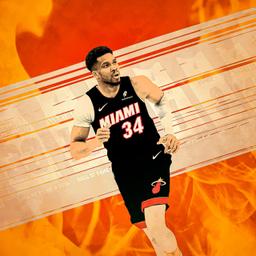

It’s NBA Deals Season
The thesis behind the past four seasons of Timberwolves basketball—inarguably the best stretch of play in franchise history—has been about building a Rudy Gobert–shaped defensive shell around a mega-talent like Edwards and giving him a skilled big man to play off of. They tried to bridge past and present by pairing him with the incumbent Karl-Anthony Towns; they tried to explore the bulldozing, playmaking potential of Randle. Part of the reason why Edwards has developed his ballhandling so much is that he’s had to; outside of Mike Conley Jr., the team has never had a legitimate point guard for Edwards to play off of. While Ant has honed his instincts as a creator, it’ll never be truly innate: He’s the ultimate hammer, not a spellbook. It explains why the Wolves, no matter what moves they make on the periphery, have consistently stalled out late in games during the postseason. The offense, in all its iterations, had become predictable. And predictability is the deepest possible antithesis of what LaMelo brings to a team.
Minnesota has generally been at or below league average in 3-point attempts during the Edwards era. Expect that to change immediately with Ball in the mix. Melo took 18.2 3-point attempts per 100 possessions last season, the highest rate that the NBA has ever seen, for all intents and purposes. The only players with higher per-100 numbers played less than 200 total minutes in their respective seasons. Melo played 2,017 last year. To hoist 3s at an all-time clip while still maintaining above-average accuracy is damn near a superpower. And it could become the ultimate force multiplier given LaMelo’s boundless creativity as a passer. That level of volume from deep puts an almost untenable amount of stress on a defense—a sort of punishment straight out of the Middle Ages.

Giving up on a longtime fan favorite like Reid is no small decision—especially given some optimism that the former Sixth Man of the Year was ready to step in as a starter for the newly departed Randle. Reid had been among the most consistent deep threats on the roster over the past few seasons, and he’s the exact kind of release valve at the 4 you’d want for whatever kind of no-look jumping hook pass that Ball is liable to fling out to the corner. But the way that Ant and Melo can warp defensive coverages ironically makes Gobert as essential as ever as a lob threat in the Wolves system. Gobert (along with Jaden McDaniels) ensures that the defensive ethic of the Wolves remains intact, but while Minnesota has had a top-10 offense over the past few seasons, the Edwards-era Wolves have never come close to entering the elite top-five territory that 12 of the past 15 NBA champions have reached. Ball’s arrival cracks open a window of possibility. Here’s a stat: Ant and Melo were among the five most prolific pull-up 3-point shooters last season. Only two duos have ever ranked that high in pull-up 3-point attempts per game since that data was first recorded in 2013-14: James Harden and Chris Paul with the Rockets and Damian Lillard and C.J. McCollum with the Blazers. In each of those instances, their respective teams had no worse than the second-best offense in the NBA.
That’s the reason Connelly made the call. That’s the reason why he has reportedly coveted LaMelo for years now. That’s the reason why the gestation period of the trade was about the length of a night’s sleep. That is the pure, unfettered upside of bringing a player like LaMelo onto a team that has stalled out despite reaching the Western Conference finals in two of the past three years. The downsides are no less obvious and will have to be worked through in time. Ball has more than his fair share of detractors who are quick to point out the fact that he has yet to reach the playoffs once in his six-year career, that he’s a quintessential good stats, bad team player. The same was said about Devin Booker, who made the Finals in his very first postseason in year six. But how much of LaMelo’s jovial, head-in-the-clouds style can actually be tamed, or at least honed? What happens when that mentality meets the pressure of expectations, of several rounds of best-of-seven series?
It’s clear now that the Hornets didn’t have much interest in finding out the answers to those questions for themselves. On its face, this is curious timing for Charlotte to cut bait on Ball, given how instrumental he was in the team’s midseason actualization as an offensive supernova. He had one of the highest net ratings on the team, and in the 800 minutes that Ball, Kon Knueppel, and Brandon Miller shared the floor together last year, the Hornets outscored opponents by 15.1 points per 100 possessions—just three-tenths of a point off the Knicks’ postseason net rating during their dominant championship run. But LaMelo was the crown jewel of an outmoded regime, and Hornets executive vice president of basketball operations Jeff Peterson isn’t beholden to the five-year, $203.9 million extension that was awarded by the previous front office administration. This is a player who, in the three seasons before this past one, managed to play in only 105 of 246 possible games. Ball was the subject of numerous trade rumors in the early parts of last season, and the team was smart to hold off on selling a distressed asset. His value recovered, but the Hornets didn’t exactly sell high on a player who’d shown he could be a game-changing offensive engine. Managing to get only one unrestricted first-round pick after the season that Ball just had feels a bit underwhelming.
Charlotte’s decisions to draft Christian Anderson—an outstanding, if undersized, 3-point shooter out of the pick-and-roll—and acquire hometown guard Coby White at last season’s trade deadline (and subsequently sign him to a three-year, $74 million deal) make a lot more sense with the knowledge that Ball’s days with the Hornets were numbered. The franchise clearly views the generative power of great spacing, not Ball’s ability to synthesize the pieces, as the secret sauce to a great offense. In White and Anderson, the Hornets hope to approximate Ball’s on-ball gravity without the psychic toll of worrying about availability—before last season, White had played at least 74 games in each of three consecutive years. Reid, the only player Charlotte got back in the trade, fits the brief; he shot 38.4 percent from deep over the past three seasons. Less than a handful of big men attempted more 3s per game than Reid did last season, and that was with him coming off the bench. The frontcourt has some adaptive lineup versatility with Reid in tow. The Hornets can still win the possession battle with their crew of high-motor, rebounding bigs, but if Reid can scale up his production to what could be big-time starter minutes, his spacing and driving talent at the 4/5 should be rare assets. Reid could potentially unlock five-out lineups in which every player on the floor can dribble, pass, and shoot at a high level—every team’s dream for the past decade.
Still, it’s hard not to feel a little wistful about what could have been if you’re a Hornets fan. The play-in tournament notwithstanding, Charlotte looked genuinely incredible in 2026, and the synergy of Ball’s audacious pull-up shooting, Knueppel’s cartographic off-ball gravity, and Miller’s blending of the two would have made them an interesting long-term trio. The Wolves needed to do something; the Hornets didn’t, but they chose to anyway. Minnesota took a chance on one of the most polarizing stars of his generation knowing exactly how he could change the team’s fortunes; Charlotte, on the other hand, realizes all too well the costs of fortifying the walls to accommodate his whimsy. And by making the trade, these two teams may have altered the Western Conference landscape. It’s a heads-or-tails gamble that the Wolves and Hornets have made, each betting on the story they’re telling themselves about how this will all turn out. The vultures are in retreat for the time being.