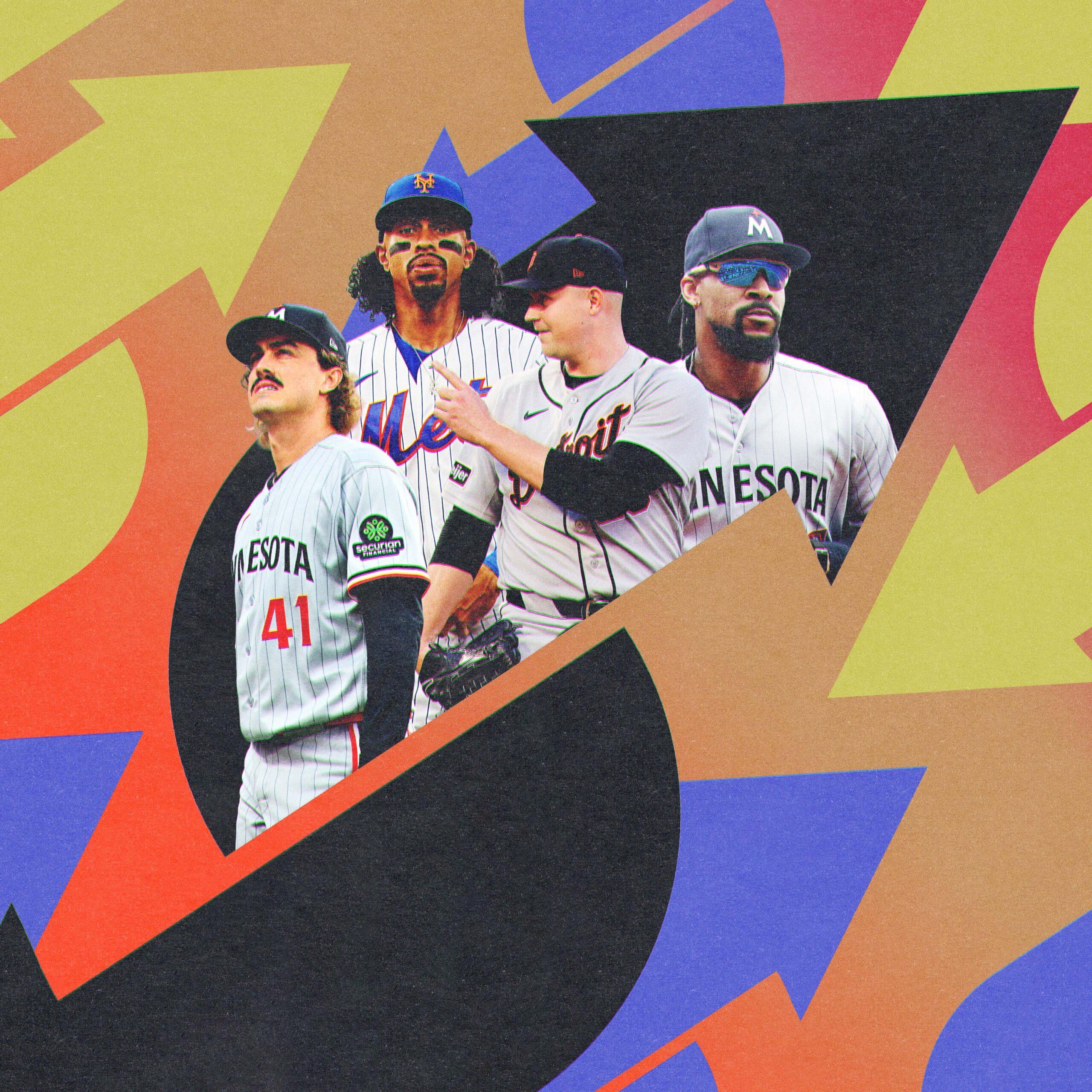

The MLB trade deadline is supposed to push teams into clarity: It’s a last chance to reinforce rosters before the playoffs, forcing them to define their competitive aspirations. But because of the jumbled nature of this season’s standings—especially in the American League—many teams are spending the final week of July deciding which side of the buyers-or-sellers line they’re on.
That line is unusually blurry, with only eight teams sitting more than 3.5 games out of a playoff spot. The AL Central has a surprise leader in the White Sox. The AL West is so lackluster that the under-.500 Astros are two games out of first place. In the AL East, the Red Sox were shaping up to be sellers before a massive win streak pushed their playoff odds above 60 percent.
In the National League, five teams—the Dodgers, Brewers, Braves, Phillies, and Cubs—look like heavy favorites to make the playoffs. So how aggressive should the pack of teams in pursuit of the NL’s sixth postseason berth be?
The Padres are clinging to relevance. The Nationals, Pirates, and Cardinals are surprise contenders hovering around the wild-card race. Lower in the standings, the Mets, Giants, and Rockies are obvious sellers, but all must decide whether that means unloading a few expiring contracts or reconstructing the foundations of their rosters.
With one week to go until trading time runs out on August 3 at 6 p.m. ET, The Ringer is asking and answering the biggest trade deadline questions.
What is the theme of this year’s deadline?
The 2024 deadline was relatively quiet: No landscape-changing stars and none of Baseball America's top 100 prospects changed teams. This year's deadline could look similar, especially if the top two players on the market stay put. There’s such a thick cluster of teams in MLB’s mediocre middle that it’s difficult for front offices to fold or push all their prospect chips in.
There will be plenty of minor upgrades, some reliever reshuffling, and certainly some rental overpays. But the compressed nature of the pennant race right now—unless you're among the handful of teams sitting pretty at the top of each league—could lead to a quieter than normal deadline.
Who are the biggest stars that could move?
The biggest star who could be on the market is Tigers ace Tarik Skubal. Skubal is the headliner in a deep group of pitchers who are expected to be available this week.
Skubal is the two-time reigning Cy Young winner and a potential rotation-reshaping acquisition, but will anyone meet the Tigers’ high asking price (and pay the remainder of the southpaw’s $32 million salary for this season) in exchange for the impending free agent? And what should that price be, considering Skubal already missed time this year after surgery to remove a loose body in his elbow?
Skubal hasn’t been quite as dominant in 2026 as he was in the preceding three seasons, but he still ranks second in MLB in K-BB percentage among pitchers with at least 60 innings pitched. The Dodgers seem to be the team sniffing around Skubal most, and they have the prospect capital to acquire a player of his caliber. But would the Dodgers trust Skubal to risk his arm on a heavy October workload with a massive free-agent payday at stake?
Recent reporting by The Athletic indicated that the Tigers—who aren’t totally out of the AL Central or wild-card races—were looking for a controllable (young) starting pitcher to backfill their rotation, plus quality prospects. Skubal would be a big addition for any team, but there may not be many teams both good and aggressive enough to land him.
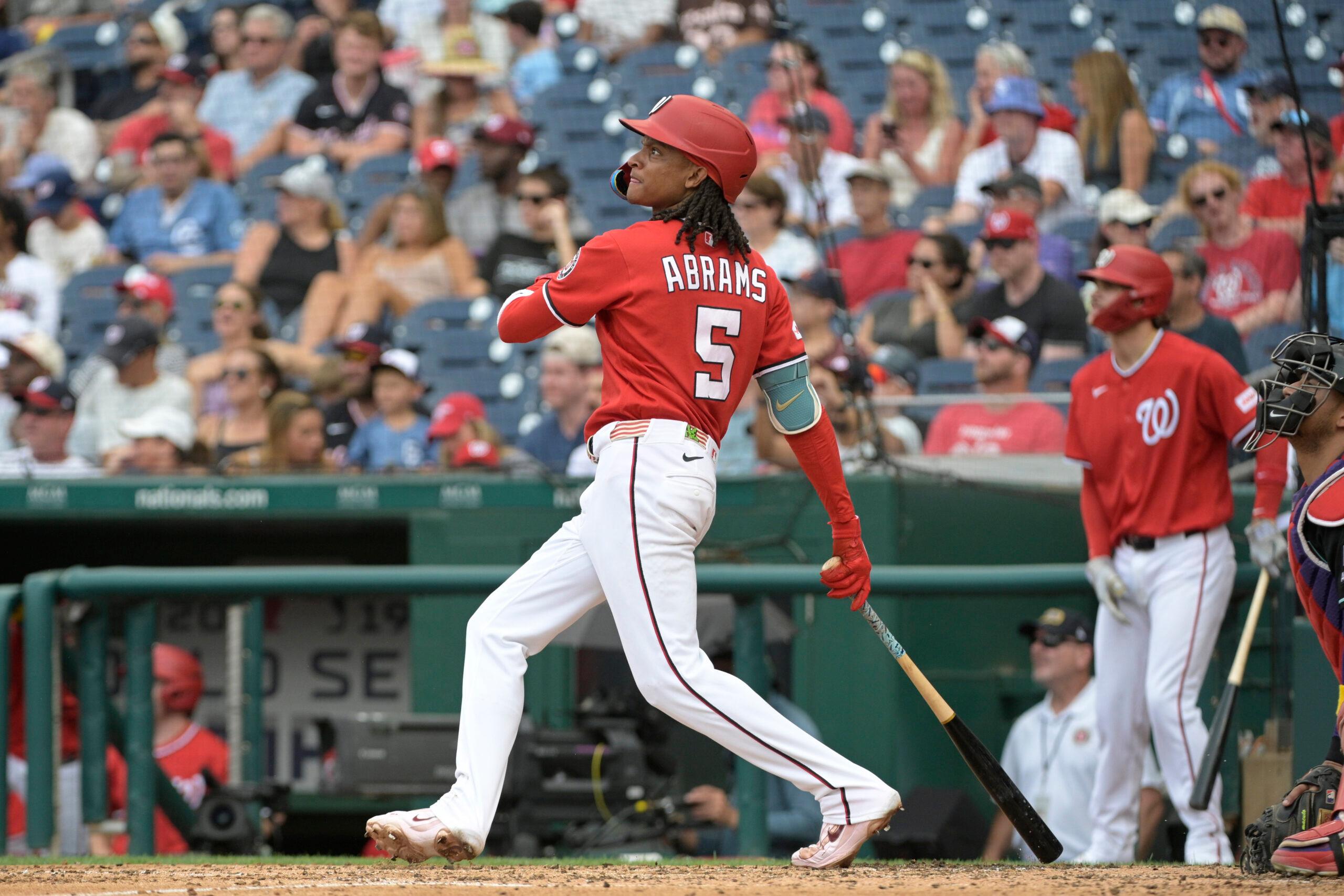
After Skubal, the top of the market for potential difference makers is more balanced. The Twins are adamant they’re not going to trade Byron Buxton, but they could trade star pitcher Joe Ryan and his elite stuff. The Padres just traded their top prospect last summer for dominant closer Mason Miller, but you can never rule out more AJ Preller deal-making chaos. The Nationals could sell very high on C.J. Abrams and take advantage of a shortstop market with a ton of demand.
Which teams have the toughest buy-or-sell decisions? And what will the next week look like for them?
The Astros are languishing at 52-55, yet they sit just two games out of first place in the middling AL West. Houston has three hitters—shortstop Jeremy Peña, third baseman Isaac Paredes, and first baseman Christian Walker—who would be attractive to contending teams should they become available. The Astros have signaled that they are planning to contend and to buy at the deadline, but it’s hard to imagine that they couldn’t be swayed from that starting position if the right offer came along.
The Mariners have woefully underperformed this year. They sit at 52-54, two games behind first-place Texas. It still seems like they can win the division (they’re the only AL West club with a positive run differential), but after an aggressive deadline and a heartbreaking loss in Game 7 of the ALCS last year, their willingness to deplete the farm further might be limited.
Five teams in the NL are within three games of the final wild-card spot, which is held by the Diamondbacks. None of those bubble teams are really a threat to the NL’s heavy hitters—the Brewers, Braves, and Dodgers. All of those wild-card hopefuls can make minor moves, but going all in would probably be overzealous given that they’re more likely than not to miss the playoffs.
When it’s better to be a seller: How will the market for right-handed bats shake out?
Numerous teams are badly in need of right-handed offense, but the supply of available bats doesn’t come close to meeting the demand.
The aforementioned Astros are the most important team on the potential supply side. With their trio of right-handed bats, they can set the market, but it’s hard to imagine a full sell-off given their position in the AL playoff race.
Nonetheless, Peña is especially interesting as a trade target because Boston, Atlanta, and Tampa Bay—all teams now expected to make the playoffs—rank in the bottom six in wRC+ from their shortstops. Meanwhile, the Phillies rank dead last in wRC+ from right-handed hitters. Atlanta is 26th. Playoff contender Pittsburgh is 25th and might be a bat away from its first postseason appearance in 11 years.
After Buxton and the Astros trio, the market dwindles to other intriguing short-term options. Outfielder Luis Robert Jr. still has a great glove and plenty of raw power, but he has barely played this year and would cost little to acquire; he will become a free agent at the end of the season (for a $2 million buyout). Bo Bichette could opt out of his contract after the season, and a team could try to lowball the Mets, who will probably be trying to get out of the rest of the contract they gave him in February. (Bichette has been 11 percent worse than league average with the stick this year.) Taylor Ward has seen a decline in his power across the board in Baltimore but remains a very disciplined hitter.
The Reds will almost certainly try to move Eugenio Suárez like the Diamondbacks did last summer, but he won’t bring back much in light of his offensive decline and near DH-only status.
This is the deadline’s most obvious seller’s market, provided anyone is actually willing to sell.
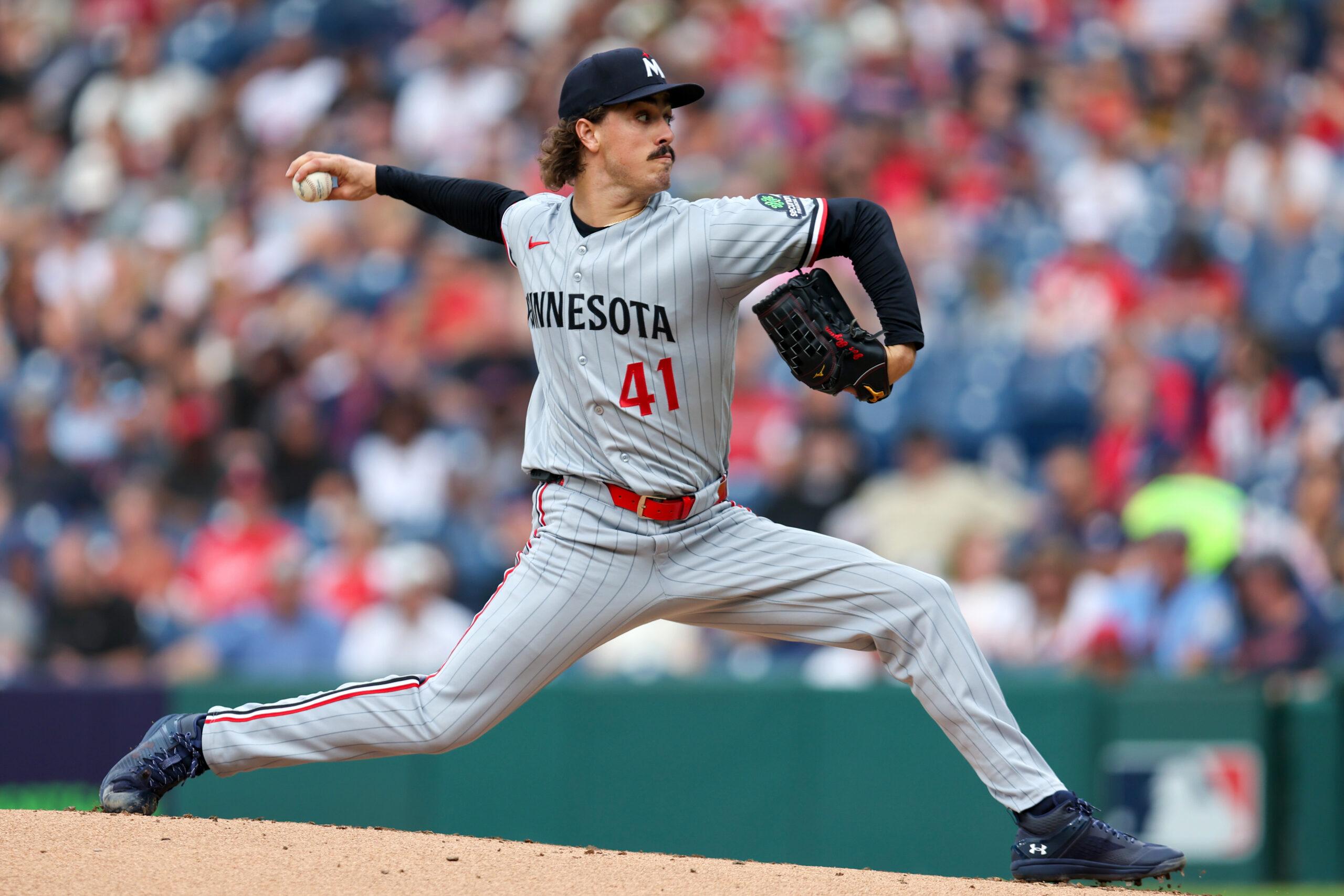
When it’s better to be a buyer: How will the pitching dominoes behind Skubal fall in a loaded market for starters?
Unlike the market for right-handed bats, the starting-pitching market holds no shortage of tantalizing talents, with a ton of depth behind Skubal.
The unquestioned no. 2 name on the market is Minnesota’s Joe Ryan, who surprisingly stayed with the Twins when the team traded 10 players in a historic sell-off at last year’s deadline. Ryan has issues with home run prevention—he allowed six homers and eight runs to Cleveland on July 20—but only five starters in MLB have higher K-BB percentages, and elite swing-and-miss stuff is always in demand in October. Plus, unlike Skubal, he’s under contract for 2027.
Former first-round pick Reid Detmers and rotation mate José Soriano could and should be moved, but Angels owner Arte Moreno has historically refused to authorize a rebuild. Detmers is a lefty with dominant strikeout stuff, and it’s unlikely that his value will ever be higher. The rest of the market remains murkier. Would the Orioles move Trevor Rogers? What value does Mets pitcher Clay Holmes have, with very few whiffs in his arsenal as he comes off of a leg injury? And how much will teams be willing to take a chance on fixing struggling veterans? The Mets’ Freddy Peralta, Toronto’s Kevin Gausman, and San Francisco’s Robbie Ray have excellent track records, to the point where teams should and will be willing to take a chance on them.
The Padres and Nationals are both teetering on the fringes of wild-card contention, and both could badly use some starting pitching help. The Nats traded for Boston’s Connelly Early on Saturday but could continue to look for more immediate pitching help given how little depth they have. If the Astros do decide to buy, they’d fall into the same category. The Cubs and Braves are the two strong contenders most in need of competitive starting pitching, while the Phillies and Dodgers could both look to double down on a strength.
The sheer volume of available pitching should give buyers leverage. If someone meets Detroit’s price for Skubal, that blockbuster could establish the market and accelerate subsequent deals. If not, teams could pivot to Ryan, Detmers, or the next tier of arms without feeling compelled to overpay. In contrast to the market for right-handed hitting, there may be more credible starters available than desperate buyers—and that makes patience a viable deadline strategy.
They’re going to sell, but how much are they going to sell?
The 2026 season has been an unmitigated disaster for both the Mets and the Angels. Neither has any shot at reaching the playoffs. The Mets’ offseason overhaul backfired, and the Angels’ prolonged malaise led to the firing of general manager Perry Minasian in June. Both teams have players who are attractive to other MLB clubs, but how far will they go in tearing down their rosters?
The Mets’ pitching staff should be emptied out between now and August 3. Holmes and Peralta are on expiring contracts and have enough of a track record for other franchises to bet on. Lefty relievers A.J. Minter and Brooks Raley will be in high demand as well. One year after the Mets aggressively pursued relievers and outfielders, they’re likely to be dealing from both positions (including the probable departure of Luis Robert Jr.). That’s the easy part. The hardest question for the Mets is whether they want to trade franchise centerpiece Francisco Lindor or fellow infielder Bo Bichette.

The Mets signed Bichette to a three-year, $126 million deal with an opt-out after this year. That contract is underwater. If the Mets ate part of his remaining 2026 salary, they could probably convince someone to take him. Then there’s the more existential Lindor situation. He and fellow cornerstone star Juan Soto don’t appear to be the closest of friends, even though they maintain a professional relationship on the field. Lindor is under contract through 2031 at $34 million a year, and shortstops of his caliber rarely move at the deadline.
Dealing Lindor, who has been a roughly league-average hitter this year amid multiple injuries, would be a shocking decision, but it wouldn’t be completely unfounded. The Mets are embracing their younger wave of prospects, and a Lindor trade would signal a soft rebuild. It would also end the risk of a bigger clubhouse clash between the Mets’ two best players.
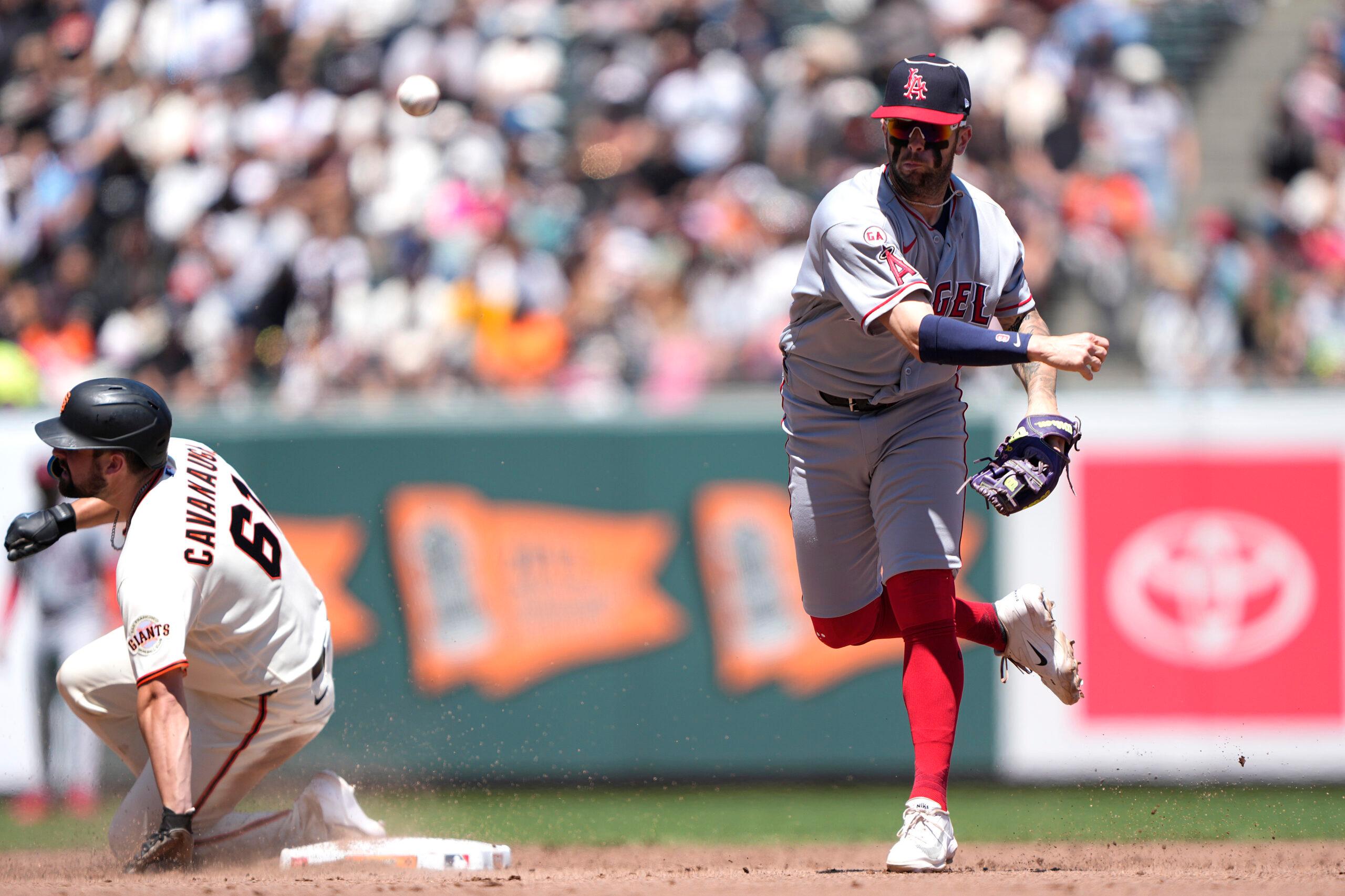
The Angels will probably unload waning power hitter Jorge Soler and bullpen arms Ryan Zeferjahn and Kirby Yates to teams that need cheap pop and midlevel relievers. But they also have younger players at or near their peaks who could also be moved. Zach Neto is 25, plays a decent shortstop, and has been 15 percent above league average with the bat over the past three years. Given the demand for shortstops, his value may never be higher.
But if the Angels are dealing him—or others, including Detmers, Soriano, and enigmatic outfielder Jo Adell—whom are they actually building around? The Halos’ deadline likely comes down to whatever directive Moreno has given to interim general manager John Mozeliak. A veteran of the Cardinals organization, Mozeliak might do a soft-sell, or he might fully hit the reset button. If he does, then Neto and Detmers in particular could fetch a really rich return.
What is each World Series contender’s biggest need? And how badly do they need it?
There are currently 10 teams with World Series odds of +2200 or better (via FanDuel Sportsbook). Here is the biggest need facing each of them ahead of the deadline.
Dodgers: Pitching Insurance
With Blake Snell, Tyler Glasnow, and Shohei Ohtani all off the mound for now, the Dodgers staff is stretched thin. They’ve relied on quality innings from Eric Lauer and Justin Wrobleski to tide them over, but both Roki Sasaki and Emmet Sheehan have struggled enough that the Dodgers should probably add more pitching insurance for October. (Not that they needed healthy starters to go all the way in 2024.)
If the Dodgers want luxury pitching reinforcements, they can shop at the top of the market in the Skubal and Ryan tier. If they want bargain pitching patches, they’ll look for a back-of-the-rotation innings eater to help them load-manage their aces between now and October.
Yankees: Catcher
Austin Wells is slashing .166/.268/.278 in 71 games played. Only the White Sox are getting less from their catchers at the plate than the Yankees are. While Wells’s defensive metrics are still decent, an offensive upgrade could massively improve a lineup that currently lacks Aaron Judge and has often failed to hit with any semblance of consistency in October. New York also needs high-leverage bullpen help, but Wells’s struggles make a catching upgrade a priority. Ryan Jeffers of the Twins and Hunter Goodman of the Rockies remain realistic and long-shot possibilities, respectively.
Brewers: Power
The Brewers may have solved clutch hitting during the regular season, but they haven’t solved playoff offense. The main reason their offense hasn’t translated to October is a lack of power. And while Milwaukee has excellent plate discipline and runs the bases well, the lineup is just 26th in isolated power.
The Brewers have frontline pitching, and their defense remains stellar, so they can prevent runs. But for them to challenge the Dodgers behemoth, they’re going to need more homers.
Braves: Frontline Starting Pitching
Spencer Schwellenbach is throwing again in an attempt to return this season, but the Braves’ starting pitching beyond Chris Sale is taped together and feels very fragile. Atlanta started the season 45-21 but has cooled considerably and is just 15-21 in its last 36 games. While Bryce Elder flashed newfound success early in the season, he hasn’t maintained it. And if the Braves end up in a playoff series, who would be their second starter? Grant Holmes, Reynaldo López, and Martín Pérez aren’t really reliable options. Alex Anthopoulos can either gamble on Schwellenbach’s healthy return or scour the market for a healthy, reliable arm.
Mariners: Offense
Seattle was aggressive at last year’s deadline, trading for both Josh Naylor and Eugenio Suárez. Now it’s new year, same problem for the Mariners: They’re light on offense. A resurgence from Cal Raleigh and a healthy comeback by Brendan Donovan is still by far their best hope at improved slugging. Raleigh has a .569 OPS, and Donovan is rehabbing from a groin injury that has kept him out since May.
Jerry Dipoto will also look outside the organization for offensive improvements. The M’s have gotten nothing from third base, but the market at that position looks a little thin.
Rangers: High-Leverage Relievers
In March, MLB Pipeline ranked the Rangers’ farm system 25th. They don’t have a ton to trade to make a marquee move. And this roster isn’t in need of a major overhaul to compete for the AL West title. Even a first-round bye isn’t out of reach since the AL Central leader is just a few games ahead.
Texas needs bullpen help in a major way. The Rangers rank 23rd in bullpen SIERA this season, and they’re 27th in strikeout rate and 28th in Stuff+. Jacob Latz has shined as a closer, with a 1.69 ERA and more than a strikeout per inning, but the options behind him are lacking, and there’s not nearly enough swing-and-miss.
Phillies: Outfield
The Phillies are near the top of baseball in pitching WAR, but their outfield has been a major flaw all year. Even though Brandon Marsh was an All-Star for the first time, Philly’s outfield ranks second to last in fWAR and last in wRC+. They don’t have any reliable starters beyond Marsh, so they may have to shop in a lightly stocked aisle.
Rays: Power
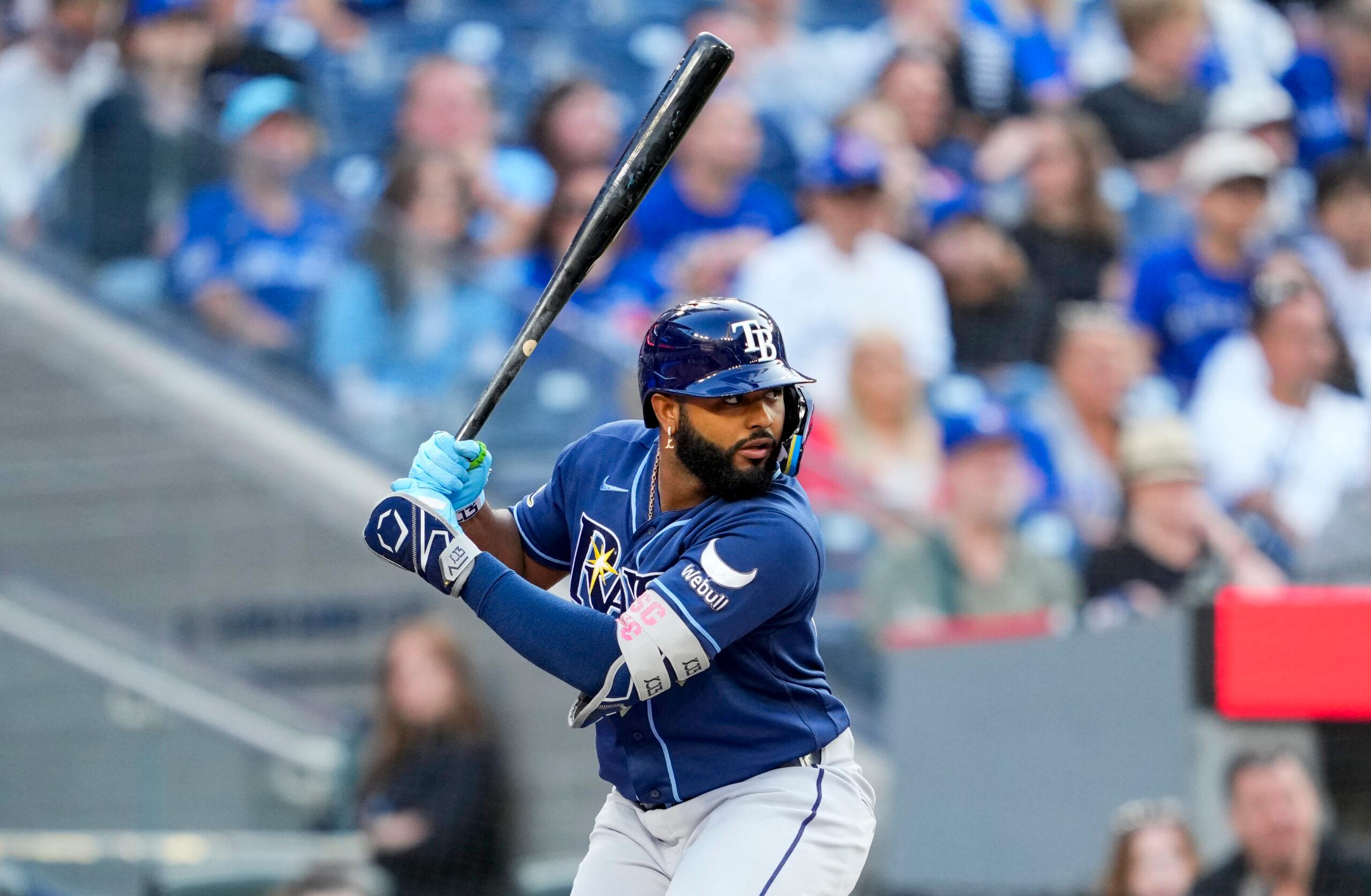
In the power department, the Rays have Junior Caminero and little else. Even though they have one of the league’s best home run hitters, they’re 27th in isolated power. As much as they’ve won by embracing ground-ball and line-drive hitters, the long ball is still paramount in October, so the Rays could stand to diversify the skills in their lineup.
Red Sox: Up the Middle
Boston’s 15-game win streak propelled the team into the heart of the American League playoff picture. With Ranger Suarez back and Garrett Crochet theoretically due to return eventually, the Red Sox can compete with any roster from a pitching perspective. However, the Sox rank in the bottom seven in fWAR at three different positions: catcher (24th), shortstop (26th), and second base (27th). Boston needs to get a lot better up the middle—especially on defense—if it wants to truly contend. The Red Sox traded from their starting pitching depth on Saturday, when they sent Connelly Early to the Nationals for Curtis Mead, but I don’t think they’re done bolstering their infield. Bob Nightengale reported on Sunday that they have interest in Peña and Neto.
Cubs: Pitching, Pitching, and More Pitching
Of the 10 teams on this list, nine have pitching staffs in the top 16 in fWAR. The Cubs are the outlier, at 27th. Chicago lost Cade Horton for the year after two starts, and Justin Steele still hasn’t thrown a pitch for them in 2026. (If he returns, it will be as a reliever.) Ben Brown hasn’t pitched in a month, and Matthew Boyd has also lost a lot of time to injury. The lineup is deep enough to win the National League, but the Cubs need a frontline starter (or two) if they want to win a battle of run prevention against teams like the Dodgers, Brewers, or Phillies in October.