Does the Hall of Fame Need a Steroid-Era Redo?
The Baseball Hall of Fame is about to welcome three new members, but some strong steroid-era candidates (like Kenny Lofton) are still excluded. Should players who got jobbed by backlogged ballots at the peak of Cooperstown’s PED pileup be granted a second chance at a plaque?

This weekend in Cooperstown, New York, two talented center fielders—Carlos Beltrán and Andruw Jones—will officially become Baseball Hall of Famers, alongside slugging second baseman Jeff Kent. Kenny Lofton will not. Lofton played center, too, and was teammates with Jones and Kent. But he won’t be with them and the legion of living Hall of Famers who’ll attend this Sunday’s induction ceremony. Lofton had Cooperstown-caliber stats. Unfortunately for him, he also had horrible Cooperstown timing.
On the field, few had better timing—and better times—than Lofton, the lefty leadoff speedster who played for 11 teams over 17 seasons (10 of them with Cleveland) from 1991 through 2007. Before the Astros drafted him in 1988, Lofton made a Houston scout do a double take when the accomplished college basketball player sprinted from home to first in 3.85 seconds in an intra-squad baseball scrimmage. “That’s the fastest time I’ve ever gotten on anybody,” said the scout, who noted that Lofton had “slowed up the last three steps.” When Lofton was routinely robbing homers, swiping 60-plus bases, and batting comfortably above .300 during his mid-’90s prime, he rarely arrived at the wrong moment.
When it came to hitting the Hall of Fame ballot, though, Lofton couldn’t have picked a less opportune time. In 2013, the year he became eligible for the Hall, the ballot was packed with fellow first-timers Barry Bonds, Roger Clemens, and Sammy Sosa, as well as holdovers Mark McGwire and Rafael Palmeiro. The specter of steroids saw to it that none of those five ever got in via the writers’ ballot: Bonds and Clemens topped out at 66.0 and 65.2 percent, respectively, well short of the 75 percent threshold for induction. But apart from Palmeiro, who fell off after four tries, they all stayed on for 10 years and absorbed a significant number of votes, as did later luminaries whose PED use was well documented (Manny Ramirez, Alex Rodriguez) or alleged (Gary Sheffield). Meanwhile, Lofton went one and done: He was named on only 3.2 percent of ballots, below the 5 percent needed to return.
“I just was hoping I’d at least get 5 percent,” Lofton remembers. “Because then every year you get a chance to get discussed.”
Instead, Lofton, like several other stars of his era whose reputations were untainted by PEDs, paid a double penalty for playing when they did. First, their performance probably suffered from competing against and being compared with chemically enhanced contemporaries while they were active. Then, five years after they retired, they drew the short straw in Hall of Fame voting when they got crowded out by a historic pileup of players whose PED pasts prevented them from gaining entry to the Hall but not from repeatedly appearing on the ballot.
From 2013 to 2022, when Bonds, Clemens, and Sosa were up for election again and again, the following players washed out after one ballot (in chronological order): Lofton, David Wells, Steve Finley, Luis Gonzalez, Carlos Delgado, Brian Giles, Tom Gordon, Jim Edmonds, Jason Kendall, Jorge Posada, Mike Cameron, J.D. Drew, Johan Santana, Johnny Damon, Jamie Moyer, Lance Berkman, Roy Oswalt, Miguel Tejada, Joe Nathan, Jonathan Papelbon, and Mark Teixeira. (Bernie Williams, Nomar Garciaparra, and Tim Hudson appeared on two ballots.) If we start the clock in 2011, when Palmeiro was first up for election, we can add John Olerud and Brad Radke to the list. Or if we rewind to 2007, when McGwire and José Canseco debuted on the ballot, we can add Bret Saberhagen, Tony Fernández, Chuck Finley, David Cone, Matt Williams, Kevin Appier, Robin Ventura, Ellis Burks, plus two-and-outer Orel Hershiser.
Most of those guys wouldn't have gotten in regardless—the majority are firmly in the “Hall of Very Good” category—but some of the stronger contenders may have missed out on the consideration and support they otherwise would have merited because the ballot was so backed up. “I got caught up in the shuffle,” Lofton says.
Maybe, then, the deck that was stacked against Lofton and others should be reshuffled. There is one way that the Hall could quickly rectify the oversights of the 2010s and early 2020s: a steroid-era redo, in which a select group of players would be reinstated to the ballot for a limited period. Unlike that glaringly anomalous span of packed ballots, it wouldn’t be unprecedented. And the time is as ripe for it now as it was rotten for Lofton in 2013.
Admittedly, making the Hall isn’t “just timing,” as Lofton once said of hitting. For one thing, you (usually) have to have had what a wide swath of voters would consider a Hall of Fame–caliber career. And it helps if your stats tell a quickly digestible story. Beltrán and Jones each hit 430-plus home runs, among the highest totals at a defense-first position; Beltrán posted the highest stolen-base percentage and playoff OPS of all time, while Jones leads all outfielders in career fielding runs and was the youngest guy to go deep in the World Series. Kent, of course, has a signature stat—he hit the most home runs of any second baseman—and a shiny bauble that Beltrán, Jones, and Lofton never added to their trophy cases: an MVP award.
Relative to this year’s Cooperstown trio, Lofton lacks a hook. He was merely one of the best baserunners and defensive outfielders ever, and those attributes, coupled with his patience, power, and productive decline phase, give him a Hall of Fame résumé. By Baseball Reference WAR and JAWS—a WAR-based system developed by Hall historian Jay Jaffe that compares players’ peak and career values to established Cooperstown standards at their positions—Lofton slots in right between Beltrán and Jones, among the all–top 10 at the position in both categories. Save for the still active Mike Trout, who’d be Cooperstown bound if he retired today, Lofton is the lone center fielder among the top 14 at the position in JAWS who hasn’t been admitted to the Hall. And more than the stealthiness of his stats, his itinerant team hopping, or voters’ bias against center fielders, Lofton owes his exclusion to steroids—the ones that were used by other players whose controversial candidacies created an unparalleled ballot backlog just as he joined.
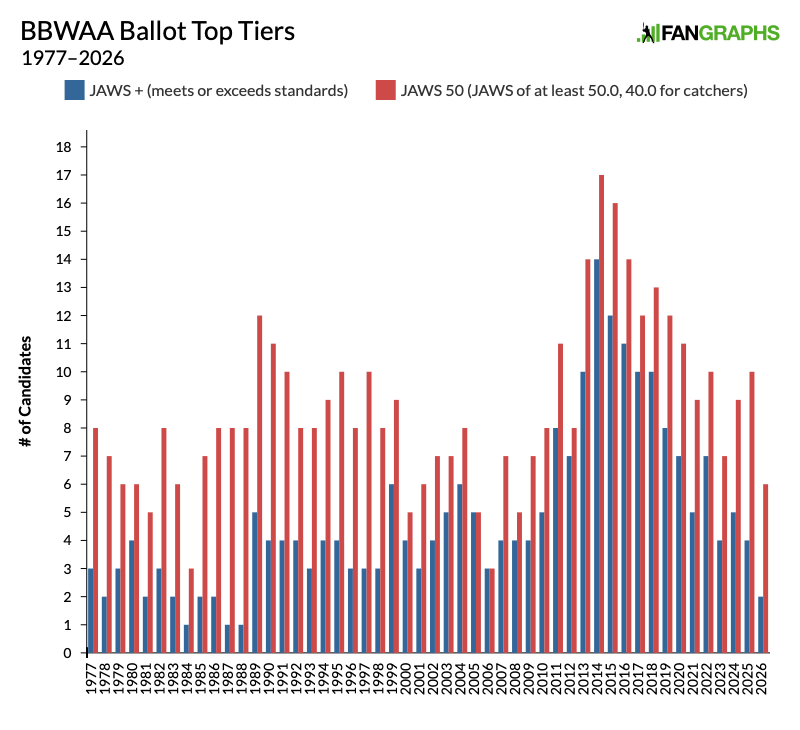
The graph below provides a visual representation of what Lofton and his ilk were up against. It shows the strength of each class of Cooperstown candidates in what one might call the modern era of Hall of Fame voting—starting in 1968, when the BBWAA permanently moved to annual voting and removed runoffs, and extending to the prospective 2027 lineup—as measured by the average score of the top 10 candidates and the 10th-best candidate according to JAWS and another Hall-centric evaluation framework, Michael Mountain’s BOOG. JAWS is based on wins above replacement, but BOOG—which stands for “better than other ordinary guys”—is based on wins above average, a higher bar that explains why BOOG’s blue lines track below JAWS’s red lines. Both systems tell a similar story about Lofton’s lousy luck.
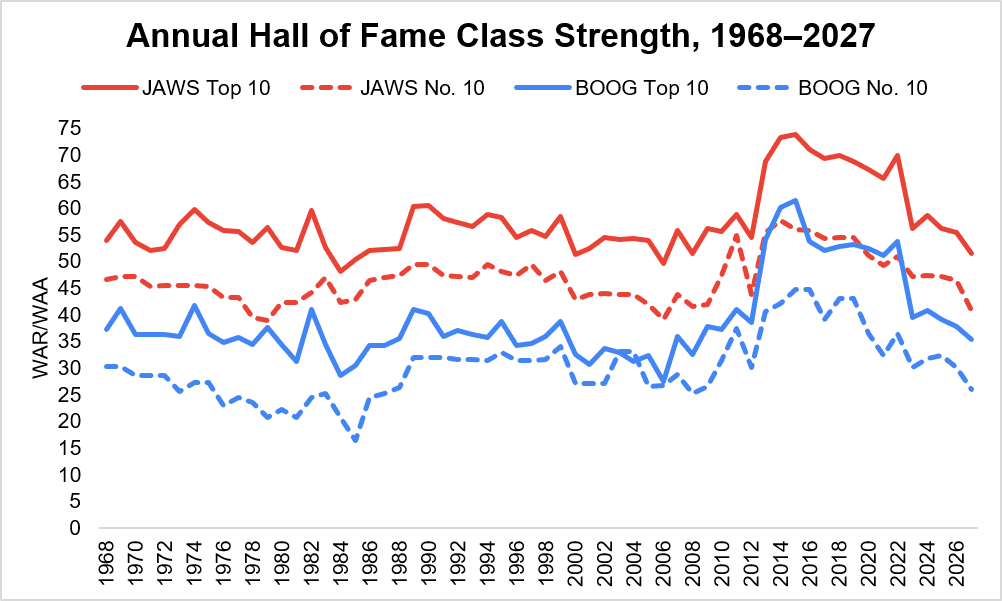
For most of this nearly 60-year period, annual fluctuations fell within a fairly constrained range. Then came the traffic jam that swallowed Lofton and other Hall hopefuls—most notably Edmonds, Santana, Hudson, and Nathan. During that persistent spike, there were more statistically qualified candidates than there was space on voters’ ballots, which accommodate no more than 10 names. As Jayson Stark wrote in 2013, “For two decades, I’ve always studied the names on my ballot and looked for reasons I should vote for a player. Suddenly, this year, I was studying the names of great, deserving players and trying to figure out which of them not to vote for because I only could vote for 10.” Nobody got in.
Lofton says that he was never tempted to take PEDs to keep up with the juicers. Partly, perhaps, he abstained out of pride in what he could accomplish clean. “It wasn’t like they overpowered me,” he says. “I held my own.” Then again, it wasn’t as if his onetime teammate Bonds was being blown away before he bulked up. Some great players were willing to break rules to become even better. “I felt like I had better morals than that,” Lofton says. “I was raised right, and I wasn’t raised to do something wrong. And I respected the game enough to not want to do it that way.”
Although he’s had harsh words for steroid users in previous voting, uh, cycles, Lofton is currently casting himself as a victim of circumstance, not of any particular party.
“The players who got on the ballot during that time, 2013, I don't even blame them, because they didn’t vote,” he says. “It was the media who did it, but I don’t even blame them … because they were stuck between a rock and a hard place. The media guys who were voting, I felt sorry. I’m like, ‘Geez, what are you guys going to do?’ You got some guys who had their name potentially stuck up with the steroids. … And then on top of that, you had the guys who were already on the ballot, that the media guys had to say, ‘Wait a minute, this guy is close, so now we got to use some of our votes to help boost them.’ … And then the other guys like myself, I became the man out. … And that's why I don't even say anything or go off or whatever, because I'm like, ‘Shoot, these guys were stuck.’”

More on the Baseball Hall of Fame
Now Lofton himself is stuck. When a player falls off the BBWAA ballot, his only path to a plaque is via the Hall’s era committees (formerly known as the veterans committees). The various incarnations of these committees have elected more than half of all Hall of Famers, including a disproportionate number of the statistically dubious ones. Over the past decade, more than a dozen players have gotten in that way: Alan Trammell and Jack Morris (2018); Lee Smith and Harold Baines (2019); Ted Simmons (2020); Minnie Miñoso, Tony Oliva, Jim Kaat, and Gil Hodges (2022); Fred McGriff (2023); Dick Allen and Dave Parker (2025); and Kent (2026). Some of those selections were questionable; others were long overdue. Lofton would be one of the latter, were he to join the list.
However, he has a hard road ahead. In 2022, the Hall reorganized this second line of elections into a rotation of three committees, each with its own distinct candidate pool: contemporary-era players (1980 to present), contemporary-era non-players, and classic-era figures (pre-1980). These committees take turns: Each year, the multitude of candidates in the bucket in question is culled to only eight who appear on the ballot. And because the members of each committee (a 16-person assemblage of Hall of Famers, executives, media members, and historians) are allotted only three votes apiece, the ballot math makes it difficult for multiple committee-nominated players to draw 75 percent support. Further changes announced in 2025 specify that candidates who receive fewer than five votes in a committee election must skip at least one turn through the rotation; if they fail twice to garner that total, they’re gone for good. For Lofton, this format imposes a formidable barrier to entry.
Five of the 10 batters most statistically similar to Lofton, as calculated by Baseball Reference, are Hall of Famers. Ichiro Suzuki ranks 10th on that list; Tim Raines ranks second. In December 2012, former New York Post columnist Ken Davidoff, one of only seven voters who publicly revealed a vote for Lofton, wrote, “Raines reminds me of Lofton. Or maybe that should be Lofton reminds me of Raines.” One crucial difference: Raines reached the BBWAA ballot in 2008, five years before Lofton and the steroid-era onslaught. That timing allowed him to gain a foothold on the ballot before it became overcrowded, and he ultimately parlayed that opening into election on his 10th and final attempt. Scott Rolen, another player with a similar statistical case, first appeared on the ballot five years after Lofton, in 2018. Although only 10.2 percent of voters checked the box next to his name initially, he hung around and gradually gained support until he cleared the 75 percent minimum in 2023, the year after Bonds, Clemens, and Sosa exhausted their eligibility.
Because Lofton came along not in 2008 or 2018, but in 2013, his Hall of Fame bid was wiped out immediately. As a result, he had no opportunity to become a sabermetric cause célèbre backed by champions who passionately campaigned on his behalf, as did players like Raines, Rolen, Bert Blyleven, and Larry Walker. And it’s hard for him to build that kind of momentum today. If Lofton had clung to the BBWAA ballot, then, as long as he was listed, “every year you get to talk about me,” he says. “Now it’s every three years. And if you don’t get on that ballot of eight, it’s going to be six years. … They talk about the WAR and how high my WAR is. But the thing about it is none of that means anything if I can’t get on that list of eight.” Without reappearing on the ballot, he continues, “I’m never being compared to an Ichiro or to a Tim Raines. … It’s almost like the lotto. You’ve got to be in it [to win]. So in this [case], you’ve got to be on it to get a chance to get in.”
Even now, Lofton continues to be ballot blocked by prominent PED users. Bonds and Clemens appeared (and bombed) on the contemporary-era ballot last year, along with Kent (the only guy who got in), Delgado, Don Mattingly, Dale Murphy, Sheffield, and Fernando Valenzuela. (Mattingly and Murphy have now been up for election by one mechanism or another 19 times.) The next contemporary players octet won’t be considered until December 2028, for inclusion in the class of 2029. And by then, even more players will be competing with Lofton for those scant slots. “You’re going to keep adding players who left the writers’ ballot to go to the veterans’ ballot,” he says. “So each year, within that three years, you’re going to add maybe 20-something guys to the veterans’ again. And you’re only doing it every three years. That’s the real tough part about that.”
It is tough. But it’s not intractable. History has handed the Hall an out, if the Cooperstown powers that be want to use it to get guys in.
In 1984, 11 players who had fallen off the Hall of Fame ballot over the preceding five years after failing to clear the 5 percent threshold were reinstated. As one account explained, “The Board of Directors of the Hall of Fame, before approving such a measure, ordered the BBWAA to review the credentials of those who received less than five percent in the last five years. Of the 150 who fell into that category, 11 were approved for a ‘second chance’ by the BBWAA Screening Committee.” This onetime ballot amnesty came about largely because Bob Broeg, who covered the Cardinals for decades for the St. Louis Post-Dispatch and won the J.G. Taylor Spink award (now renamed the BBWAA Career Excellence award) in 1979, really liked former Cardinal Ken Boyer. At the time, players were entitled to remain on the ballot for 15 years, unless they came in under 5 percent in consecutive years, as Boyer did in 1978 and 1979. His removal had been “routine and within the rules then in force,” but Broeg protested anyway.
None of the candidates selected by the screening committee garnered much support, although two of them, Ron Santo and Dick Allen, eventually got in via other means. Boyer, a seven-time All-Star and somewhat head-scratching selection as 1964 NL MVP, has now been up for election via the BBWAA ballot or committee system 22 times (most recently as part of the 2025 classic era of baseball that included Allen and Parker), to no avail.
So, there: That’s precedent. Now, one could argue that restoring players to the ballot because an influential writer had a Boyer in his bonnet wasn’t good precedent, any more than it was for the Hall to admit so many of Frankie Frisch’s friends. The Hall has to have high standards to retain its cachet, and eligibility restrictions wouldn’t mean much if they could be easily lifted. However, while Lofton may be the Boyer to my Broeg, this suggestion isn’t purely the product of one writer stumping for a pet player. For one thing, that series of steroid-stuffed ballots constituted a genuine outlier, in contrast to the unremarkable stretch of Cooperstown classes that preceded that 1984 measure. For another, I’m not alone; there are (probably) dozens of us.
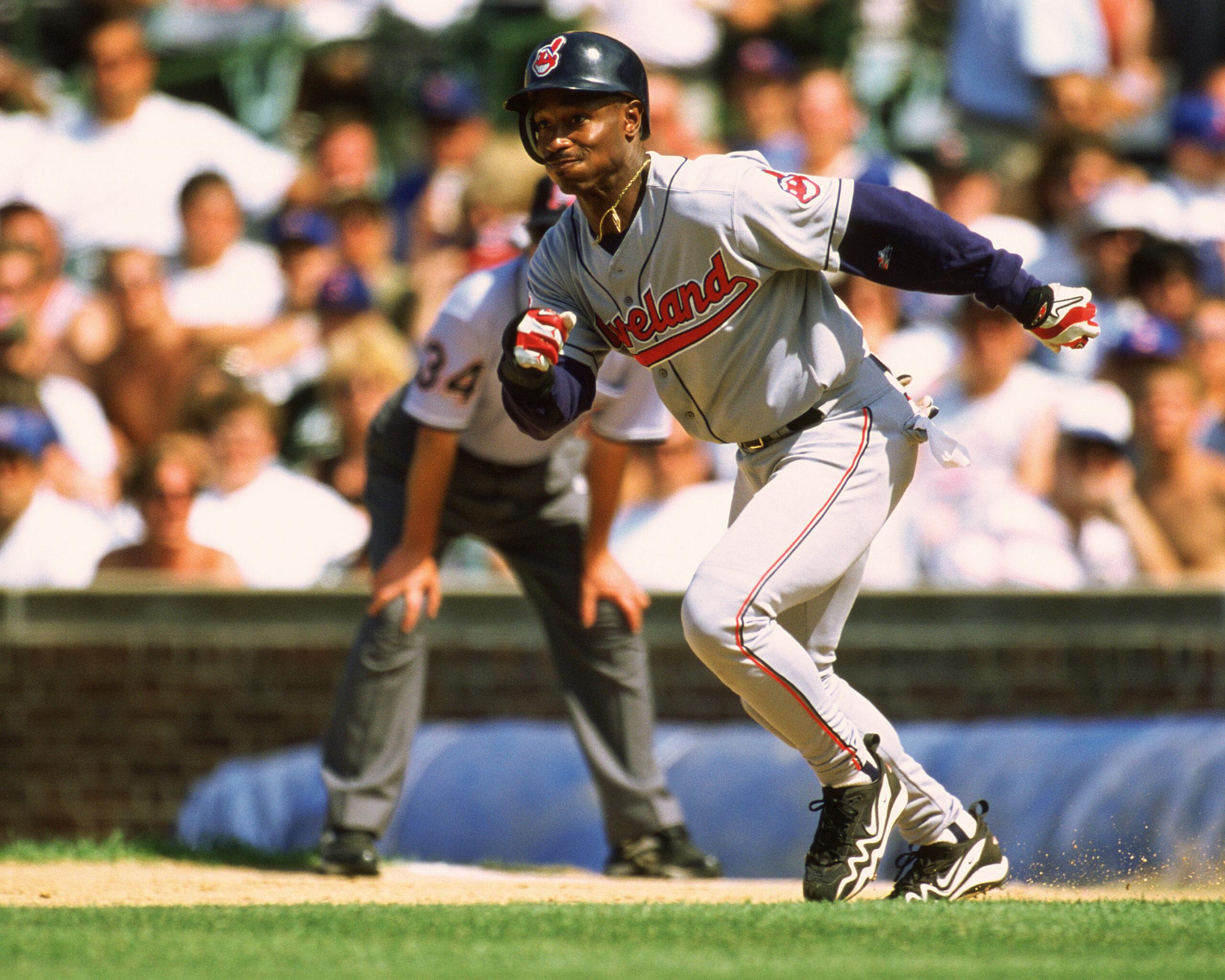
Kenny Lofton runs the bases during a Cleveland Indians game against the Chicago Cubs during the 1998 season
“I’d definitely be in favor of this idea,” says Stark, now a senior writer for The Athletic, who won the Career Excellence Award in 2019 and served on the contemporary-era committee last year. “As we look back over the last 15 years or so of ballots, it's clear we're talking about a period filled with some of the worst one-and-dones in the history of BBWAA voting. You know the names. I think about them all the time—especially every winter when the era committees have to consider many of them.” Stark continues, “If we took some of the overlooked players from that time and gave them a second look on the BBWAA ballot, with a different level of candidates around them and a different prism from which we could now view their careers, their vote levels might also look very different.”
Stark says that he raised the idea at a long-ago BBWAA meeting, and “it went nowhere. But members and voters have a different perspective on the Hall of Fame now. So it might have a better chance of success.”
The San Francisco Chronicle’s Susan Slusser says, “I’m always for anything that gets more players considered.” Slusser was BBWAA president when Lofton (and Bonds, Clemens, and Sosa) became eligible. “No one was voted in because of the chaos that ballot seemed to present,” she says, “and BBWAA members certainly have discussed the resulting ballot backlog created and even made proposals to the Hall to help with that, including changes to the number of vote slots allowed per ballot. Some wanted no limits at all, but a committee I chaired made recommendations for a slightly expanded ballot. The Hall chose not to implement that request.” Slusser, who has been a contemporary-era committee voter and has also helped decide which players appear on the ballot (including last year’s), adds, “I’ve always said that the ‘steroid era’ is underrepresented in the Hall.” However, she points out that “all of these things are up to the Hall of Fame, not the BBWAA nor the ballot committee. Perhaps some voices suggesting this would help!”
One voice who’s recently suggested it belongs to The Baseball 100 author Joe Posnanski, who proposed it in passing in his newsletter last November. “I think enough time has passed that we can look back at those insanely clogged and confusing ballots from 2013-2021, when nobody knew what to do, and say: ‘OK, yeah, some players were not given a fair shake. Let’s bring them back,’” Posnanski wrote.
“I 100 percent think that there should be a supplementary ballot to give any number of players like Kenny Lofton and Jim Edmonds and Johan Santana a fair shot,” he says now. “Those 2010s ballots were so stacked, and there was no direction, and those players, through no fault of their own, had no real chance to have their cases heard. Unfortunately, I don’t think a supplementary ballot would do much good because none of those players would get elected on a onetime ballot. And I just can’t see them putting players back on the ballot for the extended period of time that would be necessary for them to become real candidates.”
Jaffe, a senior writer for FanGraphs and author of The Cooperstown Casebook, also supports the idea of a do-over:
Just as advanced statistics helped to revive the Hall of Fame case of Ted Simmons, I think there are several other candidates who befell the same one-and-done fate who would benefit from similar career reappraisals before the voters. I think that’s particularly true for a handful of starting pitchers from the 1980s onward who compare favorably to 2018 honoree Jack Morris but didn’t have the 250 or 300 wins that it took to get the seal of approval from BBWAA electorates over a two-decade span. David Cone, Orel Hershiser, Dave Stieb, and Bret Saberhagen come to mind as examples. I think it’s also true for players from the 1970s onward whose defensive contributions were underappreciated at the time of their BBWAA candidacies, such as Dwight Evans, Bobby Grich, Keith Hernandez, and Lou Whitaker, and for many position players who were crowded out by the backlog created by the electorate's polarization regarding PED-linked candidates, such as Kenny Lofton, Jim Edmonds, and Johan Santana.
Whether it’s the Hall itself or the Historical Overview Committee that builds the Era Committee ballots, it feels as though certain former players' candidacies are endlessly recycled at the expense of chances to review the careers of some of the aforementioned players. The Hall’s visibly heavy hand at appointing Era Committee voters who have an apparent tilt for or against certain candidates and its recent rule that could end the eligibility of certain candidates who fare poorly on multiple ballots only furthers the impression that at a time when the process should be more open, it's instead becoming more closed off. How many more times do we need voters to weigh in on Don Mattingly, Dale Murphy, and Steve Garvey before the Hernandezes and Loftons get their shot?
Not everyone agrees. Another Career Excellence Award winner, Ross Newhan, who at 89 is one of the few living people who was eligible to revote on Boyer in 1984, simply says, “I think correct decisions were made and I see no reason for a reinstatement.” Writer Jack O’Connell, a longtime member of the BBWAA’s leadership who has voted on or helped craft several era committee ballots, reported on the 1984 initiative and thinks no more highly of BBWAA ballot mulligans now than he did then:
I would be opposed to any such measure, as I was in 1984 when Bob Broeg’s whining got it passed. Did not accomplish anything. None of those players got elected. The 5 percent rule that keeps a player on the ballot was designed at the time to aid candidacies. We now have around 400 voters, which means all a player needs to remain on the ballot is 20 votes. Twenty out of 400! I voted for some of the players you listed (Cone, Santana, Delgado, e.g.) and had to accept the fact that not enough of my colleagues agreed. The rules for staying on the ballot could not be more liberal. Yes, there were some thick ballots in those years, but if you firmly believe a certain player belongs in the Hall of Fame, you find a way to vote for him. Not all writers vote for the maximum 10, so there was plenty of room for those players to get votes.
The amnesty idea hasn’t entirely lain dormant since the ’80s. According to some sources, including The Cooperstown Casebook, there was serious discussion of restoring four players (Larry Bowa, Simmons, Bill Madlock, and Al Oliver) to the ballot in 1996, although Stark and O’Connell say that the BBWAA never got as far as petitioning the Hall of Fame’s board. Regardless, if there’s any time to give some steroid-era rejects a second bite at the ballot, it’s now. The PED players have all exhausted their BBWAA-ballot eligibility, save for A-Rod, who’s used up half of his. This past class was one of the weakest in decades, and the upcoming class, which features only one potential first-ballot inductee (Buster Posey), is no stronger.
However, the Hall has already thrown cold water on the idea. Hall of Fame spokesman Jon Shestakofsky shares the following statement:
The National Baseball Hall of Fame and Museum has long entrusted the Baseball Writers' Association of America with the responsibility of electing recently retired players to the Hall of Fame, and we believe the BBWAA has served that role exceptionally well over many decades. The standards for election to the Hall of Fame are intentionally rigorous, and the bar for induction remains very high. There are no plans to modify eligibility rules or voting procedures for any candidates, and the Hall remains confident in the existing election processes, which include the opportunity for any players not elected through the BBWAA process to be considered by the era committee system.
In 2014, the Hall reduced the maximum length of a stay on the BBWAA ballot from 15 years to 10, which was widely viewed, rightly or wrongly, as an effort to clear the ballot logjam and keep known PED users out of Cooperstown. But for now, at least, it seems that supplying some special dispensation for players who may have paid a steep price for that ballot bind is a bridge too far for the Hall. More tough luck for Lofton.
Kent, the Hall of Famer–elect, hit the ballot in 2014 and, unlike Lofton, mustered enough votes to stay on for 10 years. (His support peaked at 46.5 percent in his final year of eligibility.) He might have fared even better without the competition from otherwise overqualified PED pariahs (including Bonds, whom he played with for six seasons), although the advanced stats aren’t as kind to his case as they are to Lofton’s.
On the verge of his induction, Kent isn’t comfortable opining on whether some of his contemporaries who were quickly banished from the ballot deserve a second look. “I don’t think I have the clout yet to really give an answer to say who deserves to be in there or not,” he says, adding, “I’m looking forward to forging some relationships with current Hall of Famers to get an understanding of what their perception of a Hall of Famer is.” However, he allows, “I do know that there’s some great players out there that probably deserve better recognition for being great in their era.” As for Lofton, his teammate on the 2006 Dodgers, Kent says, “He was a heck of a player when we played.”
Lofton prefers for others to make his case for him. “It’s hard for me to talk about,” he says, adding, “I don’t want to come across bitter or anything. … If you try to campaign for yourself, it’s a problem. And if you kind of get mad and say bad things, that’s a problem. So I feel it’s a lose-lose for me. … Yes, I would love to talk about it, but I don’t go out and start blabbering about the Hall of Fame. The only time you hear me mention it is if someone asks me about it.” (I’m not the first to do so.) Here’s his appeal: “All I ask for people to do is compare me to people who are already in the Hall of Fame. And if they can just do that—you know, everyone knows I want to be in that elite category. … I just feel like I would want to be considered as one of the top players in the game of baseball for my position.”
For the foreseeable future, he’ll have to content himself with widely being considered one of the best hitters who isn’t in the Hall, along with the likes of Bill Dahlen, Whitaker, Grich, Evans, and Graig Nettles. On some level, Lofton’s exclusion rankles more because by the time he was up for election, voters had the tools to appreciate his complete production. (In his pro-Lofton Hall of Fame column, Davidoff liberally cited WAR and JAWS.) If we want to be cynical, the Hall probably benefits from the existence of a select group of snubs whose cases can be endlessly litigated, thereby bringing more attention to the institution.
But it would benefit, too, from the inclusion of Lofton, a well-above-average hitter who stole the most bases of anyone who debuted in the bigs after 1985, and who was good enough with the glove to push Andruw Jones—who’d be stationed nowhere except center from 1998 through 2008—to right field when they shared a lineup on the ’97 Braves. And, furthermore, who was never known to cheat (unlike steroid users or Beltrán, who helped orchestrate the Astros’ sign-stealing scheme) or, off the field, to be accused of battery (unlike Jones, Bonds, Santana, Giles, and other candidates from recent, scandal-strewn classes).
Despite his success, Lofton had something of a star-crossed career. His best season, on a rate basis, was in strike-shortened 1994, when he led the AL in Baseball Reference WAR. “A baseball strike now might hurt Kenny Lofton the most,” read the July ’94 headline of one newspaper story, which included the kicker “Kenny Lofton is enjoying the kind of summer that puts guys in the Hall of Fame.” An unabridged campaign could have helped him. A championship might have, too, but Lofton never won one in his 11 trips to the postseason.
“Kenny Lofton was the unluckiest player in MLB history,” proclaims the title of a Secret Base video published this month, which focuses on his playoff misfortunes. (An accompanying post, perhaps a bit hyperbolically, dubs Lofton’s “the most torturous career in MLB history.”) “Oh man, I had a lot of chances, boy,” Lofton says. “Oh my goodness. … We got to the point where all we need is some breaks here and there, and who knows, I would have had two or three championships.”
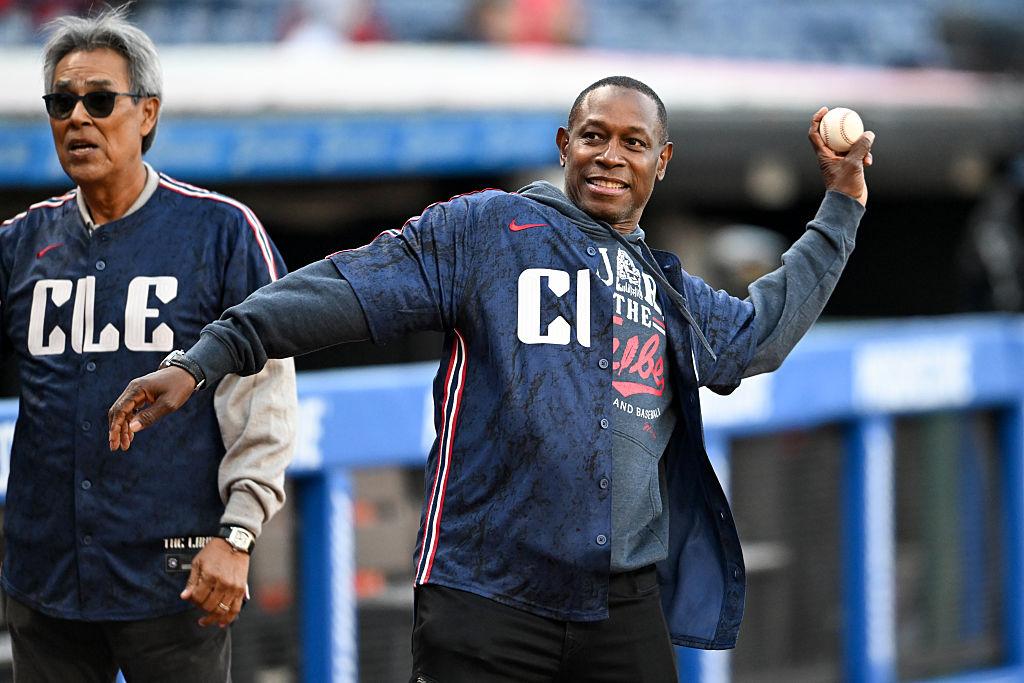
Lofton prepares to throw a ceremonial first pitch before a game between the Kansas City Royals and the Cleveland Guardians on April 12, 2025
Lofton, who weighed 3 pounds at birth and was raised in the projects by his widowed grandmother, had to earn his place in baseball. Because his college basketball career drastically curtailed his amateur baseball experience, he didn’t establish himself in the big leagues until he was 25—when he posted a 6-WAR season months after Houston traded him (and Dave Rohde) for Willie Blair and Ed Taubensee, who went on to amass a combined 0.2 WAR for the Astros. Somehow, he still finished second in AL Rookie of the Year voting to Milwaukee’s Pat Listach. “For some reason people didn’t want to believe this kid could be that good when he came into the league,” Cleveland GM John Hart said in 1994. “Last year, he didn’t make the All-Star team and really felt bad about it. That happened after he didn’t win Rookie of the Year. But now people are starting to see how exceptional a player Kenny Lofton is.”
Twenty years later, though, not enough voters saw how exceptional he was even on a filled-to-the-brim ballot. And now they can’t look again, unless the Hall steps in. “Everything is out of my hands,” he says. “I can’t put no more stats up. I can’t somehow get a few more at-bats and hit .300 and not .299 career.” That’s frustrating for a player who always believed he could will and work his way to success. Whenever he had doubters early in his career, Lofton recalls, “I just said, ‘When my time comes, I’m going to take advantage of it.’ And I think I did that. But, you know, when you look back, you’re like, ‘Dang, did I do enough? I don’t know.’”
After his final playoff defeat, in his 2007 swan song with Cleveland, Lofton said, “I got the opportunity, and it didn’t work out.” Technically, the same could be said of his Hall of Fame candidacy, but one opportunity is very different from 11. Perhaps his second opportunity will come—hopefully, for the 59-year-old Lofton’s sake, while he’s hale, hearty, and able to enjoy the honor, unlike posthumous inductees such as Santo, Miñoso, and Allen.
I don’t care nearly as much about the Hall of Fame—specifically, who has a plaque there—as I used to. There are so many moral and statistical inconsistencies in who has been anointed—steroid users are out, but Bud Selig sailed in—and so many more rigorous, holistic ways we can rank, quantify, and celebrate baseball excellence that contemplating plaques mostly makes me weary and demoralized. In fact, I’ve opted not to vote since I became eligible to in 2021.
However, Lofton’s case cries out for reconsideration, as might those of other passed-over players from his era who compare pretty favorably to enshrined peers at their positions. Channeling another legendary speed demon known for referring to himself in the third person, Lofton concludes, “I can only say, ‘Well, Kenny did what he’s supposed to do. Lead off, raise havoc on the basepaths, and play good outfield. That’s what I did. So if that’s not good enough for the Hall of Fame, I just got to keep walking.”
Thanks to Michael Mountain for research assistance.
An earlier version of this piece misstated when Rolen first appeared on the ballot.