The 2026 World Cup Was a Distinctly American Contradiction
“For just a few seconds, we can let ourselves share in this moment together”The 2026 World Cup Was a Distinctly American Contradiction
“For just a few seconds, we can let ourselves share in this moment together”
I’ve spent the past month thinking a lot about Morgan Freeman.
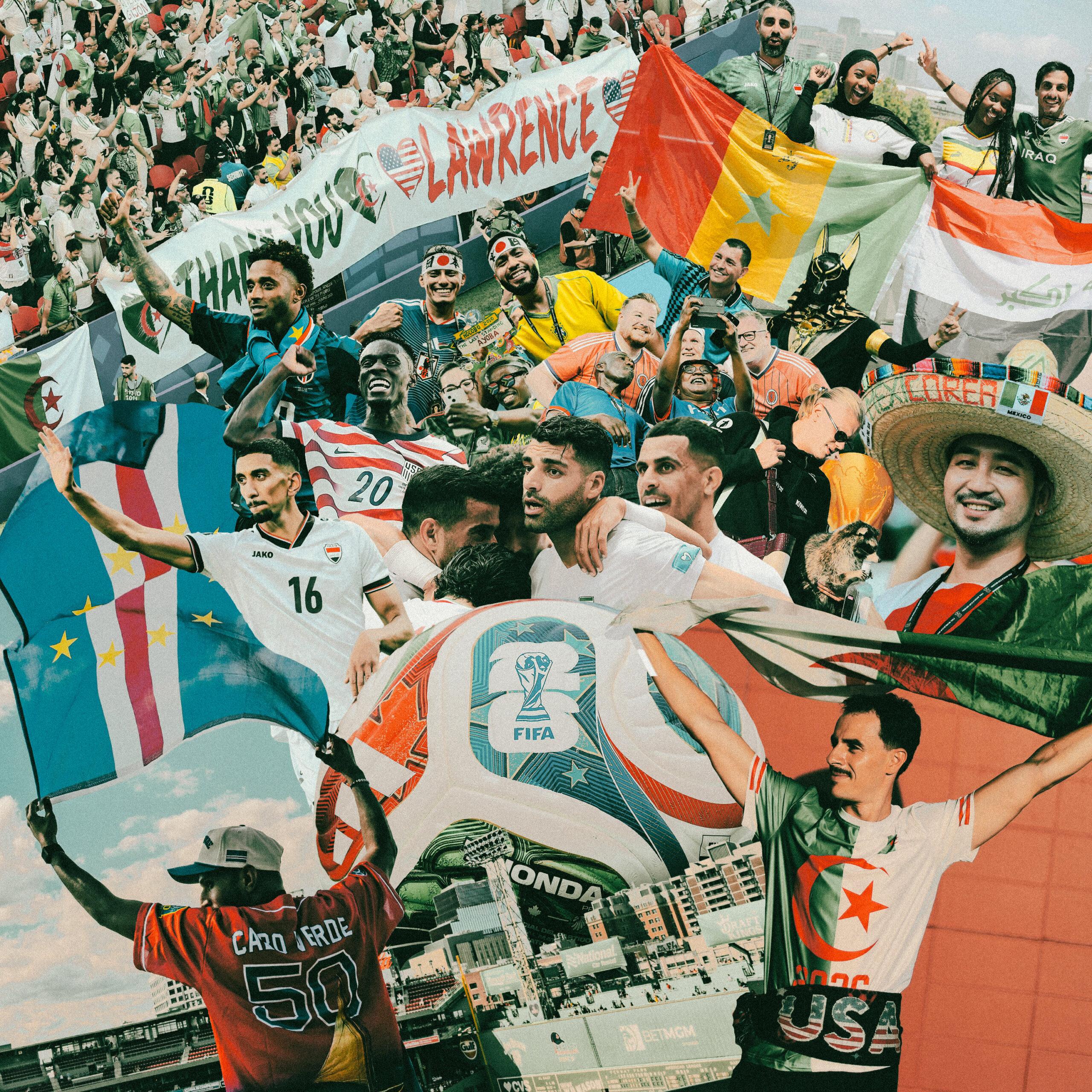
I thought about him while watching Scotsmen dance with Haitians in Boston; while watching Kansans adopt Algerians in Lawrence; while seeing Erling Haaland, the apparent progeny of a ballet dancer and a Norse god, become an honorary Texan. Freeman was on my mind when the Japanese discovered the Lone Star State’s barbecue and the Brits discovered Buc-ee’s and Freddy—the viral German perma-tourist—discovered, well, the United States of America. I thought of Freeman while watching Folarin Balogun, an American birthright citizen, emerge as perhaps the best U.S.-born men’s striker in history. While watching Weston McKennie, a Texan who grew up on a U.S. Air Force base in Germany, dance his way across a field in California, while nearly 70,000 Americans belted out the lyrics to “Country Roads.”
I haven’t thought about Freeman’s performances in The Shawshank Redemption or The Dark Knight, nor really about his cinematic work. I’ve thought, rather, about a single video he once narrated that has been largely scrubbed from the internet but can still be found in grainy, pixelated form.
It’s 2010. Guitar chords swell, evoking the sounds of mid-aughts mood-rock band Explosions in the Sky. Images appear on-screen of children playing soccer and adults holding an American flag. Then there is the voice, Freeman’s. “The United States of America,” he says. “We are the world’s home away from home.”
The video shows people speaking in Portuguese, Spanish, and Caribbean- and American-accented English. There are USMNT stars of the era, Clint Dempsey and Jozy Altidore, as well as children wearing Mexico jerseys waving American flags. The video’s purpose is simple: FIFA is preparing to award hosting rights for two future men’s World Cups. Freeman represents the United States’ bid to host the tournament. In 2022. “America,” Freeman says, “is a true melting pot of people, passion, dreams, and hope.”
The case he makes is simple: The world should come to America because America consistently shows that the world belongs in America. It’s a nod to the vastness of our population’s roots, to the fact that even if the U.S. does not rank among the world’s men’s soccer powers, we are still home to the Brazilians in Broward County and the Italians in Staten Island, the Kurds in Nashville and the Nigerians in Houston, the Mexican supporters of El Tri who stretch from Southern California to Seattle in one direction and Tampa to Maine in the other, finding homes in most every city or town in between. “We are now,” Freeman says, “the most diverse country on earth.”
The whole thing is a pristine artifact of first-term-Obama-era America, as wedded to its time and place as “hope” posters, BuzzFeed listicles, and the musical stylings of will.i.am. The bid would fail, of course. FIFA would award the 2022 tournament to Qatar. The U.S. would eventually get to serve as the featured cohost of the 2026 World Cup, but in a different era than the one Freeman spoke to, with a different image of our country projected to the rest of the world. This summer, we’ve hosted alongside Canada, a country we’ve so deeply angered with our tariffs that some Canadians boycotted bourbon and started a movement, “Elbows Up,” defining themselves in opposition to their once-friendly neighbors to the south. And we’ve hosted alongside Mexico, a country whose emigrants to the U.S. have been routinely targeted by masked agents.
During this tournament, a country that the U.S. is actively bombing played games in Seattle and Los Angeles; a country we invaded and occupied earlier this century played in Philadelphia and Boston; a country whose emigrants our president accused of eating cats and dogs played matches up and down the East Coast. Before the world arrived, the vice president joked that everyone could come and have fun, but then they needed to go home or risk an encounter with former secretary of Homeland Security Kristi Noem. While they’ve been here, the president has influenced FIFA to waive the suspension of our star striker, a man whose very citizenship the president has argued, time and again, should not be available to future children like him who are born on our shores.
And yet. All month, I’ve kept thinking about the case Freeman made for the USA’s failed bid. The case he and the others on-screen made for why the world should come to our country. “The world is here,” they say, one after another, before Freeman chimes back in: “And we welcome them all.” So as this tournament nears its end, I called around to a few people who represent that vision of America, a vision we’ve found day after day in stadiums and bars and tailgates nationwide, a vision of this country that is now increasingly difficult to see.
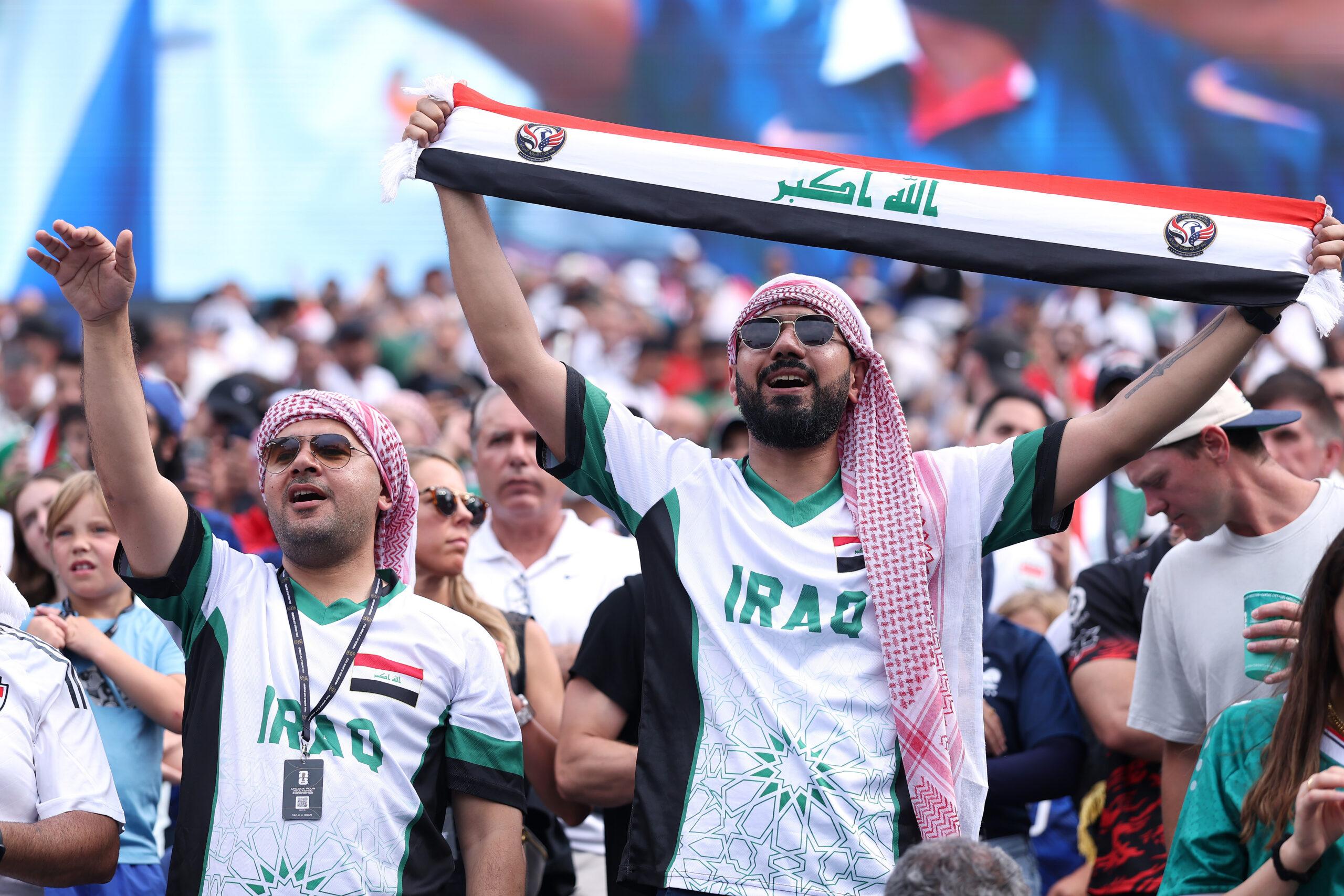
America was too cold. That’s the first thing Valair Shabilla heard about this country, back when he was growing up in Baghdad, Iraq. Before the United States invaded and occupied his country, before he became familiar with the sight of U.S. soldiers on his neighborhood’s streets. He had an aunt in Michigan. In the winters, feet of snow piled up in her yard. His mother couldn’t bear it. They would never go.
As a kid, Shabilla was soccer obsessed. He played at the Catholic church his family attended, then went home at night to watch Champions League matches on satellite TV. He remembers watching Brazil beat Germany in the 2002 World Cup final. He remembers watching Iraq beat Jordan in the West Asian Football Federation Championship final later that summer. And he remembers the American military invading Iraq the next year.
He remembers feeling excitement at first. The U.S. Army toppled Saddam Hussein, Iraq’s longtime dictator, in a matter of weeks. Shabilla remembers American soldiers wandering the streets, passing out candy, playing soccer with kids on the pitch at his church. Years passed, and the war grew uglier and more complicated, with foreign militias flooding into the country and taking power under extremist flags. Bombs dropped around the city. Approximately 200,000 Iraqi civilians were killed. Iraq fractured, factions warring for territory and influence. “We lost people,” he says of his family. “Everyone lost people.”
It was the most amazing thing. A civil war paused. Right in front of my own eyes. Everyone was celebrating together in the street.Valair Shabilla
And he remembers 2007, in the middle of the war, when Iraq cobbled together a national team with players from all corners of the country, then sent them to Thailand, Malaysia, and Indonesia to compete in the Asian Cup. They beat Australia to win their group, then defeated Vietnam and South Korea in the knockouts. On the day of the final, against Saudi Arabia, the streets of Baghdad were devoid of violence, filled instead with watch parties. Iraq won 1-0, on a 72nd-minute goal by Younis Mahmoud. “It was the most amazing thing,” Shabilla says. “A civil war paused. Right in front of my own eyes. Everyone was celebrating together in the street.”
The team had Kurdish players and Arab players, crossed lines of religion and sect. “The whole country was represented in that team,” Shabilla says. “When you see those guys out there beating bigger countries that aren’t going through what we’re going through, it gives you this incredible pride. I saw true happiness in a way I’d never seen it before. That was it for me. That turned me into a die-hard fan.”
The violence resumed. A few months later, his family fled. First to Lebanon, then to the United States, as refugees. They settled in Nashville. He found a home, made friends, and went to college at nearby Middle Tennessee State. When his family eventually moved to Michigan—his mother decided she could brave the winters after all—Shabilla stayed. Now, he covers Nashville SC, the city’s MLS team.
From afar, he remained obsessed with the Iraqi national team, following them through failed World Cup qualification cycles and disappointing Asian Cups, always hoping that someday they would recapture the magic of that 2007 run. Last year, he traveled to Monterrey, Mexico, to watch them defeat Bolivia in a World Cup qualification match, clinching a spot in the tournament. “That,” he says, “was the best night of my life.” Uber drivers to and from the stadium played Iraqi music. Mexican fans adopted the team as their own. “It brought back that 2007 feeling,” he says.
Even though Iraq lost all three matches in the 2026 World Cup, Shabilla has still gotten snippets of that feeling over the past month. He wandered the streets of Boston in his Iraq jersey, accepting well-wishes from fans who’d traveled to the city from across the globe. He danced and sang during a two-hour rain delay in Philadelphia, huddled in the concourse alongside thousands of Iraqis, exuberant even in the midst of defeat at the hands of France. “The French were beating us,” he says, “but everyone knew they weren’t having as much fun as us.”
For Iraq’s last game of the tournament, a 5-0 loss to Senegal, thousands of Iraqis drove into Canada from Michigan, a diasporic hub, and marched through the streets of Toronto, drumming and singing and throwing green and red flares. “That was the first time I’ve been around that many Iraqi people since I left Baghdad,” Shabilla says. “I couldn’t believe it.” In the stands that day, he saw not only the Iraqi national flag but regional and religious flags too, almost all of them unfurled by Iraqis who’ve now made America their home.
“This team represents all of Iraq,” he says. “And everyone was together, celebrating the fact that our team is here. It was the kind of experience you can’t get from anything else.”
They used to have a saying in Cape Verde: “If you don’t leave, you can never come back.” They said it in times of drought and in spells of poverty, in times when people knew that any future for their families meant leaving their island home. Djofa Tavares imagined this was what her grandfather was thinking when he left his village in 1913. He needed work. His family needed food. Someday, either he would return to the island nation off the northwest coast of Africa or one of his descendants would go in his stead. Until then, he would go to the place where generations of Cape Verdeans had already built new homes: Massachusetts.
They were whalers. Cape Verde sat on one side of the migratory channel for the Atlantic Ocean’s humpbacks, and Massachusetts sat on the other. Cape Verdeans came to constitute a huge percentage of workers in the coastal New England whaling industry. Tavares’s grandfather initially settled in Cape Cod before finding his way to Roxbury, the Boston neighborhood that’s now home to thousands of Cape Verdeans. That’s where Tavares was born. “Growing up, you couldn’t tell me that I wasn’t in Cape Verde,” she says. “We spoke the language. We grew vegetables in my grandmother’s yard, had chickens in the backyard. We had a grapevine at my aunt’s house. They would make wine. We did everything our family had done for centuries.”
It doesn’t matter that we’re different. It doesn’t matter that we have such different cultures. We were learning from each other and being together, you know what I mean? It was a dream.Djofa Tavares
This tiny pocket of New England felt like a portal to an island nation with a population roughly the size of Albuquerque. She could run through her neighborhood streets, in and out of friends’ homes and backyards, speaking only Cape Verdean Creole, or Kriolu, as she calls it. On school days, she would trudge through the snow and to the bus stop and ride to schools where students spoke English, but even there, many of the teachers came from the Cape Verdean community she called home. “It just was this ideal, beautiful immigrant enclave,” she says. “I grew up in this double world, and I loved it.”
She didn’t get to visit Cape Verde until she was in her early 40s. Upon arriving in the capital city of Praia, she says, “Immediately, I felt like my life had changed. Like I was somewhere I had never been and somewhere I had always been at the exact same time.”
Now 52, she returns every year. Still, the life she’s built for herself is here, among the diaspora, where she teaches the country’s language and history to younger Cape Verdeans eager to know more about their ancestral home.
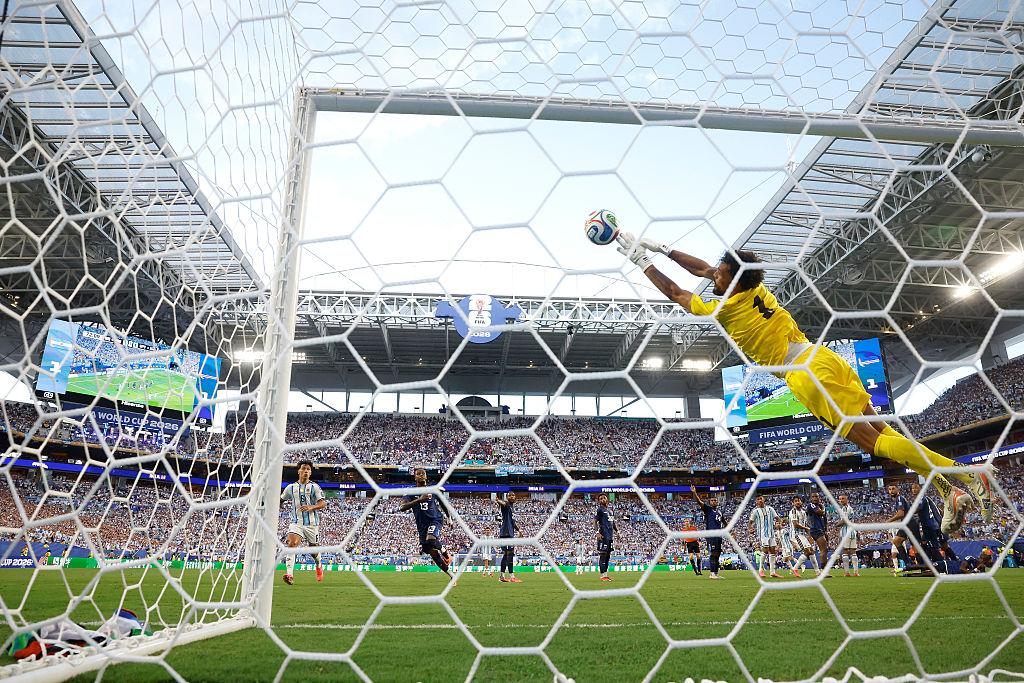
Interest has swelled this summer. “It’s been such a vibrant time,” she says, speaking more than a week after Cape Verde’s dramatic knockout-round loss to Argentina. “I tear up right now just thinking about it. It’s still in the air, you know?” When the team qualified, she wandered around in a delirium, crying and hugging strangers. When the draw was announced, the community was abuzz with travel plans and logistics, mapping out group trips to Atlanta and Houston.
On the day of the team’s first group stage game, against Spain, Tavares remembers walking around her neighborhood. “It was so quiet,” she says. “And I realized it was because no one was here. Everyone was in Atlanta for the game.” They drew Spain, 0-0, on a day that made goalkeeper Vozinha famous. Tavares went to Houston for the next game, against Saudi Arabia.
There, she found a global meeting of the Cape Verdean diaspora, people who traveled from Holland and France, Florida and California, all of them speaking Kriolu and waving that ocean-blue flag. They marched, drummed, and danced their way to the stadium. “The amazing thing was, it wasn’t just Cape Verdeans,” Tavares says. “It was Mexican fans. It was people from England and Canada and Brazil. Even the Saudis! We hugged each other. We said, ‘Good luck, but not really,’ and we laughed. We learned phrases in Arabic, and we taught them phrases in Kriolu. It was just, ‘Oh my God. This is what it should be like all the time.’ This beauty. It doesn’t matter that we’re different. It doesn’t matter that we have such different cultures. We were learning from each other and being together, you know what I mean? It was a dream.”
Her phone is a portal, transporting Nazanin Nour 7,600 miles across the world. Every day, she sees images and reads stories from her homeland, Iran. A nation at war with the United States and Israel, a people under attack by their own government. “We would have nights,” she says of herself and her Iranian friends who live nearby in Los Angeles, “where we would hunker down at someone’s house and everyone is on their phones, trying to understand what’s happening. ‘What does your cousin say? What is this news station reporting now? Have you gotten any new videos?’”
Nour’s parents moved to the U.S. in 1975, four years before the Islamic Revolution brought Iran under theocratic rule. She was born here and grew up surrounded by members of the diaspora. She spoke Persian at home, learned traditional dance and instruments, and was allowed to sleep over only at Iranian friends’ houses. When she first visited Iran as a child, she was swarmed at the airport by relatives she knew from photos and phone calls and melted into a life drastically different from the one she lived in suburban Washington, D.C.
And yet, even then, she felt the clench of the Islamic Republic’s regime. Her aunts made her throw on a chador anytime she wanted to walk across the street. One day, she went to an amusement park with her cousins and uncles, spent a day enjoying rides and eating sweets, and a strange man approached: “She needs to cover up,” he told Nour’s uncles. She was 8 years old. As an adult, she returned and rode a bus with her uncle, and he stopped her when she went to sit down next to him. “I’m so embarrassed to tell you this,” he said, “but you actually have to sit in the back.”
There’s an argument, that goes, ‘All of the kids who were killed in the streets of Iran were braver than any of these soccer players.’ And yeah. That’s one way to look at it. But also, these players have trained their whole lives for this. For the chance to represent us. Why should they get penalized for what their government has done?Nazanin Nour
Still, she loved it. The exuberant hospitality, the smells of spice and exhaust, the sense that some piece of her belonged here in ways it belonged nowhere else in this world. “Iran, to me, is home,” she says. “It is my homeland.”
Now an actor in L.A., Nour is part of the largest Persian community in the U.S. She hears the traditional music and eats familiar foods when she goes to Nowruz celebrations and to protests of the Islamic regime. In January, she and her friends watched in horror as an uprising in Iran turned into a massacre. The regime shut down the internet and blocked communications, and the Iranian military proceeded to open fire from trucks mounted with heavy machine guns. Millions of protesters had taken to the streets. Local health officials estimated that more than 30,000 were killed.
When Iran qualified for the World Cup, Nour wasn’t sure that she wanted to go. The team would play under the Islamic Republic’s flag, would sing the anthem written for a regime that had slaughtered untold thousands. “There’s an argument,” she says, “that goes, ‘All of the kids who were killed in the streets of Iran were braver than any of these soccer players.’ And yeah. That’s one way to look at it. But also, these players have trained their whole lives for this. For the chance to represent us. Why should they get penalized for what their government has done?”
The day before the first match, against New Zealand, Nour bought a ticket. “I went to support my country,” she says. “Not the government.”
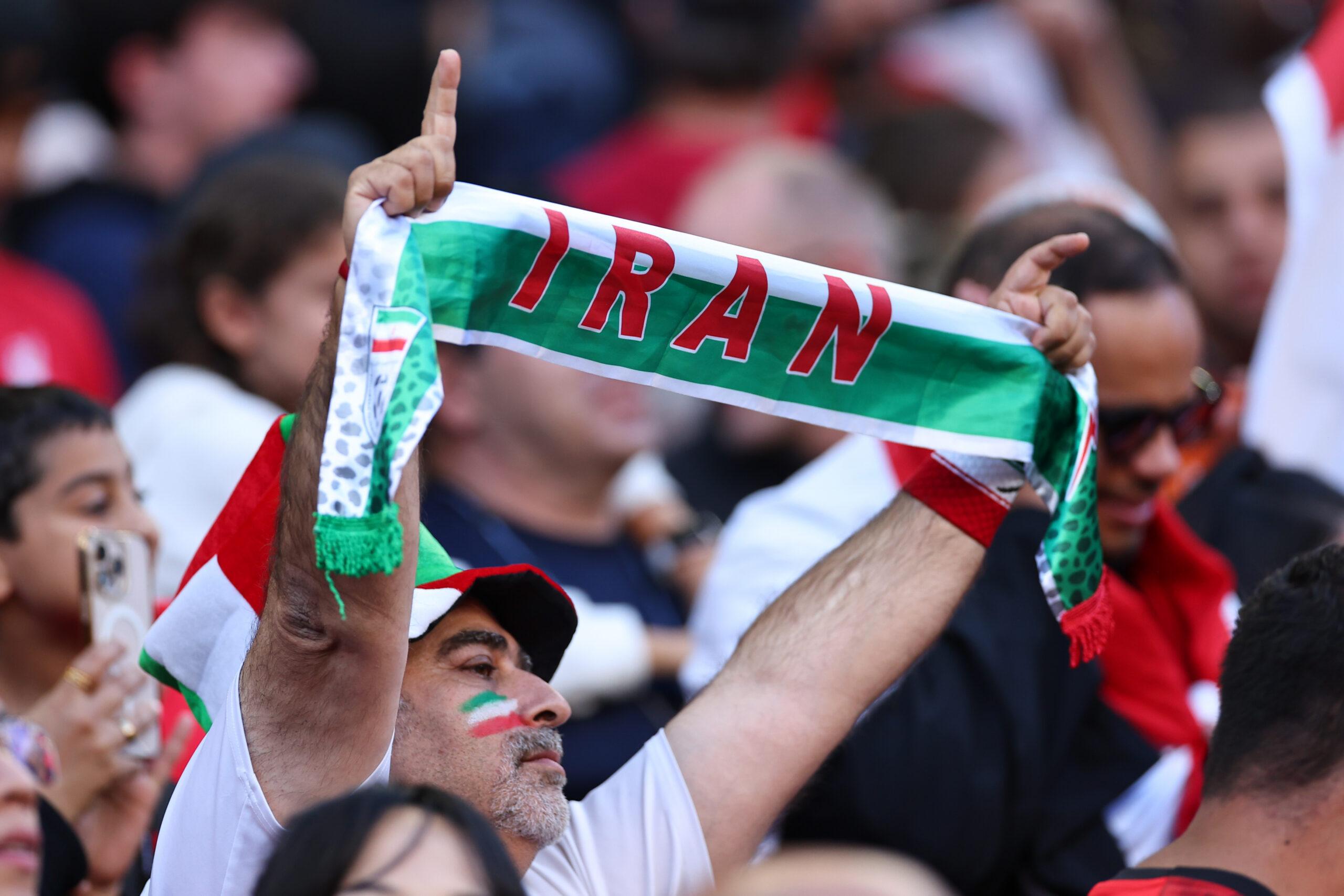
She smuggled in a Lion and Sun flag, which flew over the country before the theocratic regime took power in 1979. She saw women waving the same flag, men in shirts honoring the victims of the massacre. When the Islamic Republic’s flag was draped across the field, she stood and listened as her compatriots booed. When the regime’s national anthem played, she turned her back to the field. When the game began, she watched, enthralled.
In the 32nd minute, Iran scored a goal. Suddenly, Nour was screaming, clapping, and high-fiving strangers. She looked across the stadium and saw the fans who supported the regime and the fans who protested it hugging, bound together by joy over what they’d just seen. “There are those brief moments in sports,” she says, “where no matter what else is going on, for right now, we’re all cheering for the same thing. We’re able to hold all of these complexities and these multiple truths. We can have a good time with our compatriots. We’ll go back to the infighting afterward.”
Those disagreements, of course, are not mere matters of cultural or political difference. In a nation of war, they’re matters of life and death. Still, Nour says, in this country on the other side of the world, “for just a few seconds, we can let ourselves share in this moment together.”
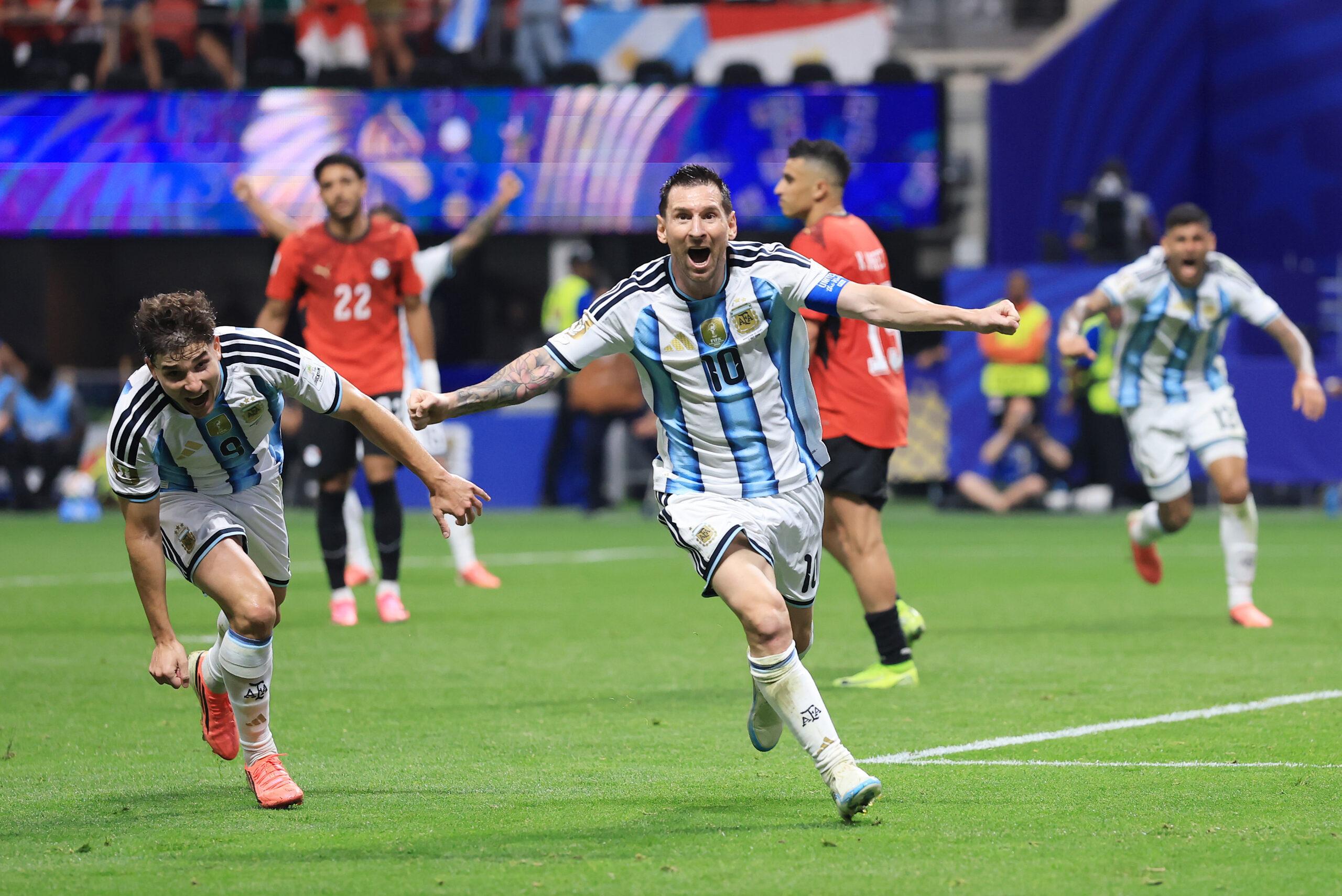
I went to one match during this World Cup: Argentina’s electrifying and controversial 3-2 comeback win over Egypt. I’ll remember what I saw on the pitch: Lionel Messi’s brilliance and defiance, his simple refusal to let his World Cup career end. And I’ll remember what I saw in the stands: men holding each other and weeping, everyone shirtless, beer and popcorn flying through the air.
But I’ll also remember what I saw and felt before the game, walking around Atlanta, as fans in Egypt jerseys wandered out of the Trap Music Museum and Argentines took a long look at the College Football Hall of Fame. I’ll remember the Egyptian father and son I met who made the drive from their home in Cincinnati through the night. “We get to see our country playing in a World Cup, just a few hours from where we live,” the son, Adam, told me. “It’s the kind of thing you never imagine getting to experience.” His father said little, just looked on with a soft smile.
And I’ll remember the scene after. Walking through the concourse of a stadium that’s typically home to SEC championship games and NFC South mediocrity, now alive with the chanting and singing of Argentines and Egyptians alike. I’m not sure what it says about what America or the World Cup is supposed to represent, either now or in any Morgan Freeman–voiced description of a utopia, but I know that in that moment, as the music swelled and I passed men from each country taking off their jerseys so they could swap, it felt like everyone wanted to linger here, to live a bit longer under the spell this tournament seems to cast over the whole world.