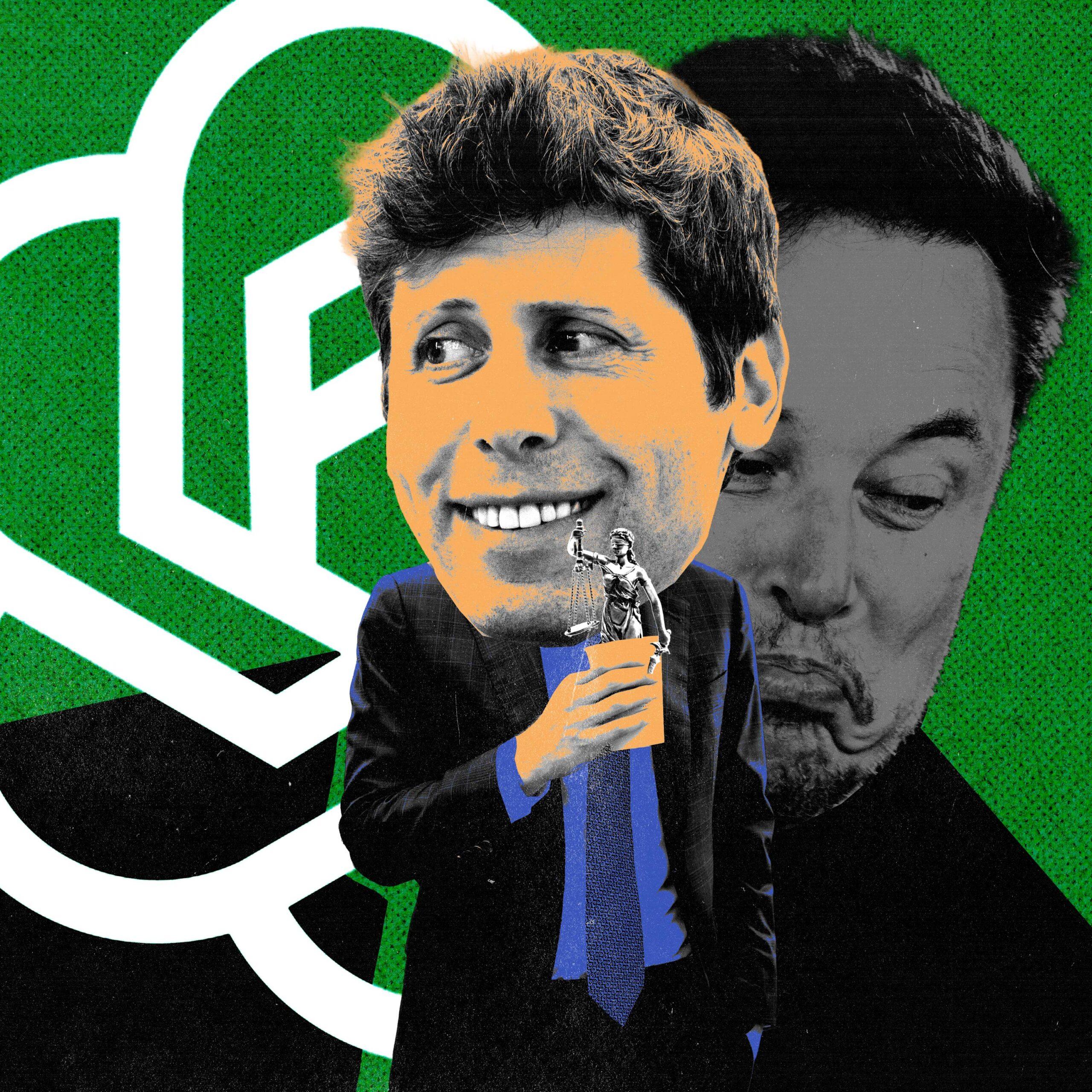

Elon Musk, et al. v. Samuel Altman, et al., the recent civil trial about artificial intelligence, charitable giving, lying liars, and the frenemies we’ve alienated along the way, spanned a solid three weeks’ worth of your and my lifetime business hours here on Earth. It roped in 20-plus witnesses, ranging from noted tech CEOs (like Microsoft’s Satya Nadella, who at one point on the stand used the phrase “amateur city”) to [checks notes] a professional “futurist” whom the plaintiff, Musk, once called a jackass in a meeting.
Day after day, sometimes beginning as early as 4 a.m., the case drew antsy crowds of onlookers, photographers, TV news crews, protesters, bodyguards, and reporters, plus an infinite fractal of lawyers (and lawyers’ lawyers, and so forth), to the federal courthouse in downtown Oakland. Our shared goal: to see billionaires bicker over the frontier research lab OpenAI’s transformation from a mission-driven nonprofit a decade ago into a lucrative corporate enterprise with mega-IPO ambitions.
Inside the courtroom, the testimony sometimes got testy. Proceedings touched on big, existential ideas about humanity’s best interests … and also exposed the nitty-gritty indignities of trying to define and build the future, especially in collaboration with a bunch of eccentrics. Digital reams of discovery documents—emails, texts, even an e-diary kept by codefendant Greg Brockman, the president of OpenAI, in which he pondered things like “When will I ever have a chance to be free and truly own my destiny?”—provided a fascinating slice-of-life glimpse into the machinations and headaches of the powerful nü-tech mafia.
All told, the Musk v. Altman lawsuit had been many years in the making. Earlier this week, a nine-member jury needed less than two hours to unanimously recommend that the case go away.
More on Musk v. Altman
What was the verdict?
During the jury selection voir dire process at the end of April, Judge Yvonne Gonzalez Rogers told the prospective jurors that they were there because the two sides simply couldn’t work things out among themselves, despite her nudges to try. “They’ve decided it’s better to have a jury of people they don’t know decide instead of settle,” she explained, with a hint of an implied eye roll in her delivery. (The following weekend, reports came out that Musk had contacted the OpenAI founders to float a settlement two days before the trial; when Brockman rebuffed him, Musk vowed, “By the end of this week, you and Sam will be the most hated men in America. If you insist, so it will be.” Who does he think he is, Cousin Greg?!)
Several weeks later, this past Monday, Judge Gonzalez Rogers was given a note just before lunchtime stating that the jury of people they don’t know had reached its decision.
In a unanimous vote, the jury ruled in favor of Altman and the other defendants, advising the judge that Musk hadn’t satisfied key statute of limitations cutoff dates. (The claims made by the plaintiff—breach of charitable trust and unjust enrichment—carry SOLs of two and three years, respectively.) In other words, Musk was too late to sue. Which meant that regardless of what had or hadn’t transpired, there were no longer any claims for the jury to deliberate. Judge Gonzalez Rogers agreed. “I think there’s a substantial amount of evidence to support the jury’s finding,” she said, closing the case. And that was that.
Or was it? Nothing’s ever quite so easy when Musk is involved. Shortly after the verdict came down, his lawyer Marc Toberoff gave reporters a terse, one-word statement: “appeal.” Musk sent two huffy posts on X, the social network he owns, and ultimately deleted one. (In it, he’d referred to Judge Gonzalez Rogers as a “terrible activist Oakland judge.”) In the post he kept up, Musk also vowed to appeal and pointed out that, as he saw it, the jury’s ruling was incomplete. “The judge & jury never actually ruled on the merits of the case,” he wrote, “just on a calendar technicality.”
What is a “calendar technicality”?
That is Musk’s terminology, not mine, because what he’s referring to here is simply the statute of limitations. Is that a technicality? I mean, I guess technically. But Musk’s chosen nomenclature feels akin to when tech companies rebrand ignoring local ordinances as, like, “spontaneous private deregulation” or “regulatory arbitrage.” Just because something is procedural in nature doesn’t mean it’s unimportant.
During closing arguments last Thursday, Musk’s lawyer Steven Molo sought to downplay the statute of limitations. “They’re gonna try to wave around emails or term sheets or whatever it is that they’re gonna try to put up,” he told the jurors of the defense’s plan. “The statute of limitations—this is not supported by the evidence,” Molo added. “Don’t let them try to trick you into believing that it is.”
“The statute of limitations exists for an important reason,” countered defense attorney William Savitt on Thursday when it was his turn to speak. “It protects defendants from opportunistic lawsuits.” Wait too long, and things deteriorate: “Evidence gets lost,” Savitt said. “People forget what happened. You’ve seen a lot of that here, particularly with Musk and his witnesses. I don’t recall. I don’t remember. I don’t recall. I don’t remember. We went and tried to count up the number of times that this was said. It was somewhere between 150 and 200 times in this trial. And nearly all of them were on the Musk side of the case.”
As I noted in a previous piece, the plaintiffs certainly seemed to be well aware that Musk’s lawsuit was built on shaky SOL grounds. It’s catchy to assert that Altman and Brockman “stole a charity” as OpenAI drifts increasingly and conspicuously far away from its nonprofit roots. But it’s trickier when old tweets, emails, and, yes, term sheets all suggest that Musk had already felt that way years before the designated two- and three-year SOL cutoffs.
On the witness stand, Musk tried to thread the needle by identifying three “phases” of what he described as a slowly dawning realization that OpenAI was being monetized, with the third phase conveniently beginning around 2022. But this tactic, lazily executed, didn’t really seem to capture the jury’s attention.
On the instructions to the jury’s verdict form—agreed to by both parties in advance and dictated by the judge—the jurors were asked to assess the statute of limitations first and foremost. Which is why their deliberations wrapped so expeditiously, and why they left so many people both inside the courtroom and beyond wondering some variation of: What was even the point of this trial, anyway?
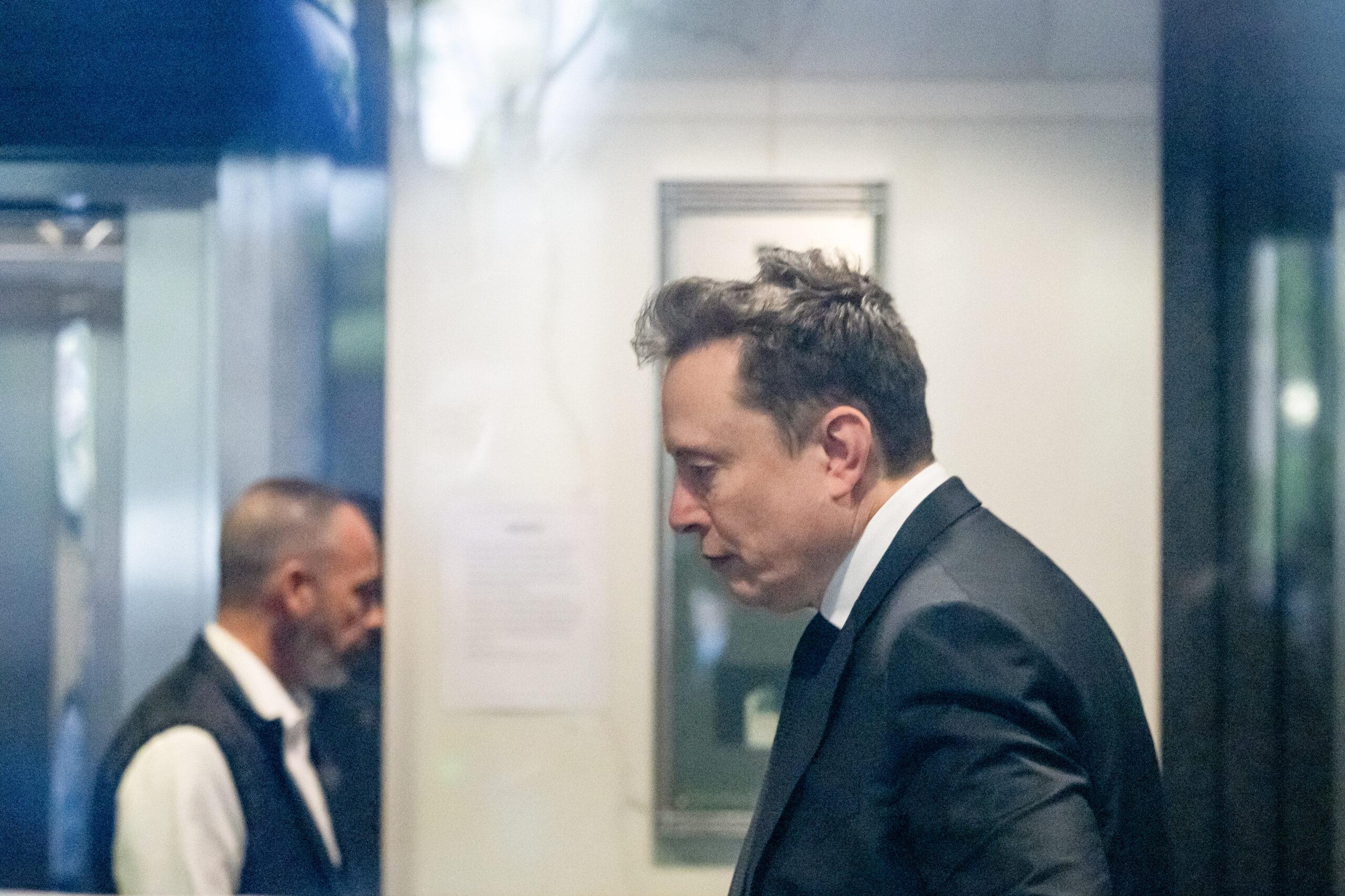
Elon Musk arrives at federal court in Oakland on April 28
What was even the point of this trial, anyway?
I guess if I were the richest man in the world and I had a frustratingly mid AI company of my own and a yen for chaos, why wouldn’t I get litigious with my enemies? It feels safe to say that one of Musk’s ongoing motivations in pushing for this trial was to force the release of embarrassing and/or proprietary information about his competition, whether via discovery or on the witness stand. And indeed, we have been blessed with such gems as the “Directionally very bad” text (perfect for all your future failed-coup needs!), the classic “Re: Honest Thoughts” email thread/personality test, and the memory of Altman sitting through umpteen exchanges like this:
Counsel: You worked with Mira Murati for several years at OpenAI. Right?
Sam Altman: Yes.
Counsel: She accused you of not being truthful and honest. Right?
Altman: I don’t want to speak to the exact words she used.
Counsel: But the essence of it was that you were dishonest. Correct?
Altman: OK.
Still, I can’t help but think that one of the biggest takeaways from this trial is how very badly Musk and his team whiffed on their own opportunity. Musk is the one who initiated this entire arduous process! In the opening week of the trial, he spent parts of three different days under oath! Yet rather than set the agenda or seize the moment—which we know he can do, because I’d argue it’s what he’s done pretty effectively with his “calendar technicality” framing!—Musk went down in everyone’s memory as having the most unpleasant and dissembling presence out of anyone who took the witness stand.
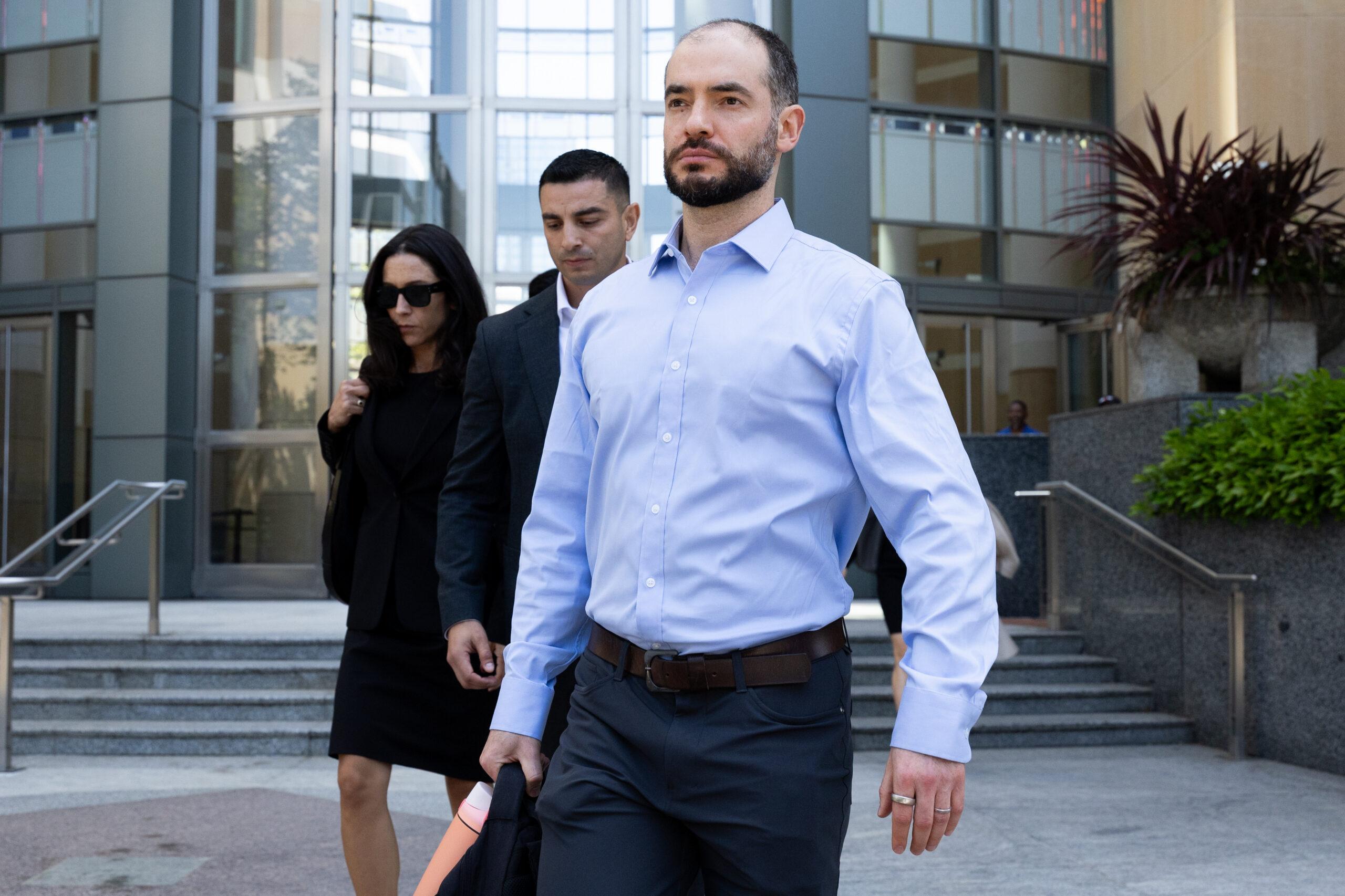
OpenAI cofounder Ilya Sutskever departs court on May 11
What stood out most in the courtroom?
I attended the first and last weeks of the trial, and a few observations stuck with me.
1. Most memorable witness (complimentary): That would be Ilya Sutskever, who cut a serenely extraterrestrial presence on the witness stand, exuded deep forthrightness that no one else I saw did, and had one of the lasting pieces of imagery of the trial:
Counsel: In early 2018, when Mr. Musk left OpenAI, did he make any statements to you about OpenAI’s prospects for the future?
Ilya Sutskever: Yes. He made comments to the effect of “We don’t have 1 percent chance of success; we have 0 percent chance of success.”
Judge Yvonne Gonzalez Rogers: Was that true? When he asked you that or when he said that there was a 0 percent chance of success, what was the technology like at that point?
Sutskever: I mean, it was less developed, it’s true.
Judge Gonzalez Rogers: Is there any way to quantify what the level was at the time?
Sutskever [synapses visibly firing inside his head]: I mean, so 2018, it was like … Yes. There is. It’s like the difference between—I would describe it like the difference between an ant and a cat. Ant and a cat. If you compare 2018 to now, yeah, it's like the difference between an ant and a cat.
(Important note: As The New York Times’ Mike Isaac noted, Sutskever’s delivery of “ant and a cat” was identical to Kevin Costner’s delivery of “back … and to the left” in JFK.)
2. Most memorable witness (derogatory): To reiterate my earlier remarks, this has gotta be Musk. I particularly appreciated when he snapped that he doesn’t yell at people—and then went on to throw a tantrum. (Also, while I wasn’t in court the day C. Paul Wazzan testified, it sounds like he was probably glad to be saved by the verdict!)
3. I guess this shouldn’t really surprise me, but I was nevertheless struck by the degree to which spite, petty rivalries, and subterfuge routinely drive actions and decisions at the tippy top of the tech and AI industries. Demis “the Menace” Hassabis of the trailblazing lab DeepMind has rent-free pied-à-terre in everyone’s heads, especially Musk’s. (The two were once pals, but things soured.) Both Shivon Zilis and Mira Murati deftly played middlewomen between big personalities. “Do you prefer I stay close and friendly to OpenAI to keep info flowing or begin to disassociate?” read one typical Zilis inquiry to Musk in 2018. “Trust game is about to get tricky so any guidance on how to do right by you is appreciated.”
And early in OpenAI’s existence, in August 2016, Musk and Altman emailed about whether their cloud provider ought to be Amazon Web Services or Microsoft Azure. “I think Jeff [Bezos] is a bit of a tool,” Musk wrote, “and Satya is not, so I slightly prefer Microsoft, but I hate their marketing dept.” Speaking of haters: poor Diane Greene.
4. Pretend I made one of those domino effect memes where the first domino is “Shadow Fiend mirror match” and the last domino is, like, “the machines kill us all.” I am not even exaggerating when I say that the 2017 Dota 2 esports tournament is arguably … the most game-changing competition of all time?!
Again and again, this tournament came up in testimony as a major inflection point for the trajectory of OpenAI. It was the lab’s success at this tournament that gave the team a galvanizing sense of confidence to keep scaling up their capabilities. (It also got the OpenAI team an invite to Musk’s haunted mansion in Northern California, where, according to Brockman’s testimony, Musk’s then-girlfriend Amber Heard had absolutely zero interest in chatting with them about AI. You win some, you lose some!) Beyond that, the Dota 2 competition served as proof that while a nonprofit mission was noble for OpenAI, a certain—very expensive—level of computing power was clearly going to be table stakes if the institution truly wished to compete with the best.
Or, as Sutskever put it: “The realization was that to make progress in AI, you need a big computer. And you need a big computer because the brain is a big computer. You have one hundred billion neurons, a hundred trillion synapses in the brain. And if your computer is small, I don’t know how good your AI is going to be. And this realization suddenly lets you say things like ‘Well, wait a second. How are you gonna get this big computer?’ That was the genesis of the for-profit conversations.”
5. Most eyebrow-raising tidbit: My dear pal Elizabeth Lopatto, a thinking woman, declared it to be the revelation that Musk distilled OpenAI code in building his Grok AI product. For me, though, it was the reminder that Altman once considered running for governor of California, and also the knowledge that the University of Michigan endowment made an early $20 million investment in OpenAI that has since ballooned to $2 billion.
6. Codefendant Microsoft’s repeated pleas to please exclude the House Clippy Built from this narrative brought me reliable joy, in a dry workplace comedy sort of way. Every slide they showed was in the Microsoft font. Back-and-forth text messages with Nadella were all forth, zero back. (Now that is a seasoned corporate executive.) And every appearance by the Microsoft lawyer went exactly like this one.
Counsel: Did Microsoft play any role in the founding of OpenAI in December 2015?
Greg Brockman: No.
Counsel: Did Microsoft participate in the discussions between OpenAI’s cofounders to create a for-profit entity after the Dota 2 win in August 2017?
Brockman: No.
Counsel: What role, if any, did Microsoft play in the OpenAI nonprofit board decision in 2018 to create a for-profit subsidiary?
Brockman: None.
Remember how sometimes your elementary school teacher would scold the class for misbehaving, and one Goody Two-shoes would raise their hand to say they weren’t involved? That’s Microsoft in this case.
7. The funniest collection of attendees was probably in court on the days Musk testified. One girl in my row carefully wrote down all the Musk email addresses that appeared in exhibits on-screen, took no other notes, and at one point pulled a thick headband over her eyes—whereupon I realized it was actually a dedicated headband/sleep mask accessory—and put her head down on the back of the pew in front of us and slept. I envy the nerve! Another gal took photos, which is like the no. 1 no-no, and got dressed down by Judge YSR so thoroughly that it left me rattled.
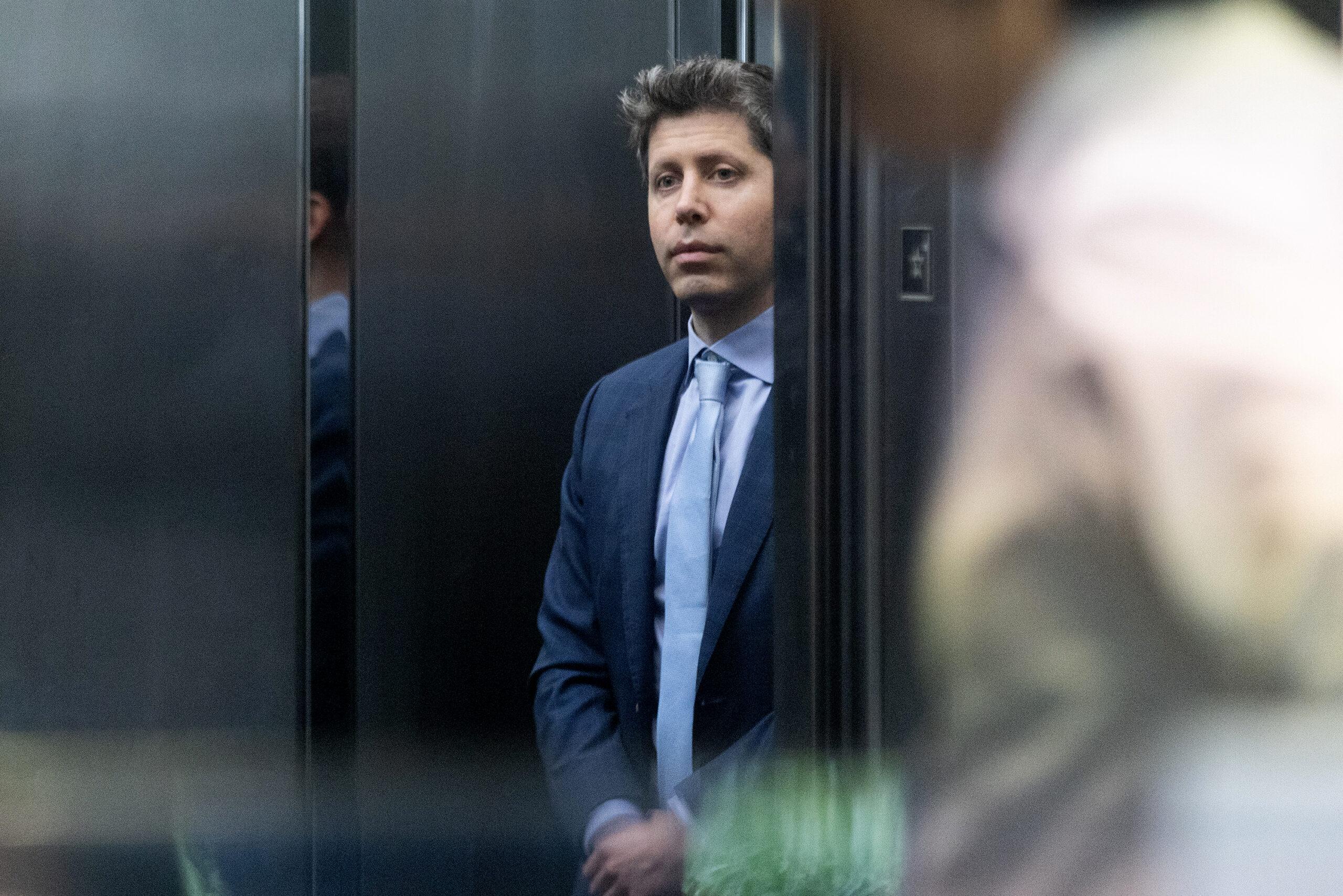
Sam Altman arrives to court on April 30
What’s left, and what’s next?
If Musk is serious about appealing his case to the 9th Circuit, as he tweeted he would, I suppose it’s worth noting that that particular appeals court is known to have some vivid personalities on the bench, so, hey—you never know! Still, the probability that an appeals court would overturn a jury’s finding of fact is low—especially when there’s no indication that this jury was misinformed or given improper instructions.
Really, the ideal situation for Musk is planning or awaiting an appeal, because so long as he remains in that liminal state, he can make regular cracks about Altman and Brockman stealing a charity without having to admit to any defeat.
With the lawsuit (sort of) behind them, the main characters can now focus on the rest of their 2026 calendars. For Musk, this includes the planned June NASDAQ debut of his SpaceX business—into which he rolled his mediocre AI company, xAI, earlier this year.
For Altman and Brockman, the upcoming agenda includes finding new recurring revenue streams, looking to barter compute in exchange for startup equity, and refocusing on their own potential IPO later this year. There’s also the ongoing refocus on communications and messaging strategy, especially as anti-AI backlash continues to simmer (as Eric Schmidt recently found out) and politicians look for easy wins. (In the past two weeks, inspired by details that arose during the trial, Republicans have started to ask more questions about Altman’s potential conflicts of interest and self-dealing.)
OpenAI also faces the question of how to solve for its surging archrival, Anthropic, a firm that officially can’t stop, won’t stop. In the past few days alone, Anthropic headlines have noted that Hassabis was an early investor ([extremely Newman voice] DEMIS), that OpenAI OG and former Tesla AI exec Andrej Karpathy is joining the company, that SpaceXAI struck a deal to lease a data center to Anthropic, and that—bear with me here—on Monday, Pope Leo (!) is scheduled to release his “first encyclical Magnifica Humanitas” (!!), on the topic of AI (??), and that he will be joined by a dude from Anthropic (?!) to present it.
Oh yeah, and: Remember the futurist I mentioned whom Musk once called a jackass in a meeting? His name is Joshua Achiam, and when he testified last week, he told the courtroom that, at the time, a former OpenAI employee honored him with a bespoke haunches-shaped award to commemorate the occasion. That former employee? Anthropic founder Dario Amodei. These Claudeheads are making the rest of us look bad.
Anything else?
On Monday, before the judge dismissed the jurors for good, she read them a quote from former Supreme Court justice William O. Douglas’s book An Almanac of Liberty:
A jury reflects the attitudes and mores of the community from which it is drawn. It lives only for the day and does justice according to its lights. The group of twelve, who are drawn to hear a case, makes the decision and melts away. It is not present the next day to be criticized. It is the one governmental agency that has no ambition. It is as human as the people who make it up.
One sign that I’d been thinking about this trial for too long is that when she said this, my first thought was that a lot of these sentences could double as descriptions of ChatGPT.
I better go touch grass, I thought—only to remember that less than 24 hours earlier, I’d literally been in the middle of Yosemite National Park on a long weekend vacation with my family, having arrived there straight from four days at the trial; and that I had signed up for a Sunday night stargazing tour; and that during the tour, as I lay on my back in a meadow whispering “arc to Arcturus and spike to Spica,” letting go and letting God and living only in the moment, our tour guide suddenly motioned to some lit dots orbiting the sky in suspicious sync.
Airplanes? Meteors? Not exactly: “Look, everyone, it’s a Starlink!” she told us, kinda squealing a little, her zest for the string of satellites catching me by surprise. “It’s Elon Musk in the sky!” There on Earth, I snorted a little at the circumstances, then stared off into space until the cosmic technicalities had passed.