“I try to be as literal as possible,” said Elon Musk on Wednesday morning. “So you don’t have to read between the lines. You can just read the lines.” The richest man in the world was on the witness stand in a federal courtroom in Oakland, California, speaking under oath. Musk hadn’t even been cross-examined yet, but already he seemed a little on edge, ever so slightly bristling at the fairly benign questions from his own lawyer, who was asking what Musk had meant by various sentences he wrote in emails sent eight, nine years ago.
“It’s pretty much as described there,” Musk answered one such line of inquiry. “Literally what I’m saying here,” he responded to another. Sitting in the courtroom, I felt a little puzzled: Why was Elon Musk acting as though someone had subpoena’d him here against his will, when he was the one responsible for dragging this entire mess into court?
Musk is suing Sam Altman and Greg Brockman, his former collaborators and cofounders at the artificial intelligence outfit OpenAI, for what he argues is a grievous and greedy breach of the frontier lab’s original nonprofit founding mission. But over the past few days, it sometimes seemed like he’d forgotten this whole circus was his idea. As the first witness to take the stand, Musk had an opportunity to set the agenda and charm the room; to tell his story and stick it to ’em.
On Wednesday morning, the line of people hoping to get a seat in the courthouse to see Musk was much longer than usual; those waiting included a father and his teen son from Palo Alto, a bunch of folks sporting conspicuous AI company logos, and loud groups of college buddies who kept trying to cut the queue. (If that one Stanford kid who got in an hours-long nap in the back row of the courtroom is any indication, Musk may not have lived up to expectations.)
But that doesn’t mean there haven’t been plenty of uniquely memorable moments. On Wednesday, for example, I posted on social media that a lawyer in Musk v. Altman had just spoken the phrase “the haunted mansion you’d just bought near SF” aloud in a court of law. “I hope I never find out what this case is actually about,” someone replied. Whether you feel the same way—or whether you simply cannot get enough information about the tech industry’s latest gigalitigation—I’m here for you.
Allow me to translate and annotate some of the strangest, funniest, and most inscrutable things that were said during Musk’s three days on the witness stand this week! He’d hate to know how much I love to read between the lines.
“We want to be in a Gene Roddenberry outcome, like Star Trek. Not so much a James Cameron movie like Terminator.”
On Tuesday, much of Musk’s testimony was about his own biographical trajectory from South Africa to Canada to the U.S.; from kid to nerd to baron. But he gave us one of the purest glimpses into his mindset with this line about two very different outcomes of rapidly advancing innovation. Star Trek’s vision of AI is like a competent, benevolent voice-activated digital butler. In the Terminator movies? Skynet nukes mankind.
Terminator has been on Musk’s mind since long before OpenAI was a gleam in anyone’s eye. (Which just reminded me to look up Altman’s eyeball-scanning side hustle to see what’s the latest, and—oh!) In The Infinity Machine: Demis Hassabis, DeepMind, and the Quest for Superintelligence, a book about an early frontier lab, author Sebastian Mallaby writes about Musk giving Hassabis and Reid Hoffman a tour of SpaceX circa the summer of 2015. Hoffman—a PayPal mafioso who also co-founded LinkedIn—pointed out a “Skynet” sticker on a server closet to Hassabis, who exclaimed to Musk: “You know what you would start saying about me if I had something like that on one of my systems?!”

Defense of the Ancients
Well, it turns out that the most important competition of the 21st century isn’t the Helmet Catch Game or the 2016 NBA Finals. It’s the Dota 2 world championship tournament that took place in August 2017! It was during that particular esports competition, involving the multiplayer sequel to the game “Defense of the Ancients,” that one of OpenAI’s models took on a bunch of humans—and actually won.
This competition has been referenced multiple times in the first few days of the Musk v. Altman trial, positioned as a big pivot point in the life and times of OpenAI. The victory proved that the lab’s models were getting the technological oomph necessary to compete with not only the minds of human gamers but also the then-front-runners over at Google. But! The amount of technological investment required to pull it off also made it clear that outcompeting big-dog AI efforts would require a lot of pricey “compute.” Enough to necessitate conversations about how to structure OpenAI in order to afford it.
It had been Musk who called up Satya Nadella at Microsoft in advance of the esports competition—“the only one who could really call Satya Nadella and have him pick up the phone was me,” he explained nobly on Tuesday—to see if he could strike a deal to provide OpenAI with enough compute to compete.
It’s not a stretch to say that this video game tournament was a catalyst in setting changes into motion at OpenAI that ultimately led to Musk rage-quitting the OpenAI board. (“Taking his marbles,” as defense attorney William Savitt put it in his opening argument.) Anyway, when AGI hits one day, “Defense of the Ancients” could be a decent nickname for the human resistance!
SUBJECT: Re: Honest Thoughts
Most of the subject lines on the many, many emails that have been introduced into evidence ahead of or during the trial are unexceptional stuff: a “Fwd: Two things” here; a “biweekly update” there, ho-hum. (The exception that proves the rule? “SUBJECT: Communicative rhesus” I don’t wanna know.) But something about “Re: Honest Thoughts” up there on the courtroom monitor keeps catching my eye with its alluring emo vibes, its laid-bare emotion.
This particular September 2017 email thread has already come up several times during Musk v. Altman, and it always lives up to its subject line. Plus, it’s a genuinely useful reference guide to the personalities and approaches of the four individuals (Musk, Altman, Brockman, and chief scientist Ilya Sutskever) who were for a time at the core of OpenAI. (This email = the billionaire version of Girls script?) It begins with a measured, tortured, 955-word joint email from Brockman and Sutskever that included sub-messages for both Altman and Musk. To which Musk responds:
Guys, I’ve had enough. This is the final straw. Either go do something on your own or continue with OpenAI as a nonprofit. I will no longer fund OpenAI until you have made a firm commitment to stay or I’m just being a fool who is essentially providing free funding for you to create a startup. Discussions are over
You can see why this email has already been shown at trial; on Wednesday, Musk again reiterated to the jury from the stand that he had been a “fool.” Though of course there’s also Altman’s reply a day later, a lower-case chime-in that is perfectly on-brand:
Sam Altman to Elon Musk, Ilya Sutskever (cc: Greg Brockman, Sam Teller, Shivon Zilis) - Sep 21, 2017 9:17 AM
i remain enthusiastic about the non-profit structure!
Total Marnie.
Phases I, II, and III
There were a few talking points that Musk returned to more than once in his testimony. When in doubt, for example, he’d say that he simply “lost confidence” in the OpenAI team, or that he wasn’t completely against OpenAI having a for-profit side—just that those profits shouldn’t be limitless, because “the tail shouldn’t be wagging the dog.” He also mentioned several times that he felt there were “three phases” of his revelations about what was happening at OpenAI:
Phase I: Full confidence and support of the company!
Phase II: “Where I’m like, wait a second …,” Musk said, “I’m starting to feel like they might be … stealing a charity?”
Phase III: The phase we’re in currently, Musk explained. The phase “where they stole a charity.”
Upon some questioning from Savitt, Musk estimated that Phase II lasted from approximately 2017 to 2022—convenient timing, considering the particulars of Musk v Altman. One of the key pillars of the case is whether Musk manages to thread the needle with respect to statutes of limitation, and attorneys on both sides have focused on building timelines—of what happened, and of who knew what when. Many of the emails referenced in court were sent around 2017 and 2018. But Musk’s team has to convince jurors that their client didn’t truly become aware of OpenAI’s total transformation—that he didn’t enter his Phase III, so to speak—until much more recently. Like, say, when Microsoft made its $10 billion investment in 2023—a date that just so happens to fall within the narrow three-year statute of limitations window.
Lumberjack
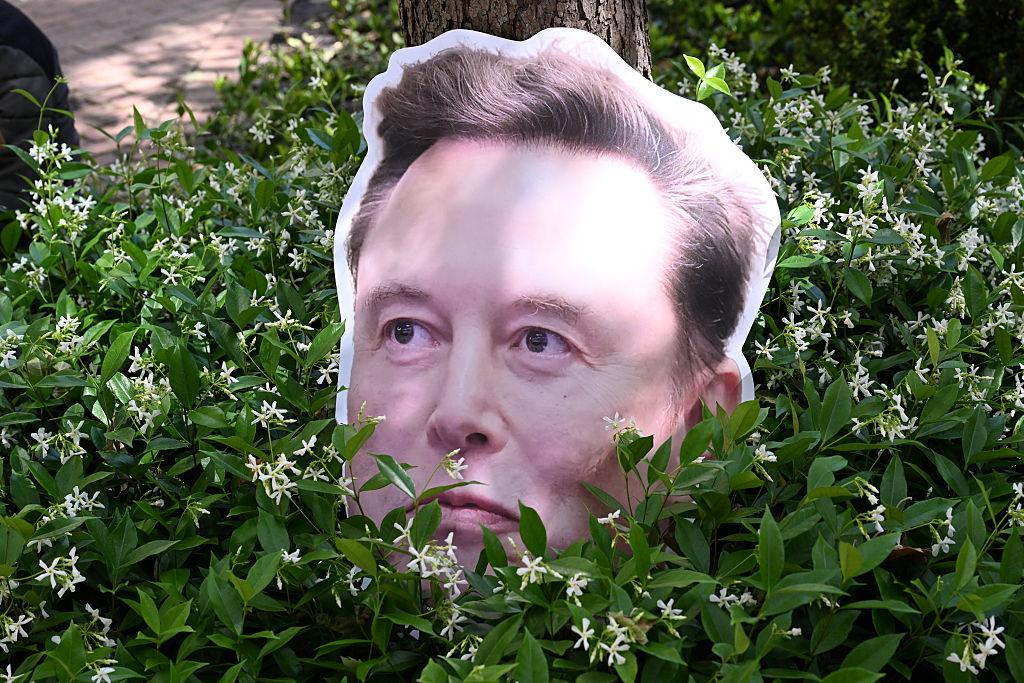
Intrigued by Musk’s mention in his Tuesday testimony of a brief stint as a lumberjack in his younger years, I went hunting for more information. Thank you, Toronto Life magazine!
Unbothered, Musk bought a cross-Canada hop-on, hop-off bus ticket for $100. He travelled over to Swift Current, Saskatchewan, and hitched a ride to his second cousin’s house, where he got to work shovelling out grain bins at a nearby farm. When that got old, he moved on to splitting logs in Vancouver and then cleaning a lumber mill boiler room for $18 an hour. But hard labour wasn’t what Musk envisioned for his future.
And speaking of jacks …
“Did you ever call an OpenAI employee a jackass?”
A nice touch here is that this question was asked by Musk’s own lawyer, Steven Molo. In 2023, The New York Times reported that in February 2018, when Musk resigned in a huff from his board seat at OpenAI over differences in opinion, he had paused first to call some young employee a jackass. (Savitt mentioned the incident in his opening remarks.)
Musk told jurors on Wednesday the infamous “jackass” thing was surely said as a joke. “I don’t yell at people, basically,” he insisted, though he allowed: “You occasionally have to use strong language to get people to change their course.”
Definitionally complex
Musk may say he doesn’t yell at people, but everyone in the courtroom on Wednesday sure got a good look at how he acts when he’s riled up. During the cross-examination by Savitt—who has crossed paths with Musk before—Musk resisted the tyranny of the simple yes-or-no question time and again, even after he’d been encouraged by Judge Yvonne Gonzalez Rogers to pipe down and shape up.
“It’s a simple question,” Savitt said at one point. “Your questions are definitionally complex, not simple,” Musk snapped back. “It is a lie to say they’re simple.” And this was just the beginning. “Your questions are not simple,” he said on another occasion. “They are designed to trick me.”
But wait, there’s more! “If you ask a question where there is no possible simple answer,” he told Savitt, “then I must give a longer answer because any simple answer would be misleading the jury.” He went on: “The classic answer to a yes or no question is not so simple. For example, if you ask the question, ‘Will you stop beating your wife—’”
As a few jurors furrowed their brows, Judge Gonzalez Rogers stepped in, sounding like a seasoned middle school teacher. “Nooo, we’re not gonna go there,” she warned.
“I find it funny,” Musk told Savitt at one point after the lawyer withdrew a question, “you saying it was an unfair question—since you’re only asking unfair questions.” Savitt smiled. “I’m doing my best!” he said. “That is not true,” shot back Musk.
After the jury left for the day, Savitt griped that Musk had been a real handful, running his allotted time off the clock. “That’s the challenge of all litigators!” said the judge with a smile.
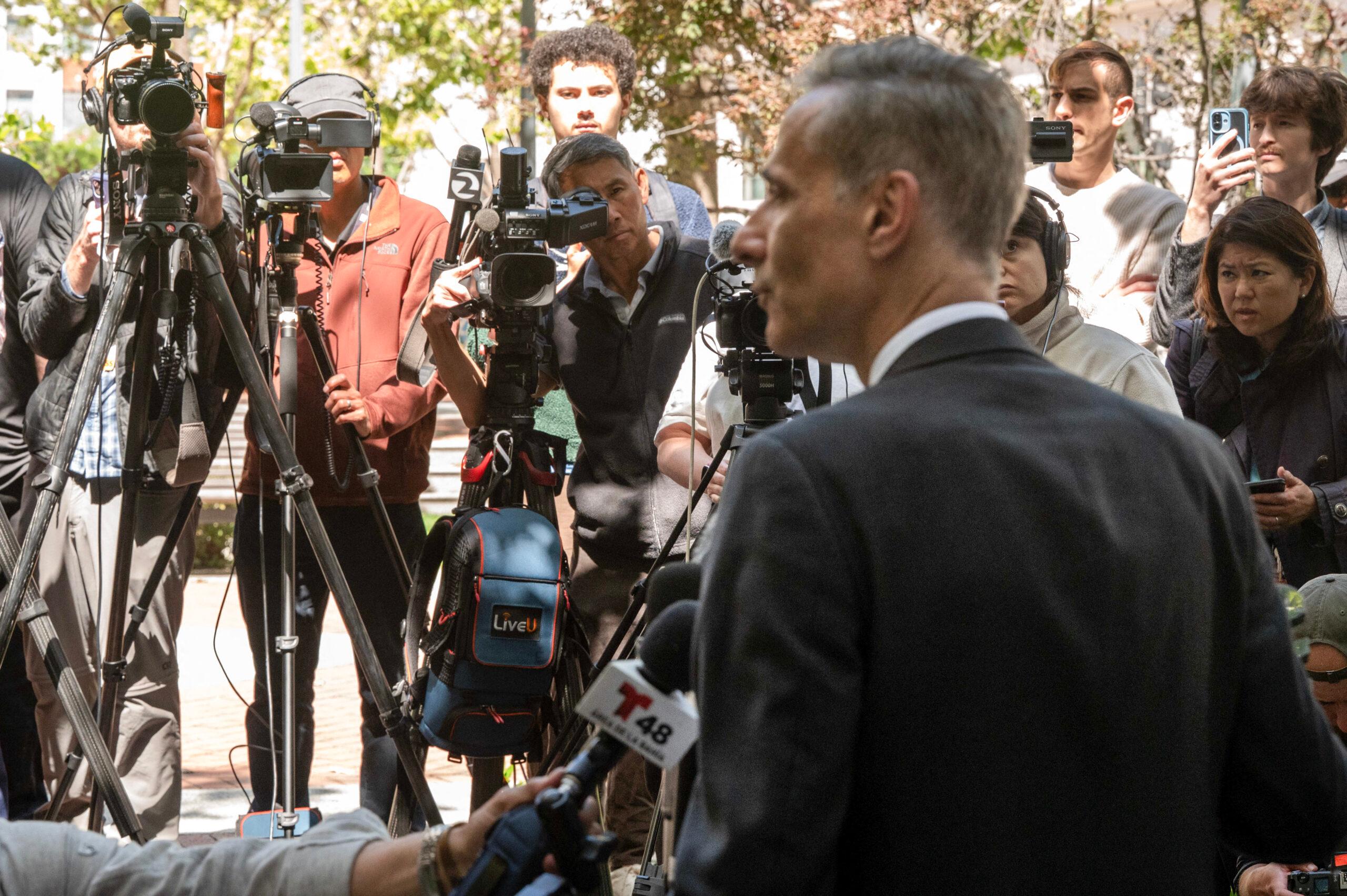
William Savitt outside the courthouse
“You suggested that the group meet at the haunted mansion you’d just bought near SF, correct?”
You know what, I just feel really blessed that this unexpected question from Savitt in Musk’s cross-examination, about a meeting Musk called in 2017, led me to the following 2020 New York Post headline: “Elon Musk describes ‘bleak’ life in ‘strange Gatsby-like house.’” There are cathedrals everywhere, and so forth.
And speaking of real estate …
The Pioneer Building
One way that Savitt needled Musk throughout his cross-examination was by picking apart his early $38 million donation to OpenAI. A healthy sum, to be sure! But not quite as hefty when held up against some ambitious boasts Musk had made back in the day—like that he’d be good for a billion-dollar investment if needed. “At a certain point,” Musk sniffed when asked about the difference, “I lost confidence in the team.”
“Thank you for the reminder,” Savitt said. “My question to you was simple: did you contribute anywhere near a billion dollars to OpenAI?”
Musk got annoyed. “I contributed my reputation!” he stressed (with a cadence reminiscent of Will Ferrell yelling that he drives a Dodge Stratus). “These things have value! Without me, OpenAI wouldn’t exist! I came up with the name!”
“My question was simple,” Savitt replied. “You didn’t contribute anywhere near a billion dollars in OpenAI: yes or no?”
“In strict monetary terms, I contributed $38 million,” Musk finally said.
Savitt also poked at a portion of Musk’s investment that came in the form of covering rent at the Pioneer Building in San Francisco, suggesting that since Musk’s company Neuralink was located there, wasn’t Musk kinda already on the hook for the space anyway? (“I would have sublet it!” Musk said.)
Tesla Founders Series Model 3
“By the way, in appreciation for what you’ve done to get OpenAI to where it is today, I would like to give you each a Founder Series Model 3,” Musk wrote to the OpenAI inner circle in July 2017. “These are the earliest cars produced and not available to the public.”
A lovely gesture! And also one that Savitt tried to leverage into one more little gotcha: it was around that time that Brockman had proposed a ramp-up in OpenAI’s for-profit operation. So if Musk truly cared so much about OpenAI’s nonprofit status, why was he busy doling out free vehicles like Oprah instead of raising contemporaneous hell?
Musk protested that “to be clear, I paid full price for the Teslas—I didn’t get a discount!” Whereupon Savitt responded with an “oookay!” in such a soothing, chipper manner that I expected him to continue on to say the entire “... grandma, let’s get you home” meme. If I’d been taking a sip of water at that moment, I for sure would have snarfed.
And speaking of cars …
“Someone might steal your car isn’t the same as someone has stolen your car.”
During cross-examination, OpenAI’s lawyers similarly tried to undermine Musk by asking why he waited until 2024 to sue if he was soooo concerned about the emerging Microsoft partnership back in 2019. Musk explained that while he’d had his suspicions early on, he needed time to confirm the nonprofit had actually been fully “looted.” Feels like maybe he should stick with the Three Phases explanation. It’s cleaner.
“If we’re going to achieve a better human-AI symbiosis…”
On Tuesday, during a casual romp through his résumé, Musk explained that Neuralink helped humanity by enabling people who are paralyzed to control their computer and phone with their mind, via an implant in their brain. And then he also noted that Neuralink’s “long-term goal is actually AI safety …. if we’re going to achieve a better human-AI symbiosis, we’re likely to have a future with AI that is good for humanity.” OK! Unless …
Enormous AI-enabled robot army? Enormous AI-enabled robot army!
“Do you recall telling analysts that Tesla was going to be building an enormous AI-enabled robot army?” Savitt asked. Musk said he didn’t, so Savitt tried again.
“Did you say the following words on an analyst call?” Savitt said, reading from the evidence: “So, like, my fundamental concern with regard to how much voting control I have in Tesla is if I go ahead and build this enormous AI-enabled robot army, can I just be ousted sometime in the future?”
Musk supposed he had said this. The imagery of it all made me remember another thing I’d read in The Infinity Machine. Way back before Musk had been motivated to help create OpenAI in an attempt to wrest away the dominance Larry Page and Google had over the superintelligence race; back before he’d soured on Hassabis, Musk had been a fan of DeepMind’s efforts. At a Founders Fund retreat in 2012, he met Hassabis and the two men talked about their interests:
Musk and Hassabis had discussed which mission mattered most: space travel, which might turn humanity into a multiplanetary species, or developing AGI, which might empower humanity to solve any and all problems. Musk had decided that humans needed to colonize Mars in case disaster struck Earth. Hassabis had countered that killer AI robots might be one such disaster, but that the AI could obviously follow humans to Mars if it wanted to. The two men had forged a competitive friendship, and Musk had decided that Hassabis was right: Powerful artificial intelligence might indeed be more consequential than spaceflight.
“If we build the robots,” Musk told the court on Wednesday, “I can make sure that they’re safe, and we don’t have a Terminator future situation.”
“The meeting with President Obama wasn’t the last time you were in the Oval Office, was it, Mr. Musk?”
Following an exchange about a 2015 Oval Office visit with President Obama in which Musk said he educated the president about AI safety, Savitt pivoted to a question surely intended to pique the interest, and maybe even the annoyance, of the multiple jury members who entered the trial with a pre-existing skepticism of Musk. (In questionnaires filled out during jury selection, a number of them noted Musk’s DOGE work as the thing they most disagreed with.) In comparison to Altman—about whom most jurors said they had no opinion, even the ones who use ChatGPT—Musk’s divisive Q rating may present more of a headwind.
Continuing his political line of questions, Savitt remarked to Musk: “You’d agree with me that one risk of AI is that it might incorporate human prejudices, won’t you?” But Musk, as he’d been all day, was in no mood to agree with his interlocutor. “That’s not the biggest risk,” he argued matter-of-factly, because he’d sworn an oath to tell the truth, you know? “The biggest risk would be that AI kills us all,” he added. So help us, God.