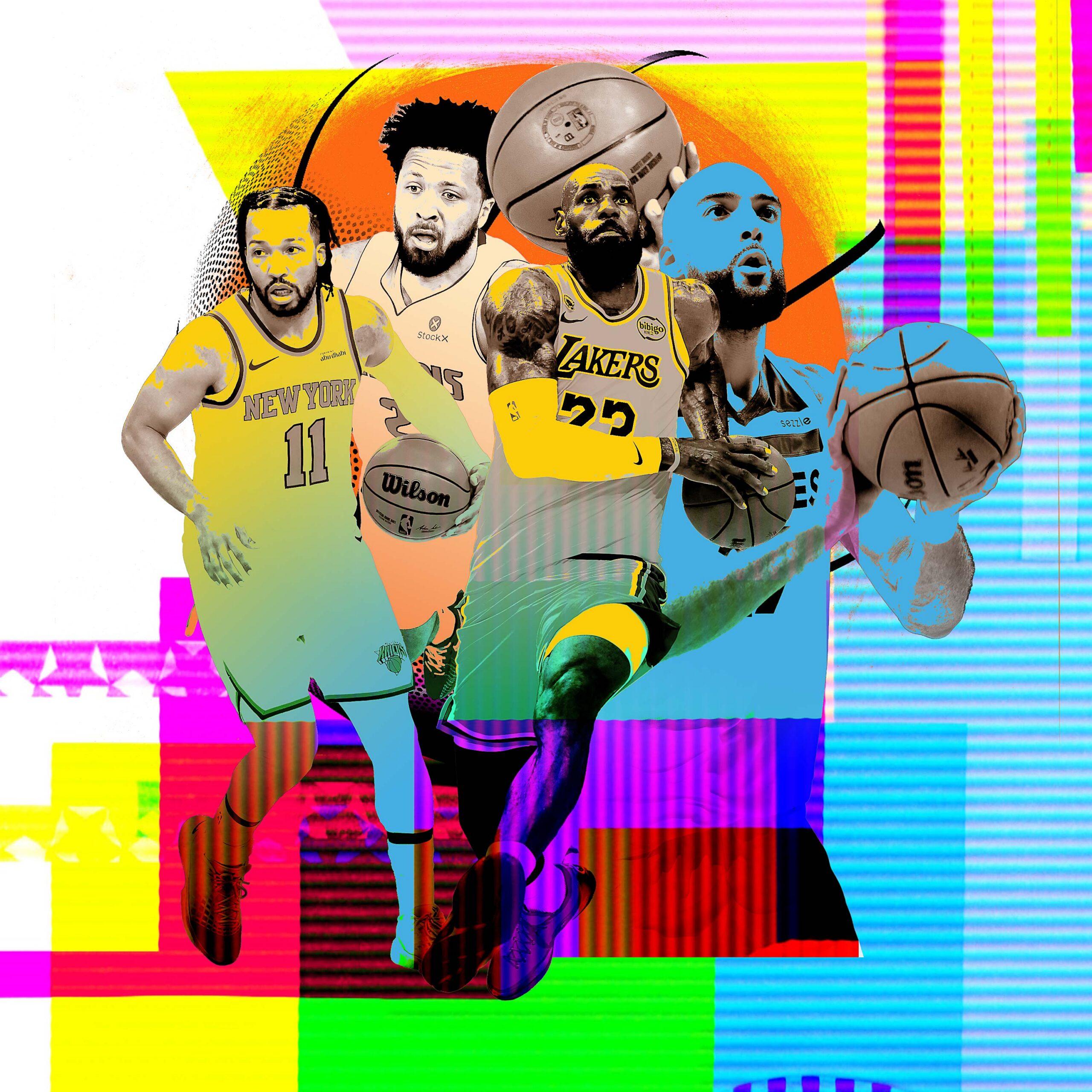

After one of the more exhilarating, consequential, and undeniably sloshed first rounds in recent NBA playoff history, the conference semifinals are here. Eight teams are still standing, and all of them have what it takes to reach the NBA Finals. Questions abound, though. As we get ready for what should be an incredible few weeks of basketball, here’s a question that will help decide each second-round series.
Spurs-Wolves: Can the Stifle Tower do it again?
Rudy Gobert has spent most of his career as a foil, forever situated as an impediment for someone else to overcome. But after he stood tall as the primary reason his Minnesota Timberwolves vanquished Nikola Jokic’s Denver Nuggets last week, I’m starting to wonder whether these playoffs might serve as some kind of redemption tour. What would Gobert look like as a hero?
The four-time Defensive Player of the Year should already be a lock for Springfield, but by making Victor Wembanyama’s life a living hell in the second round, the 33-year-old would pretty much override every playoff-related criticism that’s ever been levied against him.
Game 1 was a very good start. Wemby flashed the skills that allow him to do pretty much whatever he wants. He pushed Gobert out of the paint, forced him to guard inverted pick-and-rolls, and made him backpedal in transition. But those were just blips. Wembanyama managed just 11 points on 5-for-17 shooting. In the 21 minutes Gobert and Wemby shared the floor, San Antonio’s offensive rating was a paltry 104.7, and the mentor got the best of his mentee in spots that really mattered:
The two Frenchmen have known each other for years but had faced off only once this season, during a regular-season clash back in January. When you look at the tape, the biggest difference between this test and the one Gobert just passed against Jokic is how often the Wolves center will have to dance on the perimeter. One minute Wemby is curling off a wide pindown, and the next he’s popping out for a 3 off a flare screen. San Antonio’s MVP candidate keeps you on your heels. He missed all eight of his 3s in Game 1, but he’s too good a shooter to leave alone and too quick off the bounce to jam (as you’ll see below). Gamble in any way, shape, or form, and you’ll be dead in the water:
It’s a long series. Wolves coach Chris Finch may eventually tinker with matchups, move Gobert around, and, like the Portland Trail Blazers did with Donovan Clingan, stick him on Stephon Castle—a stratagem that allows Minnesota to sabotage Area 51’s two-man game by switching at the point of attack. Offense matters, too, meaning that Gobert won’t match Wemby’s minutes because doing so allows the Defensive Player of the Universe to roam freely around the paint. It’s why Julius Randle will check Wembanyama quite a bit, and Naz Reid’s minutes will be critical if Minnesota wants to win the series.
But if the Timberwolves are generally able to keep Gobert on Wemby, stay home on the perimeter, and force everyone else on the Spurs to make shots, they just may pull off yet another upset. And if that happens, we’ll have to conclude, as a basketball-watching society, that Minnesota is forever the favorite going forward in every series it steps into.


Thunder-Lakers: Is Marcus Smart the key?
Spoiler alert: No. From L.A.’s perspective, the key to this series does not exist. There is no dead bolt or security code. To beat the Oklahoma City Thunder, the Lakers will have to pull off a heist that’s audacious enough to make Michael Mann wonder whether he should’ve gone harder shooting the bank robbery in Heat.
The Thunder could win every game in this series by 20 points. To say nothing of how lopsided the matchups between these two teams were in the regular season when Luka Doncic was actually healthy enough to play, the Lakers committed turnovers like it was their job against the Rockets in Round 1—4.3 more per 100 possessions than they averaged during the regular season, when they already coughed the ball up at an above-average rate. The Lakers will be shoveling dirt on their own grave if that trend continues against OKC.
But! If Jalen Williams does not play in this series, L.A. will at least be able to focus its defensive game plan on making Shai Gilgeous-Alexander as uncomfortable as humanly possible. The good news there? Marcus Smart is still incredibly annoying. When guarding SGA, the 2022 Defensive Player of the Year will toggle between physical and flopping. He’ll bump, deny, hold, grab, scratch, and claw. Then he’ll act like a cannonball just exploded into his midsection whenever Shai uses his off arm to create separation. Drawing offensive fouls will be his prerogative. How many times can he dupe the referee into thinking a Thunder big just set a moving screen? At least once a game. (Smart has forced the most turnovers in the playoffs.)

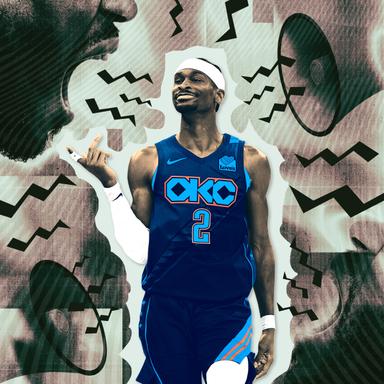
Smart and SGA haven’t shared the court since November 12, a blowout Thunder win that LeBron James and J-Dub did not appear in. Smart was the reigning MVP’s primary defender that night, but the Lakers were quick to switch just about every screen. It’ll be interesting to see whether JJ Redick sticks to that script. Will he ask his best defender to tail Gilgeous-Alexander everywhere he goes? Plant him on Chet Holmgren so he can blow up OKC’s most potent two-man game? Or maybe even have him clog the paint by helping off Lu Dort, Cason Wallace, or Alex Caruso?
Odds are that every option will be futile. The Thunder have counters for everything, and SGA has seen it all. But Smart has quietly, once again, been an excellent defender this season, and on the other end, if he manages to sustain his hot 3-point shooting and cut out all those silly turnovers, the Lakers may be able to give themselves an infinitesimal chance of avoiding ritualistic humiliation.
Knicks-76ers: Who is the best player in this series?
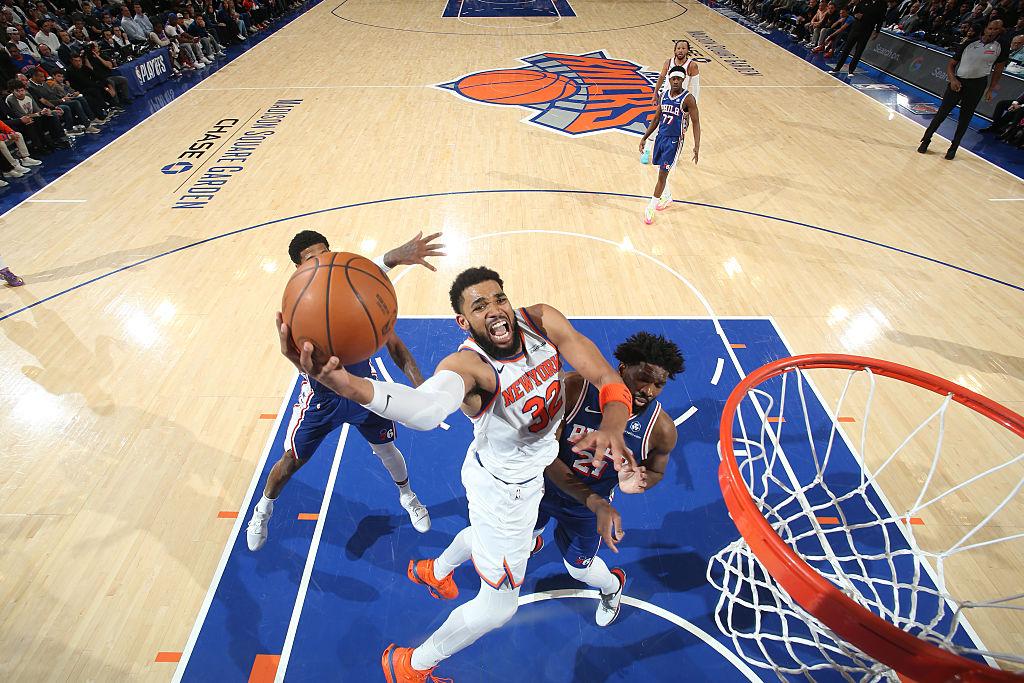
Game 1 was a tone-setting blowout of epic proportions that may ultimately mean very little. Going forward, so long as everyone remains healthy, one of the more compelling elements in this matchup still might be the way it completely bucks an old NBA aphorism: Whichever team has the best player will probably win the series. It’s obviously not a foolproof rule, but the Knicks and Sixers turn this saying into a pretzel: If you asked 10 NBA writers to rank the best players in this series, you might get 10 different lists. Among Jalen Brunson, Tyrese Maxey, Joel Embiid, Karl-Anthony Towns, Paul George (!), OG Anunoby (!!), and VJ Edgecombe (!!!), there is no unanimous order.
Strengths and weaknesses can be debated for days. Of those aforementioned names, some will pounce on mismatches, and others will be hunted. Some will take over in crunch time, and others will watch their jumper desert them at the worst possible time. The next few weeks could alter the trajectory of several historically significant career arcs. An opportunity to rewrite a stale narrative or reinforce one that’s never been more genuine. Everyone with cachet has something to prove.
There are fascinating strategic subplots that will be covered as this series develops, but it’s impossible to ignore the history we have with its main characters. What if Embiid bounces back to stamp his first trip to the Eastern Conference finals at the age of 32? What if Towns continues to lucidly govern an unstoppable Knicks offense that centered itself on his singular skill set in Round 1? Remember Playoff P? Any chance he throws Father Time another uppercut and continues to drill seemingly impossible shots as an elite two-way presence? Will Brunson’s offensive brilliance eclipse all concern about his defensive shortcomings (again)? Can Maxey turn things around and wreak enough carnage to be viewed as the single most unstoppable scorer in the Eastern Conference? Who, for however long this series lasts, is most likely to strap the opposing fan base to a hamster wheel in the pits of hell?
Big-picture reputational ramifications are prevalent in every playoff series. That’s why we love them. But this one carries an especially heavy amount of baggage. There’s so much frustration, pride, and pressure. In other words, this showdown is exactly what the postseason is all about.
Pistons-Cavaliers: Is the 3-point line all that matters?
Did you think the 3-point discourse died with the Boston Celtics? Guess again! The offenses run by Cleveland and Detroit are near polar opposites in their approach to the arc. In the playoffs, the Cavaliers rank second in 3-point rate, while the Pistons sit at 12th. That’s quite a gap.
Detroit’s defense was a bear trap during the regular season. But it allowed a crap ton of 3s, too, which didn’t exactly foster the friendliest advantage when they went head-to-head against Cleveland. Over four meetings, the Cavs averaged 8.3 more 3-point attempts per game than the Pistons. It’s a meaningful advantage created by a team that was neither at full strength nor in its current form when a vast majority of those shots were taken. We just saw something similar happen in the first round, where the Cavaliers advanced after launching 65 more 3s than the Toronto Raptors in their seven-game series. Meanwhile, the Pistons survived despite watching the Orlando Magic jack up 4.2 more 3s per game in their seven-game series.
On most fronts, this is by design. The Pistons protect the paint as well as any team in the league. That’s their priority. But they severely lack respectable shooters on their own attack. Combine those two character traits, shove them up against a team that will be happy to fire away, and, well, I’m not conducting brain surgery here: If the Cavs make a bunch of their outside shots, there’s a very good chance they will win the series going away.
Basketball is not that simple, though. Three is more than two, but more information is necessary if you want to determine how much each attempt actually matters. Who took them: Sam Merrill or Jarrett Allen? Were they open or contested? Above the break or from the corners? Off the dribble or spotting up? How much time was on the shot clock? It’s a double-edged sword, too. If the Cavs can’t create quality looks and/or don’t regularly knock down the good ones, the Pistons will have them in a vise grip.
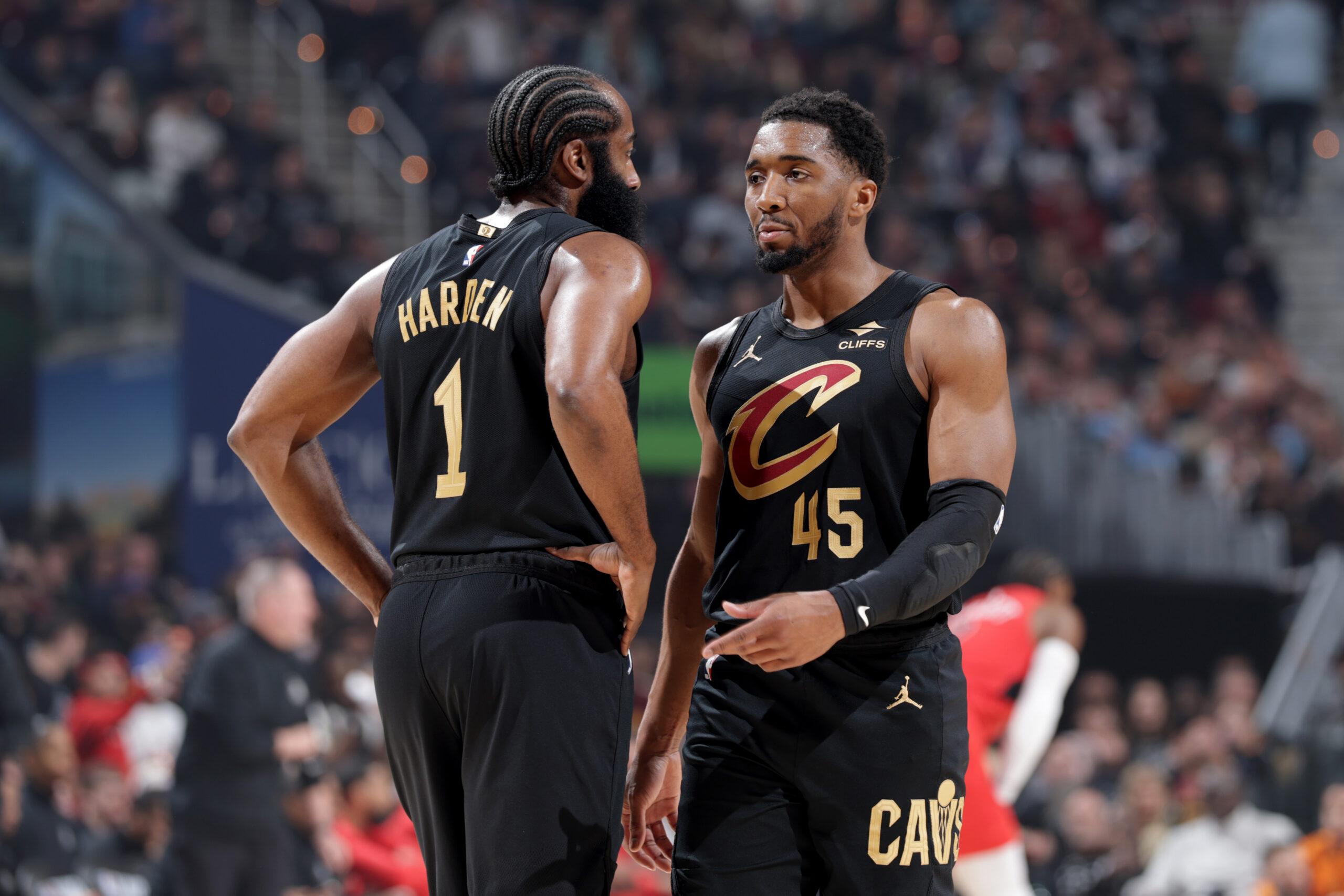
There’s no guarantee that launching more 3-point attempts will lead to victory. Truth be told, there are other areas—positional cross matches, lineup choices, and statistical markers—that are critical to this series. How will Cleveland respond when Cade Cunningham hunts Donovan Mitchell and James Harden? If and when the Cavs put Evan Mobley on Ausar Thompson and let him roam free as a deterrent, will J.B. Bickerstaff need to cut his best defender’s minutes? And on the flip side, how hard will Cleveland lean into hunting Duncan Robinson with either Mitchell or Harden? Will he get played off the floor, or will Bickerstaff live with a crack in his defense, knowing Robinson’s movement shooting makes him arguably the team’s second-most valuable offensive player?
So much of this is connected to the 3-point line. It’s a major plot point, and no team should feel pumped about being on the wrong end of a severely lopsided margin. Whether Cleveland is forcing Detroit to take shots it isn’t comfortable with or unleashing Sam Merrill, Max Strus, and Mobley from downtown at a high clip, this series may ultimately be decided by each team’s relationship with the 3-point line. Right now, that’s looking like an area Cleveland should prioritize and dominate.