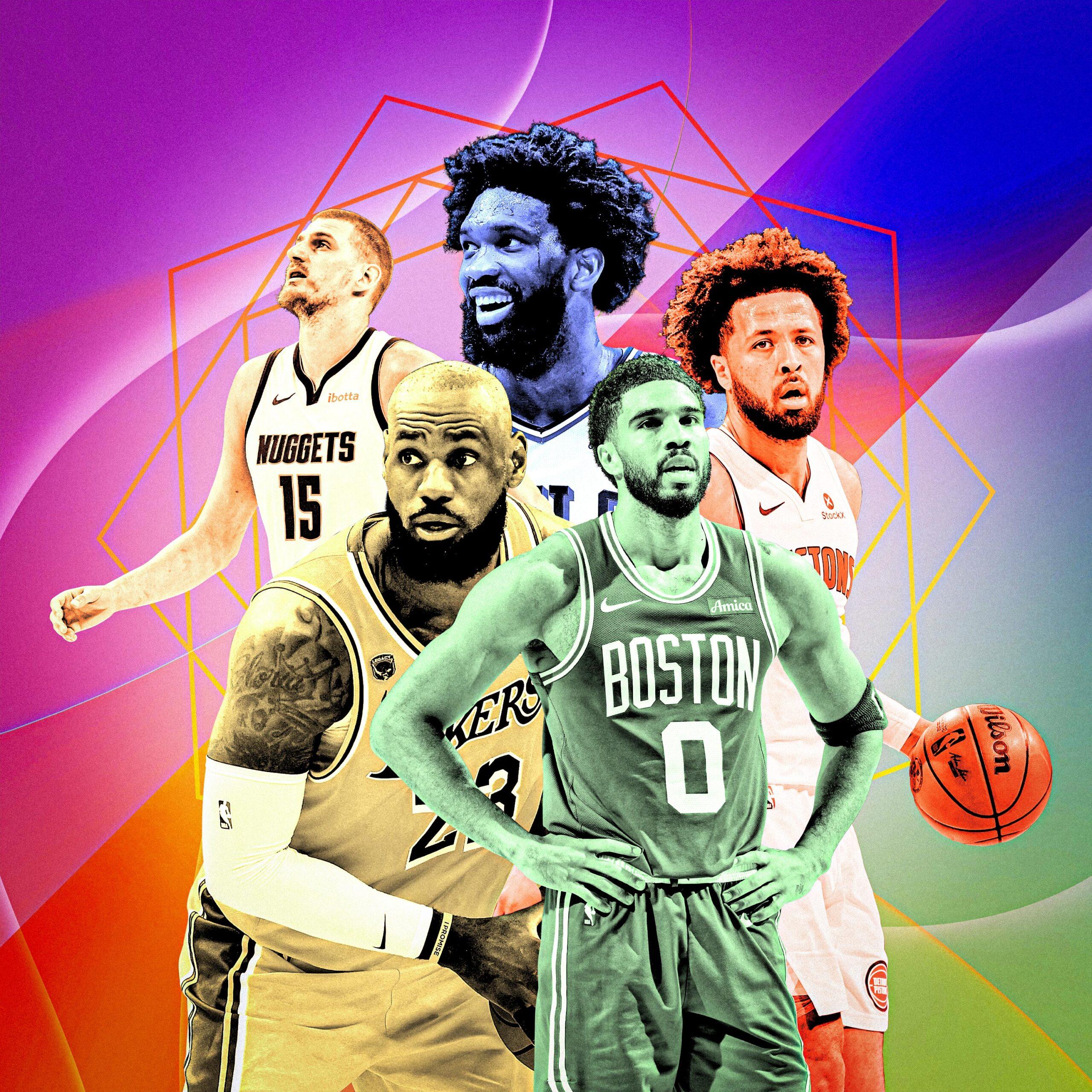

Jaylen Brown was still processing the painful end of the Celtics’ season—a stunning first-round loss to the Philadelphia 76ers, capped by a crushing Game 7 defeat in Boston—when he was asked to put his emotions into words. The first adjective he landed on? Great. And not in a sarcastic sense, either.
“Great season,” Brown said Saturday night. “Obviously, it didn’t finish the way we would have liked. … Just from our guys, to come out for a Game 7 and play with that level of intensity, play with that level of trust, that’s the style that we feel like we’ve been doing all year, and I loved it. It was a pleasure.” The Celtics had “come up a little bit short,” Brown said, but “nothing for our team to hang our head over.”
Minutes before Brown took the podium, Celtics coach Joe Mazzulla had spoken into the same microphone and philosophized about the tension of the human experience. “When you go after greatness, you have to accept the other side of that,” he said. “That's just kind of the duality of how things work.”
The kids might snarkily dismiss this all as “cope,” but the truth of the Celtics’ season was profoundly complicated. If there’s a level of human experience beyond duality, the Celtics lived it these past 12 months—from the devastation of Jayson Tatum’s ruptured Achilles last spring, to a dramatic roster overhaul, through an offseason of doubt and ultimately a stunning winter revival.
The Celtics were supposed to take a “gap year” without their brightest star; they won 56 games. Brown was supposed to wilt without his superstar tag team partner; he became a fringe MVP candidate. Tatum was supposed to miss the entire season; he returned in March, reclaiming his dominance over the stretch run and entrenching the Celtics as contenders once more.
Boston surged to a 3-1 lead over the Sixers … only to lose the next two games, then lose Tatum to knee soreness, leaving the Celtics outmanned in Game 7. They’ll go down as just the eighth no. 2 seed to lose to a no. 7 seed and the 15th team to lose a series after leading 3-1.
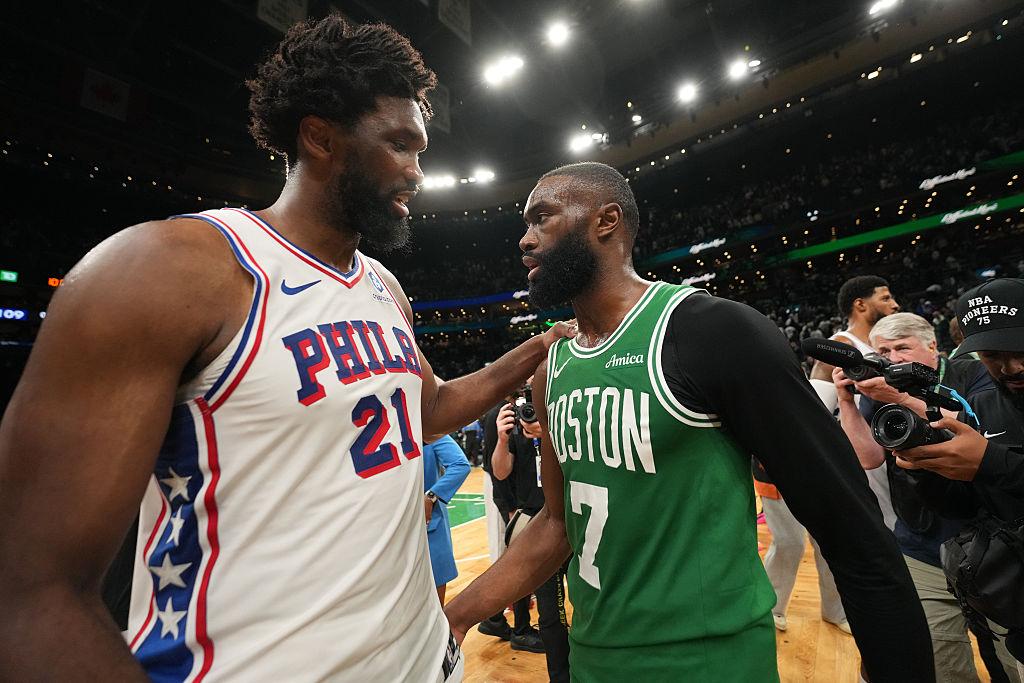
Joel Embiid and Jaylen Brown after Game 7
It all looks bad in the abstract and through the lens of history. No one wants to be on those lists. But this was a most unusual Celtics campaign, concluding against a most unusual first-round opponent. The Sixers, for all their warts and volatility, are stacked with All-Star talent, from Joel Embiid and Tyrese Maxey to the aging (but still dangerous) Paul George to the very young (but very dangerous) rookie VJ Edgecombe. “I don’t feel like that was a traditional seventh seed,” Brown said, and he was right.
But then, this entire first round was untraditional—unconventional, unpredictable, weird, occasionally painful, and sometimes bordering on absurd—and it was marked by prolonged series, razor-thin talent margins, and two major upsets. If it felt chaotic, it wasn’t your imagination. By almost every measure, this was the most volatile first round in recent memory:
- All told, there were 48 games in the first round—the most since 2014 (50) and the second most in the past two decades. The average since 2003 (when the NBA adopted the best-of-seven first round) is 43.7.
- Of the eight first-round series, six lasted at least six games—the most since 2014 (also six).
- Three series went the full seven games—also the most since 2014, when there were five. Every series in the Eastern Conference went at least six.
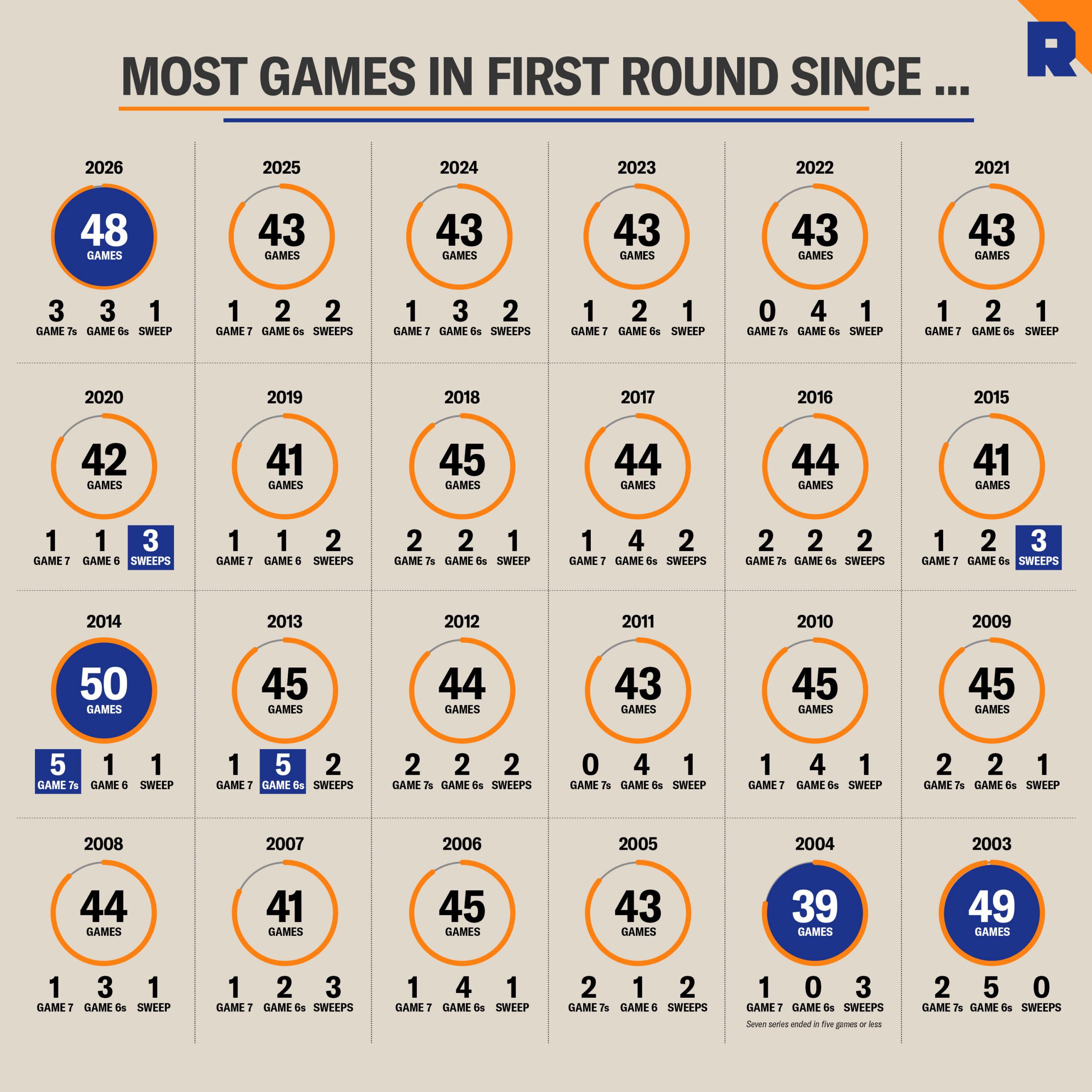
- Two teams overcame 3-1 deficits to win a series, with the Sixers rallying to beat the Celtics and the Detroit Pistons doing the same to Orlando. Before this year, there had been just 13 instances of that happening in NBA history. It did happen twice in the 2016 postseason and twice in the 2020 postseason, but this is the first time two teams have pulled it off in the same round.
- Two top-three seeds were ousted: the no. 2 Celtics in the East and the no. 3 Denver Nuggets in the West (whoops). And it took the top-seeded Pistons a seventh game to avoid the same fate.
- Nikola Jokic, widely regarded as one of the two greatest players in the world, was ousted when his Nuggets fell to the Minnesota Timberwolves in six games. The second round will thus begin without Jokic, Brown and Tatum, Kevin Durant, and several other superstars whose teams missed the playoffs entirely, including Stephen Curry, Kawhi Leonard, and Giannis Antetokounmpo. (We could also include Tyrese Haliburton, who missed the entire season after rupturing his Achilles in the 2025 Finals.)
- Oh, and meanwhile, LeBron James, at 41 and in his 23rd season, led the Los Angeles Lakers to a six-game victory over the Houston Rockets.
“The first round has been by far the best I've seen,” said Stan Van Gundy, who spent nearly three decades on NBA benches as an assistant and head coach. “Usually, in the first round you get a couple good series, and the rest of them aren’t very good. Usually, your 4-5 series are pretty good, and maybe your 3-6. But the top two teams usually roll. We’ve had six good series out of the eight. That’s phenomenal.”
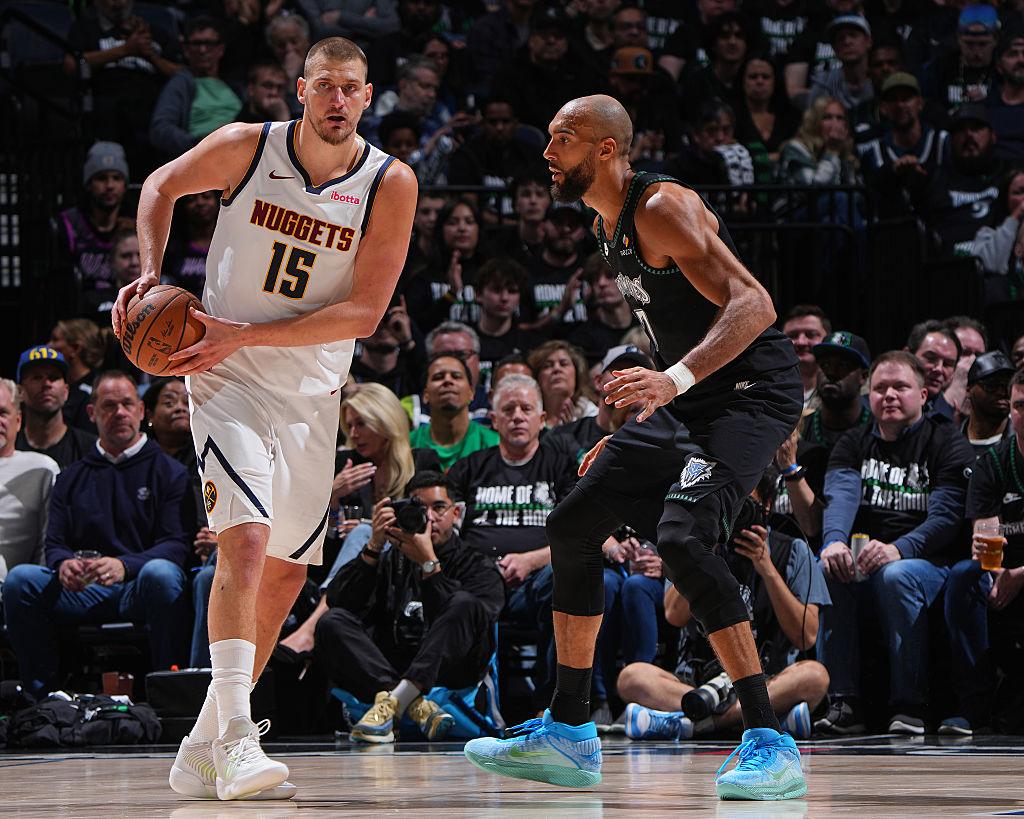
Nikola Jokic during Game 4 against the Timberwolves
And what’s become clear, to Van Gundy and most other league observers after this two-week roller coaster of results, is that the NBA has only two truly elite teams right now: the Oklahoma City Thunder (who swept the Phoenix Suns) and the San Antonio Spurs (who dismissed the Portland Trail Blazers in five games). That’s it. End of list.
But the margin in just about every other first-round series looked frightfully slim. Every team seemed equally talented and equally flawed. (Asked for his assessment last week, one NBA scout looked at me and just held two fingers a centimeter apart.)
The NBA’s new age of parity has mostly been defined by the rotating door of Finals champions (seven franchises in seven years) and Finals participants. Even conference champions can’t repeat anymore. But the 2026 postseason is shedding light on a different brand of parity, where the talent differential between a 60-win team and a 45-win team is much closer than the standings suggest.
“I think there's parity everywhere, except at the very top,” said Van Gundy, now the lead analyst for Amazon Prime. “I think that OKC and San Antonio are just way out in front of everybody else. And going forward, I think that's only going to get worse.”
The tanking race this season created a bottom tier of about 10 teams. But in between the poles at bottom and top? “Three through 20 in the league are pretty close,” Van Gundy said. “I think you could match up about anybody and expect a good series. … You’ve got a huge group of good teams.”
Anytime a top-three seed goes down in the first round, it’s a big deal. But on closer examination, even this year’s upsets don’t look like major upsets. The Sixers’ modest win total (45) was mainly a reflection of Embiid and George missing huge chunks of the season. The Magic, who nearly shocked the Pistons, also won just 45 games while dealing with a series of injuries to their key players, including Franz Wagner and Paolo Banchero. Given healthy rosters, neither of these teams would have been so low in the standings.


More on the NBA Playoffs
Injuries to key players have also inexorably shaped the playoffs to date, with Lakers star Luka Doncic missing all of the first round (and costar Austin Reaves missing the first four games), Durant missing all but one game for the Rockets, Anthony Edwards missing the Wolves’ final two games, Aaron Gordon missing half of the Nuggets’ series, Franz Wagner missing the Magic’s last three games, Embiid missing the Sixers’ first three games, and Tatum missing the Celtics’ final game.
In this era of unparalleled parity, a single ankle turn could change the course of history. Or, in Boston’s case, one sore knee.
The Celtics, who just one week ago looked like the favorites in the East, now head into another offseason of uncertainty and nagging questions. What if Tatum had stayed healthy? What if the supporting cast just isn’t good enough? And where will they stand next season, amid an Eastern Conference with a revived contender in Indiana, an evolving powerhouse in Detroit, a ferocious rival in New York, and rising squads in Orlando and Atlanta … to say nothing of the team from Philly that just bounced them from the playoffs?
There’s a lot to consider for all of them, including Celtics president Brad Stevens, who was just named Executive of the Year for his deft work remaking the roster last summer—an effort that led, surprisingly, to a wildly successful regular season.
It was indeed a great run, as Jaylen Brown asserted. Just not great enough. Certainly not in Boston, where banners are all that matter. But then, that’s the duality of life in the NBA.