

One Battle After Another is the heavy favorite to win Best Picture at the 98th Academy Awards this Sunday. The film has been raking in hardware during awards season, including the Producers Guild Award for Best Theatrical Motion Picture, the most accurate Best Picture predictor among the precursor awards leading up to Hollywood’s biggest night. Gold Derby’s experts favor its chances at about 76 percent. Odds aside, One Battle After Another would be a worthy winner of the Oscars’ top honor. But Sinners, which by all accounts appears to be the only other horse in this race, would be just as deserving as Best Picture.
Sinners might not be a perfect movie, but it’s the perfect blockbuster for the modern world of cinema. Directed by Ryan Coogler, Sinners is a crowd-pleasing vampire flick, yet it still incorporates big, thought-provoking ideas into a tale that seamlessly weaves together a rich tapestry of history and mythology. It boasts a star-studded cast led by Michael B. Jordan, and it puts on a masterful display of technical brilliance, including its cinematography (Autumn Durald Arkapaw), costume design (Ruth E. Carter), production and set design (Hannah Beachler and Monique Champagne, respectively), and sound (Chris Welcker, Benjamin A. Burtt, Felipe Pacheco, Brandon Proctor, and Steve Boeddeker). There’s a good reason Sinners earned a record-breaking 16 Oscar nominations; it’s just that well-rounded and dynamic a film.
Sinners is a cinematic achievement on many levels, but it’s also the rare modern blockbuster that’s an original story, and one that strives for authenticity. Although Sinners is a vampire movie, within its supernatural trappings is a work of historical fiction that’s crafted with tremendous research and care. The film faithfully recreates 1932 Clarksdale, Mississippi, as the Smokestack twins (Jordan) return home to open up their own juke joint after spending seven years in Chicago. Sinners captures the myriad hardships that Black Americans experienced under the grip of Jim Crow, from the lack of potential economic growth within the strictures of an exploitative sharecropping system to the ever-looming threat of violence at the hands of the Ku Klux Klan. But it also depicts the importance, and joy, that juke joints held as a safe haven for those same people, and the foundational role of the blues in American music.
“Very often, and rightfully so, that part of time and that physical location in the United States, is a place that’s associated with a lot of pain, a lot of shame, a lot of discomfort, but to completely look away from it is to not look at what else was there,” Coogler told IndieWire last year. “The resilience, the brilliance, the fortitude, and also the art, the artistic wonder, the cultural wonder.”

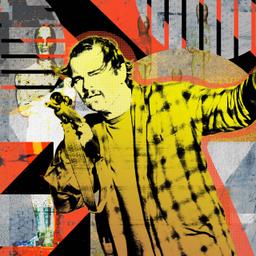

Coogler and his team draw from personal experiences and history to layer intricate details into every character and location. That extends to supporting, non-Black characters who represent cultures and communities who are often omitted from the legacy of the American South. Although their appearance is brief, a group of Choctaw Indians play an impactful role as they’re introduced while on the hunt for Remmick (Jack O’Connell), the ancient, Irish vampire who comes to terrorize the twins’ juke joint after being drawn by Sammie’s (Miles Caton) siren song. There’s also a pair of Chinese American grocers, Grace (Li Jun Li) and Bo (Yao), who own businesses directly across the street from each other, with one store serving white customers and the other serving Black customers. Whether with Choctaw vampire hunters wearing period-accurate clothing and speaking the Choctaw language, or the role that Chinese American groceries played in the segregated south, no detail is too small for Sinners.
Of course, on top of the film’s historical context and ideas surrounding race, inequality, and freedom, Sinners is a sexy, action-packed thriller that features flying vampires and so much blood. It draws from a long tradition of vampire movies, most notably Robert Rodriguez and Quentin Tarantino’s From Dusk Till Dawn, while still distinguishing itself as a work of art that feels distinct and original. Although it’s primarily categorized as a horror film, Sinners blends a multitude of genres into one stunning cinematic experience. And one of the key elements that separates it not just from this year’s field of Oscar nominees, but from most modern blockbusters at large, is the way it utilizes and centers music.


Music—specifically the blues—is the lifeblood of Sinners. It ties together the film’s story and themes, with its plot hinging on Sammie’s transcendent musical talents and Remmick’s desire to appropriate them for his own benefit. Composer Ludwig Göransson provides a brilliant score that will likely earn him his third Oscar, but some of the film’s best sequences are musical numbers that are powered by mesmerizing performances from the cast. In one of the boldest, most memorable movie scenes of the year, Caton’s Sammie performs “I Lied to You” (for which Göransson and Raphael Saadiq are also nominated for Best Original Song). As his deep, hypnotic voice fills the juke joint, Sammie connects the past, present, and future of Black music (along with Chinese opera, in a nod to Grace and Bo’s presence), unifying generations across time and space in the way that only music can.
The euphoric sequence’s twin is another musical number that finds O’Connell’s Remmick performing a bit of Irish folk music in his own attempt to connect with his past (and force the newest members of the vampire enclave to assimilate with his culture). Then there’s Pearline’s (Jayme Lawson) standout vocal performance of “Pale, Pale Moon,” and even the closing number from the elder Sammie (played by legendary blues artist Buddy Guy) that arrives in the mid-credits scene as part of the film’s true ending.

The fact that Sinners can be a transportative historical drama, a musical, and a supernatural horror flick all at once speaks to its vibrant creative nature, but also Coogler’s evolution as a singular filmmaker who can inject so much substance within the framework of a blockbuster that can still appeal to the masses. In the past, the writer-director has deftly worked within the boundaries of popular franchise IP like the Rocky movies (Creed) and the Marvel Cinematic Universe (Black Panther). With Sinners, Coogler had complete creative control—and, in a quarter-century, will have full ownership—of the story and its introduction to the film’s world. Sinners shares some of the DNA of a Marvel movie, even in its use of mid- and post-credits scenes, and it certainly could be the start of a franchise of its own. Coogler himself has said he has no interest in making a sequel, but it’s still a credit to him and his team that they created a compelling concept with room to grow.
At least in theory, the Academy Awards are a reflection of the year’s finest achievements in cinema. (In practice, that’s not always the case.) By extension, the Oscars should also reflect the global state of the film industry and its cultural impact. But the Academy has long struggled to navigate popular movies that don’t fit its traditional, rigid views of greatness, particularly when it comes to the prestigious Best Picture category. That’s why the awards show expanded the number of nominees from five to 10 in the face of public outrage over The Dark Knight’s exclusion in 2009, and why the Academy landed on the dubious decision to install a new “popular film” category in 2018 only to pull back after getting roasted online for the mere suggestion.
Sinners checks every box. It was a blockbuster cultural phenomenon and a critical darling, which the Academy has already recognized by honoring it with so many nominations. It would be the first horror movie to win Best Picture since The Silence of the Lambs in 1992, but also a genre-defying film unlike any other that’s received the Academy’s most coveted distinction. I wouldn’t be surprised or upset if One Battle After Another wins on Sunday; it’s a magnificent movie, and it’s about time Paul Thomas Anderson’s Oscars losing streak comes to an end. But I’ll be rooting for the ambitious ingenuity of Sinners and its potential to reimagine what’s possible at the Oscars, however unlikely that outcome may be.