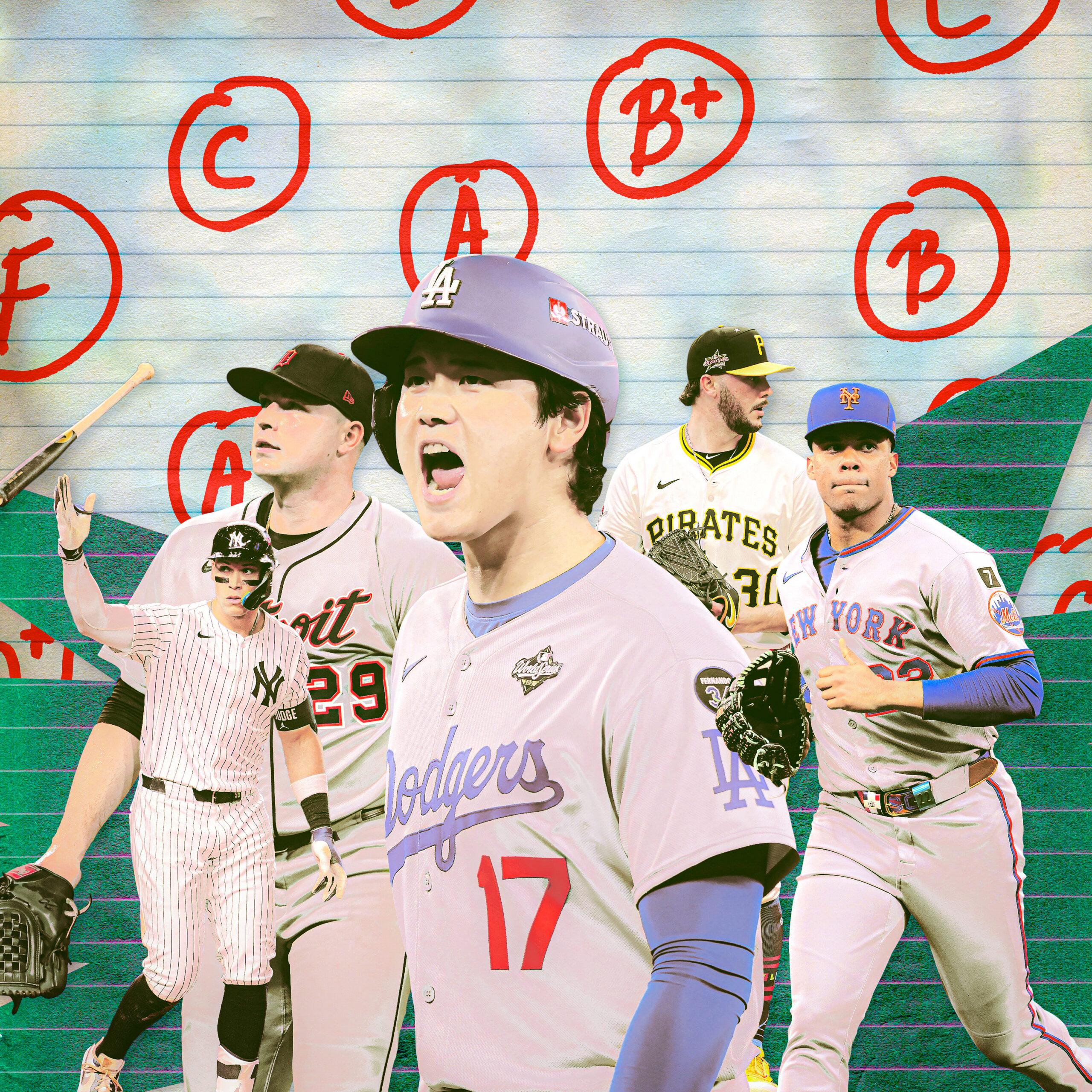

Pitchers and catchers have started to report to spring training across Arizona and Florida. The hot stove has finally cooled enough for us to take the pot off the burner and evaluate what happened this winter.
Modern baseball is increasingly punishing the fence-sitters. The teams that picked a direction by either shoving the chips in or tearing everything down have separated themselves from the ones waiting idly. Some front offices bought certainty. Some bought time. Others are simply waiting for something to happen.
Here are The Ringer’s MLB offseason grades. Teams that showed conviction and executed on it were rewarded. The grading committee (me) was less kind to the drifters.
NL East
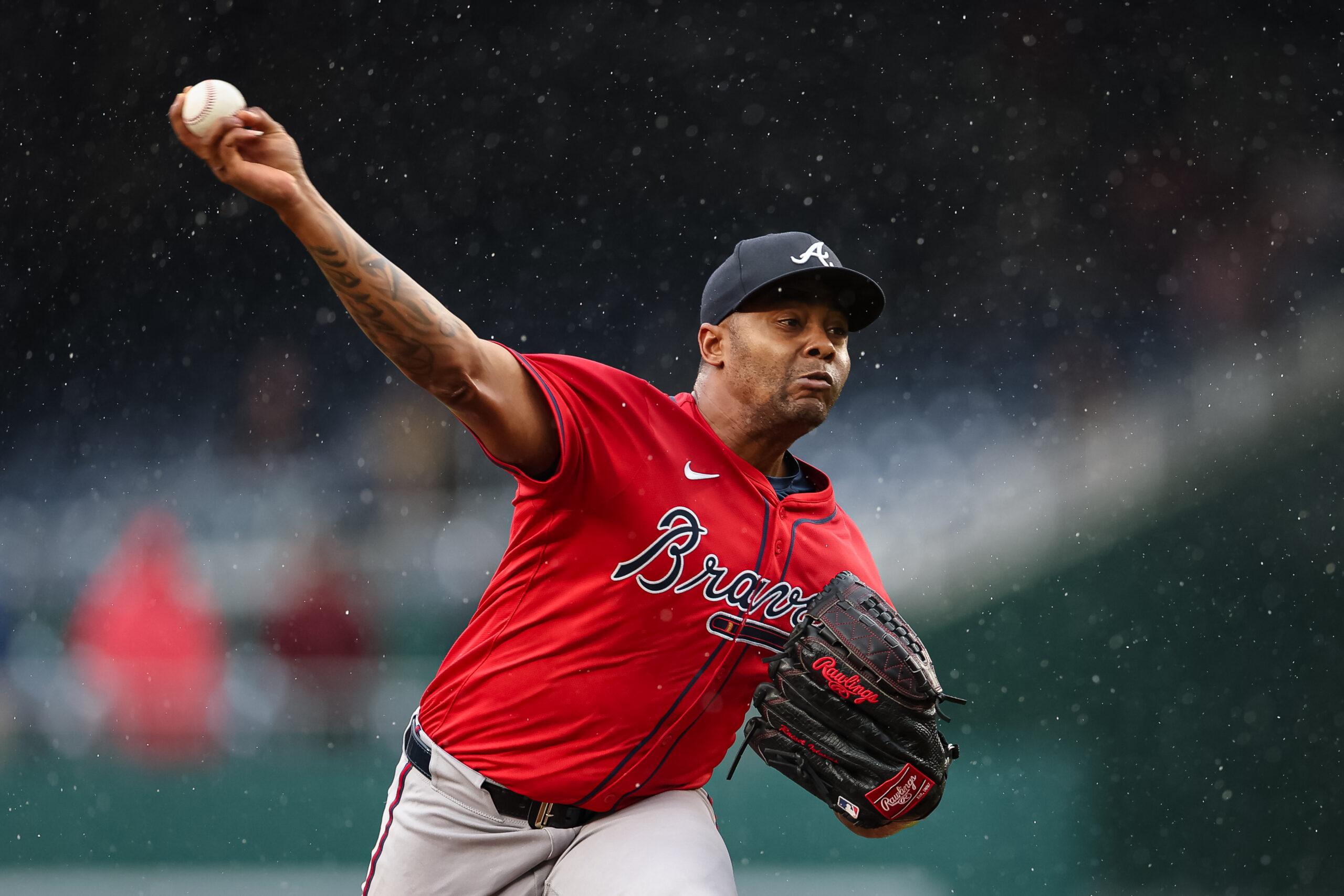
Raisel Iglesias pitches against the Washington Nationals
Atlanta Braves: B+
A quiet offseason last winter contributed to a disappointing 2025 and the franchise’s first missed playoffs since 2017, but the Braves didn’t make the same mistake again this year. Atlanta tried to address its biggest holes by spending in free agency. The addition of RHP Robert Suarez gives them an excellent one-two punch with Raisel Iglesias at the back of the bullpen, which finished 25th in WAR last year, according to FanGraphs. The Braves also gave a $20 million, one-year deal to SS Ha-Seong Kim following a season in which they ranked 28th in WAR production at the position. However, much like Atlanta’s 2024 and 2025, the injuries are piling up. Kim is set to miss four to five months with a hand injury after slipping on ice. The Braves also placed starter Spencer Schwellenbach on the 60-day injured list with an elbow injury.
Ultimately, the Braves tried to fix their two weakest links, but the baseball gods responded with a bit of misfortune. Could that lead the Braves to get aggressive in their reported pursuit of starter Chris Bassitt in free agency? That would bump them up even higher in the grades.
Atlanta still has a ton of prime-age offensive and pitching talent, but will it be able to play up to the regular-season levels we saw in 2022 and 2023? We’ll find out soon.
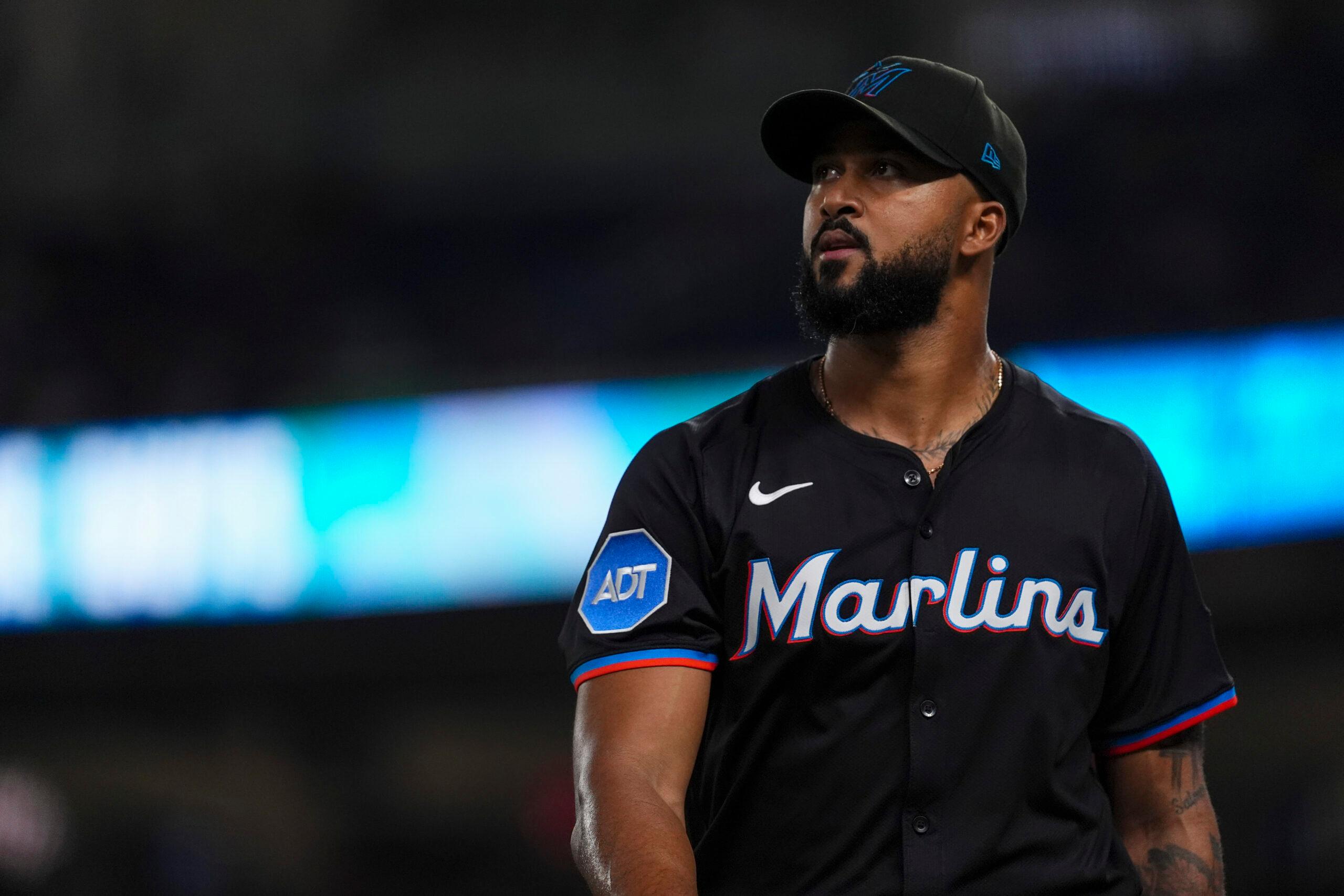
Sandy Alcantara walks off the mound in a game against the New York Mets
Miami Marlins: A-
The Marlins continue to use the trade market to flip their exciting but injury-prone pitching talent into young hitters with upside. They moved LHP Trevor Rogers to Baltimore at the 2024 deadline for OF Kyle Stowers, who was their best hitter in 2025, with a .912 OPS. Miami also traded starter Jesús Luzardo to Philadelphia for multiple prospects before the 2025 season and has continued that strategy into this offseason by moving RHPs Edward Cabrera and Ryan Weathers for prospect packages that feature OFs Owen Caissie and Dillon Lewis. Caissie will have an immediate runway to everyday playing time in MLB this year, while Lewis will continue to develop in the minors.
The starting rotation’s quality will depend on beleaguered former ace Sandy Alcantara’s injury record, but Miami is clearly on the path to developing its position-player talent.
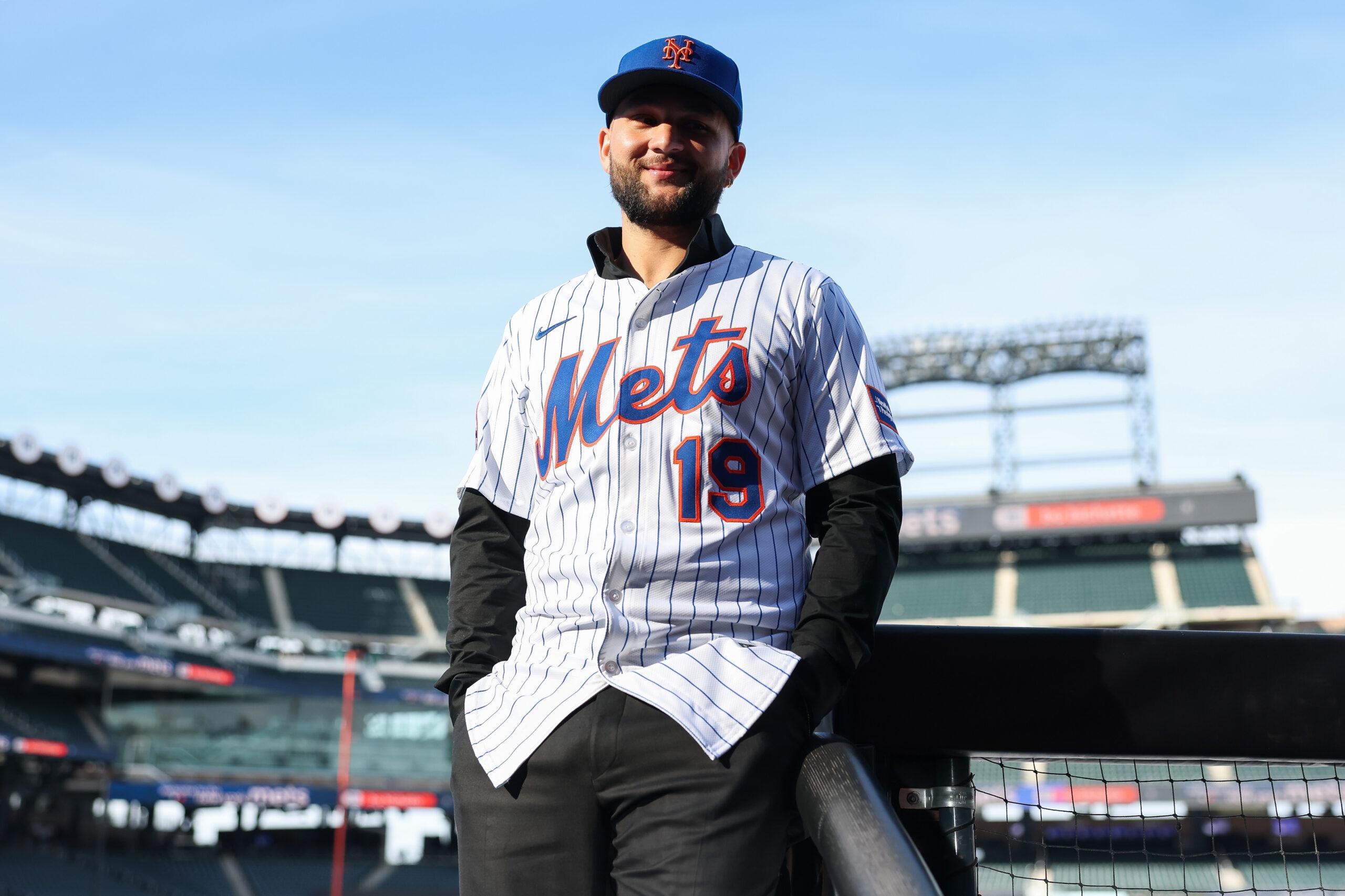
Bo Bichette poses for a photo during an introductory press conference after signing a contract with the New York Mets
New York Mets: B
The 2025 Mets offseason is a cautionary tale about why it’s important for fans and analysts not to overreact to the first few moves of the hot stove. The Mets rode quite the offseason roller coaster. New York lost core stars Edwin Díaz and Pete Alonso to free agency and then traded the fan-beloved Brandon Nimmo and Jeff McNeil. Mets owner Steve Cohen tweeted cryptically. The Mets thought they’d land top free agent Kyle Tucker. Then, when they didn’t, they immediately pivoted to beat the Phillies to Bo Bichette. In the end, president of baseball ops David Stearns completely rebuilt the roster. The 2026 Mets will have five different starters in their lineup compared to the end of the 2025 season. INF Jorge Polanco hasn’t regularly played first base before, but he will for the Mets. Bichette, a longtime shortstop, hasn’t played much at his new home at third. Former Ranger Marcus Semien is still an excellent glove at second (and will likely remain there for the Mets), but what’s left in his bat at 35 following consecutive seasons with a sub-.700 OPS?
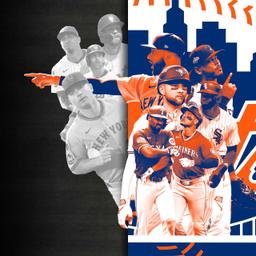
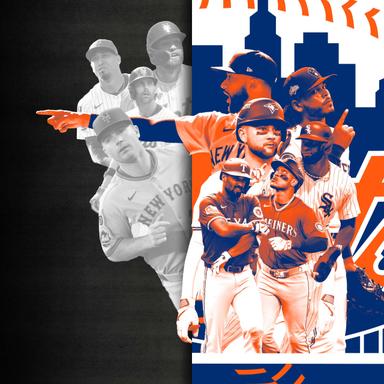
New York capped off a chaotic offseason with the addition of Brewers ace Freddy Peralta. Its rotation has a ton of depth, but Peralta is the much-needed top arm to anchor the staff so it can avoid a repeat of 2025, when the pitching staff crumbled in the second half.
Baseball almost never rewards excessive offseason roster overhauls, but the Mets just tried it anyway. It makes them the most interesting team to watch in 2026.
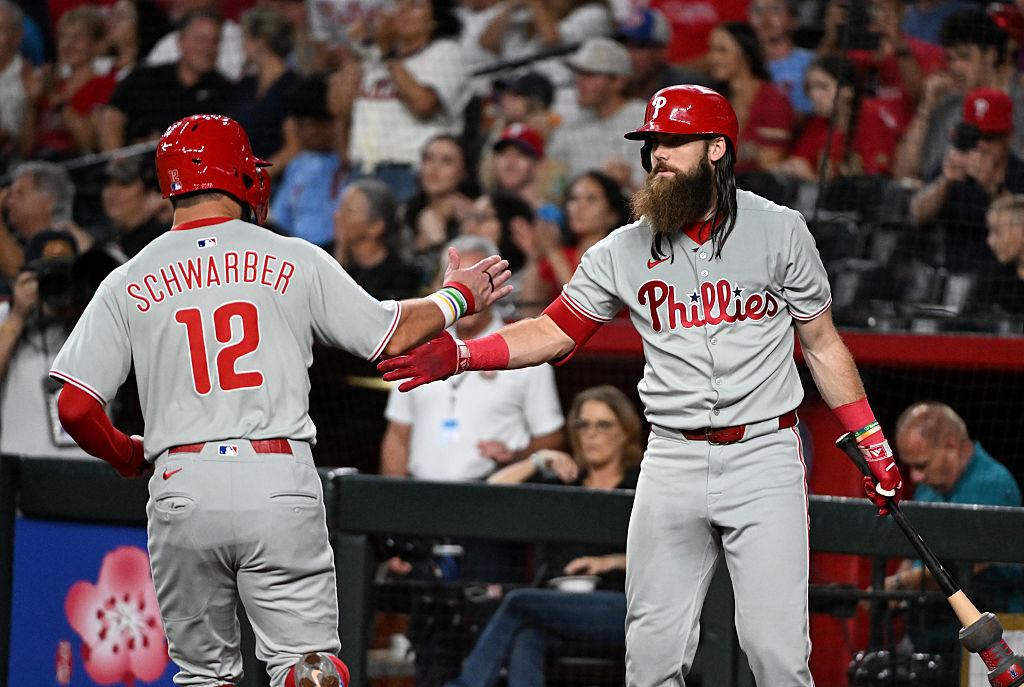
Kyle Schwarber and Brandon Marsh celebrate after scoring on a sacrifice fly hit by JT Realmuto
Philadelphia Phillies: C-
The Phillies are officially in danger of running it back one too many times. It’s not that the Phillies did nothing, but all of their moves read as status quo. Nick Castellanos is on his way out, but they replaced him with Adolis García, another flawed and aging hitter with plate discipline concerns. Rookie outfielder Justin Crawford, son of the former All-Star Carl, will be tasked with starting in center field. Otherwise, it’s more of the same for Philadelphia offensively. The team with the second-oldest lineup in MLB last year re-signed both Kyle Schwarber (32) and J.T. Realmuto (34).
Philadelphia does deserve credit for turning over the pitching staff. Top pitching prospect Andrew Painter will likely debut in the rotation. Cristopher Sánchez has emerged as the top arm on the staff, with Zack Wheeler set to begin the season late due to an injury. General manager Dave Dombrowski addressed the bullpen depth issues with the signing of Brad Keller, but as has been the case when it’s come to the last few postseasons, you can’t help but wonder whether the lineup is one bat short yet again.
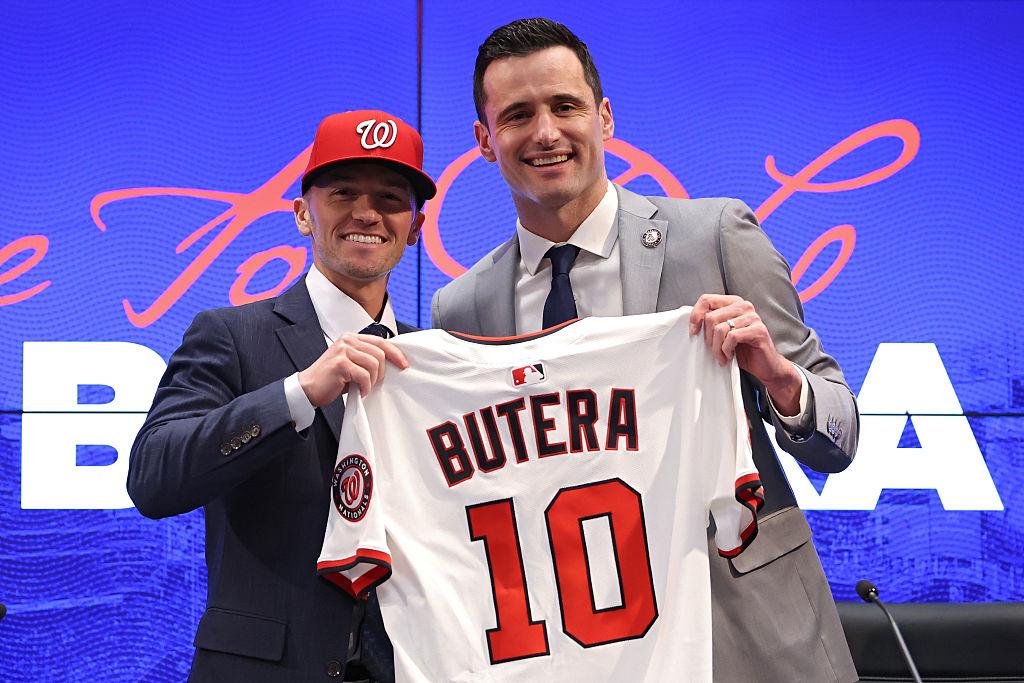
Washington Nationals president of baseball operations Paul Toboni introduces manager Blake Buter during a press conference
Washington Nationals: B+
It’s a new era of Nationals baseball, and the re-rebuild began this offseason. Washington brought in Paul Toboni from Boston to head baseball operations. He subsequently hired Ani Kilambi from the Phillies to be general manager. New manager Blake Butera is just 33 years old. The Nationals’ player development has lagged behind the rest of the league for years, so the front office shake-up could be the change the organization needs to eventually compete with the three regular contenders at the top of this division.
The Nationals traded their nastiest reliever (Jose Ferrer) and their best starter (Mackenzie Gore) to acquire Harry Ford, a top catching prospect, and Gavin Fien, the third baseman the Rangers drafted in the first round last year, among other prospects.
2026 will certainly not be the Nationals’ year to contend, but they appear to be laying the groundwork to compete in a few years’ time.
NL Central
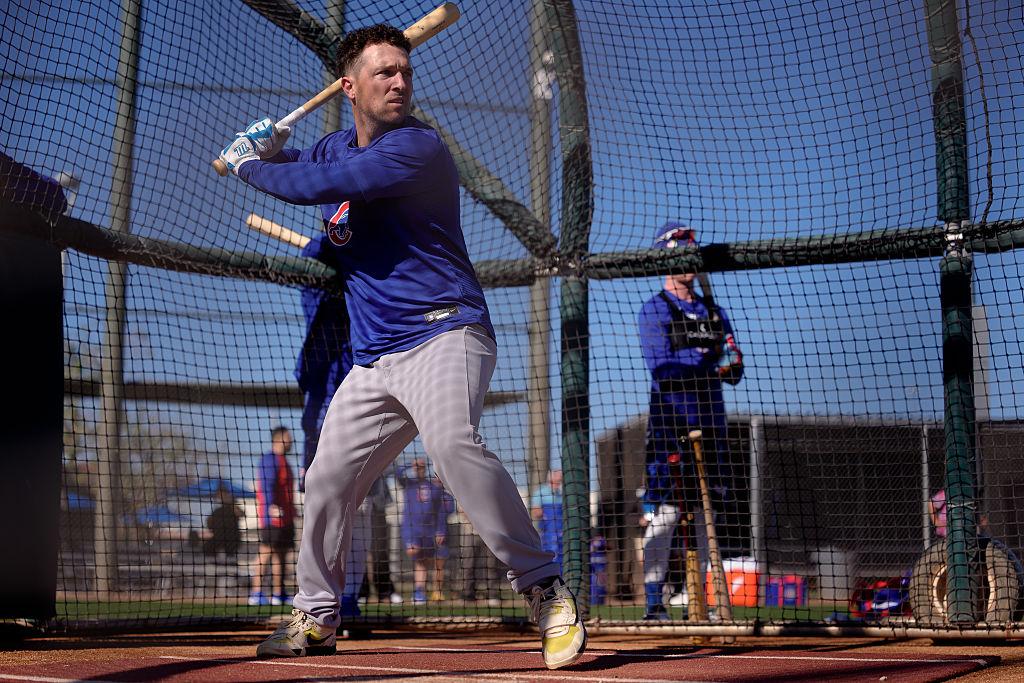
Alex Bregman at a spring training workout
Chicago Cubs: A-
The Cubs didn’t win the division in 2025, but they’ll enter the 2026 season as the favorites in the NL Central following an excellent offseason. The Cubs finished last year 27th in WAR at third base; by signing Alex Bregman to a five-year deal, they added the best third baseman on the market. It’s not easy to replace Kyle Tucker, but his absence does alleviate some issues with their lineup construction. Seiya Suzuki will be the full-time right fielder, and that frees up young slugger Moises Ballesteros to be the designated hitter.
The Cubs also chose to invest resources in the starting rotation by trading OF Owen Caissie to get right-handed pitcher Edward Cabrera from the Marlins, and then they signed a bunch of cheap relievers to compete for the middle relief spots behind closer Daniel Palencia. The Cubs have addressed their biggest holes. There may not be a superstar player on this roster (although Pete Crow-Armstrong is close), but the lineup is as good as any (besides the Dodgers’) in depth.
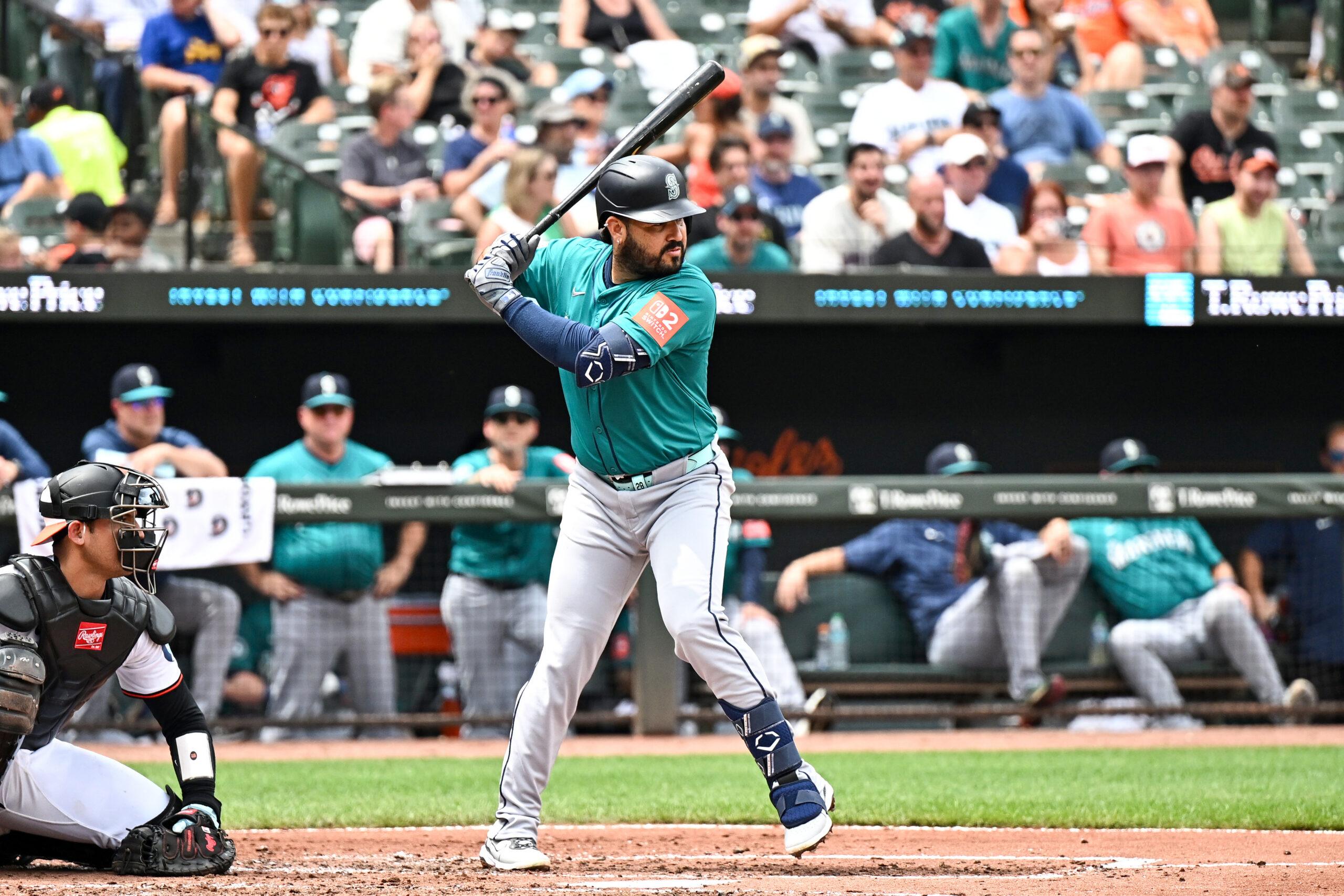
Eugenio Suárez at bat
Cincinnati Reds: B
I’m pretty excited to see how many homers Eugenio Suarez will hit in Great American Ball Park one year after he hit 49 in Seattle and Arizona combined. In the past three years, Cincinnati has been the second-friendliest home-run-hitting park, according to Fangraphs. Suarez adds some much-needed thump to the middle of the lineup, which finished 24th in isolated power last year. You can also give the Reds an A for effort for their attempt to sign Ohio native Kyle Schwarber, even if it was never likely to happen at this point in his career.
The performance of the 2026 Reds will hinge on the development of their intriguing young position-player core. Keep an eye on the development of third baseman Noelvi Marte and rookie infielder Sal Stewart.
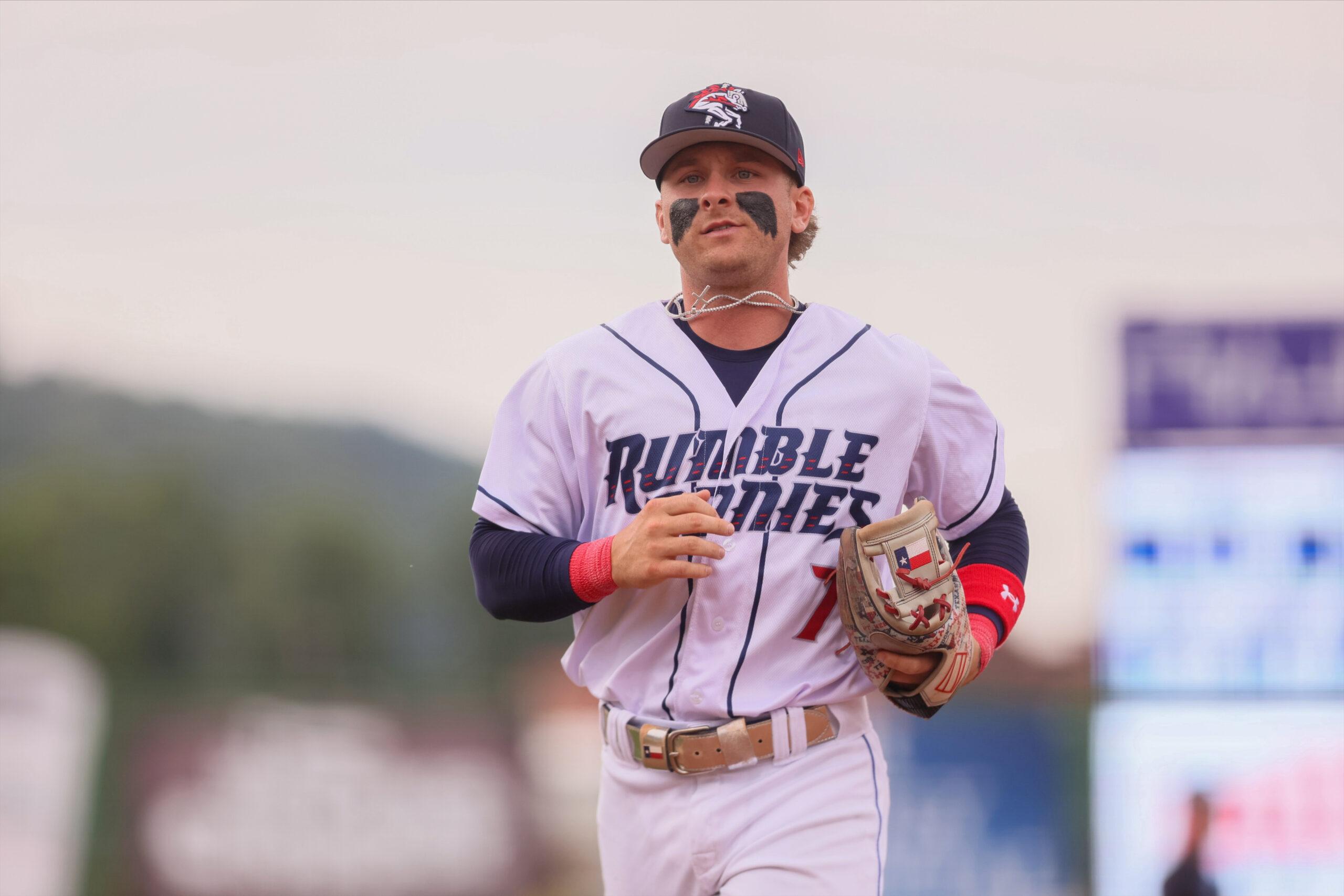
Jett Williams during a game between the Altoona Curve and the Binghamton Rumble Ponies
Milwaukee Brewers: B-
The Brewers didn’t try to “win the offseason.” Instead, they had the most Brewers offseason imaginable. They traded Freddy Peralta, who had one year left on his deal, in return for two top prospects—shortstop Jett Williams and right-handed pitcher Brandon Sproat—from the Mets. Both should pretty quickly become significant contributors on the roster.
The starting rotation looks shorthanded on paper, but this front office has earned the benefit of the doubt when it comes to turning mid-tier arms into good starters (e.g., Quinn Priester and Chad Patrick in 2025). The lineup remains young and athletic, even if it’s short on power at the heart of the order. The Brewers’ run-prevention identity, through both pitching and excellent defense, isn’t going anywhere. There isn’t a splash move here, but there also isn’t reason to doubt reigning two-time Executive of the Year Matt Arnold. The Brewers’ strength is in numbers. It’s a formula that made them the best team in baseball over the regular season last year, but given the strength of the Cubs’ offseason, I can’t go higher than a B- here.
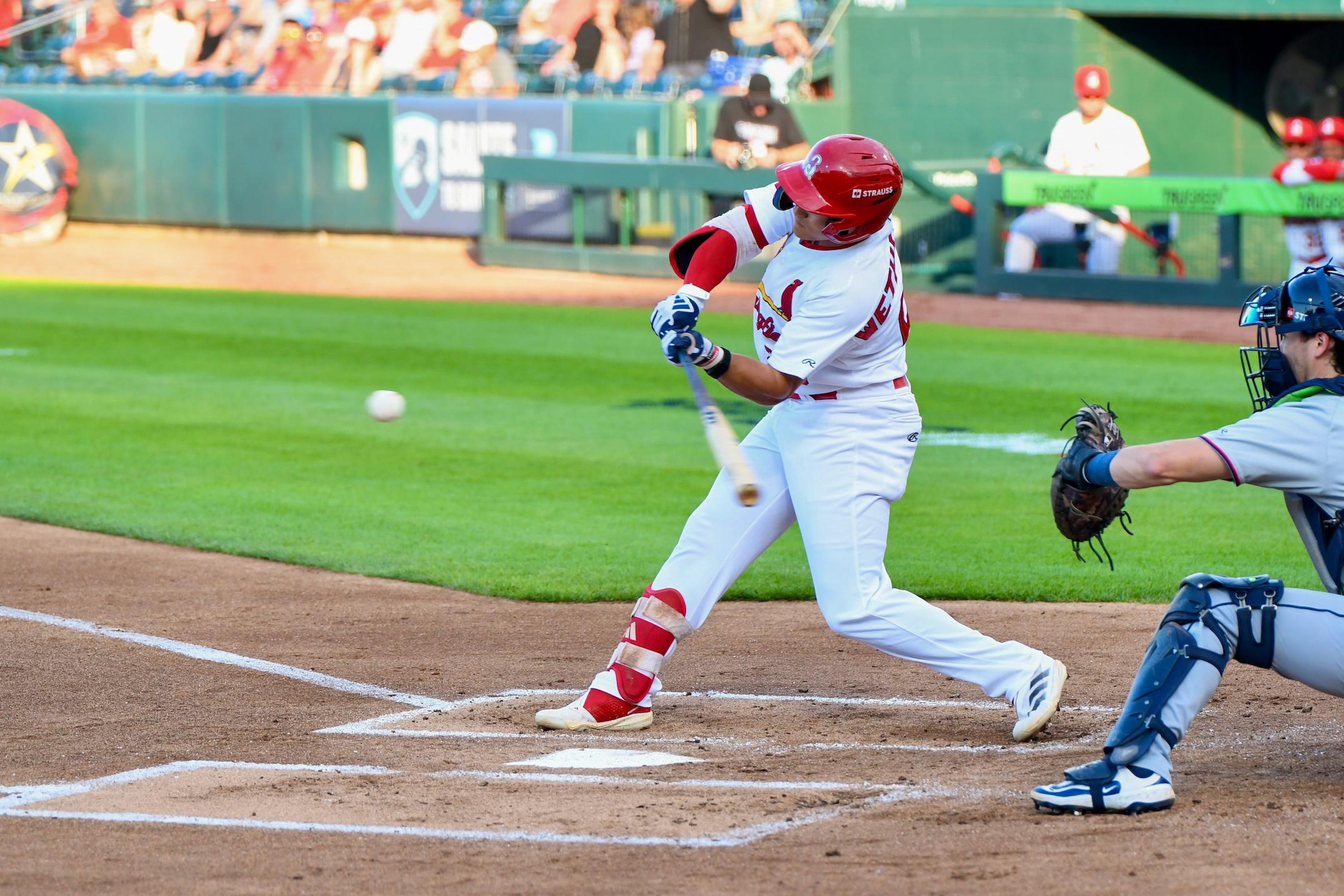
JJ Wetherholt prepares to hit the ball during a game between the Northwest Arkansas Naturals and the Springfield Cardinals
St. Louis Cardinals: A-
After the Cardinals spent three years in baseball purgatory, they brought on former Red Sox general manager Chaim Bloom as president of baseball ops and fully hit the reset button this winter. St. Louis traded away veterans Willson Contreras, Nolan Arenado, Brendan Donovan, and Sonny Gray for varying levels of prospect return. The Cardinals are now fully embracing the youth movement, headlined by rookie and top-five prospect JJ Wetherholt, who should debut in the infield in 2026.
But we won’t be able to properly evaluate St. Louis’s offseason until we see whether internal player development is able to produce its next core.
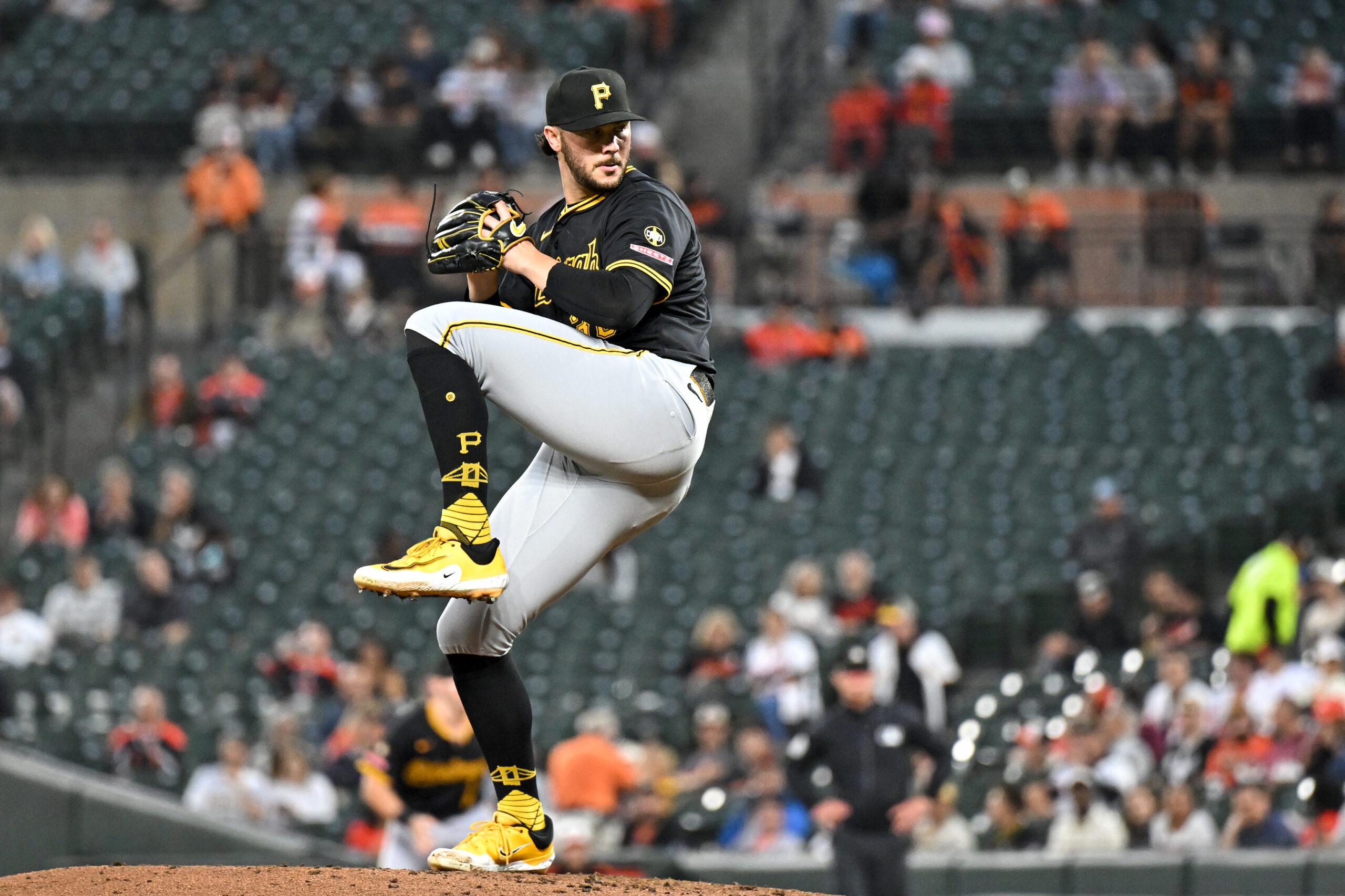
Paul Skenes throws a pitch
Pittsburgh Pirates: A-
Consider me an optimist when it comes to the 2026 Pittsburgh Pirates. Pittsburgh added serious power to the lineup, which totally lacked it last year, by adding first baseman Ryan O’Hearn and outfielder Marcell Ozuna in free agency. It traded for a steady offensive contributor in third baseman Brandon Lowe to raise its floor and added promising prospect Jhostynxon Garcia to potentially join the outfield. With Cy Young candidate Paul Skenes, Bubba Chandler, Mitch Keller, and eventually Jared Jones (once he’s back from injury), this pitching staff is ready to compete in the National League Central. And unlike in past offseasons, it’s invested in enough offense to make that dream a reality. The Pirates had the league’s second-worst offense in 2025. If that jumps up to even, say, 20th, Pittsburgh will finish above .500.
NL West
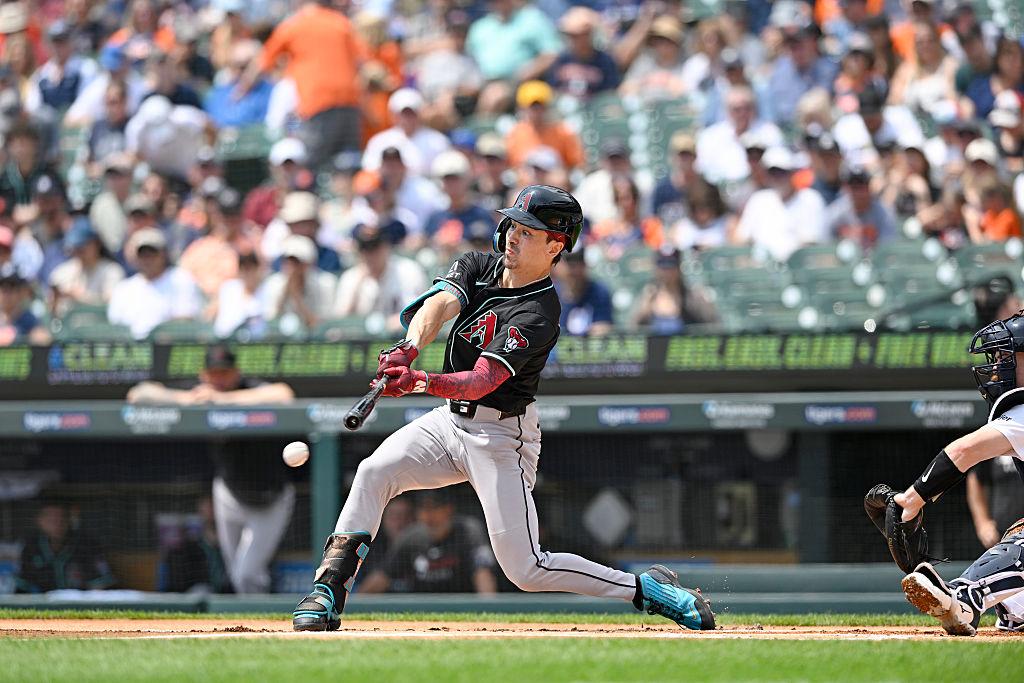
Corbin Carroll bats during the first inning against the Detroit Tigers
Arizona Diamondbacks: D+
When Arizona acquired Corbin Burnes last winter, the Diamondbacks were seen as one of the clear winners of that offseason. Burnes subsequently got injured, Zac Gallen fell off, and Arizona’s pitching crumbled as it quickly went from NL dark horse to an average ball club. The Diamondbacks haven’t shown that they really have a plan to address their pitching issues this offseason. Gallen entered free agency, and the D-backs have yet to re-sign him. Arizona’s three primary moves this offseason were adding starting pitcher Michael Soroka (who finished last year with 0.6 WAR), bringing on the aging Nolan Arenado, and re-signing Merrill Kelly, who is coming off a decent season but who’s 37.
After the news on Wednesday that Corbin Carroll has a broken hamate bone and will likely have to miss all of spring training and Opening Day, Arizona’s season is already on the fritz.
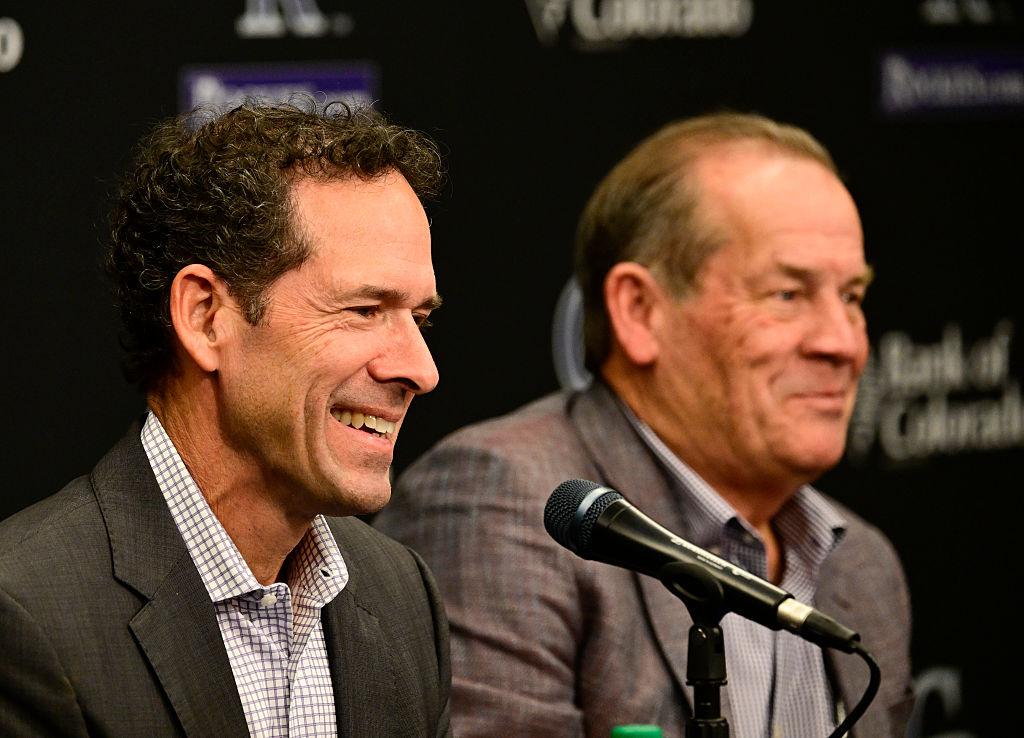
Colorado Rockies president of baseball operations Paul DePodesta, left, and Rockies owner Dick Monfort during DePodesta’s introductory press conference
Colorado Rockies: C-
In baseball, there are weird organizations, there are bad organizations, and then there are the Colorado Rockies. It’s fair to acknowledge that they’re facing an uphill battle in trying to build a winning team at Denver’s high altitude (which hampers breaking balls and leads to more home runs), but they aren’t doing themselves any favors with their failure to stay up on the modern game. Hiring Paul DePodesta, a longtime MLB “moneyball” exec who most recently worked with … [checks notes] the Cleveland Browns, could be seen as a step in the right direction, but even moneyball is a two-decade-old strategy at this point.

On the field, the Rockies are attempting to build a nucleus around players like catcher Hunter Goodman, shortstop Ezequiel Tovar, and outfielder Brenton Doyle, but are any of them actually good? FanGraphs’ BAT X projections for 2026 see Goodman as the only one of the three who will be an above-average hitter this year.
Most of their offseason moves have been stopgap and utility additions, such as outfielders Willi Castro and Jake McCarthy and starting pitcher Michael Lorenzen.
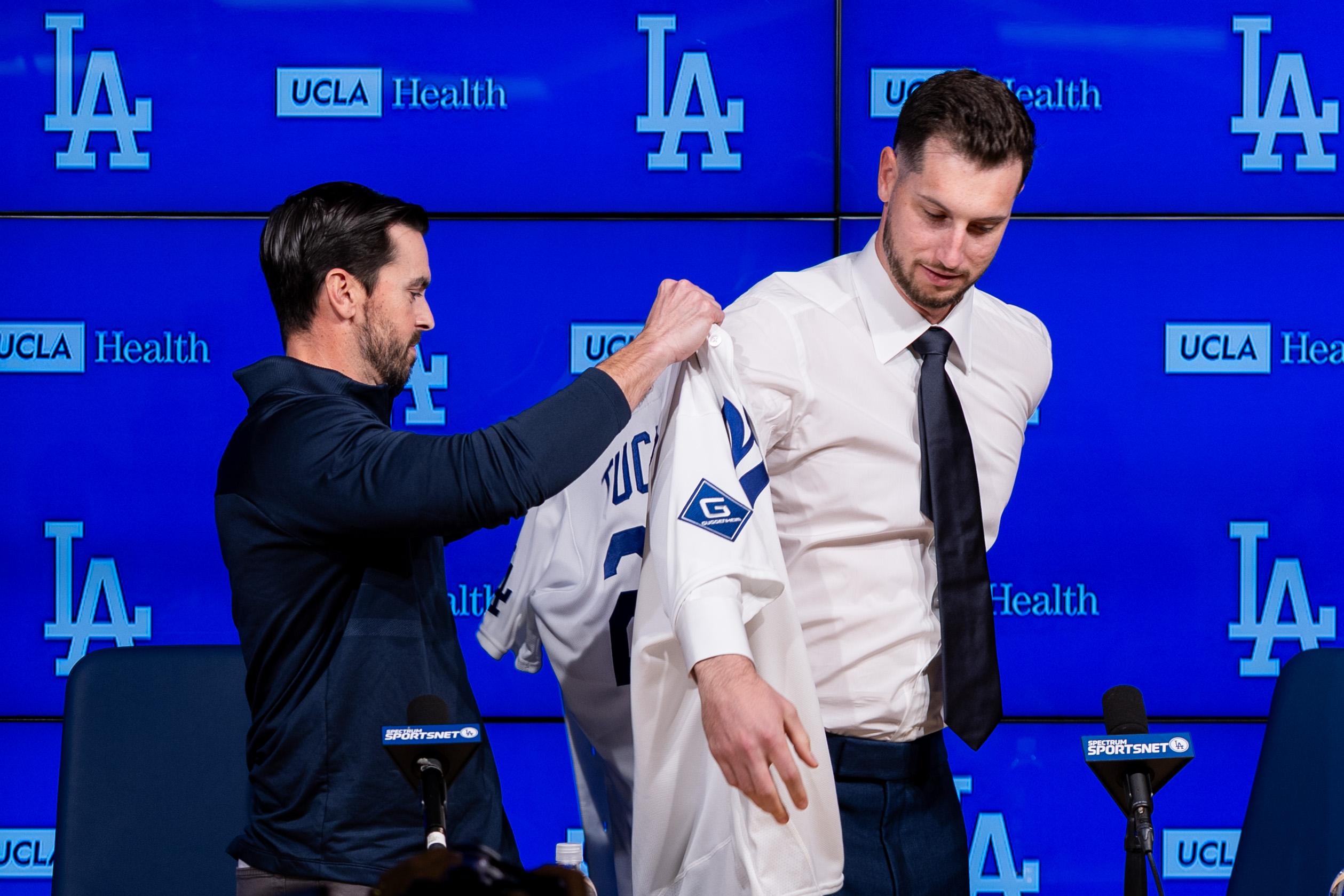
Brandon Gomes, Dodgers executive president and general manager, helps new outfielder Kyle Tucker put on a Dodgers jersey during a press conference
Los Angeles Dodgers: A
The Dodgers are an exception to the idea that money can’t solve all problems. After winning the 2024 World Series without much of a rotation, they spent the following offseason acquiring Blake Snell and Tyler Glasnow. Then, after winning the World Series again—this time without much of a bullpen—their first major addition of the winter was former Mets closer Edwin Diaz. The Dodgers then beat the Mets and Blue Jays to get the signature of Kyle Tucker, the top free agent on the market.
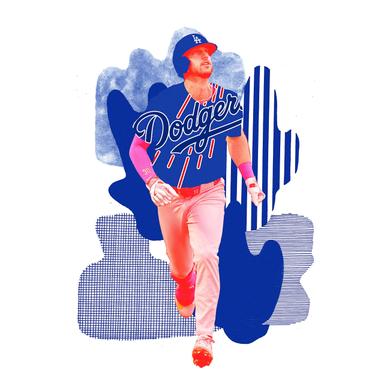
The Dodgers are not just settling for back-to-back World Series titles. All signs point to them going for a three-peat and spending whatever money it takes to achieve that.
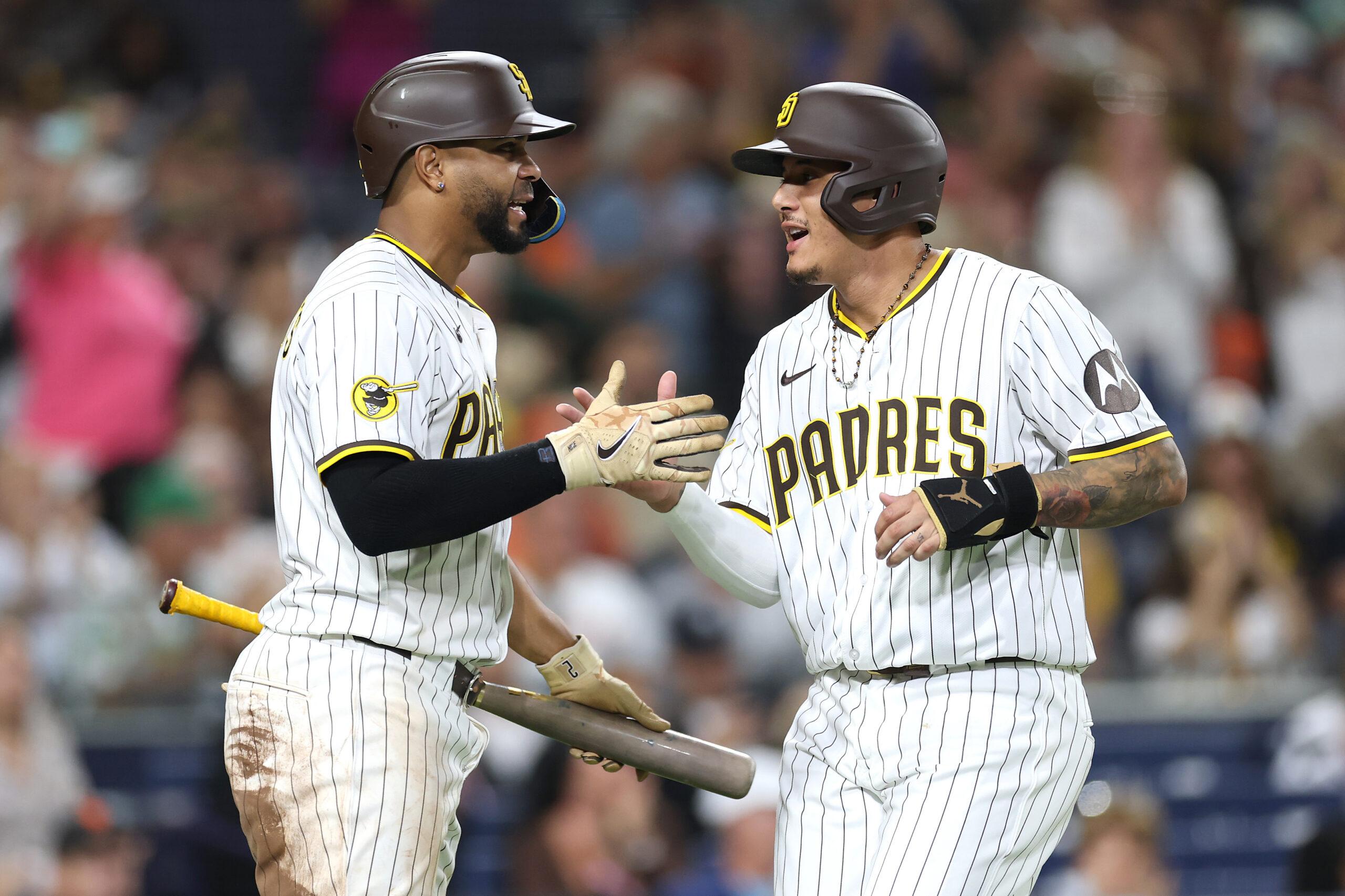
Xander Bogaerts congratulates Manny Machado after scoring on an RBI single by Ryan O’Hearn
San Diego Padres: B-
Financial constraints and ownership uncertainty in San Diego led to a quieter offseason from A.J. Preller. The Padres general manager did most of his bidding at last summer’s trade deadline to try to build a contender, and he’ll still have Mason Miller this year to hold down an elite bullpen as a result. The Padres lost Dylan Cease in free agency but were able to retain Michael King on a multiyear contract extension.
The lack of funds to spend—and the thinner than usual farm system—means that San Diego’s lineup is entering the 2026 season light on power and depth. It finished 28th in isolated power last year, and it’s hard to see how that’ll improve with the aging Xander Bogaerts and Manny Machado surrounding Fernando Tatis Jr. at the heart of the order.
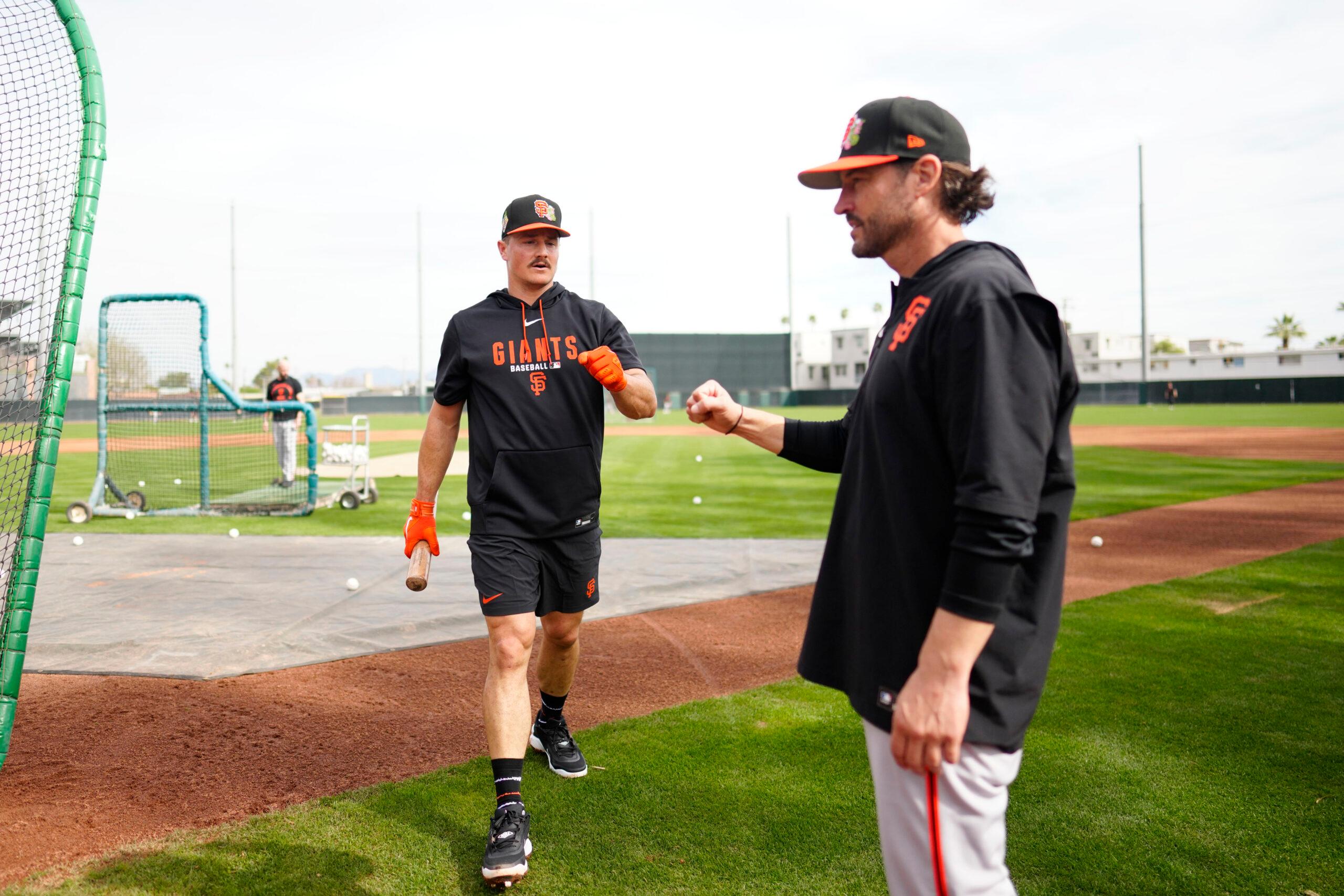
Matt Chapman and manager Tony Vitello during spring training
San Francisco Giants: C+
The Giants’ offseason signaled that the roster is in transition, but what are they aiming for right now? They signed five players to deals that are no more than $22 million in total. Outfielder Harrison Bader and starting pitchers Tyler Mahle and Adrian Houser are the main highlights, and all of them can be competent and reliable MLB players when healthy. The Giants also moved on from manager Bob Melvin and went with University of Tennessee coach Tony Vitello, a surprising hire.
San Francisco has been stuck in baseball purgatory—outside of that increasingly distant and miraculous 2021 season, when it won 107 games—for nearly a decade now. For so long it’s been one of the most milquetoast teams of each winter, and this offseason doesn’t feel much different. San Francisco isn’t rebuilding, and it isn’t contending, either. That’s the most dangerous place in baseball.
AL East
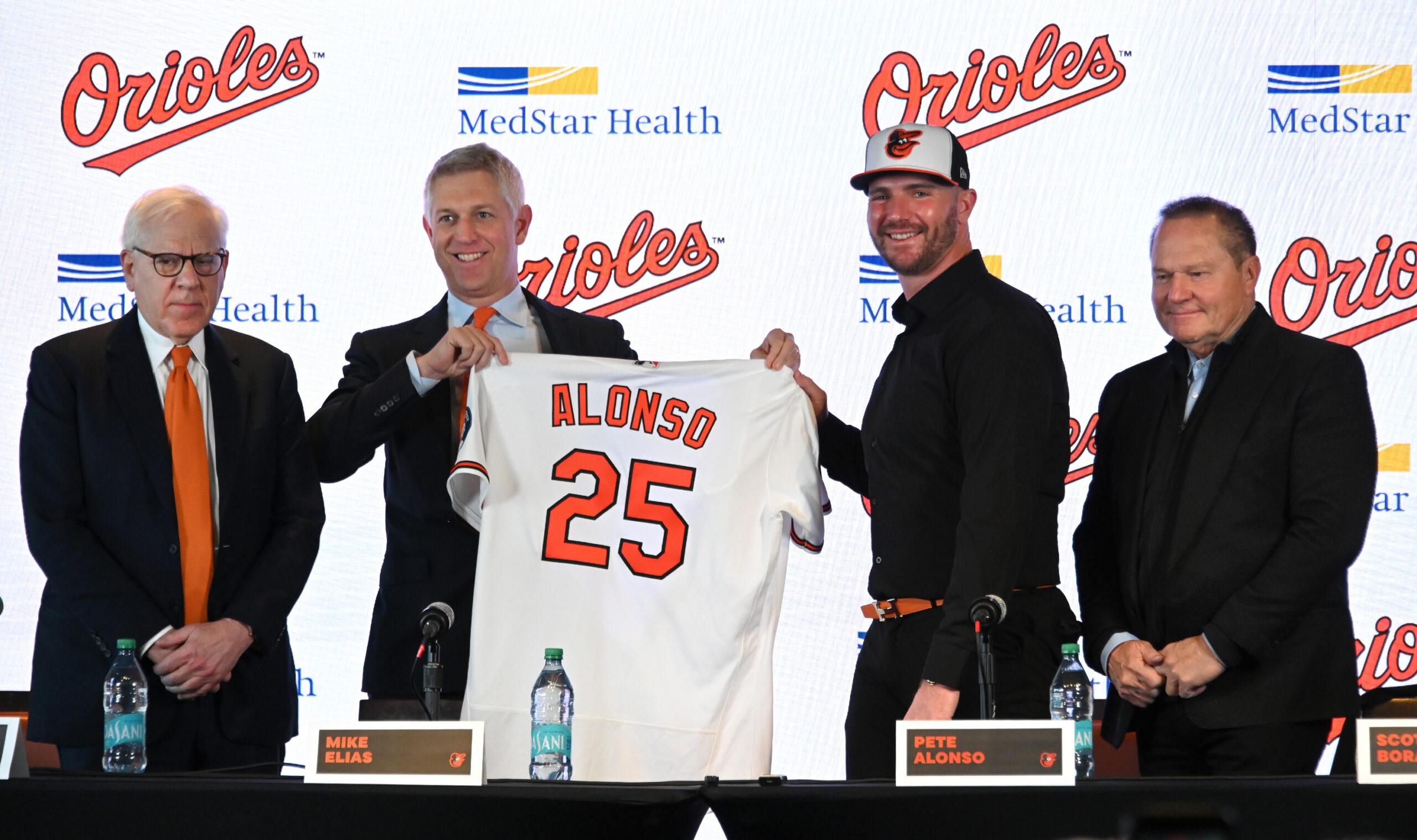
Baltimore Orioles owner David Rubenstein, president of baseball operations Mike Elias, and agent Scott Boras introduce new first baseman Pete Alonso
Baltimore Orioles: B+
The Orioles put together an offseason that is very high variance. They still have a number of talented, young position players that could break out and produce at an elite level. With the offseason free agent additions of Pete Alonso and Taylor Ward, the Orioles now have two veteran sluggers at the heart of a still relatively inexperienced lineup, similar to what Anthony Santander provided for them before departing the team following the 2024 season.
Ward and Alonso are relatively safe upgrades for the Orioles. The fun comes with their pitching staff. The decision to part with Grayson Rodriguez is sure to be litigated in the future, depending on how the former top prospect’s career pans out. But the decision to give up a prospect haul for the talented but not always healthy Shane Baz will be the defining move of their offseason. If Baz joins Kyle Bradish at the top of the O’s rotation, we’re dealing with a World Series contender. If not, the Orioles could have another season derailed by pitching issues.
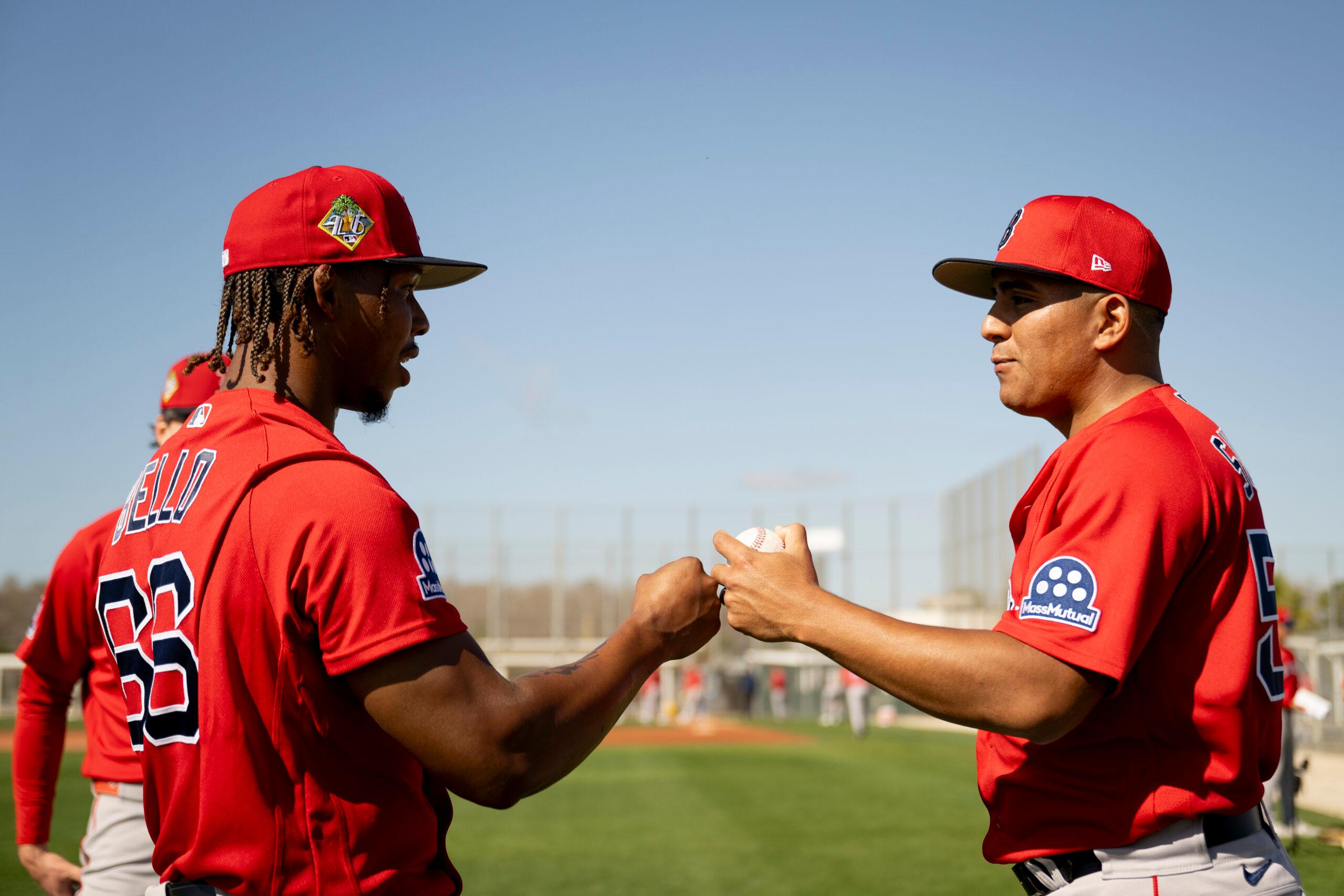
Brayan Bello and Ranger Suárez during a workout at JetBlue Park at Fenway South on February 11
Boston Red Sox: B-
It’s not a great sign for the Red Sox’s pitching development that they had to trade for Sonny Gray and sign Ranger Suarez to a five-year deal in the same offseason. Both are perfectly solid midrotation starters, but Boston surely would have preferred to have just kept Alex Bregman or landed Bo Bichette with those same resources. The Red Sox were extremely busy this offseason, but there’s no evidence they have actually improved the roster as a whole. Their preseason projected win total last season (86.5) is one win less than this season (87.5).
Trading for Willson Contreras helps them improve at first base one season after the Red Sox ranked 27th in WAR from the position. That’s the biggest clear upgrade on paper, even if it’s hard to find the others.
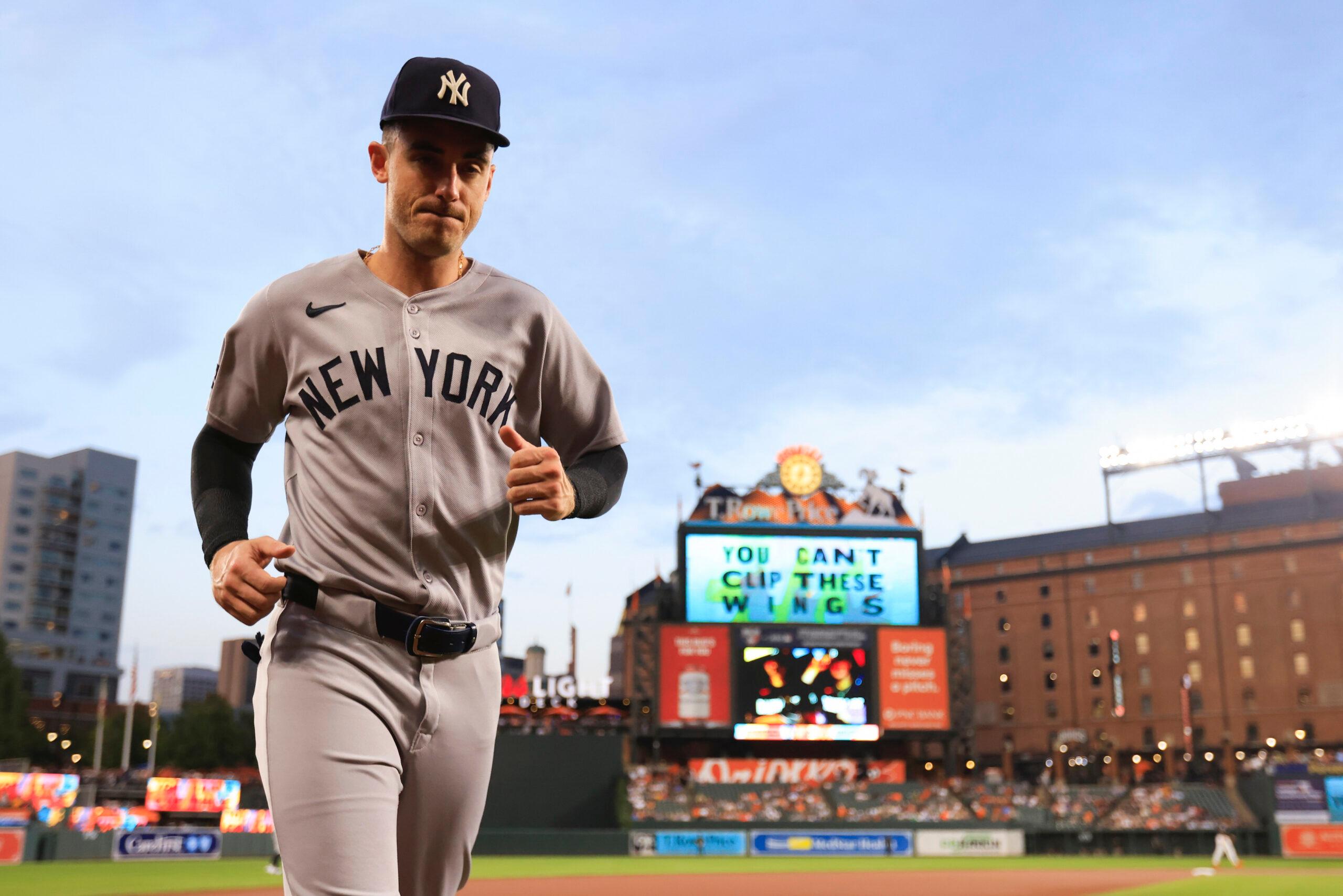
Cody Bellinger before a game between the New York Yankees and the Baltimore Orioles
New York Yankees: C+
The Yankees are essentially running it back with the same core in 2026 after re-signing Cody Bellinger and giving Trent Grisham a qualifying offer. That will disappoint most Yankees fans after they were largely outplayed by the Blue Jays in the ALDS after squeaking past Boston in the wild-card round.
We won’t get a clearer picture of the Yankees until Gerrit Cole and Carlos Rodon return from injury. Once they do, this has the potential to be the best rotation in baseball with the reliability of Max Fried and the emergence of Cam Schlittler. It’s easy to see why the Yankees didn’t feel they needed to add much after they finished with the league’s best offense in the 2025 regular season, but the offensive inconsistency of their infield wasn’t really addressed in any way.
That puts a lot of pressure on Anthony Volpe, Ben Rice, and Austin Wells to continue to improve.
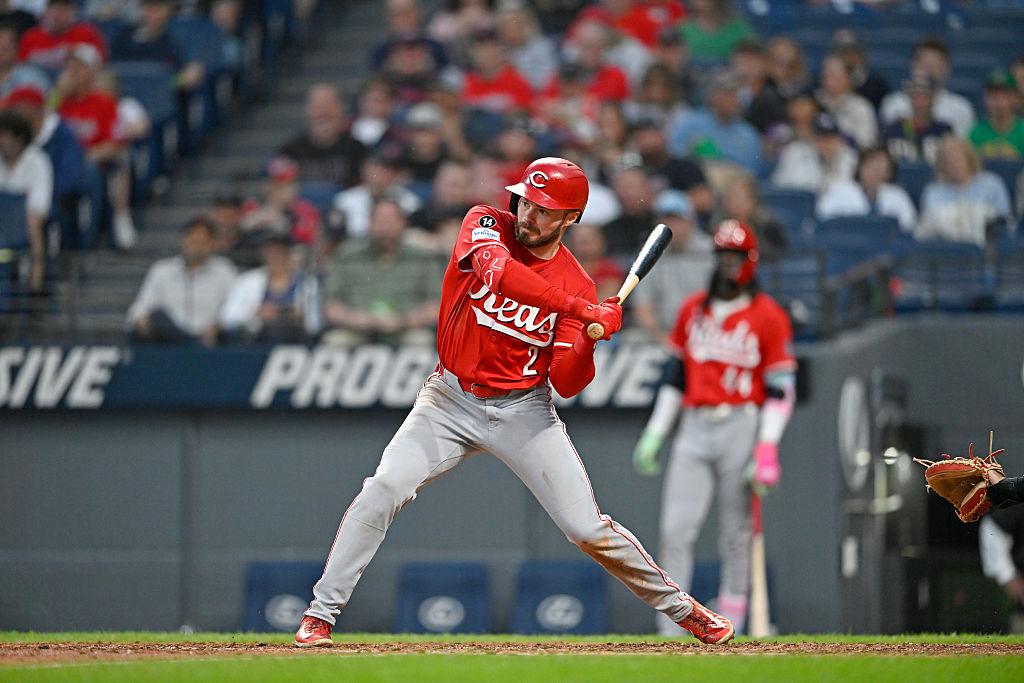
Gavin Lux at bat
Tampa Bay Rays: C
The Rays had a very Rays offseason, even by their usual Rays standards. Gone are the days where we just assume that Tampa Bay wins every trade. They were extremely active, with nine separate trades, but it’s unlikely any of their deals will be particularly consequential outside of the five-for-one return for Shane Baz. They did add 2B Gavin Lux and OFs Jake Fraley and Cedric Mullins, all competent veterans who will likely start on Opening Day.
Tampa Bay has a bigger priority right now with the new stadium discussions underway, so it appears that the Rays will have another season hovering around .500.
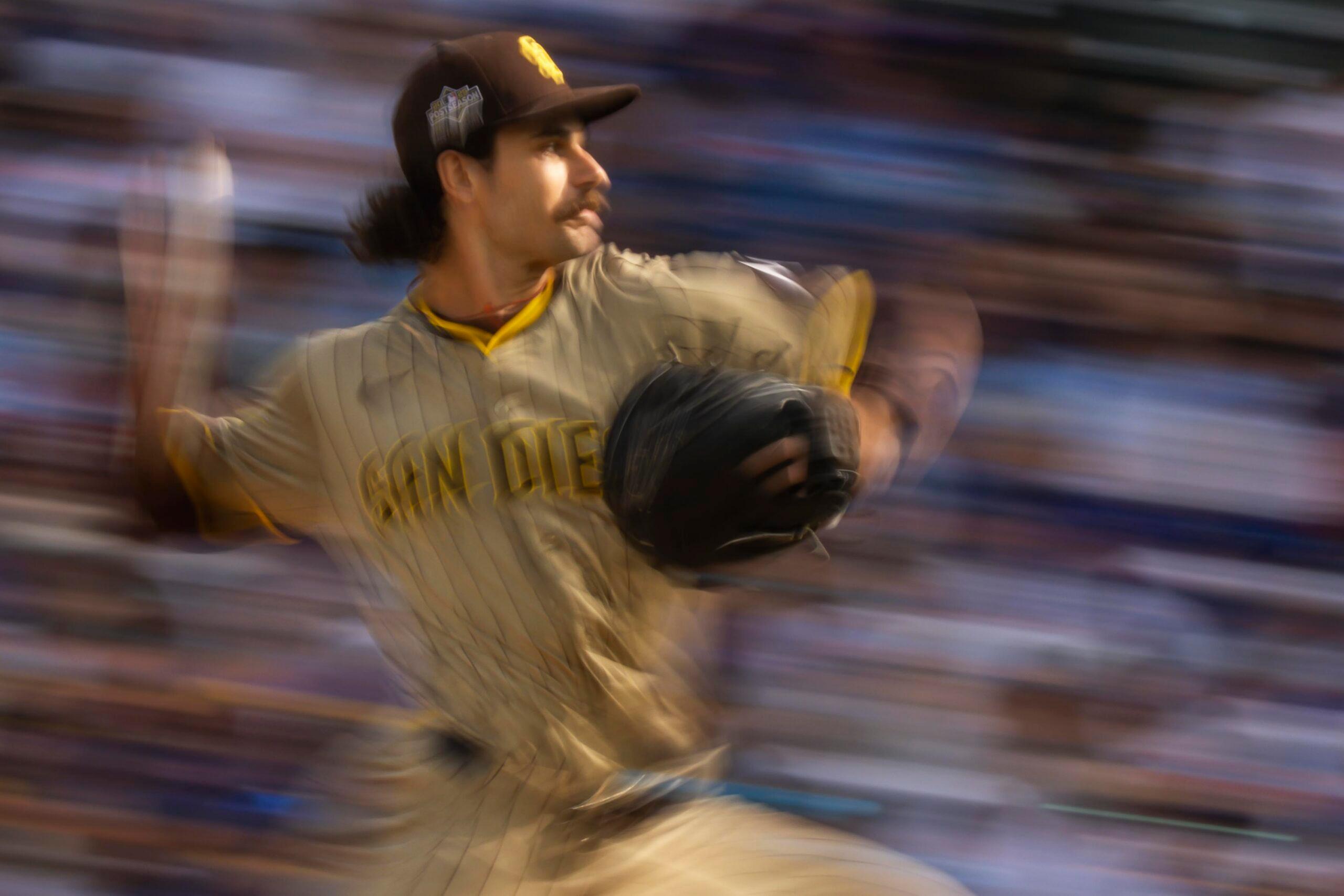
Dylan Cease pitches
Toronto Blue Jays: A-
The defending American League champions added the top starting pitcher on the free agent market, and they signed him early. Dylan Cease is a strikeout machine and slots in at the top of a rotation that lacked a guy with truly elite stuff. He can be enigmatic with his command and consistency, but on his day, he’s as good as any starter in baseball.
After Cease is where the Blue Jays’ spending becomes more high-variance. They gave Kazuma Okamoto, coming over from Japan’s NPB, a four-year deal worth $60 million. They added submarine reliever Tyler Rogers on a three-year contract and took a chance on starter Cody Ponce with another three-year deal.
The Blue Jays didn’t have a particularly great offseason last year—Anthony Santander was basically a zero-factor—and they still were the AL’s best team. Now, with more money spent and more high-upside bets taken, the Jays are in the first sentence of AL contenders yet again.
AL Central
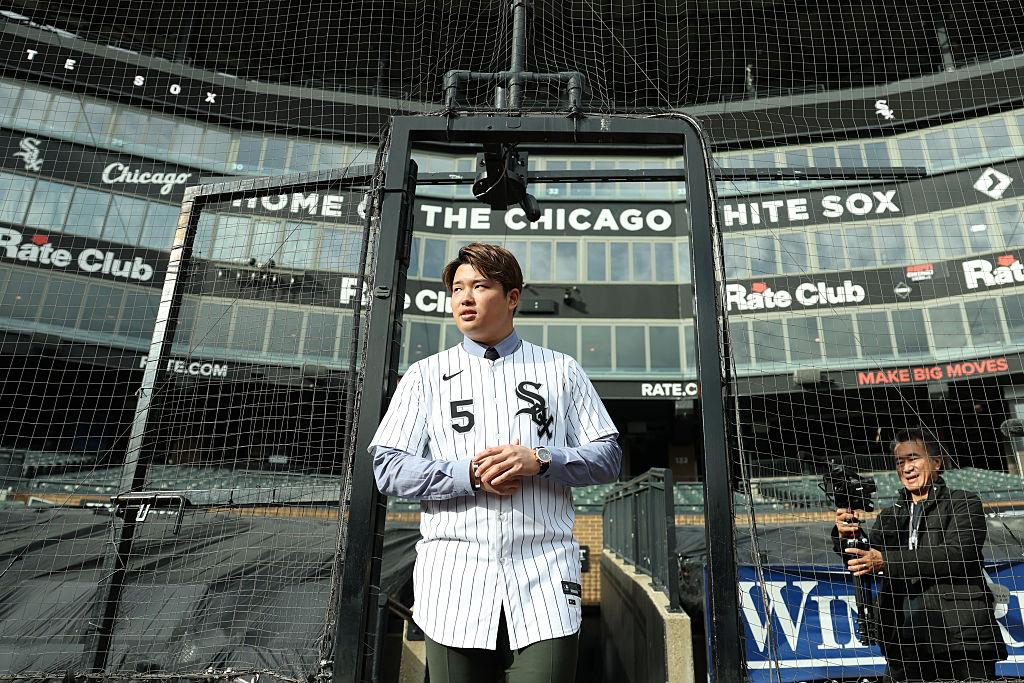
Munetaka Murakami takes the field for the first time after signing his first Major League Baseball contract
Chicago White Sox: B
Munetaka Murakami’s 29 percent strikeout rate in Japan gives plenty of reason to be skeptical about how well his contact skills will translate to MLB. But the White Sox are giving him only a two-year deal. He’ll get a chance to play every day in a low-pressure environment for a team with few expectations. The White Sox don’t really have a core of position players they are building around yet, but they do have young pitching prospects Noah Schultz and Hagen Smith coming up through the upper minors who could help put together a formidable rotation. If that pans out, we could see Chicago be more aggressive in future free agency windows to fill in the gaps. Given that they’re not really building yet, but also not selling, it was a solid offseason of smart moves around the edges.
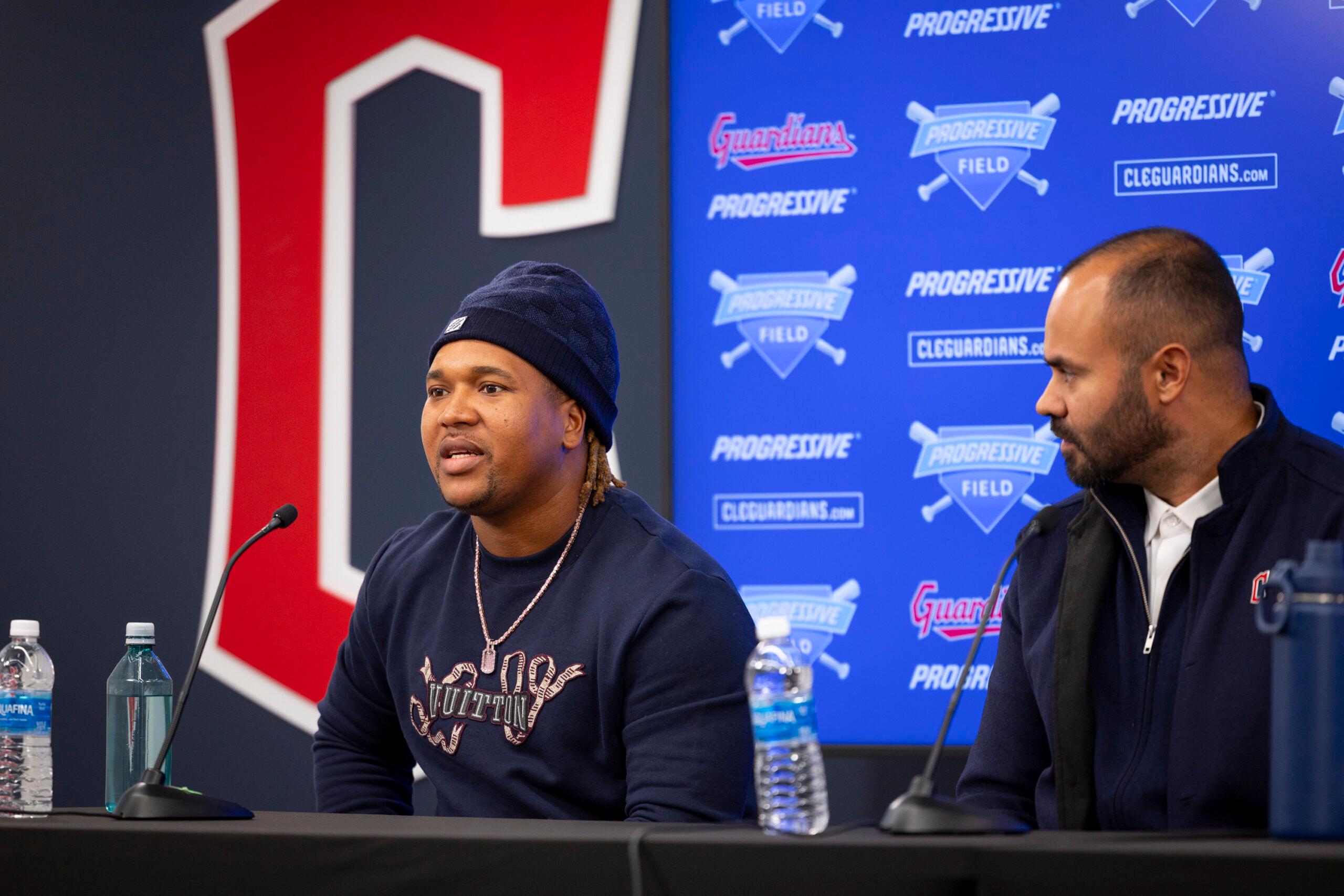
Jose Ramirez attends a press conference announcing a new seven-year contract through 2032
Cleveland Guardians: D-
After an exciting chasedown of the Tigers last September to win the AL Central, the Guardians offense struggled in a wild-card series loss to Detroit. The Guardians had a chance to address their weaknesses this winter, but did not add a single position player in the offseason. Sure, they gave Jose Ramirez a well-deserved extension, but it feels like they are wasting the last of his prime years by not investing more in an offense that finished 28th in wRC+ last year.
The Guardians are essentially betting big on their young players with no veterans to backstop them right now. Will the likes of OF Chase DeLauter or 2B Travis Bazzana take a big step forward?
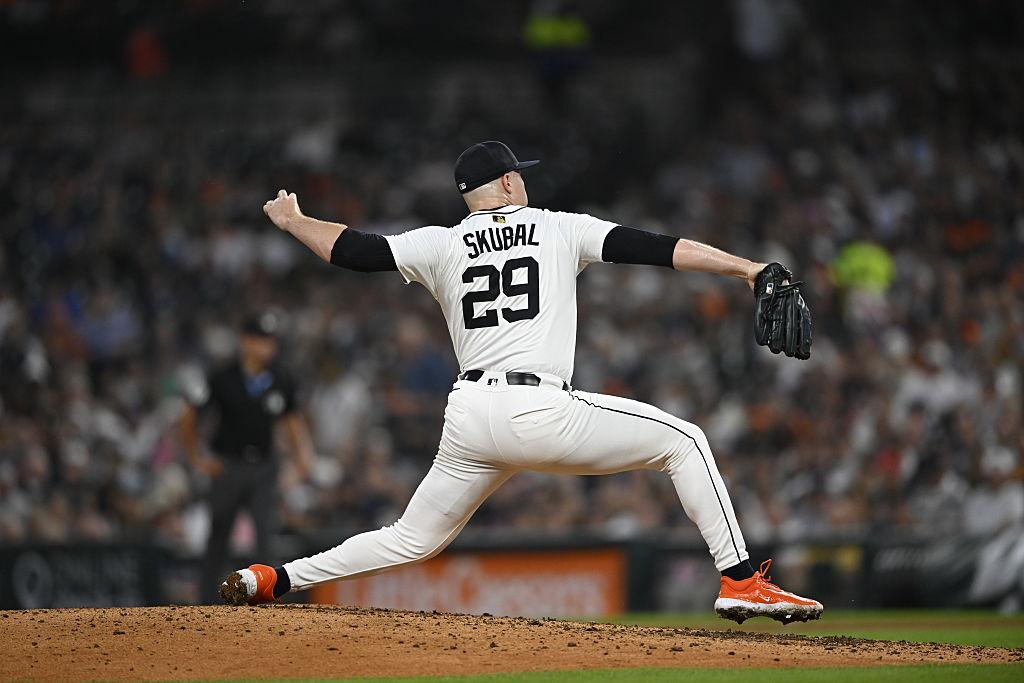
Tarik Skubal #29 of the Detroit Tigers throws a pitch during the fifth inning against the Houston Astros
Detroit Tigers: B-
Refusing to extend Tarik Skubal and making the back-to-back reigning Cy Young winner go to arbitration is a decision that docks the Tigers a full letter grade. When you have a pitcher as good as Skubal, you have to do whatever it takes to keep him in the organization. Don’t be surprised if Skubal happily walks away in free agency next season after the disrespect from Detroit.
The back end of the bullpen was an issue for the Tigers most of last season; they re-signed Kyle Finnegan and added Kenley Jansen to help fortify the last two innings. With starter Reese Olson missing the upcoming season due to shoulder surgery, the decision to pay 42-year-old Justin Verlander as part of a Tigers nostalgia tour seems like a pretty low-risk bet. Adding potential ace Framber Valdez on a three-year deal is a cherry on top of an overall solid Detroit offseason.
Despite losing the AL Central title at the very end of last season, the Tigers were the most talented team in the division, and they enter 2026 as the favorite again.
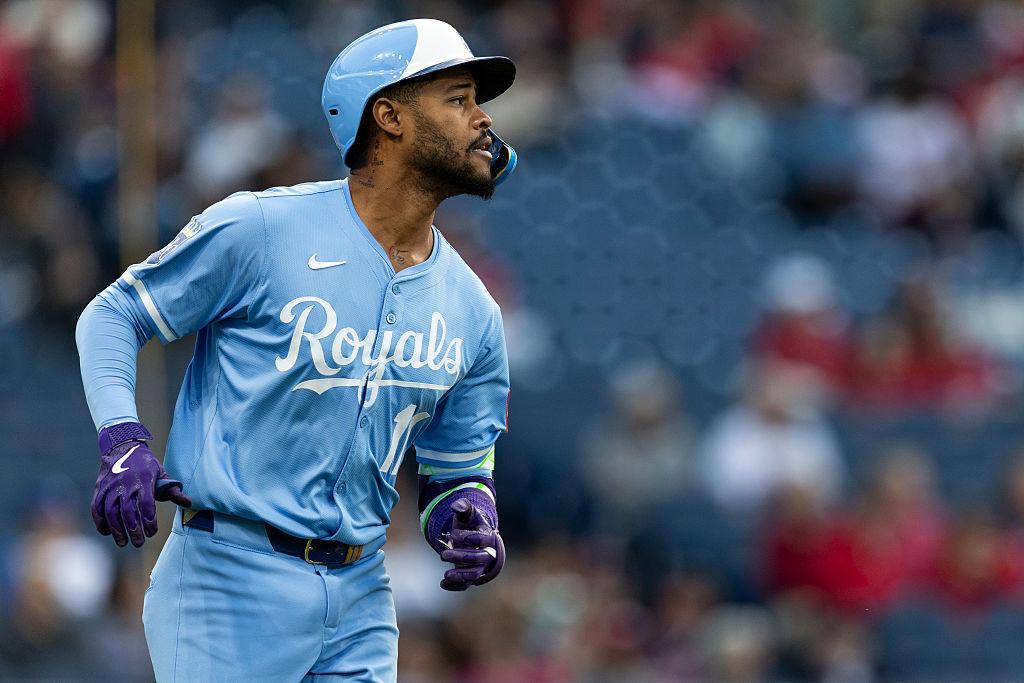
Maikel Garcia runs to first base during a game between the Kansas City Royals and the Cleveland Guardians
Kansas City Royals: A-
I was going to give Kansas City a B+, but I’m so excited by any park-dimension change that I bumped them up into the A- range. The Royals moved their outfield fences in by 10 feet, and given how hot it gets at Kauffman in the summer, it could turn into a real hitter’s paradise. The park was already hitter friendly for doubles and triples, but the closer fences could provide a homer boost, too. Deals-wise, the Royals gave INF Maikel Garcia a five-year extension with a 2031 option after a career year in his age-25 season. His arrow continues to point upward. Kansas City had one of the worst outfields in MLB last year (by WAR), so adding veterans Lane Thomas and Isaac Collins will help raise the floor of that group considerably.
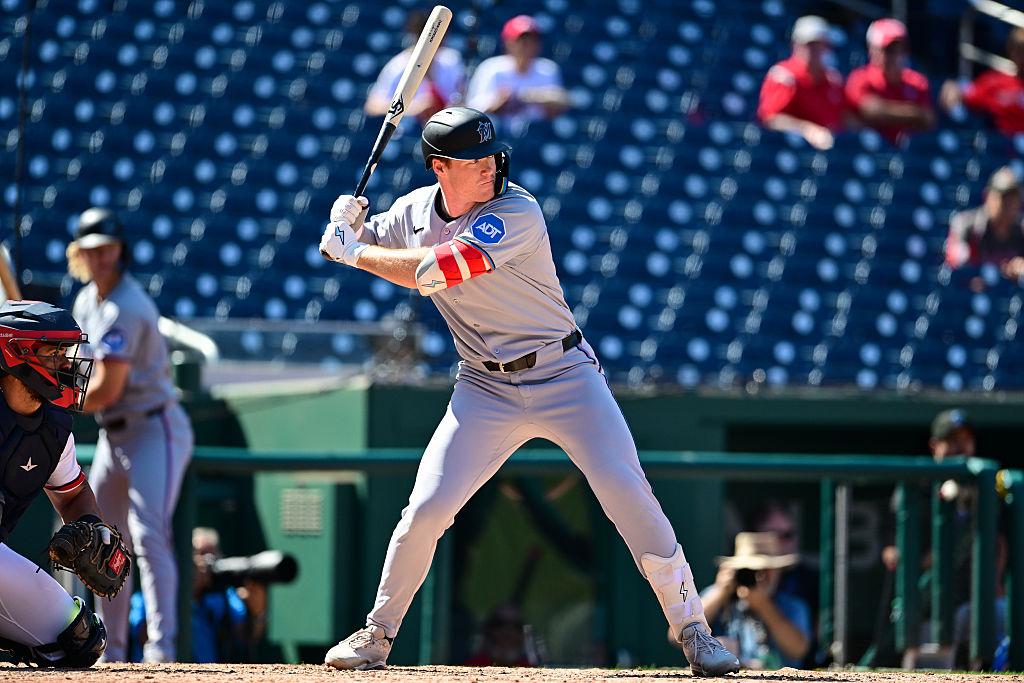
Eric Wagaman during a game against the Washington Nationals
Minnesota Twins: F
I’m placing the Twins on fire sale watch yet again. After trading 10 players at the 2025 deadline, they’ve done very little to bolster their roster entering 2026. The additions of 1B Josh Bell and catcher Victor Caratini are not moving the needle in any way this season. Nor is trading for former Marlin Eric Wagaman, who was one of the worst position players in MLB (by WAR) last year. The Twins still have multiple high-quality MLB regulars who will help them win some games but who could also fetch excellent returns in a trade. It’s hard to envision that all of Joe Ryan, Pablo López, Byron Buxton, and Royce Lewis will be on the roster by the trade deadline.
Minnesota is hurtling toward a rebuild, and this offseason is a clear signal of that. It’s a matter of when, not if.
AL West
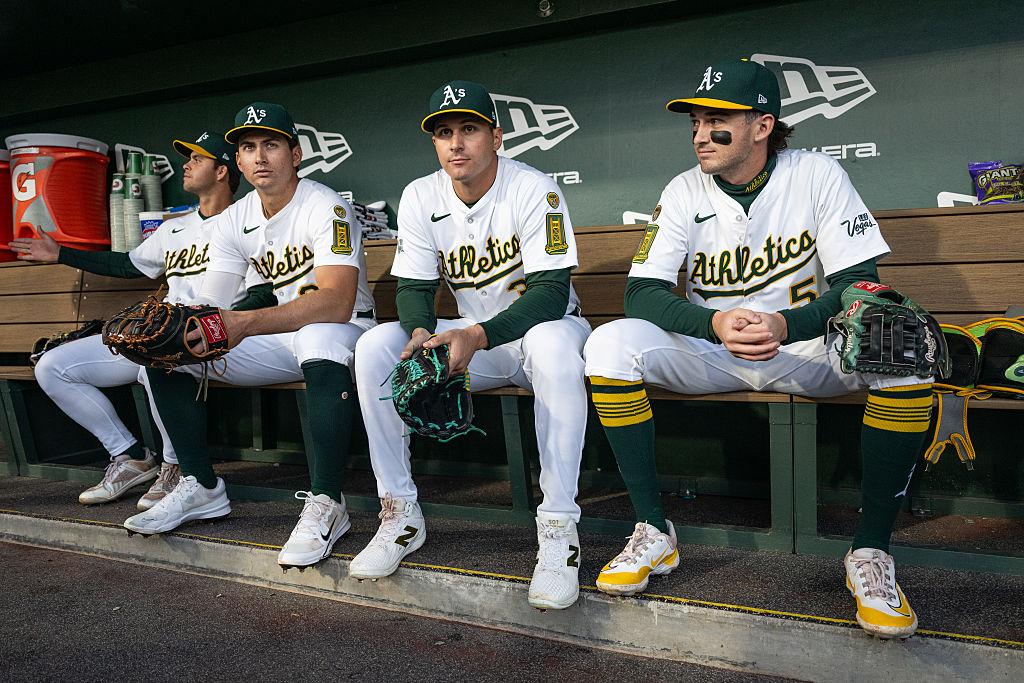
Tyler Soderstrom, JJ Bleday, and Jacob Wilson in the dugout before a game
Athletics: B+
The Athletics have a young core of good hitters, and they’re making savvy moves to lock them up. They extended both Jacob Wilson and Tyler Soderstrom to team-friendly contracts and can now pair them with Nick Kurtz and Brent Rooker in the heart of a lineup that can absolutely mash. The A’s were a top-10 offense last year by wRC+, and I see no reason they can’t be that again with a full season of Kurtz, the 2025 AL Rookie of the Year who was promoted in late April, in the lineup.
If the A’s were willing to spend some more money, they would have signed another pitcher or two and made a real playoff push. Instead, they’re going to struggle to get enough outs to win games consistently enough. That keeps them out of an A-range for 2026, but they’re well set up for 2027 and beyond.
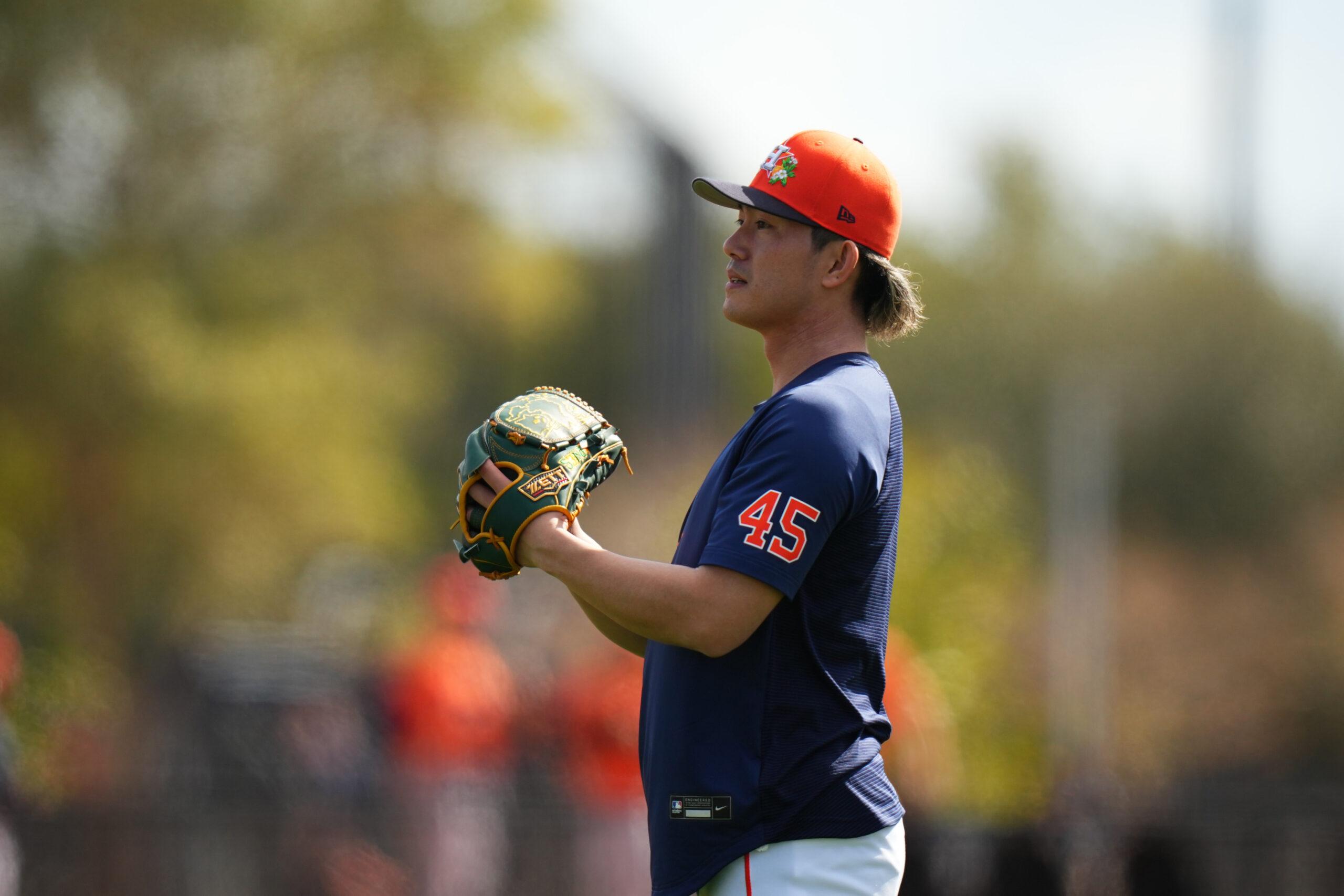
Tatsuya Imai at spring training workouts
Houston Astros: C+
The Astros are replacing former ace Framber Valdez by betting on Tatsuya Imai from Japan. Imai had a 2.34 and 1.92 ERA, respectively, in his last two seasons in more than 300 total innings, but his addition is still a risk given how much Valdez had become a cornerstone of Houston’s rotation. The Astros also did nothing to upgrade their offense, which finished 15th in wRC+ last year. And that came after SS Jeremy Peña’s strongest offensive season yet. The Astros missed the playoffs in 2025 despite an elite bullpen, and they’re headed down the same path again in 2026 unless the offense can find another gear or Imai is able to replace all of Valdez’s production.
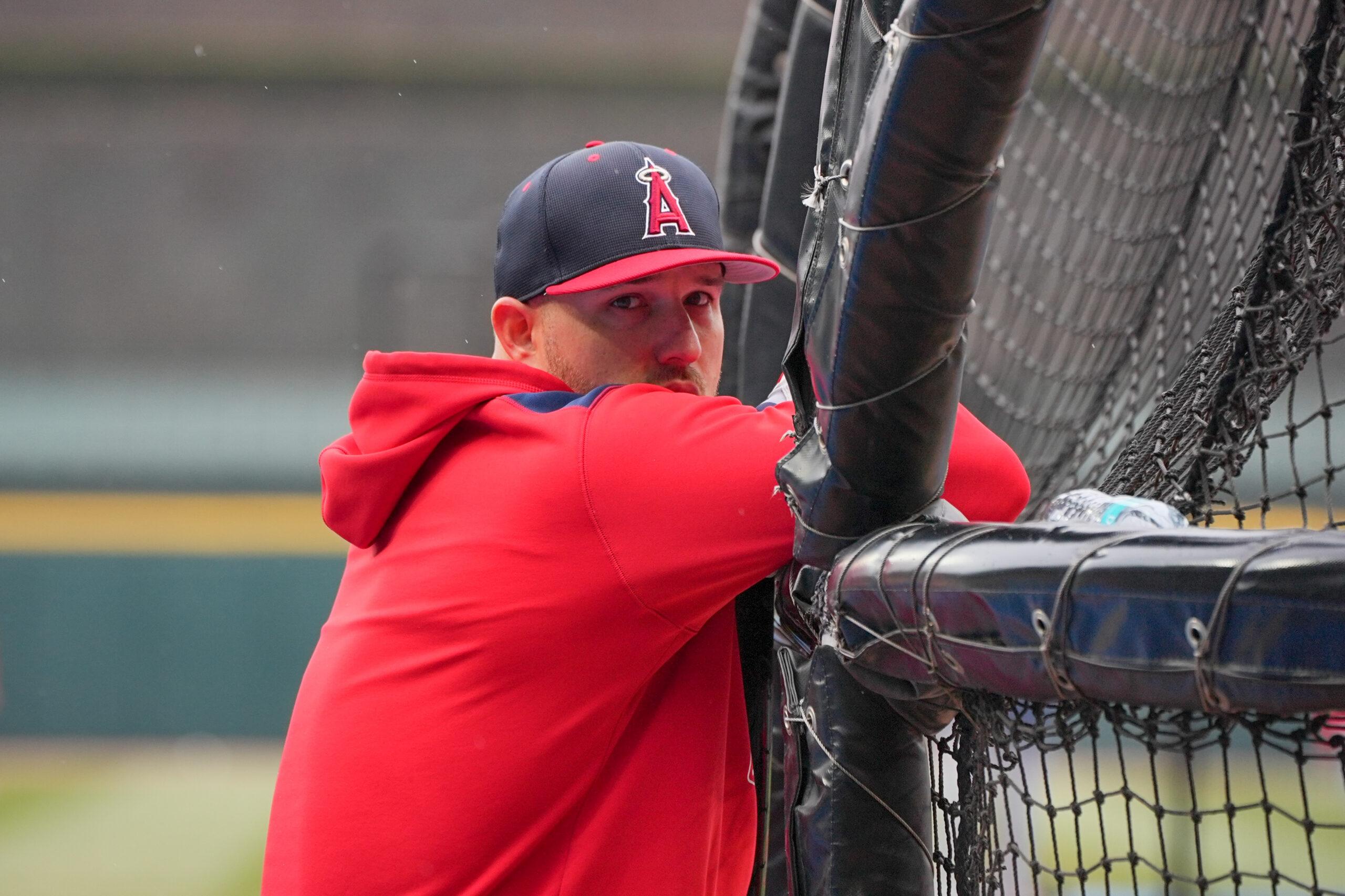
Mike Trout during batting practice
Los Angeles Angels: C-
With Mike Trout now clearly exited from his prime, the Angels should be thinking about a full teardown and rebuild around some of their young talent. The Angels are taking on reclamation projects like pitchers Grayson Rodriguez and Alek Manoah, who have had flashes of MLB success but have experienced injury struggles. That’s not a bad idea for where the Angels currently are. But at the same time, they’re also adding three relievers who have dealt with significant injuries and who are experiencing a decline in stuff: Kirby Yates, Jordan Romano, and Drew Pomeranz.
Perhaps the most peculiar offseason move was the hire of manager Kurt Suzuki to a one-year deal. Not a lot of job security for a manager who is being handed a relatively uncompetitive roster.
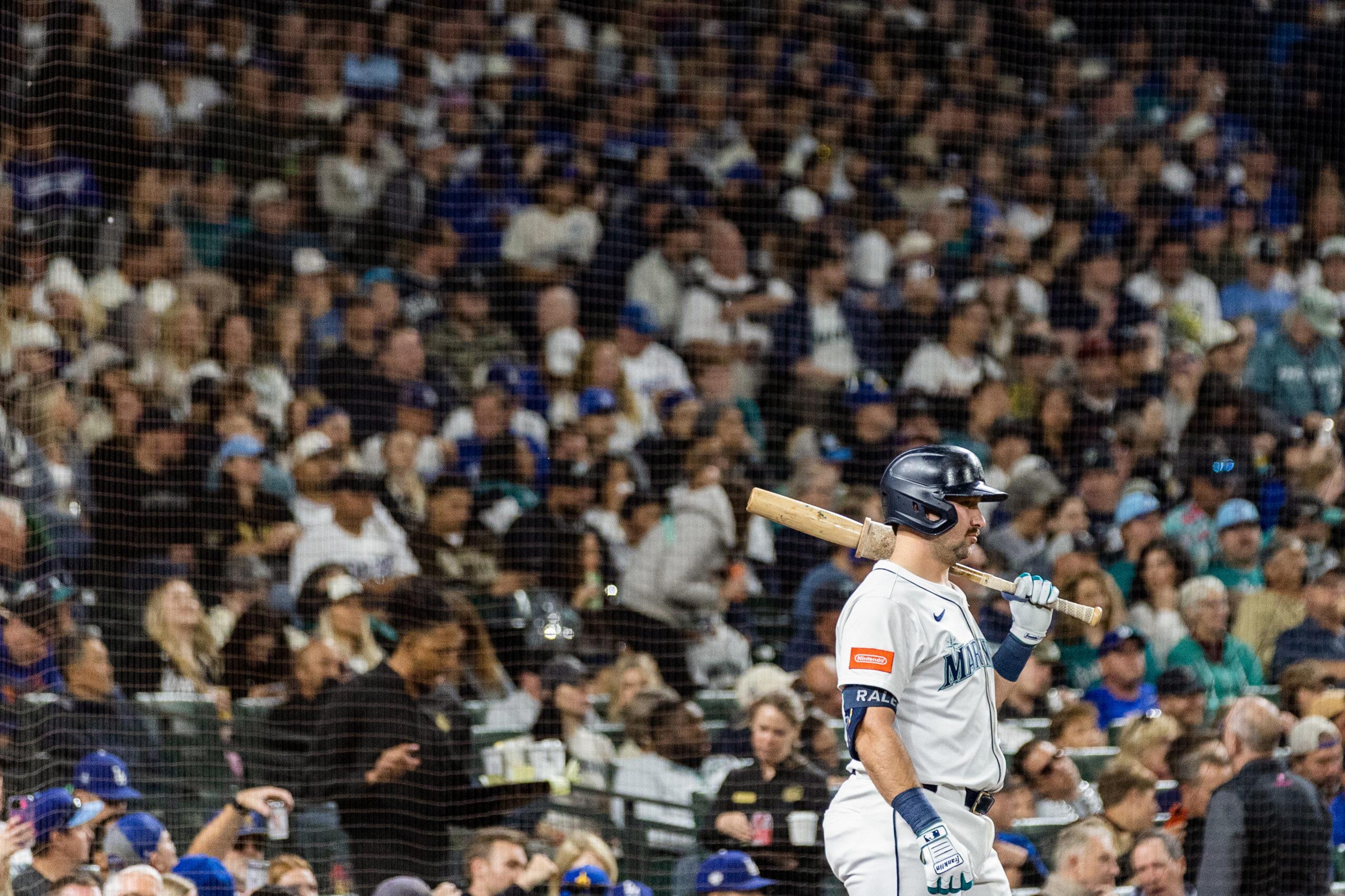
Cal Raleigh prepares to bat during a game against the Los Angeles Dodgers
Seattle Mariners: A+
The Mariners have been criticized in the past for their plodding and unwillingness to take a big swing under general manager Jerry DiPoto. Since last year’s trade deadline, there’s been a noticeable shift. The Mariners added both Eugenio Suarez and Josh Naylor and came within a few innings of the World Series in October. They made signing Naylor long-term the main priority this offseason and got their business done early. They added a much-needed high-leverage lefty, Jose Ferrer, to their bullpen by trading from their prospect surplus. And to cap off an excellent offseason, they took advantage of the Cardinals’ sell-off by acquiring Brendan Donovan.
Who knows if Cal Raleigh will ever replicate his historic 2025 season, but the Mariners now have much more lineup balance with Naylor and Donovan for at least the next two seasons. These moves have fully opened their World Series window.
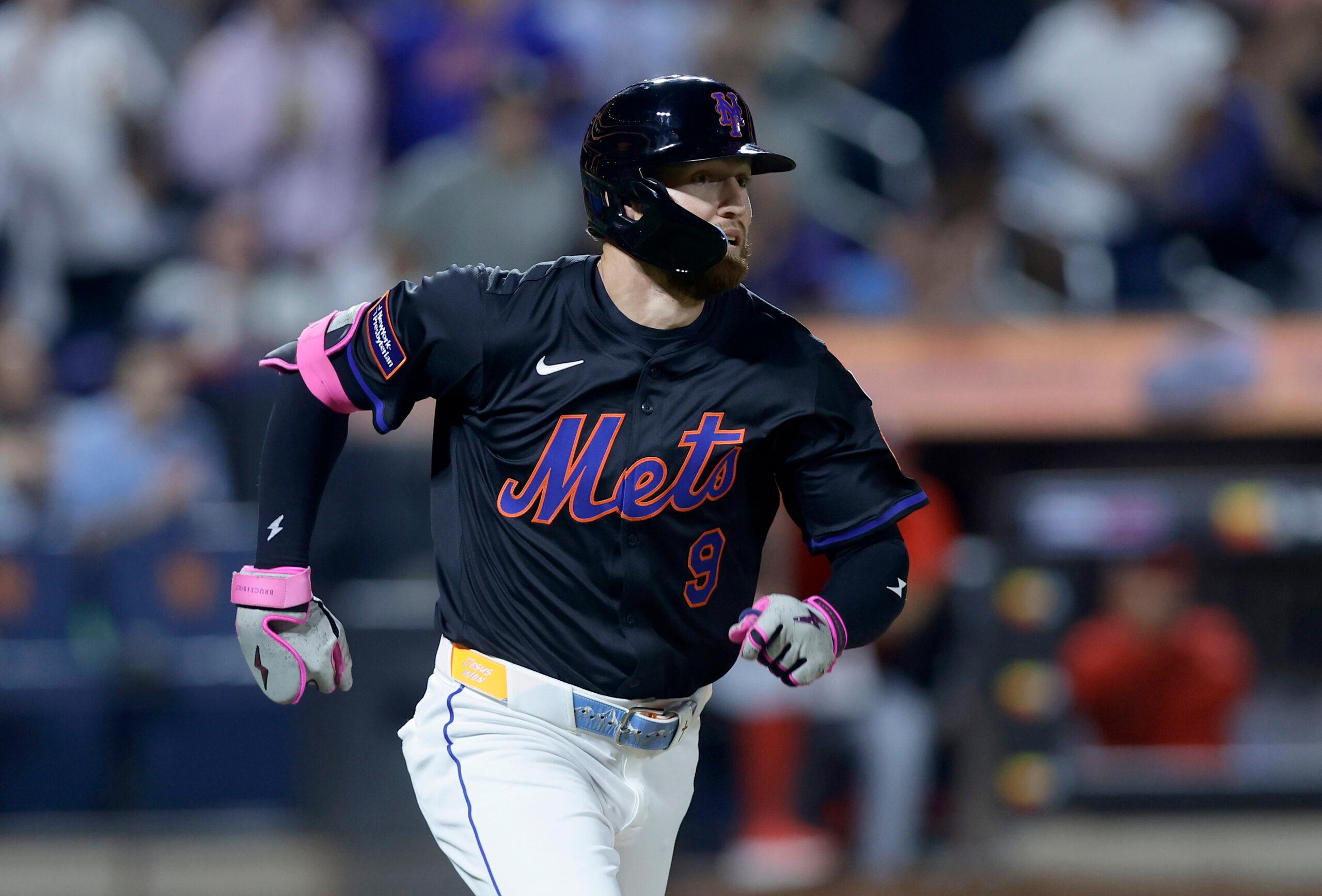
Brandon Nimmo in a game against the Washington Nationals
Texas Rangers: A-
I think the Rangers moved on from Marcus Semien one year too early, as opposed to one year too late. On the other hand, Brandon Nimmo, whom the Rangers got in return, has his flaws, but he projects to offer more offensive value in 2026. And more bats are what the Rangers need right now. Their offense finished 25th in wRC+ last year, two years after finishing second in 2023.
The other issue for Texas last year was starting pitching depth. By adding MacKenzie Gore from Washington, the Rangers get a solid no. 2 with potential no. 1 starter upside. The offense might still be a bat or two short, but I'm a fan of both of their main trades, so the Texans have to be rewarded for this offseason.