

2025 hasn’t exactly been a banner year. Between ever-present anxieties around artificial intelligence, the looming threat of a recession, and the creeping enshittification that’s turning our favorite corners of the internet into digital strip malls, it’s hard to shake the feeling that the world is caught in a depressing holding pattern. Thankfully, television has remained a welcome respite from the chaos. The medium gave us a bit of everything this year: old-school medical dramas, genre-bending docuseries, and thought-provoking science fiction that bounced from stodgy cubicles to a galaxy far, far away. For all that and more, check out The Ringer’s best TV shows of 2025. —Miles Surrey
10
Alien: Earth

By Ben Lindbergh
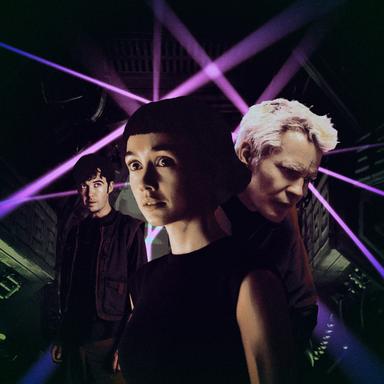
OK, it didn’t end well. But it also didn’t actually end: The second season may yet salvage the deflating finish to Season 1. So while we look forward to a less cliff-hanger-filled future, let’s remember the good times—and by “good times,” I mean the truly terrifying, dystopian times that we endured and delighted in for the first five episodes or so. Alien: Earth adapted almost 50-year-old IP to TV for the first time, and like an invasive extraterrestrial predator (not that one), it thrived in its new environment. In the process of laying new narrative groundwork for the original film, Noah Hawley’s take on the famous franchise introduced several alien species so disturbing that the Xenomorph—one of the most iconic creatures in Hollywood history—was relegated to supporting-monster status.
Instead, the breakout star—not counting a strong cast of humans, hybrids, cyborgs, and synths—was an eyeball monster that was simultaneously one of the scariest baddies ever seen on-screen and also kind of cute. That indelible design alone earned Alien: Earth a spot on this list. If Season 2 can dial down the Peter Pan allegory, ratchet up the Xenomorph action, and deliver a little resolution along with Boy Kavalier’s leisurewear, we’ll all agree to forget that the first finale ever happened. Which won’t be hard, because so little did happen.
9
Pluribus

By Miles Surrey
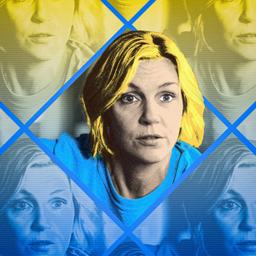
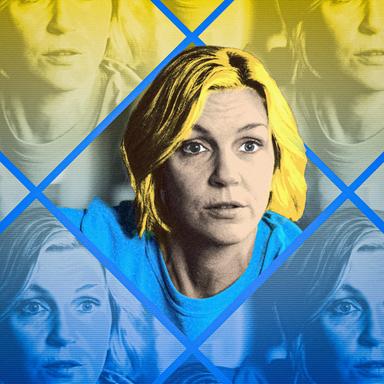
Before becoming one of television’s preeminent showrunners with Breaking Bad, Vince Gilligan cut his teeth as a longtime writer on The X-Files, and for his latest series, he returns to his sci-fi roots. The pilot of Apple TV’s Pluribus—in which a romantasy author, played by Better Call Saul’s Rhea Seehorn, watches the people around her succumb to an extraterrestrial virus—is straight out of a horror movie, portending the end of civilization as we know it. But what’s so thrilling about Pluribus is how often it zigs where you expect it to zag: The hive mind that’s taken control of humanity is eerily accommodating to anyone who’s immune and refuses to harm any living thing. (Even the reveal that they’re eating corpses has an eco-conscious spin—they don’t want anything to go to waste.) Amid these tonal swings, Seehorn’s weary protagonist is the show’s unifying force, grounding its themes of loneliness, grief, and addiction. Where Pluribus will go from here is anyone’s guess, but in the spirit of the hive mind, I’ll happily surrender to its weird, wonderful whims.
8
The Chair Company
By Miles Surrey
Something sinister lurks beneath the cheery veneer of everyday life, and one man goes down a twisted rabbit hole in search of the truth. This description evokes Blue Velvet, one of David Lynch’s seminal works, but you’d never think it could also apply to a Tim Robinson joint. The Chair Company, Robinson’s new, potentially uncategorizable HBO series, stars the cult comedian as Ron Trosper, a recently promoted mall developer who embarks on an obsessive quest to find out why an office chair collapsed under him during a work presentation. There are qualities similar to those of Robinson’s best I Think You Should Leave sketches—drab office settings, socially stunted men, bizarre non sequiturs—but stretched over 30-odd-minute episodes, The Chair Company proves to be genuinely unsettling just as often as it’s funny. (I’d have never guessed that this would be the scariest thing I’d watch all year.) From a minor workplace mystery to a full-blown descent into paranoia, The Chair Company leaves you on the edge of your seat.
7
Adolescence

By Daniel Chin
There’s a calm at the beginning of the Adolescence series premiere, but it doesn’t last for long. Detectives Luke Bascombe (Ashley Walters) and Misha Frank (Faye Marsay) are sitting in their police cruiser, chatting about how Bascombe has been eating six apples per day in an effort to kick his cigarette habit and how his son is trying to get himself out of school again. After about two minutes of screen time, though, the detectives proceed to lead a raid on the home of Jamie Miller (Owen Cooper), a 13-year-old boy who’s suspected of murdering his classmate Katie Leonard (Emilia Holliday). Adolescence ramps up its pace and never loses momentum, quickly drawing its audience into a devastating series that remains one of the most memorable of the year.
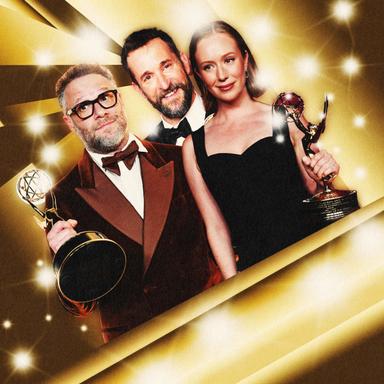
Each of the Netflix limited series’ four installments unfolds in a single hour-long take, as Adolescence follows the story of Jamie’s arrest and the impact it has on his life and those around him. The one-shot sequences make it hard to look away, eliciting a sense of dread that’s shared with the characters on-screen as the fallout from this tragedy continues to grow. Each episode is a technical marvel, and the sleek, captivating cinematography heightens the powerful performances of a cast working with challenging, emotional material. Combined with some impeccable writing from creators Jack Thorne and Stephen Graham (who also stars as Jamie’s father), Adolescence lands as a powerful—and terrifying—reflection on the trials of growing up in the modern world.
6
The Pitt
By Daniel Chin
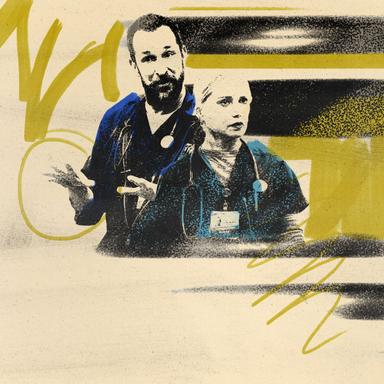
More than a decade and a half after ER concluded its 331-episode run on NBC, the genre-defining medical drama has been resuscitated on HBO Max. Although The Pitt isn’t technically a follow-up to ER, the series serves as its spiritual successor. It’s a reunion for creator R. Scott Gemmill—who joined the ER team in the show’s sixth season as a supervising producer and writer—and executive producers John Wells and Noah Wyle, the latter of whom stars as senior attending physician Dr. Michael “Robby” Robinavitch, 31 years after Wyle was introduced as a wide-eyed medical student on ER.
In a gripping first season, The Pitt follows the emergency medical staff at the Pittsburgh Trauma Medical Center as it works a single, nightmarish 15-hour shift, with each of the season’s 15 episodes covering one hour in the chaos of the emergency room. The series draws inspiration from the challenges that medical workers faced during the COVID-19 pandemic, as well as the myriad shortcomings throughout the contemporary health-care system. ER has inspired so many TV shows that have sought to recapture its winning formula. But The Pitt is the rare medical drama that elevates the genre as it pushes forward into the streaming era.
5
The Studio
By Miles Surrey
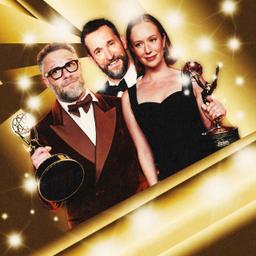
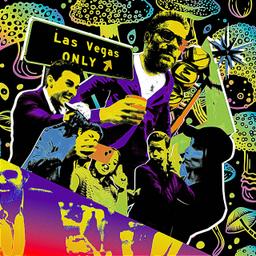
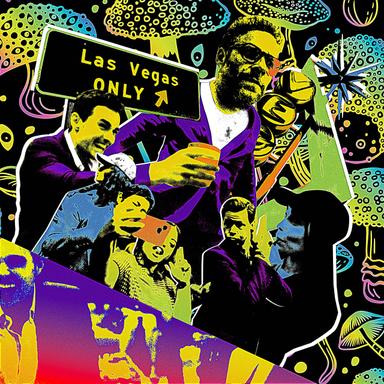
From Entourage to 30 Rock, the entertainment industry loves a TV show about itself, but few arrived as fully formed as Apple TV’s The Studio. Set within the boardrooms and back lots of the fictional Continental Studios, the series follows Matt Remick (cocreator Seth Rogen), an idealistic executive who believes that the demands of art and commerce don’t have to be mutually exclusive in IP-obsessed Hollywood. (Spoiler alert: They probably do.) Given Rogen’s involvement, the episodic setups—such as the implications of picking an all-Black cast for a Kool-Aid movie—are reliably hilarious. But what elevates The Studio beyond mere satire is its sincere affection for the industry; it features Birdman-style long takes and cameos from the likes of Martin Scorsese. The Studio wound up winning more Emmys in its debut season than any comedy in history, which bodes well for Rogen and Co.’s chances of snagging more A-list guest stars down the road. Whether it’s a good thing that a series about cinema in crisis is resonating with so many people in Hollywood is another question entirely.
4
Task
By Daniel Chin
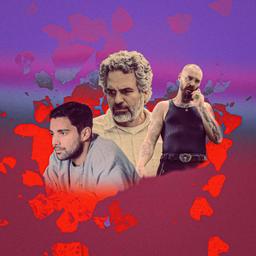
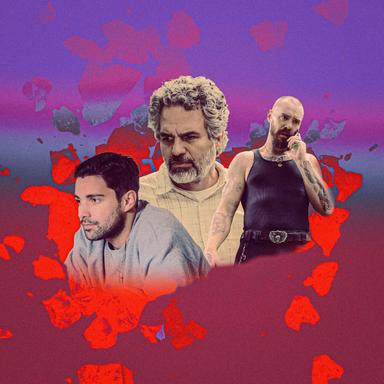
Created by Brad Ingelsby (Mare of Easttown), Task might appear to be just another crime drama on the surface. It features a biker gang, a hero cop with a drinking problem, and a principled stick-up man who steals from other criminals, akin to The Wire’s Omar Little. But the characters, and the series at large, are much more than the archetypes they’re presented as.
Task centers on recently widowed FBI agent Tom Brandis (Mark Ruffalo) and Robbie Prendergast (Tom Pelphrey), a garbage collector by day and trap-house robber by night. As a thrilling cat-and-mouse pursuit provides a through line for the seven-episode first season, Task bolsters its high-stakes action with some brilliant character studies and performances. The HBO series—which was renewed for a second season in November after first being developed as a limited program—examines how the sins of the past can be passed down from parents to children in a story that masterfully builds into a thoughtful, and often heartbreaking, interrogation of morality.
3
Severance
By Ben Lindbergh
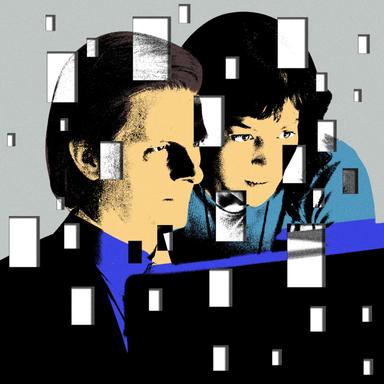
Some spectators seemed to turn on Severance in Season 2, frustrated that the series was taking its sweet time to pull back the curtain. If you’d like the show to take shorter breaks between seasons, well, I’m with ya. (The creators reportedly won’t start shooting new episodes until more than a year after the Season 2 finale aired, so don’t count on seeing Season 3 before mid-2027 at the earliest. Sigh.) But if you’re itching for the story to unspool at a faster pace on-screen, I’d preach patience. Severance isn’t a series that’s solely about setting up mysteries and doling out answers, à la Paradise. (Note: That’s not a knock on Paradise, which was also among my favorite shows this year.) It’s an exploration of the nature of memory, morality, and identity.
Sure, I want to know the deepest, darkest secrets of Lumon Industries as desperately as the next Reddit reader. But I believe that the revelations will be worth the wait and that the joy is in the journey. And gosh, it feels good that every viewer is on the same journey, with no prequels, sequels, or source material to illuminate the path. Like its fellow Apple TV original sci-fi series Pluribus (see above), Severance reminds us that collective viewer ignorance can be bliss.
2
The Rehearsal
By Daniel Chin
In May, Evanescence lead singer Amy Lee spoke to Vulture about an episode of The Rehearsal, “Pilot’s Code,” and its use of her band’s 2003 hit single “Bring Me to Life.” The song is featured in a pivotal scene in which Rehearsal creator Nathan Fielder—who stars as Captain Chesley “Sully” Sullenberger in this episode’s revelatory reenactment of the famed pilot’s life—turns to its chorus to guide him in an emergency landing on the Hudson River. “I don’t even know what word to put on it,” Lee said. “It’s just blowing my mind. It’s really beautiful.”
Lee may have been speaking about that particular sequence in “Pilot’s Code,” but she just as easily could have been talking about the surreal second season of The Rehearsal as a whole. Part of what makes Fielder’s genre-defying series so engrossing is that you never know what's coming next or whether anything that’s transpiring on-screen is real. Over the second season’s six episodes, Fielder investigates—and attempts to solve—the challenges and shortcomings of aviation safety. By the time that Fielder himself pilots a full flight in a Boeing 737 in the finale, the series transcends the very bounds of modern television as we know them. It really is beautiful.
1
Andor
By Ben Lindbergh
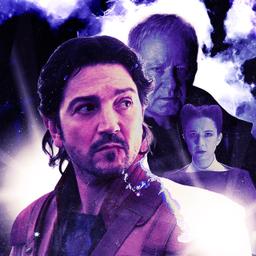
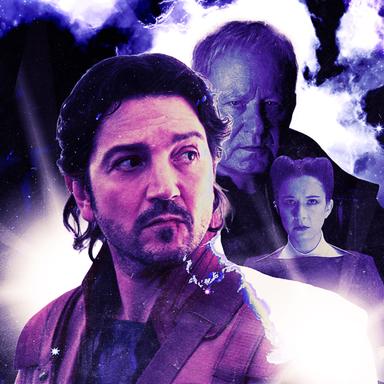
More than six months after its finale, Andor already seems like a dream. The best TVseries of the year was a Star Wars show on Disney+? And a prequel to a prequel? Featuring a character who was killed at the end of a movie released in 2016? That can’t have happened, right? I have a hunch that the existence of Andor will seem more and more miraculous the further removed from it we are. But as Han Solo once said, it’s all true.
The entertainment miracle of Andor isn’t just that Tony Gilroy and Co. crafted a topical, profound, emotional meditation on fascism and resistance under the aegis of a Flash Gordon–inspired space opera that its original creator claims is for kids. It’s that the series’ use of the Star Wars license actually enhanced its message. Not just by unlocking a Death Star–sized budget, with a commensurately killer cast and crew (though that helped), but by making its message resonate more widely and deeply. An Andor-esque series set in real life, framed around actual events, might have seemed redundant, dry, or preachy. Porting this story to a galaxy far, far away—and to a fictional universe that some spectators have been steeped in since they were kids clashing with action figures—made for a more digestible delivery system … and, maybe, a more eye-opening reflection of reality. And isn’t that what sci-fi is for?
In the mid-2020s, everything is IP, and Andor didn’t change that. But it did give us a reason to feel less bad about that trend. I worry that we won’t see its like again—but I do have hope. Andor reinstilled it.
Honorable Mentions
The Lowdown, Paradise, The Gilded Age, The White Lotus, Hacks