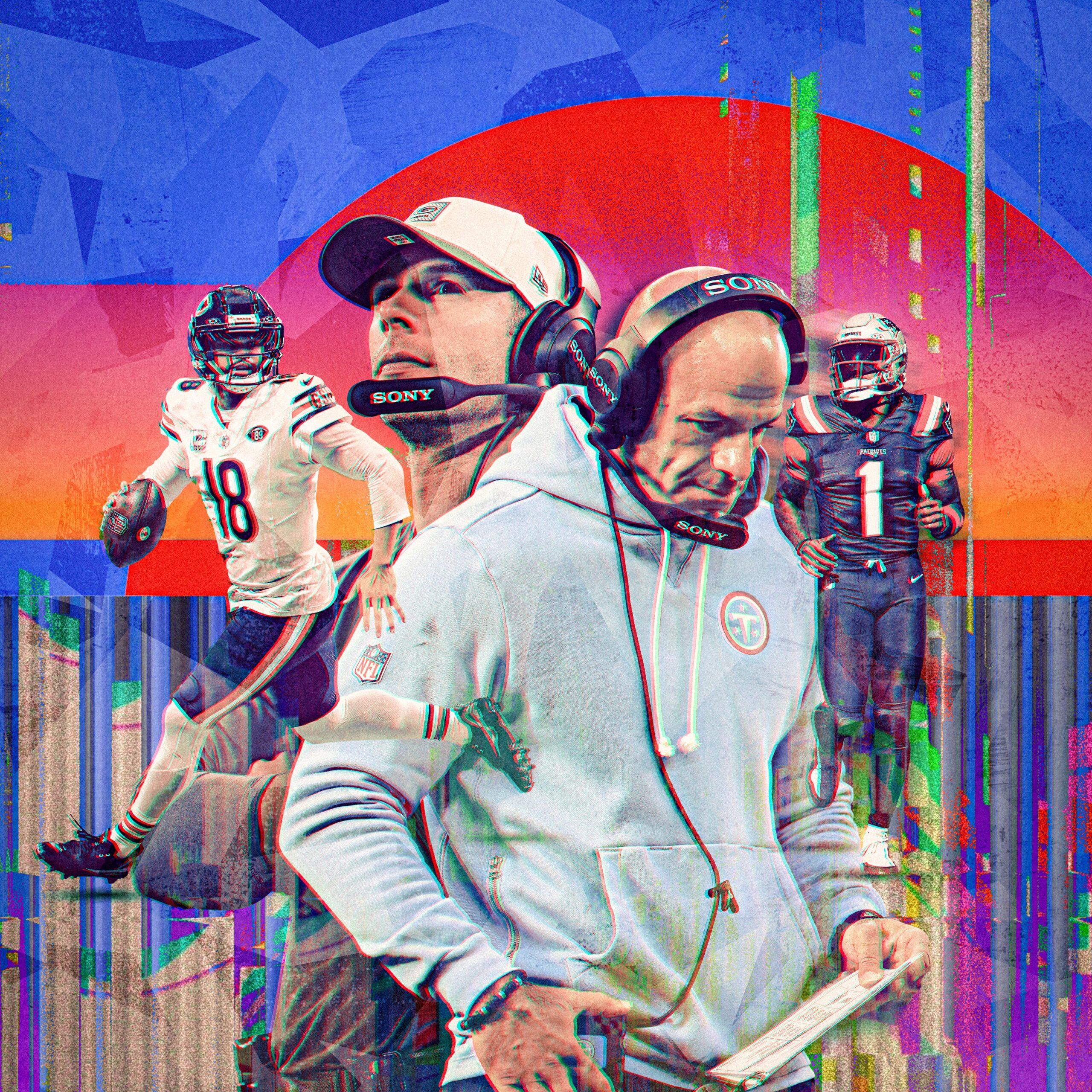

Welcome to the latest edition of the Ball Knower’s Notebook, where each week, we’re looking at the best and worst plays through the All-22 camera angles, breaking down why things worked or failed.
This week we’re focusing on quarterback play—for better or for worse. Caleb Williams, Daniel Jones, Sam Darnold, and … J.J. McCarthy (?!) are in the spotlight.
Of course, we’ll give defense some love too, particularly Green Bay for its dominant showing against the Cowboys. This is one of our most scheme-heavy notebooks yet. Now let’s talk some ’ball.
What Went Well: Caleb Williams Staying In Rhythm
Had quarterback Caleb Williams not missed the past few weeks with a hamstring injury, he’d have the inside track for my MVP vote. He’s in complete control of Chicago’s offense, and Sunday’s 31-23 win over the Falcons proved he can bend a defense to his will without ever having to use his legs. Williams cooked Atlanta’s secondary to the tune of 305 passing yards and a touchdown, completing 83 percent of his passes along the way.
Williams was in a special groove on Sunday, and you can see it in his timing and footwork. His best throw of the day might have been a 23-yard completion to receiver Rome Odunze to move the chains—which you can watch in the clip below. Williams moves running back D’Andre Swift across the formation in an effort to get enough time to work through his progression against the pass rushing stunt Atlanta’s planning to use. On the snap, you see Williams’s eyes look to linebacker Divine Deablo to check his intentions in coverage. When Deablo turns his back to Odunze, Williams knows the dig route will be open. Williams’s footwork is perfectly timed to get through his read and deliver the throw, which you can see by how quickly he rips it after taking his hitch.
When you hear former quarterbacks like Tom Brady and Drew Brees talk about tying a quarterback’s feet to his eyes, this is what they mean. And this is a major reason why Williams has been so efficient this season. Williams is currently completing 82 percent of his passes and has a passer rating of 105.4 in the pocket, both ranking top five in the league. Williams only completed 63 percent of his throws from inside the pocket last year—well below the league average of 67 percent—and the qualities of his throws were scattershot. He’s much more refined now, which is how he can drill passes like the one to receiver Luther Burden III below. After completing the play-action fake and making sure he’s balanced, Williams delivers a perfectly timed and placed throw as Burden’s coming out of his break. Atlanta has no shot to contest this throw, because the timing is pristine. This is the mark of an elite passer.
Now that he’s found his footing in the pocket (both figuratively and literally), Williams’s elite playmaking outside of structure feels even more backbreaking. His touchdown pass to tight end Colston Loveland was a perfect example of escaping immediate pressure without abandoning his ability to throw. Once Williams is out of the pocket, he buys Loveland enough time to adjust his route, then throws the kind of pass only a handful of quarterbacks are able to pull off—across his body and into a closing window. It’s hard enough to place a ball like this accurately, let alone with enough velocity to keep Atlanta’s defenders from knocking it away or picking it off.
Williams has been one of the league’s best athletes at the position since his rookie year in 2024, and now he’s also one of the most accurate passers. In just a year’s time under coach Ben Johnson, he has ironed out most of his accuracy issues, regained his explosive athletic ability (which he didn’t even need to use on Sunday), and is reading the field better than he ever has. He’s becoming the quarterback Bears fans hoped he’d be, and this version of Williams could become the best in football if this level of play keeps up.


What Went Wrong: A.J. Brown’s Hands
Last week, we talked about quarterback Drake Maye and New England’s passing offense getting back into rhythm, and that continued in Sunday’s 26-19 win over the Jets. Maye had three touchdowns without turning the ball over or taking any sacks, and he distributed the ball evenly to his best playmakers. Everyone was able to get involved and impact the game—except receiver A.J. Brown.
Brown was targeted 10 times on Sunday but only had three receptions for 27 yards. He also had several untimely drops and bobbled passes that cost the Patriots offense. Out of the 123 receivers who’ve run 50 or more routes so far this season, Brown ranks 104th in success rate on targets and dead last in expected points added per route run. And after watching multiple passes bounce off his chest or hands this week, I needed to dive into the film so I could get an understanding of whether these mistakes were a byproduct of his usage, or just a lack of concentration on the receiver’s part.
Rust and lapses in focus feel like the only explanation for some of Brown’s missed opportunities, because he’s doing just fine before the ball gets to his hands. In the clip below, Brown is lined up against press coverage at the bottom of the screen. New York is playing a version of Cover 6 with the Cover 2 side to the wide side of the field, and Cover 4 toward Brown. That means Brown will be one-on-one up the sideline on any vertical route, and that’s Maye’s first option in their “989” concept, running three receivers deep downfield. Brown gets behind New York’s defense after a good release, and he might have scored a touchdown if he’d hauled in the pass. Instead, he seems to be searching for contact from the defensive back, maybe hoping to use his physicality to ward him away from the ball. But it seems to take up enough of his focus to cause him to misjudge the ball, a wasted opportunity for one of the league’s best one-on-one receivers.
The most disappointing aspect of the drops weren’t just the missed yardage on Sunday, but the missed opportunity to truly see this Patriots passing game work to its intended design. It was clear at every turn that New England was trying to give Maye the pre-snap information to know whether Brown could be targeted. In the next clip, New England sends receiver Pop Douglas across the formation, and Maye knows he’s getting man-to-man when Douglas is tracked by a Jets defender. New England’s passing concept is clearing out for Brown to run a slant and get a catch-and-run opportunity, but Brown has an inexplicable drop on a well placed ball. It wasn’t a contested catch situation or in a tight window, Brown just had another disappointing flub.
In our last example, we get a look at how Brown can be utilized to beat zone coverage, particularly in the red zone. This time, the Patriots have him in a stacked receiver set with Douglas, and they run what I call a “shakes” concept—using a corner route to clear out a safety and a vertical route up the seam to attack the subsequent void. New York is in Cover 4, which guarantees the middle linebacker will be the only defender in the middle of the field after the corner route clears out. Maye throws a perfect pass to Brown’s back shoulder, keeping him in bounds and away from lurking defenders, and it just bounces off his hands. I’ve been skeptical of offensive coordinator Josh McDaniels this year, but he did an excellent job of featuring his best receiver. Brown just has to pay off these opportunities.
One thing the data makes clear: Brown didn’t forget how to get open. The sample size is small because he’s only played in two games due to an ankle sprain, but he’s averaging 3.1 yards of separation per route, which is on pace to be his career-best. His average air yards on targets is also a current career low at 8.9, which suggests New England is more concerned with using him to move the chains than stretch the field vertically—which highlights how good of a route runner he still is. Maye is clearly feeding him every time he finds open space, and he can put up star-level production in this offense. He just has to iron out his issue with dropping the ball.
What Went Wrong: Daniel Jones’s Awful Day Against Tennessee
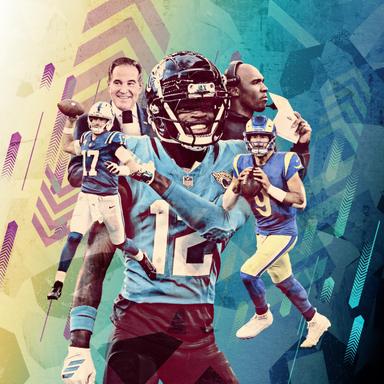
After a 26-20 loss to the cellar-dwelling Titans on Sunday and a 2-4 start to the season, the Colts seem ready to accept that their decision to go all in trying to contend with this team was a failure. The Colts have fired general manager Chris Ballard, and while their statement announcing the move ended by detailing their internal expectations to win games, I don’t think the Ballard move happens unless Indianapolis is considering trading away their better players—and doesn’t want Ballard to be the one at the helm of those negotiations.
And I wouldn’t want the man principally responsible for building this offense in charge of retooling it, because his decisions are what created the team’s issues in the first place. Tennessee’s defense has been one of the league’s worst against the pass this season, ranking 25th in expected points added against passes entering Week 6. You sure wouldn’t have known that from watching Sunday’s game, though! Nobody in Indianapolis’s receiving corps had a prayer of getting open, and I felt like that directly contributed to at least half of quarterback Daniel Jones’s six sacks.
In the clip below, Tennessee is running Cover 0 and all-out blitzing Jones. Not a single Colts receiver is even out of their breaks before Titans defensive tackle Jeffrey Simmons is in Jones’s lap. But it wouldn’t have mattered if Indianapolis had picked up the blitz perfectly, Jones still may have taken a coverage sack—a term that should never apply when a defense is in Cover 0. I acknowledge that receiver Alec Pierce is currently injured, but there’s no excuse for a professional football team to be relying on Keenan Allen and Laquon Treadwell in 2026. That’s roster-building malpractice.
It’s not just that the Colts can’t get open; they have a massive matchup liability at the moment in right tackle Jalen Travis. The Titans attacked Travis relentlessly with blitzes and speed rushers, and it felt like he didn’t win a single rep. In the clip below, the Titans get quick pressure without blitzing because Travis can’t get to edge rusher Jacob Martin. Simmons might have gotten away with a savvy grab to open space for Martin, but Travis’s pass set was at an awful angle to begin with—and he might not have laid a finger on Martin even if he hadn’t been grabbed. Travis, a fourth-round pick in 2025, has allowed five sacks and 20 pressures already this season, the second- and third-most in the league through six weeks. This was yet another Ballard decision gone wrong, and it’s directly contributing to the Colts’ passing game falling apart on a weekly basis.
I say none of this to absolve Jones of his issues, either. Far too often, he’s creating his own problems by holding onto the ball too long or making poor decisions in the pocket. One of his two interceptions—seen in the clip below—came on a “flood” concept that creates a three-level read up the sideline. Against most zone coverages, the right throw will be the dump-off in the flat, and there’ll usually be enough space for yards after the catch. Jones instead tries for the deep out route—which was never open at any point in his progression—and the ensuing pick wastes an opportunity to put points up near the red zone. Indianapolis’s receiving corps is limited and Jones’s protection is shoddy at times, but trying to make a throw like that is just reckless and deserved the result we saw.
I can’t blame team owner Carlie Irsay-Gordon for feeling an urgent need to make changes. This team’s current failings feel like a direct reflection of every mistake Ballard made in the construction of this roster—and the subsequent pressure it put on head coach Shane Steichen to try to patch together something out of almost nothing. Jones is floundering this season, but it shouldn’t be a shock that a quarterback fresh off of an Achilles tear is struggling to replicate the production he had in the first half of last season. But his job isn’t made easier by having to throw to this receiving corps—or needing to put up a bunch of points to cover for what’s been a bad defense. Steichen is probably next to lose his job, and he might find immediate success elsewhere. If he does, it will be the final nail in one of the most underwhelming GM tenures we’ve seen this century.
Jonathan Gannon
What Went Well: Jonathan Gannon’s Game Plan Against Dak Prescott
As a presently divested Eagles fan, I’m mostly indifferent to the play-calling scruples of Packers defensive coordinator Jonathan Gannon. He found success in Philadelphia with a simplistic defense, cutting his dominant line loose and using soft zone coverages to keep quarterbacks from pushing the ball downfield. His best unit was in 2022, a group that beat up on bad quarterbacks and played stress-free thanks to a dominant Eagles offense. But his scheme was diced up in Super Bowl 57 by the Chiefs, and his defenses performed pretty poorly in his tenure as Cardinals head coach. When he got the Packers job, I thought his unit would be average at best and susceptible to exposure against high-level passing attacks at worst.
So far, I’ve been wrong. By expected points added, Green Bay has the ninth-best pass defense so far this season, and they just dominated a Dallas offense I expected to have the best passing game in football this year. Gannon’s group held Cowboys quarterback Dak Prescott to just under 5 yards per pass attempt and picked him off twice on 54 pass attempts—one of Prescott’s worst performances in the last half decade.
Gannon just seems to have Prescott’s number—but it also seems like he’s added layers to his approach that are making him a more difficult play caller to gameplan against. You see Gannon’s growth most in Green Bay’s pressure packages, and the way those set up coverage disguises is a positive downstream effect from his aggression.
One of a defensive coordinator’s biggest challenges is to find ways to manufacture unblocked pass rushers without compromising the ability to cover receivers downfield. Gannon accomplished that masterfully on Sunday by sending blitzes at the running back—and being willing to drop defenders at the line of scrimmage into coverage.
In the clip below, Green Bay is in a “mug” defensive front, walking linebackers up toward the line of scrimmage to confuse Dallas’s offensive line on who to block. The Packers’ intention is to blitz to the side of running back Javonte Williams with safety Evan Williams, but the defensive back is lined up off the ball and can’t be accounted for by the offensive line because of how many defenders are threatening to rush. Green Bay blitzes Williams into an open crease, drops pass rushers Lukas Van Ness and Dani Dennis-Sutton into coverage, and puts Prescott in a situation where he just has to chuck the ball in the general direction of receiver George Pickens. He’s lucky that he was being hit too hard to put more velocity on the throw, or else Dennis-Sutton could’ve had a pick-six. This was an expert way to run a “three-deep, three-under” zone blitz to manufacture pressure.
This tactic also worked for Green Bay in the red zone. They blitzed the back to generate quick pressure and dropped defensive linemen into the passing zones Dallas intended to attack. In the next clip, Prescott gets drilled by linebacker Zaire Franklin as he and safety Javon Bullard blitz toward Williams. Van Ness drops into coverage to take away throws in the middle of the field, and Prescott is again forced to toss up a prayer to receiver CeeDee Lamb, and is again lucky that it didn’t result in an interception for cornerback Brandon Cisse.
When you plant the idea in a quarterback’s head that he’s not safe in the pocket, anything that looks like pressure distracts him from what’s happening in coverage and makes him more susceptible to throwing the ball into harm’s way. That’s what led to Prescott’s interception to Evan Williams. You can see in the following clip, Williams starts at the line of scrimmage, and Prescott probably assumes he’ll be blitzing or dropping into coverage on his side of the field. But on the snap, Williams sprints back into coverage—Green Bay is playing Cover 4—and Williams is waiting to pick off the deep crossing route Prescott is targeting. The threat of pressure makes this play possible for Williams, and you can see from the end zone view how Prescott was fooled by this disguise. Prescott had just been crushed by Franklin a play before, so it’s easy to see why he didn’t take the extra second to wait and confirm the route was open before he threw it.
Give Gannon a lot of credit for Sunday’s performance, and how well Green Bay's defense has been playing lately. When edge rusher Micah Parsons is back healthy and can add his individual excellence to Gannon’s play calling, there’s a chance this could be one of the five most enjoyable defenses to watch each week.
All-22 Spotlight: Sam Darnold’s Meatball Sub
Usually, I don’t even consider including plays from Thursday night games here, but Seattle quarterback Sam Darnold threw some passes that were so unconscionable that they must be dissected.
In overtime of Seattle’s 17-14 loss to the Broncos, the Seahawks lined up for a third-and-7 from their own 28-yard line. This is an awful situation for an offense, because going for it on fourth down isn’t an option here—and if you fail on third down, punting gives your opponent a chance to win the game with a field goal. Darnold clearly wants to be aggressive to move the chains, and that’s a defensible strategy. But the throw has to actually be there to justify taking a risk in overtime.
Denver’s defense appears to show a single-high zone before the snap, but bails into a wonky zone coverage that might be an unconventional Tampa 2 concept. Seattle is running a “flood” concept up the sideline, hoping to stress out underneath zone defenders and open a window in the deep or intermediate area of the field. Darnold sees that Denver cornerback Kris Abrams-Draine allows receiver Rashid Shaheed to run up the sideline, and the quarterback must think Shaheed is open because he doesn’t see a deep safety over the top.
What Darnold missed was slot defender Ja’Quan McMillian dropping into the area, and he serves up an easy interception—and loses the Seahawks the game.
Darnold is suffering some serious regression to start the season, with seven interceptions and 14 sacks in his five starts. His expected points added per dropback ranks 31st among 37 quarterbacks with 100 dropbacks, and his success rate when pressured is second to last. There are some issues with new offensive coordinator Brian Fleury’s scheme, but Darnold is making bad situations worse with his bad decisions and poor throws. Seattle has a championship-caliber roster and should be in contention to defend its Super Bowl title, but it won’t win the Lombardi again if Darnold keeps playing like this.
All-22 Spotlight: Baltimore’s Shoddy Late-Game Coverage
Trailing by three, with less than a minute remaining in Sunday’s game against the Browns, the Ravens had forced Cleveland into a third-and-5 on their own 38-yard line. That’s not four-down territory, so if Baltimore could get a stop and get the ball back to its offense, there was a good chance the Ravens could kick a field goal and send the game into overtime.
What did the Ravens defense do? They allowed a 33-yard completion to Jerry Jeudy, who was wide open in the middle of the field. This is a monumental meltdown in coverage. The Ravens made this play far too easy for Browns quarterback Deshaun Watson.
In the all-22 clip below, you’ll see the Ravens in a two-high safety shell against the Browns’ 3x1 formation. It’s tough to nail down Baltimore’s exact coverage, but because you can see safety Malaki Starks giving a signal and Jaylinn Hawkins cheating back before the snap, this looks like some variation of Cover 6—with Starks playing Cover 4 and Hawkins playing Cover 2. The Browns are running a “mesh dagger” concept, with two drag routes underneath, a clear out route up the seam, and a deep in route attacking a void in the middle of the field.
Based on the way the coverage rules are supposed to play out against this concept, the deep in route should be covered by the defender in the “middle hole” (in this case, safety Kyle Hamilton), and the clearout route should be covered by Starks. But because Hamilton runs up the seam with tight end Harold Fannin Jr. instead of covering the in-breaking route from Jeudy, both he and Starks are double-teaming one route and leaving a huge hole in the middle of the field, where Jeudy is able to make the catch well past the sticks, and pick up even more yardage as he runs across the field.
Hamilton and Starks have to own this breakdown. Hamilton was not in the spot he should be, and Starks did not communicate the coverage well enough for Hamilton to know how to adjust. If everyone does their job here, they would have easily covered this play, made the stop, and put the offense in the position to tie the game.
Jesse Minter is off to a strong start in his head coaching tenure in Baltimore, but this kind of mistake is a reminder that there’s still plenty of work to do before the Ravens take the leap.
All-22 Spotlight: J.J. McCarthy … Throwing a Beautiful Ball?
I’m shocked to even be asking this, but was that J.J. McCarthy throwing one of the coolest passes of the week?!
With the Giants down 10 points in the fourth quarter and in need of a chunk play to kickstart the drive, McCarthy found receiver Malik Nabers downfield for a 46-yard gain. This is one of the best completions of McCarthy’s tumultuous pro career. Here’s the play on the broadcast angle:
This was a great combination of good play design from Matt Nagy and a quarterback ambitious enough to take a deep shot against one-on-one coverage. Through the all-22 angle, we can see New York in a 3x1 formation, running a variation of the Ball Knower’s Notebook’s favorite passing concept: “dagger.” This variation is called “cross country” dagger, because it uses a deep crossing route as a clearout to occupy any deep defender, and hopefully leaving the in-breaking route uncovered.
Here, New Orleans is in a Cover 4 zone. The linebackers will cover the dig routes, and leave the clearout routes to the deep safeties—who will be in one-on-one coverage—not exactly what any defense wants. Nabers was running one of the clearout routes (so he probably wasn’t a primary target in this progression), but because of the one-on-one coverage here from the safeties, McCarthy knows he can push the ball deep to his WR1. Nabers gets a step on safety Julian Blackmon, and McCarthy lays the ball out for the receiver to track down.
McCarthy wasn’t perfect when he replaced Jameis Winston in Sunday’s loss to the Saints, but he was fun to watch, and he was daring enough to push the ball downfield to his best playmakers. If he stays in the lineup and makes more throws like this one, he may be able to rehabilitate his image and career going forward.