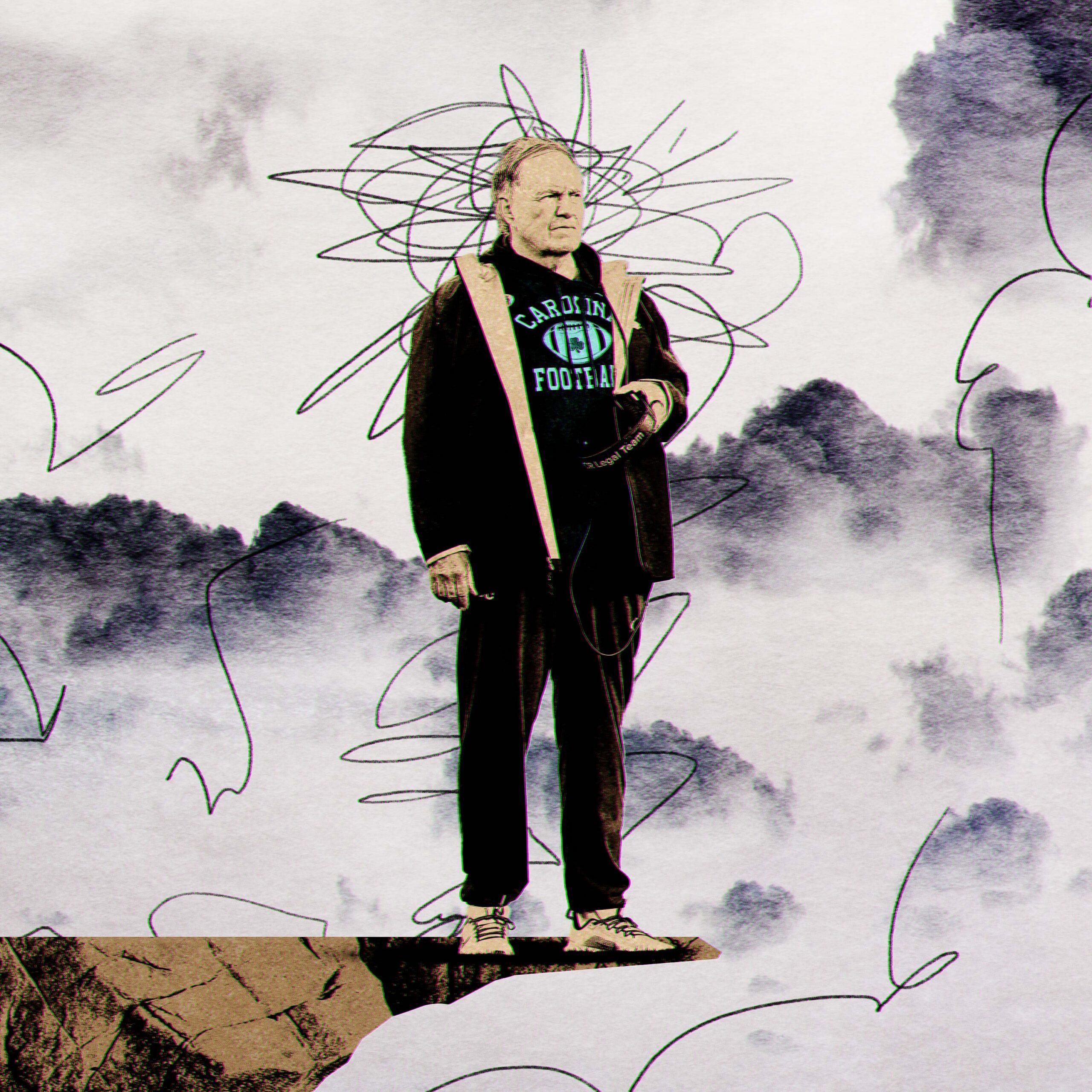
Bill Belichick’s Culture of Chaos
Belichick’s UNC tenure was supposed to remind the football world of his unparalleled greatness. Instead, it’s revealed something different—and the debacles just keep coming.Bill Belichick’s Culture of Chaos
Belichick’s UNC tenure was supposed to remind the football world of his unparalleled greatness. Instead, it’s revealed something different—and the debacles just keep coming.
How many times can we declare the Bill Belichick College Football Experience to be a flop? We did it when North Carolina was embarrassed, in front of God and Michael Jordan and Jordon Hudson, in Belichick’s much-hyped nationally televised opener in 2025. We did it a month into last season, when Belichick’s football team was getting its ass handed to it both on the football field and in the media (as he vowed to snuff out leaks in his program). We warned of it again at the start of this season, as off-field drama once again took center stage in Chapel Hill.
So, no, this probably won’t be the last time. But let’s add this column to the running tally.
The latest indignity for Belichick is this: On Thursday, UNC announced the conclusion of an internal investigation into the “culture and climate” of Belichick’s program, and, relatedly, the resignation of Tar Heels defensive coordinator Steve Belichick, one of the two Belichick sons on the coaching staff. Steve Belichick is the second key figure to leave the Carolina program, following Michael Lombardi’s resignation on September 3 amid a personnel investigation. Lombardi is Belichick’s longtime colleague and friend (and a former contributor to The Ringer), who was handpicked by the coach to, in Lombardi’s words, run UNC like the NFL’s “33rd team.”
The school said little about what its investigation uncovered, instead issuing a word salad of a statement that included two notable sentences: (1) The investigation determined that certain actions demonstrated a disregard for Carolina’s values and standards of conduct, and (2) The investigation also found that these actions were isolated in scope and not a systemic failure.
There’s a whole lot to unpack in those 32 words. The first sentence explains, in part, Steve Belichick’s departure, without offering anything in the way of specifics. Thank goodness, then, for local media outlet WRAL, which has been out front on nearly every major UNC story since Belichick’s arrival, and reported on Thursday that investigators looked into allegations of drug use within the program. Earlier this month WRAL had reported that individuals had been questioned specifically about if Steve Belichick “had used drugs on the job or whether he provided drugs to at least one player.” In that same report, WRAL wrote that investigators were also looking into a possible sexual relationship between a staff member and a player. Those are the sort of actions that would certainly impact “culture and climate.” (As far as findings related to Lombardi, UNC has been mum, but The Atlantic reported this week that the university found Lombardi had made a series of “minor” recruiting violations. The Atlantic’s source told the magazine that those violations wouldn’t have necessitated a firing, but Lombardi had rubbed plenty of important people, from donors to athletic department staff, the wrong way.)
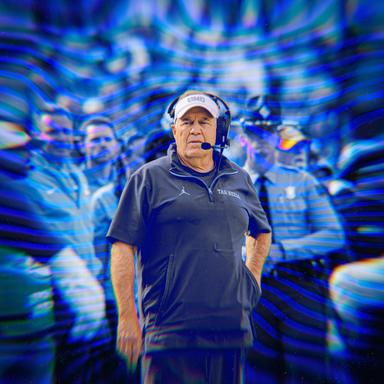
It’s the second notable sentence in UNC’s statement that we should focus on now, and these words in particular: isolated in scope and not a systemic failure. Are we really supposed to believe that the “culture and climate” issues discovered after a large-scale internal investigation were just one-offs? That we can separate noted control freak Bill “Do Your Job” Belichick from the behavior of two of the people on staff closest to him? That we should instead look at UNC’s early 2-0 record, brush off a month’s worth of salacious headlines, and move on to Cincinnati, er, Clemson? UNC hired Belichick to create a winning culture. So far, there hasn’t been much winning, and the culture is rotten.
It’s certainly possible that UNC wins, say, eight games this year and becomes bowl eligible. But at some point, you have to wonder how much permanent damage the overall messiness of Belichick’s UNC tenure has done to his reputation—and the way that the most successful coach in NFL history will be remembered.
That Belichick took a job in college football in the first place was a stunning move. He was an NFL lifer, with 302 regular-season wins, six Super Bowl triumphs, and an unimpeachable résumé as one of the best defensive minds in football history. For two decades, his teams in New England were synonymous with greatness, and the often joyless pursuit of perfection that came with it. When his divorce from the Patriots became official after the 2023 season, it seemed like only a matter of time before he wound up with a new NFL franchise, somewhere he could chase rival Don Shula’s all-time wins record.
But then the Atlanta Falcons, the only team to seriously consider him during the 2024 head coach hiring cycle, picked Raheem Morris instead. Months later, an ESPN report revealed that NFL owners were largely “loath to grant a single person as much power as Belichick wielded in New England.” Owners probably also knew that hiring Belichick to coach their NFL team meant hiring His Guys as well: Belichick’s sons, Steve and Brian; longtime assistants, like Matt Patricia, Joe Judge, and Josh McDaniels, each of them failed NFL head coaches; and Lombardi. Translating the Patriot Way to another NFL team would mean a heavy dose of both nepotism and cronyism.
So while NFL teams moved on without him, Belichick spent the 2024 season on podcasts and television sets. It was a brilliant pivot; the NFL’s grumpiest coach actually smiled when getting the chance to talk ball, and he offered smart and pointed analysis in a way he never did from a Patriots lectern. But clearly the itch to return to the sideline never went away, and he jumped at the chance to go to Chapel Hill in December 2024, before the possible humiliation of another NFL hiring period passing him by. His hiring was met with great fanfare: balloons in Carolina blue, a gifted UNC hoodie with its sleeves already cut off, and the promise he’d be given near complete autonomy (and the financial support necessary) to rebuild the Tar Heels football program in his image. And if it worked, Belichick would be able to both give a proverbial middle finger to an NFL that had rejected him and also set himself up to be a desirable candidate for an NFL job down the line.
The actual football, though, has been an afterthought when it comes to Belichick’s time in Carolina. There were no moments during the 2025 season in which you could have looked at the Tar Heels and thought, “Wow, that looks like a well-coached team.” If not for the famous face on the sideline, with his signature hoodie and sour expression, you wouldn’t have known that they were coached by a (future, more on that in a minute) Hall of Famer. UNC went 2-6 in the ACC, finished 131st out of 136 Division I teams in total offense, and lost its final three games of the season. But Belichick’s debut Carolina season is better remembered for Jordon Hudson shutting down a softball question from a CBS Sunday Morning reporter to Belichick about how the couple met, and a series of unflattering headlines about the toxic environment in the football program.
North Carolina was supposed to be a soft place for Belichick to remind the greater football world of his gridiron genius; instead, it only reinforced why NFL owners didn’t want to give him another chance. In 14 games with UNC, we’ve seen too little of the things that made Belichick arguably the greatest pro head coach of all time. Where are the creative defensive game plans designed to completely erase an opposing offense’s best player? Where has Belichick’s deep passion for special teams created an edge for the Tar Heels? Where has he used his cutthroat competitiveness to humiliate a conference rival, like he did year after year after year against the New York Jets?
Ironically, the reputational high point of Belichick’s past year came in February, when he was snubbed by the Pro Football Hall of Fame. For a few days, everyone in football was talking about Belichick’s on-field accomplishments in the NFL, his defensive game planning brilliance, the way he pushed (and crossed) nearly every competitive line possible and defined what it means to be a winner. For a few days, we weren’t thinking about how poorly things were going at North Carolina, or asking if Belichick would be able to dig his way out.
Ultimately, Belichick will get into the Hall of Fame—perhaps as soon as next year, thanks to massive changes to the selection process that will put coaches in consideration with players, rather than in a different voting pool alongside senior candidates and a contributor finalist. Maybe the culture within the UNC football program will improve now that Lombardi is gone. Maybe Brian Belichick will prove to be a better (and less problematic) defensive coordinator than his older brother, Steve, was. Maybe, with a roster that includes more of his own handpicked players plucked from the transfer portal than holdovers from a prior regime, Belichick will be able to implement the type of offensive and defensive schemes he wants. The early results have been promising, particularly a 15-10 win against TCU (the team that so thoroughly beat the Tar Heels in his college debut a year ago).
Still, Belichick now needs to show he can beat some ACC teams, and, more importantly, that his program can make it more than a couple of weeks without some sort of off-field drama. Even that may not be enough to erase the stink of the past year and a half. There is nothing that could happen at Carolina that can change Belichick’s legacy as one of football’s greatest minds and ultimate winners. But his legacy as one of the sport’s most exacting and effective culture builders is weakening by the day.