
For much of Cathy Engelbert’s seven-year tenure as WNBA commissioner, being a fan has felt like being a passenger on an airplane gaining altitude while flying upside down.
The peaks, from the apex of Caitlin Clark’s logo 3s to the genesis of the StudBudz, have been breathtaking. The lows, from the dildos to the refereeing gaffes to the culture war invasion, have been exhausting and cringe-worthy.
On Friday, ESPN reported that Engelbert has decided to retire at the end of 2026. In the past three years, she has overseen an era of both exponential growth and exponential crisis, while trying to take too much credit for the former and not doing enough to mitigate the latter. In the end, the qualities that made her an effective commissioner when the WNBA needed stability became liabilities when the league needed ambition.
The WNBA commissioner is supposed to be a liaison between the players and owners while answering to NBA commissioner Adam Silver. The position carries a lot of responsibility but not a lot of hard power. She couldn’t control what she couldn’t control, but she didn’t control what she could. She bears responsibility for how she operated in a flawed context, but so do the people responsible for creating that context. Her eventual successor will inherit the same problems and promise. Whether they’ll face similar constraints will be up to Silver.
To understand the Engelbert era, it is useful—as with nearly all things WNBA related—to separate her tenure into pre–Caitlin Clark and post–Caitlin Clark periods.
In 2019, when Engelbert officially took over, the league was in a precarious financial position. Ratings were going downhill. Two months after the WNBA’s new collective bargaining agreement was negotiated, the COVID-19 pandemic sent event-based industries into a financial spiral and threatened the league’s very existence. Engelbert, less than a year into the job, helped design the “Wubble”—what fans affectionately called the pandemic isolation zone at IMG Academy—and the 2020 season miraculously commenced.
In 2022, Engelbert made a decision that will likely have more long-term consequences than anything else she did in her tenure, leading a $75 million capital raise that sold a 16 percent equity stake in the league to a group of investors. The deal further complicated the WNBA’s ownership structure, turning a 50/50 split between WNBA and NBA owners into a 42/42/16 split.


More on the WNBA
The capital infusion, designed to shore up the WNBA’s marketing apparatus, helped the league office grow from a shoestring operation into a business with around 100 WNBA-focused employees, according to Engelbert’s interview with Howard Megdal of The IX Sports. As players demanded a higher share of the league’s revenue in the latest round of CBA negotiations, the WNBA reportedly explored buying back part of its stake. But given how much team valuations have exploded in the past four years, that stake could be worth around a billion dollars now.
In hindsight, was the capital raise shortsighted? Yes.
But did a league concerned with survival have the luxury of thinking with a long-term vision in mind? No.
The capital raise was also a sign of how little regard the NBA owners held for the WNBA at the time. For less than the cost of the contract Terry Rozier signed that offseason, they allowed the WNBA to sell off a significant stake of its own league.
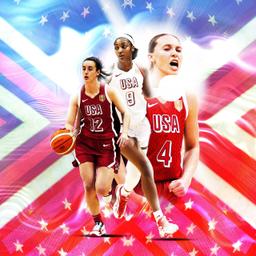
All of that changed in 2024. The arrival of Caitlin Clark was a lottery ticket with a culture war grenade attached to it. Engelbert neither fully maximized Clark’s popularity nor diffused the bomb.
Clark brought in millions of new fans. Viewership, attendance, and merchandising sales skyrocketed. She also brought, through no desire of her own, an online right-wing movement bent on mining Clark’s conflicts with other players for race-based slights. She became a magnet and a magnifying glass, turning the WNBA into a target for algorithmically incentivized rage-bait and conspiracy mongering.
The first sign that Engelbert wasn’t built to handle this new era came in a CNBC interview in which she tried to spin the hostile and discriminatory discourse around Clark and Angel Reese’s rivalry into a … positive. Her answer featured the defining contours of the Engelbert era: an off-key communication gaffe rooted in avoiding and downplaying problems instead of acknowledging and handling them head-on.
As the job became less about fine-tuning the WNBA’s fledgling financial operations and more about leveraging relationships and protecting the league’s reputation from bad-faith actors, Engelbert’s flaws began to completely overshadow her strengths.
It took Napheesa Collier going scorched earth last October and accusing the WNBA of having the worst leadership in the world for the league to finally acknowledge its players, fans, and coaches’ long-held concerns about the overly physical play of the game. To Engelbert’s credit, the WNBA’s new emphasis on freedom of on-court movement has worked, with free throw attempts and offensive efficiency hitting all-time highs. The WNBA’s Replay Center, a centralized hub designed to streamline play review, will launch next season.
But according to reporting from ESPN’s Alexa Philippou, communication has remained a persistent hurdle for the WNBA’s top leader, as Engelbert has put forth little effort to repair broken relationships.
Her final years have been defined by half measures and inconsistency. The league has yet to issue a response to its latest controversy, set off by Fever player Sophie Cunningham’s statements about trans girls playing alongside cis girls in sports. Anti-trans protesters have followed the WNBA from game to game since. Former NBA player Enes Kanter Freedom declared for the WNBA draft to highlight that its policy does not explicitly exclude trans players; he was later ejected from a Sky game after a verbal altercation with a player. The Sky banned Kanter Freedom from the Wintrust Arena, and he responded with his own lawsuit—but the league itself has not issued a ban against him. That's left the door open for more stunts, stretching the Overton window of what the WNBA is willing to tolerate from bullies and provocateurs. Meanwhile, teams and players are left holding the bag, forced to address questions and resolve conflicts that the WNBA won’t.
The question of whether an organization backed by the might of the NBA’s legal counsel would rather have Kanter Freedom’s litigiousness or his presence is only a hard one if you don’t understand that the propulsivity and inclusiveness of the in-game experience are some of the WNBA’s most sacred and powerful assets.
Power, though, is often in the eyes of the beholder. Engelbert is a representative and maybe even a relic of a bygone era of the WNBA, when incrementalism and compromise were tools for the league's adaptation and survival.
The WNBA was forged by players who saw the expedience in trading autonomy for security and chose the WNBA over the ABL, which offered players equity in the league but didn’t have the backing of the NBA. For years, that security allowed the WNBA to survive. Now that the league is finding its own identity, it feels more like a crutch.
In a position where exerting soft power is vital, Engelbert could have built and leveraged relationships with the media, players, and other stakeholders to convince the NBA to give the league more autonomy over expansion and negotiating its own media rights deal. She didn’t. In public, she often expressed more annoyance with her critics than she did with her bosses.
Before Clark’s arrival, Engelbert worked well within the constraints she was given. But as time has worn on, her lack of willingness to push against those constraints and find creative solutions has become a glaring problem.
The WNBA’s next commissioner will need to take a different approach, but they will also be dealing with a different context. The WNBA has the interest and investment of the NBA now. Fifteen NBA-affiliated owners have stakes in WNBA teams. Three more NBA ownership groups are starting up expansion teams in Cleveland, Detroit, and Philadelphia, and even more want in.
The job will require political savvy and bridge building. It will require someone who has enough institutional wisdom to understand the league without being bogged down by the culture of defensiveness and cynicism that has overtaken it. It will require someone who can simultaneously nurture the popularity of Clark and the expansion teams in Golden State, Portland, and Toronto, which are catering to dedicated, deep-pocketed, and diverse fan bases.
The answer, ultimately, will come down to what Silver wants. Does he want a figurehead who can better handle the day-to-day operations, from rule enforcement to marketing, while the NBA pulls the levers on the biggest decisions? Or does he want someone he can trust to forge a future? Someone whose savvy could occasionally outfox him and whose vision could surprise him? Does he want someone who can sell him on the advantages of building the WNBA differently than the NBA?
“I was brought in as a business leader to transform the business. I look at revenue and merchandise, viewership and attendance,” Engelbert told the AP’s Doug Feinberg after news of her retirement broke. “A great leader senses when it’s time for someone else to come in.”
It’s easy to bristle at Engelbert’s self-mythologizing and the fact that she’s still trying to take credit for the exponential growth the league experienced after Clark’s arrival. But you can’t help but laugh at the irony of the Engelbert era: The person who helped lead the league out of the darkness was ultimately blinded by the light.