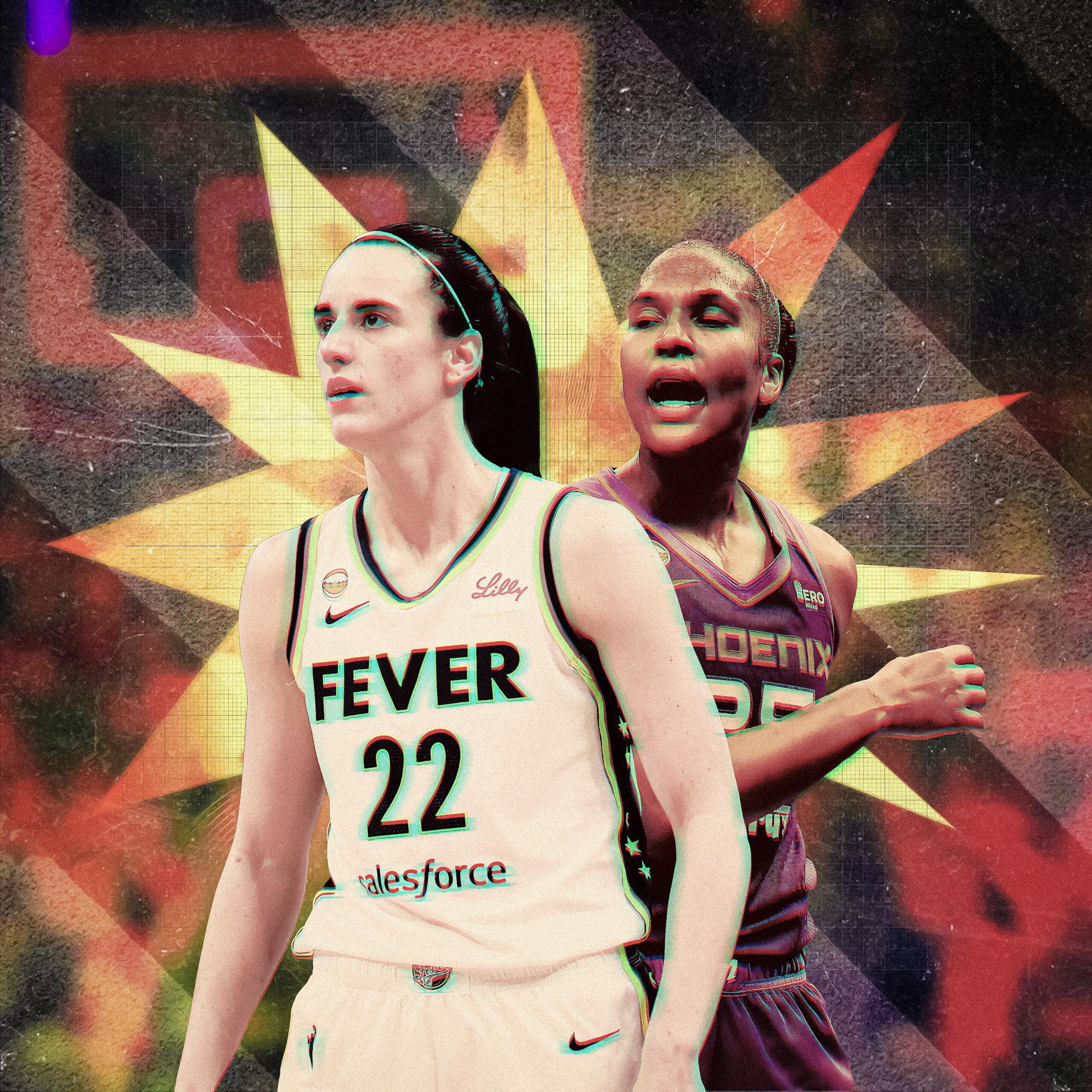

For a few hours on Wednesday night, while watching the chaos that was Indiana Fever–Phoenix Mercury, I felt like I was back in 2024. There was:
- The obvious foul on Caitlin Clark committed by Alyssa Thomas, whose closed fist pushed against Clark’s neck in a tangle for a loose ball.
- The no-call on the play, which provoked outrage.
- The racism, misogyny, and homophobia that inevitably follow incidents involving Clark and Black and/or queer players.
- The distorted instinct to downplay an obviously dirty play in the name of protecting Thomas from personal attacks.
- The familiar pressure to choose a side.
- The way every argument about Clark feels like a cultural Rorschach test.
Clark was also undercut by Mercury defenders on two of her 3-point attempts, and she eventually left the game with a back injury, which further stoked the fire. Another week, another full-blown Caitlin Clark controversy.
“I’m not sure if it had any impact on her health or not, but it was egregious,” said furious Fever coach Stephanie White after the game. “We have a generational talent and a WNBA superstar who had two cheap shots there that weren’t called.”
Thomas, the league announced Thursday, would be suspended for one game after retroactively being given a flagrant 2. For a league that has a habit of wishing away its problems, it’s the right decision, albeit a belated one. You can’t run away from this kind of controversy. It’s also hard to give the league too much credit for reacting to a crisis it helped create.
The WNBA’s biggest PR problem isn’t the overly physical play, Clark’s complaining, poor refereeing, or even the bad-faith actors who look at every moment like it’s the Zapruder film, in search of ways to ignite culture wars. The WNBA’s biggest problem is the gulf between how good it feels to be a WNBA fan and how toxic the league seems from the outside looking in.
The environment inside a WNBA arena is palpably life-affirming. The fans are more friendly than those of other sports. The players are more accessible. On Sunday, I went to the Liberty-Sparks game on the 30th anniversary of their first meeting, the inaugural game of the WNBA. I felt the gravitas and gratitude of Lisa Leslie, who played in that inaugural clash. I listened to DeLisha Milton-Jones dish insights about the future of women’s basketball. I heard the crowd return Teresa Weatherspoon’s love of the game back to her. I watched Sue Wicks, the first WNBA player to come out as queer, have her moment (stylishly, I might add) as fans lined up to take selfies with her. I felt the presence of the basketball gods setting the stage for Nneka Ogwumike—the bridge between the WNBA’s past and its future—to hit a game-winning 3 for the franchise she once won a title with.
Speaking of Ogwumike, who was just reelected as the president of the WNBPA—the players’ relentless self-advocacy during CBA negotiations, in the face of constant misinformation, was genuinely inspiring.
This week, I had a conversation on my WNBA podcast with USA Today’s Callie Fin about how the league empowered her during a medically dangerous pregnancy.
The WNBA has changed my brain chemistry in ways I couldn’t have imagined. I show up to the arena less self-conscious, more authentic. I've had conversations about identity, community, and ambition around this league that simply do not happen in many other corners of professional sports. This is a league that’s anchored by vital fan communities who mobilize one another into action and players who have made a tangible impact on election outcomes in this country. There is so much about women’s basketball that breathes genuine life into the people around it.
Life inside the WNBA, for the most part, is genuinely awesome. But outside the arena, the league is filtered through two polarized narratives, both of them unflattering:
- The league is stacked against Clark. Players resent her, referees won't protect her, and league leadership has been reluctant to acknowledge obvious mistreatment.
- The league is a hotbed of racism, homophobia, and misogyny.
In the three years I’ve covered Clark, I've grown frustrated by what often seems like a refusal to acknowledge the obvious realities around her. That includes the physicality she faces, her outsized impact on the league's popularity, and the complicated feelings some of her peers have toward her. To be fair, Clark’s fans often ignore the discrimination her peers have faced from people purporting to speak for her. At the same time, I’ve come to understand the soul of the league the old guard is so protective of. Some are suspicious of Clark because they believe she represents forces that would destroy what makes the WNBA special, flattening its culture and turning decades of history into a quick buck and a headline. The old guard often interprets the narrative of Clark’s singular popularity as an attempt to erase the contributions that came before her.
Thomas is a particularly polarizing foil in this conflict. She is a 13-year vet and a perennial MVP candidate whose career could have been even greater if she’d had access to the same resources today’s young players have. Thomas has permanent ligament tears in both of her shoulders that affect her shooting form; her early-career schedule of playing in the WNBA and then immediately playing overseas in the offseason left little time for surgery or recovery. Her broad, tattered shoulders carried the WNBA through its darker days. Thomas is also queer and Black, and in 2024, she spoke out against the discrimination she’d endured during the Sun’s postseason series against the Fever. Her partner is current WNBA player DeWanna Bonner, who had a brief but controversial stint with Indiana last year before she asked for a trade, got waived, and eventually signed with Phoenix to play with Thomas. They were among the first WNBA couples to become part of the league's public identity.
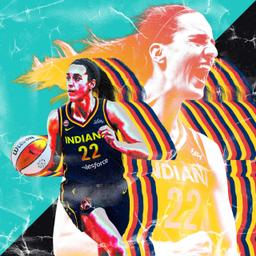
Thomas is one of the toughest players in the game, a bona fide trash-talker who toes the line between physical and dirty. She was the defender on the play that ended Napheesa Collier’s postseason last year and spurred her infamous speech against WNBA commissioner Cathy Engelbert. Thomas has her own justifiable beef with the Fever, and she has a right to be treated with dignity. But against Clark and the Fever on Wednesday, she made a mistake that needed to be punished. We should be capable of holding all of these truths at once.
Over the past three years, too many conversations have been structured around this belief that to defend cheap shots against Clark is to defend the sanctity of the league, and that to discipline those cheap shots would empower the wrong side.
Of course, there are some people who do not really care about Clark or Thomas and will just use this controversy to denigrate the rest of the WNBA. No amount of good PR is going to stop clickbait or the right’s obsession with criticizing the WNBA.
But until now, the league’s constant downplaying of this Clark dynamic and lack of punishment for fouls against her have consistently given the trolls more ammo. The best way for the WNBA to defang them is by refusing to offer them any more easy wins, to improve refereeing standards across the board, to officiate the game with consistency, and to own when the league has fallen short.
A league that prides itself on authenticity can’t ask its fans to suspend their judgment and deny what they are seeing with their own eyes.
By suspending Thomas, the league took a rare opportunity to offer a counternarrative—to acknowledge reality and bring us closer to a world where Clark can take a hard foul, her opponent can be given the correct punishment on the spot, and everyone can move on in short order.
Engelbert and the WNBA have created a needle that will be nearly impossible to thread.
There are two fan bases that have two very different visions for the future of the league; the WNBA will have to address their concerns but also move past them. The problem is, I’m not sure that WNBA leadership has ever understood the magic they’ve been tasked with preserving or the grievances they’ve been asked to resolve. Engelbert, to date, has not displayed the political instincts, connectedness, or credibility required to navigate the WNBA’s new era. The failure of this regime is probably the one thing most WNBA fans can agree on.
When it comes to officiating, investigations, punishments, or the lack thereof, the league's decisions often seem influenced more by external pressure—whether from players or social media—than by an actual vision. Every time the WNBA asks fans to deny what they can plainly see, it chips away at its own greatest quality. Time and time again, the WNBA has captured the public’s attention, but it has yet to earn their trust.