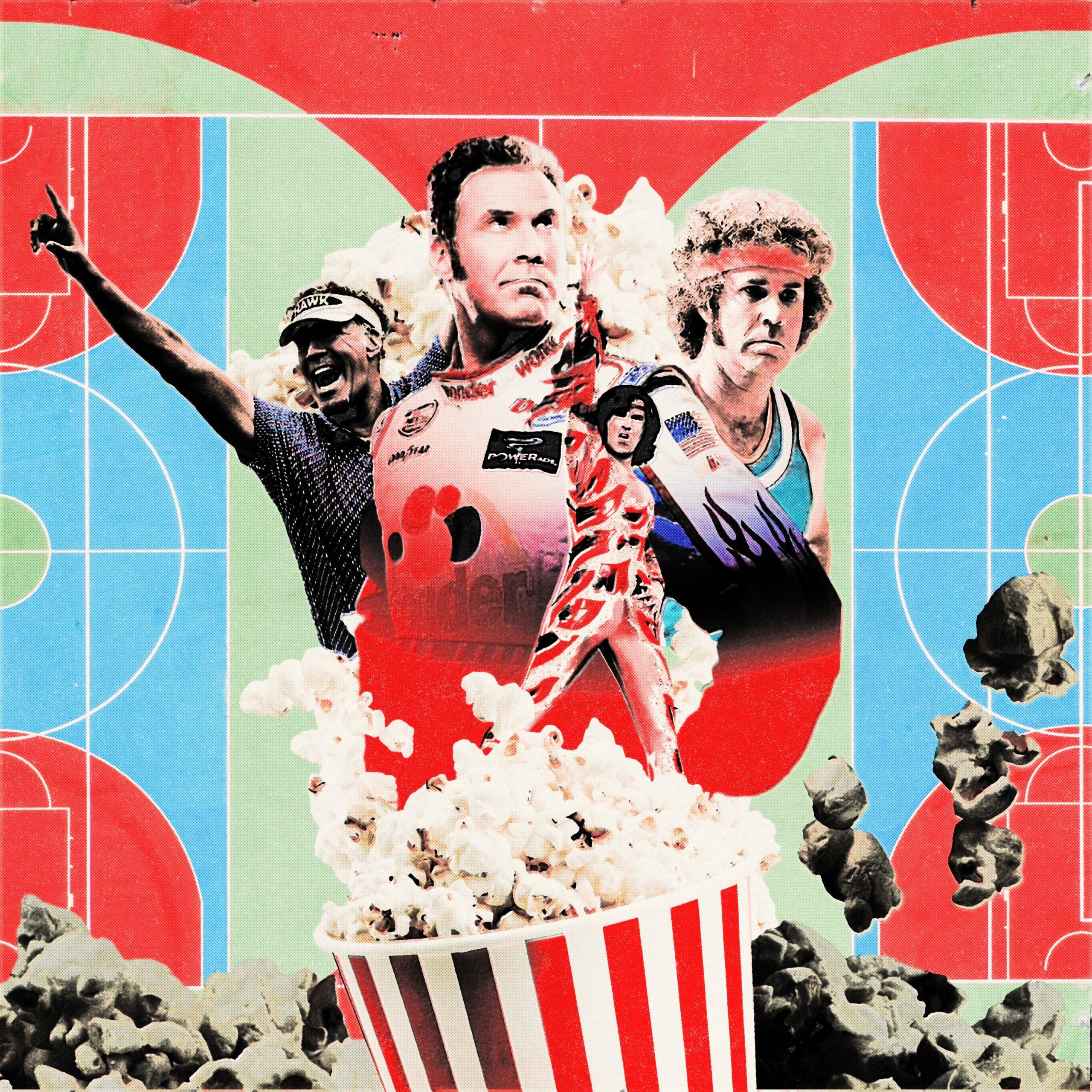
The Oral History of Will Ferrell, Sports Comedy Icon
On the 20th anniversary of ‘Talladega Nights,’ here are the stories behind how Ferrell became the defining sports comedian of his generation—and how the best moments of Ricky Bobby, Chazz Michael Michaels, and more came to beThe Oral History of Will Ferrell, Sports Comedy Icon
On the 20th anniversary of ‘Talladega Nights,’ here are the stories behind how Ferrell became the defining sports comedian of his generation—and how the best moments of Ricky Bobby, Chazz Michael Michaels, and more came to be
Will Ferrell was supposed to end up at ESPN.
That, at least, was his plan after graduating from USC in 1990 with a degree in sports journalism. Sports had long been the organizing principle of his life. As a kid, he tore around AYSO soccer fields. At University High School in Irvine, California, he played baseball, basketball, and football, lining up at safety and drilling 45-yard field goals. His hopes of kicking for the Trojans fizzled after an unsuccessful walk-on tryout, but Ferrell couldn’t imagine a future too far removed from the games he loved.
“He was so into sports,” says Craig Pollard, the founder of Cancer for College, Ferrell’s longtime friend, and the former athletic chairman of their Delta Tau Delta fraternity. “He’s just a natural athlete, so you could put him in badminton or racquetball or anything like that, and he’d perform.”
When Ferrell finished school, he headed home to Orange County and took a class at a local cable access news station. If Bristol was the destination, he required a highlight reel: clips of him anchoring the news, field reporting from games, chasing assignments, and working behind the camera. But one afternoon, Ferrell had a realization that changed his trajectory. At the start of class, his teacher relayed that the station had received an opportunity to interview then–Los Angeles Rams head coach John Robinson at Anaheim Stadium. Was anyone interested?
“Forty hands shot up, except for mine,” Ferrell recalled in a 2020 interview on SmartLess. “I was surrounded by these hungry people who were like, ‘I need that interview on my reel.’ And my first thought was like, ‘I’m gonna have to check out a camera. I’ve gotta pay for parking, I’ve gotta ask one of my classmates if they’ll run sound for me.’ … I should be leaping out of my chair to go.”
The thing that was actually gnawing at him was comedy. He’d dabbled with it at USC but recommitted to it with a new outlook, bouncing between open mic nights and improv classes before winding up at the Groundlings, a well-known L.A. improv and sketch comedy troupe. Fittingly, his first successful sketch incorporated sports: a pitch-perfect impression of legendary Chicago Cubs announcer Harry Caray, whose off-color remarks and distinctive vocal stylings became comedic catnip, lit up local clubs, and eventually helped earn Ferrell’s ticket to Saturday Night Live.
In the three decades since debuting that beloved caricature to a national audience, Ferrell has harmonized his twin obsessions. Whether embodying overgrown jock egos in Talladega Nights, Blades of Glory, Semi-Pro, and The Hawk or staging elaborate bits inside countless real sporting events, he’s emerged as comedy’s most endearing athletic avatar. His characters might be absurd, arrogant, and emotionally stunted, but they’re rooted in a genuine reverence for the games themselves, celebrating sports culture even as they mercilessly send it up.
On the 20th anniversary of Ferrell’s performance in Talladega Nights, it’s time to look back on his path to becoming this generation’s defining sports comedian. “When you love sports like Will does, you get really comfortable making fun of the characters, making fun of the clichés, making fun of the serious dramatic moments that we expect in a sports movie, and then flipping them on their head,” says Hollywood sports coordinator Mark Robert Ellis. “I think he relishes it.”
Part 1: “Oh Shit, Is NASCAR Gonna Be OK With This?”
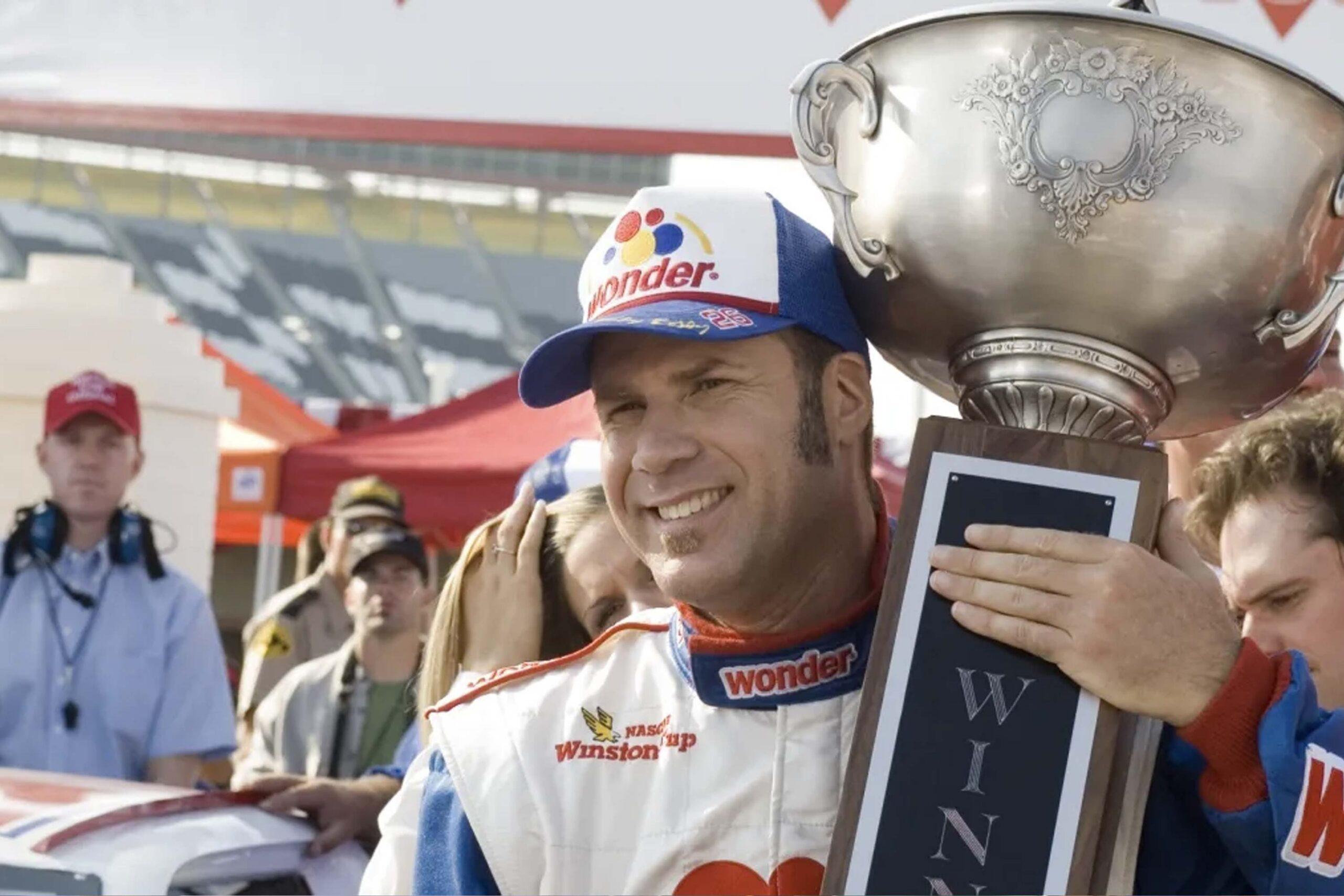
By the mid-2000s, Will Ferrell had become one of Hollywood’s biggest comedy stars. The runaway success of Elf and Anchorman had cemented him as a bankable leading man, but his next act would channel a lifelong passion. After dipping into sports with 2005’s Kicking & Screaming, in which he played an increasingly unhinged youth soccer coach, Ferrell reunited with writer-director Adam McKay for his first true swing at professional athletics, turning NASCAR into a gloriously over-the-top playground with Talladega Nights: The Ballad of Ricky Bobby.
Jason Heyman (Will Ferrell’s agent): We sold it off a one-line pitch: “Will Ferrell is a NASCAR driver.” That’s it. There was no movie. There was no script. There was nothing. And Sony green-lit the movie. I don’t know if anyone’s ever done that in history.
Martin Lesak (Will Ferrell’s agent): I remember reading Talladega for the first time and thinking, “Wow, what a terrific script.”
Andy Richter (actor, Talladega Nights, Blades of Glory, Semi-Pro): Will and Adam McKay were talking about how you could make the case they were not the ones to handle the NASCAR movie. NASCAR had been sort of protective of doing the NASCAR comedy movie. You need their blessing in order to do it. But they loved Will, and they wanted to do it. There was a bit of “These NASCAR guys don’t know what they’ve got coming.”
Will Ferrell, to ESPN (actor, producer, Talladega Nights; actor, Blades of Glory, Semi-Pro): We were really adamant up front that our goal wasn’t to make fun of NASCAR. We wanted to have fun with NASCAR. We were fascinated by this idea of drivers being teammates but also competing, like Ricky and Cal [Naughton Jr.]. We said give us the inside jokes from the people who do this for a living and we’ll roll with it.
Sarah Nettinga (executive producer, Talladega Nights): I was running a NASCAR division that was focused on pushing NASCAR into the mainstream. We had a focused effort to get our story out about why the sport was so great. We didn’t want them to have this two-dimensional look at the world. We wanted them to be immersed in the sport.
Heyman: We were on the track, we were in the pits, we had carte blanche access to everything.
We sold it off a one-line pitch: “Will Ferrell is a NASCAR driver.” And Sony green-lit the movie. I don’t know if anyone’s ever done that in history.Jason Heyman
Chris McKee (former chief marketing officer, Richard Petty Driving Experience): I was the point person for the driving school. We threw Will and John C. Reilly into a van at Charlotte Motor Speedway and took them around the track, going no more than 70 miles an hour. We had one of the race car driver instructors driving the van, and he’s pointing out different things—the lines on the track and what they’re going to experience over the next two hours. I don’t know if it was all comedy or some of it was real, but Will immediately went into, “Well, no, no, we just came here to do the van ride.”
Ferrell, to ESPN: The scene where Ricky comes back and thinks he’s going fast, but he’s really only going 25 miles per hour, totally terrified. That was pretty much based on real-life experience.
McKee: We’re like, “Yeah, you’re each gonna ride shotgun.” Will does it first. He comes out pale as a ghost, kisses the ground, gets up, doesn’t even say anything. He’s speechless. He passes John C. Reilly as I’m moving John to get in the car next for his ride. Will’s like, “That was intense. That was not exactly what I expected.” Then John comes in. Same thing. White as a ghost, shaking. They kind of meet, and we’re chatting, and they’re like, “Chris, we are good to go.” I was like, “What do you mean? We’ve got the track for like three hours.” They were serious. They were ready to go. And if it weren’t for Adam McKay calling them sissies and telling them to grow a new pair, they were gonna leave.
Brent White (editor, Talladega Nights): They shot it in North Carolina. We did two big races. We did a night race in Charlotte and a race at Talladega. A lot of the stuff was slightly manufactured with VFX inserts and background plates and green screens.
Nettinga: Will sat with everyone from Jeff Gordon to Kevin Harvick. It didn’t matter which level of driver it was. That's what’s so genuine about Will and Adam, is they really wanted to get it right.
White: Kevin Harvick was one of the guys that we liked a lot because he was a joker but also a real solid NASCAR guy. There were stories they would get from different drivers that would filter down into the movie.
William Boyer (actor, Talladega Nights; former editor, NASCAR): There’s definitely a culture when it comes to a driver—the wives that don’t work and the kids that do whatever the hell they want.
Richter: I love the dinner scene. And how bratty those kids are. That’s a perfect example of a scene where, before you do it, and maybe even while you’re doing it, you might think, “Oh shit, is NASCAR gonna be OK with this?” And then it turns out it’s one of the funniest parts of the whole thing.
Nettinga: Everything [in NASCAR] is driven through sponsorship. They’re paying the bills, so they get to have a say in a lot of things. Will and Adam just picked up on that. That’s what they wanted to portray in the dinner scene.
White: To this day, when I hear “Baby Jesus,” I go, “Oh my God, what have I done?” Now you just hear it all the time. “If you’re not first, you’re last.” They work their way into the zeitgeist in a crazy way.
Boyer: Drivers all get into it because they’re gearheads. They just want to go fast. But then they have to deal with the sponsors and media training and all this stuff. When they have the spotlight on them, they’re like, “What do I do with my hands?” That’s why that moment is so funny, because every one of those drivers usually has that same issue.
David Gordon Green (director, The Hawk): What Will does so brilliantly is he can satirize something from the inside. He’s not making fun of NASCAR fans. He’s taking a preposterous character in Ricky Bobby, creating the nuance of arrogance and attitude and insanity, and then dropping him in a very authentic world of NASCAR.
White: Will and John were really funny together, and they really clicked. It was the first time that we’d seen them work together in such a great way.
Nettinga: I was sitting in the screenings with Sony. We knew we had complete gold. Everyone felt like it was going to be very successful.
Heyman: When you capture things in the zeitgeist in that moment with the perfect pairing, it’s just a no-brainer. If you’re running a studio, you kind of just go, “Oh, well yeah, that's gonna be amazing.” And it was.
Part 2: “It Really Was My Crotch in His Face and His Crotch in My Face.”
Ferrell didn’t set out to headline three studio sports comedies in as many years, but Talladega’s undeniable box office haul (it grossed $163.4 million worldwide against a $72.5 million budget) set a strong blueprint for success—and Hollywood quickly took notice.
Jon Heder (actor, Blades of Glory): Ben Stiller had called up my agents. They said, “Ben wants to sit down and talk with you about doing a comedy about two male figure skaters who have to skate together.” It was the easiest pitch of all time. He was gonna play Chazz Michael Michaels. I was gonna play Jimmy [MacElroy]. We did a table read. His character is a sex addict, very macho, but it felt very much like his character from Dodgeball.
Will Speck (codirector, Blades of Glory): After the table read, Ben felt like it was an area he’d already explored. So we said, “What about Will Ferrell?” It was almost a simultaneous idea. He was shooting Talladega Nights at the time, so we went to go visit him to talk about cooling off on an ice rink.
Josh Gordon (codirector, Blades of Glory): We went to his house and had a long conversation about it. It was more important for us to make a great sports movie that also happened to be really funny. Our whole vision—and he agreed with it—was that you really had to root for their routine no matter how absurd it is. That meant making the skating feel real.
Heyman: We all were like, “We’re making fun of NASCAR, but ice skating? That seems like one step too far.” More than any other of his sports movies, that was the one where we were on the fence. But the reason we did that movie was because ice skating was really big globally. Ice skating works around the world.
Heder: I was over the moon to play opposite Will. I was so excited. I was hopping up and down. But then immediately, I was like, “The dynamic is going to change.” I was [supposed to be] the tall guy with the short guy—and now I’m the short guy.
Speck: Will’s frame and size was definitely something we all put our heads together [about]. If you are a professional skater who’s 6-foot-4, that limits the amount of double axles or triple axles.
Gordon: Will had to train for a long time even to get to a level where he could look confident in the middle of the ice.
Susan Austin (skate coach, Blades of Glory): It’s really hard for an adult to learn to skate and look like they can really skate. But he was undeterred. We trained for three hours, five days a week for quite a few months. We’d do a warm-up, then we’d get on the ice. He had all the padding on: wrist braces, kneepads, elbow pads. He came well prepared in case he did have a spill, but I don’t recall him having one.
Heder: We met on the ice, just choreographing, figuring out what you can do. The first thing he said is “Are you ready for this?” Not in a way that he’s challenging me. More like, “Dude, this is gonna be wild.” At that moment, it felt like a real partnership.


Gordon: There had to be enormous safety harnesses and wires. The days were very exhausting. Everything else had to be planned within an inch of its life: doubles, face replacements, visual effects.
Speck: We wanted to make sure there were jumps and leaps that skaters would say, “This is competitive, authentic skating.” But we also wanted to make the audience laugh. And the thing about Will was figuring out his sexuality on ice. How do we get a routine that reflects it?
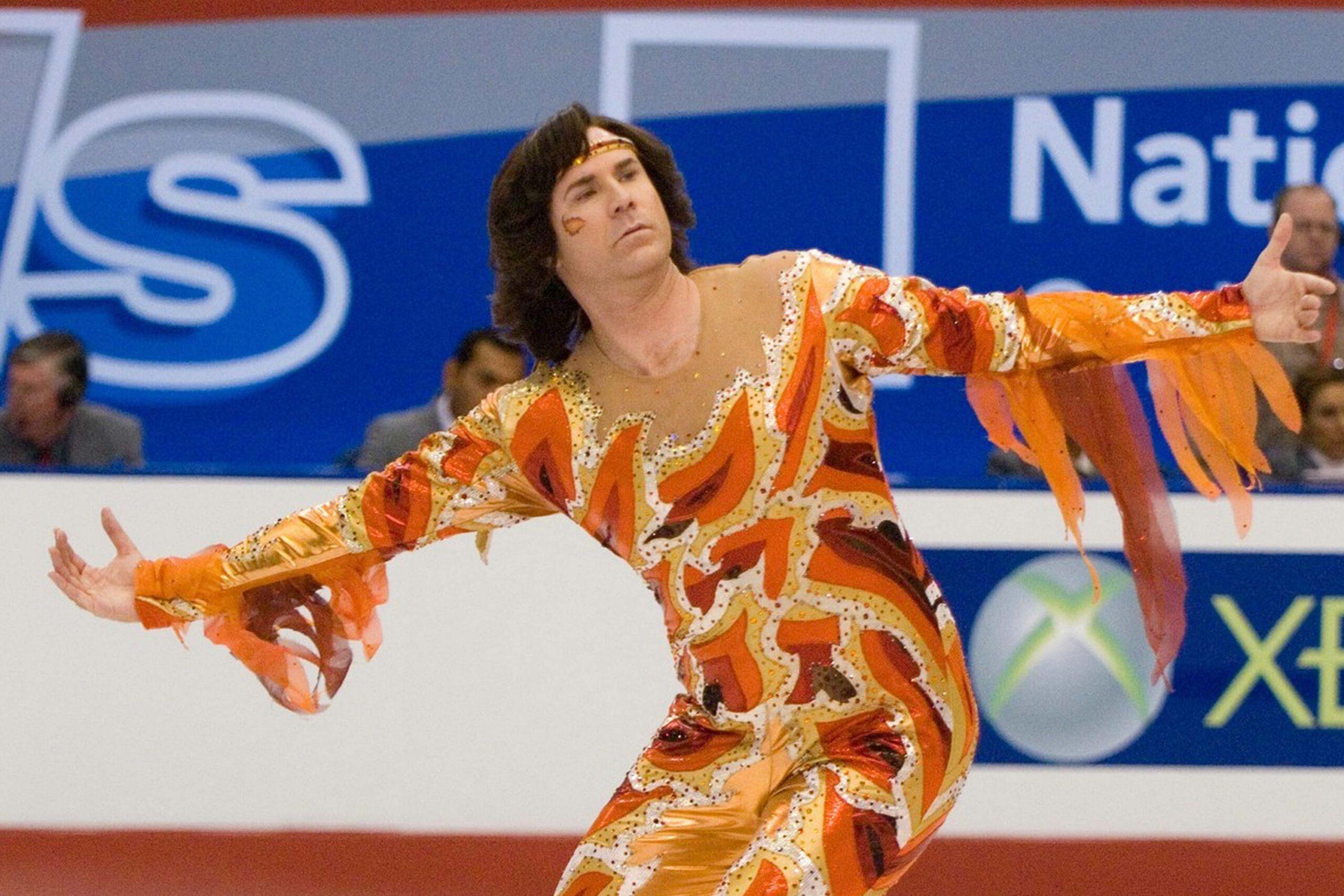
Chad Brennan (skate double, Blades of Glory): When we were on set, we had our main choreographer, Sarah Kawahara. She would have me follow Will around the rink side by side, trying to mimic how he stroked. The hard part was his character was the tough, rock ’n’ roll guy, and I’m a classically trained figure skater with many years of ballet. They kept saying I was too graceful for a lot of things, and I had to try to man it up.
Gordon: The double had to mimic what Will was doing. It couldn’t be the opposite. Those sequences were incredibly arduous. We had always said if you make a trailer with an Olympic-looking skater landing a triple lutz, go right past the lens, and it’s Will Ferrell, people will show up for that movie.
Stefan Czapsky (cinematographer, Blades of Glory): I actually had a custom-built track made out of steel pipe that followed the itinerary that the skaters would perform on after the doubles did the skating. I could lay down that track on top of the ice very quickly and had big platforms that the actors could fake skate on.
Gordon: It was amazing to watch the two of them. When Heder came out and started to do his routine, you could feel Will as a natural sparring partner. It was like they kept raising each other’s game.
Heder: We had this thing—the Clydesdale and show pony dynamic. When it came to comedy, he was the Clydesdale, and I was the show pony, meaning I was the straight man setting up the jokes. And when it came to skating, it was reversed. His character did most of the lifting. It really was my crotch in his face and his crotch in my face.
Speck: We just had such a fun time. That first day, we went into the trailer where Will was waiting to be called. He was fully dressed, with leather fingerless gloves, and he was standing because he didn’t want to sit down and mess things up. It was like walking in on Gene Simmons. We just both looked at each other and were like, “Oh my God, this character has arrived.”
Part 3: “Is Will the King of Sports Movies?”
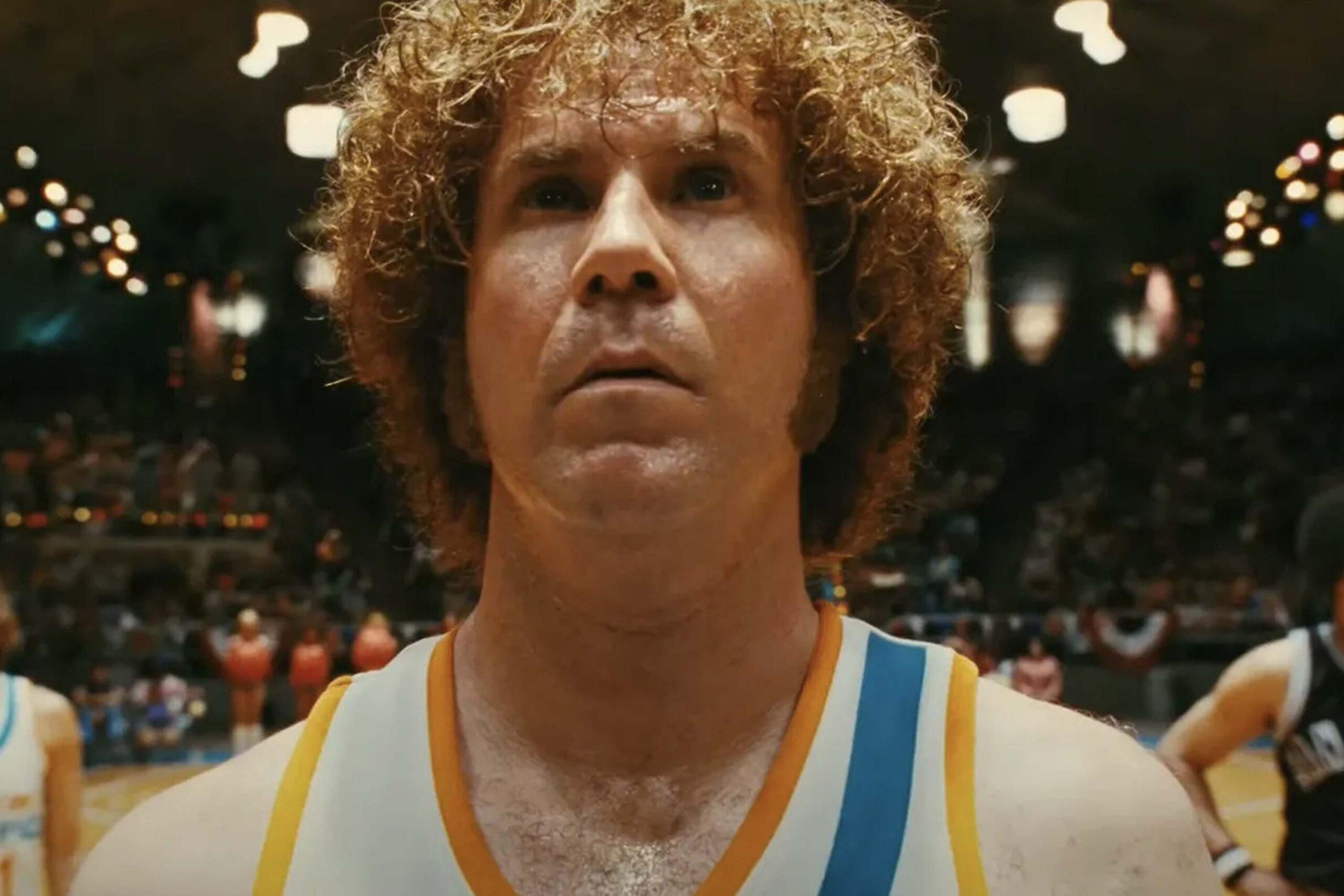
Not long after Blades of Glory grossed $145.7 million at the global box office, Ferrell was hard at work on another sports comedy—this time sending up the American Basketball Association. Ferrell’s time training to become a team captain was a little easier than learning to ice-skate.
Kent Alterman (director, Semi-Pro): I was really terrified of like, “Oh my God, this is gonna be the third sports comedy in a row for Will.”
Heyman: Someone wrote an article saying, “Is Will the king of sports movies?” We were kind of like, “Oh yeah, we are doing a lot of sports movies. We might want to pivot to some other stuff.” I just think Will liked the idea of doing a period comedy. And he was friends with Kent Alterman.
Matt Walsh (actor, Semi-Pro): Kent was our executive at Comedy Central back in the day when we had a sketch show [Upright Citizens Brigade]. He was talking about this project for a year.
Alterman: Scot Armstrong was writing the character to be the player-coach, and he was struggling with how to utilize Will and his comedic genius. And I remember at one point I said to Scot, “Well, what if we made Jackie Moon the owner? It will put him in this desperate situation.” And Scott had the genius idea of: “He was a one-hit wonder, and he had this song ‘Love Me Sexy.’”
Richter: One of my favorite [types of] characters is the overconfident, high-status idiot who remains unchecked. To have the audacity to be a one-hit wonder who makes himself the captain of a professional basketball team—it’s funny on its face.
Alterman: Once we lit on the idea of making him the owner, we could explore the lore of the ABA—this crazy, ramshackle league that had these insane promotions.
Walsh: The player-owner was a very fun premise for me. Those ABA teams had to do whatever they could to keep the lights on. It was a circus, but it also introduced so many elements of the game that were folded in because they were playing freer.
Alterman: Mark Robert Ellis ran a two-week mini basketball camp. And that became a rehearsal because we were trying to design plays that would make sense for the movie and to really ingrain them in the performers.
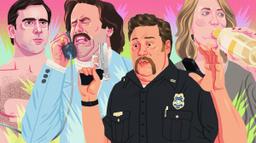
Mark Robert Ellis (basketball coordinator, Semi-Pro): Will comes in the gym, and there’s no intimidation. He picks up a basketball right away, starts shooting around, warming up, and you can see: smooth, confident, right at home. Here’s a guy who loves the game. He naturally walks, talks, and spits athletics. He knows how to speak it and doesn’t force it.
Richter: Woody Harrelson played basketball all day long. He just got to shoot baskets and hang out. Will was kind of the same way. There’s a bunch of basketballs around, and you just start shooting.
Alterman: We’d finish a scene and we’d break for a turnaround, and there was downtime. We would constantly play H-O-R-S-E. Sometimes it would be gambling, sometimes it would just be for fun.
Ellis: Whatever it was, it was competitive. The gym they built us in L.A. was sick. It was ridiculous. The court was gorgeous. These guys wouldn’t go back to the trailers. In between setups they’d be shooting. They’d be talking trash. A lot of betting. “I can make it from here.” “You were lucky yesterday.” “You owe me.”
Walsh: We were constantly rehearsing in that armory. I just remember guys like Pooh Richardson and other legit guys just doing open play or doing trick shots. It’s kind of like sitting at the bar with the old men and listening to their stories. You’re just a fan in those moments.
Ellis: It was important for Will to get the rules right: how guys played back then, what kind of offense they ran, what kind of defense they ran. You wouldn’t think you’d go over all that stuff in a comedy like that. Nobody would care. But we did, and Will did.
Walsh: It was this full reenactment of a ’70s game so that, when they said action, everything coming to life was like a tiny Disneyland. That’s the other aspect that was really fun. Everybody involved was executing a really specific way to augment and focus the bit.
Ellis: Will had worked on the granny shot. We could have easily CGI’d the ball going in, but we didn’t want to. We wanted the audience to see it come out of his hand and go in the basket. I don’t care if you’re a regular player. When you say, “Rolling ... action,” and it’s $250,000 a day to shoot a movie, and you start missing shots, it can be nerve-racking. None of that was behind Will’s eyes. Will was completely comfortable in the moment getting that ball in the basket. I think that’s why he had so much fun with the free throw ritual, because he wasn’t worried about the ball. He knew when he let go, it was going to go in.
Part 4: “He Was Pushing, Shoving, and Using That Butt”
Working with Ferrell is like playing with a superstar point guard. He’s capable of creating his own iconic characters and comedic moments, but he’s equally willing to set up his scene partners with a killer punch line. The comedian’s preparation, timing, physicality, and sports IQ all coalesced into some indelible moments.
Alterman: Will is good at being a bombastic, overconfident idiot.
McKee: Ricky Bobby shouting, “I’m on fire, I’m on fire.”
Nettinga: A grown man running around with his underwear in the middle of the track. There’s nothing funnier.
Boyer: We’re shooting [Talladega Nights] in the middle of the night. It was on the backstretch between turns two and three because we needed that curvature that goes up on the side of the wall. And EMTs are coming out, they’re totally confused. We did it several different times, and we even shot it several different ways. I just remember having to grab him to try to tackle him down. He was in his underwear, and I was covered in Will Ferrell back sweat.
White: There’s such a great build to that. He’s talking about “[Help me, Jesus. Help me, Jewish] God,” and then the last big joke is “Tom Cruise!”
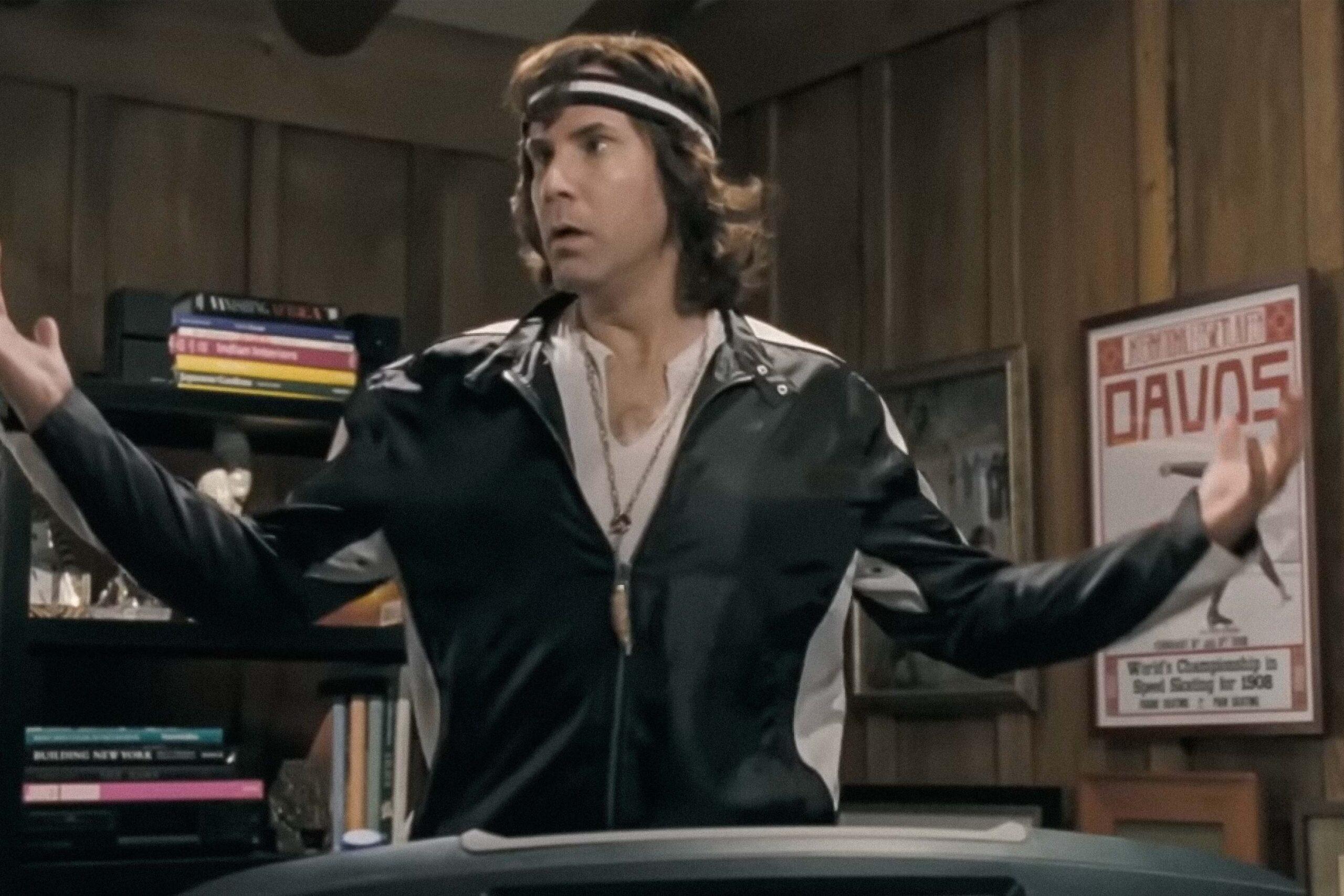
Speck: So much of Will’s improvisation is physical. In Blades of Glory, the way he walked into a room. The way he would shake his head when his hair was wet. The decision to put a towel wrapped around his head in a turban in the morning.
Heder: And you can see his whole body. That’s a joke that would not have landed with Ben Stiller. His cadence, his timing, his body—he knows how to work all those elements. With so many years of SNL under his belt, this is the kind of guy who is absolutely fearless and has no qualms making fun of himself.
By the time we’re in the middle of it, the opponent players are literally on the floor. Will’s cracking everybody up so much that we can’t even finish the choreography.Mark Robert Ellis
Gordon: The treadmill scene [in Blades of Glory] was performed as written. The thing we changed the day of was the song choice. In the original script, it was a typical old song. We all saw it in the first rehearsal, and we were like, “It’s kind of an older man’s joke,” which was right for the character, but not necessarily for the audience. We all kind of came up with what the song should be. I just remember legal having to approve it quickly. The clock was ticking down. Could we use it? And of course the song was really what makes the scene so great.
Speck: It was fun to watch somebody who was so about male identity and machismo admit that he rocked out to Fergie.
Heder: “Lady Humps.” It was just stupid. And it felt like a Will type of joke. It got the best reaction.
Speck: We would bring in actors he hadn’t met—Rob Corddry and Will Arnett—and he’d start to spar with them and recognize a fellow traveler in terms of comedy and improvisation. That discovery was so fun to watch.
Richter: He’s a very generous performer. You never feel like you’re supposed to do anything other than be as funny as you possibly can be. You never feel like you’re going to step on his toes if you do something good.
Walsh: Will wants you to be funny because, in a way, it’s less pressure for him. I never felt like, “Oh shit, I’m going toe-to-toe with Will.” It’s like, “Oh wow, I get to play with Will, and he’s so great.” There was such an invitation to play and go do your stuff.
Green: The guy can make an amazing line adjustment in the middle of a monologue. He can switch from scripted to improvisational and then back within the same scene. He can keep a focus. He can always be listening to what his other actors are saying so that he can respond with authority and honesty.
Chris Henchy (cocreator, director, The Hawk): It’s this school of comedy that I grew up on working with Will. We learned, “Let’s get what’s written,” because we probably know it’ll work, and you’re going to need it for continuity and story. But as soon as we find something that’s funny, it’s just like, “Keep going. Talk about this. Keep going. Go down a story of when you were a kid …”
Ellis: The whole scene [in Semi-Pro] about giving the ball to him in the post. “Give it to me. Give it to me. Give it to me.” He gets it, and he passes it right back out. You think, “OK, that was funny for a second.” Then immediately, he asks for it again. Like three or four times. By the time we’re in the middle of it, the opponent players are literally on the floor. They can’t even guard him because they’re laughing, trying to play it straight. Will’s cracking everybody up so much that we can’t even finish the choreography.
Walsh: I remember seeing that being rehearsed and him playing with different lines or exploring different versions of it. With someone like Will, you design moments in the script for them to flourish. That’s a perfect moment.
Ellis: You think it’s easy to talk, perform, and dribble a basketball with real guys in your face? It’s hard for a lot of actors to walk and chew gum. He was pushing, shoving, and using that butt. Will knew what to do. His feet were good. He knew how to face the basket, he knew how to face the rim, he knew how to back in. That’s why he was able to do all that funny stuff.
Peter Teschner (editor, Semi-Pro): They did a bunch of those takes, but [producer] Jimmy Miller had an idea to elongate the scene. And I think we made that twice as long as it was in the original cut. It just goes on so much longer than it should.
White: He has that ability to go out on a limb and give it everything. He’s fully invested in every joke, every bit, every character, knowing it could be disastrous. That’s part of the winning mentality Will embodies. It’s this ability to make you think he’s giving everything he has. That’s a magic quality.
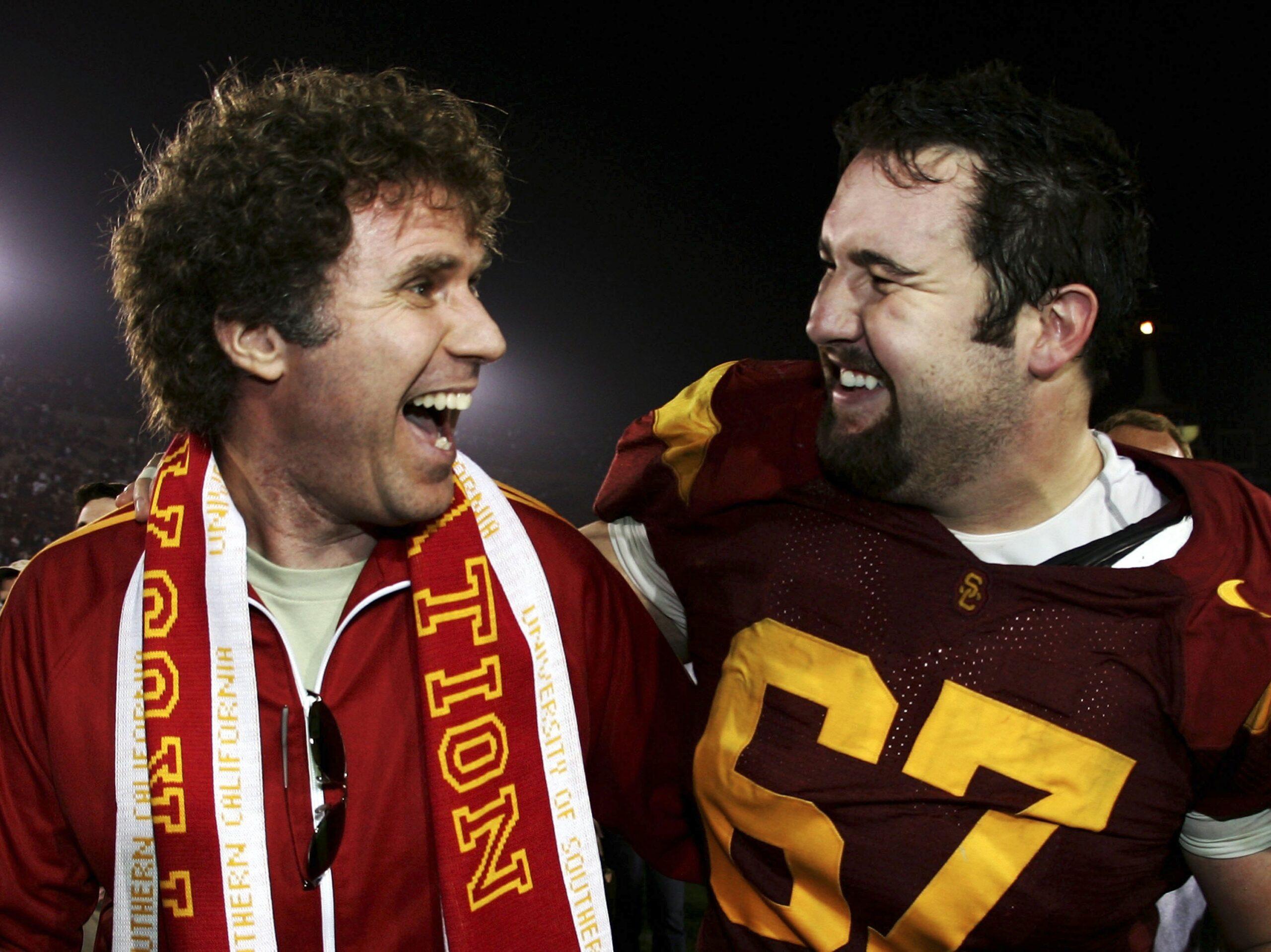
Will Ferrell and Ryan Kalil celebrate a 23-9 win over the California Golden Bears on November 18, 2006
Part 5: “It Was Kind of a Hit-and-Run”
Ferrell has never limited his love of sports to movie characters. Whether announcing NBA lineups, ushering Shaq out of a Lakers game, or making cameos at USC football practice, he’s made a habit of showing up and injecting his signature brand of humor into all kinds of amateur and professional sporting events.
Craig Pollard (executive director, Cancer for College; Ferrell’s USC classmate): Our fraternity was a platform for Will to test his comedy. And USC football became another platform. You had a head coach who was this gregarious guy and obviously a fan of Will’s. USC football was at its peak. It was just a great recipe for success.
Pete Carroll (USC head coach, 2001-9): When we were at SC, we wanted to have our own swag and have our own way about us because we could. I thought it could elevate us. I wanted the guys to come to our program not knowing what was going to happen next—to keep them on their toes and energized, whether it was the constant music or the fun we were having or Bill Withers showing up or Will Ferrell coming.
Ryan Kalil (USC offensive lineman, 2003-6): When we were winning, there were a lot of celebrities coming around that liked the backdrop of sports, especially the winning culture that Pete was starting to cultivate.
Carroll: Snoop was around at the time, and he’d come through and catch balls or whatever we were doing.
Kalil: Will was one of the few genuine sports fans. He really knows the culture, the history, the personalities, the weirdly deep cuts of players. He also knows the local high school sports scene in kind of a crazy way.
Pollard: Pete has a lot of creative ideas. Will would tell me they’d go back and forth on the phone pitching different ideas, and Pete was always willing to let Will do his thing.
Carroll: I thought about some crazy shit we could do and kicked it around with my guys, then we’d throw it past Will. He was an SC guy and had pride, and it just came real natural and comfortable.
Kalil: He came a handful of times to practices and meetings, always in some kind of surprise form. Pete had him show up in his Talladega Nights NASCAR uniform with the helmet and everything. It wasn’t until he took the helmet off that we all figured out it was actually him.
Heyman: They were playing for the 2005 national championship. Martin and I went to the practice field, and Carroll called the team around. He goes, “We have a new wide receiver joining us. Let’s run him through a few drills.” And Will showed up, but he had his helmet on, so no one knew who it was.
I thought about some crazy shit we could do and kicked it around with my guys, then we’d throw it past Will. It just came real natural and comfortable.Pete Carroll
Carroll: He comes running through the gate with his full uniform on. We get in the huddle and call a play, and he runs a post route, and Matt Leinart throws him the ball, and he falls down and catches it. Everybody goes crazy.
Heyman: All the players are standing on the sideline like, “Who is this guy? What is going on right now?” He caught some good 40-yard passes, and he comes running up like, “Thanks, Coach.” And then Will took off his helmet and they’re like, “Fuck yeah, it’s Will Ferrell!”
Carroll: Then he’d take off, and he’d be out. It was kind of a hit-and-run. “What the fuck was that?”
Pollard: You’re in such a stressful environment with all this intensity, and Will can just break it down for fun.
Carroll: The Captain Compete skit was pretty well orchestrated. There was a guy up on one of those cherry pickers. He had to fall off and be caught in the net. I have one of the coaches say, “Look at the cameraman up there.” It gets everybody to look up. You stop practice, then the guy falls off, and the guys are in shock. Will comes running through the gate in some little Spider-Man outfit or something like he saved him. That was a good one.
Kalil: There was a pressure valve that Pete knew and could feel, so he would always find ways to release it at just the right time. Will was always the perfect guest for that because practice was hard. It was really cathartic to have that release.
Carroll: Will doesn’t mind being the fool and acting the fool. Having people laugh at him was the win. It just became kind of a regular part of the program after a while.
Stuart Miller (executive producer, Ferrell Takes the Field): Will did that bit where he was the USC strength coach.
Kalil: After my senior year, I started getting a lot of press that I could get drafted pretty early, maybe even sneak into the first round. I was getting a lot of requests to do predraft video stuff. There was a request from NFL Network to follow me during my training. The same week I got asked to do that, Will was asking me about the draft, and I just took a shot and threw it out there. I said, “Hey, I know you’re probably crazy busy, but would you ever want to do something like this with me?”
Carroll: Kalil was creative as hell. He always took to Will. He’s an offensive lineman, and Will kind of fits in with those guys.
Kalil: I found a time and he came down. NFL Network was there. We didn’t really have a script or anything. We were just making it up. He was so kind and supportive and just kind of let me run with it and direct it. He just drove it with absurdity, and we just kept throwing out random, dumb ideas.
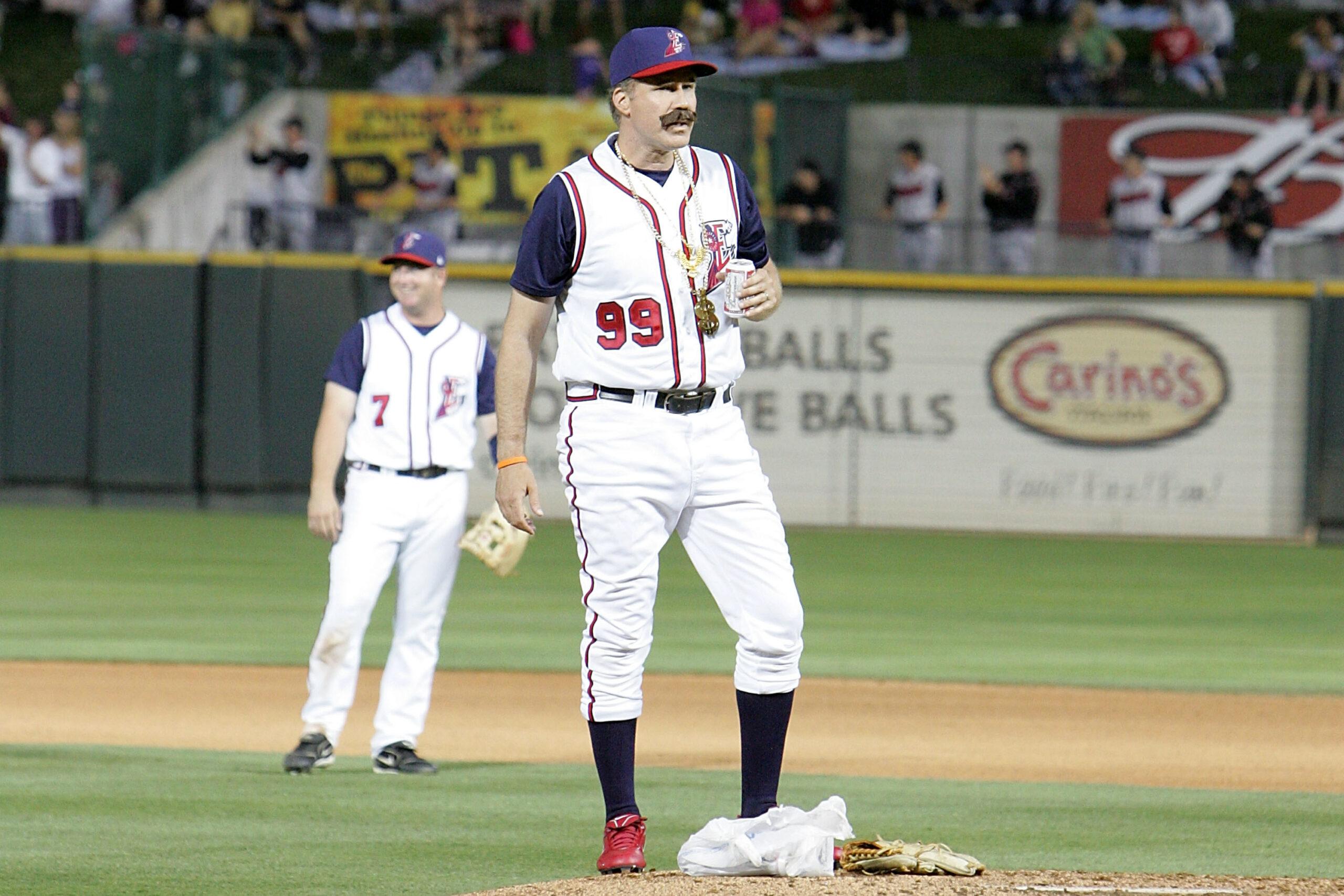
Will “RoJo Johnson” Ferrell pitches for the Round Rock Express on May 6, 2010
Part 6: “It Was Like He Was John Lennon or Paul McCartney”
In 2010, Ferrell pulled off his biggest stunt to date when he suited up as Billy Ray “RoJo” Johnson for the Astros’ Triple-A affiliate, the Round Rock Express. The stunt helped promote the Will Powered Golf Classic, which benefited Cancer for College, Pollard’s charitable organization that provides scholarships to cancer survivors.
Reid Ryan (CEO, Round Rock Express): One of Will’s USC friends had moved to the Austin market and reached out to us about sponsoring his golf tournament. We pitched him, “Would you do something on the field?” They said, “Yeah. What do you have in mind?” We were like, “What if we got Will to take part in a game?” But the Astros were never going to allow that, and the Brewers were never going to allow that.
Pollard: It was Reid’s idea to have him come out and throw the first pitch, but then the whole marketing spin of him being this pitcher RoJo Johnson from another country came together.
Ryan: We said, “What if we build up this personality online and just get a grassroots buzz going for this Dominican pitcher. We’ll come up with some guy like Sidd Finch.” We created the skit, and we won’t tell either major league club and won’t tell anybody but the manager the day of the game. It’s Will Ferrell, of course he’ll do it. Will rolled up the day of the game. We had a bunch of costumes and all this crazy stuff. We had been making these videos where you never saw the guy’s face, and he just loved it. It was a packed house, and nobody knew what he was going to do.
George King (general manager, Nashville Sounds): Reid called me and said we’re going to do this little thing there, we’ve asked your team for a uniform top. That’s all I knew. I just knew Will Ferrell was involved. That’s about it.
Ryan: We approached it with the players. We were like, “Look, we’re going to have a between-inning skit, and what we ask is you guys go out early and start rolling balls and warming up like you would.” Will hung on to exactly the time frame. He threw the ball and sprayed beer in the batter’s face, and the batter chased him. He ran out to the outfield and ran through the bullpen and everything like he was supposed to.
Pollard: As soon as he got up on the mound and they realized he wasn’t throwing as hard as a minor league player would throw, and then the camera zoomed in and they saw the mustache was moving around and falling down, I think the jig was up.
Will doesn’t get outwardly nervous if things aren’t going well. The improviser in him sees it as an opportunity.Joe Farrell
Ryan: The Astros called the next day just beyond pissed because they didn’t know anything about it. Their people were calling during the game because all of a sudden they’re getting rumors. We were like, “Calm down. He never played in a real game. He threw to one batter.”
Pollard: When my wife and I were getting in the car with Will afterward, it was the first time I ever felt a little unsafe for him because of the crowd. It was like he was John Lennon or Paul McCartney. People were rushing toward him. I’d felt a little of that when we had gone backstage at Saturday Night Live, but at Round Rock it was on another level.
Joe Farrell (executive producer, Ferrell Takes the Field): Will doesn’t get outwardly nervous if things aren’t going well. The improviser in him sees it as an opportunity. I think that’s sort of what gets his pulse and excitement. Like, “Oh, this wasn’t what we planned. Now I really have to be resourceful.” I can see the glint in his eye.
Miller: He’ll find that fun, weird thing. Then all of a sudden, “Why is Will Ferrell playing or managing a Little League team in a suburb of Illinois?”
Farrell: Funny or Die started when Will made “The Landlord” with Adam McKay, and no one had seen a celebrity online that way. Will likes being first. He likes when people are like, “Wait, this doesn’t happen.”
Henchy: I had gone to a Lakers game with a buddy, and we were watching the security staff that would come out during every timeout with the burgundy sport coat, black pants, the lanyard, and the name tag. My assistant at the time knew a person at Staples Center, and they gave us the uniform company. It’s re-created to a T. We were like, “Will’s birthday’s coming up. We have to get him that outfit.” We do things like that because we want to make Will do it.
The following year, I went with him to a game. Will wore a white shirt and black pants and put the jacket and lanyard in his bag. We’re sitting courtside, and sure enough, during a timeout, he puts it on. His name is “Ted Vagina.” He goes out and stands there. Maybe 200 people behind us start to see it and are laughing. Nobody kicks us out, so the next timeout he does it again. Shaq was seated on the other side of the basket. His assistant came over and said, “Hey, Shaq wants to leave. Do you want to escort him out?” So Will goes over, starts pointing at him like, “That’s it, you’re out of here,” and escorts Shaq off while the crowd is going crazy. It played out perfectly.
Alterman: Klay Thompson was coming back from an injury, and Steve Kerr was wanting to do something to cheer him up. They made this plan for Will to dress as Jackie Moon for the shootaround warm-ups and not tell Klay. I was fortunate enough to go with Will and Jimmy Miller. They hid Will from the team in a closet between the locker room and the court. Steph and Klay start doing their warm-ups, and it was just so fun to see Klay go, “What the fuck?” And then of course the fans went crazy because Jackie Moon was now shooting warm-ups with Steph Curry and Klay Thompson. You can’t predict where this stuff goes.
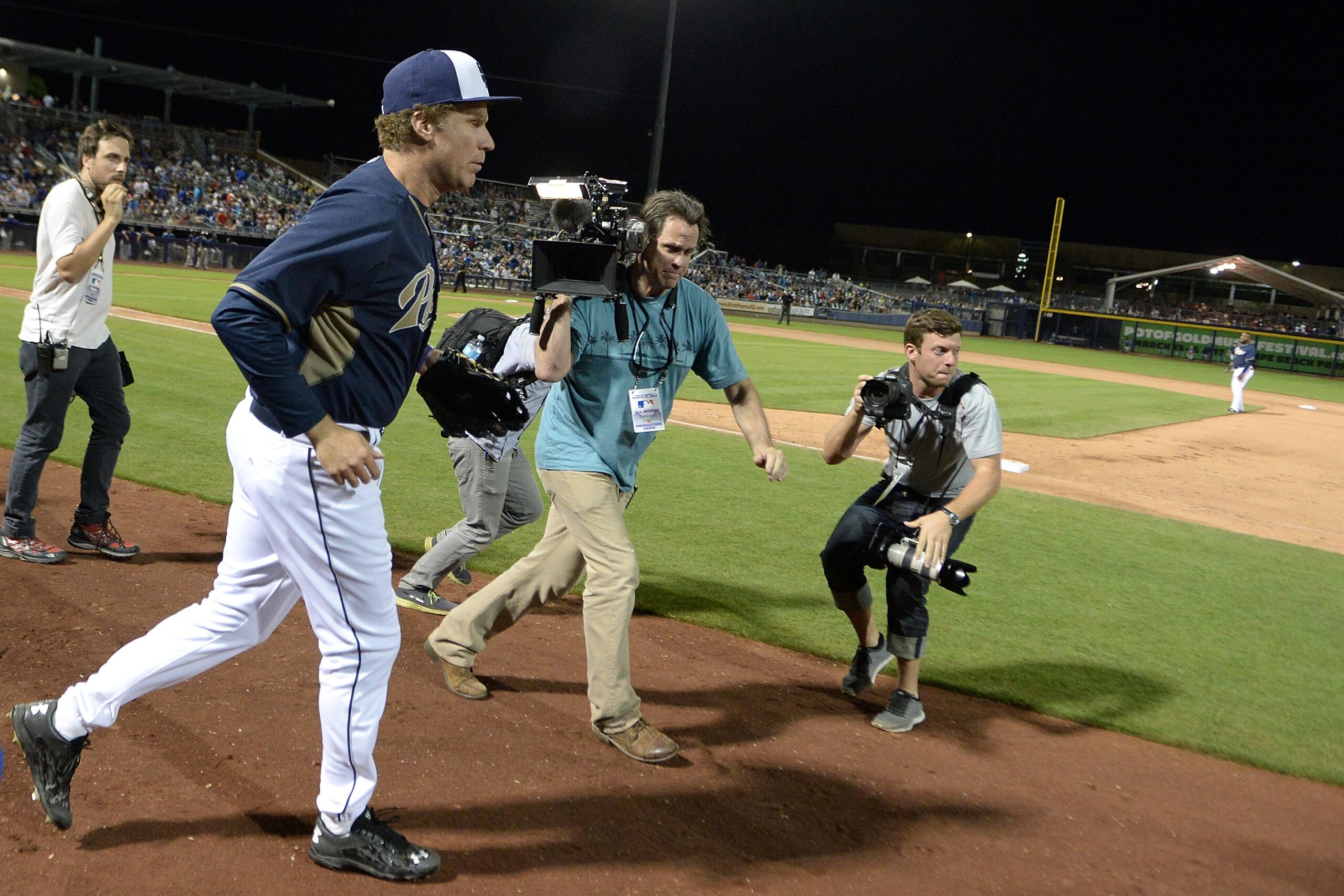
Ferrell plays right field for the San Diego Padres as they take on the Los Angeles Dodgers on March 12, 2015
Part 7: “We’re Going to Cram an Entire Career Into One Day”
Arguably the peak of Ferrell’s professional sports stunts took place in 2015, when he re-created a feat first accomplished by shortstop Bert Campaneris, who once played all nine positions in a single 1965 game for the Kansas City Athletics. The effort, chronicled in the HBO documentary Ferrell Takes the Field, raised money for Cancer for College and required Ferrell to zip between five different Cactus League ballparks, 10 different teams, and 10 different positions over the span of one day. Needless to say, pulling it off proved to be a gigantic effort.
Lesak: Will had this baseball idea for a while. It’s always one of those things where you’ve gotta look at Will’s schedule and figure out when it can all fit in. It was literally one of the first things that Rob Manfred green-lit as the new commissioner. Noah Garden, the deputy commissioner, just loved stunts and taking chances and really going for it.
Farrell: We didn’t have distribution. Will said, “If I do this, it has to involve charity. I have to find a way to raise the money.”
Lesak: I called Mike Lombardo at HBO. I’m like, “Mike, we want to do this thing, but we don’t have a lot of time. You’ve got to green-light it right now.” And he was like, “Well, what do you need?” I just made up a number. “We need a million dollars to go to the charity and then another million and a half to make it.” He’s like, “How’s he gonna pull this off?” And I said, “We’re gonna have to get Major League Baseball to move the times of the games and stagger them out throughout the day.” And he was like, “If you got it, you got it, I’m in, let’s go.” That was it. It was literally one 10-minute call, and he didn’t have to hear anything else. And the next thing you know, we were off to the races.
Farrell: It was very daunting. We were like, “How on earth are we gonna pull this off?” So we called Stu Miller because of his experience with field pieces on The Daily Show. He had been in all sorts of real scenarios finding stories in very tight pressure situations.
Miller: Jon Stewart would let me sneak out to do fun projects on the side if it didn’t really affect work. And he said, “How do you ever turn down a Will Ferrell thing? This is incredible. Go do it.”
Farrell: Brian McGinn had done some stuff with us at Funny or Die, and we knew because of Chef’s Table that he could make things look beautiful. And so we thought if we can combine the beauty and guerrilla filmmaking of a Daily Show field piece, that might be a good spine for us to pull this off.
One of my favorite texts I ever received from Will just said, “Nacho beard.” I was like, “Say no more.”Stuart Miller
Brian McGinn (director, Ferrell Takes the Field): I got a call two weeks before we shot. “You want to do this thing? Cool. It’s shooting here.” And I went, in my head, “Oh, shit.” My goal right away was “How do we make it funny and look cool?”
Adam Bricker (cinematographer, Ferrell Takes the Field): We had a great team and a lot of cameras. I don’t think we rehearsed it. We had a pretty good game plan about how we were going to cover each ballpark and each transition.
McGinn: I remember all the teams being super into it. “Hey, Will Ferrell’s going to come play a couple of outs or bat after landing in center field in a helicopter.” What team would say no to that?
Farrell: Campaneris played for the A’s, so we wanted to start with the A’s. We figured out the 10 ball clubs, five games, and who he was going to be in each scenario. Will would do two positions per game, then we’d have to get in the vans and race.
McGinn: Stu carried around this crazily large binder full of ideas that he and the writers had devised. So at any moment, if there wasn’t a joke happening, we could prompt Will with some crazy idea. But the insane thing about Will is that he’s so good in character that almost anything you prompt him with, he instantly makes better.
Miller: One of my favorite texts I ever received from Will just said, “Nacho beard.” I was like, “Say no more.” So we had the art department start building a nacho beard.
Farrell: Will was really obsessed with having a beard made of nachos. We had probably 100 scenarios of him getting traded for some cheesy nachos. And so we had all of this planned. And then there was a chance that Will might not be able to do it.
Lesak: Two days before the thing’s being shot, Will had pulled a hammy in a charity tennis tournament with his wife and Justin Bieber in Palm Springs. So we called Noah. MLB was going crazy. Do you understand this is one of the first things our commissioner’s approved? Will’s like, “I wanna do this, but I don’t even think I can move.” I was really close to the UCLA baseball coach John Savage. I said, “Why don’t I see if he can get his trainer there first thing in the morning.”
They arranged it, and Will’s like, “I’m going into UCLA. This is enemy territory. No photos. I can’t let any of my USC guys know that I’m going to UCLA to get repaired.” I called over at 9:45, and a trainer said, “I think we’re gonna get ’em to go. We think he’s just dehydrated.” And then Will asked the trainer: “If I were playing on the UCLA team, what would Coach Savage say to me if I came to him with this injury?” And the trainer said without missing a beat: “Savage would say, ‘No one cares, Will.’”
Farrell: I remember getting to Arizona the night before. All of the HBO execs are there, MLB execs are there. We have three Sprinter vans. I have his 10 uniforms in a bag, 10 sets of cleats, 10 belts. I’m both executive producer and his bagman.
Miller: We wanted the players to be themselves but also treat Will like a teammate. Not have their phones out filming him constantly. Everyone seemed really excited. He’s just a good athlete. It didn’t look that incredibly out of place.
Bricker: I think people were genuinely impressed and respected Will’s baseball ability.
Miller: He starts as this fresh-faced rookie who’s promoted from the minors, then becomes this veteran who keeps getting cut and traded. That’s a fun game to keep coming back to comedically. We’re just going to cram an entire career into one day.
Farrell: We thought it would be funny if Will was traded for two radial tires between teams. We had a huge PA, probably 6-foot-4. His job was to carry those two radial tires between every stadium because we didn’t know if that would be the moment where we’d say, “The White Sox trade Will for two radial tires.” And we never got to the bit.
McGinn: We were transiting between games and driving all over Arizona. And Will was just riffing the whole time.
Farrell: There was no trailer following us with his dressing room. I would have to say, “We’re in the White Sox stadium. You’re going to have to change in the storeroom closet. We can’t go into the locker room.” And he was like, “OK.” I just remember how gracious he was all day.
Miller: While we were in the van, Will said, “Hey, what if we just went and checked out some real estate in the Phoenix-Scottsdale area?” He wanted to blow the whole thing up and go look at an open house we found online.
Farrell: He had heard Arizona real estate was hot and thought it would be funny if he said, “I don’t know when I’ll be back, but I hear these timeshares are the way to go.”
Miller: We gave it half a thought.
Farrell: We were terrified of Will getting hurt. If you only played three games and got hurt in the fourth, we lose the special. HBO isn’t just gonna write a check for the million dollars to charity. It becomes a stunt that doesn’t pay off.
McGinn: The goal of the comedy special is to not kill the comedian. You can’t have 100 mph line drives coming back at a national icon.
In the Diamondbacks game, Will was in left, and there’s a line drive into the gap. Then another ball into the gap. And the manager just goes crazy. He’s just yelling, “What the fuck is this? This is bullshit. This fucking motherfucker’s getting my pitcher’s ERA up.”Martin Lesak
Lesak: The players were like, “Hey Will, back up. Don’t play in.” Will’s so crazy and so committed, there’s no fear. He said afterwards, “What if I got a line drive right off the head at third? What would happen?” And I said, “You’d be in a hospital.” When he’s in the moment, he goes for it.
Farrell: But we didn’t go to the players and say, “Don’t pitch to him. Don’t hit it to him.” If anything, I thought everyone was jonesing for him to see some action.
Miller: The Cubs manager Joe Maddon was asking me, “Hey, can we have Will bat?” I said, “I’d love to, but the way our schedule’s working, we just can’t.” Then the next thing I hear is “Now batting for the Chicago Cubs, Will Ferrell.”
Pollard: He’s just fearless. Standing in a batter’s box against a 90 mph fastball can be terrifying. Even with just a pitching machine.
Farrell: When he took his at-bat, we were like, “Oh, just throw him a meatball.” But the players have pride. They don’t want to be shown up.
Lesak: In the Diamondbacks game, Will was in left, and there’s a line drive into the gap. Then another ball into the gap. Balls just started going in his direction, and now he was completely exposed. And the manager, Chip Hale, just goes crazy. He’s just yelling, “What the fuck is this? This is bullshit. This fucking motherfucker’s getting my pitcher’s ERA up.”
Heyman: It was just interesting to see how some people were able to have a good time with it, and other people were like not into it at all.
McGinn: We had to figure out how we were going to get someone on a helicopter with him to land in the middle of center field at a game.
Farrell: It was our last game. The innings were ticking by. The helicopter wasn’t big enough, so the producers and the rest of the crew got into Sprinter vans to drive between stadiums. Then we got stuck in terrible traffic. We told our MLB rep, “We’re going to miss the game if this traffic doesn't clear.” Then Stu said, “Can you call the commissioner and see if he can get in touch with the dugouts and have them slow the game down?” Which is something only someone from The Daily Show would have the audacity to suggest. Eventually we got through, raced in, and had the helicopter take off.
Farrell: One of the Daily Show guys turned to me and said, “This is the toughest day of shooting I’ve ever had.” He’d been rolling the camera for 10 straight hours. We were never off.
McGinn: You start to really understand that a world-class comedian looks a lot like a world-class athlete. Their hit rate is just way freaking higher than an ordinary person.
Farrell: When I look back at everything else I’ve produced, this remains the most inspiring day. I don’t know if it’ll ever be beaten.
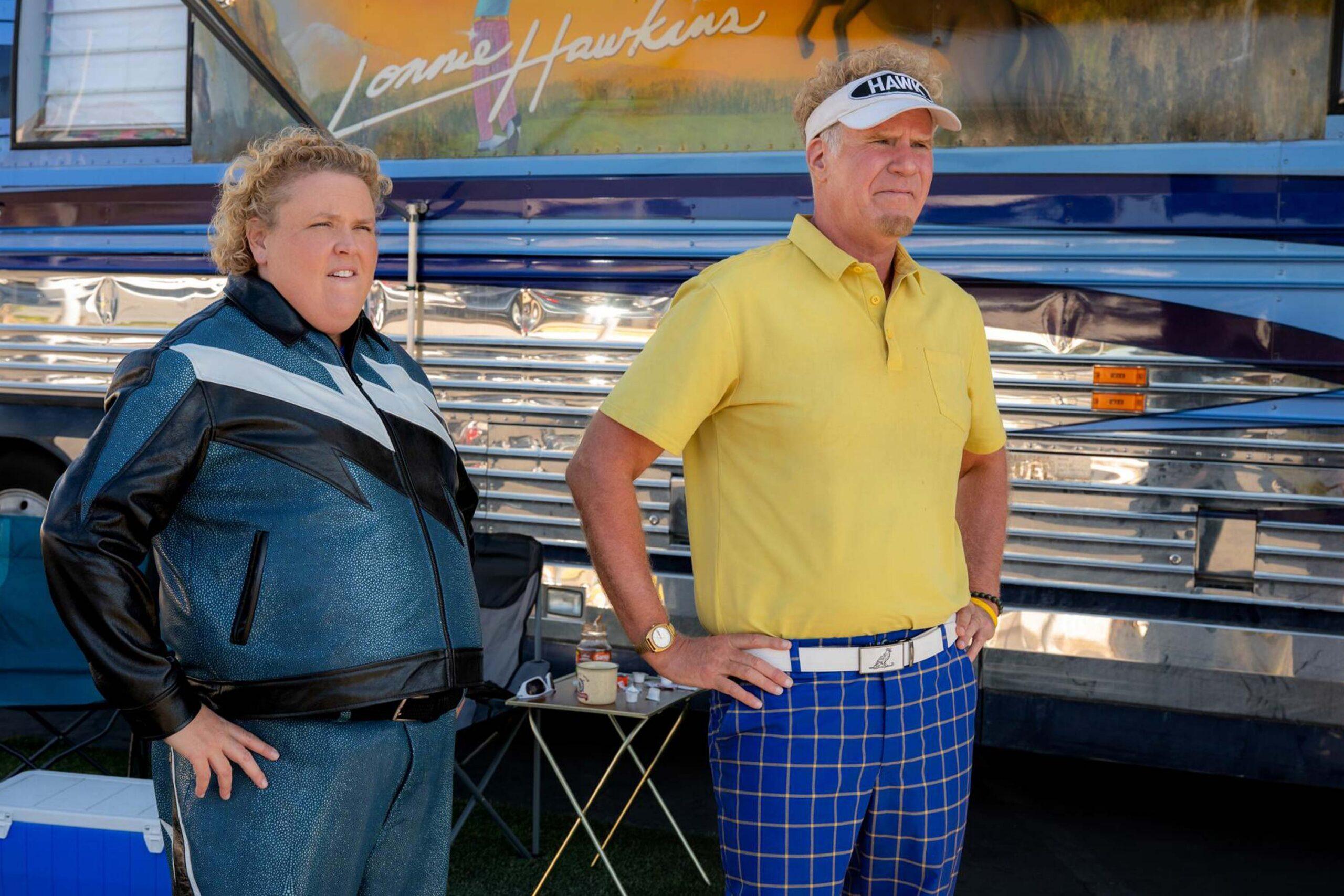
Part 8: “Will Is a Distinctly American Figure”
Twenty years after Talladega Nights changed the sports comedy playbook, Ferrell is back in the arena with his first TV series, The Hawk, the Netflix golf satire that revisits the gloriously delusional athlete archetype he has spent decades perfecting.
Lesak: The Hawk was Will’s idea. Over the last three years, he really wanted to do a show about his take on golf.
Henchy: We always like the idea of the underdog, the world against him, trying to get back into the PGA, down in the Korn Ferry Tour. And we’ve never really explored Will as a dad of an older guy. Athletes are competitive, even when it’s family, and we just love that dynamic.
Lesak: Golf is a very elitist sport and a sport that isn’t accessible to so many. That was kind of the thesis of why Will wanted to do it and thought it could be really funny.
Green: I live in a part of South Carolina where there are a lot of golfers. The types of conversations that they have make me laugh. So imagining Will in that world, surrounded by these personalities and fashions, made me chuckle. When I spoke with Will about the flavor of absurdity that I wanted to prioritize for this, we just really hit it off and dove in.
Henchy: Will loved the idea of metal spikes. He’s a golfer that still wears metal spikes. So whenever Will’s walking, you can hear the metal spikes in the background.
Pollard: Golf is one of the things Will and I do together. We play a fair amount, and I was in the golf industry for more than 25 years. He makes good contact. He hits the clubface well, and he’s got good balance. I was never worried about how that part was going to be portrayed.
Henchy: You add a little sound effect and a little swoosh sound, and it connects the two. It makes it seem like Will’s definitely got a professional swing, but he’s pulling it off on his own.
Green: There’s something so weirdly relatable and innocent about the characters that Will plays, no matter how savage their behavior can be. That’s a great wheelhouse because you can push the envelope. You can write something that has teeth, and he puts it in that human form that lets us laugh at it without it feeling mean-spirited.
Kalil: I’ve played with so many athletes who are incredibly confident and sometimes irrationally confident. That’s kind of all of Will’s memorable characters: Ricky Bobby, Jackie Moon, Chazz Michael Michaels. They all have this oversized self-belief that borders on delusion. I think he’s fascinated by people who are completely convinced of their own greatness, even when the evidence probably suggests otherwise.
Gordon: Will is a distinctly American figure. There’s a sort of bravado to him and a wounded, reckless quality that fits very well with fallen sports figures. I think he’s able to inhabit [that role] the way John Wayne could be a cowboy and you believed it. There’s just something in his DNA that probably should have been a character like this.
Speck: He understood both the legitimacy of athletes like Joe Namath and Dennis Rodman, but also the performative element of what they could become in the culture.
There’s something so weirdly relatable and innocent about the characters that Will plays, no matter how savage their behavior can be. You can write something that has teeth, and he puts it in that human form that lets us laugh at it without it feeling mean-spirited.David Gordon Green
Farrell: Will has an everyman quality that makes what he’s doing feel attainable. He’s athletic enough to pull it off, but approachable enough that people think, “Maybe I could play 10 positions, too.”
Henchy: I just went through New York City and the Hamptons with him during the U.S. Open as his caddy. We played through the High Line, did a sports bar down in the West Village. We had no permits, just one camera. We’d start walking, people would realize it was Will, and you’d get a crowd following him. He was in character as the Hawk the whole time. People would be like, “We loved you in Elf.” And he’d say, “I don't know what you’re talking about.” He likes that kind of weirdness. It’s something you just don’t see. That’s what we do with our scripts and stories, too. We ask, “What haven’t we seen before?”
Pollard: I would love to see him do a curling movie.
McGinn: I like the idea of him in the esports world. You can pound a controller as long as you want to. There’s no expiration date.
Heyman: We want to find a movie for Will and Adam Sandler. Why can’t we put Hawk and Happy together? Before their careers are over, they have to do something.
Henchy: That would be a good special: Hawk versus Gilmore. There’s something kind of interesting about professional darts. The one champion right now is only 19 years old, but he looks like he’s about 50. The amount of people that attend a dart competition is crazy.
Ellis: We’ve made some sports movies lately with these crazy stories where older guys somehow get back on the field and find a way to play again. If there’s anybody who could pull that off, it would be Will.