
As an NFL analyst, I’ll be the first to admit that we in the profession are terrible at evaluating head coaching hires. We can break down schemes and psychoanalyze press conferences until we’re blue in the face, but the truth is, most of a coach’s work is done behind closed doors. And the glimpses we do get are often curated by a team’s PR department.
That doesn’t stop us from thinking we know what goes into the job, though, and a lot of the qualities we value are those we’ve seen from coaches in football movies. Our idea of leadership comes from gravel‑voiced halftime speeches. Our sense of good strategy comes from trick plays drawn on napkins and whiteboards—or, in the case of The Little Giants, the nearest child. Our expectations for sideline behavior have been shaped by scriptwriters who may have never been on a sideline or set foot in a locker room. And boy, oh boy, do we love an underdog story.
We’re not alone in this: Even real-life coaches buy into the football movie mythology, using performative motivational tactics and showing their teams inspiring speeches and scenes from sports movies. These fictional leaders of men have taught all of us—including the people who do it for a living—what a football coach should be. And just like real-life coaches, they should be subjected to intense (and sometimes uninformed) scrutiny.
So to celebrate the last few weeks of the NFL offseason, when football fans and media rank anything and everything related to the sport, let’s pay homage to some of the most memorable figures in (fake) football lore by ranking football movie coaches. An early point of clarification: While some of these guys existed in real life—like Herman Boone and Bill Yost (Remember the Titans) and Gary Gaines (Friday Night Lights)—we’re judging them solely on what happens in their movies. We’re also leaving out television coaches, so apologies to all you Eric Taylor stans out there. (I don’t think you would have been happy with my take on his coaching, anyway.)
These rankings aren’t based on which actor gave the best or most memorable performance or on the quality of the film. Rather, it’s based on the coaches’ X’s and O’s, their locker room management, and their all-around vibes. Every play call, personnel decision, and strategy move was taken into consideration. So with that out of the way, let’s rank some fake football coaches.
15
The Little Giants (1994)
Danny O’Shea, Urbania Giants Head Coach
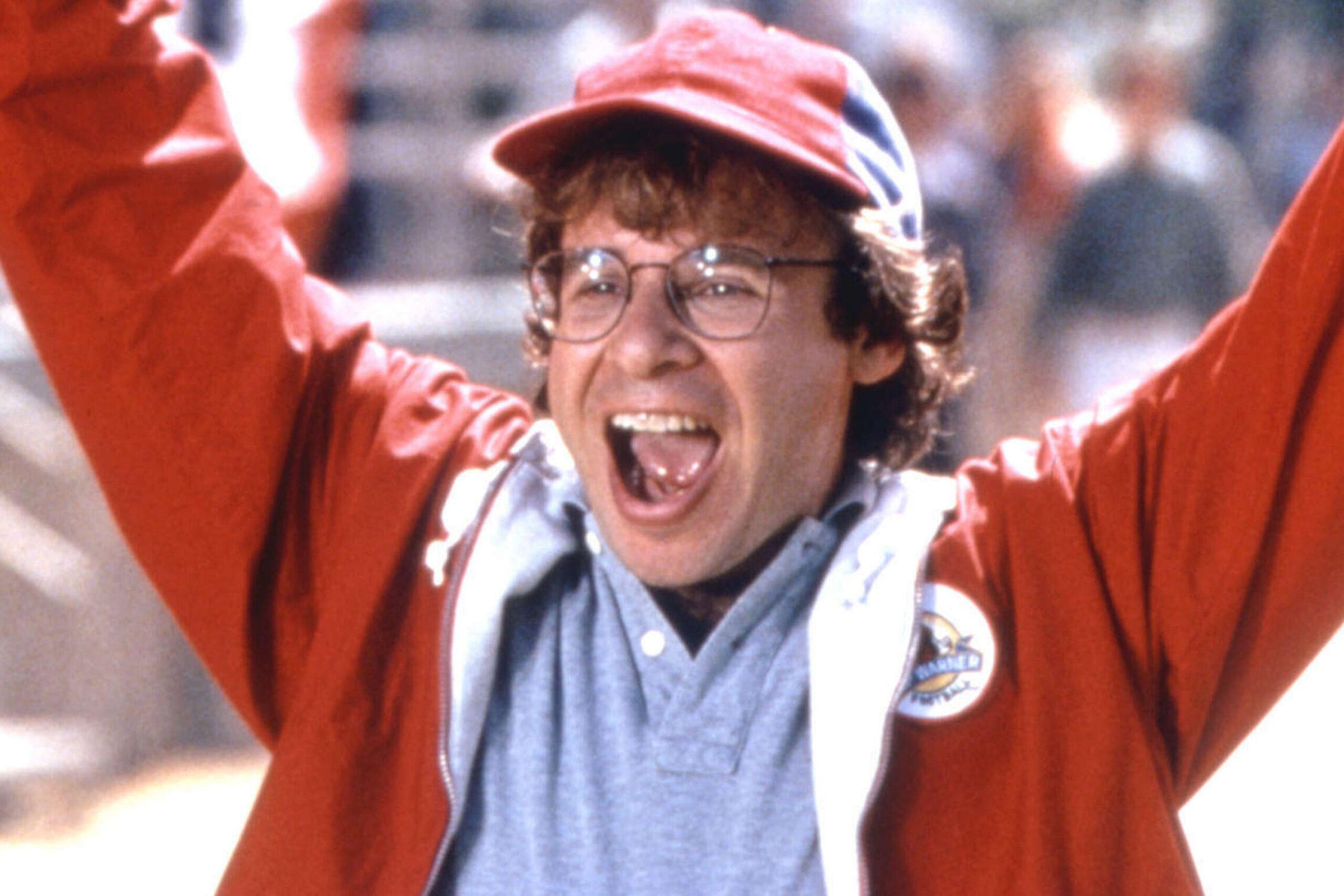
Danny O’Shea, played by Rick Moranis, may present as a warm, caring single dad who doesn’t know ball and is just trying to do right by his daughter. But I see the real Danny. And the real Danny is a conniving pragmatist who is dead set on getting revenge against his more successful brother. You probably don’t remember how dark this film gets—especially its main protagonist. At one point, Danny catches his brother, Kevin, spying on his team’s practice, and he responds by calling the police and telling them Kevin is peeping on kids in his underwear. The police point guns at him!
Danny also pretends to be Kevin—someone who is actually qualified to coach a football team and develop young players—to get Spike on his team. Spike has a clear future in football, and Danny’s willing to sabotage it just to get one over on his brother in an exhibition game. Danny’s kind of a selfish asshole, a fact his own daughter clocks the night before the big game when she correctly points out that he cares little about the kids and just wants to beat Kevin. And instead of offering any help to Johnny, who has a strained relationship with his absentee father, Danny exploits Johnny’s pain via an admittedly shrewd play call. The Giants coach dials up a toss play to Johnny, thinking he’d be motivated by the sight of his dad—who arrives late to the game and just so happens to be located at the back of the Giants end zone. It’s a convoluted plan, but it ends up working as designed.
That’s the only good idea Danny has throughout the movie. The team is an utter disaster right up until John Madden’s bus conveniently breaks down up the street from the Giants practice field. It’s Madden and his band of All-Pro players who get the team back on track. It’s clear Danny has no idea what he’s doing out there.
I give Danny zero credit for the two coaching interventions that save the game for the Giants. On the key goal line stop, Junior’s mom comes out of the stands to tell Danny which play the Cowboys are running.
And then there’s the Annexation of Puerto Rico, which was designed by Danny’s 12-year-old assistant and is an objectively bad play that just happens to work out. It’s a fumblerooski with the Giants faking a run to the right and Zoltek, the team’s slowest player, picking the ball off the turf and running to his left, needing 99 yards to score the go-ahead touchdown. The play works only thanks to Zoltek’s miraculous no-look pitch back over his head as he’s tackled around midfield.
X’s and O’s: Awful. Look at his playbook, which is drawn on a kid’s torso for some reason:
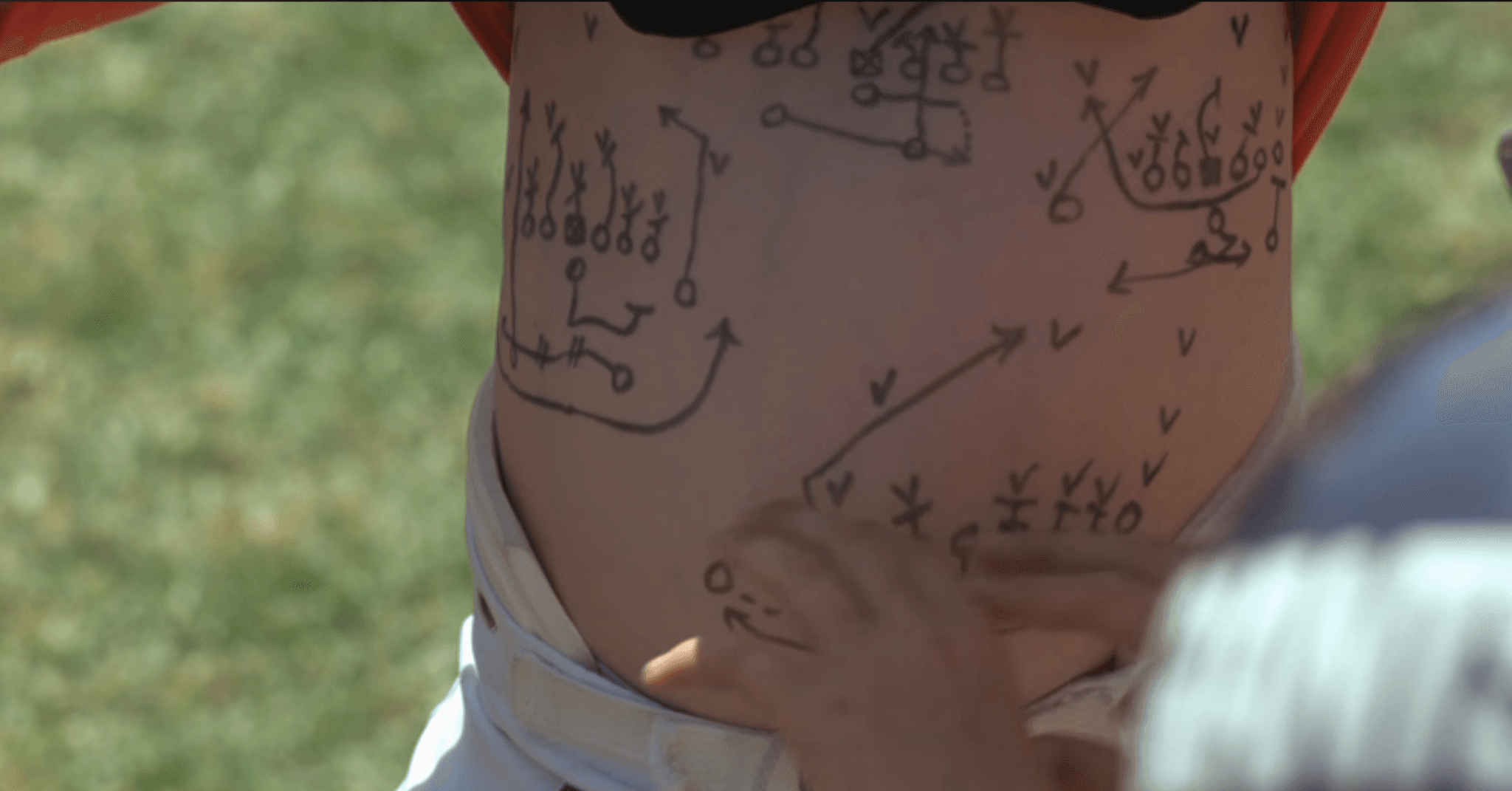
The offensive line is blocking for runs, but the receivers are running routes. Unless Danny accidentally created the RPO back in 1994, these plays make zero fucking sense.
Locker room management: Look, the “One Time” halftime speech is a banger and gets his team fired up, but the bad outweighs the good here. Danny’s two best players quit the day before the game, and it’s clear the team doesn’t respect him. Look at Zoltek staring off in the other direction while Danny is addressing the team.
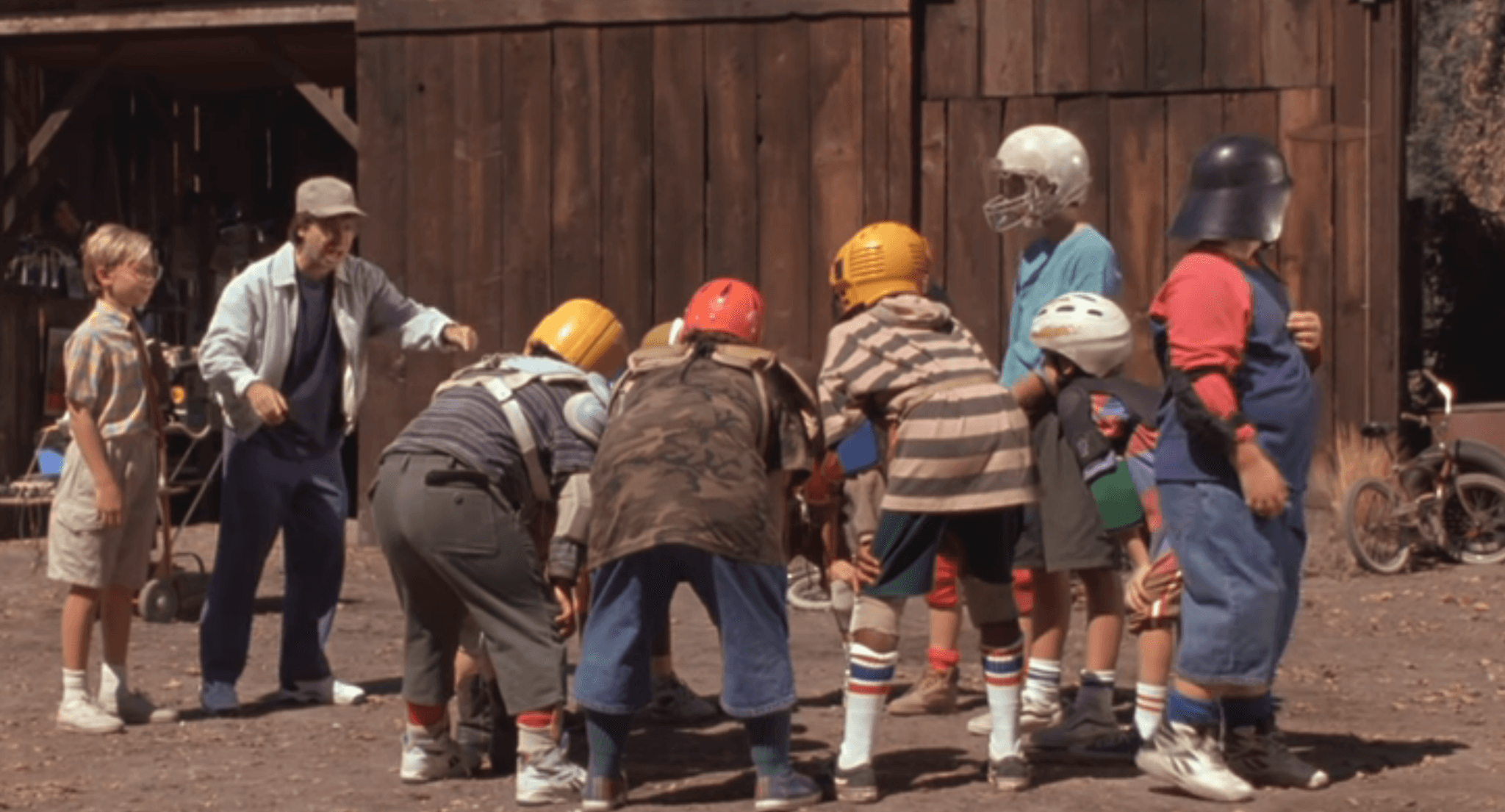
Danny’s got him in a Darth Vader helmet. I’d check out, too.
NFL comp: Bill Belichick without the ball knowledge
14
Varsity Blues (1999)
Bud Kilmer, West Canaan High Head Coach
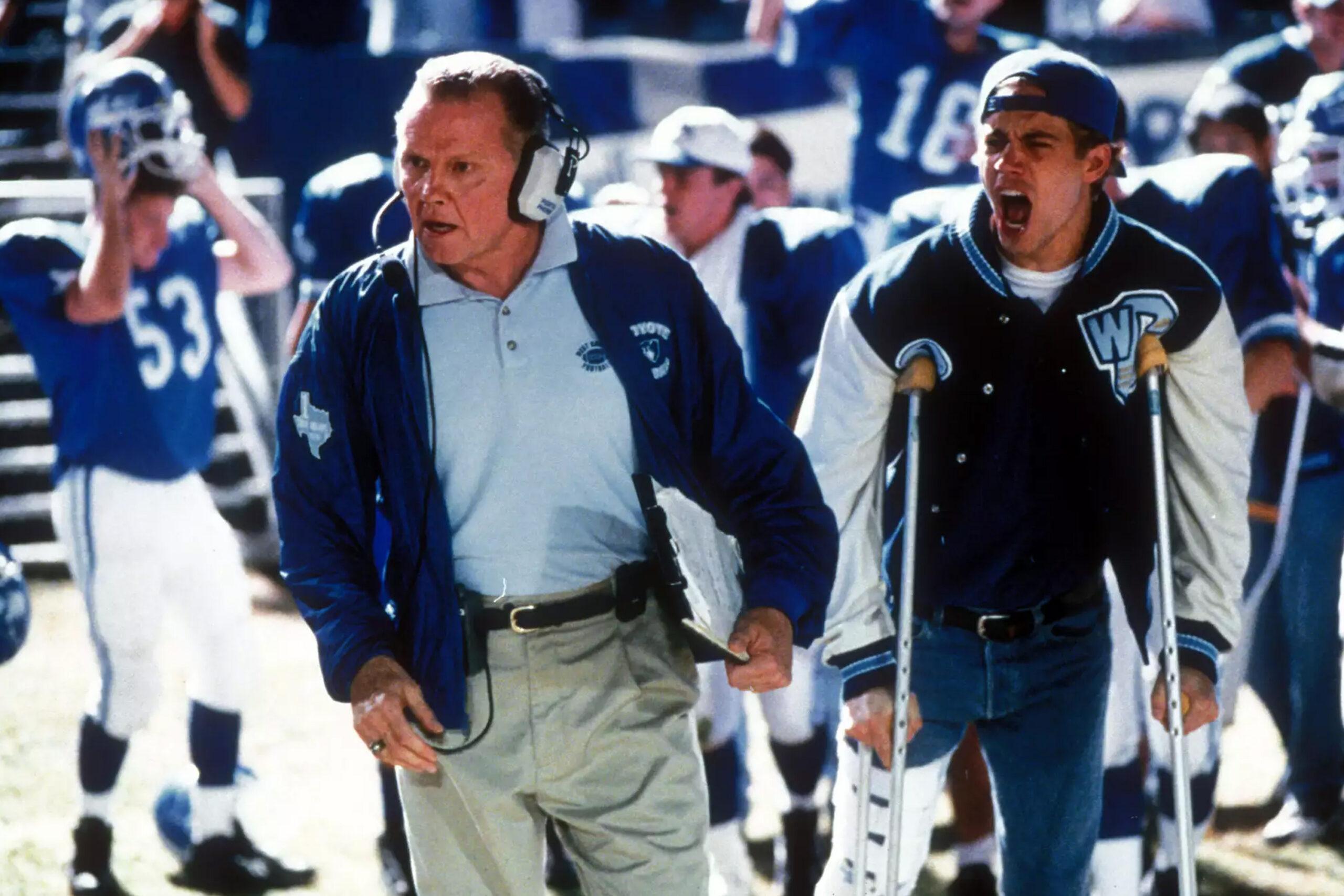
Kilmer (played by Jon Voight, who, in a way, is really playing himself) tells us early on in the movie that he’s won 22 district titles and two state championships in his 30 years coaching West Canaan. What he leaves out is the fact that the Coyotes haven’t won state in a decade, and I’m assuming none of those district titles happened recently. The game seems to be passing Kilmer by, and it’s probably for the best that his coaching career comes to an abrupt end in the last act of the movie.
The guy is an irredeemable shithead. He’s quite clearly a racist who refuses to let his star running back, Wendell Brown, shine. If that weren’t bad enough, he also has no concern for his players’ safety. He convinces Billy Bob to play through multiple concussions, which inevitably leads to the big offensive lineman missing a block and giving up the hit that ends quarterback Lance Harbor’s playing career. We later learn that Harbor was playing on an injured knee and shouldn’t have been on the field to begin with. And in the final game, Kilmer makes Brown play through a serious ankle injury, which sparks a locker room mutiny. Kilmer eventually leaves in disgrace and cleans out his office as the team, now coached by Harbor, leads a second-half comeback.
X’s and O’s: Kilmer is an offensive-minded head coach who calls the plays for West Canaan, but he approaches the game with a defensive mindset. “We are a running team,” the cranky old coach reminds his ambitious backup quarterback, Jonathan Moxon, several times throughout the movie. Kilmer wants his team to grind down the opposing defense and run out the clock, which can be a successful strategy for overmatched teams but makes little sense for a group that features two quarterbacks with Division I talent and a dynamic receiver in Charlie Tweeder. Kilmer is scared to compete, and that’s made clear in the final game against Gilroy. Trailing in the second quarter, Kilmer decides to kneel out the last 1:22 of the first half, which draws a chorus of boos from the crowd. The hometown commentators call it “gutless football.” If the players hadn’t pushed Kilmer into an early retirement, the community may have.
Locker room management: We’ve already covered the racism and the complete disregard for player safety. On top of that, Kilmer tells Mox, who has just gotten a full ride to Brown, that he’d “fuck with his transcripts” if Mox doesn’t follow the run-heavy game plan to a tee. It’s a miracle Kilmer held on to the West Canaan job as long as he did—but I guess winning covers up a lot.
NFL comp: Urban Meyer
13
Friday Night Lights (2004)
Gary Gaines, Permian High Head Coach
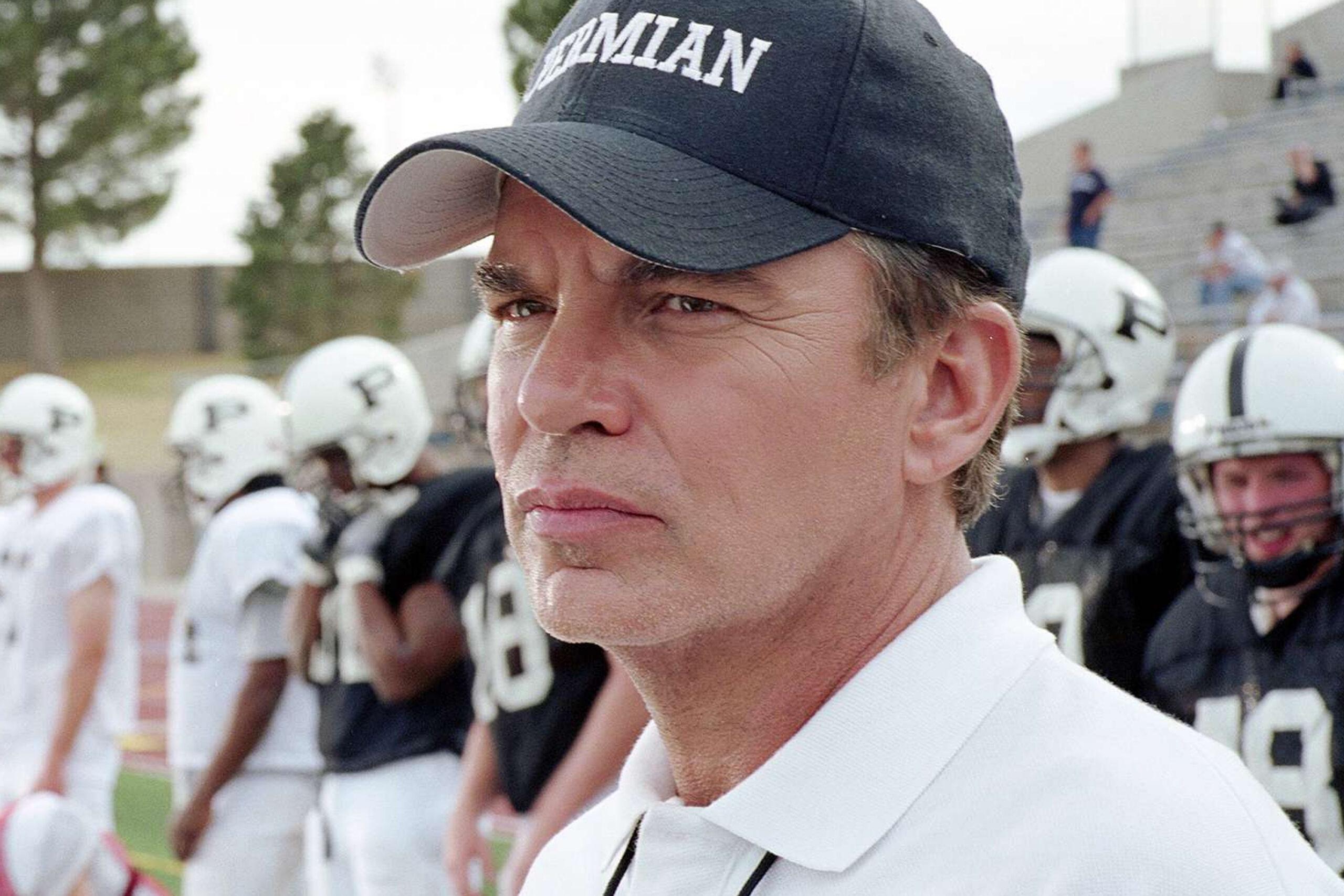
Gaines deserves credit for getting an undersized Permian team within a yard of a Texas state title considering his star running back, Boobie Miles, was on the sideline for most of the season. But his handling of Miles’s injury is indefensible. To be clear, I’m referring only to the movie version of Gaines: In real life, Miles injured his knee during a preseason scrimmage and later quit the team because Gaines didn’t allow him to play more snaps. The real Gaines protected Miles from further injury. Billy Bob Thornton’s version did the opposite.
In the movie, Miles initially hurts his knee on a run play late in the fourth quarter against Marshall. Gaines tries to put third-stringer Chris Comer in to close out the game, but the sophomore tailback can’t find his helmet. Rather than putting in the second-string back or simply kneeling out the clock with his team up 42-7, Gaines calls a run play for Miles, and Miles ends up tearing his ACL. Miles hides the injury from Gaines and convinces the coach to let him dress for the rivalry game against Midland Lee. But when the team is trailing late, Miles gets the ball and tries to make a cut, and he goes down clutching at his knee. Instead of immediately taking Miles off the field, Gaines calls another run, which unsurprisingly ends with the star running back getting seriously hurt and ending his high school career. Permian does recover from the loss to make a surprising run to the state final, but only after winning a coin toss to make the postseason.
X’s and O’s: Gaines’s offense is all over the place. Permian seems to run a little bit of everything with no clear philosophy behind it. One game, they look like a traditional option team; the next, their quarterback drops back to pass on nearly every down. Based on an early scene in the movie in which Mike Winchell is being quizzed on the playbook by his overbearing mother, the offense seems needlessly complicated for the high school level.
Locker room management: We don’t really see Gaines attempting to forge personal relationships with his players. And he’s brutally rough on Winchell, calling him “the village idiot” and a “fool.” That’s no way to instill confidence in your quarterback. Gaines also stands idly by as Don Billingsly’s dad berates and abuses his son on the practice field in front of the team. The locker room is toxic as hell.
NFL comp: If Tom Thibodeau coached football
12
The Waterboy (1998)
Coach Klein, CSLSU Head Coach
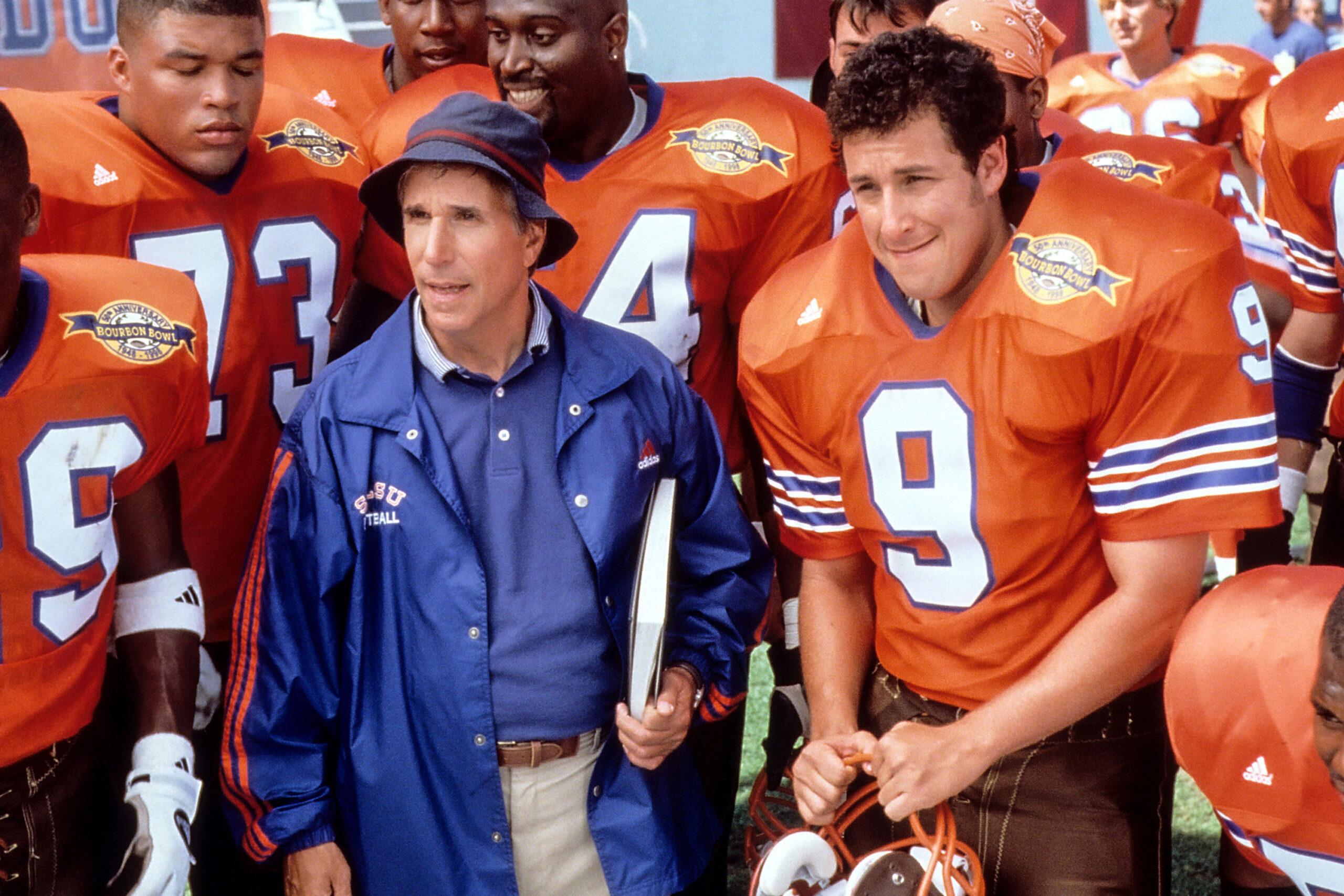
Klein (Henry Winkler) is a full-on Bobby Boucher merchant for the first two acts of this movie, but his coaching in the final sequence redeems him. With his team trailing Louisiana by three scores in the Bourbon Bowl, we finally get to see some of the play calling genius that had been teased earlier in the movie. He runs a reverse halfback pass in which Boucher, typically a linebacker, makes the game-winning throw as time expires. Up to that point, Klein’s coaching was thoroughly unimpressive. But it was difficult to blame him given that he had only one assistant, whose Cajun accent made him impossible to understand, and Klein called plays on offense, defense, and even special teams. The athletic department neglected the football program to the point that players were forced to share helmets and cups. I don’t know whether any coach could succeed in that environment. Still, before Boucher, Klein’s team had lost 40 consecutive games, which can’t be explained away by limited funding.
X’s and O’s: Klein runs a diverse offense from a variety of personnel groupings. Over the course of the 90-minute movie, we see the Mud Dogs operating out of a spread set with three receivers on the field, a two–tight end set, and some two-back formations. His creativity isn’t limited to the offensive side of the ball, either. In the Bourbon Bowl, we see him use Boucher as a decoy on the weak side of an overload blitz that totally breaks Louisiana's protection. Klein knows both sides of the ball.
Locker room management: On one hand, Klein tries to abandon his team in the second half of the Bourbon Bowl before Boucher convinces him to stay; on the other, he unlocks Boucher’s potential by imploring him to visualize opponents as people who’d bullied him off the field. It takes him just five minutes to figure out which of Boucher’s buttons to push.
NFL comp: Mike McDaniel
11
The Little Giants (1994)
Kevin O’Shea, Urbania Cowboys Head Coach
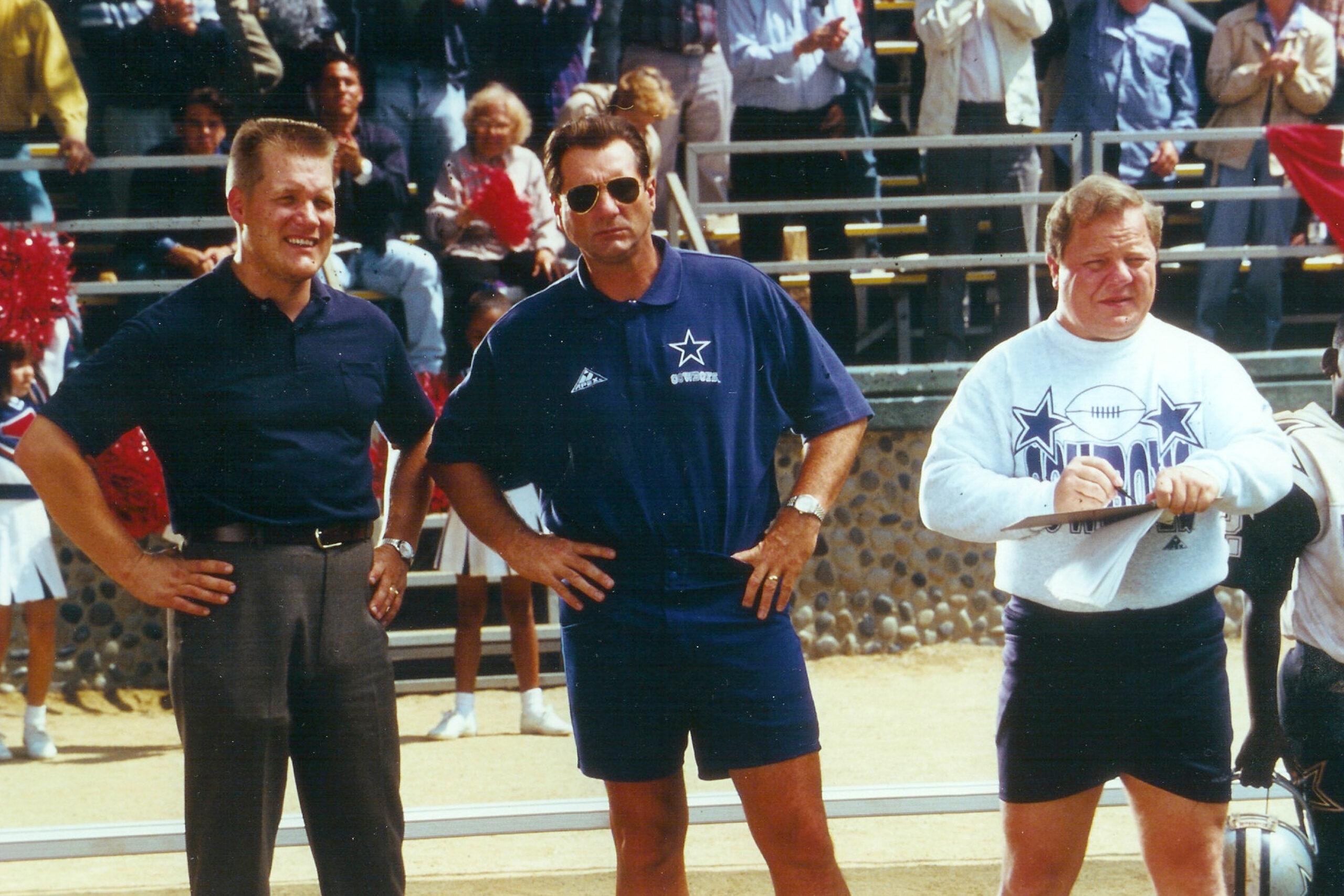
Kevin’s conservative ways ultimately cost his team the big game against the Giants. His overtly sexist philosophy (Ed O’Neill is essentially playing Al Bundy in this movie) leads him to cut the town’s best player, his niece, Becky “The Icebox” O’Shea. And that move is what causes the Giants team to form. There wouldn’t have even been a game for Kevin to choke away if he had given Icebox her proper respect. And then there’s his play calling, which even Kirk Ferentz would find a bit too safe. We don’t see the Cowboys attempt a single pass throughout the game against the Giants. Sure, they were sitting on a lead and had a massive advantage in the trenches, but the Giants were loading up the box.
Couldn’t we get one deep shot?
If you can overlook his shitty views on women in sports—a pretty big if!—Kevin isn’t as much of an asshole as the movie wants you to think. Am I supposed to be offended that he cut the non-Icebox members of the Giants during tryouts? Hanon couldn’t catch a football and was blowing snot on his potential teammates. Zoltek had a peanut butter and jelly sandwich in his helmet and flunked the conditioning drills. Tad was running like Tom Brady at the combine. Kevin has a respect for the sport that his brother doesn’t seem to share. While Danny is willing to resort to dirty tactics to win the game, Kevin just wants to compete ethically. After Spike intentionally injures Junior Floyd, the Cowboys coach lets Spike’s dad know that if he pulls another stunt like that, he’ll be kicked off the team.
X’s and O’s: I’ve already covered Kevin’s conservative scheme, which I would be willing to overlook if he exhibited better game management. When it becomes clear that the Giants know the Cowboys’ play call on a key fourth down—Kevin even says, “They know the play”—he doesn’t call a timeout and instead lets his team run the ill-fated design. If he didn’t have a timeout to burn in a game the Cowboys had led throughout, that’s just poor clock management. Either way, it’s a bad look.
Locker room management: Kevin may have been shitty to his niece, but his players seem to love playing for him. They hang on to every word of every speech and genuinely play hard on each snap. His players are respectful competitors as well. After the heartbreaking loss to the Giants, the Cowboys join in on the standing ovation for the underdogs who’d just embarrassed them in front of the entire town. Somebody show this movie to Tom Brady.
NFL comp: Bill Parcells
10
Remember the Titans (2000)
Bill Yoast, T.C. Williams Defensive Coordinator
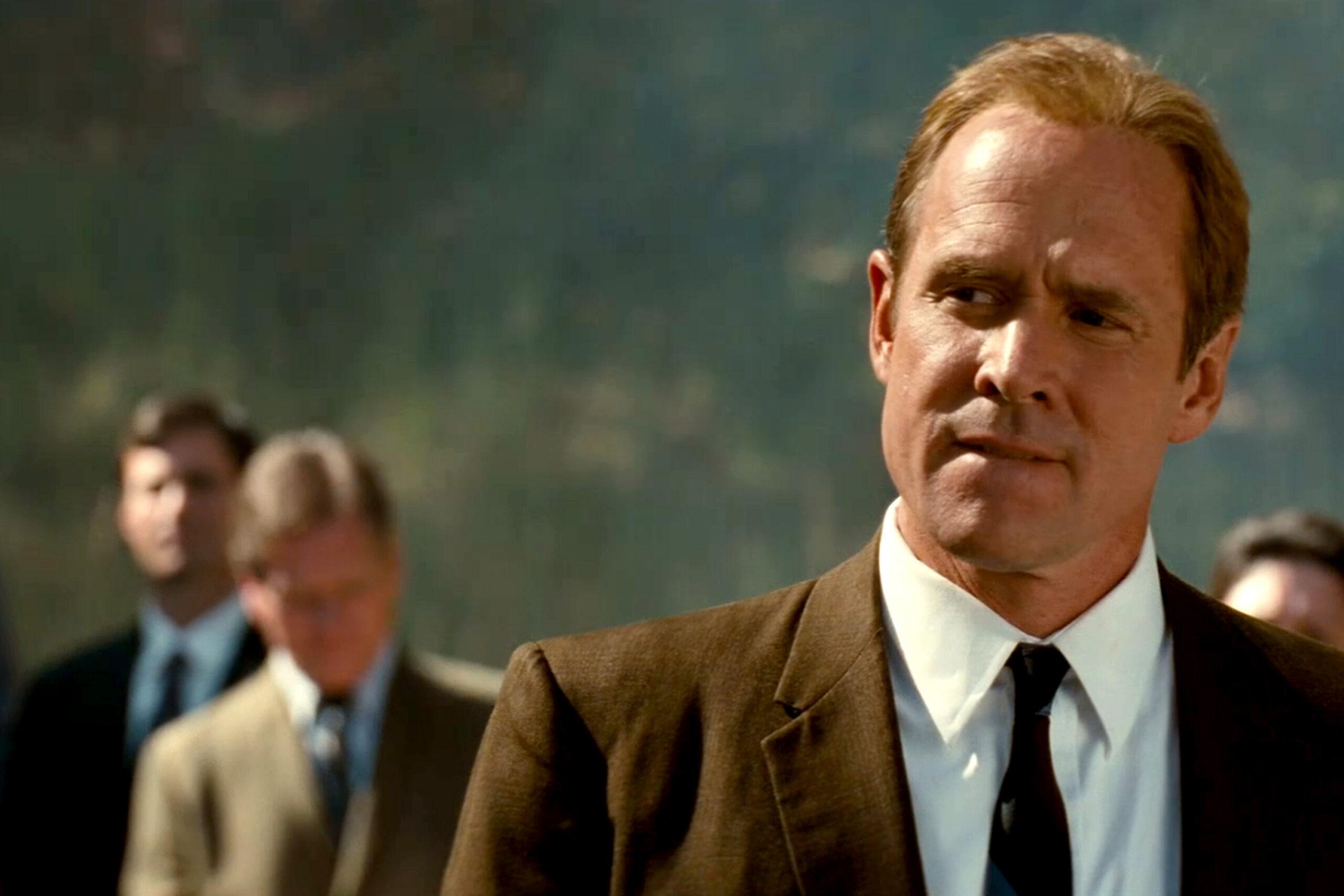
We’re told early in Remember the Titans that Yoast (Will Patton) is so consumed with football that his wife left him, which is odd, considering we don’t see him doing much coaching off the field during the movie’s 113-minute running time. We don’t see him watching film once. Boone has to get help from the math teacher to devise scouting reports on the opposing offenses. When Yoast’s football-crazed daughter wants to dive into the T.C. Williams tape, she does it with Boone and not her father. I don’t know what led the Yoasts to end their marriage, but based on what we see in the movie, the “coaching lifestyle” explanation is a crock of shit.
Yoast doesn’t run an overly complicated defense. Under his watch, the Titans seem to sit in man coverage and rely on their All-American defensive line to pressure the quarterback. We see the weakness in his simplistic philosophy almost instantly. In the opener, Alan, who’s played by Ryan Gosling, is getting cooked in coverage, but Yoast doesn’t make an adjustment to help his linebacker out. (Why is he covering a receiver, anyway?) Instead, he benches Alan and replaces him with Petey, played by a pre-Scrubs Donald Faison, who has zero experience on defense. It works out, but Yoast had no way of knowing it would. I wouldn’t call Yoast a fraud, but he’s an overrated defensive mind who’s carried by his players’ talent.
X’s and O’s: The Titans live in the same 4-4 formation and play man coverage throughout the movie. That system works well for Yoast up until the state title game, when the legendary Marshall coach Ed Henry surprises T.C. Williams with a shotgun offense. Yoast doesn’t have answers and asks Boone for help. It’s Boone who comes up with the key adjustments—switching to a 5-2 front and playing zone coverage with lighter personnel—that help the Titans secure their perfect season.
Locker room management: I can shit on Yoast’s X’s and O’s all day, but the man knows how to deliver a sideline speech.
That montage of hard hits is awesome, but also kind of messed up when you realize it’s 16- and 17-year-olds taking violent, and possibly illegal, shots to the head. Still, what a speech.
NFL comp: Gregg Williams
9
Varsity Blues (1999)
Jonathan Moxon, West Canaan Player and Interim Coach
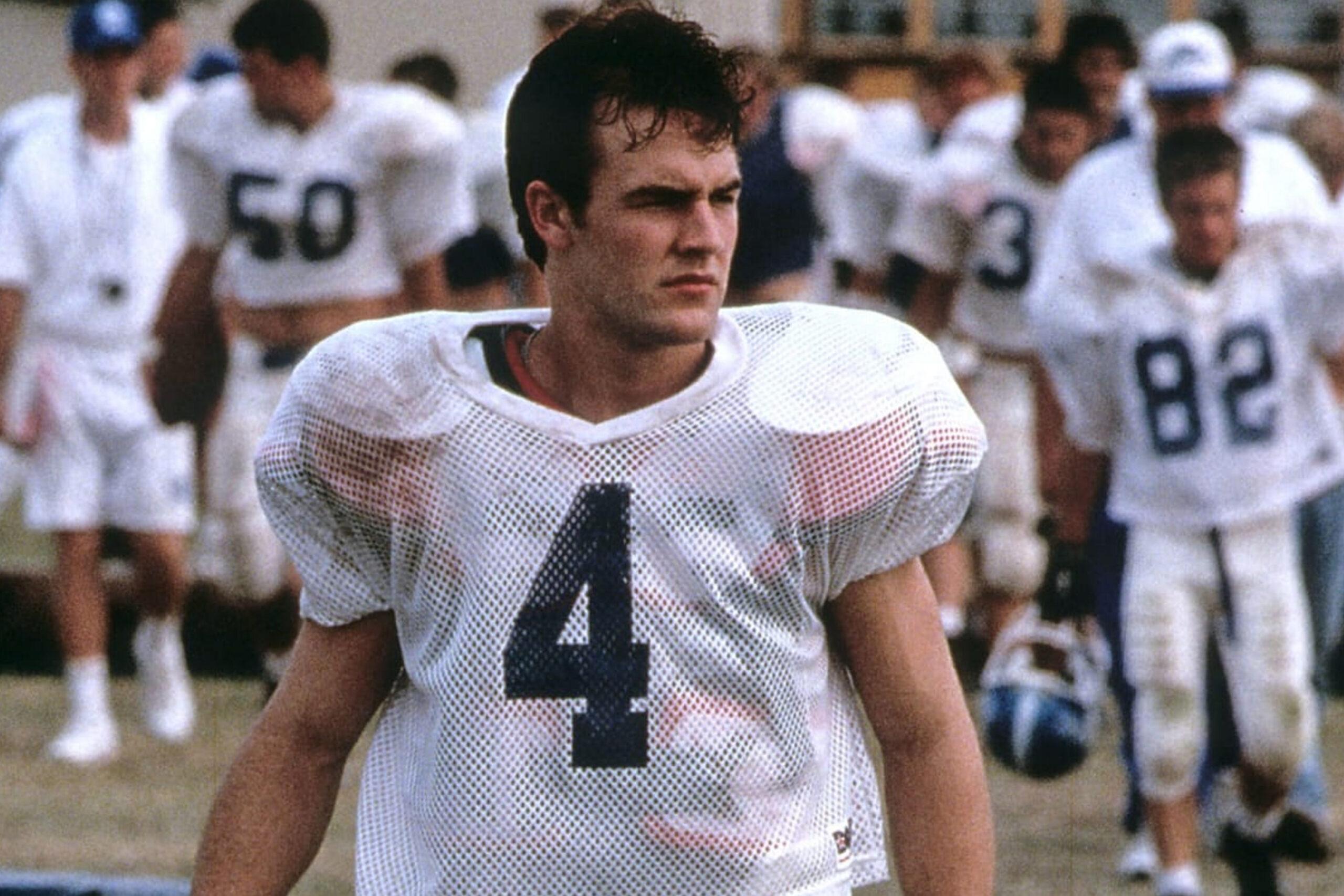
Technically, it’s injured quarterback Lance Harbor (Paul Walker) who takes over as coach after a disgraced Bud Kilmer loses his locker room, but Moxon (James Van Der Beek) is really calling the shots from the field. Under Harbor and Moxon’s direction, the Coyotes go with a hurry-up, no-huddle attack in which the latter calls the offense at the line. They lean heavily on Moxon’s “Oop-dee-Oop” formation, which he had been trying to pitch to Kilmer after seeing Mississippi Valley State run it. Mox prioritizes his education over football, but it’s clear that he loves the game and is keeping tabs on the schematic trends emerging around the country. He’s a reluctant offensive genius who doesn’t want to pursue football—or coaching, I’d imagine—just because he’s good at it. I wonder whether Kyle Shanahan ever grappled with a similar dilemma.
X’s and O’s: We don’t get to see much of Moxon’s playbook, but judging by the Oop-dee-Oop formation, he prefers a spread offense built around unbalanced formations. The Oop-dee-Oop is a 4-by-1 formation, with four receivers flanking one side and a lone receiver on the other.
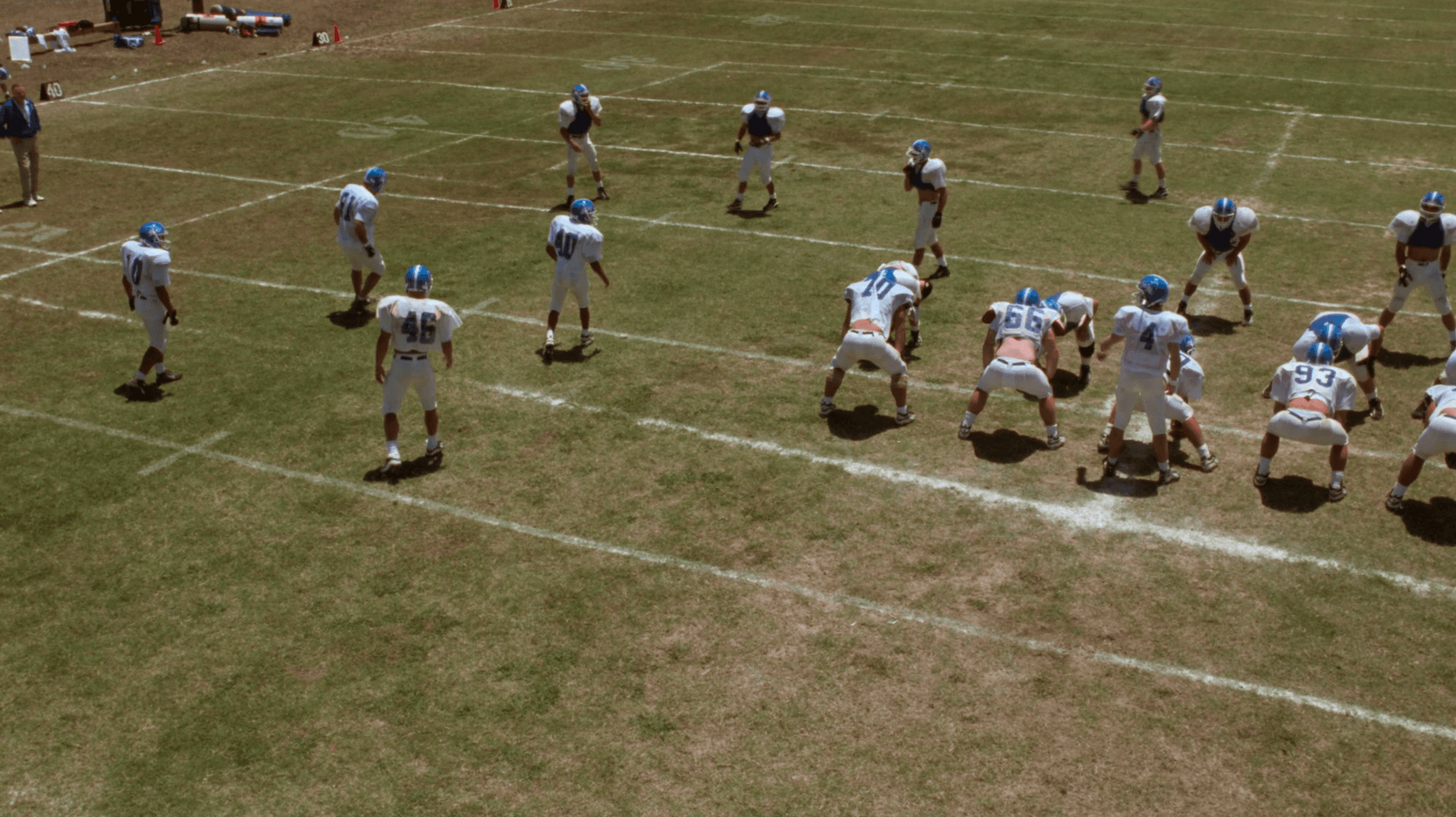
If the defense overloads the strong side, the quarterback works the one-on-one matchup. If not, the offense has a numbers advantage on the four-receiver side. Many modern passing games are built around a similar concept. Mox was running this scheme back in ’99. The guy was a visionary.
Locker room management: It’s a mixed bag for the high school senior, which makes sense. He leads the mutiny against Kilmer, showing that he’s earned his teammates' trust. Then he delivers a rousing halftime speech that gets the team all fired up coming out of the locker room. But he also took his teammates to an all-night party at a strip club the day before a game that the Coyotes lost.
NFL comp: Kliff Kingsbury


8
The Replacements (2000)
Jimmy McGinty, Washington Sentinels Head Coach
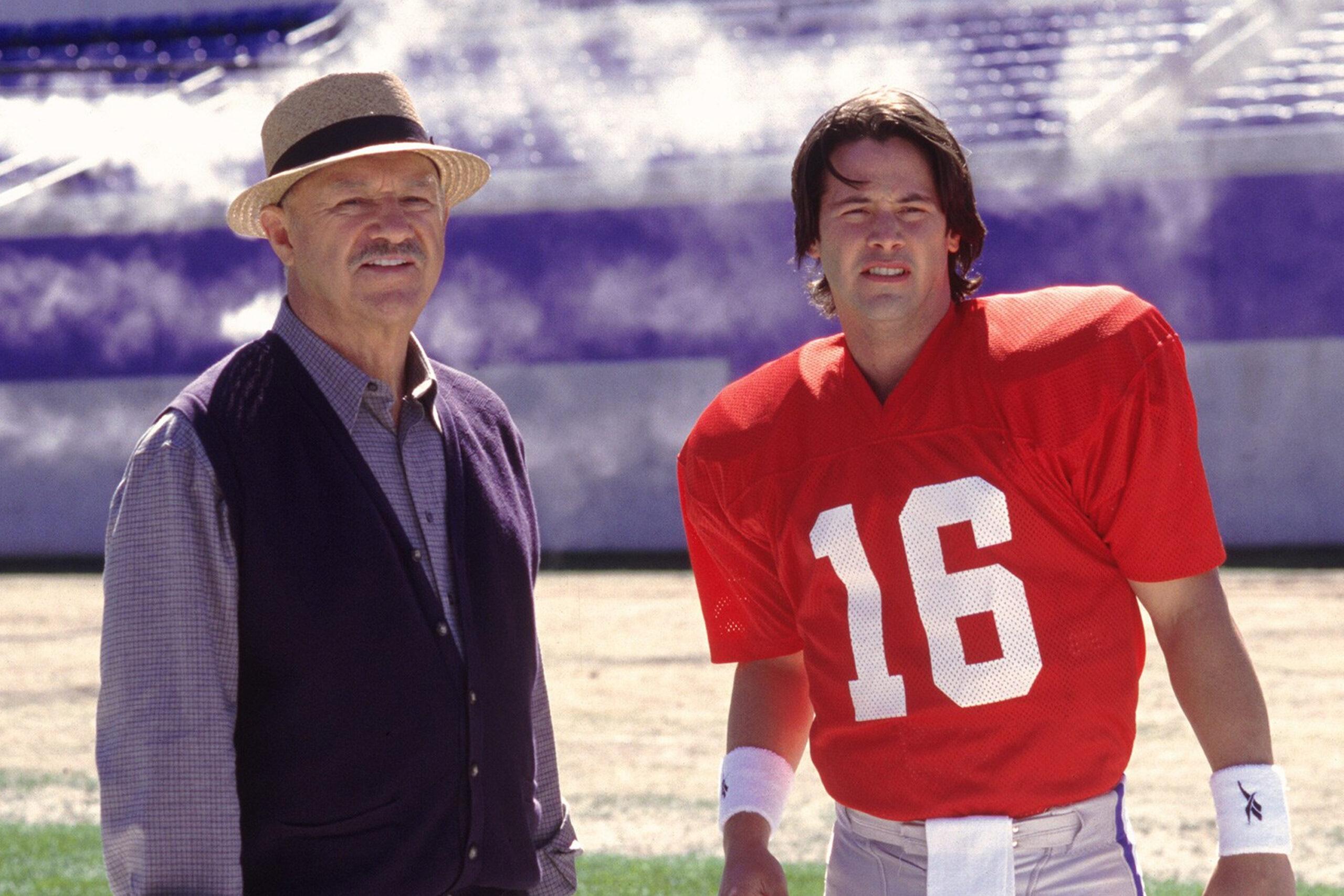
It’s difficult to argue against the results McGinty (Gene Hackman) delivers in his four games as a replacement head coach. He takes a group of scabs who have little to no professional football experience and leads them to three consecutive victories and Washington’s first playoff appearance in years. Along the way, he delivers a number of impactful speeches that galvanize what started out as a divided, bickering locker room. It’s a master class in man management. But McGinty’s scheme leaves plenty to be desired.
He’s an offensive-minded coach who insists on calling the plays, but none of his calls ever seem to work. I can count on one hand the number of times he sets Shane Falco (Keanu Reeves) up for an easy completion. Falco creates almost all of Washington's big plays out of structure. And during the win streak, the Sentinels are carried by a stout defense and unsustainable turnover luck. McGinty may have gotten Washington to the postseason, but it’s fair to question how much of the team’s success was a result of his tactical acumen.
X’s and O’s: The bones of McGinty’s offense are solid. He would fit right in with the Kyle Shanahan and Sean McVay trees that are currently dominating the NFL. The Sentinels offense uses a variety of personnel groupings and mostly operates from under center. Almost every play call includes some type of shift or quick motion. It’s a play-action-heavy attack that gets Falco out of the pocket, where he’s at his best. Unfortunately, the execution is horrible, and the Sentinels commit a maddening number of procedural penalties. That’s typically a sign of poor coaching.
Locker room management: As I said, the man knows how to rile up a locker room, but we learn that McGinty was fired by Dallas after clashing with its star quarterback. He has issues with Washington’s regular starter, Eddie Martel, and seems to resent highly paid athletes—which would obviously cause problems in a modern locker room.
NFL comp: Nick Sirianni

7
Any Given Sunday (1999)
Tony D’Amato, Miami Sharks Head Coach
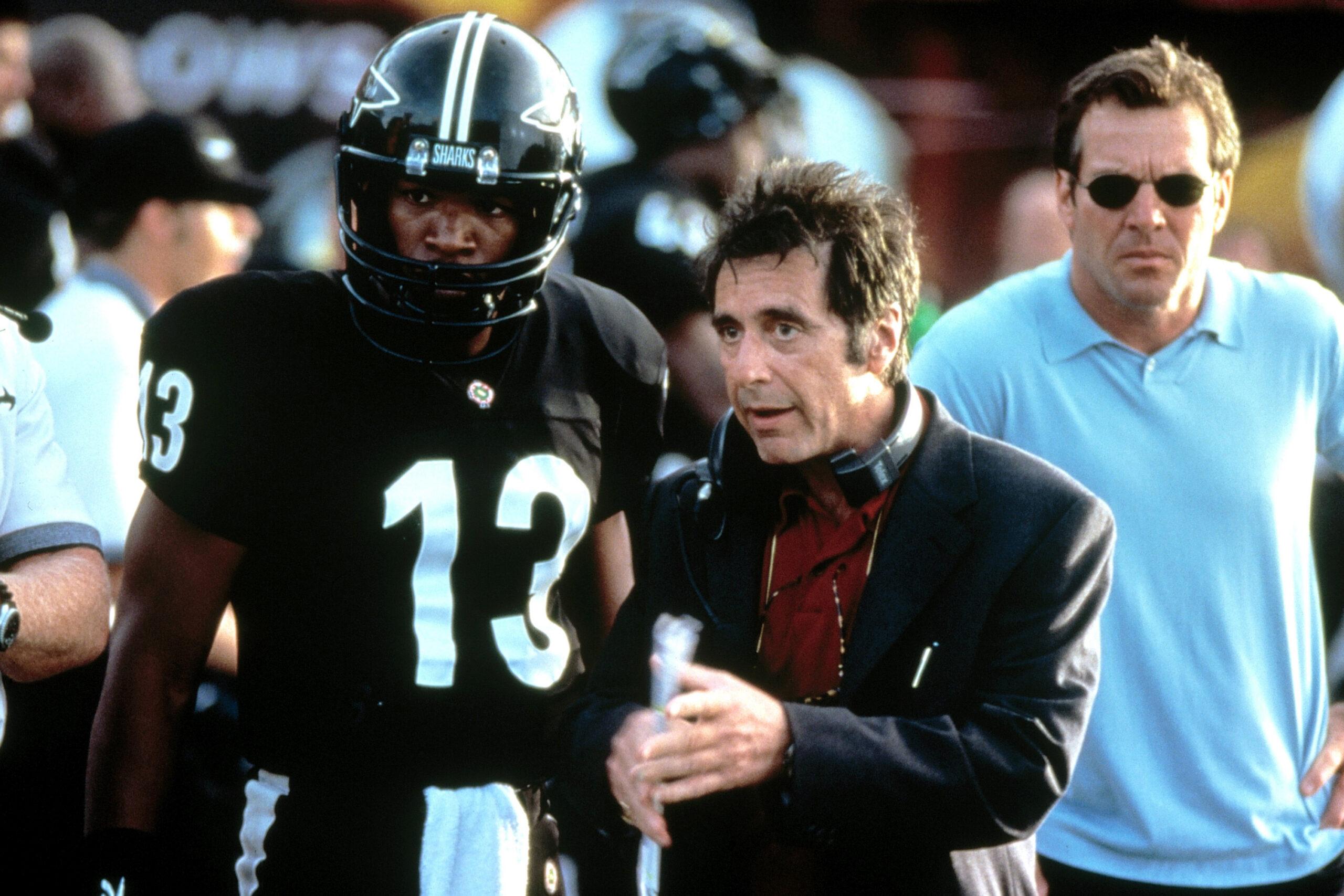
The movie goes out of its way to tell us that D’Amato (Al Pacino) is past his prime. The team’s owner and general manager, Christina Pagniacci (played by Cameron Diaz), is looking for any reason to move on from the withered coach and to replace him with Miami’s young offensive coordinator, Nick Crozier (Aaron Eckhart). And while we’re supposed to dislike Pagniacci and view her as meddlesome, I’m kind of on her side. D’Amato is a conservative play caller who insists on funneling his offense through a washed-up running back, even though he lucked into a generational dual-threat quarterback whom he previously had wasting away on the bench behind two mediocre quarterbacks.
Willie Beamon (Jamie Foxx) saves D’Amato’s job, and it takes way too long for the veteran coach to realize it. If Beamon hadn’t repeatedly changed plays and improvised after the snap, the Sharks would have missed the playoffs, and D’Amato would have been viewed as another has-been coach who was too stubborn to realize the game had passed him by. But the Sharks’ playoff run, led by Beamon, restores D’Amato’s reputation as a winner and earns him a coach and general manager role in Albuquerque with an expansion team, the Aztecs. D’Amato is smart enough to bring Beamon along with him, but he announces that he’s signing the young quarterback to a long-term deal shortly after the Sharks' season ends and presumably well before the free agency period opens. That has to be a violation of the league’s tampering rules, right? It’s no wonder Pagniacci didn’t want to give D’Amato the full roster control that the Aztecs offered.
X’s and O’s: D’Amato’s tired scheme holds the Sharks back. If he’d shown a little humility, allowed the more forward-thinking Crozier to call plays, and embraced Beamon’s dual-threat ability, Miami would have thrashed defenses on its way to another Pantheon Cup. The receiving talent, with a corps led by Jimmy Sanderson (Bill Bellamy) and Terrell Owens (who was apparently playing himself), was there. They had the quarterback. Instead, D’Amato tried to rely on a run game that was in decline.
Locker room management: D’Amato’s “Inch by Inch” speech at halftime of the playoff game in Dallas is one of the best in football movie history.
That’s how you motivate a team that’s on the verge of breaking. But managing a locker room goes far beyond halftime speeches, and Miami is a mess throughout the movie. D’Amato mishandles the quarterback situation, he allows feuds to eventually boil over, he doesn’t realize the team doctor is shady and putting players in danger, and he alienates his offensive coordinator. Miami is better off without him.
NFL comp: John Harbaugh
6
North Dallas Forty (1979)
B.A. Strothers, North Dallas Bulls Head Coach
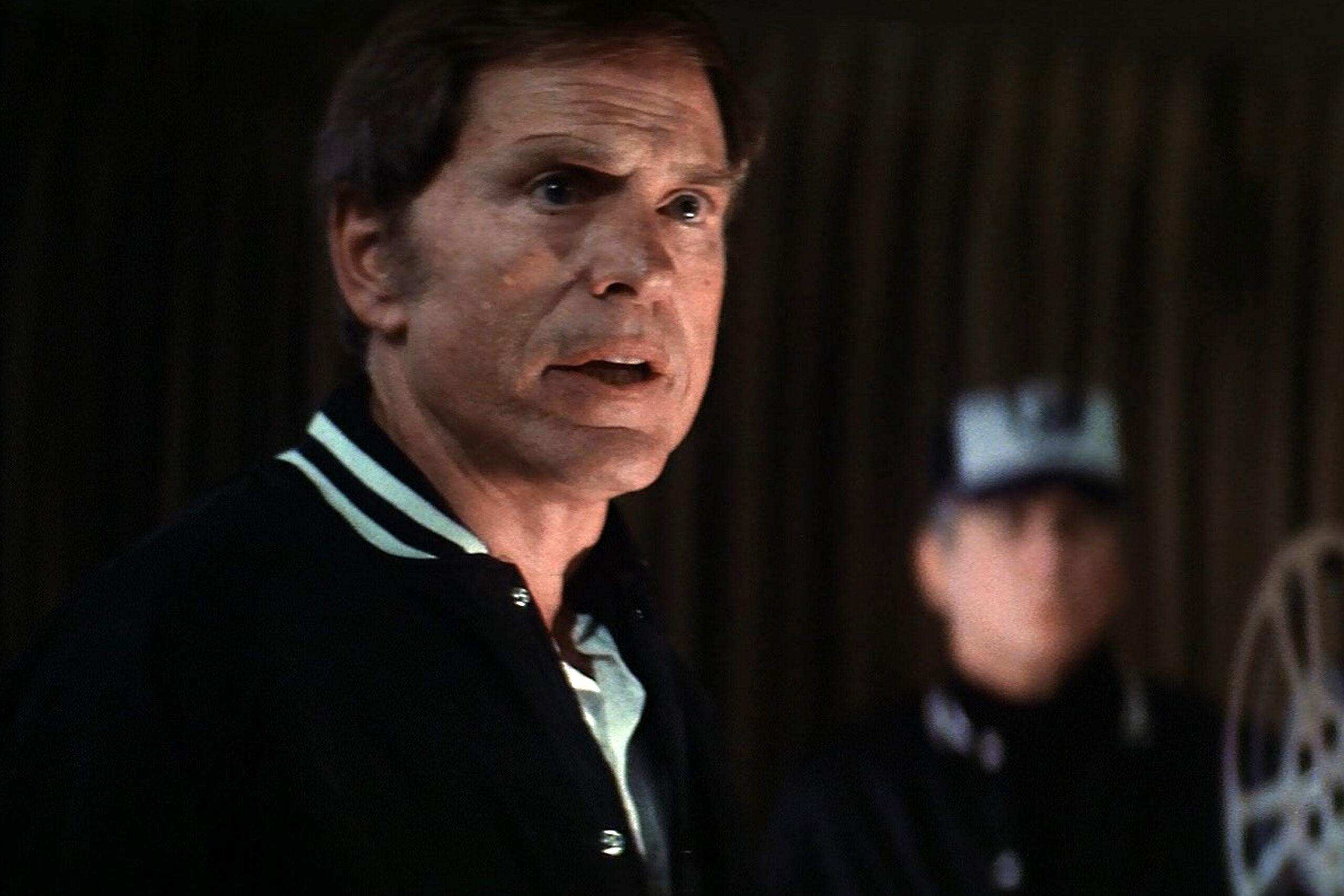
B.A. Strothers (played by G.D. Spradlin) is a nerd. I say that as both a compliment and a critique. On one hand, Strothers’s attention to detail, advanced scouting techniques, and use of analytics turn North Dallas into a championship contender. On the other, the players all rightfully despise him because he treats them like dots on a chalkboard rather than people. The guy is a bad hang, and if he’d been born 50 years later, he’d probably be a Silicon Valley exec who gets booed during a college commencement speech. But goddamn, the guy knows how to put together a game plan. This movie is set in the 1970s, and the Bulls are using computers to track opponent tendencies and quantify player performance. I’m not sure the Cincinnati Bengals have a setup that advanced right now. Had Strothers shown a bit more humanity and made any effort to forge personal bonds, North Dallas would have dominated the league.
X’s and O’s: Strothers runs a boilerplate 1970s offense. The Bulls go to a shotgun formation in hurry-up situations but mainly stick to run-heavy formations. North Dallas wins thanks to execution, not fancy play design.
Locker room management: It’s basically nonexistent. Strothers is so consumed with the football side of things that he’s oblivious to everything else. The players are chugging beers and chain-smoking in the locker room—which may have been acceptable back then—and they’re fighting every other day. The vibes are horrendous, and Strothers just sits in his office, poring over statistics and game film while team chemistry plummets. He also contributes to the toxic environment by pressuring players to play through serious injuries.
NFL comp: Kyle Shanahan
5
The Longest Yard (2005)
Nate Scarborough, Mean Machine Head Coach
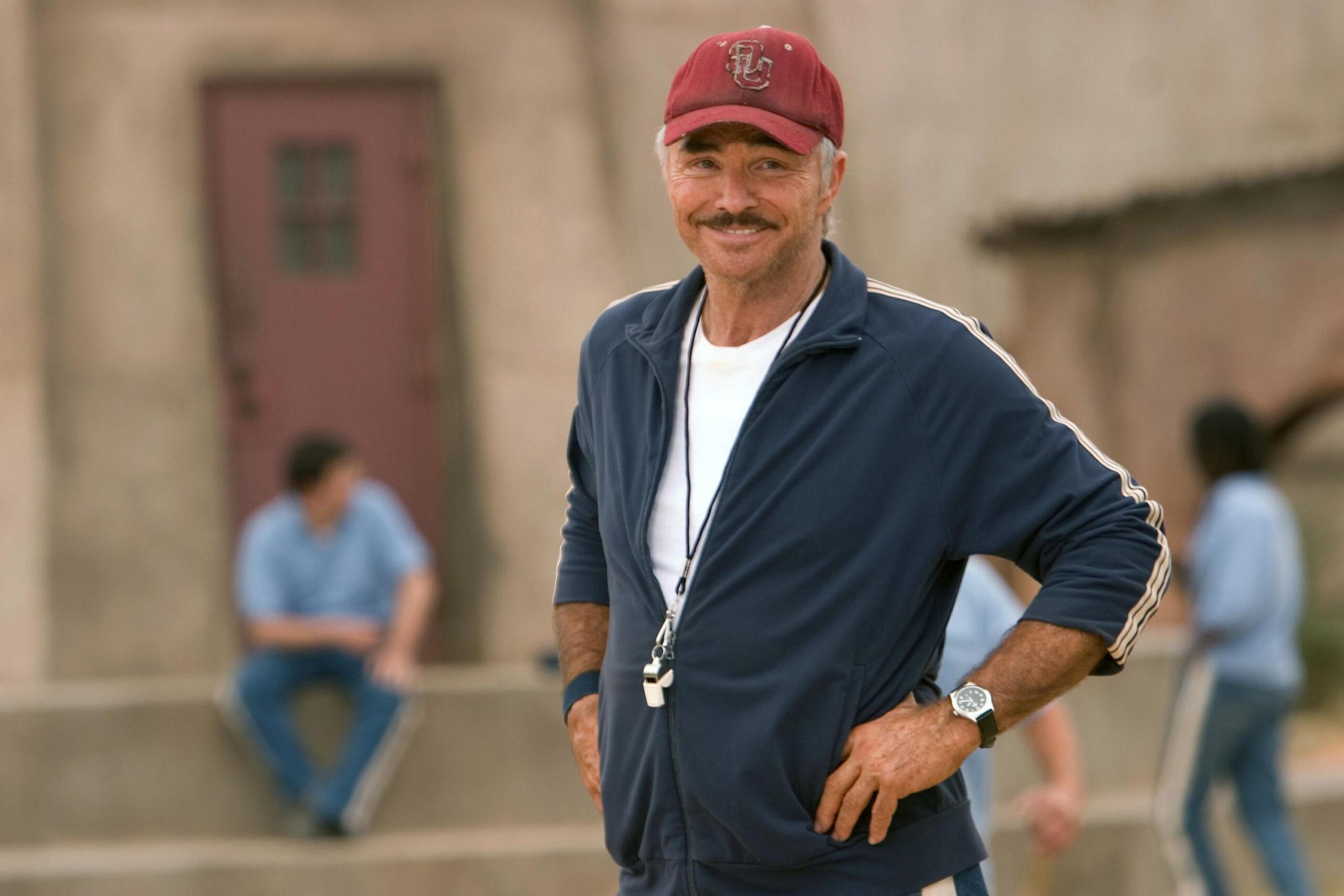
Paul Crewe (Adam Sandler) obviously deserves a significant share of the credit for coaching the Mean Machine team, but this group was in shambles before Scarborough (Burt Reynolds) brought some legitimacy to the program. It’s Scarborough’s idea to recruit more talented (or violent) players to the team, and he makes the key strategic decision during the Mean Machine’s comeback in the game against the guards. Remember Sean Payton’s surprise onside kick that helped the Saints beat the Colts in Super Bowl XLIV? Scarborough did it first—putting Brucie on kickoff duty, knowing that he’d shank the kick and give his team a chance to recover. He comes up with a Philly Special–style play for the game-winning two-point conversion, with Crewe feigning confusion at the line of scrimmage before a direct snap to the back, who tosses it to a wide-open Crewe in the flat. It’s also Scarborough’s idea to run the fumblerooski that ties the game, setting up that ballsy two-point attempt. I have plenty of nits to pick with Scarborough’s coaching decisions, including two questionable fourth-down calls and his choice to go to Brucie at quarterback when Crewe fakes a knee injury to get out of the game. Encouraging his players to use brass knuckles and other dirty tactics against the guards puts the Mean Machine in an early hole. But it’s Scarborough’s coaching that gets them out of it.
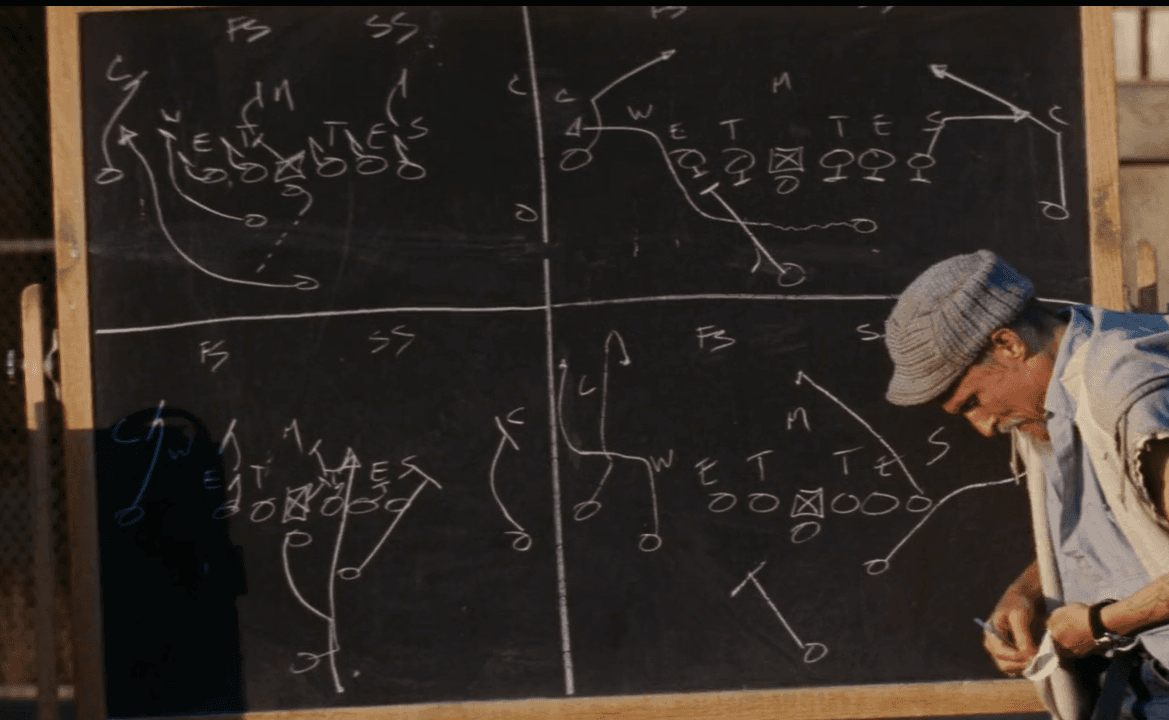
X’s and O’s: While it’s never explicitly stated, it appears that Scarborough runs a West Coast–style offense that uses under-center formations and quick timing passes. The diagrams we see during a practice look straight out of a Bill Walsh playbook.
Scarborough leans heavily on his most talented playmakers. There are only one or two plays in the final game that aren’t designed for Earl Megget (Nelly) or Deacon Moss (Michael Irvin). Given the fact that both were later additions to the roster, it’s impressive that Scarborough immediately integrates them into his offense.
Locker room management: Crewe does most of the heavy lifting here, and Scarborough’s attempts to get his quarterback’s head back into the game fall flat.
NFL comp: Sean Payton
4
Air Bud: Golden Receiver (1998)
Jimmy Fanelli, Fernfield Junior High Head Coach
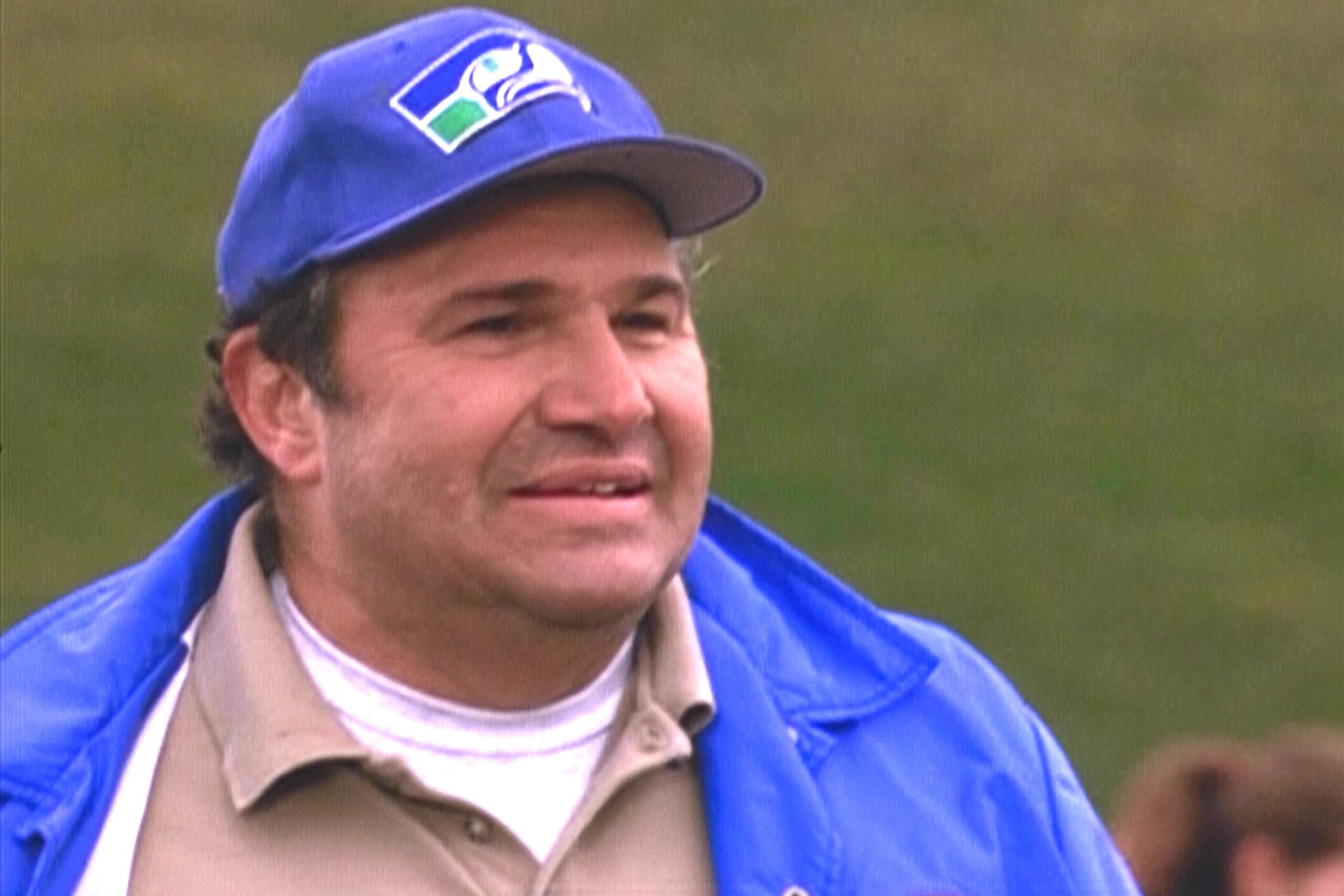
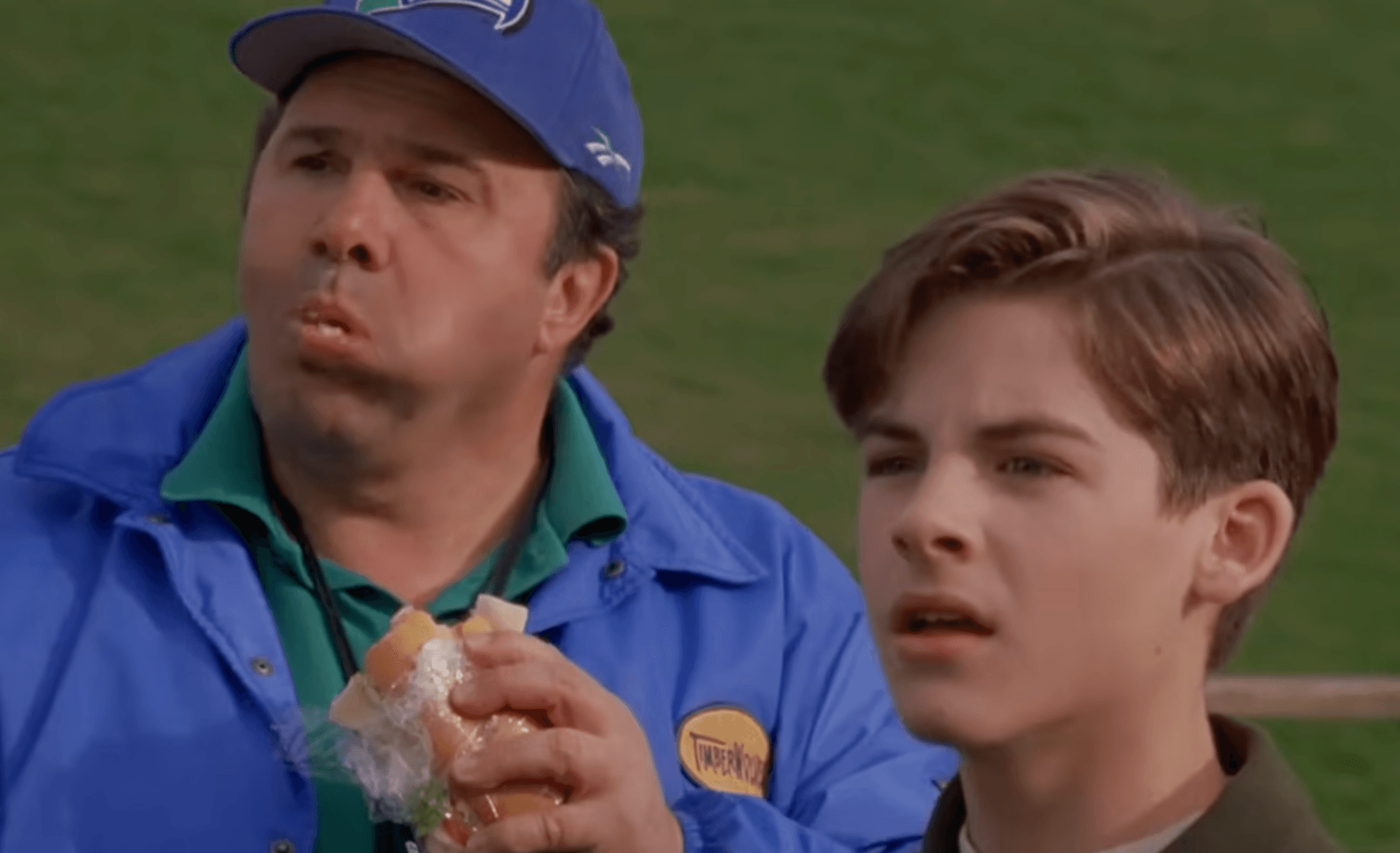
Fanelli (Robert Costanzo) doesn’t look the part of an offensive genius. He’s initially presented as a buffoon who hasn’t had a winning season in a decade. And the movie really wants you to know this guy is Italian, to the point that he’s eating a hoagie in every scene he’s in. Even on the sideline.
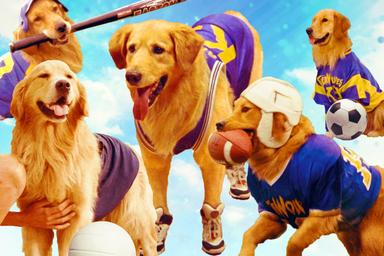
But underneath the problematic stereotypes is a damn good football coach and offensive mind. There aren’t many coaches who are flexible and open-minded enough to integrate a dog into their scheme. Fanelli? He does it seamlessly in just one practice! The offense takes off with Air Bud in the fold, but it was already showing potential before his arrival. Timberwolves receivers had been running wide open all over the field—and when they add a pass catcher who can track the ball and haul it in, Fanelli’s passing game becomes unstoppable. Air Bud will get a lot of the credit for this team’s success, but I’ll be honest: He’s a terrible route runner who’s sloppy getting in and out of his breaks. Fanelli’s play designs do a lot of the heavy lifting to get Buddy open downfield. And that dog is wide-ass open. There isn’t a defender in sight whenever Air Bud is shown catching the football.
X’s and O’s: Fanelli runs an expansive offense. The Timberwolves system is powered by the deep passing game, but we also see quarterback runs, option concepts, and plays that get the team’s canine star the ball in space, where he’s awfully difficult to bring down—mostly because he’s running on all fours.
Locker room management: Again, how many coaches would welcome a dog into their locker room without letting it be a distraction? Beyond his play calling talent, Fanelli is a caring head coach who looks out for his players. He picks up on the fact that Josh Framm, Air Bud’s owner, is bummed out that his mom has a new man in her life. When Josh tries to run away to San Francisco, it’s his coach who tracks him down and convinces him to stay—all while housing an Italian sub.
NFL comp: Andy Reid

3
The Program (1993)
Sam Winters, Eastern State Head Coach
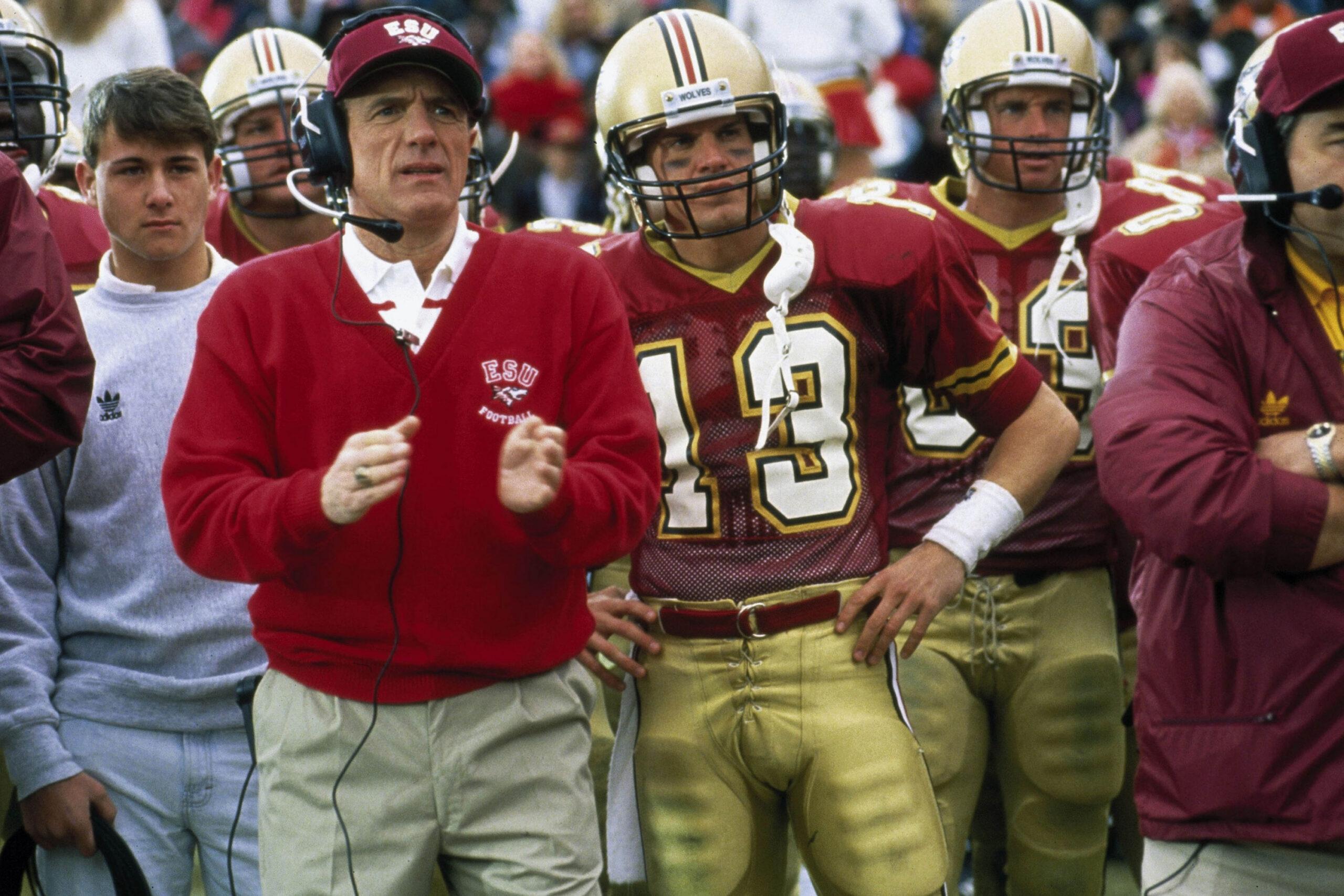
The vultures were circling around Sam Winters (James Caan) heading into a crucial 1993 season, and the Eastern State head coach responds with a masterful coaching job that ends with a conference championship and a trip to a major bowl game. It’s remarkable what Winters’s team is able to overcome:
- Joe Kane, ESU’s Heisman hopeful quarterback, developing a drinking problem, getting in a bar fight, and getting pulled over for drunk driving. Winters gets him checked into rehab, which sidelines Kane for four games.
- All-American linebacker and first-round draft prospect Alvin Mack suffering a career-threatening injury right before the biggest game of the season.
- Starting defensive tackle Steve Lattimer being on steroids and physically assaulting a woman during a dorm party, after which Winters suspends him against the wishes of his assistant coaches.
- His two running backs fighting over Halle Berry and getting into a physical altercation during halftime of the biggest game of the season.
ESU’s locker room is a mess, but Winters doesn’t let it derail the season. More impressively, he manages to maintain some semblance of integrity and morality when making program-altering decisions.
X’s and O’s: Winters calls the plays for ESU’s offense, and the results are mixed throughout the season. The Wolves lack playmaking talent outside of freshman tailback Darnell Jefferson, who starts the season as a backup, so Winters employs a ball-control offense built around bigger personnel groupings. It’s the most viable approach, given that Kane is playing inconsistently and misses extended time. Winters finally shows his creativity against Georgia Tech, when he puts two halfbacks on the field to increase the team’s speed. The two-back lineup of Jefferson and Ray Griffen is instrumental in the comeback.
Locker room management: Winters is tough on his team, but he also shows the players that he cares. He’s the only member of the team who visits Alvin in the hospital after his injury. He’s the only one willing to hold Lattimer accountable when it becomes apparent he’s juicing. He gets Kane the help he needs, even when it threatens ESU’s season, and restores Kane’s confidence after a shaky start to the second half against Georgia Tech. Say what you want about Winters’s X’s and O’s, but the veteran coach knows how to keep a locker room together.
NFL comp: Mike Tomlin

2
Wildcats (1986)
Molly McGrath, Central High School Head Coach
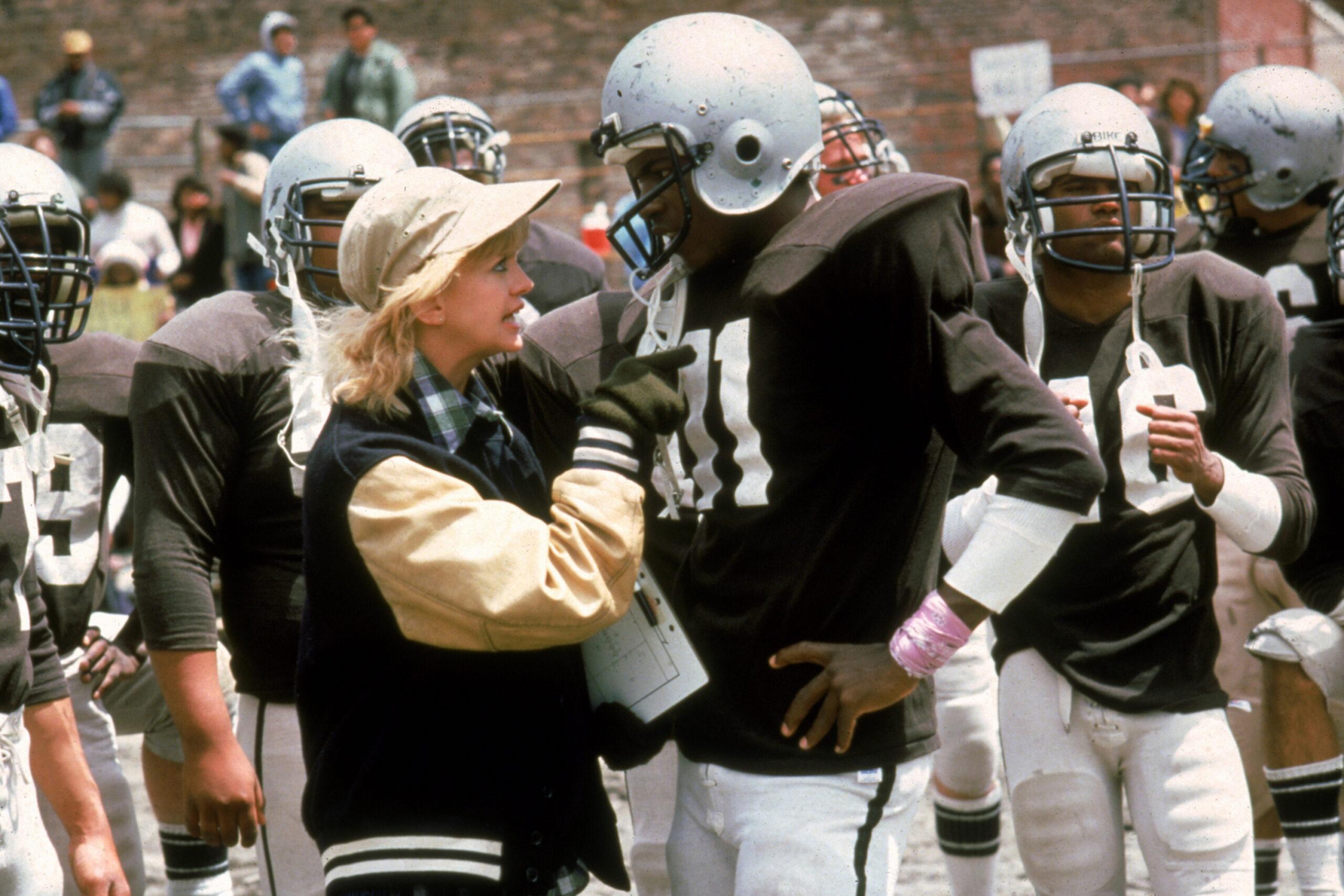
Nobody wants McGrath (Goldie Hawn) to succeed at Central High. Her ex-husband starts a nasty custody battle over their two daughters that he offers to end if she quits the job. Her former colleague at Prescott High—who set her up with the job, thinking she would fail—wants her fired. Even the players try to push her away with some problematic antics that should have led to charges of sexual harassment or assault. Her first interaction with the team ends with every member of the roster flashing their dicks. Unsurprisingly, this movie is loaded with an unmistakably ’80s brand of sexism, but that only makes it easier to recognize McGrath’s coaching talent. Even with the deck stacked heavily against her, McGrath quickly wins over the locker room and turns the team into a winner. After dropping a heartbreaker in its season opener, Central doesn’t lose another game.
McGrath is a ball knower and a coach’s daughter who’s been around the game her whole life. She really knows the run game, blending her father’s “sweep” series—which was ahead of its time, according to McGrath—with a split veer concept. It’s one thing to know the schemes and be able to draw them up on a chalkboard, but McGrath can also explain them clearly and concisely. Watch her make some halftime corrections after the team struggles to execute the veer in the first half of its opening game.
That entire room of creeps is totally locked in.
X’s and O’s: The run game is the centerpiece of McGrath’s offense, but after she convinces Bird Williams—a talented quarterback who quit the team to focus on his side hustles—to play, we see that she’s got some good ideas in the passing game, as well. Most of Williams’s passes come off of play-action and take advantage of the defenses that load up the box to contend with the Wildcats’ diverse run scheme. I doubt this offense would be overly effective in the modern era, but it’s perfect for ’80s high school football.
Locker room management: Despite their initial skepticism, the roster of misfits buys into McGrath’s culture and rides for their coach. The entire team shows up at her custody hearing to vouch for her character.
NFL comp: Sean McVay
1
Remember the Titans (2000)
Herman Boone, T.C. Williams Head Coach
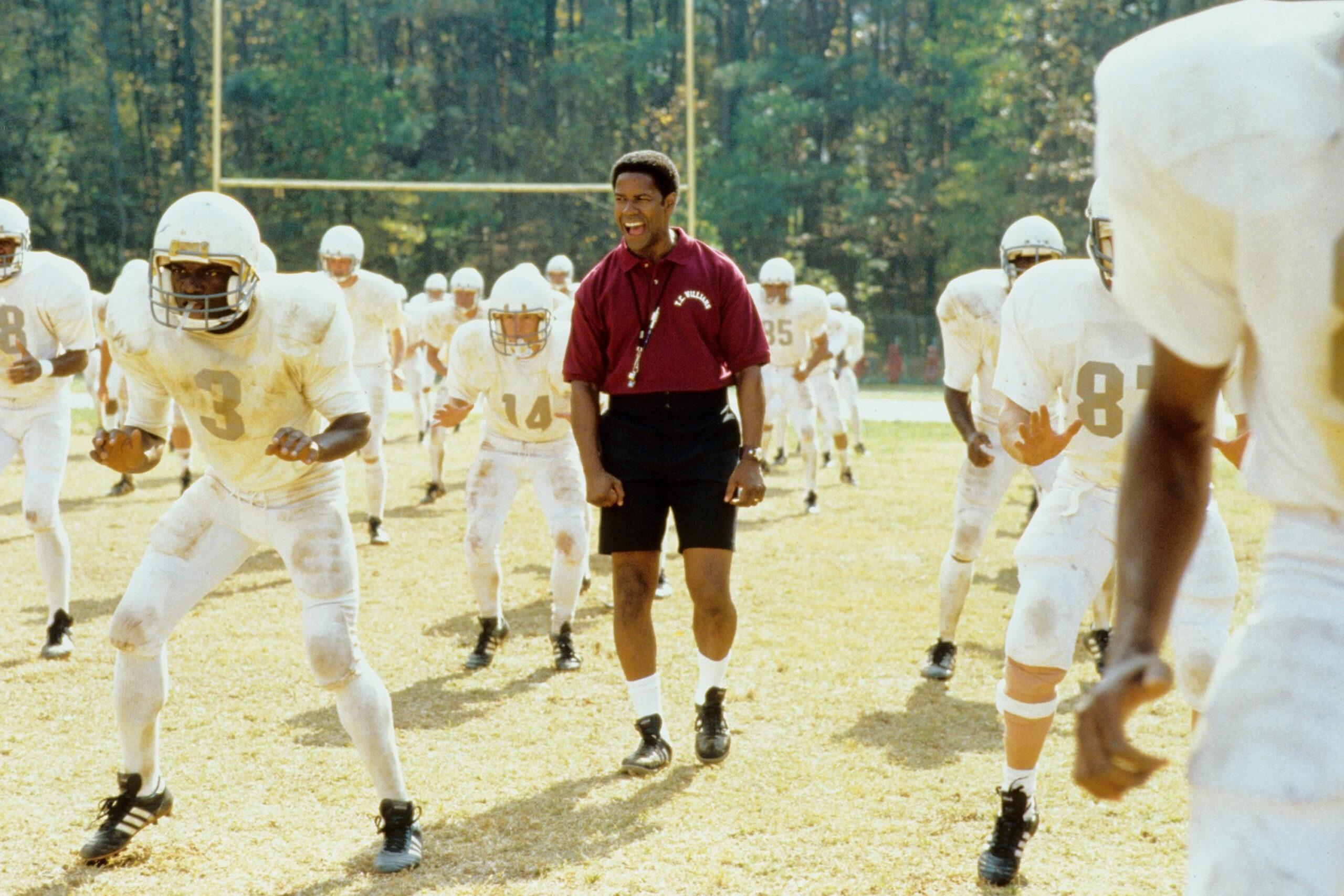
I always forget how freaking good Denzel Washington is in this role. I’m convinced that he could lead a successful high school program just by delivering his lines from the script. Boone was a real-life coach, but the movie takes some liberties with his motivational tactics. His speech to the team after an early morning run in Gettysburg? That didn’t actually happen. That camp also wasn’t the first time the newly integrated roster practiced together. The Ray character, who was so racist that he intentionally missed a block, injuring quarterback Rev Harris, didn’t exist. A lot of Boone’s best coaching moments were made up, but we’re not judging the real-life T.C. Williams coach. We’re judging the one Disney came up with—and that coach is one of the best motivators in fake football history.
Boone is an inspirational mastermind first and foremost, but don’t sleep on his tactical acumen. He’s an offensive-minded coach who won “four or five” state titles before leading the Titans to a 13-0 record and a state championship in his first season of Triple-A Virginia ball. And while Boone oversees the offensive side of the ball, his defensive adjustments in the state title game help his team shut out Marshall in the second half. There isn’t anything Boone can’t do. At one point in the movie, he says, “I’m not Jesus Christ, Martin Luther King, or the Easter Bunny,” but I don’t know. I’ve never seen any of those three win a state title.
X’s and O’s: He runs a split veer system built around just six plays, but it’s a cohesive offense that puts opposing defensive coordinators in hell once Ronnie Bass takes over at quarterback. Bass unlocks Boone’s offense, which was mostly limited to option runs before the injury to Rev Harris. We still see those option runs, but Bass allows Boone to open up the passing game, and the play fakes off of the veer action give opponents all sorts of issues.
Locker room management: I mean, the guy basically solves racism in a matter of days.
NFL comp: Ben Johnson