VAR Is My Mortal Enemy and Should Be Yours, Too
Four incontrovertible reasons we should fire soccer’s replay review technology directly into the sunVAR Is My Mortal Enemy and Should Be Yours, Too
Four incontrovertible reasons we should fire soccer’s replay review technology directly into the sun
And so here we are. The World Cup finalists are set. After two compelling semifinals—one marked by France’s inability to cope with Spain’s discipline, the other marked by England’s tactically questionable decision to stop playing after 65 minutes—Argentina and Spain will face each other on Sunday for the biggest prize in sports. It’s been an amazing tournament, full of astounding underdogs, late plot twists, and dazzling goals. For all its many glories, though, there’s one less-than-glorious issue we need to talk through before the curtain rises on the final: namely, how absolutely fucking horrible VAR has been.
It’s time to abolish VAR. The reason is that VAR sucks. It makes soccer consistently less fun without making it consistently more fair. It’s slow, capricious, frequently self-defeating, and contrary to the spirit of the game. One of its main functions is to increase trust in the way soccer is officiated, yet as we’ve seen at this World Cup, it overwhelmingly does the opposite. Disagree? Consider that over the past month alone, VAR has been responsible for at least two of the most pervasive conspiracy theories I’ve ever seen in the sport, convincing literally millions of people that FIFA has rigged the tournament in favor of Argentina. A trust-enhancement system that destroys trust may sound like a bad idea, but VAR doesn’t stop there. It also makes soccer more alienating and less thrilling to watch. Get it out of here!
VAR, for those who don’t know, stands for “video assistant referee.” Technically, the acronym refers to a person—there’s also an AVAR, the very reasonably named assistant video assistant referee—but I’m using it the way most people do, to refer to the whole video-review system that’s in place across high-level soccer. Two officials sit in a booth looking at video of the match; if they think the referee has missed a call, they can tell the referee to go look at a replay on a little screen on the touchline, after which the call might be changed. However—and please prepare yourself, because like most things involving VAR, this is painfully stupid—there are only four scenarios VAR is permitted to review. They are:
- Should a goal be allowed?
- Should a penalty be given?
- Was a card shown to the wrong player?
- Should a player be given a straight red card?
If you’re looking at that list and thinking, “Wow, it seems like this would create circumstances in which VAR literally can’t produce a correct call!”—say, when a referee reviews a tackle and sees that it should have been a yellow card, but under VAR rules can only do nothing or show a red; we’re going to encounter this as a real-world situation in a minute—you are right. As an impatient person and a disbeliever in the possibility of human systems ever being perfect, I’m generally against all technology-assisted officiating in sports unless it’s instantaneous. (Automated line calls in tennis? Great. Eight seasons of legal drama to determine whether a tight end caught a ball? Seal it in a tomb and bury it in the desert.) But FIFA’s approach with VAR is particularly infuriating.
Here’s a short list of ways VAR has made the 2026 World Cup noticeably, painfully worse:
1. By replacing smaller controversies with larger ones
Let’s look at arguably the biggest VAR house fire at the tournament so far: U.S. striker Folarin Balogun’s second-half red card in the USMNT’s round of 32 match against Bosnia-Herzegovina. (And yes, the fact that I have to use “arguably” for what will surely go down as one of the most controversial incidents in World Cup history should tell you something about how contentious this summer’s video reviews have been.) Balogun stepped on the ankle of Bosnian defender Tarik Muharemovic. The collision was a matter of bad luck and split-second timing; both players were going for the ball. Most observers, including professional referees and rules experts, thought Balogun should have been shown a yellow card at most. The referee initially let the tackle go but was then alerted by VAR that he should look at the video. At this point, remember, he was not allowed to issue a yellow card, because yellows are beyond VAR’s purview. His choices were to do nothing, a bad call, or to send Balogun off with a red, also a bad call.
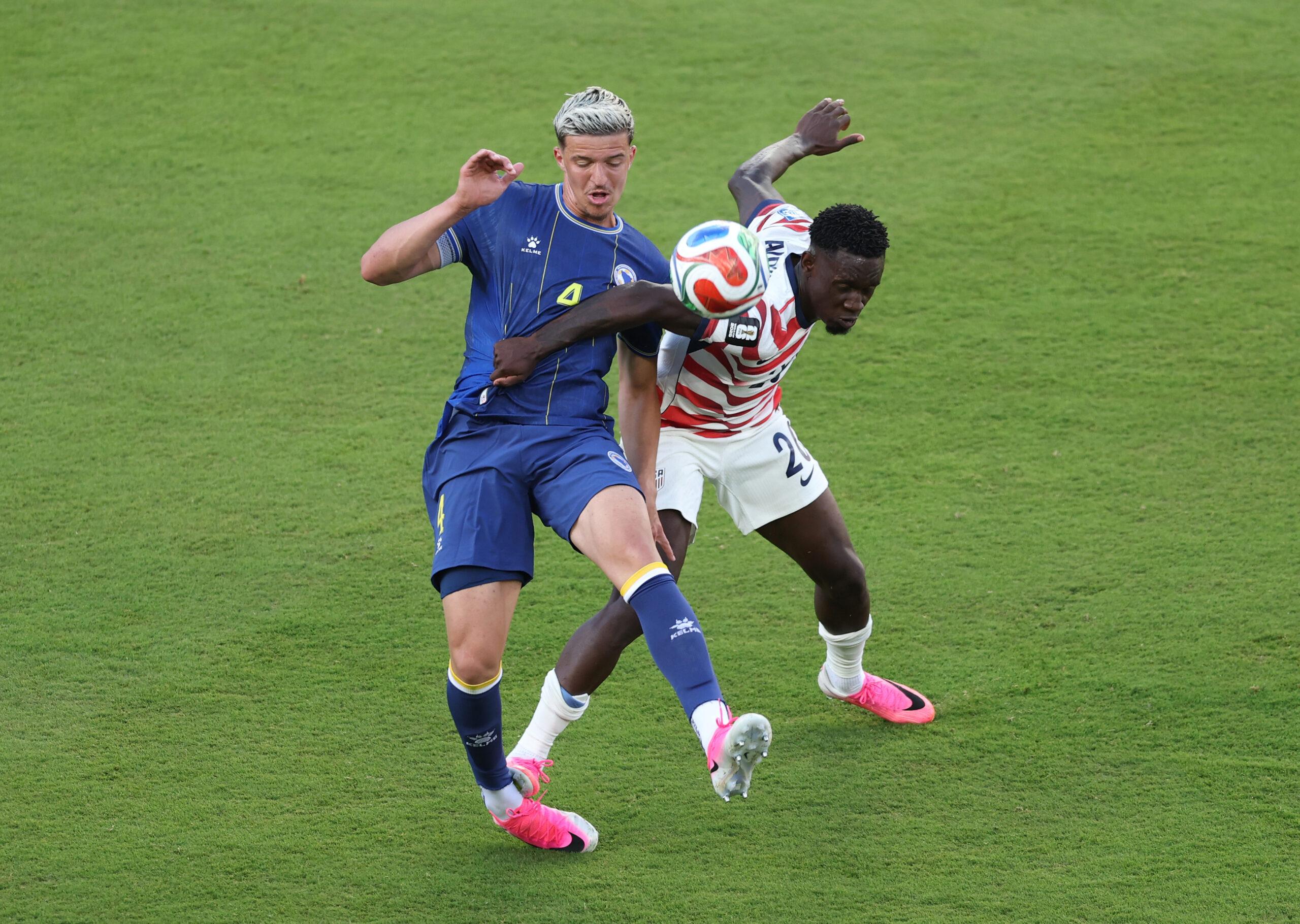
Folarin Balogun fouls Tarik Muharemovic
He chose red. You know what happened next. Donald Trump spoke to FIFA president Gianni Infantino about Balogun’s red card, which would have forced the striker to serve a one-game suspension, ruling him out of the USMNT’s round of 16 match against Belgium. A notionally independent FIFA commission decided to let Balogun play. A global outcry ensued. It’s not VAR’s fault that Trump and Infantino are corrupt. Nevertheless, FIFA’s system for getting calls right led directly to the perception that the game was being manipulated by the whims of powerful men—and did so without even getting the call right.
If the cashier at McDonald’s reaches over the counter and yanks my Big Mac out of my hands, he’d better be planning to correct a mistake with my order. In this case, he disappeared for 15 minutes, somehow managed to alienate a billion or so people, and still gave me a burger without pickles. Thanks to VAR, what would’ve been a run-of-the-mill, semi-controversial tackle, something to look at fleetingly during post-match highlight reels and then forget the next day, blew up into an international incident that will damage trust in the game, and understandably so, for years to come.
2. By playing arbitrary games with time
Consider another candidate for the World Cup’s most controversial VAR incident: Mostafa Ziko’s disallowed goal in the 58th minute of Egypt’s round of 16 match against Argentina. The goal would have given Egypt a 2-0 lead over the defending champions. After VAR intervention, however, the referee waved it off, saying Egypt’s Marwan Attia had fouled Argentina’s Lisandro Martínez during the preceding passage of play. And Attia had fouled Martínez. The problem, for soccer fans, was that he’d done so almost 20 seconds earlier and 100 yards away, at the opposite end of the pitch. How far back in time can the referee go in deciding whether a goal is a goal?
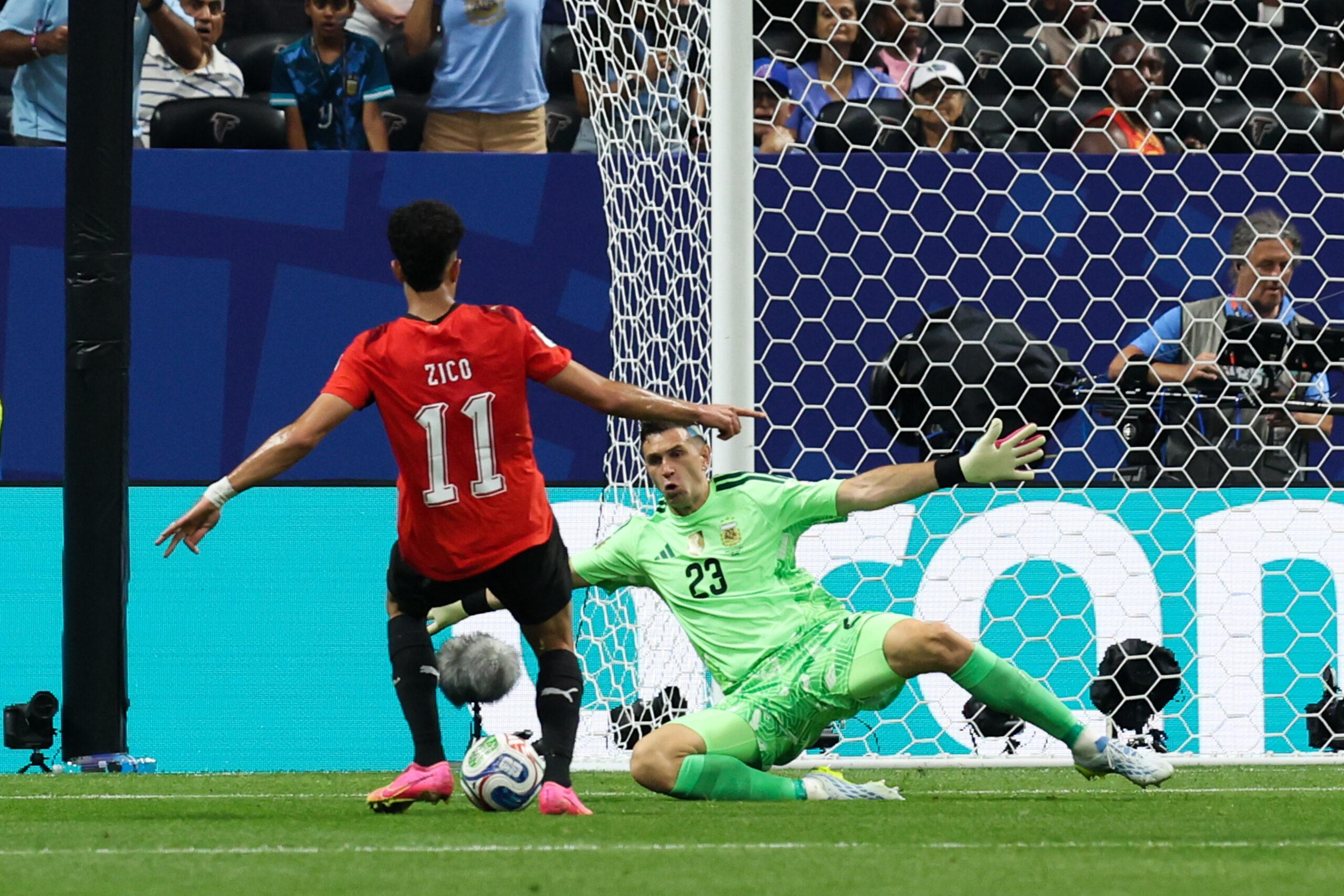
Mostafa Zico scores a goal that is later disallowed following a VAR review
The call wasn’t indefensible—Attia’s foul had occurred as he won the ball, initiating Egypt’s counterattack—but it created a sense of absurd contingency. Uncalled fouls happen constantly in soccer, and every incident in a match changes what comes after. If you looked back far enough, couldn’t you rule out any goal? Has there, in fact, ever been a perfectly legal goal scored from open play? If we start tracing the alternate timelines created by missed fouls, won’t we be likely to find that the entire history of the game is invalidated? Would VAR kill baby Hitler???
So why choose this to excavate like an archaeological dig? It felt like taking a touchdown off the board in an NFL game because a video review showed a left tackle flinched before the snap six plays earlier at the other end of the field. And because several other judgment calls went against Egypt, including VAR’s decision not to review a possible foul against Mo Salah in the box near the end of the game, it’s not shocking that the call helped create a rapidly spreading conspiracy theory claiming that FIFA is using VAR to rig the World Cup for Lionel Messi and Argentina.
Fortunately, VAR produced only one data point supporting that outrageous conclusion, right? Well …
3. By getting excessively cute about the letter of the law
Consider yet another VAR-induced nightmare, this one from Argentina’s very next game, a quarterfinal match against Switzerland. Five minutes after the Swiss leveled the match at 1-1 in the second half, the referee showed the Argentine midfielder Leandro Paredes a yellow card for a foul on Switzerland’s Breel Embolo. VAR stepped in; the replay showed that Embolo had been falling before he was touched. Again, VAR’s inanely conceived four-point list of reviewable scenarios meant that the referee couldn’t simply rescind Paredes’s yellow and maybe give Embolo a warning. He could only uphold the card, clearly a bad call, or—using the “mistaken identity” scenario, under which VAR can intervene if the wrong player receives a caution—transfer it to Embolo. He chose the latter. And because Embolo had already been shown a yellow card in the match, the Swiss player had to be sent off. Just as Switzerland seemed to be taking control of the match, they found themselves playing with 10 men. Argentina, of course, won.
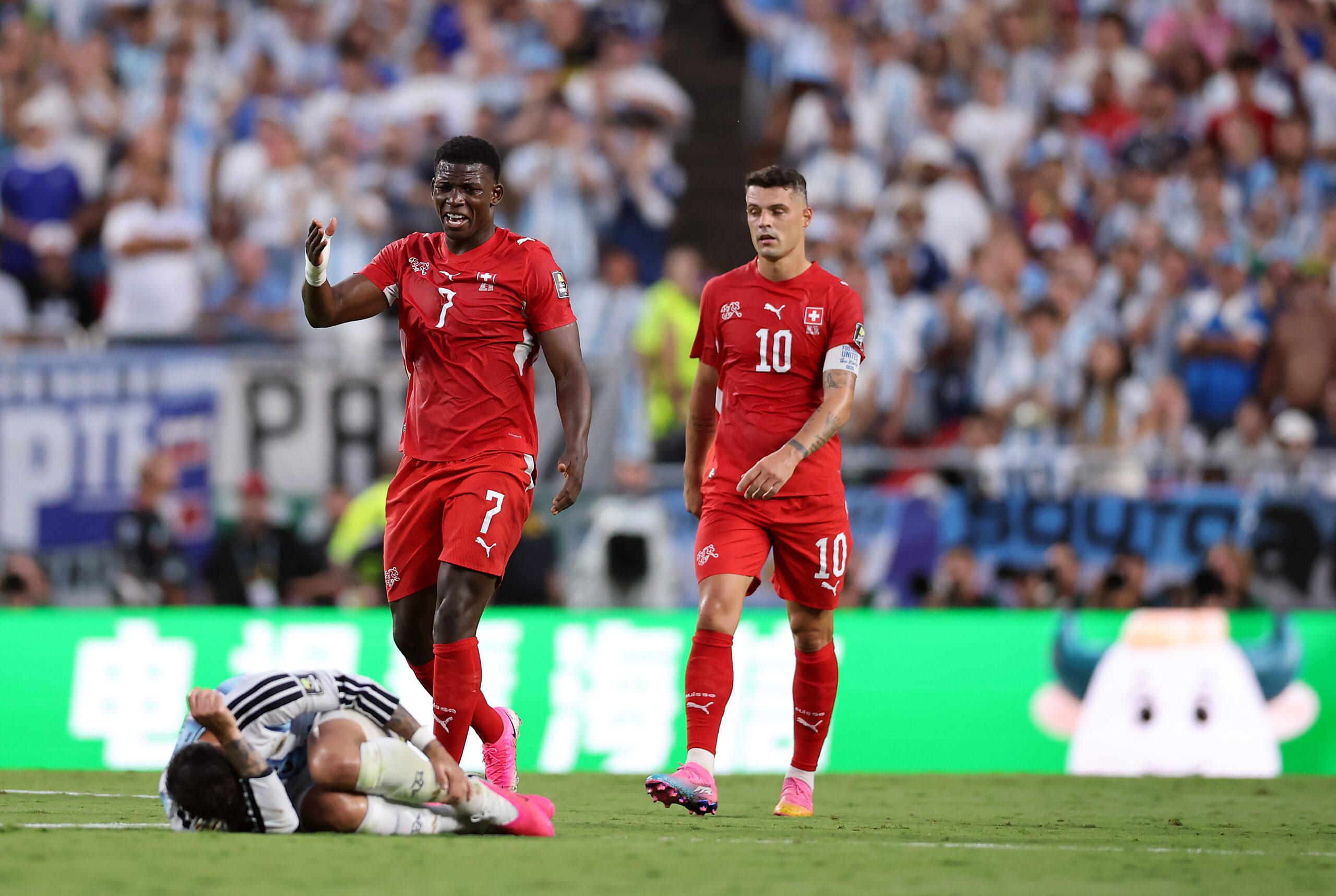
Breel Embolo and Leandro Paredes
Once again, the call was defensible. Embolo clearly dived. The problem was that before this World Cup, the “mistaken identity” provision was used almost exclusively to make sure that a player wasn’t mistakenly booked for a foul committed by a player on the same team; to send Embolo off like this was a strange new use of the rule, albeit one that was within the strict limits of the law. Embolo’s dive would have been equally flagrant if the referee hadn’t shown Paredes a card at all, but in that case, there would have been no mechanism for VAR to even look at the incident.
Was it fair for Embolo to be sent off for a very typical act of simulation—not, after all, the first such act in this tournament—just so the referee could reverse his bad call against Paredes? Was it fair for Switzerland’s whole World Cup to be torpedoed by an eccentric new use of an established rule—one that, once again, benefited the defending champions and their ratings magnet of a star player?
I don’t really think the World Cup is rigged for Argentina, and even I’m sitting here like, Hmmm. Convenient!
4. By taking us all out of the moment
The biggest problem with VAR has nothing to do with any specific intervention. The biggest problem with VAR is how it affects the way we experience the game as a whole, including the parts that don’t involve VAR at all. Watching sports is about being in the moment. The entire appeal of spectator sports is that you will get to see exciting things and have strong feelings about them. A player scores a sensational goal. You jump up out of your seat. You scream. You hug someone. You can’t feel your face. The World Cup feels most magical at those times when a billion people are collectively sharing a transportive experience. Maybe some of us are feeling joy and some of us are feeling anguish, but we all know that anguish is part of the deal. Sports promise us intensity, not happiness. At its best, the World Cup joins us in an almost unbelievable intensity; we are all here, in the moment, together.
How does VAR affect that magic? I can speak only for myself, but I increasingly find myself holding off, hanging back, not reacting to what should be thrilling moments—or if I do react, it’s with one eye on the referee, waiting to see if the thing I’m reacting to will be allowed to stand. Once confirmation comes, the excitement is a bit more muted than it would have been otherwise, a bit less spontaneous. And I hate this! Of course, as an inconsistent idiot, I’ll always celebrate when a reversed call benefits my team. On a philosophical level, though? I’d rather be burned by the occasional on-field injustice than spend my whole soccer-watching life glancing over my shoulder to see if an accountant is about to cancel my emotions.



More on the World Cup
Constructing a framework for rules enforcement in sports inevitably means trying to find the right balance between entertainment and accuracy. “Getting the call right is the most important thing,” I hear you say—or anyway, I hear Joe Buck say, in my nightmares—but you don’t actually believe this. I can prove it to you in five seconds: Imagine a world where every video review led to the correct call but also took six hours to complete. Would you take that trade-off? No, because you understand that there is something more important than getting the call right, and that is letting you enjoy the game without crumbling to dust on your sofa like the Grail Knight at the end of Last Crusade.
Getting the call right isn’t the only important thing; your viewing experience also matters, and a video-review system that makes you less engaged with the game even when it’s not being used is a serious blow to your viewing experience. And here’s the real coup de grâce: VAR is doing this without unambiguously getting the calls right, especially in big moments. Let’s say that one more time, for emphasis:
VAR is making the game less fun without making it consistently more fair.
FIFA built a trust-enhancement machine whose main product is paranoia, and it makes its entertainment product less entertaining. Great work!
Obviously the conundrum posed by video review isn’t unique to soccer. As the stakes of professional sports keep getting higher—so much money, so much cultural attention; maybe more to the point, so many angry gamblers—both the leagues and many fans have lost touch with the idea that these games are pastimes, meant to add a little spice to your day rather than yet another vector for life-or-death solemnity. Everything in sports has become so serious, with the result that the people who run things are increasingly choosing to prioritize accuracy, or at least the appearance of pursuing accuracy, over entertainment. NFL games feel like legal conferences punctuated by minor flurries of football; NBA games turn into weird mediations on whether a dude’s head getting clanked by a leaping man’s pelvis rises to the level of a flagrant 1.
At this point, we’ve all spent too much of our lives staring at middle-aged men in referee business wear crouching over tiny TV screens. We’ve all noticed that often—unsurprisingly often, since the rule books of modern sports aren’t able to cope with the speed and power at which they’re played—this legal theater fails to produce a judgment even experts can agree on. Video review, much of the time, is like taking your shoes off at airport security. It looks important. It does nothing to make you safer in the air.
There’s one last reason to abolish VAR. I’m not including it on the official list because it hasn't been an issue at this World Cup. But I think it’s worth taking seriously. We’re already getting far too comfortable with long pauses in soccer games, and I’m worried that anything that normalizes play stoppage will eventually be used to introduce more commercial breaks into the game.
Think about this. For decades, one of the coolest things about soccer has been that the clock stops only once, at halftime. As a result, play seldom halts for more than a few seconds at a time. For Americans, this makes for a dizzying contrast with most of the sports we watch on TV. Don’t get me wrong: I love NFL games, but we both know the NFL viewing experience is 15 minutes of action in a three-and-a-half-hour sack. I love watching NBA games, but the last 10 seconds of a close playoff game take 20 minutes to play, and eight of those are eaten up by ads about letting AI handle the business of your data so you can handle the business of your business.
A soccer game, by contrast, could traditionally be trusted to pack 90-plus minutes of play into just a couple of hours of your life. For fans who like the “watching sports” aspect of watching sports more than the “learning about the latest ways to treat moderate-to-severe plaque psoriasis” aspect of watching sports, this is an unbelievable blessing. For FIFA, an organization famously not nose-blind to the scent of profit opportunities, it must be maddening. So many chances to hawk prediction markets going to waste! I imagine Infantino looking at NFL telecasts and salivating at the mere thought of emulating their structure. Most of the conspiracy theories about the World Cup may be overblown, but you’d have to live in a children’s cartoon to believe that soccer’s broadcast rights holders aren’t keenly interested in ways to squeeze more advertising into the game. (The children’s cartoon would also have frequent commercial breaks.)
In fact, we’ve already seen the results of such exploration in the form of the World Cup’s hydration breaks, where more advertising is being smuggled into some broadcasts under the unimpeachable cover of protecting players’ health. Is it really implausible to think that ads during VAR reviews may not be far away? All those minutes standing around while a guy looks at a monitor—couldn’t they be better spent trying to convince me that David Beckham loves Home Depot? And once we’ve accepted that there are scenarios during which a gamecast will cut to commercials during the half, why not do what other sports do and start baking in regular clock stoppages just for that purpose?
Maybe I’m the paranoid one here, but I value soccer’s outstanding action-to-ad ratio extremely highly, and I don’t trust FIFA to protect it. I mean, think of what you know about the people in charge of global soccer. Are you confident that they won’t test the limits of what their audience will let them get away with? Do you really think they have too much integrity to do that to the game?
They don’t. But even if they did, the World Cup deserves better than VAR. Soccer as a whole deserves better. The game captivates us by taking human imperfection—the literal clumsiness that results from not being able to use our hands—and turning it into something graceful and beautiful. To police the sport by making something ugly and bungling out of a perfection-seeking technology may be an irony worthy of FIFA, but it isn’t worthy of the rest of us.