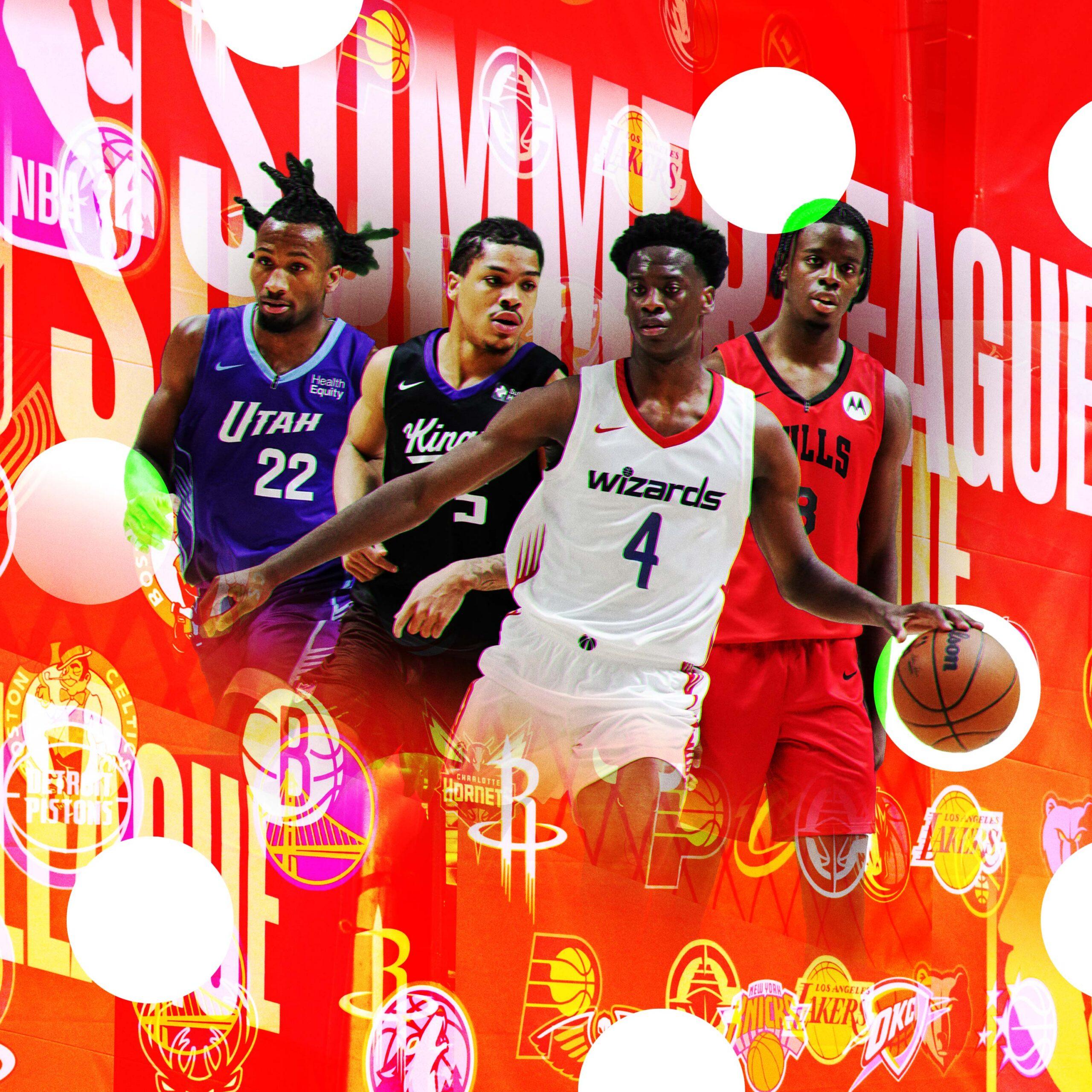

Summer league is a funny thing. The games almost objectively don’t matter from a wins and losses perspective, yet the results create such emotional resonance in the beholder. Las Vegas can be the start of something extraordinary. It can also be the beginning of the end. There are more missed field goals than a normal NBA game. More turnovers, more fouls (but fewer foul shots). The top two picks in the draft, AJ Dybantsa and Darryn Peterson, both shot below 40 percent from the field during the tournament. Still, we marvel at their talent. Dybantsa demonstrated his unique craft, balance, and fluidity as a driver—as SGA-adjacent as a player can be at nearly 6-foot-10—while also showing off the defensive playmaking chops that were curiously few and far between at BYU. Peterson’s ability to dictate pace is already star-quality, as are the blitzes he’s already being subjected to; he tap-dances to his spots like he’s walking on water, and his pull-up from all areas of the floor is advanced beyond his years—but he can still pierce his way into the lane and cram it on a defender if need be.
Inefficiency, in and of itself, at this stage of play isn’t all that meaningful. Actually, the inefficiency is kind of the point. The featured portion of the player pool consists of young men just weeks removed from fulfilling a childhood dream, largely playing with a bunch of strangers on haphazard rosters assembled in less time than it takes to complete a trade in your fantasy football league.
That isn’t to say that pristine and efficient play can’t be celebrated—we’ll get to plenty of that shortly—but as unrefined and sloppy as it can appear, we watch summer league for moments of game action that show flashes of a player’s intrinsic style. We’re looking for windows into the soul, road maps in the desert.
Here are some of the strongest first impressions made at the 2026 NBA Las Vegas summer league.
Caleb Wilson, Chicago Bulls
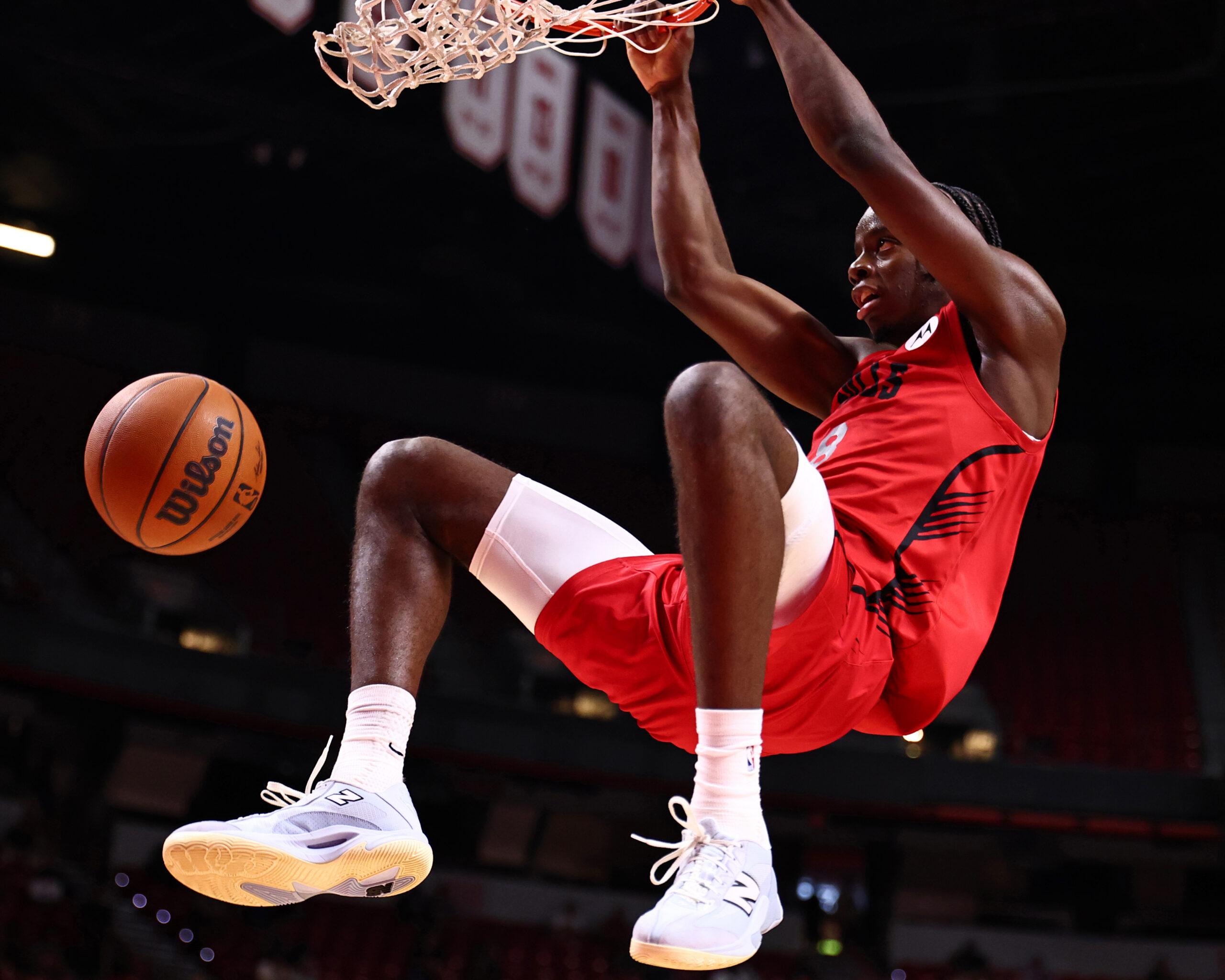
Chicago’s new franchise cornerstone is arguably the biggest revelation of the tournament so far, but my favorite part of the Caleb Wilson experience thus far has been what’s been said by him off the court. There is an undeniable charisma that imbues both his athleticism and his words with a unique edge. I originally compared Wilson to a Gumby-fied Shawn Kemp, but Wilson seems to spiritually identify as the Mark Ruffalo–era Incredible Hulk.
“That’s when I play my best,” Wilson told The Athletic last week. “When I’m mad, I got a reason. As long as I have a reason, I’m gonna play as hard as I can. I always got a reason. That’s my thing.”
Wilson is a stunning athlete, and, with the benefit of one of the greatest summer league debuts in history in hindsight, the way he can bend and contort his body—in addition to his unreal force-generation—should have been a window into the hidden potential of Wilson as a dynamic shot creator. Wilson stunned the world in his first summer league appearance, scoring 35 points and going a brilliant 7-for-11 from behind the arc, matching his career total in 3-pointers at North Carolina in a single game. Elite athleticism isn't in and of itself the holy grail, but it creates a much wider margin for error and a deeper realm of possibility. Wilson had a whole highlight reel worth of gorgeous, on-balance turnaround fadeaways at Carolina that suggested he was a better shooter than his volume or percentages let on. Star-level shots, the kind that become iconic, indelible images in the mind. He’d been categorized as a big throughout the predraft process, but Wilson’s improving range is the kind of development that could change how we all think about positionality moving forward. That doesn’t feel like an exaggeration given the raw tools at Wilson’s disposal.
Wilson, in Game 1 of his NBA career, chose to get ahead of any narrative that he’s just a dunker. It took Blake Griffin years to break that identity marker; Zion Williamson similarly hit 4-of-4 3-pointers in his first career regular-season game, as many 3s as he’s made in 92 games over the past two seasons. It was truly a remarkable performance from Wilson. He just has to prove it wasn’t a one-time deal. In the meantime, here’s an absurd dunk from his follow-up performance:
Meleek Thomas, Cleveland Cavaliers
All hail the new scoring king of Las Vegas, who sure looked like the best Razorback freshman in town, at least in this environment. Over the past decade or so, a player deemed too good for summer league usually plays only two games. But Thomas, a player with a first-round grade on The Ringer’s NBA Draft Guide, might’ve had a bit more to prove as a second-round steal by the Cavaliers. The Razorback diaper dandy, who was drafted 34th overall, has averaged a scintillating 28.3 points (on 50-45.8-100 splits!), four rebounds, 4.3 assists, and 2.3 steals across three summer league games. Thomas has the highest points average among all players who have logged more than two summer league games in 14 years.
There is an irrepressible freneticism to Thomas’s game. It takes no time at all for the 6-foot-3 guard to get his shot off, and he’s regularly pulled up from 30 feet out and splashed his attempts cleanly. The sheer velocity of his play style can make it difficult to predict just how and when he’s going to rise and fire; he demonstrates as much touch on deep 3s as he does on full-throttle runners taking off from behind the free throw line. His self-creation operating at this high a level is a minor revelation, and the sheer dynamism of his shooting talent is something the Cavaliers will have to figure out how to incorporate sooner rather than later.
It’s also a welcome sight to see Thomas’s ancillary skills show up at this level of competition. He’s a disruptor whose hands find their way to steals. And for such a live-wire act, Thomas hardly ever turned the ball over at Arkansas, finishing the season with a 2.5-to-1 assist-to-turnover ratio. He’s maintained that during his time in Vegas.
Now, torrential buckets in Vegas don’t necessarily presage an All-Star career—Thomas’s scoring average is the highest since Jerryd Bayless dropped 29.8 points per game in 2008. But the expectations of an early second-rounder aren’t nearly the same as a lottery selection. The Cavaliers made a smart bet on Thomas’s special combination of touch and athleticism and it already looks to be paying off. There are legitimate superstar creators at the top of Cleveland’s pecking order (not to mention a certain somebody possibly on his way), but the team’s elite offense is sustained on the back of high-volume deep shooting. The Cavaliers have plenty of floor-spacing role players on the roster, but none with as much athletic pop as Thomas. It wouldn’t be a shock to see him fight for a role from the jump.



Darius Acuff, Sacramento Kings
What has made Acuff such a lightning rod during summer league is the dawning realization that much of the thesis of him as a franchise player rests on efficiency. In his first four summer league games, Acuff has shot just 29.4 percent from the field, 23.1 percent from 3, and 62.5 percent from the line, a far cry from the 48.4/44/80.6 he shot in one of the best freshman campaigns of this century.
There are clips from Vegas of Acuff making great use of his length to make an impact on defense. There are also clips of him completely checked out when he isn’t directly involved in the play. This all came with the territory. Projecting Acuff as a net-negative defender was always part of the calculus. But it’s fair to wonder whether Acuff’s shooting slump and questionable on-ball decision-making are indicative of something more elemental. He had jaw-droppingly great games playing in high-intensity college environments against some of the best teams on the Razorbacks’ schedule; maybe the summer league vibe just isn’t getting his blood pumping quite the same.
Or maybe there’s something amiss in his game itself. Acuff’s game isn’t predicated on blow-by speed, but he’s also more of a straight-line mover and lacks a degree of lateral flexibility on drives. That was all mitigated in college by being an absolute flamethrower on and off the ball. But at the NBA level, the ability to get to preferable areas on the court at will is what defines stardom as an on-ball creator. There is a lot of negative space to play with between each of his hard-pounding dribbles, and finding ways to manipulate defenses to the march of his own beat could be a real difference maker.
One of my lower-end, patently unsexy comparisons in The Ringer’s NBA Draft Guide was likening Acuff to Randy Foye, a similarly powerful guard who was a serious shooting threat and one of the great unheralded lob passers of his day. But Foye’s lack of dynamic handling ability limited his pathways to being more than a sixth-man type. We’re nowhere near close to throwing in the towel on Acuff, but this off stretch in Vegas has introduced a wider range of outcomes for the undeniably talented guard. Acuff was billed as a stable offensive engine whose unreal efficiency would render his defensive concerns irrelevant. He still might be that, but it could take time. It took Jalen Brunson four years in Dallas to develop into the kind of player that the Knicks would offer $104 million to back in 2022, nevermind the dragonslayer he’s become in the years since. Given Sacramento’s track record of developing point guards … nevermind. Forget I said anything.
Brayden Burries, Milwaukee Bucks
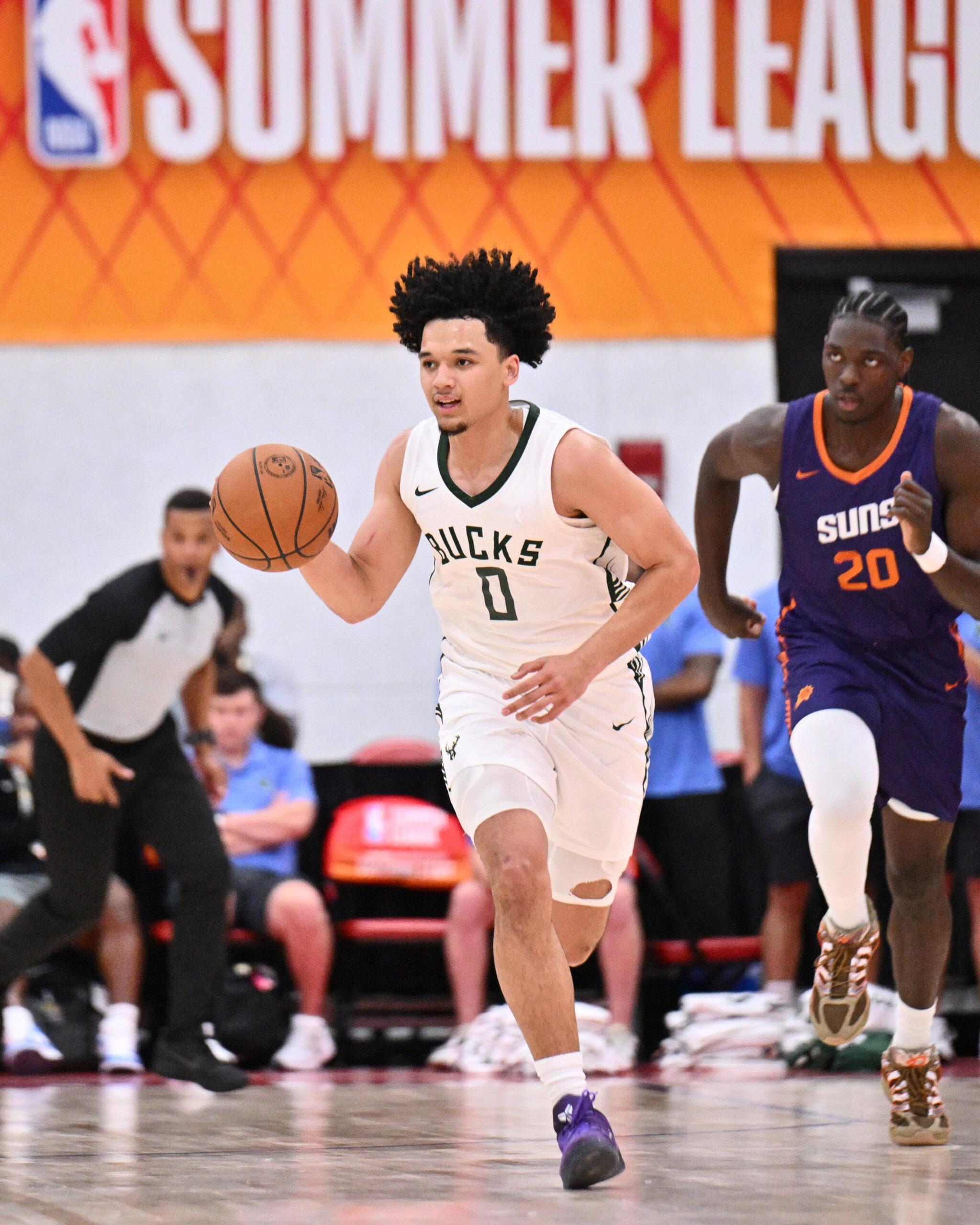
In a draft class overstuffed with guards, Burries might be having the most impressive summer league performance of the lot. The big selling point with Burries was his high floor: He’s always been an absolute dog of a competitor who plays with rare intensity on both ends, and an excellent shooter with poise as an on-ball creator. But in the desert heat, when you add that all up together … he kind of looks like Devin Booker?
Burries is averaging 22.3 points per game in Vegas, shooting 50 percent from the field and 44 percent from 3. He’s making plays on defense, and has a sterling 12-to-1 assist-to-turnover ratio that would even make Monte Morris blush. Whether or not this is sustainable, it’s clear the Bucks have landed a star-caliber prospect worth investing in with the 10th pick. Perhaps the high-floor designation was a hedge against Burries’s advanced age relative to his cohort, and good-not-great physical tools, wherein there are no real outlier traits. But it also could have created the illusion of a false ceiling.
The Brooklyn Nets
I do not wish to speak ill of the Nets. I think they made the right call with the fifth pick by selecting Mikel Brown Jr.—his limitless pull-up shooting range and imaginative downhill playmaking can completely reconfigure Brooklyn’s offensive architecture. Egor Demin is building upon a thesis he’d introduced, seemingly at random, upon getting drafted eighth overall last year: That he’s one of the most promising young shooters in the game, with a frame that is getting strong enough to also be dangerous off the dribble. Two players who exhibit that level of range and creativity is an encouraging foundation. But it’s the other pieces of Brooklyn’s purported future that are cause for concern.
The Nets have seemingly been haunted by mistakes of the past for what is fast approaching two decades now. The front office’s decision to draft five players in the first round last year instead of consolidating or diversifying their assets may be the latest in a line of regrettable moments in franchise history. What should have been one of summer league’s most intriguing teams has turned out instead to be one of the least inspiring. Drake Powell, the 22nd overall pick last year, has somehow shot 1-for-28 (???) from the field across four summer league games. Ben Saraf’s methodical jail-dribble drives are going nowhere, and he’s lacked the burst or the strength to score over and around length. Danny Wolf has some whimsical play for a 7-footer, but if he can’t finish around the rim or do necessary big-man things consistently, there may be a cap to how far whimsy can take him. Nolan Traoré is on the bench, recovering from an injury; unfortunate timing for a point guard whose upside has been supplanted by a far more talented prospect. It’s been a long, long time since the Nets have had a player with Brown’s level of potential. All of the questionable choices will come out in the wash if the synergistic games of Brown and Demin can one day generate an elite offense, but last year’s dart throws look a bit like misfires at this point.
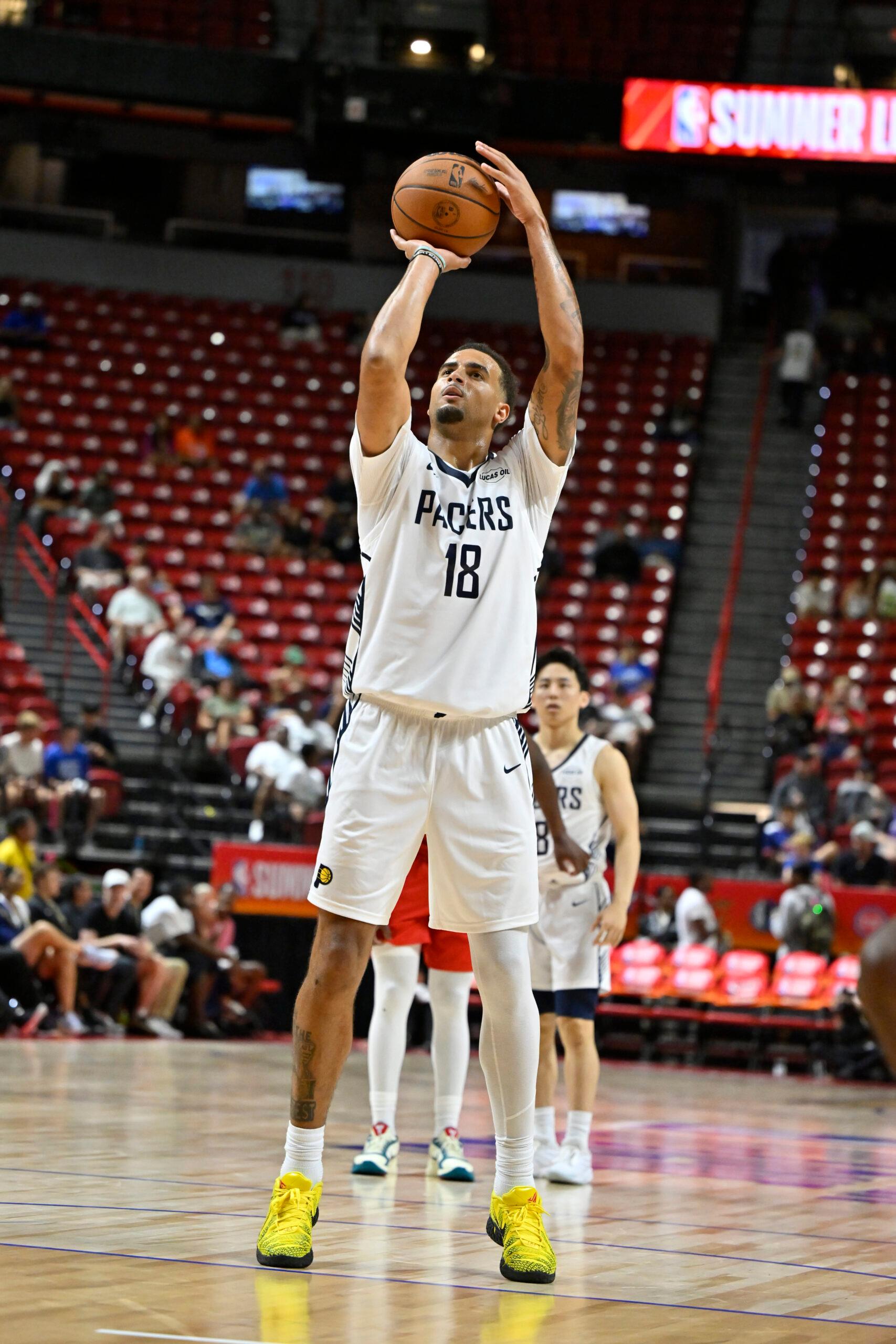
Jalen Slawson, Indiana Pacers
Jalen Slawson, shall I compare thee to a summer (league)’s day? How about this: Slawson is to the NBA’s developmental circuits what Yaxel Lendeborg was to the NCAA this past season—wildly dynamic for his size, unafraid to let it fly, and probably way too old for this shit. The 26-year-old two-way contractor on the Pacers has been one of the standouts of Las Vegas so far, and will be a candidate for a roster, whether in Indiana or elsewhere. In Slawson’s first game late last week, he launched eight 3-point attempts in the first 14 minutes of game time. He hit just two of them, but you have to respect the audacity.
Slawson’s best games this past season playing for the Pacer G League affiliate Noblesville Boom were a collage of the most satisfying video game stat lines you’ll ever see. He had a game of 24 points, 11 rebounds, five assists, two steals, and seven blocks; he had a 23-point performance in which he was one steal short of the mythical 5x5; he’s logged a 26-point triple-double; and a near triple-double with five blocks. His numbers are impressive even when scaled down to role-player usage at the NBA level. Granted, Indiana was playing through a generationally cursed season, but Slawson still averaged 10.3 points, five rebounds, 3.1 assists, 2.1 steals, and 1.4 blocks in the nine Pacers regular-season games in which he logged at least 20 minutes.
Watching him play in Vegas, it’s abundantly clear that Slawson has a role in the league as a chaos engine off the bench, à la Tari Eason or Paul Reed—full-tilt playmaking disruptors who can completely change the complexion of a game in short bursts of playing time—short enough to mitigate any sloppiness that will eventually leech out. He’s an aggressive downhill athlete who can make passes on the move and is an effective weakside rim-protecting wing. It’s a tantalizing skill set that some team ought to harness now that he’s in his prime years.
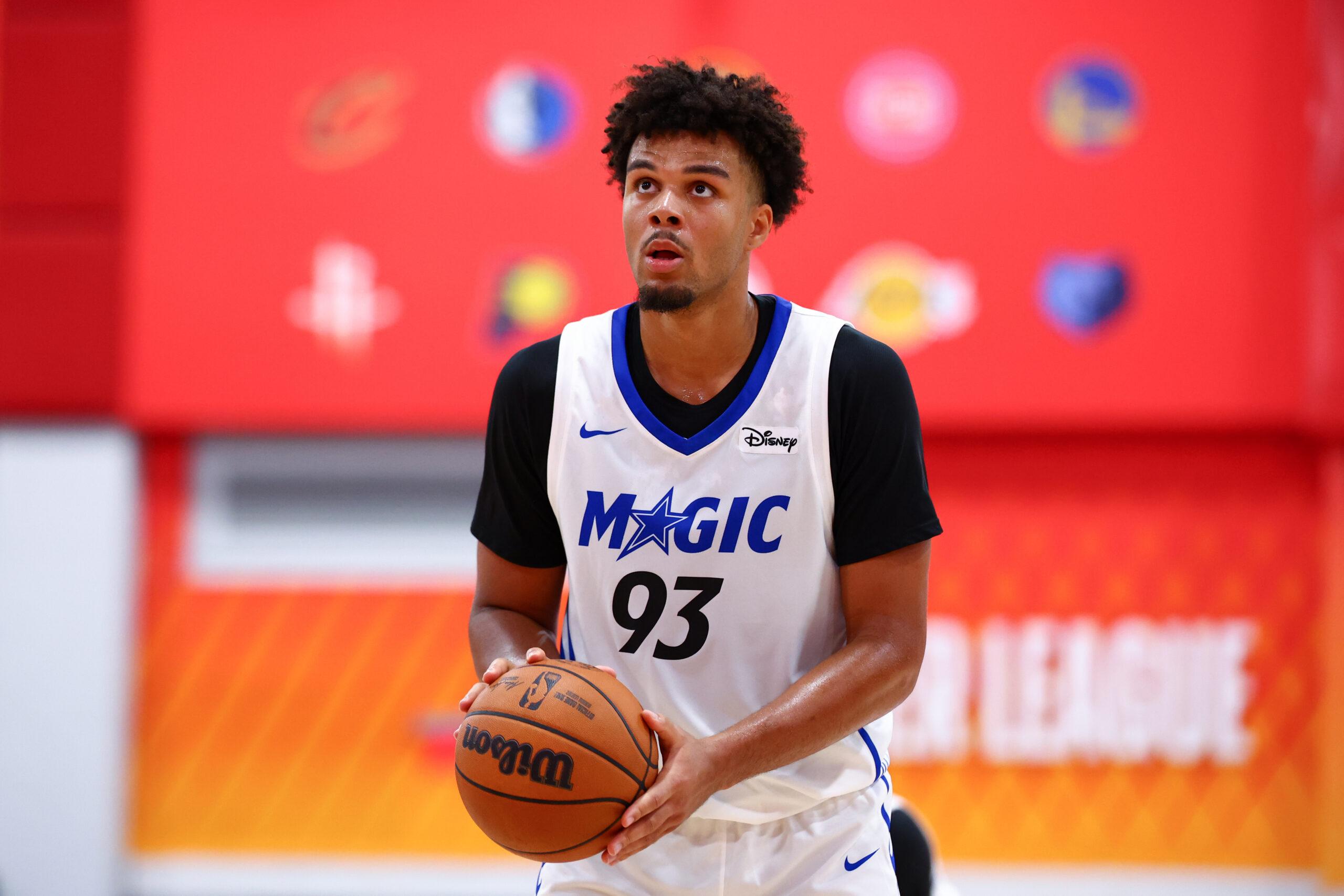
Noah Penda, Orlando Magic
I was a big fan of Penda coming out of the 2025 draft, and thought the Magic got nice value when they took the first-round talent near the top of the second. Penda’s most bankable skills coming out of France’s LNB Elite were similar to those of Allen Graves, who was drafted at no. 19 last month despite being a bench player at Santa Clara. Penda was the best defensive playmaker in the French league at just 20 years old, dismantling plays with excellent hand-eye coordination and pattern recognition. Defensive precognition and the ability to make plays for others as a combo forward are exceedingly valuable tools with the way the NBA game is being played today. That much has never been in doubt—Penda is averaging 4.5 stocks and has made some excellent passes out of inverted pick-and-rolls in his two games in Las Vegas.
The biggest revelation has been Penda’s comfort spotting up behind the arc and his confidence in his power-based drives, showing off nimble footwork and the ability to take and make tough shots. Who would have thought the 6-foot-7 youngster had a Hardenesque late-clock side-step 3-point fade in his bag?
The Magic have a crowded frontcourt rotation, but Penda can easily play his way into the mix given how much his strengths as a defender align with what new head coach Sean Sweeney had instilled in the Spurs last season. If Penda can shoot league average from 3 and leverage that ability to get into the lane on closeouts, a whole lot of opportunities will open up for him.
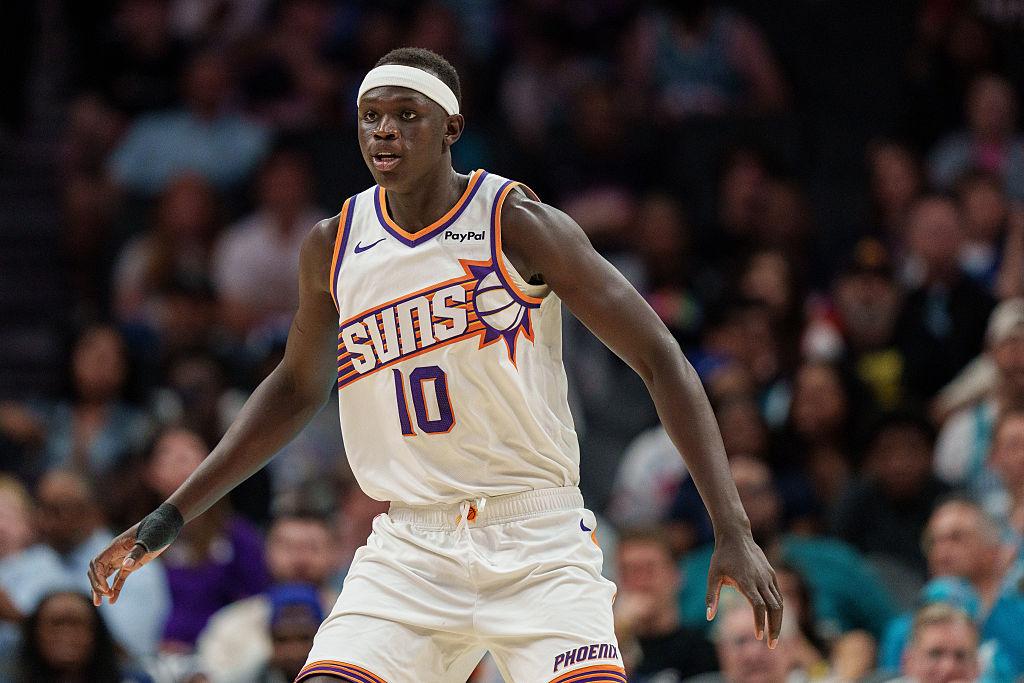
Khaman Maluach, Phoenix Suns
Despite a lack of credible guard play from the Suns at summer league (which is essentially like forcing the team to play under 2x gravity), Maluach is having a breakout showing in Vegas, averaging 18.3 points, 12 rebounds, and 2.3 blocks across three games, shooting precisely 50 percent from the field, 40 percent from 3, and 90 percent from the free throw line.
In a season full of impactful rookie showings, Maluach’s development flew under the radar for most, but it’s important to remember that 2025’s 10th pick is younger than half of the players selected in the lottery in last month’s draft, including a few of the one-and-done freshmen. The most noteworthy development in Maluach’s game is clearly the 3-pointer. It’s a skill that he flashed while playing in Africa and then moved away from completely at Duke, where he drilled down on big-man fundamentals. But he’d always had confidence in his perimeter game; it was just a matter of time before it manifested at the NBA level.
There aren’t many legitimate 7-footers who are equally adept at rolling and popping out of the two-man game. If Maluach’s shooting is anything more than a desert mirage, his skill set alone would be one of the most coveted in the league. He has attempted 178 free throws since leaving the Basketball Africa League more than two years ago, spanning his season with Duke, his stints in the G League, and his time in Phoenix Suns summer league and regular-season play. He’s hit 71.9 percent of them in that time. The shooting touch is real.
But the best highlight of Maluach’s summer league thus far goes back to basics, reminding us all why he was one of the best prospects of 2025: A textbook rim-running dunk on one end, a defensive stop on the other. Maluach’s ability to marry length and coordination to stunt at the driver, spin, and deny an alleyoop—all in one fluid motion—is the foundation of his immense allure as a modern big man. Still not yet 20 years old, Maluach can be molded to fit a number of trends. There is hope that he can develop into a player who can not only rim-run, but also run into step-up 3-pointers as a trailer; and with a 15.1 percent offensive rebound rate in 11 G League games, Maluach showed he could also develop into the kind of possession extender that has become a necessity in high-stakes postseason series. There is no rush for him to get there; he’s still second (at best) on the depth chart behind Mark Williams. But Maluach’s performance in Vegas has been a massive green flag. The Valley has a potential game-changer coming down the line.
Keaton Wagler, Los Angeles Clippers
For six quarters, it looked so, so over for the fifth pick in last month’s draft. Two-for-14 shooting from the field. A complete and utter lack of ability to separate from the defense. And then, naturally, the best quarter of offense that any player has played all tournament:
This is part of the summer league experience—deflating performances can be wiped from memory as long as there’s a kernel of hope left to cling to. Wagler’s unbelievable shooting touch is his NBA crash pad, as the teenager gets everything else in order. Billed as a tall initiator after arguably one of the most stunning one-and-done campaigns ever at Illinois, Wagler seems likely to start off in an off-ball role for the Clippers while he develops his frame and ball control. The lack of burst is a real issue, as is his lack of strength. Part of the advantage of having a pick-and-roll-fluent ball handler is the opportunity to exploit mismatches on a switch. But at this stage in his development, Wagler doesn’t quite have the juice to get by anyone. His rookie season could look a lot like Egor Demin’s in Brooklyn—largely a shooting specialist whose lack of confidence driving toward the basket could limit the vision and creativity so essential to their respective games.
Wagler’s third-quarter barrage against Darryn Peterson and the Jazz will keep the wolves at bay for now, but the Clippers’ strength and conditioning team better be ready, because they have an era-defining task on their hands.
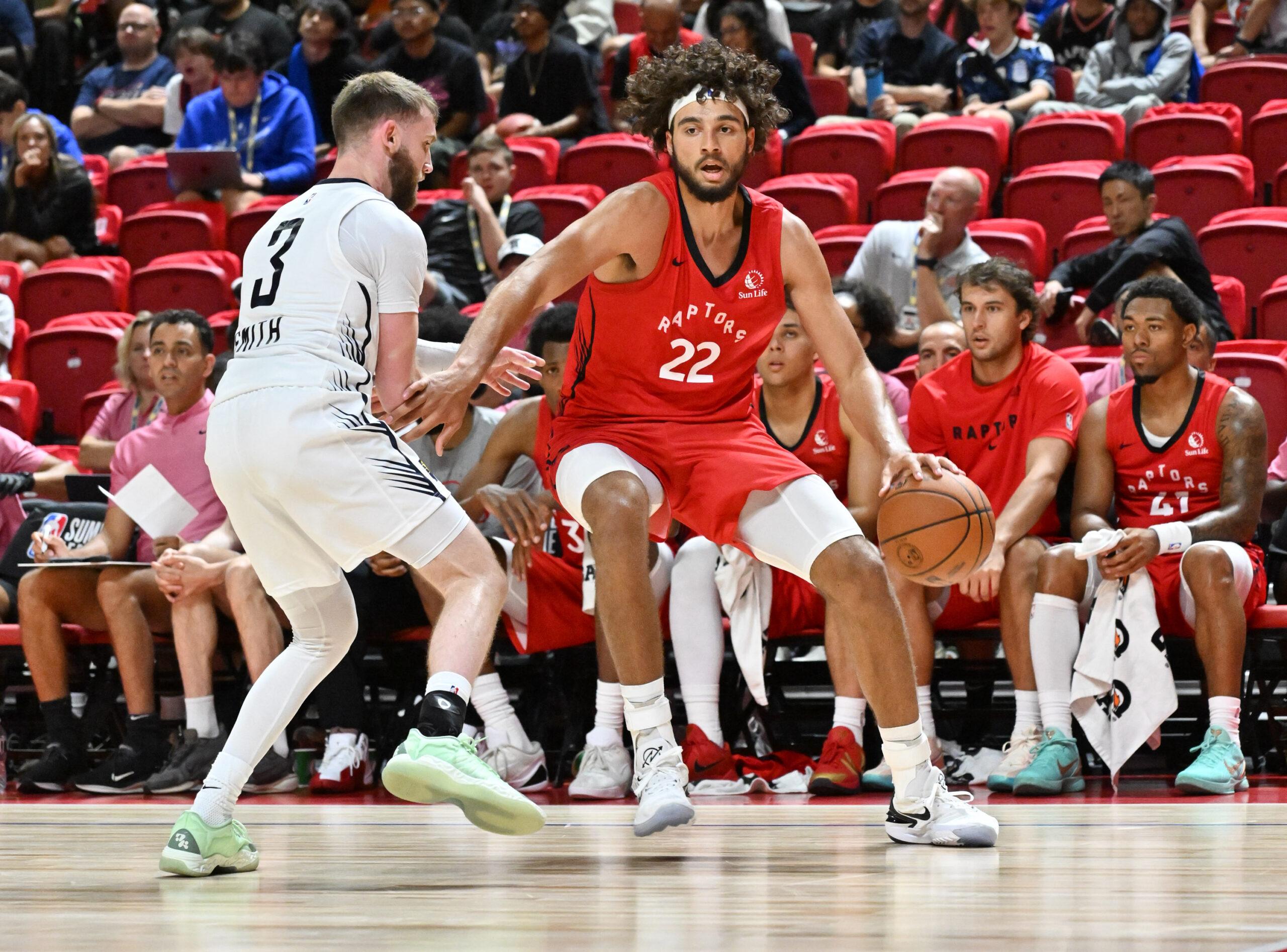
Allen Graves, Toronto Raptors
The Raptors’ first-round selection had a similar burden of proof coming into summer league, as a doughy forward who didn’t look particularly athletic coming off the bench for Santa Clara, playing in the West Coast Conference. Graves’s happy-go-lucky demeanor off the court belies the sharp focus he has on the court; though his explosiveness is unremarkable, the speed with which he processes the floor on both ends is one of the more impressive traits exhibited in all of summer league. His ability to jump passing lanes and to create fractures in an offense has translated seamlessly against NBA-caliber competition. So has his shooting—the percentages eerily similar to the aforementioned human inferno Meleek Thomas. Graves has averaged 14.7 points, seven rebounds, 2.7 assists, and 2.7 steals in his first three games, all while playing more minutes than he did in college. The Raptors have given Graves as many on-ball reps as he can handle, stress-testing his ability to scale his production (and probably serving as a deputy, taking the responsibilities that Collin Murray-Boyles would have assumed had he not gotten injured just prior to summer league). He’s acquitted himself well, even if it hasn’t always looked pretty.
I called Graves “a chimera born of deep basketball p-hacking” in the draft guide—that is, a player whose analytical profile was so airtight in its positive value that it threatened to subsume the athlete himself. But something unique happens when data and human perception align just so—it’s almost mystical. The first three games of the Allen Graves Experience in the NBA have been exactly what the numbers predicted; to both the trained and untrained eye, good things happen when he’s on the court.