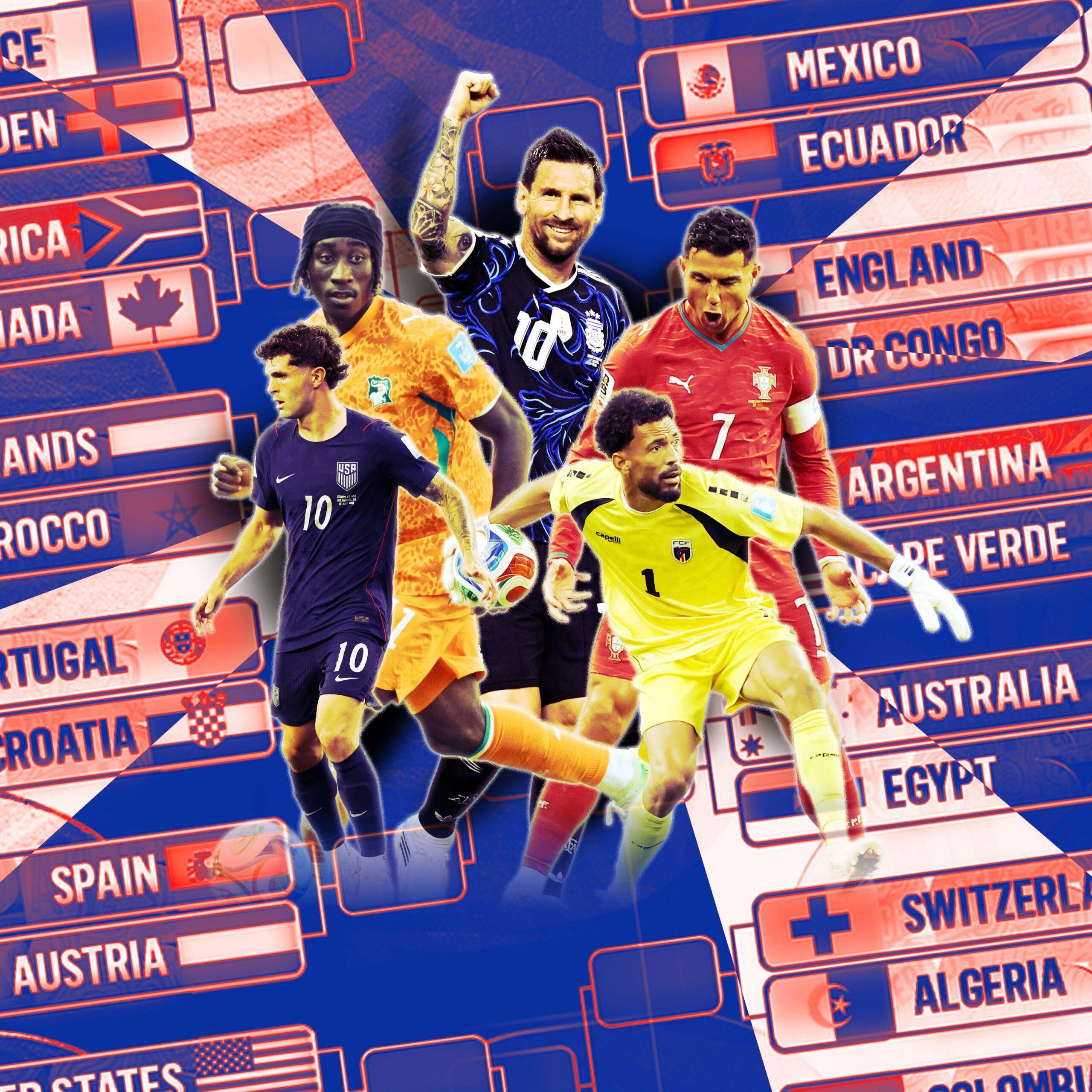

The expanded World Cup field turned the group stage into more of a math exercise than it ever was before. Qualification scenarios. Third-place tables. Bracket permutations. Every result seemed to create three new possibilities, and the final round of matches often required one eye on the television and another on the live standings.
The knockout stage simplifies everything.
The bracket is finally locked in. Every remaining team knows exactly what stands between it and the final. Some contenders have been handed favorable roads. Others drew gauntlets that could end their tournament early. The stakes are as straightforward as can be: Win and keep playing; lose and go home.
The round of 32 began on Sunday, when Canada beat South Africa 1-0 for the country's first World Cup knockout victory. That left 31 teams—and 31 matches—between now and the crowning of a champion. To get you prepared, here are The Ringer’s 15 most intriguing World Cup knockout narratives as the round of 32 continues.
The New Tournament Favorite: Argentina
When I ran my updated projections before the round of 32 began, they spit out a new favorite to win the entire tournament: Argentina. Despite their lower individual team rating, the reigning champions surpassed both Spain and France because their path is so much easier than those of the other three big favorites (Spain and France, plus England). While England is staring down a potential road game against Mexico in Mexico City and possibly a quarterfinal against Brazil, Argentina will play Cape Verde and then either Australia or Egypt en route to the quarterfinal. France will likely need to go through Germany in the round of 16, while Spain has a potential date with Iberian rival Portugal looming in the second round. Spain, France, and England will all be tested much more quickly than Argentina.
Most projection systems and betting odds don’t see a huge gap in true team quality at the top of this field, and thus the winner of the tournament may come down to which team has the most left in the tank for the semifinals and finals. Argentina is poised to be that team, and they’ll need as much rest as possible as they continue to rely heavily on and manage the minutes of their aging megastar.
Most Intriguing Apex Superstar: Lionel Messi
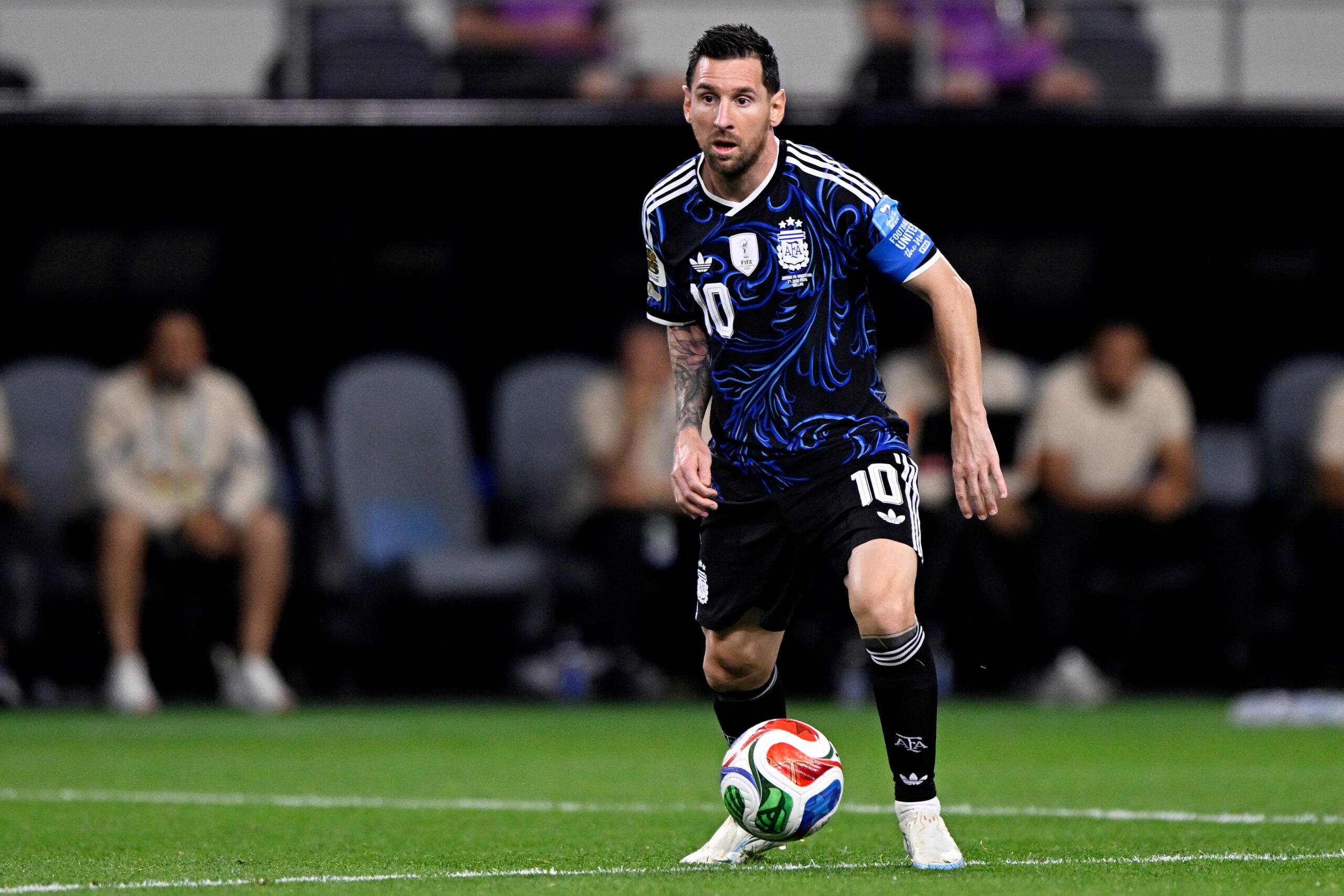
Messi has already conquered soccer. He lifted the weight of an entire nation with his stunning performance at the 2022 World Cup. He was the apex superstar at that World Cup, and he won the Golden Ball and scored two goals in Argentina’s all-time dramatic victory against France in the final.
It’s easy to forget that as recently as three weeks ago, many wondered what form Messi would be in at this World Cup. He’s 39 years old. He’s no longer playing at the top level in Europe. But as it turns out, the old saying that “form is temporary, class is permanent” rings true for the greatest ever in soccer history.
Messi walked into Argentina’s opener and scored a hat trick (albeit aided by the goalkeeper). Then he scored two more goals in the win against Austria to clinch the group. And then, for good measure, Argentina brought him off the bench against Jordan, and Messi banged in a free kick. His six goals in the group stage have Messi in pole position for the Golden Boot, and they also prove that he remains the apex superstar of international soccer. He still causes casual World Cup fans to look up at the bar television with wonder as he lines up a free kick.
He now has a chance to win an unprecedented fourth major consecutive tournament for Argentina. And while Messi has flirted with international retirement multiple times in his career, this really should be his Last Dance.
Most Favorable Knockout Path: Colombia
Colombia and Portugal’s thrilling goalless draw in Miami on Saturday night had massive implications for the knockout bracket. Of the 12 tournament favorites, Portugal was the only team that failed to win its World Cup group, and Colombia now benefits from a much easier knockout path. Los Cafeteros are heavy favorites to beat Ghana in the round of 32, and if they win, they’ll play either Switzerland or Algeria in the second round.
Portugal’s path forward begins with frequent tournament overachievers Croatia, and they will likely draw Spain in the second round. By comparison, Colombia has a clearer way ahead. Colombia made the quarterfinals in 2014 before losing a tight match to Brazil; that year was their only World Cup knockout win in the 21st century. If they make it back to the quarterfinals, a familiar foe, Argentina, will likely await. Colombia and Argentina played in the 2024 Copa América final, which Argentina won in extra time.
Most Unfavorable Knockout Path: Germany
The Germans did everything they were supposed to. They scored seven goals on Curacao in the opener. They fought off a stern test from Ivory Coast, beating them 2-1, and clinched a difficult group with a match to spare. Their reward for taking care of business? A likely round of 16 matchup with France.
The biggest question for Germany is whether they are robust enough on defense to hold up against a superior attacking team. We know that they can pass through and score on anyone, but can they (or anyone?) slow France down? Both Ivory Coast and Ecuador were able to generate transition opportunities against Germany, and neither of those nations has anything close to the dynamic attacking firepower of Les Bleus.
To make matters worse, the high temperature for their likely round of 16 clash in Philadelphia on Saturday is 93 degrees. So the tired German defenders will have to deal with wave after wave of speedy French attackers. The matchup may come down to which team’s substitutes can make the biggest impact because the conditions will make it extremely uncomfortable for everyone.
And if the Germans survive this matchup with France, they’ll probably need to beat the Netherlands or Morocco, plus Spain, just to reach the final. Never count out Germany and manager Julian Nagelsmann, but this is a brutal draw for a group winner.
Most Intriguing Breakout Star: Yan Diomandé
Diomandé is already one of the biggest winners of the World Cup, regardless of what happens for Ivory Coast on the pitch between now and the end of the tournament. On Sunday, Diamondé reportedly agreed to a five-year deal with Paris Saint-Germain and will likely join the two-time defending European champions after the World Cup.
Diomandé is one of the best wide players in the entire world, and he’s only 19. His dribbling ability should terrify Norway and anyone else the Ivorians come up against in this tournament. Ivory Coast is more likely to play in transition than to frequently settle possessions, and a dribbler and ball progressor like Diomandé enables them to easily move the ball up the pitch. He’s been Ivory Coast’s best player in this tournament and one of the World Cup’s best players overall.
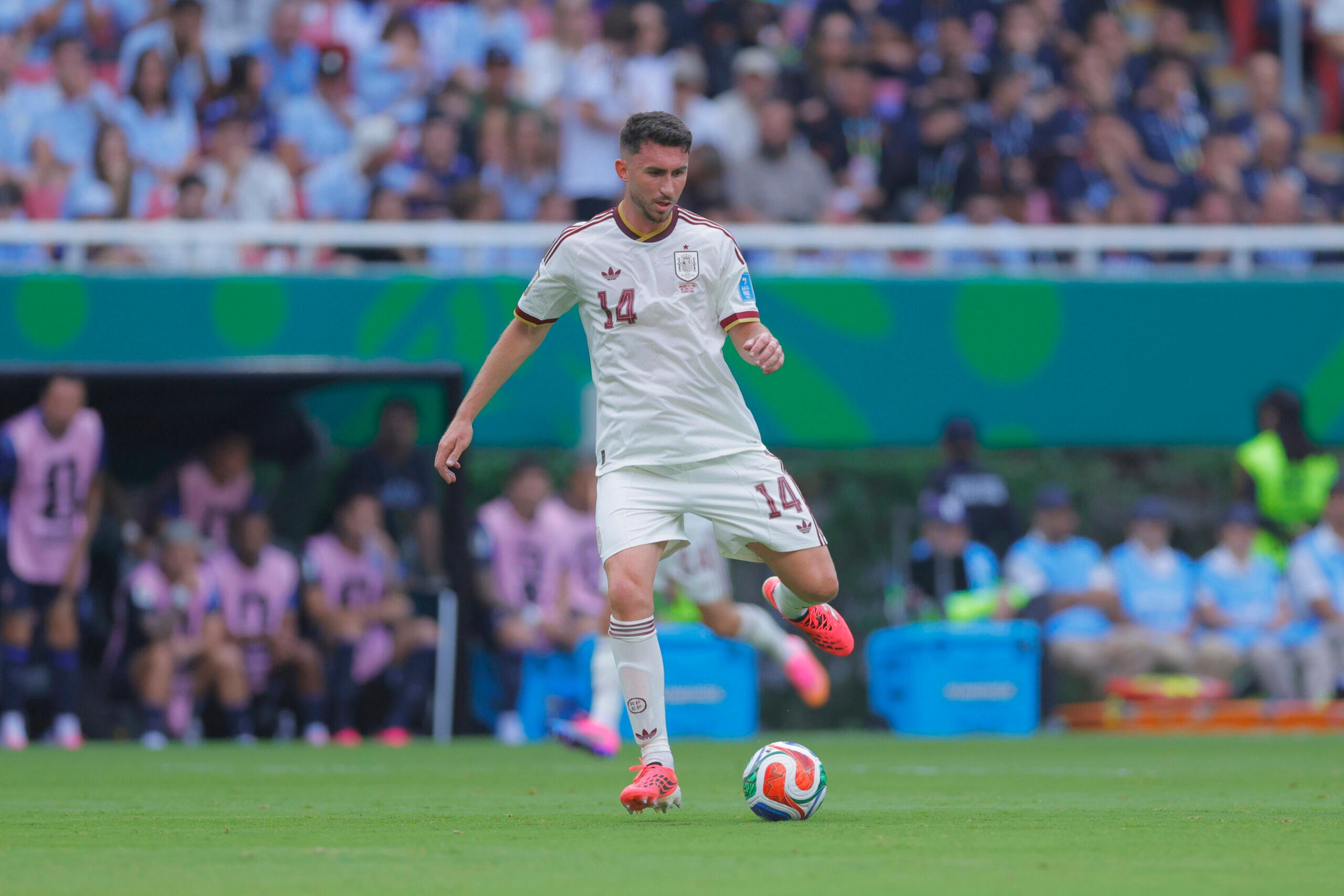
Aymeric Laporte of Spain during the match against Uruguay
Most Intriguing Contender: Spain
An age-old sports debate is on full display with pre-Cup favorite Spain. Through three matches, Spain has not passed the eye test. They slogged their way through the Cape Verde match and dropped points in a goalless draw. They dominated Saudi Arabia but were lackluster again in a controlled 1-0 win against Uruguay. Their lone goal in that match came as a result of poor Uruguayan goalkeeping. To make matters worse, Nico Williams is injured again, and his return seems questionable.
But there’s an analytical case that Spain is every bit the tournament favorite many people expected. Spain conceded 0.5 total expected goals in three matches. That is next-level defensive dominance and territorial control. Yes, their opponents were relatively weak, but Spain’s midfield is one of the elite trios in the world, even if Rodri isn’t at peak fitness. And Pau Cubarsi looks even better as a center back now that he’s not being asked to play in the absurdly high defensive line system under Hansi Flick at Barcelona.
Spain is second only to Uruguay in final-third possessions won thus far; they are applying significant pressure and consistently winning the ball in dangerous areas. They are tilting the field like a dominant club team, smothering transition attacks, and conceding nothing. Lamine Yamal has not looked fully fit to this point, but I do wonder how much the Spanish youngster is pacing himself for the knockout stages.
We haven’t seen Spain in desperation mode yet. We haven’t seen Yamal in top gear. There are certainly questions about the top-end quality of Spain’s attack. But the team is doing everything else at an elite level, and it’s too soon to give up on it. It could play two games in Los Angeles and two games indoors en route to the final, too, avoiding the extreme heat that’s coming to outdoor venues across the eastern United States in the next two weeks.
Most Intriguing Round of 32 Matchup: Norway vs. Ivory Coast
A face-off against Brazil is potentially looming for the winner of this match, making it feel like the 12:15 tipoff between the 8- and 9-seeds on the first Thursday of March Madness. Norway and Ivory Coast are like two popular mid-major programs that double as trendy dark-horse picks for soccer hipsters and ball knowers.
If you played FIFA at some point from 2008 to 2016, then you’re well aware of the legendary Ivory Coast team. But even Yaya Touré and Didier Drogba never made it to the World Cup knockout stage. This year’s team did. And if you’re not living under a rock, you’ve probably seen a video of the Norwegian people rowing their way across America all month.
There’s plenty of star power in this matchup, too. Erling Haaland and Martin Odegaard should be well rested following Norway’s decision to sit its starters against France, and they are one of the most functional and effective attacking duos at this tournament. Norway finished in the top five in expected goals created in the group stage, but Ivory Coast should feel confident about its ability to exploit the shaky Norwegian defense, especially in wide areas. Norway has more top-end talent, Ivory Coast has more depth, and both teams are more than capable of beating Brazil (or Japan) in the next round.


Most Intriguing Potential Knockout Matchups
It was too hard to pick only one of these matchups, so I chose three pre-final matches that stand out.
- Round of 16: France vs. Germany in Philadelphia (July 4): It was never possible for the Americans and English to play each other on July 4 at this World Cup. However, the next best thing for history nerds out there could be the French and Germans fighting a proxy war in the birthplace of America on America’s birthday. During the American Revolution, the French came to the aid of the Americans, while the British enlisted the help of the German “Hessian” army to help fight on their behalf. Oh, right—this is also a salivating matchup between two global soccer superpowers.
- Round of 16: England vs. Mexico in Mexico City (July 5): Mexico's home-field advantage at Estadio Azteca in Mexico City is perhaps the greatest in all of sports. Mexico has played 85 competitive matches there since it opened in 1966. They’ve lost just twice. The Mexicans will host Ecuador on Tuesday night in a defense-first rock fight, and if they survive that, they’ll (likely) go on to play England on July 5. It could be the most raucous and hostile atmosphere of the entire tournament, and England will be in for a real challenge playing at altitude after its indoors round of 32 match in cozy Atlanta.
- Quarterfinal: Colombia vs. Argentina in Kansas City (July 11): The last time that Colombia and Argentina played on American soil, the Miami match had to be delayed because so many fans without tickets breached the stadium. FIFA will be more prepared in Kansas City than CONMEBOL was two years ago, but those scenes were a signal of just how important this matchup is. Colombia’s following is as big as any team’s in this tournament, and Argentina is Argentina. These two have been the class of South America in the past four years, and they could play in a quarterfinal as Colombia aims for revenge for their defeat in the Copa América final.
Team Under the Most Pressure: Portugal
Last week, I revisited Portugal’s 2016 Euro-winning roster. Cristiano Ronaldo was in his prime, but that roster was nowhere near as talented as the group Portugal has at this World Cup. But that 2016 team amounted to more than the sum of its parts. It ground its way to a Euro title with a lot of extra-time heroics and quality defense.
More on Ronaldo in a moment, but it’s clear through three matches that this version of Portugal is less than the sum of its parts. Portugal has three starters from PSG’s Champions League–winning team and the Premier League’s all-time single-season assist record holder (Bruno Fernandes). Yes, they thrashed Uzbekistan 5-0. But here are Portugal’s last five major tournament matches:
- 0-0 draw with Slovenia (won on penalties) at Euro 2024
- 0-0 draw with France (lost on penalties) at Euro 2024
- 1-1 draw with Congo at the World Cup
- 5-0 win against Uzbekistan at the World Cup
- 0-0 draw with Colombia at the World Cup
Portugal is just not that difficult to defend. They have a supremely talented midfield that often underwhelms because of the limitations of the forward line. How many front threes would you take over Portugal’s Ronaldo, Joao Felix, and Pedro Neto? I can count at least 10 left in this tournament.
Portugal won the Nations League last summer, but they will be carrying immense pressure in their knockout matchup against Croatia on Thursday night. And that pressure will follow them if they end up playing Spain in the round of 16. The Portuguese should be among the favorites to win this entire tournament, and instead, they are at risk of becoming one of its biggest underachievers. It’s not just Ronaldo’s final World Cup, but a potentially wasted golden generation around the global megastar.
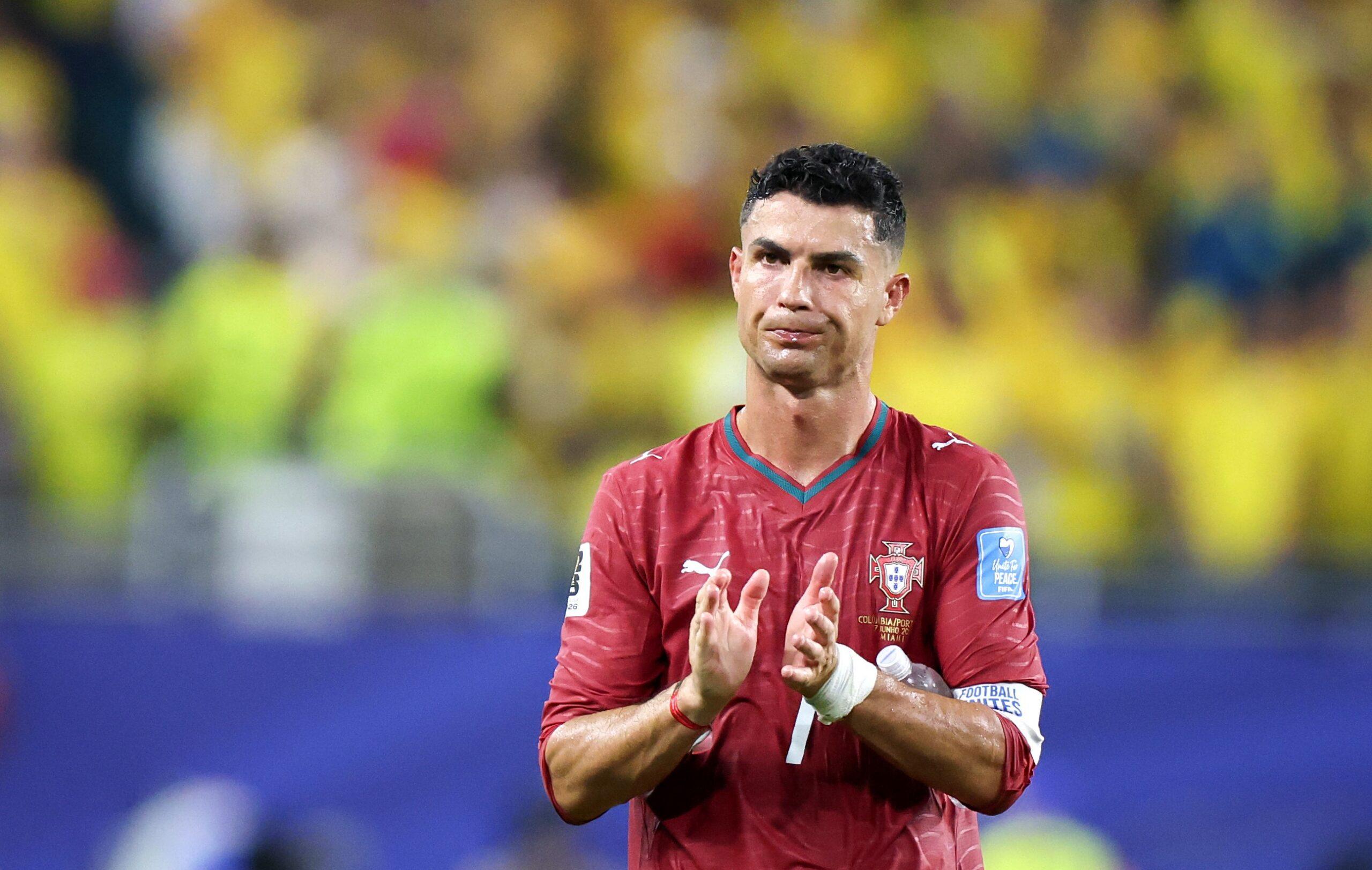
Player Under the Most Pressure: Cristiano Ronaldo
As for Messi, there’s nothing left for Ronaldo to prove. There shouldn’t be pressure on him. But that’s not how this works. This is the game, and even at 41 years old, Ronaldo is still playing it.
Portugal’s manager, Roberto Martinez, chose to play Ronaldo for every minute of the group stage. He scored two goals against Uzbekistan, but he has not been effective overall across these 270 minutes of soccer. He had three shots against Colombia—two were blocked, and one was a tame free-kick effort from 35 yards. In three matches, he has not created a chance for any of his teammates, per Opta’s tracking data (via FotMob).
In some ways, this Ronaldo story line is as much about Martinez as it is about Portugal’s legendary talisman. But we’re here either way. And the pressure could cause a blowup once Portugal eventually bows out of this tournament.
Team No One Wants to Play: Morocco
You can’t discuss a bracket or playoff structure of any kind without mentioning the proverbial “team no one wants to play.” It can’t be a favorite or top team because that’s too obvious. It can’t be a bad team that’s just lucky or happy to be there, either. But the team no one wants to play should be dangerous enough to end anyone’s tournament on any given night. And in 2026, that team is Morocco.
Morocco made the semifinal four years ago, and they are better now than they were then. That doesn’t mean they’ll make the semifinal again—odds are they won’t—but they had a smooth group stage and were able to control matches with possession, which they couldn’t do four years ago.
Morocco played basically even with Brazil across 90 minutes—and outclassed them in the first half. They had a couple of defensive hiccups in the final group matchup against Haiti but showcased a much higher offensive ceiling, too. Attackers Brahim Diaz and Ismael Saibari weren’t on this team at the last World Cup, and Morocco won’t have to try to win every game 1-0 like they did in 2022.
The Netherlands is the unlucky team that drew Morocco in the round of 32. The winner of that match on Monday will be a clear favorite over Canada in the round of 16. The Dutch are favored on Monday, but their defense has real holes that can be exploited in transition. For all of their name-brand defensive talent, the Netherlands conceded four group-stage goals and haven’t kept a clean sheet in eight matches. Dutch manager Ronald Koeman smartly inserted Brian Brobbey into the lineup at striker to bully Sweden and Tunisia with his back-to-goal play. But his midfield still doesn’t press or win back possession quickly, and his high back line is vulnerable to the exact kind of quick-strike transition play that sends Moroccan runners in behind the Dutch defense.
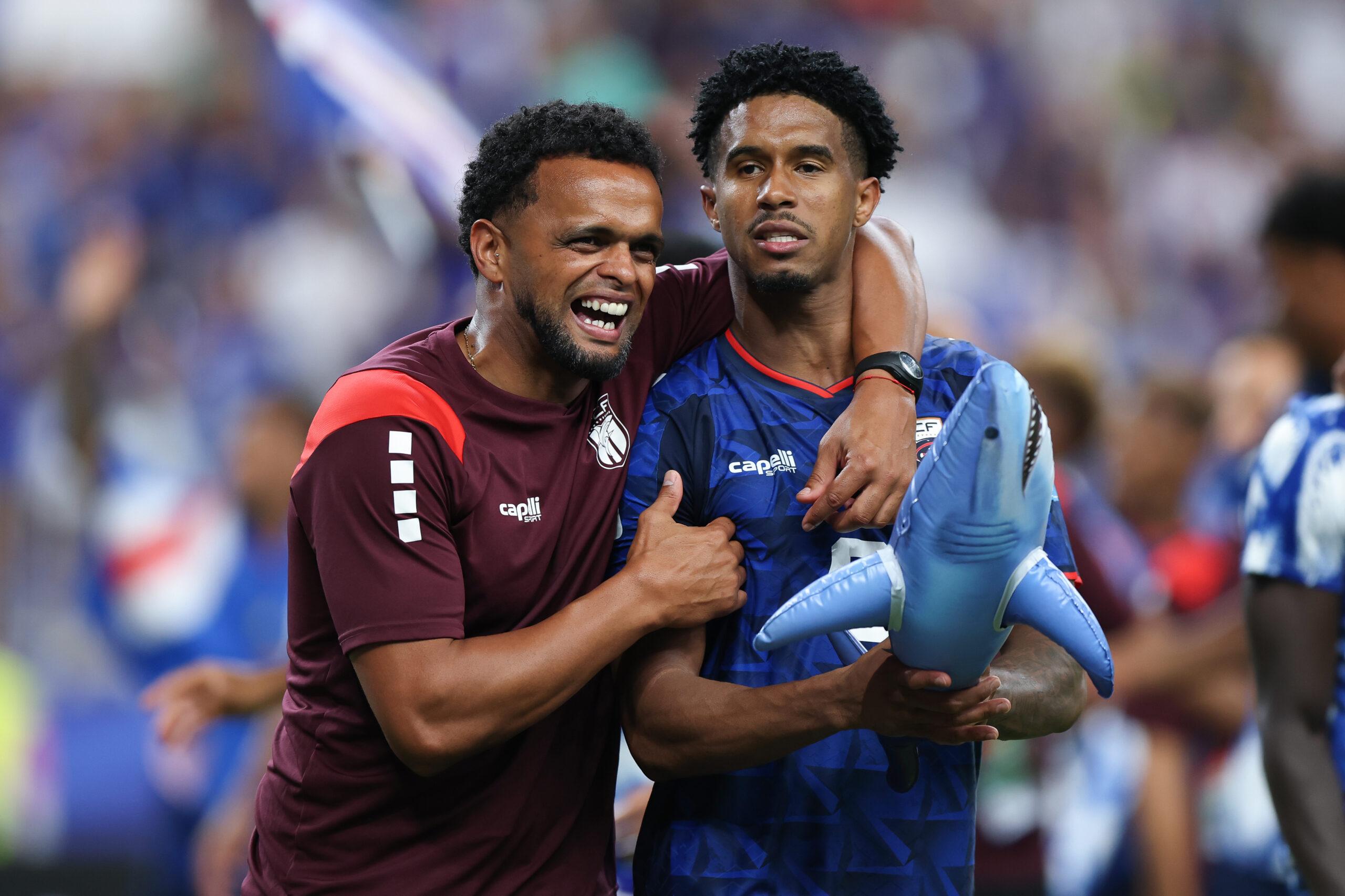
Kevin Pina of Cape Verde celebrates after the between Cabo Verde and Saudi Arabia
Cinderella: Cape Verde
Cape Verde is the story of the 2026 World Cup group stage. While the expanded format has mostly removed any elimination jeopardy for the top teams, that means the spotlight shines on the smaller nations during group play. On the one hand, Cape Verde tied its way into the knockouts, drawing all three matches. On the other hand, for a nation as small as Cape Verde, which has zero previous World Cup history, draws with Spain and Uruguay are wins.
And while Cape Verde didn’t even need to win on the final day to advance, that didn’t stop the debutants from pushing and attacking Saudi Arabia in search of a goal. Their reward for advancing is a date with world champions Argentina, and that’s unlikely to go well for them. But you can already imagine the scenes if Vozinha stands on his head again and denies Messi. And if you can dream about it, you can do it. Cape Verde has the lowest odds of any team to advance to the round of 16, but this tournament is a historic success for the nation regardless of the score line in their next match.
Chip-and-a-Chair Teams: Austria and Ecuador
In 1982, Jack “Treetop” Strauss was down to his final chip at the World Series of Poker before he came all the way back to win the entire tournament. After his victory, Strauss said that all he needed to stay in the game was “a chip and a chair.” The same can apply to these two teams, which both battled back from the brink in group play to qualify for the knockout round.
Last Wednesday, Ecuador needed to beat Germany after managing just one point in their first two matches. First, Ecuador hit the crossbar twice and lost in stoppage time to Ivory Coast; then, Curacao goalkeeper Eloy Room made a World Cup–record 15 saves against the Ecuadoreans, keeping them from scoring at all. Against Germany, Ecuador went down 1-0 in the second minute but rallied to win 2-1 and will now face Mexico on Tuesday. Ecuador is an elite defensive team, with individual defensive playmakers all over the pitch. They’re very comfortable playing in hostile environments, and their South American qualifying matches proved that they can perform well at Mexico City's elevation.
On Saturday, Austria and Algeria played out one of the most absurd endings to a sporting event that I’ve ever seen. Algeria had a 108-pass sequence in the final minutes that seemed destined to end in a handshake draw. All of a sudden, a through ball to star man Riyad Mahrez put Algeria in prime position to score, knock Austria out of the tournament, and get revenge 44 years after the Disgrace of Gijón.
Alas, it became one of the all-time sports moments that never was. Algeria scored the goal, but Austria still had a chip and a chair and the opportunity to make one final attack. Unbelievably, they scored on a header, kept their World Cup hopes alive, and will now face European champions Spain.
Those two minutes of history, narrative, shock, and awe are why we love the World Cup. Austria will now try to take a page out of Uruguay’s defensive pressing playbook, aiming to blow up the midfield and muddy the game with Spain as much as possible.
Most Intriguing Collection of Talent: France
Kylian Mbappé may be the global superstar, but with his first-half hat trick against Norway’s B team, Ousmane Dembélé reminded us that he’s the French squad’s reigning Ballon d’Or winner. Oh, and if that wasn’t enough, Michael Olise has already had three assists in this tournament, and he’s making the case that he’s a top-five player in the world, too.
Because of Mbappé’s lack of defensive work at the club level the past few years, it’s fair to ask whether he’s still France’s best player. But let me turn that question around: What if this version of France is now too talented for tactics to matter?
In 2024, before Dembélé’s and Olise’s ascension to their current peak, France had real tactical flaws. A lack of deep-lying playmaking derailed their Euro 2024 run. They didn’t score enough goals, they didn’t have a plan to win the ball back against equally talented midfields, and they struggled as a result.
France still has similar issues. The midfield’s struggles against Senegal prompted manager Didier Deschamps to drop Aurélien Tchouaméni for Manu Koné in the past two matches. The defense has shown real cracks that France hasn’t usually had in past tournaments; Norway’s B team managed to create quite a few chances. But France has been too talented for any of that to matter. Mbappé, Dembélé, and Olise might be good enough to paper over anything.

Most Intriguing USMNT Story Line: Their Golden Opportunity
Mauricio Pochettino wasn’t the United States Soccer Federation’s first choice for this World Cup cycle. When Gregg Berhalter’s contract was extended following the 2022 World Cup, it came with the expectation that he’d lead the USA into the most important soccer matches in the nation’s history this summer. But the choice to hire Pochettino in 2024 has proved to be a case of bringing on the right man at the right moment. Pochettino is elevating the most talented roster the USMNT has ever had.
After winning Group D convincingly, the Americans will be defined by what happens next. And this is a once-in-a-generation opportunity. In 2014—the last time the U.S. played in a summer World Cup—its games against Germany and Belgium were played on weekday afternoons. This year, the USA will play on home soil, during prime time, in front of a nation of increasingly soccer-curious fans.
A real bandwagon is building, and it will only continue to pick up new fans if the Americans take care of business against Bosnia-Herzegovina on Wednesday. Bosnia-Herzegovina’s set pieces are dangerous, but their attack is one of the worst left in the field.
A win on Wednesday would set the Americans up against either Belgium or Senegal. Facing Belgium would provide a chance at revenge after Belgium knocked the U.S. out of the World Cup in 2014. A rematch would allow the USMNT a chance to honor the heroics of Tim Howard. To erase the woes of Chris Wondolowski’s miss. To fulfill the never-realized dreams of Julian Green. And if the Americans make it back to SoFi for the quarterfinals, likely against Spain or Portugal, this country will rally around soccer in an unprecedented manner.
We have expectations for the USMNT now. The pressure that comes with them is new. Anything less than a genuine run through this favorable section of the bracket will feel like a missed opportunity. In their upcoming matches, the Americans have a chance to flip the narrative surrounding this generation of players, this team, and even this sport in the U.S. And I can’t wait to see what happens.