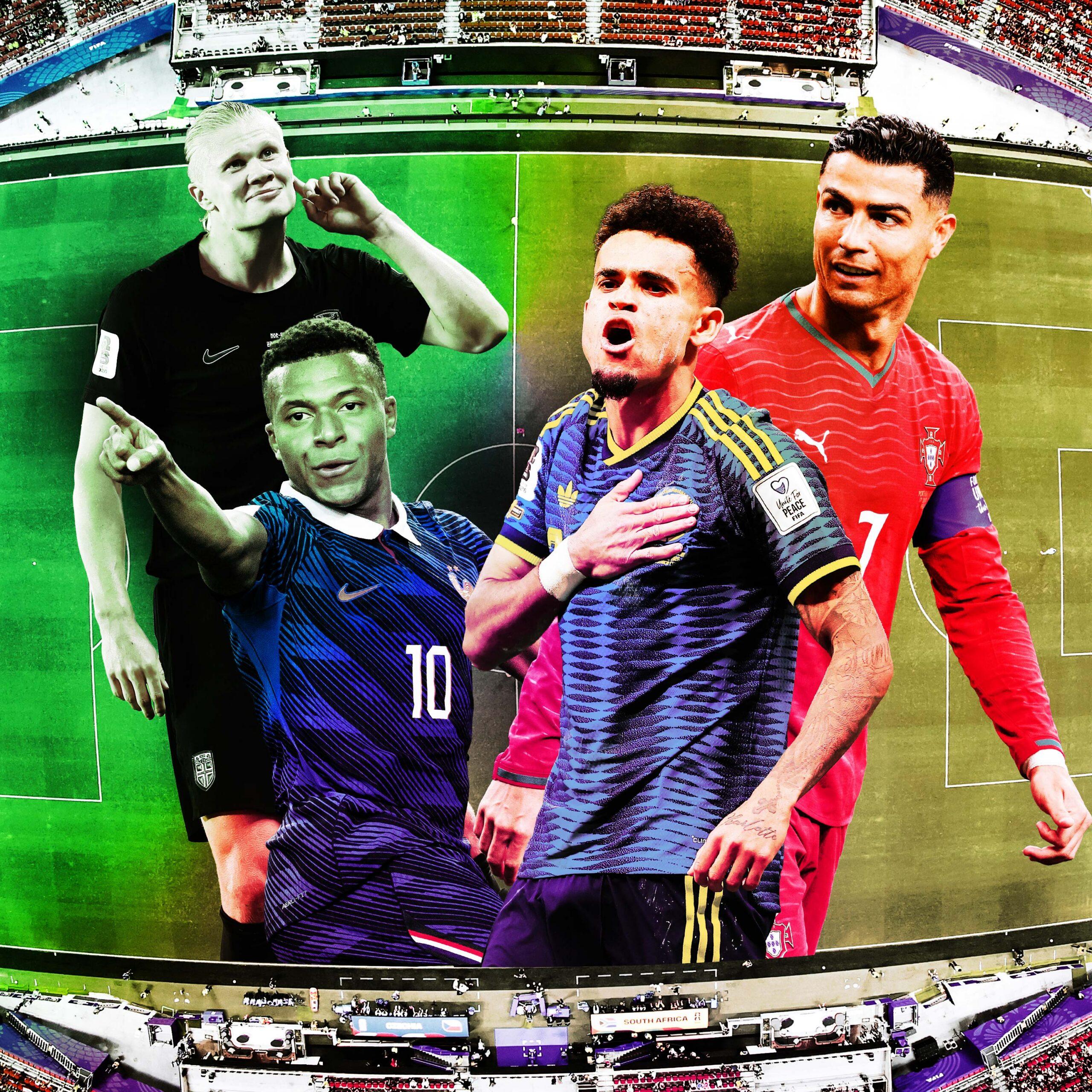

The first two weeks of the World Cup are all about possibility; the third week is all about consequences.
As of Tuesday night, every team in the field has played two group-stage matches. The tournament has largely been a celebration of superstars and favorites, as the biggest global icons sit atop the individual goals leaderboard. But the third and final round of group play—consisting of 24 matches over the next four days—will determine who advances to the knockout rounds, which begin on Sunday.
The expanded 48-team format was supposed to make these final group matches less dramatic. Sure enough, four teams—Mexico, the United States, Germany, and Argentina—have already clinched first place in their respective groups with a match to spare. But the idea that more third-place teams advancing would lead to less desperation at this stage has not borne out. Instead, the final four days of group play are packed with intrigue.
Ecuador and Czechia need victories against already qualified opponents to stay alive. Bosnia and Qatar will play an elimination match, and a draw would send both teams home. Paraguay, Australia, Algeria, and Austria could play their way into mutually beneficial draws that guarantee advancement for all four teams.
The possibilities are vast and chaotic. To help guide you through this final round of group play, we’ve highlighted the eight most compelling matches left before the knockouts.


More on the World Cup
Colombia vs. Portugal
Saturday, 7:30 p.m. ET
Group K
The appeal: This heavyweight bout on the final day of group play saves the best for last.
On Saturday night in Miami Gardens, two of the World Cup's most fervent fan bases will collide as Colombia and Portugal battle for first place in Group K. Daniel Muñoz's late winner on Tuesday night ensured that Colombia would enter the most anticipated match of the group stage with control of its own destiny.
Colombia needs only a draw to secure the group and has been the more convincing team through the opening two matches. Portugal, however, remains favored by the betting markets after rebounding from a disappointing draw against Congo with a dominant 5-0 victory over Uzbekistan, powered by two goals from Cristiano Ronaldo.
The significance of the matchup extends well beyond group positioning. It is one of only two group-stage meetings between teams currently ranked inside FIFA's top 12 (the other is Brazil-Morocco), and it could have a major impact on the shape of the knockout bracket.
The group-winning team will likely earn a round of 16 matchup against either Canada or Switzerland, on the opposite side of the bracket from Spain and France. The second-place finisher would have a much more difficult path and a likely round of 16 matchup with Spain. In a World Cup where the margins between contenders are thin, Saturday's result will reverberate all the way to the quarterfinals and beyond.
And it’s our first chance to see these two teams get truly tested by an opponent in their own weight class. Colombia has been notoriously difficult to beat under manager Néstor Lorenzo, especially in 90 minutes. They had a 28-match unbeaten run a few years ago, before it was snapped by Argentina in the Copa América final in 2024.
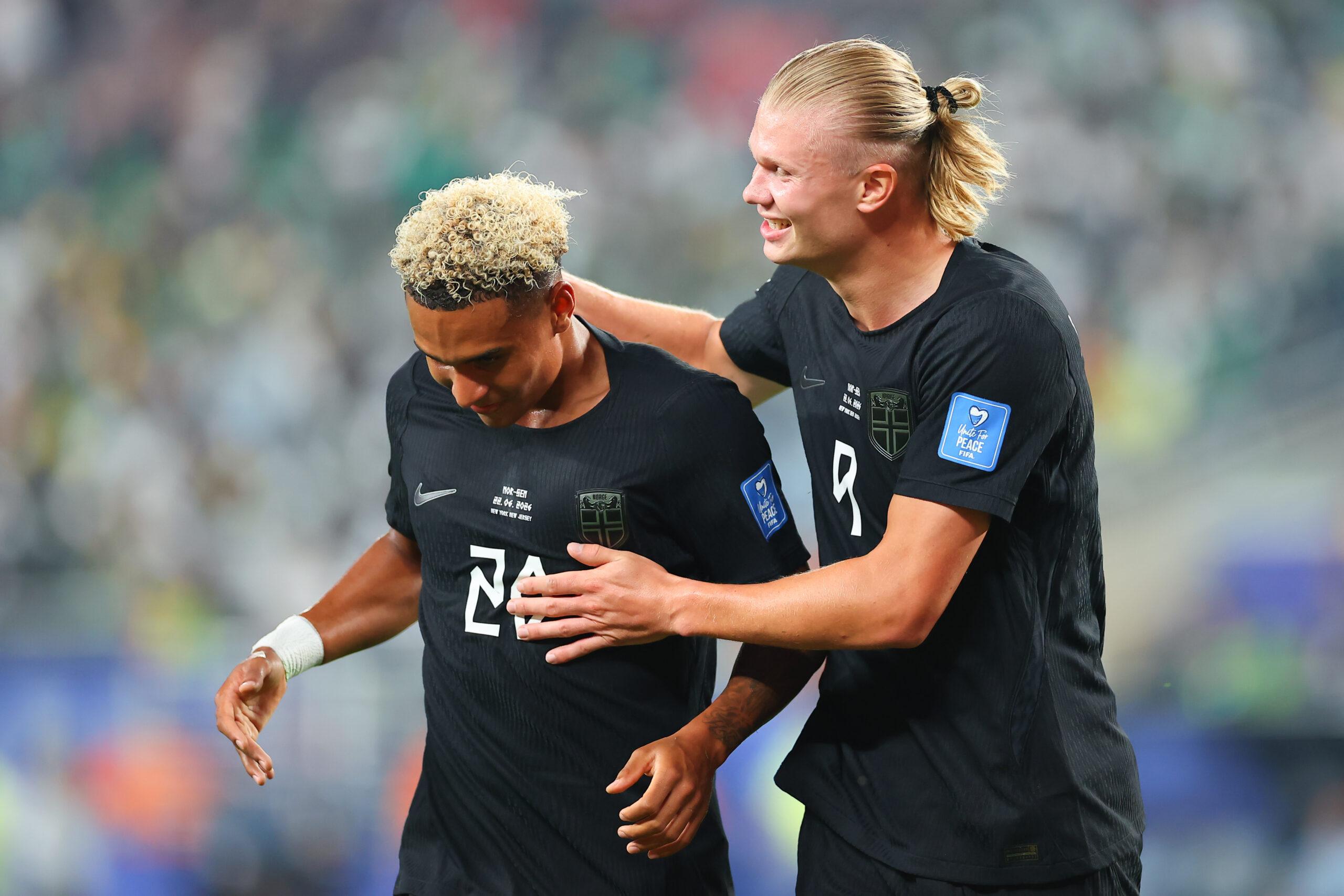
Erling Haaland and Antonio Nusa of Norway during the FIFA World Cup 2026 Group I match between Norway and Senegal
France vs. Norway
Friday, 3 p.m. ET
Group I
The appeal: Two of the world’s best attacking players and Golden Boot favorites share a field with Group I on the line.
As soccer fans, we’ve been blessed to watch Lionel Messi, Kylian Mbappé, and Erling Haaland cook during this tournament. All three have scored at least two goals on each match day and produced soccer superstardom euphoria. On Friday, we’ll get to see two of them go head-to-head.
France already has control of Group I, which means that a tie will be enough for Les Bleus to win the group and set up a potential round of 16 clash with fellow titan Germany on July 4. Neither France nor Norway will have an easy ride through the knockouts, though. Group I’s second-place finisher will match up with second place from Group E—which is very likely to be Ivory Coast—in the round of 32. The winner of that match will likely get a date with Morocco, Brazil, Japan, or the Netherlands in the round of 16.
But this match isn’t really about the group permutations and the knockout draws. Both teams have already advanced. This match is all about attacking firepower. Norway is a limited defensive team that has seemingly decided its best path to World Cup success is to outscore opponents, take risks in transition, and get the ball to Haaland as much as possible. France barely left second gear during its first two World Cup matches, but it scored six goals, and Michael Olise is leading the tournament in assists (with three) already.
This match also pits one of the tournament’s biggest stars against one of its breakout personalities. Mbappé is already on the verge of breaking World Cup scoring records at age 27; he is tied with Miroslav Klose for career World Cup goals, a record Klose held until Lionel Messi passed him on Monday. On the other side, Haaland has dazzled with his goal-scoring prowess and his love of rowing.
Following Norway’s thrilling 3-2 win over Senegal, Haaland leaned into his typical dry humor when he was asked about the upcoming match with France. “They’re probably going to win against us,” Haaland said. “They're probably going to win the whole tournament.”
Indeed, France is the favorite to win this match outright. But they’re liable to get picked off if they come out as sluggish as they did in the opening halves of their last two matches. An upset win for Norway in this match would establish them as a legitimate elite contender in this field.
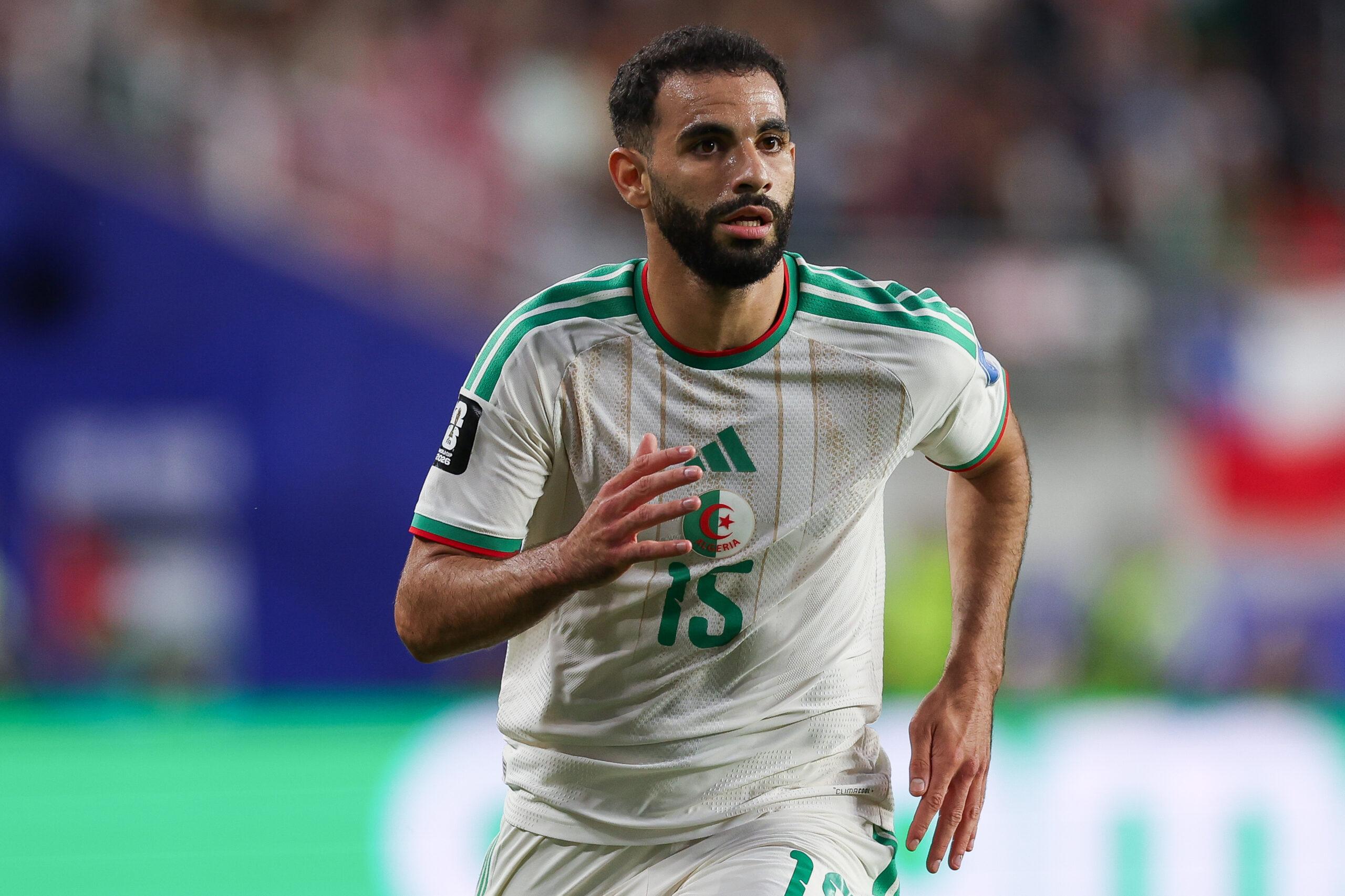
Rayan Ait-Nouri of Algeria
Austria vs. Algeria
Saturday, 10 p.m. ET
Group J
The appeal: This world-historical revenge game has major potential for shenanigans.
Have you ever wondered what would happen if a soccer match doubled as an exercise in game theory? Well, look no further than the final match of the group stage on Saturday night, between Austria and Algeria, which will decide who will finish second and third in Group J.
But before we get into that, a history lesson: In 1982, the final two matches of the World Cup group stage—Austria vs. West Germany and Algeria vs. Chile—were not played concurrently. Austria, West Germany, and Algeria were all in contention for the final two spots in the knockout round, but Algeria had already played its final match. Which meant that both Austria and West Germany knew that if West Germany won their match exactly 1-0, it would eliminate Algeria and send both teams to the knockout stage. Uncoincidentally, that’s exactly what happened. West Germany scored 10 minutes into the match, and neither team made much effort to score the rest of the way. That match is now infamously called “the Disgrace of Gijón.” FIFA changed the World Cup rules to prevent these sorts of shenanigans, but the new 48-team format opens the door for more tomfoolery and borderline match fixing.
So back to this year: Argentina has already clinched Group J and will play a dead rubber (a match with no stakes for either team) against Jordan. All eyes will be on Austria and Algeria in Kansas City. Since both teams have three points—and they are in the last group to play—they’ll know exactly what result could send both teams through to the knockouts.
This match could end up being even worse than Gijón because both teams may have an incentive to lose. A draw will most likely send both teams through safely, but the group runner-up will likely play Spain in the first round of knockouts, while the third-place team is almost certain to draw a weaker group winner. Would Austria throw the match to help their knockout chances? Will the two teams play out a handshake draw to ensure both are safe? Will Algeria want revenge for Gijón? The possibilities are endless, and I can’t wait to watch.
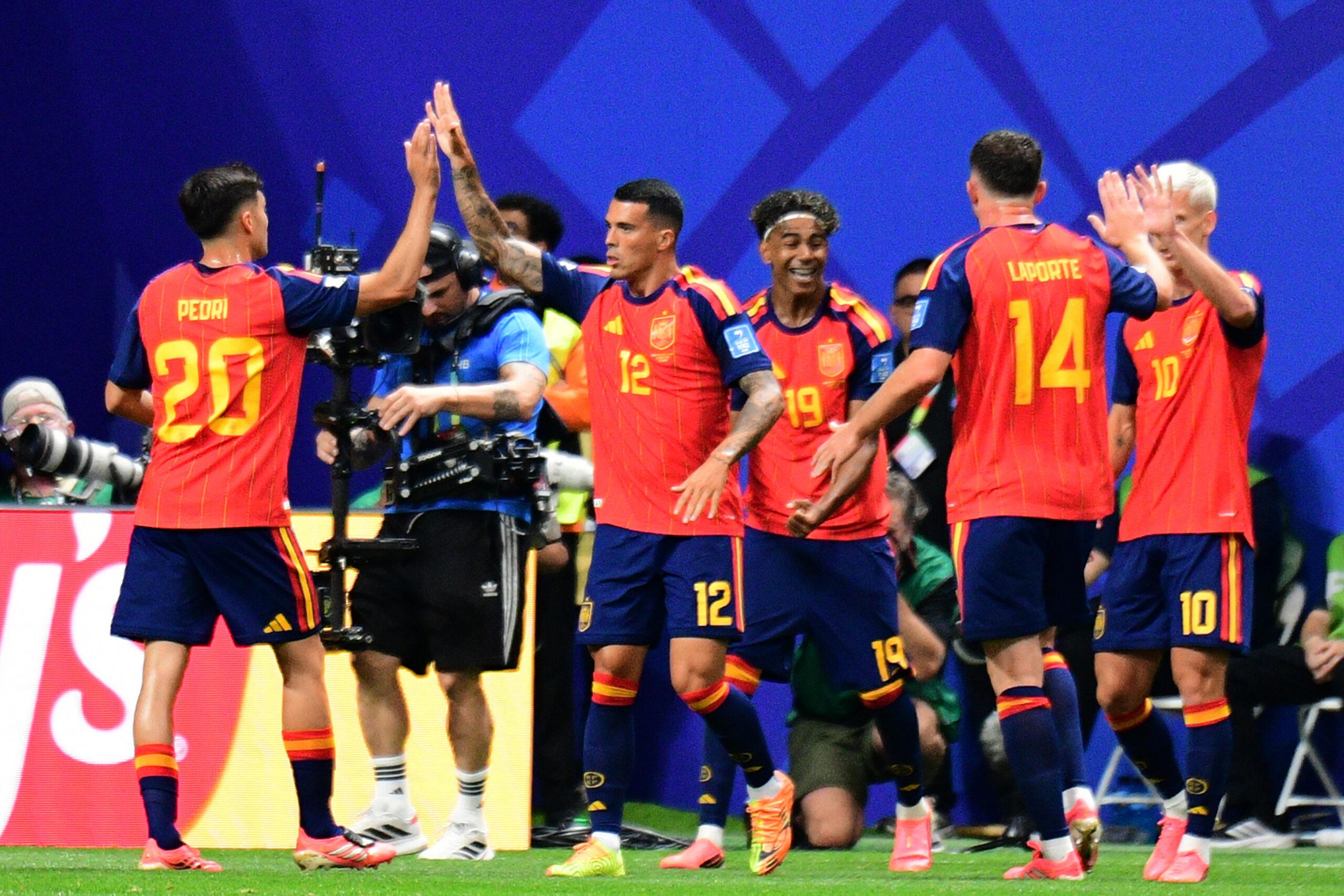
Lamine Yamal of Spain celebrates his goal with Pedro Porro and Pedri during a game against Saudi Arabia
Spain vs. Uruguay
Saturday, 8 p.m. ET
Group H
The appeal: A South American power fights for its tournament life in a match with massive bracket implications.
Clear favorite Uruguay failed to beat both Saudi Arabia and Cape Verde in its first two matches and now finds itself facing elimination unless it can nab at least a point against the defending European champions. A draw will almost certainly be enough for Uruguay to advance, but holding Spain to a stalemate is a lot easier said than done.
The impact of this match on the entire tournament is really underrated. If Uruguay pulls off an upset, then it will probably win the group, and Spain will very likely play Argentina in the round of 32. That would send the entire bracket into an uneven and chaotic mess. If Spain holds serve, then Cape Verde just needs a draw to set up a match between Messi and tournament darling Vozinha, as Argentina would play Cape Verde in the round of 32.
Uruguay has really struggled to create chances from open play against two very defensive teams so far. Spain is an entirely different test altogether, and the Uruguayans will need 40-year-old keeper Fernando Muslera to be considerably better following his disastrous showing in the 2-2 draw with Cape Verde. Uruguay will try to blow up the midfield with its defensive press and then break into space behind Spain’s high defensive line. They will probably prefer to play without the ball, even though that’s a difficult strategy to execute.
Given that Lamine Yamal is back for Spain and La Roja has been the most territorially dominant team in the tournament, it’s hard to see Uruguay pulling it off. But does legendary Uruguay manager Marcelo Bielsa have one more tactical wrinkle or magical moment up his sleeve?
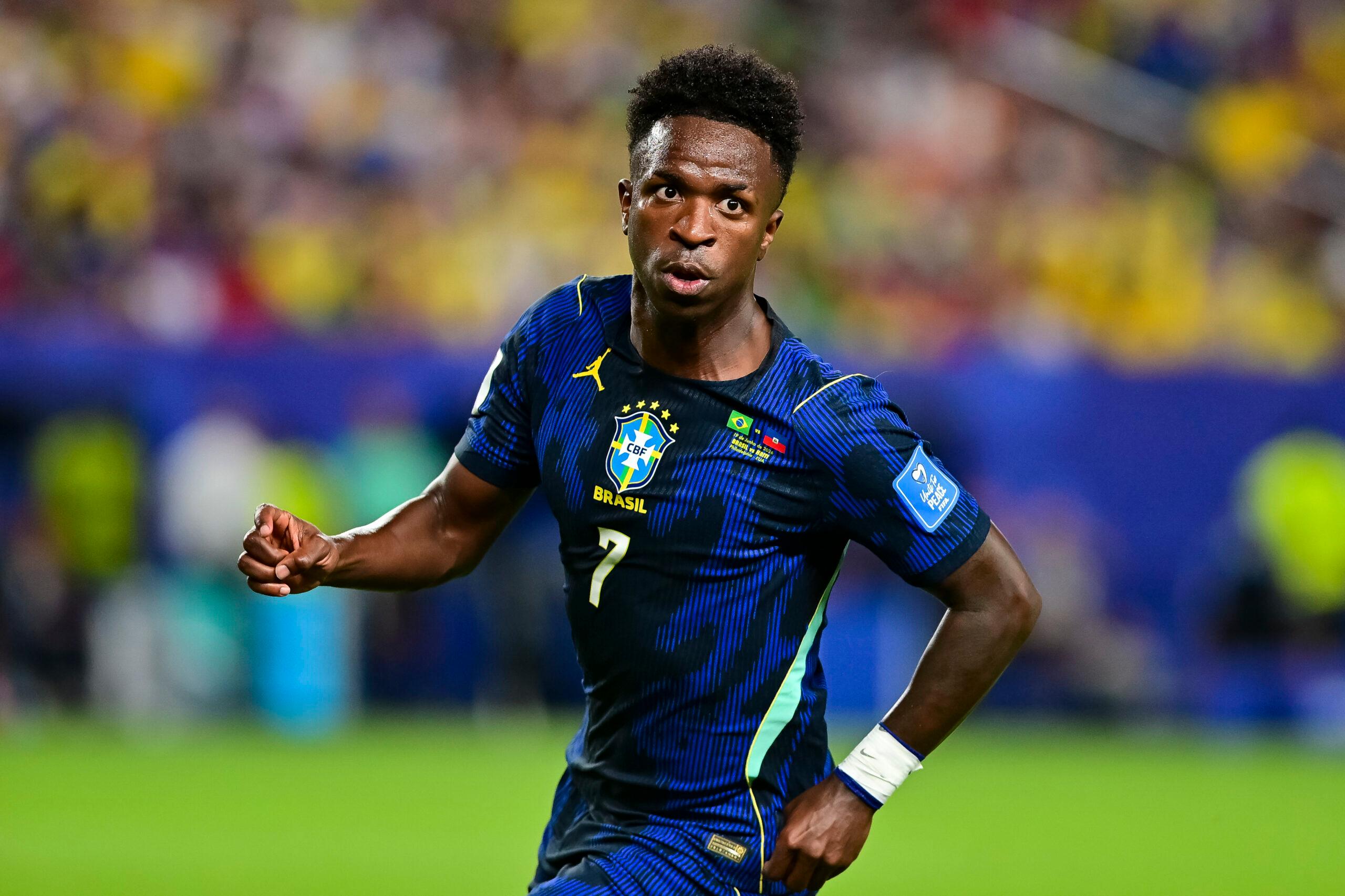
Vinícius Júnior of Brazil
Scotland vs. Brazil
Wednesday, 6 p.m. ET
Group C
The appeal: The Tartan Army. The Samba Kings. Miami. Scenes.
The beloved Tartan Army has descended upon Miami for an epic cultural clash with the Brazilians. Scotland has played in eight World Cups and never made it to the knockout stage, but sitting on three points in Group C, it has a chance to turn Wednesday night’s match into an all-time Scottish-Brazilian party in South Beach.
If Scotland manages to secure a draw, it will advance. If Scotland loses narrowly, it will still be well positioned to advance as one of the best third-place teams, but it would need help elsewhere and face a nervous wait. Meanwhile, Brazil is in close competition with Morocco at the top of the group. First place will likely play Japan in the round of 32, while second place will probably draw the Netherlands. Neither will be easy. Brazil has a two-goal edge over Morocco in goal difference, but Morocco has the easier match against the already eliminated Haiti.
On Wednesday, the Scots will play in their traditional defensive style for almost the whole match. Even if they trail by a goal late, they’ll be incentivized to play it safe. They’re playing the third-place teams in other groups as much as they are playing against Brazil.
This match also serves as an excellent test for Brazil and manager Carlo Ancelotti. They’ve had two uneven performances so far, against Morocco and Haiti. The second half against Morocco and first half against Haiti were encouraging, but Brazil also had long stretches in both matches when they didn’t really threaten the opposition’s goal. Without Raphinha, who is injured, Brazil's attack is too reliant on Vinícius Júnior to do something spectacular.
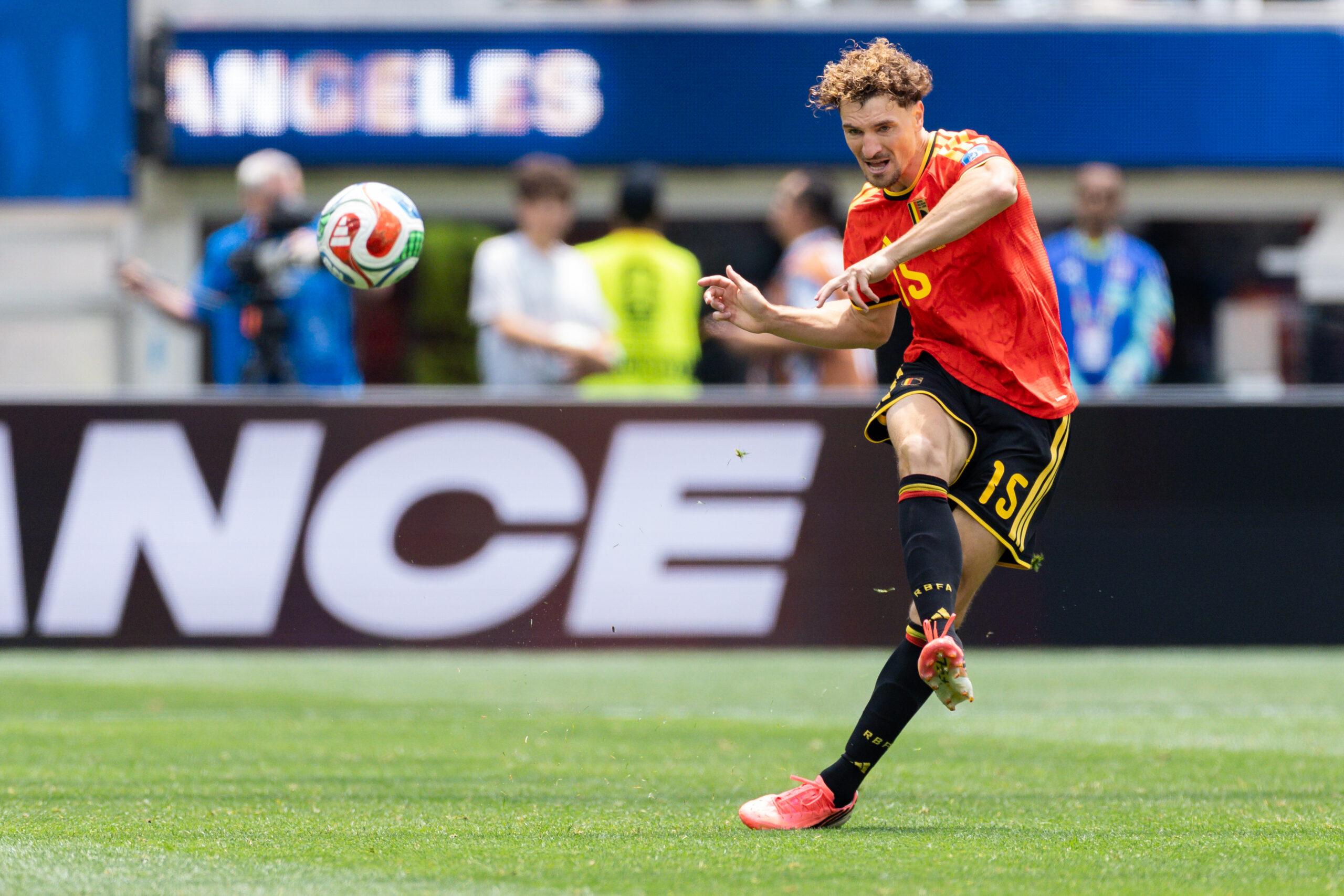
Thomas Meunier of Belgium
Egypt vs. Iran and New Zealand vs. Belgium
Friday, 11 p.m. ET
Group G
The appeal: This is a chaotic group where almost anything can—and probably will—happen.
In a tournament defined by heavyweight contenders and breakout stars, Group G has quietly become the World Cup's strangest group. Three of the four matches in Group G have ended in a draw, which means all four teams enter the final day with a path to either the knockout stage or an early flight home.
Belgium arrived as the favorite, but the Red Devils’ only score in their first two matches was an Egyptian own goal. They settled for draws against both Egypt and Iran and now need at least a point against New Zealand to avoid a second consecutive embarrassing group stage exit. That would mark a brutal, and likely final, international chapter for Kevin De Bruyne and Romelu Lukaku.
Egypt is in control of the group at this point. After opening with a draw against Belgium, the Pharaohs seized first place with a convincing comeback victory over New Zealand. A win over Iran would guarantee first place, while a draw would likely be enough to take the group unless Belgium wins by three or more goals. Iran missed a real opportunity to grab a win as it played with an extra man for most of the second half against Belgium, but a third consecutive draw would probably be enough to see Iran through to the round of 32.
Then there is New Zealand, which entered the tournament as the longest shot in the group and somehow still controls its own destiny. The All Whites know a victory over Belgium would almost certainly send them into the knockout stage and produce one of the biggest upsets of the tournament.
With every team still alive and every match carrying knockout implications, Group G is perfectly positioned to deliver the type of late-night chaos that makes the World Cup group stage so addictive. While the new format has chipped away at some of the elimination drama, this feels like a classic World Cup group—and it’s made even more perfect by the 11 p.m. ET start time.
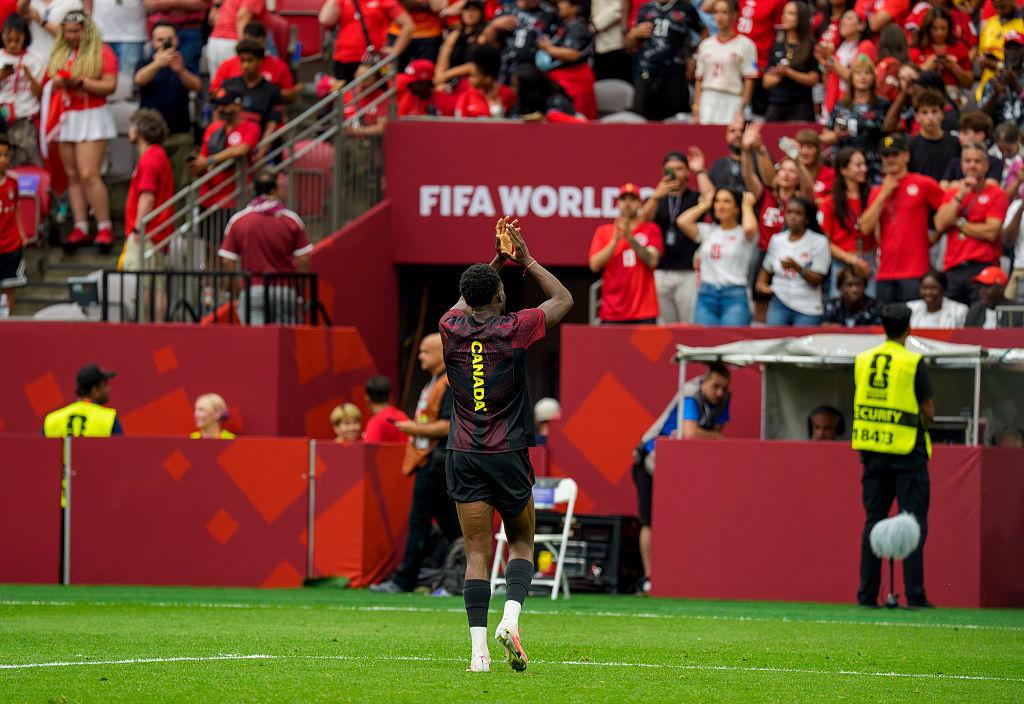
Alphonso Davies of Canada
Switzerland vs. Canada
Wednesday, 3 p.m. ET
Group B
The appeal: This matchup features contrasting styles and a chance for the Canadians to make history on home soil.
Canada has spent decades trying to establish itself as a legitimate soccer nation. Now, in front of a home crowd in Vancouver, it has a chance to win its first World Cup group. After watching Switzerland beat Bosnia 4-1, the Canadians took control of Group B with a 6-0 demolition of Qatar. That was Canada’s first World Cup win, and it also gave them a clear path to first place entering the final match day.
A draw would be enough for Canada to finish atop the group and remain in Vancouver for the opening rounds of the knockout stage. A loss would probably drop them into second place and send them on the road to Los Angeles for a difficult round of 32 clash with, most likely, South Korea.
Switzerland enters this match with a reputation. The Swiss rarely arrive at major tournaments with much star power, but they almost always find a way to advance. After coughing up a goal late in their draw with Qatar and struggling through the first hour with Bosnia, the Swiss may need to shake up their attacking lineup.
The contrast in styles should make for one of the more intriguing tactical battles of the group stage. Canada wants to play with speed, verticality, and pressing energy in front of a packed home stadium. Switzerland would prefer a slower, more controlled match where its organization and experience can frustrate the Canadians. The winner of this match will be well set up for a potential quarterfinal run. And by the way, if Bosnia and Qatar are tied late in their match, that will be worth watching too, as both teams will try to avoid the double-elimination draw.