The Six Biggest Questions About ‘GTA VI’
We’ve learned a lot about the most anticipated video game of all time. But much of Rockstar’s blockbuster sequel to ‘Grand Theft Auto V’ remains a mystery.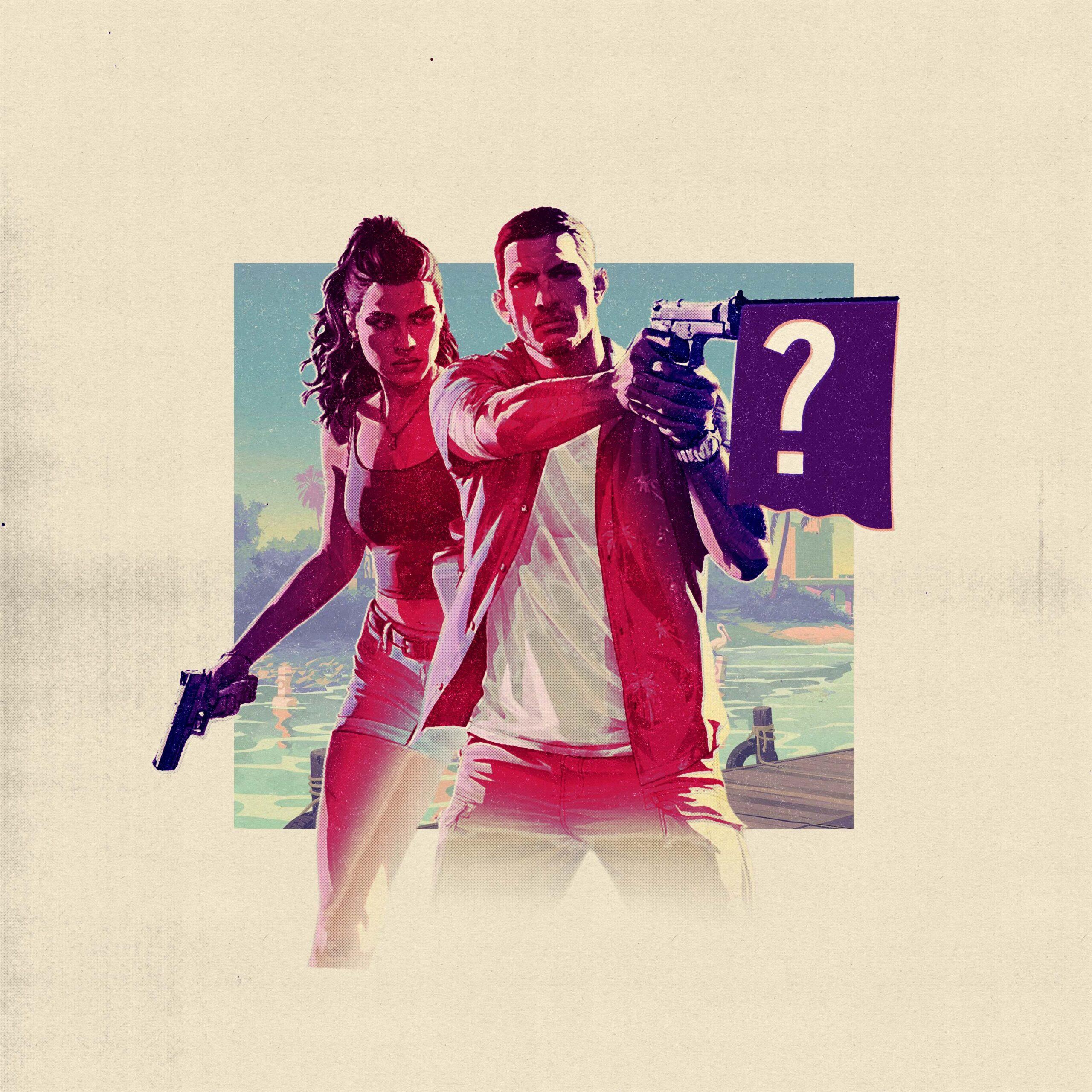

Whether you’ve been waiting for Grand Theft Auto VI for 13 years, 13 months, or 13 days, last week was a doozy. To the great relief of fans who’ve stomached multiple delays—not to mention rival game makers who’ve cleared the calendar for this fall—developer Rockstar Games and publisher Take-Two Interactive opened preorders for GTA VI and, in the process, reaffirmed their commitment to the game’s November 19 release for PlayStation 5 and Xbox Series X/S.
To convince people to plunk down cash today for a file they can’t download until later—digital supplies aren’t exactly limited—Rockstar published a batch of screenshots and details. The news blitz that broke the studio’s extended silence offered solutions to several major mysteries about the blockbuster-to-be, such as: What will it cost? (A steep but not unprecedented $80 for the base game, or $100 for an “ultimate edition” that contains exclusive content and customization options.) What will the cover art look like? (More or less what GTA cover art always looks like, complete with traditional helicopter.) Will the “physical” version include a disc? (Not at launch, or for the foreseeable future; buying a box gets you a download code and a piece of plastic to put on your shelf.)
Even after these revelations, and the synopsis of setting, premise, and protagonists that Rockstar previously provided, much of the game remains a cipher. It’s been more than a year since the most recent trailer appeared, and we still haven’t seen so much as a snippet of gameplay, outside of some footage leaked by a hacker in 2022. Like its 2013 predecessor—the third-bestselling game ever and the most profitable entertainment product, period—GTA VI is a virtual lock to post a singularly lucrative launch. (It’s already the bestselling game in the PlayStation Store.) But beyond that, its success is still uncertain. There are countless questions we could ask about the game’s marketing and mechanics, but the answers to the following six big-picture queries will go a long way toward defining the reception, impact, and legacy of the most anticipated title of all time.

Will the wow factor be there?
Considering Rockstar’s track record—every mainline 3D/HD GTA boasts a Metacritic rating of 95 or higher—and the time and money the studio has sunk into its next open-world opus, it’s hard to imagine GTA VI not being a very good game. But the bar for GTA greatness is set higher than Mount Chiliad. To have any hope of living up to the unparalleled hype, GTA VI will have to feel revolutionary, not just for the franchise but for the medium as a whole.
A mandate to blow gamers’ minds has been a tall order in every era, but it’s particularly tough in 2026. This isn’t the 1990s or 2000s, when gaming’s transitions to 3D and HD delivered evolutionary leaps in eye-popping polygon counts. We’re well into an era of near-photorealistic fidelity for triple-A titles, and it already takes an expert eye to distinguish between games that look great and those that look greater. As Bloomberg put it last week, “Gamers are no longer easily impressed by technological advances because quality is already high enough across the industry.” Each year of the 2020s has ushered in graphical showcases such as Cyberpunk 2077, Horizon Forbidden West, Alan Wake 2, Senua’s Saga: Hellblade 2, Death Stranding 2, and Crimson Desert. GTA might look even more amazing than those and other standouts, but by how much?
GTA VI will completely outclass its predecessor, but that isn’t saying much, considering GTA V arrived two console generations ago. And even GTA V has gotten two graphical facelifts via enhanced editions released for subsequent consoles and PC, so it’s not as if GTA VI will be the first next-gen GTA; anyone who’s spent time in a remastered or modded GTA V’s souped-up Los Santos won’t be wowed easily. Yet no one who has waited an eternity (in gaming terms) for a brand-new GTA will be sated unless the game looks like it took a decade-plus to polish. As upgrades go, “incremental” won’t cut it. Some fans are frothing at the mouth over missing Ferris wheel reflections and perceived downgrades from earlier looks in the morsels Rockstar recently released, although others have been awed by the game’s reactive mud and a collection of cars that make Forza Horizon 6’s seem flat.
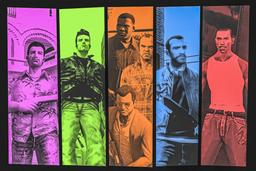
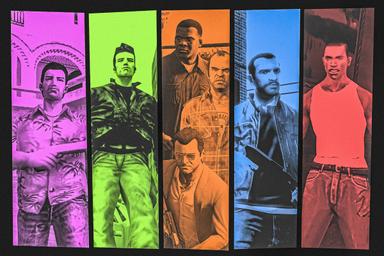
Until we get gameplay footage, we won’t really know what we’re looking at anyway. And ultimately, gameplay possibilities, more than the superficial flair of a rebuilt game engine, will dictate whether GTA VI is perceived as a disappointment or a triumph. Each mainline, 21st-century GTA has supplied significant advances for the franchise and for video games as a whole: the dizzying, genre-defining freedom of Grand Theft Auto III; the speaking protagonist, property system, and unforgettable soundtrack of Vice City; the massive scale and RPG-style progression of San Andreas; the (somewhat) more mature tone, moral/relationship choices, and online multiplayer of IV; and the tripartite protagonists, elaborate but linear heists, and living world of V and its multiplayer counterpart, GTA Online.
At this stage, we can only speculate about what the equivalents of those breakthroughs and impressive, subtle touches might be in GTA VI. At minimum, the sequel will have to incorporate and build on the dynamic interactivity of the past decade’s open-world games. Some apparently leaked marketing copy, coupled with cutscene and screenshot clues, hints at non-player-character reactions that will put GTA IV’s (or even Red Dead Redemption 2’s) to shame; a fully fleshed-out in-game social media network; the ginormous, geographically varied landscape of a modernized Vice City and the surrounding regions of Florida Leonida; a vast assortment of explorable indoor spaces; and more immersive, handcrafted environments. And to a greater extent than in GTA V, missions may revolve around switching between playable characters—in this case, dual protagonists, outlaws, and lovebirds Jason Duval and Lucia Caminos.
Of course, any innovations we can conceive of in June may not make our jaws drop come November. The true test of GTA VI will probably be how fresh it feels when we finally have our hands on it. But the game is going up against a multitude of obstacles that have simultaneously raised expectations and made them more challenging to meet: the GTA series’ storied past, a shift from transformational to iterative technology, and the fact that gamers have gotten much harder to impress.


What’s the multiplayer plan?
Online listings for GTA VI specify, “Grand Theft Auto VI is a single-player experience.” It’s certain not to stay solely single-player—but we’ve learned next to nothing about how and when that will change. That’s a pretty consequential thing not to know, considering that the multiplayer experience grafted to GTA VI must be central to Rockstar’s long-term goals for the game.
GTA V started out as a single-player product, too. The base game launched on PS3 and Xbox 360 on September 17, 2013, and Grand Theft Auto Online went live two weeks later, on October 1. It took time for the persistent online component of Rockstar’s GTA V vision to overcome early technical hurdles, generate a sufficient (or even excessive) array of assets and activities, and come into its own. Eventually, it flourished and morphed into such a money-minting juggernaut that Rockstar released it as a stand-alone product and assimilated aspects of the game’s grassroots community.
As remunerative as selling and reselling single-player GTA V has been, Rockstar’s golden goose is GTA Online. The online mode remains one of the world’s most played, most streamed games, and its microtransactions generate more than $1 million a day in revenue. More than any other factor—GTA VI’s ambitious scope, Rockstar’s commitment to minimizing crunch, pandemic-induced developmental slowdowns—that steady stream of income explains why a sequel to GTA V has taken so long to materialize. Rockstar had scant reason to rush when GTA Online was printing a fortune for its publisher.
A thriving online game in a landscape littered with live-service corpses isn’t something to throw away. Naturally, Take-Two has no desire to turn off the spigot of steady GTA Online lucre, even after releasing GTA VI. The online game has grown along with the power of the hardware it runs on, and in some form, it will continue to. Take-Two CEO Strauss Zelnick has stated, and reiterated, that the arrival of GTA VI won’t mark the end of GTA V’s online experience: “I have every reason to believe we’ll continue to support GTA Online,” he said in February. And as long as people keep playing—and, more importantly, spending—we’ll have a million reasons a day to believe him.
What we don’t know is what the next phase of GTA Online will look like. Will GTA VI, like GTA V before it, gain an online offshoot not long after launch? Can GTA Online and this multiplayer successor—GTA Online 2?—coexist indefinitely, or would the former cannibalize the latter’s audience? Might Rockstar maintain both until the OG GTA Online sees its audience depart for flashier pastures and the game gets retired on all platforms, as it did on PS3 and Xbox 360 in 2021? Can Rockstar migrate players’ possessions to the sequel, and if not, how will it avoid pissing off people who’ve lavished mountains of money and untold hours on online Los Santos? Is it possible for the new online entity to absorb the old, so that players of the new GTA Online can visit Vice City and Los Santos? However it works, the game isn’t going to downsize.

Will protracted development date the game?
Remember 2013? Yeah, me neither. GTA V came out before the legalization of gay marriage; before Donald Trump descended an escalator and upended our lives; before COVID-19 debuted and measles made a comeback; before Woke 1.0, Gamergate, and the mainstream manosphere; before Fortnite, The Force Awakens, and Twitch Plays Pokémon; before NFTs, the metaverse, and generative AI. We got an awful lot of life before GTA VI. Imagine trying to make a single, sprawling piece of art over that extended, topsy-turvy period that still seems cohesive and topical in 2026. What if GTA VI’s long-gestating story and setting seem stitched together from elements of an era that’s already over?
Now, it’s not as if Rockstar has been head down, grinding on the game since the day the designers declared their work on GTA V finished. For one thing, there was the minor matter of 2018 masterpiece Red Dead Redemption 2, whose production really ramped up after GTA V shipped. For another, there’s the ongoing maintenance and development of GTA Online and Red Dead Online. According to Take-Two, Rockstar started making GTA VI “in earnest” in 2020. Of course, the country and culture have changed quite a bit even since then, and it seems safe to say that preproduction dates back a good deal longer than that. There’s no telling how long ago the brainstorming stage for GTA VI started.
With period pieces like the original Red Dead and its sequel, timeliness wasn’t a concern. And Rockstar’s first vision of Vice City—which took only 18 months (or nine “in earnest” months) to make—was steeped in neon nostalgia and dated by design. But GTA VI is set in the present day—and while Rockstar was working, the present turned into the past. GTA III, San Andreas, GTA IV, and GTA V feel like time capsules today, but when they were new, their influences and references were ripped from recent headlines. Based on the first trailer—which came out two and a half years ago—some of GTA VI’s viral inspirations are nearly a decade old.
Expired slang and half-forgotten memes can be cringey, of course, but the bigger threat to GTA VI is stale satire. Most GTA games’ milieus have been snapshots that distilled specific moments into heightened, targeted spoofs. The origins of GTA VI might be a patchwork quilt of culture. As of 2022 (if not 2026), the GTA maker was trying to become a “kinder, gentler Rockstar,” in both its company culture and its public-facing products: In a sign of the times, GTA VI was slated to adopt a playable female protagonist (a Latina, no less) and stop punching down at marginalized groups. The franchise that had once incited a moral panic was flirting with becoming politically correct. How will that moderately more progressive ethos play after a conservative vibe shift? Rockstar’s previous send-ups of American culture proved prescient, and this time around, the studio’s knack for anticipating trends could be key to keeping its comedy and commentary from feeling overcooked.
Can Rockstar write romance?
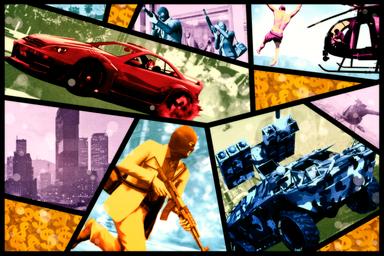
Speaking of dating: GTA VI seems destined to depend on romance to a greater degree than any other entry in the series, which isn’t saying much where this franchise is concerned. GTA games—which can always be played as pure chaos simulators, apart from their plots—are generally focused on tasking players with climbing (or escaping from) the criminal ranks while causing as much mayhem as possible. On a relationship level, they’re known more for San Andreas’s Hot Coffee mod and the more discreet assignations and perfunctory “girlfriend” activities of GTA IV than for tender depictions of romantic connection. In Grand Theft Auto, genuine love is rarely in the air (tonight).
GTA VI seems set to change that via its leading duo, a Bonnie-and-Clyde couple on the wrong side of the law. Lucia is a Liberty City native who’s just finished serving time. Jason is a Leonida local in league with drug runners. They’re out to trade their hardscrabble upbringings and run-ins with the fuzz for a better (and possibly less illicit) life, but their liaison might be bad for both of them. Sorry for the spoiler, but the real-life and fictional Bonnie and Clyde didn’t have happy endings.
Rockstar has depicted couples in previous games—Victor and Louise, John and Abigail, Arthur and Mary—but romance has never been so central to a Rockstar game. That’s if the love of Lucia and Jason is truly foundational to GTA VI, and not just window dressing for the usual violence and lawbreaking. Rockstar’s narrative ambitions are sometimes in tension with its players’ appetites for wanton destruction; see Niko Bellic’s guilt about behaving badly, a compunction most purchasers of GTA IV didn’t share. Maybe Jason and Lucia’s star-crossed love will supply some meaningful (even moral) motivation for their violence and a needed dose of pathos. Or maybe it will be a silly sideshow or half-baked B plot.
Whether or not GTA has grown up, many of its diehards have. Someone who was in their early teens when GTA III came out—and who, hypothetically, had to get their grandma to buy it for them because a certain store clerk was a stickler for that 17-plus M rating—is pushing 40 now. Not that I’m speaking from experience. OK, I’ll come clean: As youthful and hip as I certainly seem, I’ve gotten hitched, had a kid, and begun to go gray since GTA V, and GTA VI’s audience will undoubtedly encompass millions more like me. That doesn’t mean the game’s comedy can’t be sophomoric at times—no one wants GTA to be super-serious—but it does suggest that grounding the game in its characters’ connection could elevate the experience for some consumers instead of dragging it down. For Rockstar, that’s a daunting challenge—and for better or worse, the studio set out to sound newfound depths without cofounder and longtime lead storyteller Dan Houser, who departed the studio in 2020, founded his own company, and poached prominent Rockstar writers.
Can GTA sell systems?
To qualify as a coup for Rockstar and Take-Two, GTA VI has to make enough money for its publisher to recoup development and marketing costs measured in the billions—and then keep paying off in pure profit for many years to come. But the beleaguered industry writ large won’t judge GTA’s success based solely on units moved or microtransactions completed. It will also assess how many consoles it sells.
Every other game maker is terrified of losing players and sales to Rockstar’s sensation in the short term. But they’re all banking on being boats lifted by Take-Two’s tide in time. GTA V wasn’t ported to PC until April 2015, more than 18 months after the original was released, and five months after it landed on PS4 and Xbox One. GTA VI will similarly cater to Rockstar’s “core consumer” first; if you want to play the latest GTA without waiting even longer, you’ll have to have the latest Sony or Microsoft console. Thus, GTA VI isn’t just a potential system seller; it’s a potential systems seller. Or, perhaps, a whole ecosystem seller, if the game makes good on its potential.
The current console generation, which turned five late last year, got off to a slow start thanks to COVID-19-driven supply chain disruptions and potential buyers’ blasé stance on the hardware’s diminishing returns. Now sales are stagnant (or worse) for a different reason. The price of any given gaming console used to go down over time. In this generation, it’s gone up, thanks in part to Trump’s tariffs and, increasingly, because of AI-driven RAM shortages that have caused crucial components’ prices to skyrocket. The effects have been felt across the tech world—Apple just raised Mac and iPad prices—but gaming machines, which tend to be loss leaders or to operate with slim profit margins, have been especially hard hit. Xbox, PlayStation, Switch, Steam Machine, even the Nex Playground—no system has been spared at least one price hike. I never thought I’d pine for depreciation.
“Unfortunately, console storage and memory prices have increased by more than 2.5x and we expect another doubling by the fall of 2027,” moaned Microsoft—which is partly responsible for the RAMpocalypse—in a press release last week that revealed the company’s third Xbox Series cost increase but couldn’t bring itself to state the systems’ eye-watering new price tags. Not coincidentally, Microsoft just recorded its lowest-ever tally of Xbox units moved in May, and Sony suffered its worst PlayStation sales in the month of May since 2000.
The RAM crisis is expected to persist until at least 2028, which means that Microsoft’s and Sony’s successor systems—Project Helix and the PlayStation 6—could be a ways away. And if the next generation fails to launch after the typical time frame (seven years or so), console gamers will be stuck with (or without) the machines on the market today. GTA VI is spurring a spirited campaign in the recently renewed console wars: Sony has a history of marketing arrangements with Rockstar, and it’s making the most of that partnership by plugging the PS5 as the platform where GTA VI “plays best.” That appeal appears to be paying dividends in disproportionate PlayStation preorder figures, although we don’t know yet whether people are picking up PS5s for the privilege.
For years, console manufacturers have been banking on GTA to supercharge adoption of their gaming machines. “GTA VI, which is only launching on Xbox and PlayStation, is expected to cause an increase in interest for those platforms,” The Game Business noted this week. Will that interest translate to sales?
It would, if said platforms were plentiful and affordable. At these prices, uptake may be more muted. Plus, even a universally acclaimed game—combined with Call of Duty finally forsaking PS4 and Xbox One—can’t sell systems if there aren’t any systems to sell. And a lack of RAM supply may limit console stock during the holiday season, when well-heeled customers might otherwise be giving the gift of GTA.

Will we ever see a game get made like this again?
GTA VI is the avatar of an era in which high-profile games cost more to make and (relatedly) take longer to come out, a two-pronged trend that’s widely described as unsustainable. In response, some (although not all) companies are pivoting away from high-risk live-service ventures. Tiny teams of indie devs are using off-the-rack tools to build friendslop splashes. PC gaming is growing; consoles, cutting-edge graphics, and triple-A are passé.
GTA VI is the antithesis of all of the above: It’s a painstakingly, expensively, proprietarily crafted offline and live-service hybrid that’s coming to consoles first. Grand Theft Auto is a genre unto itself, and the industry’s regular rules don’t apply to the medium’s ultimate outlier. But even though fans will start counting down the days (or decades) until GTA VII as soon as VI is in the wild, we may never see another game of this magnitude made under these conditions.
Desperate to cut costs via reduced development times and/or head counts, companies are increasingly chasing the siren song of AI. The same week Rockstar revealed the preorder date for GTA VI, Epic Games boasted that the next version of its industry-leading Unreal Engine would deeply integrate AI tools. The week preorders began, film producer A24 struck a controversial deal with Google DeepMind. Amid this upheaval, Epic Games veteran (and former Unreal Engine evangelist) Sjoerd De Jong announced his resignation. “This era has come to a close,” he wrote, adding, “The games industry has always been an industry where change is relentless and inevitable, but it feels like we are reaching a pivotal point now and a potent mix of things. As much as I love the old way of working, I think it would be strategic to come to terms with where this is heading.”
According to Zelnick, it’s not heading for a slopified Vice City. In February, the CEO said, “Generative AI has zero part in what Rockstar Games is building. Their worlds are handcrafted. That’s what differentiates them. They’re built from the ground up, building by building, street by street, neighborhood by neighborhood. They’re not procedurally generated, they shouldn’t be. That’s what makes great entertainment.”
Will that sentiment sound quaint by the time the next GTA sequel comes out? That may depend in part on Rockstar, a sui generis studio with the power to influence an industry. Will GTA VI be remembered as a testament to human ingenuity or a monument to bloated ambitions and budgets? A model for the future or a last gasp of the past? In all likelihood, there hasn’t been anything like it. There may never be anything like it again. In mere months, the wait—worthwhile or otherwise—will end. So preorder now or pony up later; side with Sony or make up with Microsoft; see yourself in Jason or lean toward Lucia. However you play, there’s no avoiding GTA. Ah shit, here we go again.