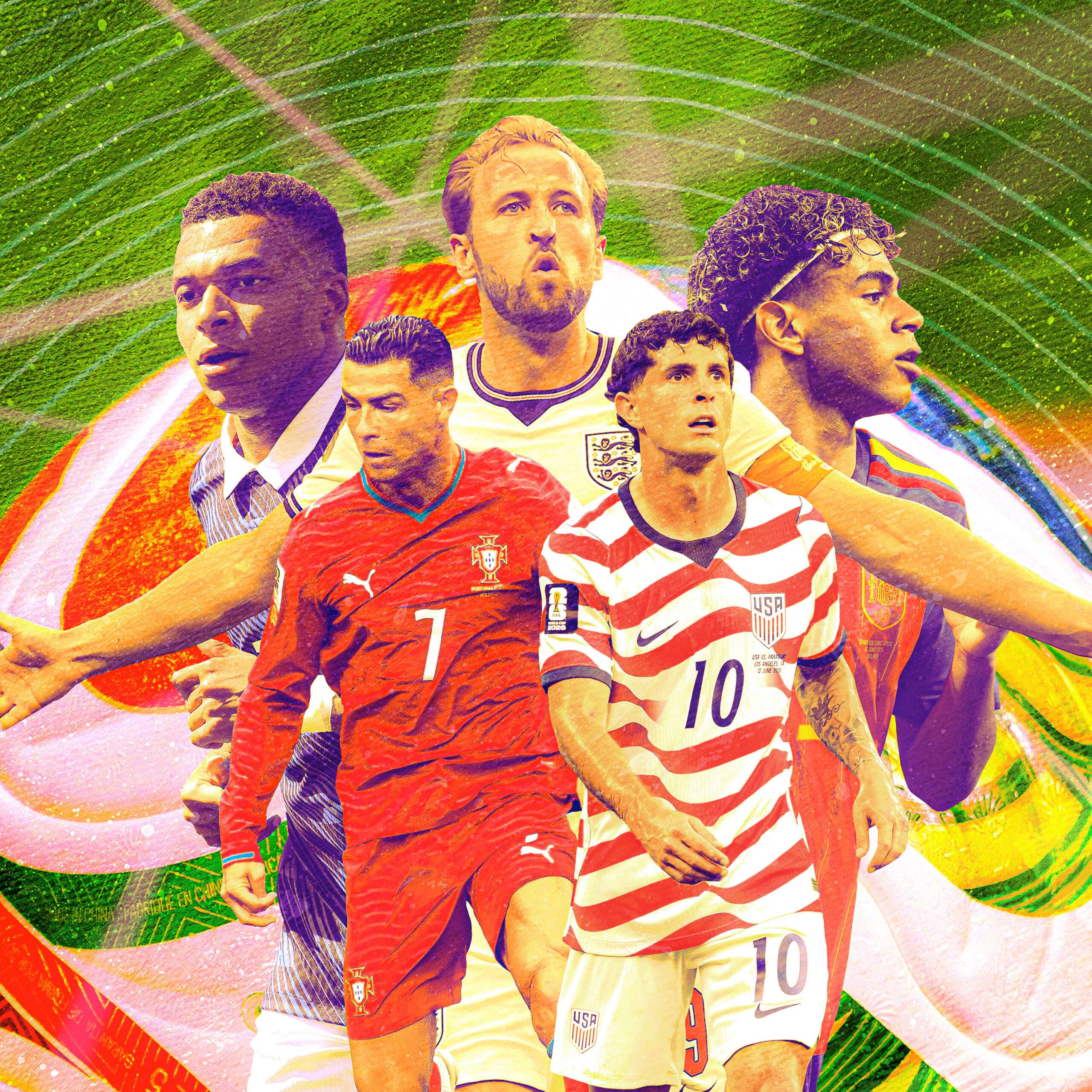

The opening matches of the World Cup rarely tell us who will lift the trophy at the end. Argentina lost its opener in 2022 before going on to win. Spain did the same in 2010. Almost every eventual champion endures some kind of group-stage scare, disappointing performance, or result that sparks doubt.
Plenty of the favorites in this tournament have delivered performances that fell short of expectations. Perhaps the most striking takeaway from the first round is how many contenders are still trying to discover exactly who they are. France looked vulnerable for the first 45 minutes and unstoppable for the next 45. Brazil seemed uncertain of its identity. Spain is heavily dependent on two young stars who are working their way back from injury. Portugal has a Cristiano Ronaldo dilemma that is impossible to ignore. Belgium and the Netherlands both dropped points in matches they were expected to win.
Meanwhile, some of the tournament’s biggest names and most established powers looked exactly as advertised. Lionel Messi reminded the world why Argentina remains a contender. England looked liberated under Thomas Tuchel. Germany scored seven goals, again. The United States may have produced the most complete World Cup performance in its modern history.
One round of matches is far too small a sample to draw sweeping conclusions from. But it's enough to identify the story lines that could shape the rest of the tournament. So now that all 48 teams have taken the field, here are the biggest questions to emerge from the opening week of the 2026 World Cup.
Will England’s newfound courage carry over into the knockouts?
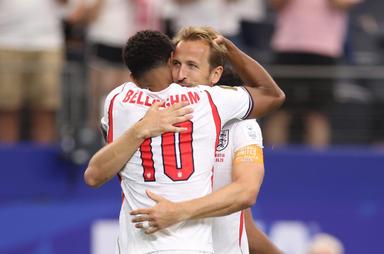
Tuchel won’t be drawing Winston Churchill comparisons anytime soon, but Harry Kane credited England’s manager for a rousing halftime speech that sparked a dominant second half in England’s 4-2 win over Croatia. “He told us to take the shackles off, calm down and let’s go,” Kane said. “He said, ‘What’s the worst that can happen? Show the world who we can be.’”
The message resonated because it cut directly against England's instincts. For years under Gareth Southgate, the team’s default response was caution. Once they gained an advantage, they often retreated into a defensive shell, prioritizing solidity and risk avoidance over ambition. Southgate’s struggleball delivered respectable tournament finishes, but it also produced a brand of soccer that rarely seemed to match the talent on the field. It routinely invited lesser opponents back into matches.
England had every excuse to fall into those old habits after Jude Bellingham's brilliant goal put it up 3-2 less than three minutes into the second half. Instead, England put its foot on the gas. After generating 0.59 non-penalty expected goals in the opening 45 minutes, England created 1.83 after halftime. The English carved up a Croatian defense that had struggled to contain their movement in transition.
Based on their opener, England stands out as one of the rightful three or four favorites to win this whole thing. But when stakes are reintroduced in the knockout stage, England will need to maintain its courage.

Can the U.S.’s aggressive midfield strategy survive against better opponents?
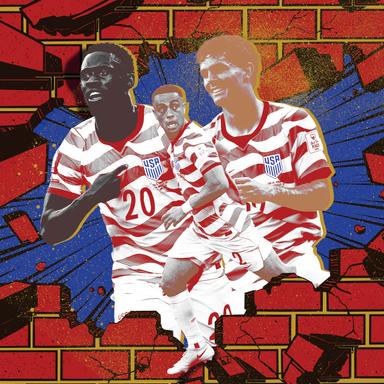
The United States thrashed Paraguay 4-1 and had one of the most impressive opening-round performances of any team in the World Cup. The utter dominance and control on display in the win felt new for USMNT fans; it left zero need for the doom and gloom that has been following this team like a dark storm cloud for the past two years.
Manager Mauricio Pochettino pushed his central players high up the pitch, trusted them to make runs behind Paraguay’s defensive line, and encouraged them to press relentlessly at every opportunity. Against Paraguay, it worked perfectly. The Americans dominated territory, created multiple big chances through those tactics, and cruised. The question now is what will happen when the USMNT’s opponent can actually play through that pressure. Or when teams are more willing and able to counterpress the United States when they lose possession of the ball.
The USMNT's preferred midfield trio is built around energy, athleticism, and ball-winning rather than possession control. Tyler Adams is one of the best defensive midfielders in the tournament, while Weston McKennie and Malik Tillman thrive when games are chaotic and free form. Against strong opponents, Pochettino’s midfield tactics become a risk-reward proposition. If the press succeeds, the United States can create scoring opportunities without needing to break down a settled defense. If it fails, a lot of space opens between the midfield and the back line.
The United States looked proactive and fearless against Paraguay, but the tournament’s elite teams are much more comfortable navigating and generating pressure. We probably won’t get an answer to this question until the knockout stage, but when the answer comes it will come quickly.
Can Portugal solve its Ronaldo riddle?
The scrutiny of Cristiano Ronaldo’s role in Portugal’s lineup began before the World Cup. The 41-year-old forward is no longer the world-beater he was during his prime, yet he still leads the line for Portugal. After their 1-1 draw with Congo, the light is shining directly onto manager Roberto Martínez to see whether he’s willing to make the hard decision and experiment with someone else as a main striker.
Ronaldo's supporters can point to his goals; he was Portugal’s most reliable goal scorer during qualifying play, after all. His critics can point to everything else. Portugal boasts one of the deepest and most technically gifted midfields in the tournament, yet too often their possession sequences seem designed to find Ronaldo rather than maximize the collective talent around him. When Portugal struggles to break opponents down, the question inevitably becomes whether the tradeoff is still worth it. Ronaldo isn’t adding any value to Portugal’s possession play right now, and he’s not threatening to stretch the defense. It leaves Portugal’s dynamic midfield with few ways to pass the ball forward.
Martínez now faces perhaps the most delicate decision of any manager at this World Cup. Is Ronaldo still Portugal's best option at striker, or has he become the most famous untouchable starter in international soccer? Benching him entirely feels unlikely. But experimenting with Gonçalo Ramos or another more mobile option could unlock a different version of Portugal's attack.
Can Turkey finally make good on its talent?
It’s become one of the most predictable narratives in international soccer: Turkey enters a tournament as a popular dark horse choice, and then underperforms. While it did make the quarterfinal of Euro 2024 in Germany, Turkey was a common underdog pick in both Euro 2016 and Euro 2021. Both times, the team failed to escape the group stage. And after losing 2-0 to Australia in its opener at this World Cup, Turkey could be headed that way again if it fails to beat Paraguay on Friday.
Turkey hasn’t been to the World Cup since it finished in third place in 2002, but its overall talent immediately caught the eye of soccer hipsters. That talent was evident at times in the loss to Australia, but so were some familiar flaws. Turkey struggled to create clear-cut chances in settled possession and became increasingly vulnerable whenever it chased the game. For all the excitement surrounding Turkey’s individual players, international tournaments are often decided by organization, discipline, and avoiding mistakes.
Turkey’s shot map in the Australia match is particularly ugly. Sixteen of its 30 shot attempts came from outside the penalty area, and that’s why it totaled only 1.36 expected goals. Arda Guler was expected to be one of the breakout young stars to make a name for himself in this tournament; it’s only one game, but it certainly wasn’t Guler’s moment, as he attempted long-range shot after long-range shot, to no avail.
Is Yan Diomande the next global soccer superstar?
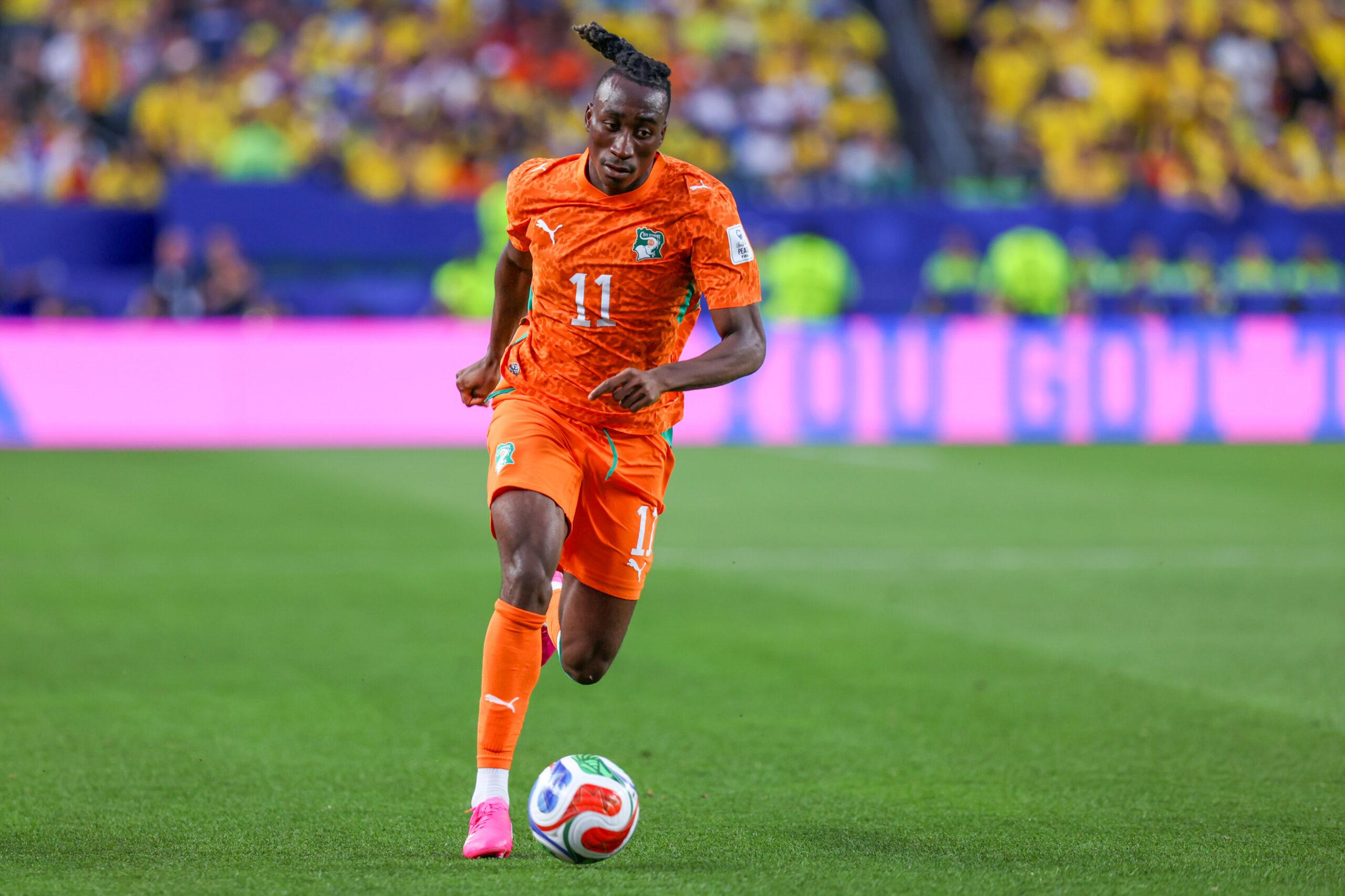
Every World Cup produces a player who enters as a promising talent and leaves a household name. Jamés Rodriguez for Colombia in 2014. Kylian Mbappé for France in 2018. And the early front-runner for 2026 is Yan Diomande of Ivory Coast.
Diomande faced off against one of the tournament’s best defenses in Ecuador and put up a stellar performance as a ballcarrier. He applied relentless pressure on the penalty area and created five chances with four dribbles. At just 19 years old, Diomande’s performance was one of the most impressive in the entire World Cup so far.
Ivory Coast’s next opponent, Germany, likes to dominate possession, control territory, and spend long stretches camped in the attacking half. But there are major questions about Germany’s ability to defend in wide areas and guard against direct attacks. That’s where the Germans are uniquely vulnerable to the exact skills Diomande brings to the table. If Germany pushes numbers forward, and it will, every transition will present an opportunity to isolate defenders against one of the most explosive players in the tournament.
If the Ecuador match was Diomande’s introduction to the world stage, the match with Germany could be the one that turns him into a budding superstar.
Does Hervé Renard have one more World Cup magic trick up his (crispy white) sleeve?
Few managers have built an international managing reputation quite like Hervé Renard. Since Saudi Arabia’s historic upset of Argentina in 2022, the Frenchman has become synonymous with underdog success and emotional speeches. Renard stalking the touchline in a crisp and lucky white shirt has become one of international soccer's most recognizable images.
Renard won AFCON with Zambia and Ivory Coast. He was supposed to be coaching Saudi Arabia at this tournament, but the team fired him in April. Now he’s taking over as the manager of Tunisia during the middle of the World Cup. If Tunisia can win either match against Japan or the Netherlands, it’ll have a chance to make the knockouts.
Renard has a borderline impossible task in front of him, given that he’s being dropped into a new team in the middle of the tournament. But the World Cup wouldn’t really be the World Cup if Renard didn’t make an appearance—with the white shirt, of course.
Which version of France will show up next?
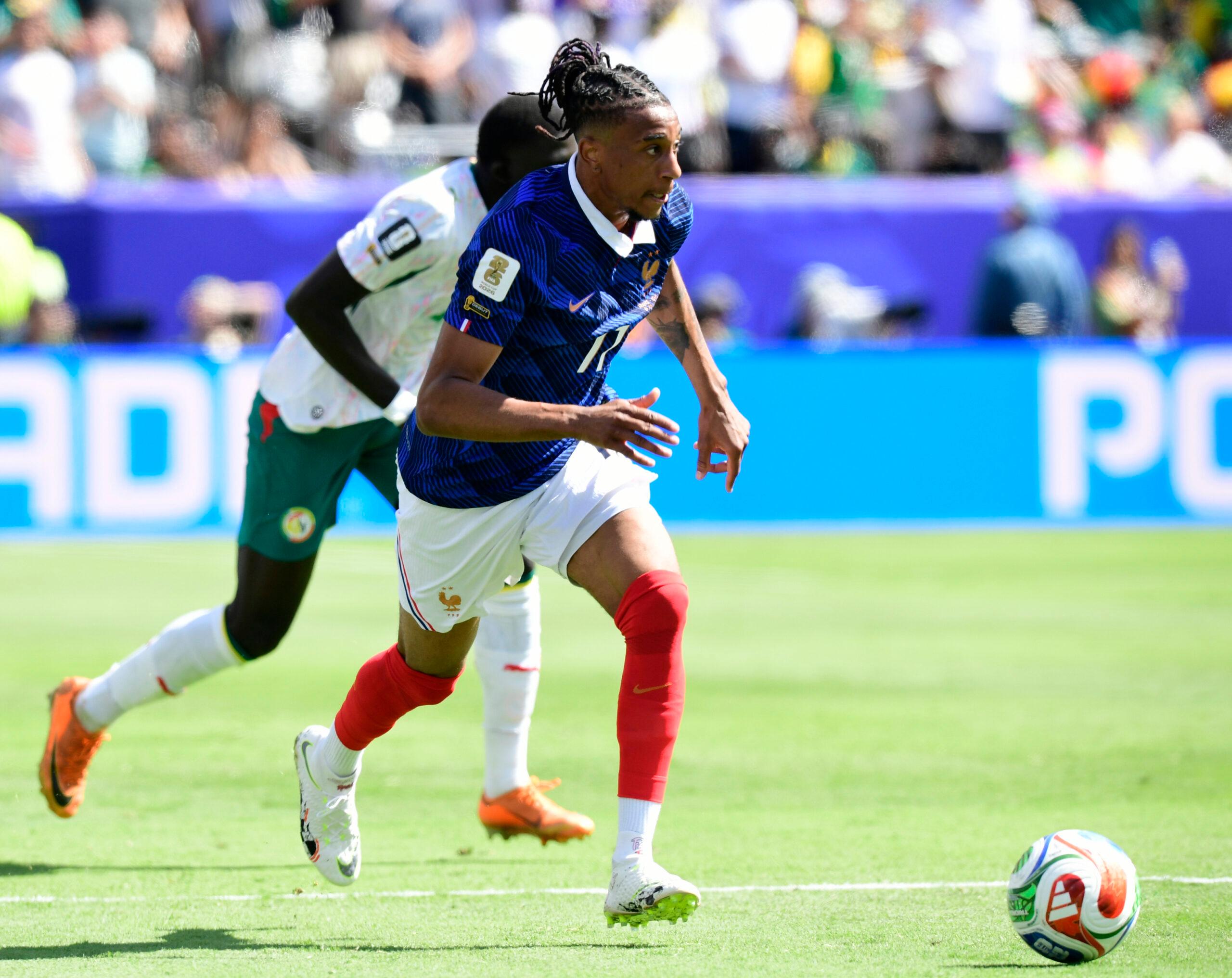
France’s opening match against Senegal was an erratic performance for the tournament cofavorite. Through 45 minutes, France had attempted just one shot. Its attack looked disjointed. Its superstar lineup badly lacked a point guard to orchestrate. Since France didn’t really press out of possession, Senegal kept 44 percent of the possession and had more touches in the opposing box than France.
What happened next wasn’t because France stopped being “arrogant,” but rather a tactical switch that finally gave France someone to run the offense. Since Rayan Cherki didn’t start and Michael Olise spent the first half isolated on the wing, France lacked a central playmaker. Once Olise moved more centrally, he became that player. And he showed why he’s blossomed into one of the best attacking players in the world. He assisted the opening goal to Mbappé, tallied almost a full expected assist, and created four chances in one half. Between his own shot attempts and the ones he created for others, Olise showed us what France can be at its absolute best.
The first half showed that France can be vulnerable to organized opponents who deny space in transition and force the French to construct patient attacks. The second half reminded us that France is one of the most talented teams in the tournament, capable of overwhelming opponents when the right players are put in the right positions.
That's what makes France so difficult to evaluate after one match. The ceiling remains terrifyingly high. Few teams can match their combination of athleticism and technical quality. But the opening 45 minutes also served as a reminder that France isn't immune to tactical problems, even with all that talent.
Can Nico Williams and Lamine Yamal find their fitness in time to save Spain?
It required a perfect confluence of events for Cape Verde to pull off a dramatic, goalless draw with Spain in the opening match of both teams’ World Cup. It was one of those days in soccer—one in which Cape Verde goalkeeper Vozinha stood on his head, Spain’s starting striker was surprisingly ineffective, and none of its chances found the back of the net. From Spain’s point of view, it would be a mistake to overreact to a performance like this; but at the same time, it showed how reliant Spain’s setup is on two players.
Spain's problem wasn't progressing the ball into dangerous areas—the midfield still controlled the match exactly as manager Luis de la Fuente would have wanted. The issue came once possession reached the final third. Too many attacks ended with harmless circulation around the penalty area instead of with actions that forced defenders to make difficult decisions.
That's where Yamal and Williams become indispensable. They are two of the few attackers in world soccer capable of creating advantages entirely on their own. A tactical plan can help a defense keep Spain’s attack at bay, but it can't teach a defender how to stop Yamal from cutting inside onto his left foot or Williams from exploding past a fullback in a one-on-one situation.
Unfortunately, both Yamal and Williams are coming back from injuries and both entered the match as subs. It should be alarming to Spanish fans that the team looked so toothless without them on the field. Spain dominated territory, possession, and the passing stats, but what did it have to show for it in terms of chances created?
Based on Opta’s shot charting, Spain managed only one big scoring chance. That will change as Yamal and Williams play themselves into match fitness, but how long is that going to take? World Cups don't always allow teams the luxury of gradually building toward peak form. Spain still looks capable of beating almost anyone in the tournament, but its margin for error shrinks considerably if its two most explosive players are still searching for full fitness when the elimination games arrive.
Does this Brazilian team have an identity?
For most of modern World Cup history, Brazil has entered tournaments with a clearly identifiable identity. Sometimes it was overwhelming attacking talent. Sometimes it was technical superiority and a unique flair. Sometimes it was a devastating transition attack built around a superstar. Even when Brazil failed, you generally knew what kind of team it was trying to be.
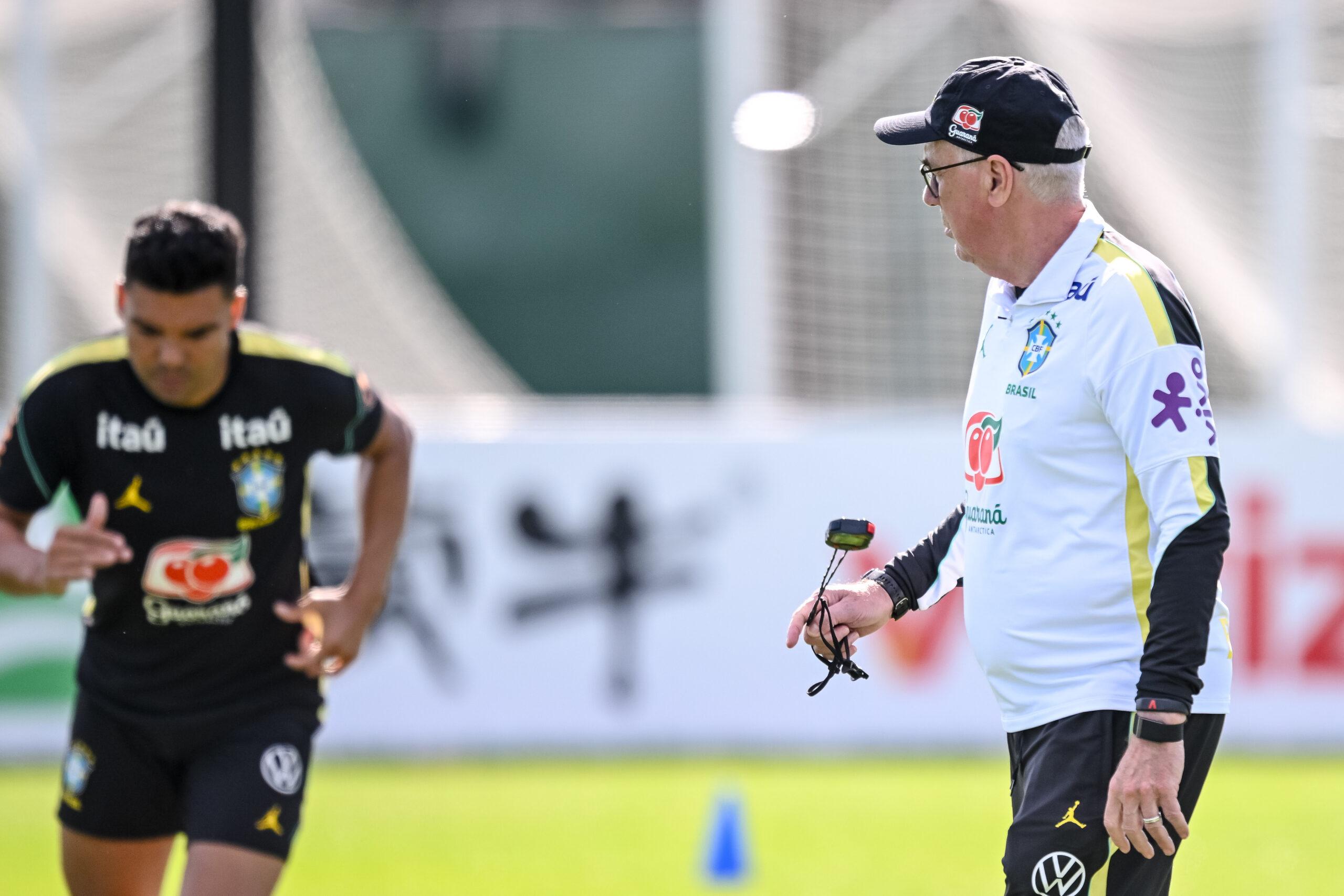
This year feels different. Carlo Ancelotti has inherited a squad with some elite individual talent, but less than it has typically enjoyed. Is this a possession-dominant team built around controlling matches? Is it a transition-heavy side designed to unleash Vinicius Junior in space? Is it a pressing team that wants to overwhelm opponents physically? After 90 minutes against Morocco, the answer isn’t entirely clear.
Brazil settled for a 1-1 draw in its highly anticipated World Cup opener last Saturday. The team’s issues looked like a combination of both personnel and structure. The midfield duo of Bruno Guimaraes and Casemiro routinely gave the ball away in the first half, and it left Brazil exposed to direct counterattacks from Morocco. Ancelotti chose to hook Casemiro at halftime, but not before he picked up a yellow card and was dribbled past three times.
In theory, Brazil’s best attacking plan is to get the ball to Vini Jr. and Raphinha as much as possible, and let them cook. However, there were very few instances when that actually happened. Some of this is a credit to Morocco, who denied easy access to Brazil’s elite wingers. But more of this is a criticism of Brazil, who is one match into the World Cup without a clear identity of what this squad really is.
Will African teams continue to punch above their weight?
It’s been a stellar opening round of matches for African soccer. Ivory Coast upset Ecuador and Diomande had one of the tournament’s best individual performances. Cape Verde stunned Spain in a stalemate with goalkeeping heroics from Vozinha. Egypt went toe-to-toe with Belgium in a highly competitive draw. Morocco did the same against Brazil. Congo outplayed Portugal for large stretches in their draw. Ghana beat Panama in stoppage time.
Outside of some poor goalkeeping displays from Tunisia and Algeria, and whatever happened to South Africa in the opener, African teams have outperformed expectations. Maybe this is just a small-sample-size story that will disappear by the knockout rounds. Or maybe the African Cup of Nations—held just half a year ago—served as a dress rehearsal that left African teams better prepared for the chaos of a World Cup than many of the tournament favorites. It’s only one round of matches, but during that round the continuity of the African teams outweighed the perceived gap in talent.
How does Lionel Messi keep doing this?
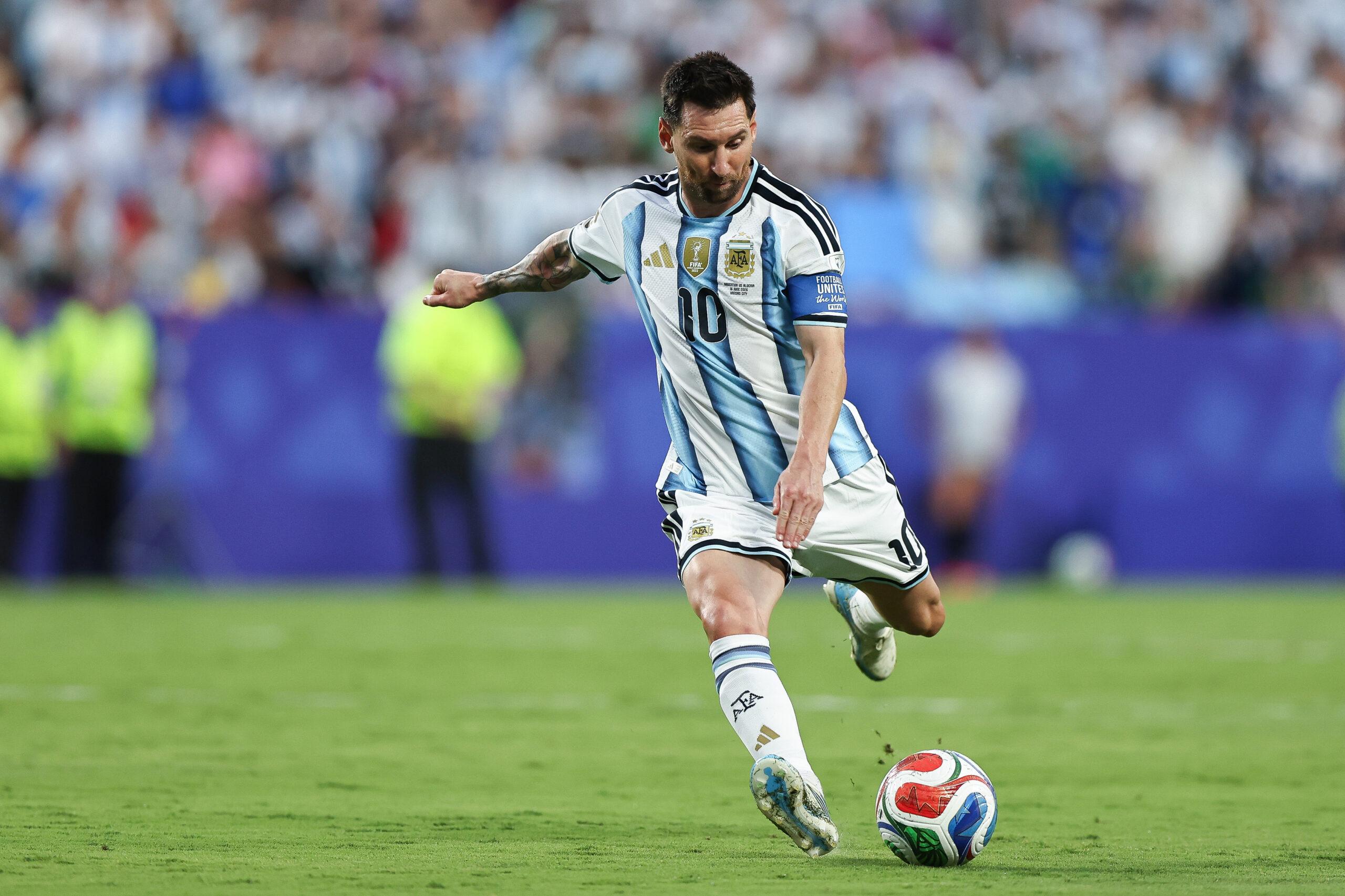
Lionel Messi has already beaten soccer. He’s done just about everything there is to do in the sport. And yet, in the first game of what is likely his final World Cup, at age 38, Messi showed us that he’s still finding unique ways to dazzle us and new records to rewrite. He scored a hat trick in Argentina’s opener against Algeria. He benefitted from some shaky goalkeeping on the first two goals, sure, but Messi is now tied with German Miroslav Klose for most goals ever scored at the World Cup. It was also Messi’s first World Cup hat trick. And he became the only MLS player to score three goals in a World Cup match.
The first goal, in particular, perfectly encapsulates why Argentina can win this tournament despite an aging and flawed roster that is mostly running it back from four years ago. The Argentines have defensive solidity built into their DNA and a tactical identity under manager Lionel Scaloni. Yet, 16 minutes into the match, Argentina had yet to enter the Algerian penalty area. Their attack looked disjointed and unconnected. Then Messi scored from 25 yards out and erased any concerns that Scaloni may have had. International soccer isn’t often decided by the sexiest passing patterns or the most coordinated press. It’s often won by individuals making game-changing plays, and Messi can still do that as well as anyone in the tournament.
That's the paradox of this Argentina team. It may be more dependent on Messi now than it was four years ago. The supporting cast remains organized, disciplined, and defensively reliable, but fewer players are capable of creating something from nothing when matches become tense and compressed. Argentina doesn't need Messi to dominate games for 90 minutes anymore. It just needs him to deliver a decisive moment every once in a while.
And would you ever doubt his ability to do that?