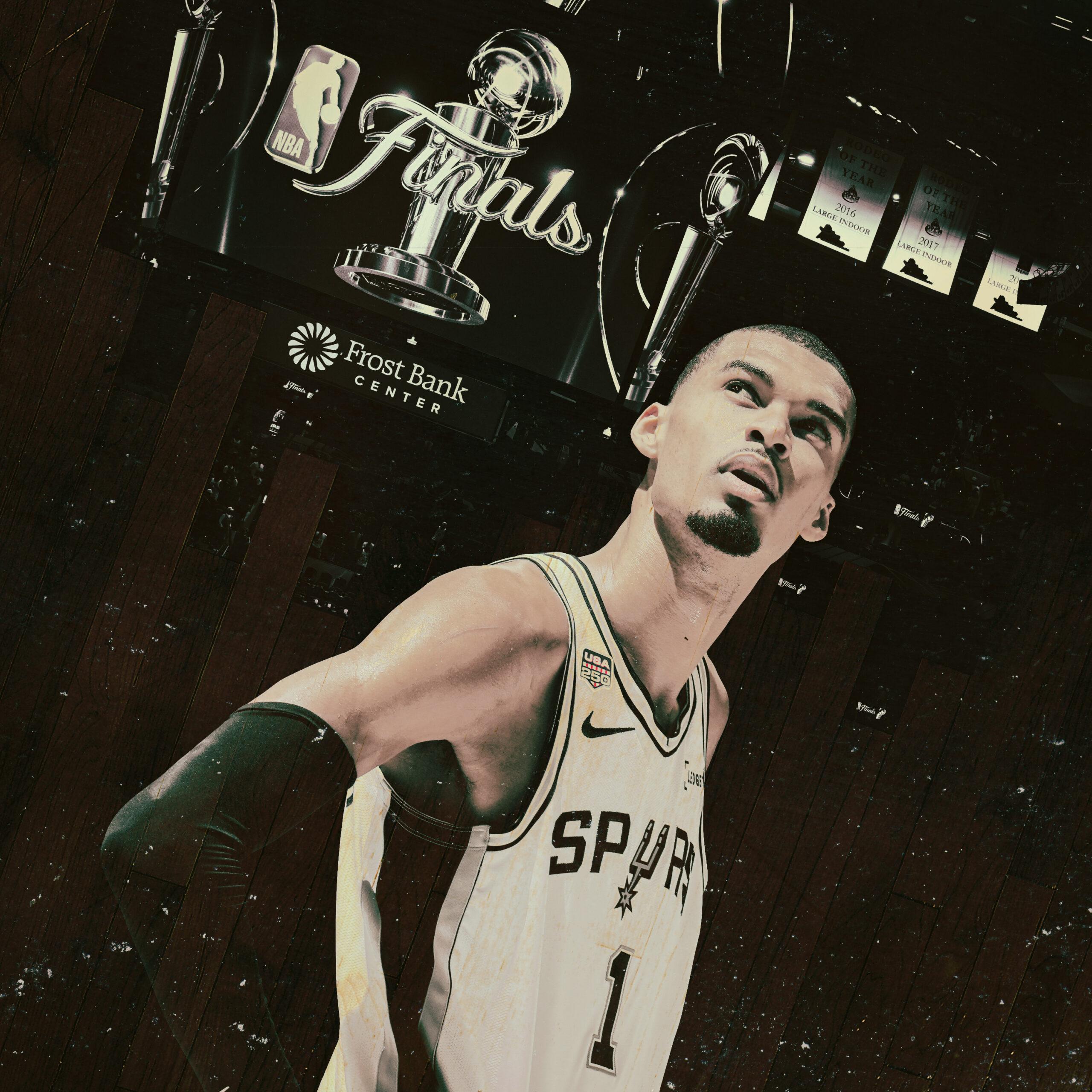

Let’s start with the obvious: The San Antonio Spurs weren’t supposed to be here. Teams that go 34-48, then step into the following season with an over/under of 44.5 wins, never make the NBA Finals. It doesn’t happen.
And yet, despite four of their starters entering this postseason with zero career playoff minutes, there they were, up 29 points in Game 4 at Madison Square Garden against a New York Knicks juggernaut that had just beaten them twice in their own building. The Spurs, on the cusp of evening the Finals 2-2, were seemingly unbothered by the environment, brimming with energy, composed as hell, and fortified by a sense of togetherness. Until, of course, they weren’t.
“We absolutely dominated for most of the series,” Victor Wembanyama said after the Spurs wilted in Game 5. “But our errors, our mistakes … the ups are OK. The downs is the reason we lost.”
Those downs felt apocalyptic in the moment. In another situation, for a different team, their aftermath could linger for years. That’s what happens when you repeatedly disintegrate in the biggest moments. A coach gets fired, a franchise player sojourns through the Australian outback, an existential crisis squeezes all hope from a promising situation. It’s also almost impossible to get as close as San Antonio got to the mountaintop without actually touching it. A missed buzzer-beater by your best player in Game 2, the worst Finals collapse ever seen in Game 4, coughing up another double-digit, second-half lead in the series clincher. In the Finals, microscopic margins separate profound elation from everlasting regret.



More on the NBA Finals
San Antonio’s late-game execution was poor. Their discipline waned. No team can understand how damaging the slightest mistake can truly be at basketball’s absolute highest level until one burns them into infamy. Here’s where all that aforementioned context pops into the frame and allows for a little grace. Unlike most teams that just lost an NBA championship, inertia is of no concern to San Antonio. This organization will have absolutely no problem being patient.
Failure in this year’s Finals will make the Spurs better, tighter, and more detail-oriented. Wembanyama is only 22, Stephon Castle is 21, and Dylan Harper is 20. They own the 20th pick in this month’s draft and aren’t close to feeling any type of financial, apron-related strain. If you want to call San Antonio the favorite to win it all next year, have at it. Championships are hard as hell to achieve, the result of an unforgiving gauntlet run that requires luck, timing, fate, and a level of focus that would be deemed unhealthy in almost any other profession. But barring injury, these Spurs will be back in some form or another.
“This has been a hell of a year in terms of experience,” Wembanyama said. “I don't think we could have learned more and gained more experience in one playoff run, in one season, and personally in 18 months. It's been hard and full of lessons.”
Teachable moments came fast and furious at Wemby in these Finals. He lost his cool and struggled to find any rhythm, drifting when aggression was called for, lacking the stamina that’s necessary to push through a muddy fourth quarter. But they’re overshadowed by the first dozen reasons for optimism about San Antonio’s future being directly related to their franchise player having no biological antecedent. The odds of any human being’s body stretching to 7-foot-4 are infinitesimal. They crumble to dust when then paired with such advanced psychological makeup—the actual reason why casually referring to Wembanyama as an alien is so apt. This is an incredibly confident, inherently comfortable, endlessly curious, and easily vulnerable young man. He has a spine, guts, and heart. To soberly possess such authenticity at that age, in front of the world, is special. It makes him such an easy player to bet on. He cares deeply.
“What I'm pissed about is that there's probably a hundred games before we can be back in Finals,” he said after Game 5, steaming like a tea kettle. “I don't know how to say it in English, but I'm going to have to hold that inside of me and slow down and wait and execute for a hundred games.”
The Spurs outscored the Knicks by eight points with Wemby on the court in the Finals. They were outscored by 20 points in the 41 minutes he rested. It’s irreplaceable value. Despite falling short of the ultimate goal, Wembanyama still conquered the Minnesota Timberwolves and reigning champion Oklahoma City Thunder, nearly accomplishing something the NBA has never seen before—as someone who can, with a straight face, call himself the most disruptive defender of all time.
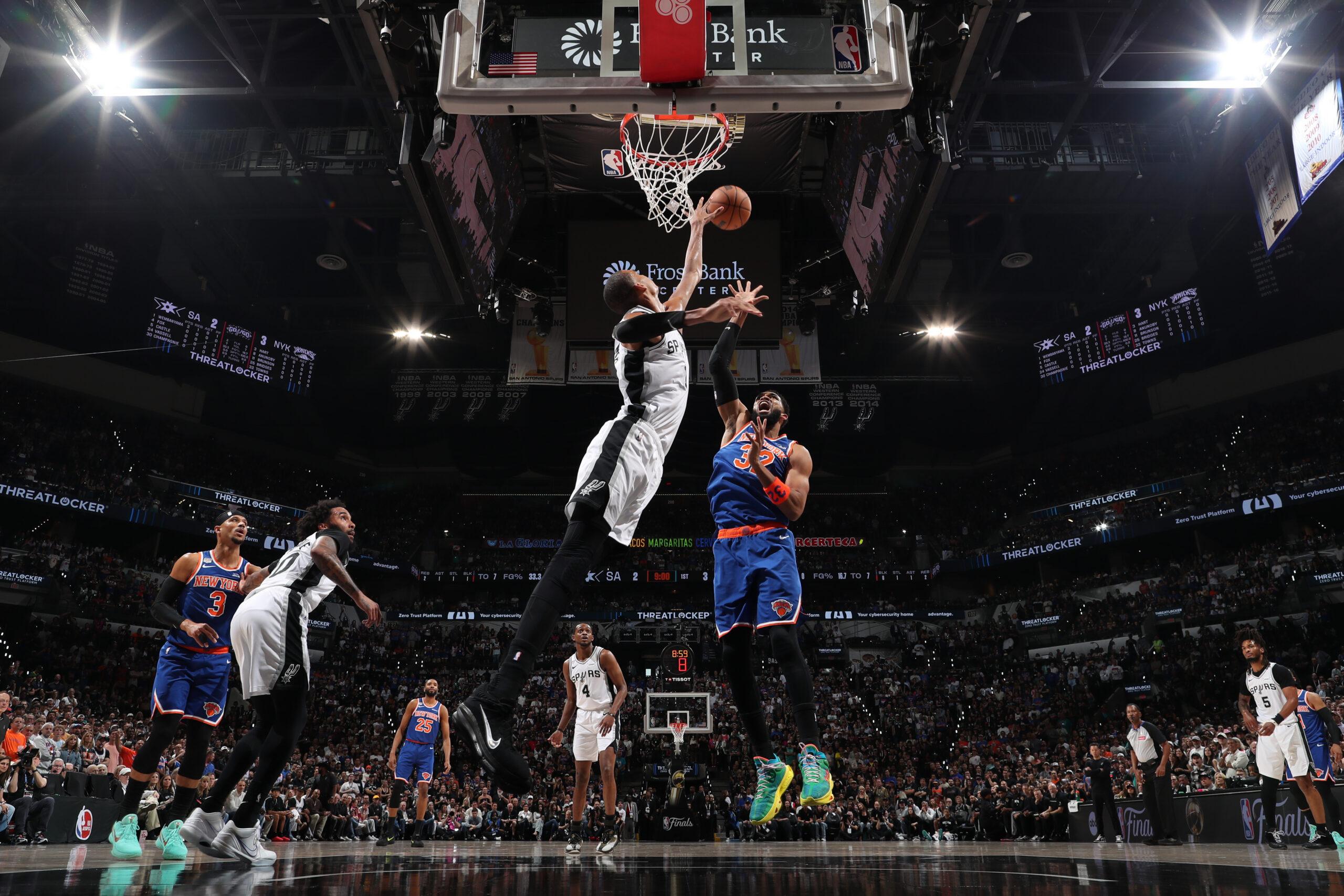
The Knicks were a steamroller coming into the Finals but generated only 110.3 points per 100 possessions when facing Wemby. (That’s “Sacramento Kings” efficiency.) Karl-Anthony Towns was playing some of the most mature and potent basketball of his life before he ran into the Spurs’ center. Wemby didn't shoot the ball particularly well in the Finals but ended up leading the playoffs in estimated plus-minus and player efficiency rating. Against New York, he averaged 26 points, 11.2 rebounds, and 3.6 blocks per game.
Physical exhaustion was harder for him to solve than anyone wearing a Knicks jersey, which is a problem. But some of the broader critiques about Wemby’s play in this series deserve some reassessment. Every 3-pointer that wasn’t a dunk shouldn’t be seen as a moral failure—or, at least, a choice on his part to settle. Wembanyama squared off against a punishing, resilient, orderly opponent that made him feel every step in and around the paint. Instead of ever having a clean path diving toward the basket, Wemby slalomed through Knicks defenders like a running back trying to avoid a row of tackle dummies. Just because you’re bigger than everyone else doesn’t mean you can dominate inside whenever you want. The NBA no longer works that way.
More often than not, Wembanyama’s shot selection was less a compromise and more a reminder to everyone watching just how broad his repertoire already has to be. The complaints about his string of flagrant fouls were warranted, though it is ironic to hear some of that whining come from the same corners that have long pined for ’90s-era physicality. The guy isn’t going out of his way to assault people so much as he’s responding to desperate game plans that boil down to “If we don’t grab, pull, and hit this guy every chance we get, we’re screwed.”
Resentment is often handcuffed to greatness. That’s life. That’s sports. But rarely do you see it tinged with genuine antipathy this early in a superstar’s ascent. It’s strange, but also fuels anticipation: How will such a miserable couple of weeks affect Wemby’s trajectory? Even if he claims not to be bothered by the coward who flung an egg at his head outside the Spurs hotel after Game 4, how often will it cross his mind this summer? What about the chants of “Fuck you, Wemby!” that echoed throughout the world’s most famous arena throughout Game 3? Or the catastrophic decision to outlet a pass toward Castle’s back at the end of Game 2? Or the buzzer-beating jumper that clanged off the rim in the same game, just a couple minutes later? Or the missed free throws that helped New York pull off its historic miracle? Or the burning hamstrings and sore lungs? All of it will motivate him more than victory ever could. The NBA thought it was in trouble three weeks ago. Now it’s forced to confront a version of Wemby who’s tasted his own blood.
The joy of watching an all-time great player fulfill his basketball destiny arrives in his response to adversity. It’s here where suspense holds sway over dominance. Where LeBron James realizes he needs a post game after losing his first Finals or Michael Jordan embraces the value of a well-calibrated offense after taking seven years to win his first title. Losing is a critical ingredient. Nobody has ever reached their peak without it.
For Wembanyama, the experience is likely a pit stop. Long enough to demand reflection but hardly something that will haunt his prime. This is someone who doesn’t drown in his own pretensions. He consistently rises above them. And, critically, as he continues to get stronger, more refined, and more technically skilled, it’s worth mentioning a not insignificant detail: Wembanyama already has costars.
Castle was inefficient and erratic in his first Finals, committing brainless fouls and live-ball turnovers. But, generally, he rules. It’s not easy to find a brick-wall defender with such athleticism and fearlessness who can finish in the paint through contact and make every read running a pick-and-roll. Castle makes mistakes, but, to his (eventual) credit, none curb the aggression that justifies his minutes in the first place. He won Rookie of the Year last season and then was one of the most improved players in the league. I can’t wait to see what he looks like in year three.
And then there’s Harper, who spent most of the Finals playing like a demon who recently escaped from the seventh layer of hell. In Game 5, the second overall pick finished with an efficient 25 points, five rebounds, four assists, and zero turnovers. He led the Spurs in usage rate and was really the only player on the entire team who was able to create quality scoring opportunities for himself.
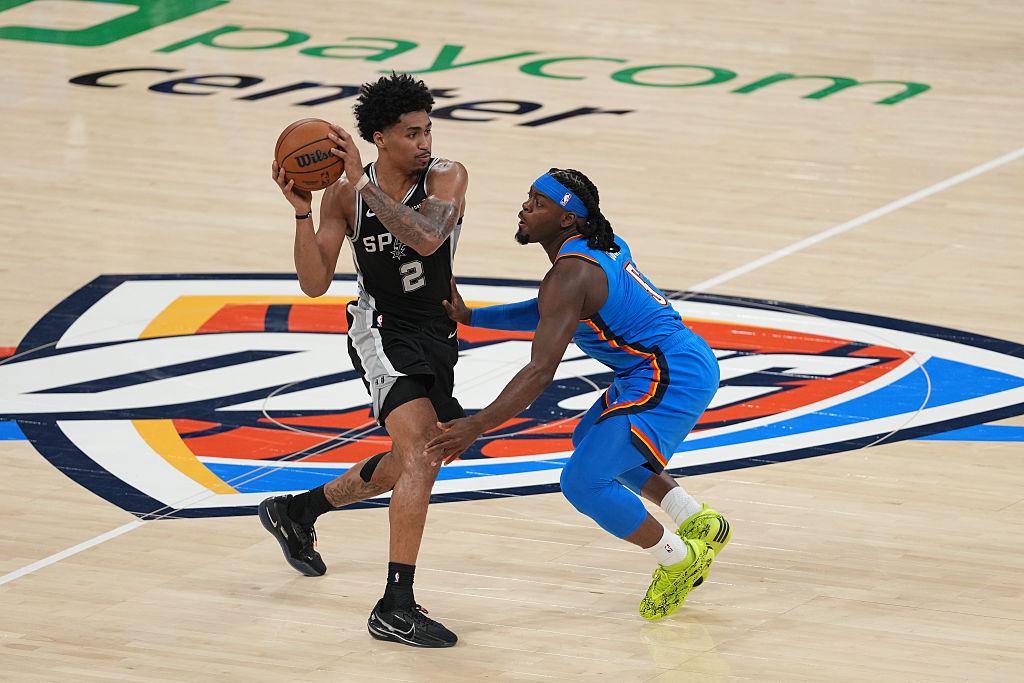
There were sequences from Harper’s first playoff run that felt like a premonition. (I’ll never forget watching him shrug off Luguentz Dort on a drive to the rim. How does a rookie guard do that?) Now that Harper’s first season is over, it’s fair to say he’s more than ready to be handed the keys. It’s a revelation that simultaneously increases San Antonio’s organization-wide urgency while also allowing them to exhale. Landing Wembanyama was a blessing. Already finding his long-term sidekick—an exceptionally difficult task—is borderline unfair. Harper’s development into someone who can make an All-Star team next season is a fantastic complication that 29 organizations would die for.
But thanks to De’Aaron Fox, it’s nonetheless an issue. Before the Finals began, I thought Fox’s future as a Spur was safe. Even though he made a slew of crippling mistakes at the end of Game 4, missed a critical paint jumper at the end of Game 1, and failed to redeem himself in any way during Game 5, my opinion hasn’t entirely changed. I wouldn’t be shocked if the Spurs traded him this summer, but I don’t think they could even if they wanted to. Fox’s massive four-year, $221 million max contract kicks in next season. His stock could not possibly be any lower than it currently is.
But, embarrassing gaffes aside, we know what Fox is capable of. He’s made an All-NBA team, won Clutch Player of the Year, and led the Kings to the playoffs. Now, with the Spurs, no player in the league is more overqualified for their role. His on-ball percentage is significantly lower than it used to be. His shots are cleaner. The attention defenses show him is less hostile. All are good things for him and San Antonio.
But Fox’s reduced burden will probably turn his contract into dead weight. We aren’t exactly there yet, though. The Spurs would not be in the Finals without Fox, who—while still dealing with a high ankle sprain—hit a humongous pull-up jumper at the end of Game 3 and routinely did an excellent job of creating wide-open looks for others. Keeping him out of the paint remains a significant challenge.
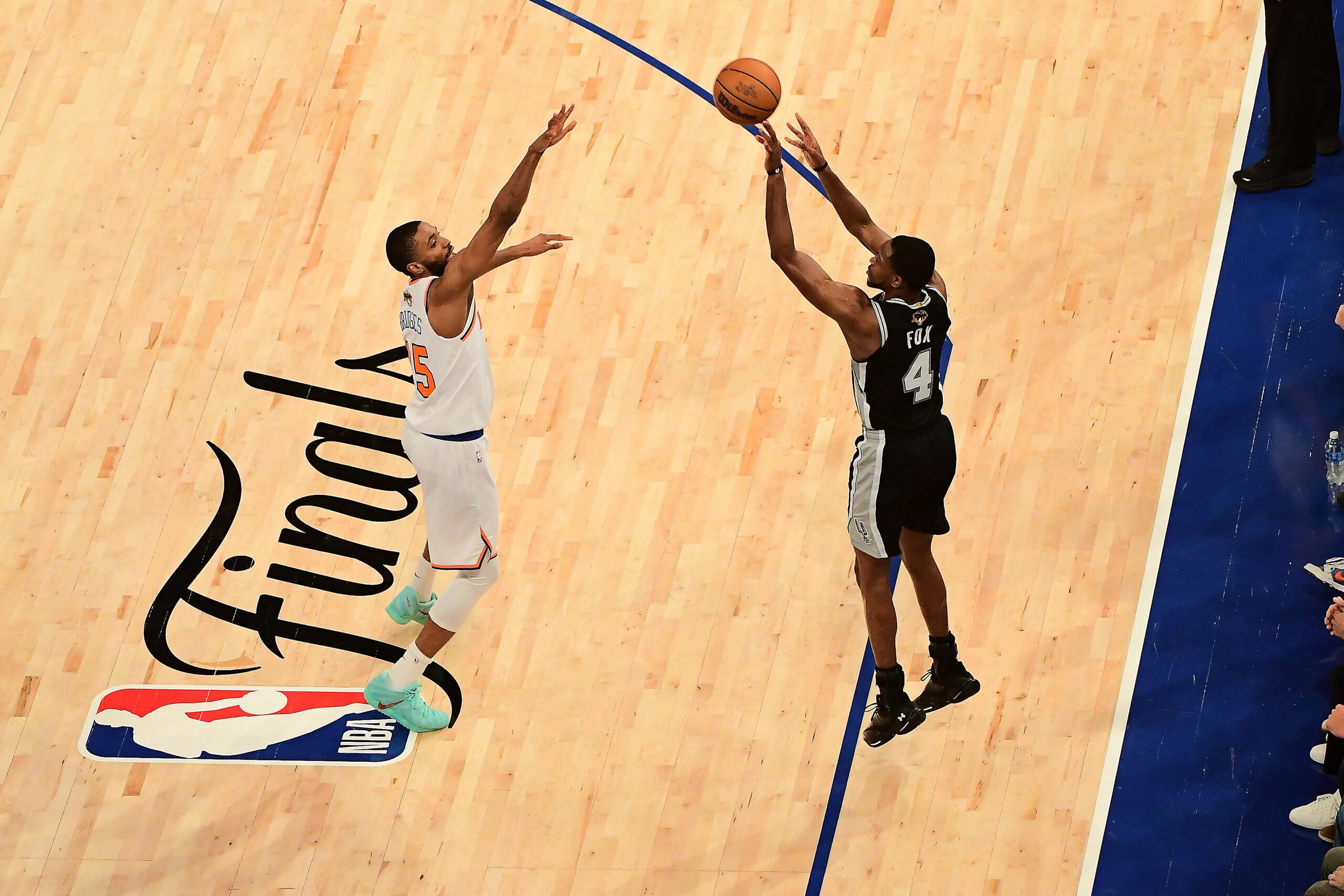
“We're at our best when he's confident, in attack mode, has the basketball in his hands, making his teammates play better, making plays for himself,” Spurs coach Mitch Johnson said before Game 2. “I think that role has been pretty consistent. The thing that's changed obviously is the teammates around him have continued to grow and improve. He has probably balanced better than anyone on our team being able to be at the forefront and lead the attack at times, then also understand that he can allow someone else to be super aggressive and be right next to that person. I don't believe he gets enough credit for that.”
Now, Fox enters the offseason as San Antonio’s scapegoat, with Harper emerging as its prince. But if I had to guess, the 28-year-old will still be San Antonio’s starting point guard on opening night next season. It isn’t the end of the world if Harper comes off the bench for one more year, even if more sacrifice is hard to swallow.
The Spurs can sell him on winning Sixth Man of the Year, while providing more shots, touches, and crunch-time minutes. I’m not yet willing to declare Harper as San Antonio’s best guard—running a team for 82 games against defenses that treat you like a number one option is a lot different than coming off the bench with a score-first mentality—but he may be just that six months from now. Regardless, Johnson needs to find space in his rotation for lineups that play Fox, Castle, and Harper at the same time. There’s some overlap, but the ceiling on that trio is too high not to experiment a little more.
Losing the Finals stings, but the Spurs don’t need to make any big moves to win three more games next season. They’re uniquely led, uniquely built, and uniquely positioned to dominate the NBA for a decade. Throughout their first postseason, San Antonio responded to just about every challenge, withstood every injury, and matured on the fly, sans ego, with a plethora of talent and generational greatness. It ultimately wasn’t enough.
“We weren’t ready to win an NBA championship,” Johnson said. “The better team won.”
That is undeniably true. San Antonio blew a golden opportunity to add a sixth banner. Slipped, fell, and landed on its face. But, in time, it shouldn’t be that hard for the Spurs to also see these Finals as a stepping stone to something more. They can’t change what just happened. But what they can do is make sure that when they get back on this stage, every lesson they learned in humiliating fashion can be spun into the title they already feel destined to win.