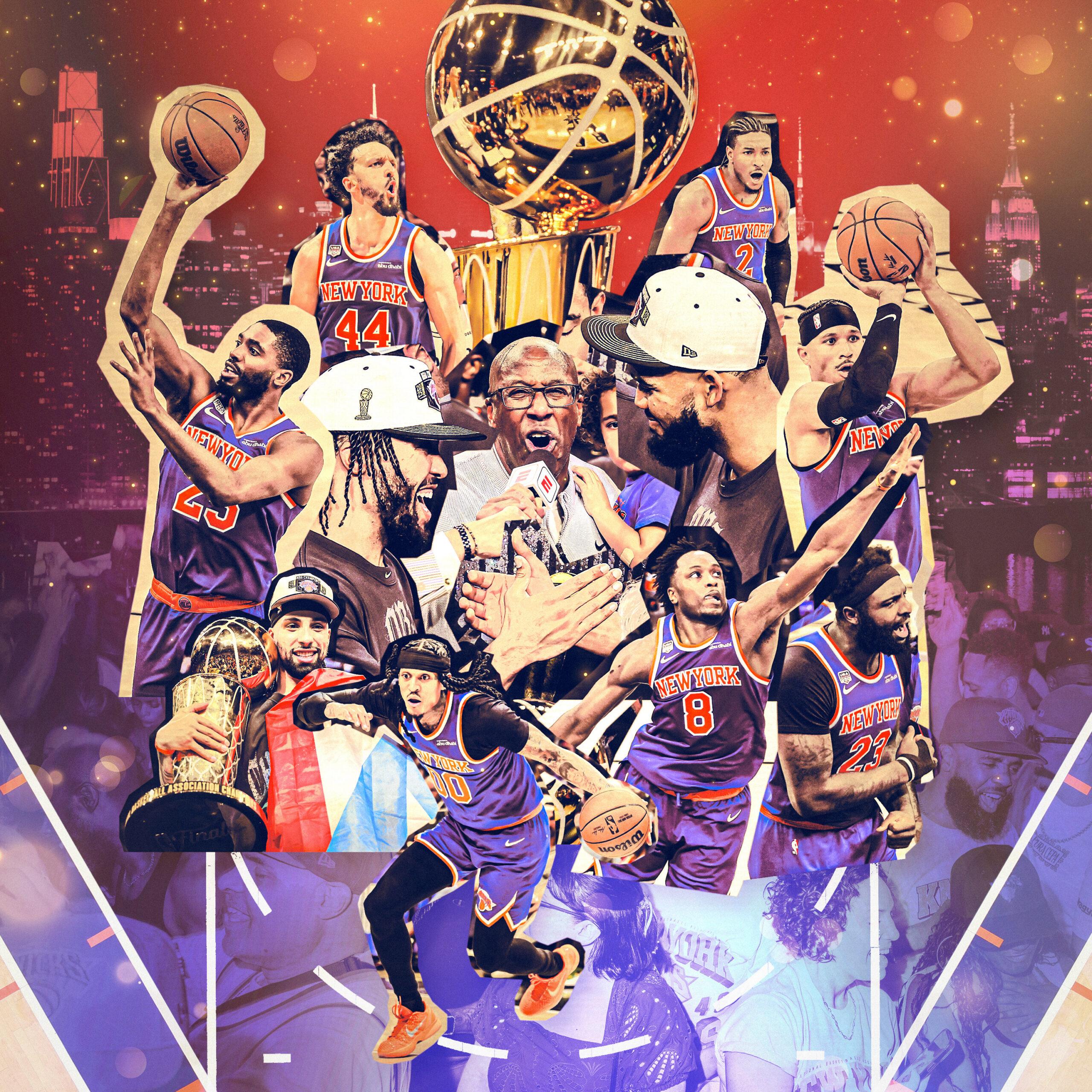
The New York Knicks Just Won the Championship of a Lifetime
The Knicks’ title drought lasted 53 years. Their 2026 title run will last forever.The New York Knicks Just Won the Championship of a Lifetime
The Knicks’ title drought lasted 53 years. Their 2026 title run will last forever.
Fifty-three years is a long time for an echo to travel, from the legendary Forum in Inglewood back in 1973 to the Frost Bank Arena in San Antonio on Saturday night. The one tether, the one constant, across two landmark moments in New York City history was the Knicks’ blue away uniforms, with orange and white trim.
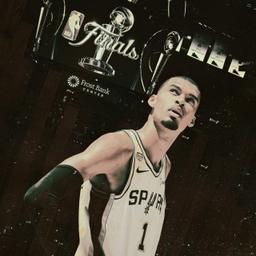
The New York Knickerbockers last reached the mountaintop in 1973, when they defeated the Lakers on the road in Game 5, draped in cobalt blue. As above, so below. Just as they did 53 years ago, these Knicks won in five on the road, this time with a 94-90 win over the San Antonio Spurs. Fifty-three years ago, the series ended with an outlet pass to Wilt Chamberlain, who slammed home a dunk that meant more to him personally than it meant to the series—it was his final basket scored in an NBA game; on Saturday, the buzzer sounded shortly after Victor Wembanyama clanked a 3-pointer off the backboard. Where the Knicks’ last championship served as a farewell to a walking myth, their current triumph coincides with the arrival of Wilt’s spiritual successor—a modern-day Goliath who, if this series was any indication, will be the object of awe and derision for the rest of his career.
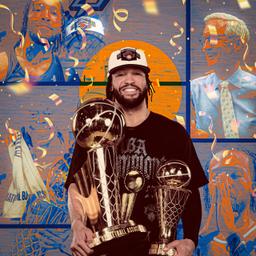
But it wasn’t Wemby’s time. The Knicks made damn sure of that, amid one of the greatest playoff runs the NBA has ever seen. The Knicks are now only the third team in the league’s best-of-seven era—which started in 2003—to win a championship with three or fewer losses across their entire run. They are tied with the 2023-24 Celtics for the ninth-best postseason win percentage of all time. Only the 2016-17 Warriors have won more consecutive playoff games. The list goes on: The best postseason net rating of any team since Michael Jordan’s Bulls. The greatest comeback victory in Finals history, capped off with a game-winning tip-in by OG Anunoby that has already been etched into eternity. And, most importantly, an all-time night from Jalen Brunson, the 2026 Finals MVP, who stands alongside Jordan with the most points in a championship-clinching performance on the road with 45. These 2025-26 New York Knicks? One of the greatest postseason teams ever. Let it sink in. Let it linger.
These Knicks were self-starters in all five Finals games. They didn’t wait for adversity—they created their own. In every single game, the Knicks trailed by double figures in the first quarter. But throughout their enchanted run, New York forged the kind of mystique that enshrouds only the greatest teams of all time. They were inevitable, but not in the way we’ve come to expect. The Knicks weren’t the 2017-18 Warriors or the 2000-01 Lakers, two teams that subsisted on the reserves of past championship experience to guide them back to the summit. These Knicks didn’t flip a switch. They built up, tore down, repaired, and reiterated in real time. We saw the highs, we saw the comedowns. We saw the frustration, we saw the resolve. Ultimately, we saw the vision.
That vision begins and ends with Brunson’s individual brilliance. Throughout the series, he shot 38.5 percent from the field in the first three quarters; that number spiked to 51.4 percent in the fourth. In a closeout game on the road, Brunson’s 45 points were just four short of the rest of the team’s total. He is undeniably one of the great clutch performers in NBA history. “I know what I’m made of, I know what I put into this,” Brunson said in a postgame interview on NBA TV. He was shaking, on the verge of tears as he stood next to Lisa Salters, talking about all the summers he’d spent, practically since he was born, refining his game and pushing his endurance to the brink. There is poetry in Brunson being the Knicks’ savior. He was never the prince that was promised, but he’d internalized that raw electricity of Knicks fandom at a young age. He grew up in those Madison Square Garden locker rooms. He saw his dad among the dozen other worn-down bodies on the last Knicks team to make it to the Finals. He saw how much the city wanted it then, never mind how desperate it’d become in the 27 years since.
Brunson brought it home, but the Knicks title run on the whole was a complete team effort. Mike Brown exorcised his decades-long NBA Finals demons as a head coach … only to become possessed by the Baha Men after the final buzzer. Karl-Anthony Towns’s two-way impact set the tone in the first two games of the series, and he became something of a martyr in the final two games given his foul trouble. Anunoby, who had been the invisible hand keeping the Knicks on track the past two and a half years, had his moment with the divine. Mikal Bridges lived up to the impossible expectations set by what it cost to trade for him. Mitchell Robinson proved himself to be the best offensive rebounder in basketball, bulldozing Wemby underneath the basket with 22 seconds remaining in the game to effectively clinch the title. Josh Hart was a plus-15 in Game 5. Jose Alvarado was Game 4’s other hero. It all coalesced at the right time.
The last time the long-suffering Knicks won a championship, hip-hop hadn’t been born yet. Doesn’t that feel impossible? One of the truly dominant forms of cultural expression of the past century, then just a twinkle in the eye of a Jamaican-born teenager spinning records on a sound system he’d borrowed from his dad’s friend. So much time has passed in the torturous 53-year wait for this very moment. The city has changed immeasurably, yet its beating heart maintains a familiar rhythm. This series, this team, has become an inexorable part of the city’s mythos. When Anunoby secured the final rebound, the Knicks turned a moment into a lifetime. Is there anything more hip-hop—more New York—than that?
Throughout this championship run, I’ve found myself thinking about a teenage Clive Campbell—the soon-to-be Prometheus of hip-hop—finding his way into rec-room parties held at a housing project right by the Cross Bronx Expressway at the tail end of the ’60s. It was in those circles, listening to Kool and the Gang, the Isley Brothers, and James Brown, that he learned how to adapt, how to assimilate, how to become a New Yorker. He heard the frustration on the dance floor, how the DJs would cut songs off right when they were getting good, right when a groove had been built. That tension lingered in his mind.
He’d moved to the Bronx at 12 from the Trenchtown neighborhood of Kingston, Jamaica, in 1967, the same year that Walt Frazier entered the league as the Knicks’ first-round draft pick. Campbell’s accent was thick and no one could get his name quite right, so he went by Clyde—as in Frazier—to keep things simple. In the summer of 1970, with the city basking in the immediate afterglow of the Knicks’ first-ever NBA championship, he picked up a spray can like every other kid his age. His tag: CLYDE AS KOOL. He’d also grown bigger and stronger that summer. His friends teased, calling him Hercules because of the way he bullied people in the lane playing basketball at school. “Between high school and the block, I put the two names together and I dropped the Clyde,” Campbell told hip-hop historian Jeff Chang. “I started calling myself Kool Herc, and that was it.” Basketball gave Campbell an identity he could borrow before it helped him construct an identity that would make him immortal.
The actual Clyde was all smiles stalking the court after the final buzzer, clad in a peacock-paisley suit. For more than half a century, he’s been the team’s leader, voice, elder statesman, spirit animal. No one, not least of whom Frazier, could have predicted it would take this long for the Knicks to win another title. Most championship teams create portals peering out into the future of the sport. This one feels like an extended arm reaching out to the past, making up for lost time.
Hip-hop’s big bang moment came almost exactly three months after the Knicks won their second-ever championship in 1973, at a summer back-to-school party thrown by Campbell’s sister, who had asked him to DJ. It was there that DJ Kool Herc—then still a teenager—debuted to an unsuspecting public what he called the Merry-Go-Round: two copies of the same record placed on the turntables, with one of the records set to drop right in at the beginning of a drum break just as the break playing on the other record ended. It was during the breaks that people came alive on the dancefloor, their bodies moving in anticipation for what was to come. He wouldn’t make the same mistake as the neighborhood DJs he’d seen before. He discovered the ability to manipulate time, to transform the euphoria of anticipation into its own climax. He could make that moment last forever.
This is forever. This was the most-watched NBA Finals since Jordan’s last run with the Bulls—a gold mine for the attention economy and those with the means to profit off an undeniable cultural moment. Alvarado—who was raised in an affordable housing co-op in Williamsburg that was the most ethnically diverse apartment building in the country—crash-landing into former NYC mayor Michael Bloomberg (whose net worth exceeds $100 billion) in Game 3 is the kind of metaphor that could take years to fully unpack. Fans were priced out of game tickets, fenced out of watch parties, and forced to endure the scourge of celebrity, commodity, and privilege engulfing the basketball of it all. But then Brunson, in the biggest game of his life, delivered a timeless masterpiece to snap it all back into focus. New York’s gravitational pull can be so all-encompassing that it can convince you of destiny. At last, we can say the Knicks have reentered that orbit.