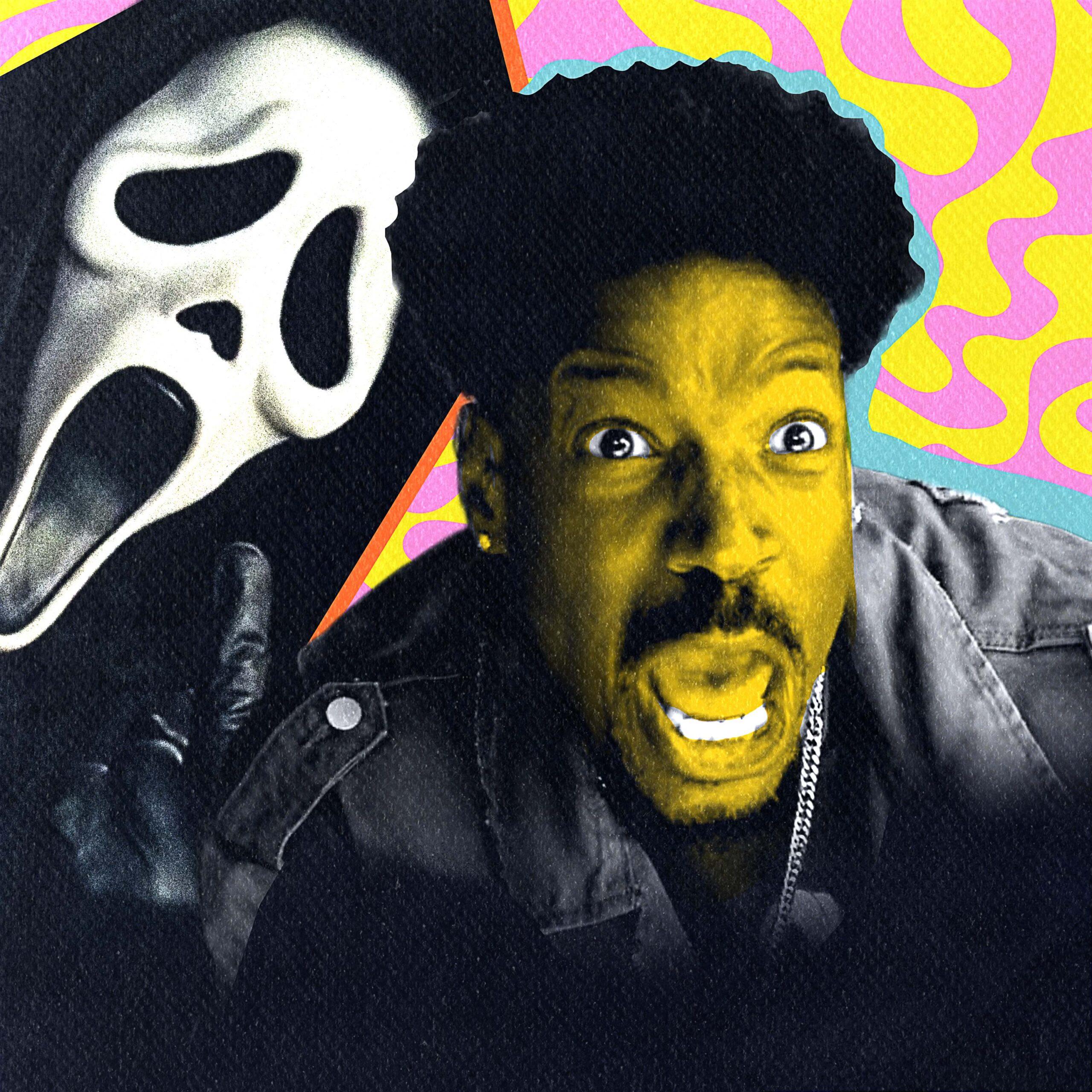
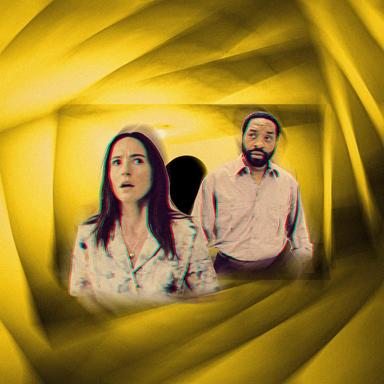
To paraphrase Lloyd Bridges in Airplane!: looks like the Wayans brothers picked the wrong week to release Scary Movie. Or, at least, the timing could have been better. In theory, the return of the beloved spoof-horror franchise syncs nicely with a moment when youthful, independently-minded genre directors are breaking containment and possibly shifting industrial paradigms. When the original Scary Movie debuted in July 2000, its makers knew very well what their target audience had done (and seen) last summer, and duly included allusions to The Blair Witch Project alongside a barrage of gags skewering Scream. But this sixth installment—the first Scary Movie entry since 2013’s Scary Movie 5, and the first by the Wayans since Scary Movie 2 (2001)—doesn’t quite seize the zeitgeist; if the filmmakers had a One-Wish Willow, they’d probably use it to go back in time to do a few days’ worth of pickups. Imagine Ghostface hotboxing the Backrooms, or Officer Doofy getting his face beaten in with a brick, Obsession-style. Apparently, it’s still possible that there will be some kind of buzzer-beaters in play by opening night; if not, well, there’s always next time.
There are still plenty of juicy targets in this iteration: Sinners, Weapons, Terrifier, The Substance, Longlegs, and, most promisingly of all, the entire A24 oeuvre, which is ripe for deconstruction (or demolition). The gentrification of genre is a real and consequential development, and yet the prevailing feeling watching the latest Scary Movie is of vague disinterest, and also narrowly missed opportunities. The prologue trots out Teyana Taylor to play herself being menaced during a blind date in New York City by Ghostface (her server at the restaurant is Carmen Electra, just for the hell of it). After setting up a decent joke about the actress’s loss at the Academy Awards earlier this year, the script—cowritten by Marlon, Shawn, Keenen Ivory and Craig Wayans, with Rick Alvarez—somehow neglects to include an Amy Madigan manque to provide a real punch line. Honestly: Couldn’t Teyana have grabbed Amy’s Oscar and bludgeoned her with it? This stuff writes itself.
It’s telling, perhaps, that the Wayanses don’t seem to care much about the style or meaning of so-called “elevated horror,” which gets mentioned in the script as something that makes “white people feel smart.” This brush-off is fair enough: the brothers’ proclivity (and, occasionally, genius) has always been to go low, and there are a few worthy below-the-belt sight gags here, including a pair of oral sex scenes that see the original Scary Movie’s legendary money-shot bit and raise it. Still, it’s a shame that the embedded formal and thematic pretensions of filmmakers like Ari Aster and Osgood Perkins are mostly left on the table; the whole point of an abattoir is to skewer sacred cows (the cult rituals and Aryan aesthetics of Midsommar are right there, guys). And I confess that I was hoping for a sustained parody of the endlessly tracking camera in David Robert Mitchell’s It Follows, which is mentioned in the film, yet discarded in the same breath as being “too obscure” (take that, David Robert Mitchell). There’s considerably more energy—and interest—in the extended parodies of Sinners and Get Out, which makes sense insofar as the not-so-submerged subtext of the entire enterprise is the significance of African American authorship.
Just because Scary Movie doesn’t have a plot, per se, doesn’t mean it lacks a point; the common denominator between the episodes is the re-emergence of the Wayanses from the Hollywood equivalent of the Sunken Place in order to re-open the family business. “My father was in the hospital for a few weeks before he passed,” Marlon told Variety in May in a wide-ranging and emotionally bruised interview that recaps the film’s 20-year gestation. “And in one of our final conversations, he said, ‘I think you and your brothers should work together again.’”
Whether or not the Wayanses care over-much about film history, they’re surely on the right side of it; the Scary Movie franchise was (in)famously hijacked by Harvey Weinstein in the early 2000s, who reportedly screwed the family out of royalties before handing things off to Airplane! and Naked Gun alum David Zucker. Notwithstanding the obvious influence of the ZAZ house-style on the Wayanses’ project (and with all due respect to Camryn Manheim’s magical expanding hat) Scary Movie 3 and 4 felt at best like a holding pattern and at worst like stolen valor; the presence of series stars Anna Farris and Regina Hall suggested a certain lack of solidarity. No hard feelings, apparently, as Scary Movie makes sure to play this tension for laughs while cheerfully demolishing the fourth wall. “They offered us so much money,” proclaims Hall’s Brenda when she’s asked why she signed on for the earlier sequels, while Cindy (Faris) claims her participation had an artistic imperative: “I got to work with the great thespian Charlie Sheen.”
The pleasure of seeing Hall and Faris goofing off together is real (and it’s a good bit that Brenda has transformed into Octavia Spencer’s character from Ma). If Scary Movie works at all as a “rebootiquel,” it’s as a combination therapy-session-slash-group-hug, with Marlon’s eternally stoned Shorty and Shawn Wayans’s not-so-ambiguously gay Ray on hand as well. How and why these characters are still in touch doesn’t matter so much as the spectacle of them all gathered together in one place. The anxieties of middle-aged Gen X comedians sharing the screen with their Zoomer replacements is potentially fertile terrain, and Scary Movie nails one important piece of casting: Olivia Rose Keegan plays Cindy’s estranged daughter Sara, and channels enough of Faris’s manic, fearless, anything-for-a-joke charisma to seem plausible as a chip off the old block. She’s up for anything, and so are the rest of the young newcomers; the problem is that the Wayanses are seemingly so preoccupied with being back in control that they neglect to do much with it.
That includes pushing the envelope, and for all of Marlon’s ambitions to “cancel the cancel culture” (a proposal just a few degrees removed from Elon Musk’s “make comedy legal again” shtick), Scary Movie isn’t even egregious enough to function as an equal opportunity offender. In some ways that’s a compliment, and given Marlon’s outspoken advocacy on behalf of his transgender son, it’s not exactly surprising that the scenes that involve non-binary characters—one of whom is literally named D.E.I. (Sydney Park)—are relatively restrained and sympathetic (and a long way away from the original’s Miss Mann). But the pronoun jokes aren’t good pronoun jokes, and the political satire hits and misses—less due to bad aim than an unwillingness to pull the proverbial trigger. (One exception: A couple of cops looking for Longlegs ignore him in favor of the Black guy standing next to him by the side of the road.)
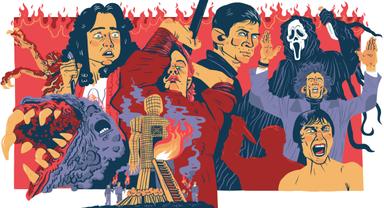
The first Scary Movie wasn’t profound, but it was savage; taking on Scream meant dealing with the racial politics of the entire teen-slasher cottage industry (i.e., the smug opening of Scream 2, which prods and reinforces the expendability of Black characters in the film’s universe). There’s nothing wrong with raunchiness for its own sake—in fact, there’s plenty right with it—but vulgarity deserves higher stakes. It would have been genuinely daring for the Wayanses to comment on their parent company, Paramount, and the very real controversy over Scream 7—a true example of how voices get silenced in the interests of corporate decorum. But the hand that feeds in this case goes safely unscathed; the movie doesn’t even go at Weinstein, who’s currently a sitting duck. Instead, we get lazy, obligatory digs at Fake News broadcasts and COVID tests (sadly no Eddington jokes); barely there allusions to #MeToo and #BlackLivesMatter; a cameo by Kai Cenat and an excruciatingly extended send-up of KPop Demon Hunters. It’s all just sort of … there.
For a comedy like this to work, the jokes have to bat about .275 with a couple of home runs. Last year’s Naked Gun reboot did better than that, leveraging old-school, ZAZ-caliber stupidity against Lonely Island–style discipline and getting in some satisfying shots at AI and tech bros—not to mention a better “cancel cancel culture” joke than anything in Scary Movie. (“In my club, you can,” says Danny Huston’s villain of playing the original version of the Black Eyed Peas’ “Let’s Get It Started”). It’s good to have the Wayans brothers back, but it’d be better if they stuck their necks out farther. Maybe the relegation of a perfectly decent bit to the end credits—a self-explanatorily-titled fake trailer for Brosferatu—means they’ll go for the jugular next time.